
Casino Sign-Up Bonuses in Australia: A Market That Does Not Exist by Law
The phrase “casino sign-up bonus Australia” sits in the same breath as a search for pokies bonuses, free-spin packages and matched-deposit deals — the language of a market the law has closed off. Online casino games, including online pokies, table games and live-dealer product, are a prohibited interactive gambling service under the Interactive Gambling Act 2001, and no state or territory of Australia issues a licence for them. A reader typing that phrase in 2026 will find offshore operators willing to take the deposit, and an Australian Communications and Media Authority (ACMA) record of formal warnings against almost every one of them. Currency-stamped as of 30 October 2026 against the ACMA’s published register of formal warnings and blocking requests.
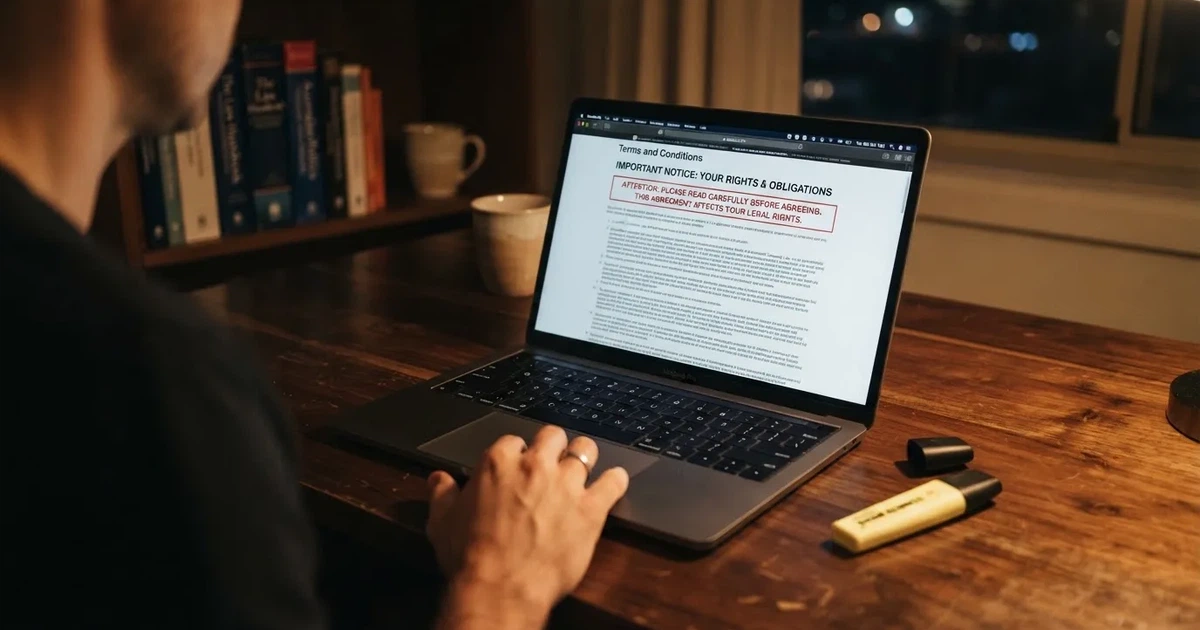
The rest of this page works through what that gap looks like in practice — what the ACMA has acted against, what the bonus mechanics would be if any operator were licensable, what the payment rails look like for legal wagering in Australia, and what BetStop and the bank-level gambling blocks do for a person trying to keep their play contained. The angle is consequence: what each fact means for a reader sitting at a kitchen table with a laptop open, and what surfaces once the marketing settles.
See also Best first deposit bonus casino Australia.
Table of Contents
- Why “Best Casino Sign-Up Bonus” Has No Australian Answer
- The ACMA Record: What Has Been Warned and What Has Been Blocked
- Responsible Gaming: BetStop, Bank Blocks and the Helpline
- Crypto and the Sign-Up Bonus Question
- Payments and Payout Speed: How Money Actually Moves
- Bonuses and Free Spins: The Mechanics If They Were Lawful
- The Comparison: Brands the ACMA Has Acted Against
- What a Reader in Australia Can Actually Do
- Frequently Asked Questions
Why “Best Casino Sign-Up Bonus” Has No Australian Answer
A casino sign-up bonus is the offer an online casino makes to a new account: a matched deposit, free spins on a named pokie, or a small credit issued for registration alone. In a regulated market — the United Kingdom, Malta, Ontario — these are advertised in pounds, euros or CAD, with a published turnover multiple and a list of eligible games. Australia is not a regulated market for this product. The IGA makes the supply of online casino games to anyone in Australia an offence, so no Australian-licensed entity can offer one. The bonuses that surface in Australian search results are offered by offshore operators under licences issued elsewhere — Curaçao, Anjouan — and the ACMA has issued formal warnings against most of the better-known ones.

The reason this matters is not a formality. An offshore operator sits outside the Australian consumer-protection frame: there is no Australian complaints body, no Australian recourse if a withdrawal stalls, and the site can be blocked by Australian internet service providers at the ACMA’s request with a balance still on it. A bonus in that setting is not a promotion under a regulatory framework — it is a marketing line attached to a product that Australian law treats as prohibited.
The legal frame in one paragraph
The Interactive Gambling Act 2001, tightened by the Interactive Gambling Amendment Act 2017, prohibits the supply of online casino games (including online pokies, table games and live-dealer product), in-play betting on sport, and any other “prohibited interactive gambling service” to a person physically in Australia. Wagering on racing and pre-event sport remains lawful when offered by an Australian-licensed provider; lotteries and keno sit in the same lawful bucket. The IGA targets the provider, not the player. The minimum age is 18.

Where wagering actually gets licensed in Australia
Online wagering on racing and sport is licensed at the territory level — in practice, most of it through the Northern Territory Racing and Wagering Commission (NTRWC), which regulates 52 of Australia’s online bookmakers, including Sportsbet, Bet365 and Ladbrokes. The commission is the de facto national regulator by virtue of the volume it covers, and it runs on a notably thin staffing model: no full-time staff, monthly meetings in Darwin. A reader comparing “online gambling” markets will find that the body that signs off on most of the legal product looks nothing like the Gambling Commission in the United Kingdom or the Malta Gaming Authority.
What a sign-up bonus would mean if one were licensable
A matched-deposit sign-up bonus, if it were licensable in Australia, would convert the bonus amount into withdrawable cash only after a turnover multiple — typically 30× to 50× the bonus — has been wagered on eligible games, with a maximum bet per spin or hand (usually A$5–A$10) and an expiry window measured in days rather than months. Free-spin packages carry their own conversion rules: winnings land as bonus money, which then has to clear the same turnover gate. The mechanics themselves are unremarkable; what is remarkable is that no Australian licence authorises their use on online casino product.
The ACMA Record: What Has Been Warned and What Has Been Blocked
The ACMA’s enforcement work is the most concrete Australian data the page sits on. Three numbers describe the scale. First, the running total: as reported in June 2026, 1,751 illegal gambling and affiliate marketing websites had been blocked since the first blocking request in November 2019. Second, the exit number: more than 230 unlicensed gambling services had left the Australian market since enforcement was strengthened in 2017. Third, the most recent round reported on 26 June 2026, in which the ACMA asked Australian ISPs to block 12 more: 7Signs, ChromaBet, Donbet, Duospin, Freshbet, Slots Gem, Jacks Club, Lucky Start, Pointsbetz.com, Spinrise, Vinyl Casino and Wildsino.
H2 Gambling Capital’s 2025 report estimates Australians lose about A$3.9 billion a year to illegal gambling sites, and that the share of gambling going through legal channels fell from 74% in 2021 to 64%. The gap is not a curiosity — it is a measurable flow of money out of consumer protections and into operators the ACMA has, in many cases, already named.
Formal warnings the ACMA has published
The ACMA’s formal warning register is the public record of who has been told, in writing, to stop offering prohibited product to Australians. The warnings are published online; the register grows each time a new operator is acted against. The relevant entries, in chronological order:
- Hollycorn N.V., over Sky Crown and Blue Leo — September 2022.
- Dama N.V., over six brands (Bambet, Dazard, Level Up, Rocketplay, Wild Tornado and Cobra Casinos) — May 2022.
- TechSolutions (CY) Group Limited and TechSolutions Group N.V., over Bizzo Casino — 2022.
- EOD Code SRL, over Instant Casino — February 2025.
- Sterplay Holding Ltd, over Casino Intense — April 2025.
- Dama N.V., over Woo Casino — March 2025.
- Dama N.V., over Spirit Casino — May 2025.
- Bamboo Media, over Ignition Casino — July 2025.
- Consolutetish S.R.L., over National Casino and Bizzo Casino — July 2025 (Bizzo had already been warned in 2022).
- Ryker B.V., over Jackbit and CasinOK — April 2026.
- Pulsup Ltd, over Rocketplay.com.au — March 2026.
The pattern in the register is not subtle: the same operators recur under different brand names, and a single parent company can rack up warnings across several years. Dama N.V. has been named over at least eight brands across 2022 and 2025. Consolutetish S.R.L. took over the warning on Bizzo that TechSolutions had previously absorbed.
The blocking-rate calculation: how fast the wall goes up
The blocking-rate calculation sits in this section because it quantifies what the ACMA’s register actually does. The arithmetic helps quantify the trend: between the first blocking request in November 2019 and the most recent cumulative figure of 1,751 sites blocked as at June 2026, the ACMA has added roughly 250–270 blocked sites per year to the wall. That figure is a band rather than a precise count: the cumulative total has been reported at intervals, not continuously, and the per-year rate fluctuates with the size of each blocking round. The condition attached to it is that this is the rate at which the ACMA has identified, investigated and successfully requested ISPs to block illegal sites — not the rate at which new illegal sites appear, which is higher.
| Blocking Metric | Data Point |
|---|---|
| Total blocked sites | 1,751 |
| Unlicensed services exited | 230 |
| Reporting period | Nov 2019 – Jun 2026 |
The practical consequence: an offshore operator who took an Australian deposit in late 2019 has, on average, been behind the wall for some time. The wall is not a single event; it is a queue.
Responsible Gaming: BetStop, Bank Blocks and the Helpline
The responsible-gaming shelf is the one place the page can hand a reader a real Australian tool. Three mechanisms do meaningful work, and they do it on different layers.
BetStop — the National Self-Exclusion Register — went live in August 2023 and binds Australian-licensed online and phone wagering services. A person who registers with BetStop is excluded from every Australian-licensed wagering operator for a chosen period (from three months up to a lifetime), and the operators share that exclusion across their customer bases. The catch is in the words “Australian-licensed”: an offshore casino is not connected to BetStop, and registering does not stop a person opening an account with one.
Bank-level gambling blocks work on the card or account, not on the operator. Westpac’s gambling block refuses authorisation of transactions registered under the merchant category code for betting and casino gambling on eligible personal credit and debit cards. ANZ runs an equivalent block, activated in the ANZ app, which also blocks gambling transactions made through a digital wallet such as Apple Pay on an eligible card. Commonwealth Bank offers a gambling lock on eligible cards through the CommBank app. None of these banks guarantees a complete block — Westpac, ANZ and Commonwealth Bank all warn that not every gambling transaction will be stopped, and that some non-gambling transactions may be blocked in error. ANZ’s block has an additional friction built in: once turned on, it carries a 48-hour waiting period before it can be removed.
The National Gambling Helpline — 1800 858 858 — is free, runs 24/7, and offers chat through Gambling Help Online. The number works from anywhere in Australia. The chat service works on the same terms. For a person whose play has moved offshore, these are the contact points that do not depend on the operator cooperating.
What BetStop does and does not do
BetStop is the most consequential single piece of consumer protection in the Australian online wagering frame, and it is also the one most often misunderstood. It binds Australian-licensed operators. It does not bind offshore operators. A reader who has registered with BetStop and then opens an account with an offshore casino has not circumvented anything; they have stepped outside the perimeter of the protection they registered for. The same is true of bank-level blocks: a person using a different card, or a different account at a different institution, sits outside the block they set up.
What the bank blocks do and do not do
The bank blocks work by merchant category code. Transactions registered under the betting and casino gambling code are refused at authorisation. Transactions registered under a different code — for example, a transfer to a PayID that is then forwarded, or a purchase at a general retailer that is later refunded — sit outside the block’s reach. The banks are explicit about this: the block is best-effort, not absolute. ANZ’s 48-hour cooling-off period on removing the block is a small friction; the bigger one is the assumption that the merchant’s code is honest, which is an assumption the offshore sector does not always honour.
Casino Sign-Up Bonuses in Australia — More on this topic at casino deposit.
Crypto and the Sign-Up Bonus Question
A crypto casino sign-up bonus works the same way a fiat sign-up bonus does — the marketing line is the same, the turnover multiple is the same — but the deposit rail is a wallet transfer rather than a card payment. The question for an Australian reader is not whether the bonus exists; it is whether the deposit can lawfully leave an Australian account and reach the offshore operator.
The answer is that it cannot, by the same path a credit card cannot. Under the IGA as amended in 2023, Australian-licensed online wagering services cannot accept payment by credit card, credit-related products, or digital currency — penalties for licensed operators up to A$247,500. Digital currency is named in the prohibition. The ban bites on the licensed side; an offshore operator is not bound by it. The licensed-side prohibition matters because it forecloses the Australian-friendly deposit path: a licensed Australian bookmaker cannot offer a crypto deposit, and an offshore casino is the only entity that will. The offshore entity sits outside Australian jurisdiction, and the deposit falls outside the consumer-protection frame.
A reader who treats crypto as the anonymity route is reading past the legal layer. The blockchain transfer is pseudonymous, not anonymous: the wallet address and the transaction graph are public, and Australian authorities have growing familiarity with tracing them. What crypto does deliver, in this market, is the removal of the bank block — a transfer from a self-custody wallet does not carry a merchant category code, and Westpac’s, ANZ’s and Commonwealth Bank’s gambling blocks do not catch it. That is not a defence of crypto as anonymity; it is a description of what the bank blocks actually look at.
What “no deposit” means in this frame
A no-deposit sign-up bonus is the smallest version of the offer — a small credit (typically A$10–A$30) or a handful of free spins issued for opening an account, with no deposit required. The mechanics are the same as a deposit-gated bonus, only the entry point is lower. The legal frame is identical: the offer is made by an offshore operator to a person in Australia, on a product the IGA prohibits supplying. The smaller entry point does not move the operator onto the lawful side of the line; it just lowers the dollar value of the prohibited transaction.
Payments and Payout Speed: How Money Actually Moves
The payment shelf, on an Australian page about online casino sign-up bonuses, is mostly about what the law has closed off. Credit cards and credit-related products cannot be used with Australian-licensed online wagering services, and the same prohibition extends to digital currency. The legal deposit routes that remain for licensed wagering are debit card, bank transfer, PayID/Osko and BPAY. An offshore casino asking for a credit card or a crypto deposit is, by definition, asking through a path the licensed frame forbids — which is one of the markers that the operator sits outside the Australian frame.
PayID and Osko: the speed layer
Osko, run by Australian Payments Plus (AP+), is the real-time transfer layer of Australia’s New Payments Platform. A bank transfer between participating Australian banks arrives in under a minute, 24/7 including weekends, whether the transfer is addressed to a BSB and account number or to a PayID. PayID-based instant transfers are available at over 100 Australian financial institutions. More than 25 million PayID identifiers had been registered on the New Payments Platform as of April 2025. The platform went live to the public on 13 February 2018, and is owned by New Payments Platform Australia Ltd — a non-profit whose 13 shareholders include the Reserve Bank of Australia and the major banks.
Two practical notes matter for a reader. First, paying to a PayID shows the name of the account holder before the transfer is sent — AP+ warns that being asked to transfer money to a PayID on an illegal gambling site almost certainly means a scam site. Second, AUSTRAC’s threshold-transaction-report rule, which requires reporting of transfers of A$10,000 or more, applies only to physical cash; ordinary electronic bank transfers are not subject to that per-transaction reporting, regardless of the amount.
BPAY: the bill-payment layer
BPAY has operated in Australia since 1997 and runs in the online banking of over 140 banks and financial institutions, with over 95,000 businesses offering it as a payment option. The payer enters a Biller Code and a Customer Reference Number (CRN) printed on the bill. BPAY is run by AP+, the same operator as PayID and Osko, and is owned equally — via the parent Cardlink Services Limited — by ANZ, Commonwealth Bank, National Australia Bank and Westpac. In September 2021 the ACCC authorised the merger of BPAY Group, eftpos and NPP Australia into Australian Payments Plus. For licensed wagering, BPAY is one of the standard deposit rails; for an offshore casino, it is rarely a deposit rail at all, because BPAY is a bill-payment service, not a wallet-to-wallet transfer.
Apple Pay, Google Pay and the credit-card back-end
By the end of 2025, Apple Pay, Google Pay and Samsung Pay collectively accounted for around 45% of all card payments in Australia by number. Apple Pay does not charge consumer fees; any surcharge comes from the merchant’s card-processing fees, not from Apple. Transaction limits and PIN requirements are set by the card issuer or merchant, not by Apple itself. The catch, in this frame, is that the card sitting behind Apple Pay is the determining instrument. ANZ’s gambling block stops a gambling transaction made through Apple Pay on an eligible ANZ card — the wallet is not the loophole. The same logic applies to Google Pay and Samsung Pay: they carry the card’s existing restrictions with them.
American Express sits slightly outside the standard card picture. It is a three-party scheme: Amex issues cards and processes transactions itself, rather than running the four-party network Visa and Mastercard use. The Reserve Bank of Australia’s July 2025 review proposes removing surcharges on eftpos, Mastercard and Visa — explicitly leaving Amex outside the scope of the proposed surcharge ban. For gambling, the relevant fact is the underlying credit/debit status of the card, not the network. A credit-card-funded Amex transaction is subject to the IGA credit-card prohibition; a debit-card-funded one is not.
Bonuses and Free Spins: The Mechanics If They Were Lawful
The bonus shelf, on a page that cannot recommend any of its subjects, still has work to do: a reader typing “casino sign up bonus” or “no deposit sign up bonus” is asking how these things work, and the mechanics carry over to the licensed Australian product (lotteries, keno) and to the offshore sites the reader will encounter.
A matched-deposit bonus matches a percentage of the player’s first deposit — typically 100% (so a A$200 deposit returns a A$200 bonus) up to a cap, with caps in the A$500–A$2,000 range common in offshore product. The bonus is not cash. It is bonus money that converts to withdrawable cash only after a turnover multiple — the wagering requirement — has been wagered on eligible games. A 40× turnover on a A$200 bonus is A$8,000 of wagering before the bonus converts. Free-spin packages work the same way: the winnings from the spins land as bonus money, and the same turnover gate applies.
Turnover, or the wagering requirement
Turnover, also called the wagering requirement, is the total amount that has to be bet before bonus money converts to cash. It is calculated as bonus × multiple — a A$200 bonus with a 40× wagering requirement is A$8,000 of betting turnover. For pokies, every spin counts the full stake toward turnover. For table games, the contribution rate is usually lower — 10% or 20% — because the house edge is smaller. A reader comparing offers should look at the multiple and the contribution table before the headline percentage.
Why maximum bet caps are standard
Most bonus terms cap the maximum bet allowed while the bonus is active — typically A$5 to A$10 per spin or hand. The reason is mechanical: a single large spin can move a meaningful share of turnover in one click, and the cap prevents a player from clearing the wagering requirement in a few high-stakes bets. A reader who sees a bonus with a low turnover multiple and no max-bet cap is looking at either an outlier offer or a term buried in the small print.
What happens to an unused bonus
Every bonus carries an expiry window — typically 7 to 30 days from issuance, sometimes longer. If the turnover is not met within the window, the bonus and any winnings derived from it are forfeited. The clause is standard and is the one most often missed by players who open an account, claim a bonus, and return to it a month later. The forfeiture applies to the bonus balance and to any winnings traceable to it; the player’s cash deposit, if any, is usually returned.
The cost arithmetic of a bonus
The expected cost of a bonus, when the wagering requirement clears, is turnover × (1 − RTP). A A$200 bonus with a 40× wagering requirement, cleared entirely on an online pokie at a 96% RTP, carries an expected loss of A$8,000 × 0.04 = A$320. That is the average cost over many spins, not a guaranteed loss for any individual session — a player can run hotter or colder than the average. The point is that the headline bonus amount and the headline turnover multiple together imply a cost, and that cost is rarely the headline figure the marketing emphasises. The same arithmetic, applied to free spins: a package of 50 free spins at A$1 per spin on a 96% pokie, with 40× wagering on the winnings, carries a similar profile, scaled down to the size of the package.
The Comparison: Brands the ACMA Has Acted Against
This is not a ranking and not a recommendation. Each brand in the table below is listed because the ACMA itself issued a formal warning over it for offering prohibited services to Australians. The comparison is built to make the record legible, not to make the case for any of the listed brands.
| Brand | ACMA action and date | Operator named by the ACMA | Subject support |
|---|---|---|---|
| RocketPlay | Formal warning, March 2026 | Pulsup Ltd (Rocketplay.com.au) | Offshore operator; subject support listed only by third-party review pages |
| Level Up Casino | Formal warning, May 2022 | Dama N.V. | Offshore operator; subject support listed only by third-party review pages |
| Woo Casino | Formal warning, March 2025 | Dama N.V. | Offshore operator; no Australian-side subject support recorded |
| Spirit Casino | Formal warning, May 2025 | Dama N.V. | Offshore operator; no Australian-side subject support recorded |
| National Casino | Formal warning, July 2025 | Consolutetish S.R.L. | Offshore operator; subject support listed only by ACMA, AUSTRAC and BetStop references |
| Bizzo Casino | Formal warning, July 2025 (and earlier, 2022) | Consolutetish S.R.L. (2025); TechSolutions (2022) | Offshore operator; subject support listed only by third-party review pages |
| Ignition Casino | Formal warning, July 2025 | Bamboo Media | Offshore operator; no Australian-side subject support recorded |
| Instant Casino | Formal warning, February 2025 | EOD Code SRL | Offshore operator; subject support listed only by payment-rail and PayID references |
| Jackbit | Formal warning, April 2026 | Ryker B.V. | Offshore operator; no Australian-side subject support recorded |
| Casino Intense | Formal warning, April 2025 | Sterplay Holding Ltd | Offshore operator; subject support listed only by AUSTRAC, BetStop and review-page references |
| Sky Crown | Formal warning, September 2022 | Hollycorn N.V. | Offshore operator; no Australian-side subject support recorded |
The shape of the table is the point. The same parent operators recur across multiple brands and across multiple years — Dama N.V. over six brands in 2022 and two more in 2025; Consolutetish S.R.L. over Bizzo and National Casino in 2025; Hollycorn N.V. over Sky Crown and Blue Leo in 2022. The brands themselves are marketed as separate casinos; the ACMA’s register treats them as a portfolio. For a reader, that means a “new” brand in the same parent’s stable is not a fresh option; it is another entry on an existing record.
Reading the table alongside the rest of the page
The column on subject support is the one to read carefully. Where it shows no Australian-side reference, the brand has no visible footprint in the Australian consumer-protection or payments frame — no AUSTRAC reference, no BetStop interaction, no PayID mention. Where it shows third-party review-page references only, the brand’s Australian footprint is marketing, not regulatory. The point is not to denigrate the brand; it is to clarify that the ACMA’s warning is the only Australian-side entry on the brand’s record, and the warning itself sits outside any framework that would compel the brand to respond to it.
The cluster of 2025 warnings — Woo Casino, Spirit Casino, Instant Casino, Ignition Casino, National Casino, Bizzo Casino, Casino Intense — is unusually dense. Seven warnings across seven months is not the rate of a regulator finding occasional outliers; it is the rate of a sector that has not adjusted to the legal frame. The 2026 entries (RocketPlay, Jackbit) continue the pattern. A reader comparing offers in this space is comparing products whose own regulator has, in most cases, already named them.
What “online casino games cannot be licensed anywhere in Australia” means in practice
Every brand in the table displays a licence on its website — usually Curaçao or Anjouan. The displayed licence is real, in the sense that the regulator named issued it. It is not an Australian licence, because no Australian jurisdiction issues one for online casino product. A reader who treats the displayed licence as a consumer-protection marker is reading a foreign regulator’s permission to operate against a frame the ACMA has already determined does not extend to Australians. The two facts coexist; neither cancels the other.
What a Reader in Australia Can Actually Do
The page has spent its length on what is not available. The closing section is the part that hands the reader something usable.
For wagering on racing and sport, the lawful route is an Australian-licensed bookmaker — Sportsbet, Bet365, Ladbrokes and the rest of the NTRWC’s 52-licensee roster. The sign-up mechanics in this segment are real, the consumer-protection frame is real, BetStop applies, and the bank-level gambling blocks apply. The product set is narrower than an offshore casino — no online pokies, no live-dealer roulette, no progressive jackpot slots — but it is the only product an Australian can lawfully be sold.
For the casino-style product set — pokies, table games, live-dealer — the lawful route is land-based. Every Australian state and territory licenses pubs and clubs with poker machines, and the major capital cities have land-based casinos (Crown Melbourne, Crown Perth, The Star Sydney, SkyCity Adelaide, Treasury Brisbane, Country Club Launceston, Casino Canberra). The product is the same genre as an offshore online casino; the regulatory frame is Australian; consumer protection runs through state gambling regulators and through the relevant state-based self-exclusion schemes.
For a person whose play has moved offshore and who wants to step back from it, BetStop, the bank-level gambling blocks and the National Gambling Helpline (1800 858 858) are the Australian-side mechanisms that work regardless of where the offshore account sits. They do not block every path; they meaningfully narrow the available ones.
A note on the 2026 reform
The Interactive Gambling Amendment (Gambling Reform) Bill 2026 passed Parliament on 19 August 2026. Its advertising and inducement measures commence 1 January 2027. As at 2026 the bill is law with a start date, not yet in force. The implication for a reader comparing offers in this transitional window is that the inducement language used by licensed operators is about to be constrained in ways the offshore sector will not be constrained by. Offshore marketing in 2026 is unchanged by the bill.
Frequently Asked Questions
What is the difference between a sign-up bonus and a no-deposit bonus?
A sign-up bonus is the umbrella term for the offer an online casino makes to a new account — usually a matched deposit, sometimes free spins, sometimes both. A no-deposit bonus is a specific kind of sign-up bonus: a small credit or handful of free spins issued for opening an account, with no deposit required. The deposit-gated version returns more value; the no-deposit version carries a lower entry point. Both convert bonus money to cash only after the wagering requirement is met.
What does turnover, or wagering requirement, mean for a sign-up bonus?
Turnover is the total amount that has to be bet before bonus money converts to withdrawable cash. It is calculated as the bonus amount multiplied by the wagering multiple — a A$200 bonus at 40× turnover is A$8,000 of betting before the bonus unlocks. Pokies usually contribute the full stake toward turnover; table games often contribute a smaller percentage. The wagering requirement is the most important number on the offer, ahead of the headline percentage.
Is it legal for an online casino to offer a sign-up bonus to players in Australia?
No, not as a licensed Australian product. The Interactive Gambling Act 2001 prohibits offering online casino games to anyone in Australia, and no state or territory licenses them. Bonuses offered to Australian readers come from offshore operators under foreign licences. The ACMA has issued formal warnings against most of the brands that surface in Australian search results, and can direct Australian ISPs to block the underlying sites.
Can a sign-up bonus be claimed using a cryptocurrency deposit?
An offshore operator will accept a crypto deposit; an Australian-licensed operator will not — the IGA’s 2023 amendment prohibits Australian-licensed online wagering services from accepting digital currency, alongside credit cards. The crypto path therefore routes exclusively through offshore operators, which sit outside the Australian consumer-protection frame. The blockchain transfer is pseudonymous rather than anonymous, and bank-level gambling blocks do not catch wallet-to-wallet transfers, so the path is also outside the bank-side controls.
Why do sign-up bonus terms usually cap the maximum bet allowed?
The maximum bet cap prevents a player from clearing the wagering requirement in a few large spins. A A$200 bonus at 40× turnover is A$8,000 of betting — at A$10 a spin, that is 800 spins; at A$100 a spin, it is 80. The cap forces the requirement to be worked through over a meaningful number of wagers. The cap is standard on essentially every bonus offer; the size of the cap varies.
What happens to an unused sign-up bonus if the wagering period expires?
The bonus and any winnings derived from it are forfeited. The player’s own cash deposit, if any, is usually returned. The expiry window is set in the bonus terms — typically 7 to 30 days from issuance — and is the single most often missed clause by players who open an account, claim a bonus, and return to it a month later. Forfeiture is mechanical, not discretionary, and applies whether the player is close to clearing the requirement or not.