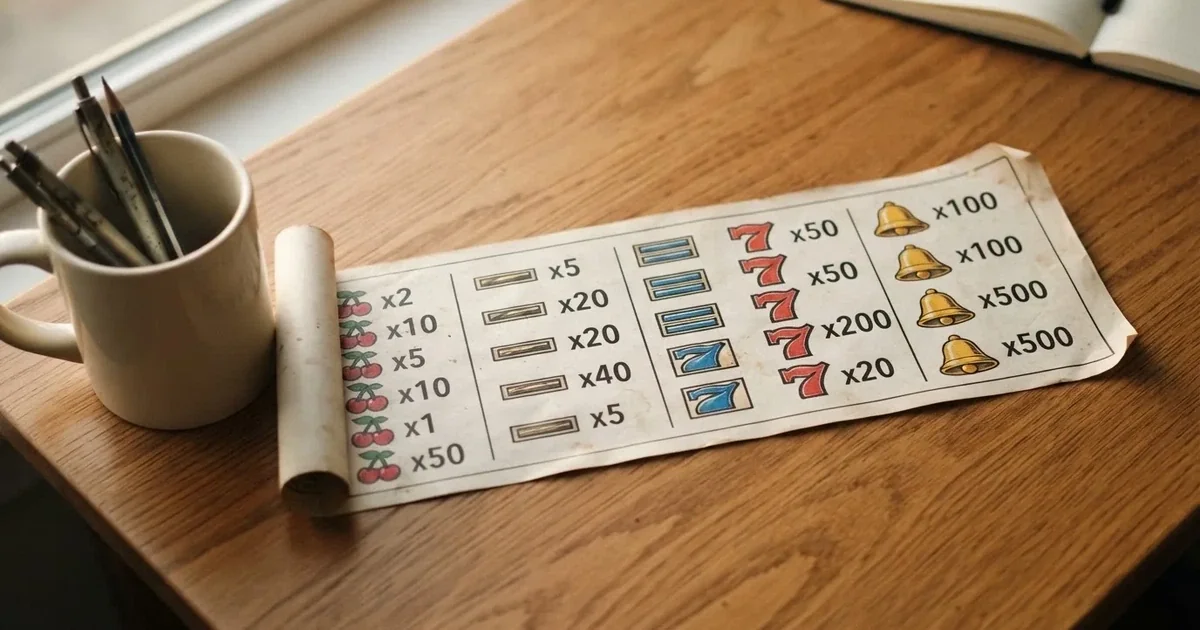
Three-Reel Slots, the Australian Market, and the Operators the ACMA Has Named
 Available in US
A three-reel slot is the original slot machine: three spinning strips, a single payline, a small handful of symbols. In Australia, the physical machine still lives in pubs and clubs in six-figure numbers, but the online version of the same format sits in an offshore market the regulator has spent the last decade taking apart. What follows covers the format itself, the prohibition that closes off any Australian-licensed site from serving it, the bonus structures the offshore operators package around three-reel play, the eleven brands the Australian Communications and Media Authority has formally warned, and the arithmetic behind an enforcement campaign that now blocks more than 260 illegal sites a year.
Current as of 23 September 2026 (verified against ACMA formal warnings and the regulator’s published blocking notices).
Table of Contents
- When Play Stops Being Entertainment
- What Bonus and Free-Spin Offers Mean on a Three-Reel Format
- Three-Reel Paytables: Symbols, Lines, and the Math Behind a Spin
- The Landscape: Eleven Brands the ACMA Has Formally Warned
- The Fundamentals of Three-Reel Slots and Why the Format Persists
- The Prohibition Regime and What ACMA Enforcement Actually Looks Like
- Frequently Asked Questions
When Play Stops Being Entertainment
Anyone exploring three-reel slots, even out of curiosity, can land somewhere that pulls harder than they expected. The compact format, with low cognitive load and short outcome cycles, is part of why it remains attractive. It is also part of why the same player who came in for the format can find themselves chasing outcomes rather than playing them.
Help is free, confidential, and available around the clock. The National Gambling Helpline is 1800 858 858, twenty-four hours a day. Online chat and email support sit behind the same service at Gambling Help Online. There is no cost, no referral, no waiting list. The same line also connects callers to financial counselling where gambling has eaten into household money.
For a player who wants the wagering off-limits rather than just slower, BetStop — the National Self-Exclusion Register, live since August 2023 — lets a person exclude themselves from every Australian-licensed wagering service in one enrolment. The catch, important to read before relying on it: BetStop binds only operators licensed in Australia. An offshore casino is not connected to it. Self-excluding through BetStop does not stop a Curacao- or Anjouan-registered site from accepting a deposit or sending a bonus email. The exclusion, in other words, is real against the licensed side of the Australian market and silent everywhere else.
The consequence is structural. A player who is using BetStop as a single tool to walk away from gambling is closing only the front door of the part of the market the regulator can reach. That is enough for many people, and it is enough for the wagering side of the Australian offering, but it cannot cover a parallel offshore account that the regulator has warned against. Combining BetStop with the helpline, financial counselling, and, where it helps, a banking block on gambling-coded transactions is the layered approach that holds up in practice. None of those layers is hard to set up, and the helpline will arrange them.
A final point on what the prohibition does not change about help. The IGA does not target the player. An Australian placing a real-money bet on an offshore three-reel slot is not committing an offence. The provider is. The practical consequence is that a player with a concern about their own play is a person the help services treat as a person, not as a defendant, and that is exactly who the help lines are set up for.
What Bonus and Free-Spin Offers Mean on a Three-Reel Format
Three-reel slots and bonuses have a long overlap. The older mechanical format did not invent free spins, that marketing word long predates the modern video slot, but the simplicity of three reels makes the offer feel different when it lands. A three-reel game tends to play fast, settle quickly, and award credit at a rate most modern video slots do not. Operators ride that perception when they promote free-spin packages tied to three-reel titles: more spins, smaller stake per spin, more rounds of result per minute.
The general shape of a three-reel bonus, where the rulebook ships one, is a deposit match tied to a named three-reel title plus a batch of free spins on the same game, sometimes with extra spins on a five-reel partner. The headline number is what the bonus prints; the conditions are what determine whether the number matters. Wagering requirements are the dominant one. The same bonus that prints “100%” on the page may carry a wagering multiple of 35x, 40x, or 50x the bonus amount, and a max-cashout cap that limits the part of any winnings actually withdrawable.
Three-reel bonus slots marketed as “free” almost always sit behind a deposit or a registration that triggers the package. The term “no deposit” appears on some affiliate pages but rarely survives a close read of the operator’s own terms. Where the offer is genuinely free, it tends to cap winnings at a low figure and require identity verification before any cashout. Where it is deposit-gated, the wagering requirement is the line that decides whether the offer is worth the deposit. The marketing word “free” is doing a lot of work where the underlying offer is anything but.
For a three-reel game specifically, the consequence of a 40x wagering requirement depends on the stake-per-spin the bonus enforces. Three-reel slots almost always play at a lower stake-per-spin than five-reel video slots, sometimes A$0.10, often A$0.20, occasionally higher. Lower stake, longer road. A 40x multiple on a small bonus with a small stake means thousands of qualifying spins before the bonus clears, and on a low-volatility three-reel game the variance along the way is real.
Two patterns recur across the offers these offshore brands publish. First, the bonus-eligible game list usually restricts play to a small subset of titles, three-reel classics plus two or three modern variants, and excludes the highest-return titles in the lobby. Second, the free-spin allocation frequently runs on a different title from the deposit-match portion, so the player has two different games to clear two different wagering tracks at once. Reading the bonus term page for the eligible-game list before claiming is the single move that catches both patterns.
The whole subject is framed here as background. None of the eleven operators in the section that follows holds an Australian licence, and the ACMA has formally warned each of them for offering prohibited services. So a bonus offer tied to a three-reel slot in this market is something a reader knows what it is, not something a reader goes and claims. The point of writing it down is that if a reader arrives on an offshore site that does take their business, the offer will not look like the marketing makes it look, and the term page is the read that turns around that surprise.
Three-Reel Paytables: Symbols, Lines, and the Math Behind a Spin
| Feature | Three-Reel Slots | Five-Reel Video Slots |
|---|---|---|
| Typical Paylines | Single | Multiple / Every-ways |
| Volatility Profile | Lower (often) | Higher (often) |
| Bonus Mechanics | Limited (classic) | High (features/buy) |
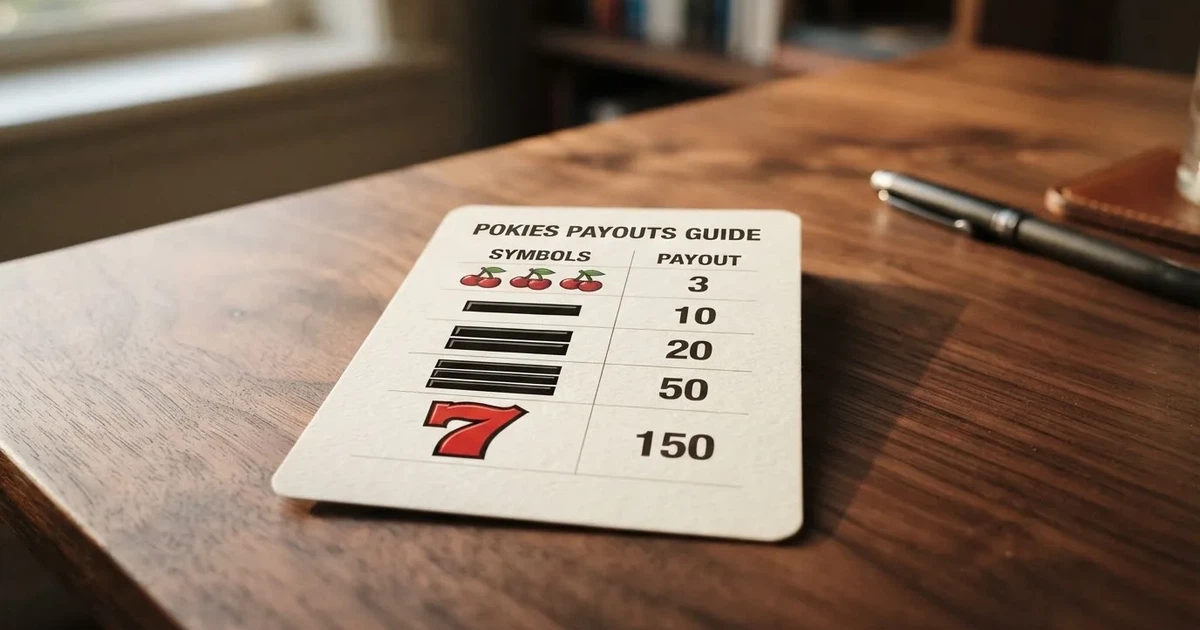
A three-reel slot pays on combinations of symbols landing on a single horizontal line. Three matching symbols across the line is the canonical win; two matching symbols plus a designated third often pays a smaller credit. The line is the entire win-evaluation grid. There is no scatter paytable, no wild substitute, no second-screen bonus in the mechanical frame.
Symbol counts per reel drive the math more than any other design choice. A classic three-reel machine with about ten symbols per reel offers roughly a thousand possible combinations across all three reels, a small enough space that the paytable can show, with reasonable clarity, what each combination is worth. Compare that to a modern five-reel video slot with fifty or more symbols per reel: the same arithmetic delivers odds against the top combination running to hundreds of millions to one. Both mechanics are honest about the house edge; the difference is in the granularity of the outcome, not the underlying edge.
Charles Fey of San Francisco developed the first automatic slot mechanism in the late nineteenth century, a three-reel machine with five symbols (horseshoes, diamonds, spades, hearts and the Liberty Bell), where three bells in a row paid the top prize of ten nickels. Bally’s “Money Honey,” released in 1963, was the first slot with a bottomless hopper and automatic payout of up to 500 coins without an attendant. The first video slot came in 1976 from Fortune Coin Co. in Kearny Mesa, California, a modified nineteen-inch Sony television displaying reels on screen rather than physically spinning them. That change is what eventually made online three-reel games possible. The Australian market does not licence online variants, but the format that offshore sites serve traces back through this lineage.
Inside Australia the format lives in pubs and clubs rather than on screens. By 2010 Australia operated an estimated 97,103 gaming machines outside casinos, a per-capita rate that ran about five times the United States equivalent. The same broader inventory counts 87,298 pokies-style machines in New South Wales in June 2023, 26,380 in Victoria across 2021–22, 21,122 in Queensland in October 2023, 11,672 in South Australia in September 2023, and 3,587 in the ACT in November 2023. The precise figure moves year to year and state by state, but the order of magnitude is right across the country: the three-reel physical machine has more Australian homes than any single offshore operator has customers.
Three-reel online titles vary a lot under the hood. Some run a tight paytable with a single payline and a return in the mid-nineties of percent. Some add multiple paylines (three or five across the same three reels) without changing the reel count, which raises the hit frequency but compresses the win amounts. A “bonus” three-reel game keeps the three-reel format but layers a feature on top: a pick-em round, a nudge, a free-spin rerun, and reads more like a five-reel slot with the visual restraint of three. The reader who lands on a three-reel title online will not always be playing the same game they would have played in 1976.
The volatility of three-reel slots, as a class, sits lower than the volatility of high-feature video slots. Three reels and a small symbol set tend to produce frequent small wins and infrequent large wins, the canonical low-volatility profile. A handful of three-reel games run the opposite profile: tight paytables, sparse line-hits, very large top symbols. The format is a way to frame volatility; it does not determine it. A reader weighing a three-reel title, especially on a bonus-tracked playthrough, needs to look at the variance profile the operator publishes rather than assume the format.
The Landscape: Eleven Brands the ACMA Has Formally Warned
No online casino, on three reels or on five, is licensed for real-money play in Australia. The eleven brands in the table below are listed because the ACMA has issued a formal warning to each of them for offering prohibited interactive gambling services to Australians — a regulator finding, not a ranking, not a recommendation. What the table records is who the regulator named, when, under what licence-holder or operating company it appeared, and whether any independent source carries a fact about the subject the page can quote.
A reader looking to play a real-money three-reel slot online inside Australia does not have a place to play. Every operator in the table sits outside the Australian regulatory perimeter, and the ACMA has, at the time of writing, formally warned each one. The licence the site displays on its footer is almost always a Curaçao, Anjouan or similar offshore licence. That licence binds the operator to the rules of the issuing jurisdiction. It does not bind the operator to Australian consumer-protection law, and a player with a complaint has no Australian body to take it to.
The brands themselves have appeared in clusters of activity that show the structure of the offshore market better than any single licence-holder does. Dama N.V. was warned in May 2022 across six brands — Bambet, Dazard, Level Up, Rocketplay, Wild Tornado and Cobra Casinos — and re-warned in 2025 over Woo Casino (March 2025) and Spirit Casino (May 2025). Consolutetish S.R.L. was warned twice in one notice, over National Casino and Bizzo Casino, in July 2025; Bizzo had already been the subject of a 2022 formal warning over a TechSolutions entity. Hollycorn N.V. carried a single warning that covered Sky Crown and Blue Leo together. Bamboo Media appeared for Ignition Casino; EOD Code SRL for Instant Casino; Ryker B.V. for Jackbit and CasinOK together in April 2026; Sterplay Holding for Casino Intense in April 2025; Pulsup Ltd for Rocketplay in March 2026. The same operators, sometimes under different trade names, are the recurring entities the regulator names.
| Brand | ACMA action and date | Operator named by the ACMA | Subject support |
|---|---|---|---|
| RocketPlay | Formal warning under the IGA, March 2026; earlier Dama N.V., May 2022 | Pulsup Ltd | — |
| Level Up Casino | Formal warning under the IGA, May 2022 | Dama N.V. | Catalogued on Bgaming |
| Woo Casino | Formal warning under the IGA, March 2025 | Dama N.V. | — |
| Spirit Casino | Formal warning under the IGA, May 2025 | Dama N.V. | — |
| National Casino | Formal warning under the IGA, July 2025 | Consolutetish S.R.L. | As listed in Wikipedia’s casino entry |
| Bizzo Casino | Formal warning under the IGA, July 2025; earlier TechSolutions, 2022 | Consolutetish S.R.L. | — |
| Ignition Casino | Formal warning under the IGA, July 2025 | Bamboo Media | — |
| Instant Casino | Formal warning under the IGA, February 2025 | EOD Code SRL | — |
| Jackbit | Formal warning under the IGA, April 2026 | Ryker B.V. | — |
| Casino Intense | Formal warning under the IGA, April 2025 | Sterplay Holding Ltd | — |
| Sky Crown | Formal warning under the IGA | Hollycorn N.V. | — |
A “—” in the right-hand column means no figure from a non-affiliated source is available on a fact about three-reel slots specifically. Where a row names a publication, it indicates the only independent source the look for these brands turned up, and what the underlying data says is what that publication lists, not what the operator publishes about itself.
Per-brand write-ups, in the same order as the table, follow below.
RocketPlay
Rocketplay is the most recent of the eleven. The ACMA published a March 2026 formal warning naming Pulsup Ltd, the operator entity behind the brand, for offering prohibited interactive gambling services to Australians — a finding that follows the original Rocketplay warning from May 2022 issued to Dama N.V. Two warnings, two different operating companies, the same brand. The site’s licence in Curaçao does not change the regulator’s standing view in Australia. No independent source exists for a RocketPlay-specific fact on three-reel slots. The consequence of the regulator’s most recent naming is that the brand is the freshest mark on the ACMA’s record.
Level Up Casino
Level Up was named in the May 2022 Dama N.V. cluster of six brands — Bambet, Dazard, Level Up, Rocketplay, Wild Tornado and Cobra Casinos — that the ACMA warned in a single notice. Where Bgaming lists the brand, it appears in a third-party provider catalogue rather than a marketing context, which is as close to a neutral source as the operator has. The May 2022 warning is now more than four years old, and the ACMA has not re-named Level Up since, which is the regulator’s only public signal of what has happened in the interval. A licence-holder chosen once and walked away from is a different shape of risk from one that has been re-warned for the same conduct.
Woo Casino
Woo was named in March 2025, the same Dama N.V. operator entity that carried the May 2022 cluster. The brand sits inside the umbrella of an operator the regulator has now pointed at twice in three years. Woo Casino is what the regulator sees as continued prohibited offering, not a single warning followed by an exit from the Australian market. There is no independent source for a Woo-specific three-reel fact. The conclusion is the same as for the rest of the Dama brands: the licence Curaçao issues does not change the Australian outcome, and the regulator’s standing view in March 2025 is the most recent statement on the record.
Spirit Casino
Spirit is the fourth of the Dama N.V. brands, named in May 2025. The brand is recent on the record. There is no earlier warning under the Spirit name. What there is, again, is the operator-level signal: Dama N.V. was named in May 2022 and again in 2025 across different brand names. A reader who already knows Woo Casino would recognise the same operator under a fresh trade name. Independent sources on a Spirit-specific three-reel fact are not available to quote. The regulator’s May 2025 action is the published signal for this brand, full stop.
National Casino
National Casino was named in the July 2025 ACMA action against Consolutetish S.R.L., the same operator entity that also drew a warning for Bizzo Casino in the same notice. National is what Wikipedia’s casino entry lists in passing, which is the only independent reference for the brand available to quote, and what Wikipedia says is what is being reported rather than what the operator itself says. The brand has not been named by the ACMA before the 2025 action, which is a difference of record between it and its sibling, Bizzo. Two brands in one notice, one operator, one regulator action.
Bizzo Casino
Bizzo Casino carries the longer record of the two Consolutetish S.R.L. brands the ACMA named. The 2025 warning is the second over the brand: a TechSolutions entity was warned over Bizzo in 2022, and the same brand appeared in the July 2025 Consolutetish action. Two warnings, two operator entities, one brand name. A regulator signal across more than one corporate wrapper, over an ongoing prohibited offering, is the rare combination the ACMA’s published record actually surfaces. There is no independent source on a Bizzo-specific three-reel fact. The pattern, rather than the latest date, is the read.
Ignition Casino
Ignition was named in the July 2025 ACMA action against Bamboo Media, a different operator entity from anything that has appeared earlier. Ignition’s appearance under a fresh operator is the regulator’s signal that the market includes more than the established Curaçao umbrellas; smaller fronting companies appear, attract customers, and end up on a published warning list as a result. The brand was not named in the May 2022 Dama cluster, the Consolutetish July 2025 notice, or any other published action. A single warning, a fresh operator, and no independent source for a brand-specific three-reel fact.
Instant Casino
Instant Casino was named in February 2025 by the ACMA over EOD Code SRL, an operator entity that has not appeared elsewhere in this list. The February 2025 date is the earliest of the ACMA’s 2025 notices and the action that opened the regulator’s most recent published round. Instant Casino has not been named again since. No independent source exists for an Instant-specific three-reel fact. A single published action, under a small operator vehicle, sits where the regulator’s activity opened the year, and the brand is the marker for that opening signal.
Jackbit
Jackbit was named in the April 2026 ACMA action against Ryker B.V., an operator entity that also draws a warning for CasinOK in the same notice. Jackbit’s appearance is recent; the brand’s first published ACMA action is the April 2026 entry. One operator, two brands, single published notice. No independent source for a Jackbit-specific three-reel fact is available, and a row on the table that says “—” is, in this market, the cleaner shape for what is actually available. The April 2026 Ryker notice is the only published signal on the brand, and the published record carries nothing more.
Casino Intense
Casino Intense was named in April 2025 by the ACMA over Sterplay Holding Ltd. The brand has not appeared elsewhere in the regulator’s published record. No independent source on a three-reel fact specific to this brand is available to quote. The April 2025 Sterplay action is the published signal for the brand. Without a prior or subsequent warning to compare it against, the row carries one regulator action and one operator entity — a thin record, and the honest shape of that thinness.
Sky Crown
Sky Crown was named by the ACMA in a Hollycorn N.V. formal warning that also covered Blue Leo Casino, published in September 2022. Sky Crown is the oldest of the eleven brands and the only one the regulator has pointed at without an operator rotating underneath it (Hollycorn is the named operator in the same notice). No independent source exists for a Sky Crown-specific three-reel fact. The September 2022 action is the regulator’s only published signal for the brand; the absence of a re-warning either indicates the brand stopped offering to Australians or that the regulator’s publication cadence has moved on, and the published record does not distinguish between those two readings.
What the table as a whole shows is the texture of the offshore market the regulator has been acting against. Most of the eleven sit under one of three operator entities, and the same brand or a closely related brand has, in some cases, drawn multiple warnings over more than one operator. A reader doing the comparison thinking the table is supposed to enable — which of these is the lesser of an unlicensable set — is doing the comparison on data the regulator does not provide. There is no licensed site to rank these brands against, no complaint history in an Australian jurisdiction, and no published payout performance over an extended window. What the ACMA’s record discloses is enforcement, and that is what the table reports.
The Fundamentals of Three-Reel Slots and Why the Format Persists
Three reels is the original slot format. The mechanical machine from which every modern slot descends — Fey’s 1890s San Francisco invention with three spinning strips and five symbols — is the direct ancestor of every three-reel title currently circulating, online or on a casino floor. The format has not died out. It has been out-marketed, out-featured and out-animated by five-reel video slots, but it survives because the gameplay it offers is genuinely different from the modern product.

The differentiator is decision load. A three-reel slot presents, on most spins, exactly one decision: whether to play. There is no bet-level selector beyond a credit-and-coin choice, no payline selector across dozens of lines, no feature buy, no gamble mechanic. A reader who has played a five-reel video slot for ten minutes and then plays a three-reel game will feel the difference instantly. The five-reel format invites attention; the three-reel format dispenses with it. The player is choosing outcomes rather than engaging with the format itself, and that property is what makes the three-reel game attractive on the occasions it is not attractive, and what makes it risky where the player is using the format to disengage from outcome tracking.
Inside Australia the prevalence of three-reel-style machines on pub and club floors shows what people choose when they are choosing with their feet. The 87,298 pokies-style machines in NSW as of June 2023, the 26,380 in Victoria across 2021–22, the 21,122 in Queensland in October 2023, the 11,672 in South Australia in September 2023 and the 3,587 in the ACT in November 2023 — together with the 97,103 estimate for Australia as a whole in 2010 — are a population of devices. They are not all strictly three-reel. They are not all three-payline or one-payline. They are all, however, closer to the three-reel mechanic than to a five-reel video slot, and the per-capita rate of pokies-style machines in Australia runs about five times that of the United States. The physical offer settled on the simple, compact format decades before offshore online play existed, and the online offer reaches that same shape rather than the other way around.
A reader interested in three-reel slots for the format is, in Australia’s current market, best served by the physical offer: a pub or club pokie played responsibly, in person, on a regulated and taxed device. The ACMA’s enforcement and the IGA’s prohibition have closed the licensed online route for the format, and the unlicensed online route is, by the ACMA’s published record over the last few years, a route the regulator has been actively narrowing.
The fundamental point is that the format itself is sound, the regulatory prohibition is on the online channel rather than on three-reel play as such, and the consequence of the prohibition is that an Australian who wants to play a three-reel slot for real money has the regulated pub and club offer and nothing in the way of a licensed alternative online.
The Prohibition Regime and What ACMA Enforcement Actually Looks Like
The Interactive Gambling Act 2001 (the IGA), strengthened by the Interactive Gambling Amendment Act 2017, makes it an offence for a provider to offer online casino games, online pokies or in-play betting to a person in Australia. The IGA is a provider-targeted Act — it does not make it an offence for a player to place a real-money bet, but it does make it an offence for a provider to take one. No state or territory issues a licence for online casino games or online pokies; the category is not licensable in Australia. What is licensable is wagering on races and sport placed before the event, lotteries and keno, with the practical regulator being the Northern Territory Racing and Wagering Commission, which covers 52 of Australia’s online bookmakers — including Sportsbet, Bet365 and Ladbrokes — but operates with no full-time staff and meets once a month in Darwin.

The prohibition has enforcement behind it. The Australian Communications and Media Authority (the ACMA) investigates complaints, issues formal warnings to operators, and directs Australian internet service providers to block illegal sites. As the ACMA reported in June 2026, a cumulative total of 1,751 illegal gambling and affiliate marketing websites had been blocked since the first blocking request was made in November 2019, and more than 230 unlicensed gambling services had left the Australian market since enforcement was strengthened in 2017. In June 2026 alone, the ACMA asked ISPs to block twelve more illegal gambling sites in a single round: 7Signs, ChromaBet, Donbet, Duospin, Freshbet, Slots Gem, Jacks Club, Lucky Start, Pointsbetz, Spinrise, Vinyl Casino and Wildsino.
The economics, by H2 Gambling Capital’s 2025 report, run about A$3.9 billion a year into illegal gambling sites; the share of gambling going through legal channels fell from 74% in 2021 to 64% in 2025. The decade-long enforcement campaign has not closed the offshore channel. It has narrowed it, made it harder to find from Australia, and made the typical operator on the other end a regulator-named one. The consequence of that pattern is that any Australian who lands on an offshore site is, on the published record, far more likely than not to be on a site the ACMA has warned against. The same narrowing is also why the eleven brands discussed earlier are a regulator list rather than a ranking.
Player protection is built around the licensed side of the market, with a structural caveat that matters. BetStop, the National Self-Exclusion Register, binds only Australian-licensed services. An offshore casino is not on the register, does not honour BetStop exclusions, and in practice does not respond to Australian complaints bodies. The 1800 858 858 helpline and Gambling Help Online are independent of licence and free to call. Outside the licensed perimeter, there is no Australian complaint body that holds an offshore operator to account for a refused withdrawal or a delayed payout; a player whose withdrawal stalls on an offshore site has recourse through the issuing jurisdiction (Curaçao, Anjouan, or whatever licence the footer states) and through no Australian body in particular.
The payment rules tighten the perimeter further. Since 11 June 2024, credit cards, credit-related products and digital currency are banned as payment for licensed online wagering, with penalties reaching A$247,500 for an operator that accepts them. The legal deposit routes for licensed wagering are debit card, bank transfer, PayID/Osko and BPAY. A site asking an Australian for a credit card or a crypto deposit is operating outside the Australian rules. The same signal applies, more loosely, to unlicensed sites: an offshore operator that takes crypto from Australians is operating in a payment space the regulator has signalled it considers high-risk.
The 2026 reform is on a different timeline. The Interactive Gambling Amendment (Gambling Reform) Bill 2026 passed Parliament on 19 August 2026; its advertising and inducement measures commence on 1 January 2027 — law with a start date, not yet in force in 2026. When it commences, the advertising and inducement environment around wagering will change in Australia; the prohibition regime on online casino games is unaffected by that bill. The format is closed off by the IGA, and stays that way under the post-2027 framework.
On tax, no general-purpose summary can cover the specifics. Gambling winnings of a recreational player are not assessable income under section 6-5 of the ITAA 1997, and losses are not deductible, unless the person carries on a business of gambling. Anyone whose gambling income is large enough to look like a business should check the position with the ATO or a tax adviser in writing, since published guidance stops where the personal facts begin.
What the Blocking Numbers Mean Over Time
The ACMA’s published blocking numbers are a running total. Starting from the first blocking request in November 2019, with a cumulative 1,751 blocked websites by June 2026, the arithmetic sits in a band of roughly 22 blocked sites per month, or a little over 260 a year, on average over the full period since blocking powers began.
That band is an average. The actual pattern of blocks is uneven: some months publish no new blocking notices, some publish multiple in a single week, and the dozen-site batches tend to come in concentrated rounds. The right way to read the average is as the baseline rate the enforcement regime has settled into — the rate of new entrants the regulator catches at the moment. The number 260-or-so is not a forecast; it is a summary of what has actually happened, and it is what the regulator can credibly continue to deliver at current resourcing.
A consequence of that average is that a reader visiting a new offshore three-reel site in 2026 is visiting one of a population the ACMA is actively blocking at a rate in the band of 22 a month. The site may not be blocked yet; the ACMA’s process runs from complaint or monitoring through formal warning through blocking, and the gap between an operator launching and the regulator catching up is the live surface of the prohibition regime. The unread message in the average is that the offshore market is dynamic and the regulatory catch-up is partial. The actual safety of any given offshore site is not a property of the enforcement rate; it is a property of that individual site, and the ACMA’s published warning list is the closest the regulator comes to disclosing that.
Frequently Asked Questions
What makes a three-reel slot a different game from a five-reel video slot?
A three-reel slot typically uses one payline, a smaller symbol set per reel, and simpler win evaluation. A five-reel video slot usually carries multiple paylines (or pays every-ways), scatter symbols, wild substitutes, free-spin features, and a second-screen bonus round. The play feels different; the math is also different. A classic three-reel game with about ten symbols per reel offers roughly a thousand possible combinations; a modern five-reel video slot can run to hundreds of millions of distinct combinations against the top symbol.
Can three-reel machines be found in licensed Australian pubs and clubs?
Yes. New South Wales held 87,298 pokies-style machines in June 2023, Victoria 26,380 across 2021–22, Queensland 21,122 in October 2023, South Australia 11,672 in September 2023, and the ACT 3,587 in November 2023. The machines are not all strictly three-reel, but they sit closer to that format than to a five-reel video slot. The Australian online channel does not licence them.
Do three-reel games typically pay out differently from a five-reel game?
Three-reel games usually show a higher hit frequency with smaller wins and a tighter variance profile. Five-reel video slots typically show a lower hit frequency with larger variance. The way a slot’s volatility is reported differs by operator and by jurisdiction; the underlying volatility is a function of the symbol set, paytable and feature design rather than reel count alone.
Is a three-reel slot online the same as one on a casino floor?
Functionally yes, mechanically different. The casino-floor machine uses physical spinning reels and an electromechanical or electronic random number generator inside the cabinet. The online version uses a software random number generator displayed on three digital reels. The regulatory environment is the bigger difference — a casino-floor machine sits inside a licensed Australian jurisdiction with a regulated return-to-player percentage, while the online version sits outside any Australian licence.
Are three-reel online slots for real money legally available from an Australian-based site?
No. The Interactive Gambling Act 2001, as amended in 2017, prohibits the provision of online casino games and online pokies to a person in Australia. No state or territory issues a licence for them. The ACMA enforces the prohibition against providers, formally warns operators, and asks Australian ISPs to block illegal sites. Real-money three-reel online slots are only accessible through offshore operators, none of which hold an Australian licence.
Created by the ”Casino Deposit Info” editorial team.