
Best first deposit bonus casino Australia: what the page is actually for
The phrase looks like a shopping query. It is not. Every site that returns for it offers online casino games or online pokies to Australians, and that offering is prohibited under the Interactive Gambling Act 2001, as amended in 2017 and again in 2023. The ACMA has been issuing formal warnings and ordering blocks against these sites for years, and the round reported on 26 June 2026 alone added a further twelve names to the block list. A page that simply hands a reader a shortlist is one that walks them past the law to a product that, in Australia, does not exist in any lawful form.

What follows is therefore not a ranking. The eleven operators named below are named because the ACMA itself has issued a formal warning against each of them for offering prohibited services to Australians. They are not on this page because the page endorses them; they are on it because they are the operators the regulator has actually named in the period this material covers, and a reader who typed the search phrase into a search engine has probably already met their marketing. The legal ground around them — what is licensed, what is prohibited, what is enforceable, and where Australian-licensed play still lives — is the substance of the page.
Data current as of 30 October 2026; cross-checked against the Australian Communications and Media Authority register and the Interactive Gambling Act 2001 as in force.
See also High roller casinos with bonuses for Australian players.
Table of Contents
- What a first deposit bonus actually is, in the shape the offer takes
- The legal ground: what the IGA actually prohibits
- How the ACMA has been enforcing it: the named-operator record
- The blocking-rate calculation: what the queue actually looks like
- Where the bonus market sits in relation to the law: the consequence that lands
- Responsible-gambling tools that actually apply to Australians
- Payments, payout speed and the bonus: how money moves through this picture
- The named operators: what the ACMA record shows for each
- The marketing claim that meets the law: where the gap is widest
- Where licensed play actually lives, for the reader this page is for
- Tax, winnings and the Australian player
- Frequently asked questions on first deposit bonuses in Australia
What a first deposit bonus actually is, in the shape the offer takes
A first deposit bonus is the marketing name for a deal an online casino runs on a player’s first deposit: a percentage match on the amount paid in, sometimes with free spins attached, sometimes with a fixed cash credit. In markets where online casino is licensed and supervised — the United Kingdom, Malta, parts of Europe, most Canadian provinces, several US states — the offer sits inside a regulated bonus framework. The framework caps what providers can advertise, requires wagering requirements to be disclosed before the player opts in, and routes disputes to a named Alternative Dispute Resolution provider.

In Australia, that framework does not exist for casino games. No state or territory issues a casino licence for online play, and the IGA prohibits any operator from supplying online casino games, online pokies or in-play betting to a person physically in Australia. The result is that every “first deposit bonus casino” a search engine returns for an Australian reader is operating outside Australian law. The bonus terms those sites publish are real to the site; they are not enforceable in Australia through any Australian consumer protection body.
Three shapes the offer takes, with no judgement attached to which one a player would find elsewhere:
- A percentage match. “100% up to A$500” is the standard form: the casino matches the deposit one-for-one up to a stated ceiling. Anything beyond the ceiling is paid in at the casino’s ordinary terms, with no bonus attached.
- A percentage match plus free spins. The same match, with a fixed number of free spins on a named slot. Free-spin winnings typically pass through their own wagering requirement before becoming withdrawable.
- A tiered package. Match on the first deposit, then smaller matches on the second, third and fourth deposits, often with a combined maximum. The wagering requirement may apply to each tier separately or to the combined bonus amount.
What none of these shapes change is the underlying Australian position: offering the product is prohibited, the offer is made from outside the country, and accepting it is not the offence — supplying it is. The IGA targets the provider. The player who funds an account at one of these sites is not personally liable to prosecution. That distinction is real and worth holding onto, because it is the difference between a regulated market where a player has recourse and an unregulated one where the player has none.
The legal ground: what the IGA actually prohibits
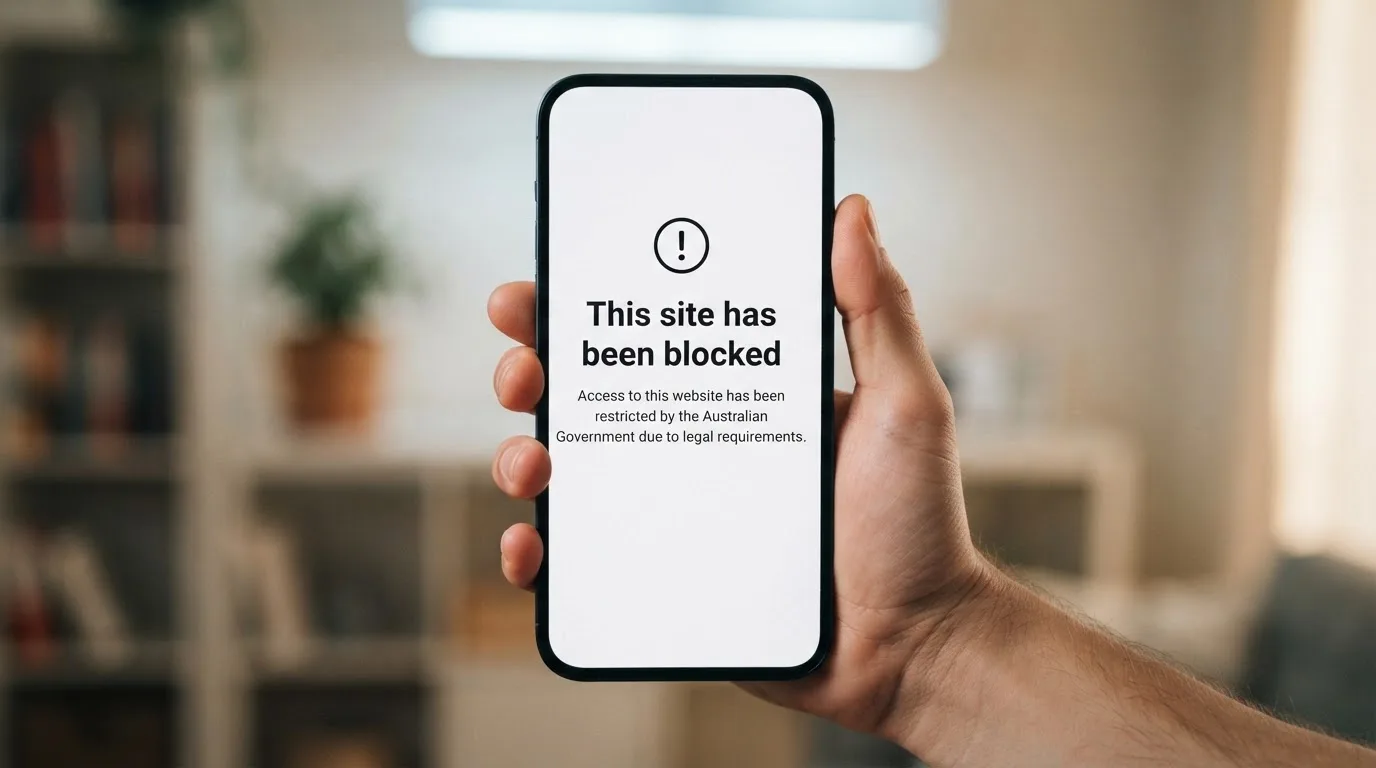
The Interactive Gambling Act 2001 is the central statute. It makes it an offence for an overseas or Australian-based provider to supply online casino games, online pokies or in-play betting services to a person who is physically in Australia. The Interactive Gambling Amendment Act 2017 strengthened the regime by giving the ACMA the power to issue formal warnings, accept enforceable undertakings, and direct Australian internet service providers to block offending sites. The 2023 amendments tightened it further, most visibly by extending the ban on credit-card payments to credit-related products and to digital currency for licensed online wagering. The penalty for a licensed operator accepting those payments is up to A$247,500 per breach.
Three points that recur in the legal material and are worth stating once, in full:
- The prohibition covers the provider, not the player. The IGA has never been used to prosecute an Australian resident for using an offshore site. What it does is make the supply illegal, and the consequence falls on the operator — and through it, on the Australian consumer’s access to recourse.
- No state or territory issues an online casino licence. Wagering on races and sport before the event, plus lotteries and keno, is licensed. In practice most licensed online bookmakers are licensed in the Northern Territory, where the Racing and Wagering Commission regulates 52 of them, including Sportsbet, Bet365 and Ladbrokes; the commission itself runs on a small part-time basis, meeting once a month in Darwin. Casino games and in-play betting sit outside that scope.
- Offshore sites display licences from other jurisdictions — Curaçao, Anjouan, the Philippines — and these licences are real to the site. They are not enforceable through any Australian body, and they do not require the site to follow Australian consumer law, the Australian Consumer Law’s unfair-terms provisions, or Australian responsible-gambling standards.
The practical consequence is that a player at an offshore site has, on a refused withdrawal, no Australian complaints body to approach. The site operates under its own house rules and its own dispute process. That is the trade a player accepts in exchange for the offer, and it is the trade no marketing page states.
How the ACMA has been enforcing it: the named-operator record
The ACMA has been escalating since the 2017 amendments took effect. The numbers, anchored to the regulator’s own communications, are these:
Since the first blocking request in November 2019, the ACMA has directed Australian internet service providers to block 1,751 illegal gambling and affiliate marketing websites. More than 230 unlicensed gambling services have left the Australian market since enforcement was strengthened in 2017. The round reported on 26 June 2026 alone added twelve more names to the block list: 7Signs, ChromaBet, Donbet, Duospin, Freshbet, Slots Gem, Jacks Club, Lucky Start, Pointsbetz, Spinrise, Vinyl Casino and Wildsino.
H2 Gambling Capital’s 2025 estimate puts Australian losses to illegal gambling sites at around A$3.9 billion a year. The same estimate traces the share of gambling going through legal channels falling from 74 per cent in 2021 to 64 per cent by 2025 — a ten-point drop in four years. That is the macro picture the bonus offers sit inside.
Beyond the blocks, the ACMA publishes formal warnings naming specific operators. The list below tracks the warnings this material covers, in the order they happened. Each brand appears in the operator section further down with the same date and operator name attached, and the picture that builds across the eleven of them is one operator company handling several brands, several operator companies re-flagged for the same kind of conduct, and a regulator working through a queue that does not get shorter.
| Brand | ACMA action and date | Operator named by the ACMA | Subject support |
|---|---|---|---|
| RocketPlay | Formal warning, March 2026; earlier Dama N.V. warning, May 2022 | Pulsup Ltd (Rocketplay); Dama N.V. | Listings-only (Gambling Insider) |
| Level Up Casino | Formal warning, May 2022 | Dama N.V. | Listings-only (Westpac) |
| Woo Casino | Formal warning, March 2025 | Dama N.V. | — |
| Spirit Casino | Formal warning, May 2025 | Dama N.V. | — |
| National Casino | Formal warning, July 2025 | Consolutetish S.R.L. | Listings-only (acma.gov.au, austrac.gov.au, betstop.gov.au) |
| Bizzo Casino | Formal warning, July 2025; earlier 2022 warning to TechSolutions | Consolutetish S.R.L.; TechSolutions (CY) Group Limited and TechSolutions Group N.V. | Listings-only (Gambling Insider) |
| Ignition Casino | Formal warning, July 2025 | Bamboo Media | — |
| Instant Casino | Formal warning, February 2025 | EOD Code SRL | Listings-only (EcoPayz, PayID) |
| Jackbit | Formal warning, April 2026 | Ryker B.V. | — |
| Casino Intense | Formal warning, April 2025 | Sterplay Holding Ltd | Listings-only (austrac.gov.au, betstop.gov.au, Gambling Insider) |
| Sky Crown | Formal warning, September 2022 | Hollycorn N.V. | — |
The pattern underneath the table is the point. Dama N.V. alone has been named in warnings over Rocketplay, Level Up, Woo Casino and Spirit Casino, with two of those warnings — Woo in March 2025 and Spirit in May 2025 — landing after the company’s first warning in 2022. Consolutetish S.R.L. received a warning over both National Casino and Bizzo Casino in July 2025; Bizzo had already been warned in 2022, when it sat under a TechSolutions entity. The ACMA’s enforcement record is a record of operator companies more than it is a record of brands.
The blocking-rate calculation: what the queue actually looks like
The arithmetic on this page is the blocking rate itself. The ACMA’s first blocking request went to Australian ISPs in November 2019. By 26 June 2026, the regulator had directed the block of 1,751 illegal gambling and affiliate marketing websites. That is the running figure across roughly six years and seven months of enforcement — 79 months of cumulative blocking action.
That is an average of just over 22 blocked sites per month since the first request, on a straight-line basis, though the actual monthly cadence is uneven and rounds cluster. Two conclusions the page draws from it, stated as bands rather than single numbers: the rate the regulator is removing sites from reach for Australian consumers has been sustained across the period since November 2019, and the round reported on 26 June 2026 — twelve sites in one update — sits within that long-run band rather than outside it. The picture the number carries is a regulator that has been adding to the block list steadily, not one that suddenly accelerated.
The rate is a coarse measure. It counts domains, not operator companies; one company can run several brands, and one block round can carry several of a single operator’s brands. It also conflates gambling sites with affiliate marketing sites that promote them, so the 1,751 total mixes the suppliers with the people who advertise for them. Both of those are reasons the rate is a measure of the regulator’s reach rather than a measure of how many distinct businesses the regulator has put out of reach.
Where the bonus market sits in relation to the law: the consequence that lands
The marketing for first deposit bonuses reaches Australians because geo-targeting is not what these sites rely on. The bonus terms are designed for licensed markets; they sit on a site whose terms of service, on close reading, exclude Australians or require them to confirm they are not in a prohibited jurisdiction before depositing. Where the site’s terms do not exclude Australians, the operator has chosen to take the risk of an ACMA action, and the consequence of that choice for the player is the absence of any Australian-side recourse on a refused withdrawal.
The consequence that lands for an Australian player who funds an account is a four-part set:
- No Australian complaints body. The site operates under an offshore licence. Disputes go to the offshore regulator or to the site’s own internal process, not to an Australian ombudsman, the Australian Financial Complaints Authority, or the relevant state and territory gaming authority.
- No Australian consumer protection. The Australian Consumer Law’s unfair-terms provisions, the ePayments Code, and the eSafety Commissioner’s complaint pathways do not apply to an offshore site. The site’s terms apply, and the site’s terms typically include an arbitration clause and a governing-law clause pointing to the licence jurisdiction.
- Withdrawal at the operator’s discretion. The site may delay or refuse a withdrawal on the basis of bonus-term violation, identity-check failure, or “irregular play” clauses. The player has no Australian-side lever to pull.
- The site can be blocked with a balance on it. The ACMA’s blocking power operates against Australian ISPs, not against the site itself. A player whose account holds a balance when the block is issued cannot reach the site from Australia to withdraw, and the regulator has no power to compel the site to release the funds.
These four are the consequence of the offer existing outside the Australian legal frame. They are not a description of every player’s experience; they are the structural position a player is in when an Australian consumer-protection body is not, in fact, attached to the other side of the transaction.
Responsible-gambling tools that actually apply to Australians
The Australian responsible-gambling framework is built around licensed wagering. BetStop, the National Self-Exclusion Register, has been live since August 2023 and binds every Australian-licensed online and phone wagering service. A player who registers with BetStop is excluded from placing bets with Sportsbet, Bet365, Ladbrokes, TAB and the rest of the licensed bookmaker set; the exclusion is for a minimum period of three months and can be extended up to a permanent exclusion.
BetStop does not bind offshore casinos. The exclusion register is connected to the licensed wagering set; an offshore site that accepts Australian deposits has not joined BetStop and is not required to honour a BetStop registration. The tool that works for the licensed market does not transfer to the offshore market.
For Australians who want to block gambling at the payment source, the major banks have built their own switches. ANZ lets a customer activate a gambling transaction block in the ANZ app; once on, the block refuses transactions at gambling merchants and also blocks gambling transactions routed through a digital wallet like Apple Pay on an eligible card. Removing the block requires a 48-hour cooling-off period; ANZ warns the block is not perfect and that some non-gambling transactions may be refused in error. Commonwealth Bank offers a similar lock, applied via the CommBank app. Westpac’s gambling block operates at card level, declining authorisations on transactions carrying the merchant category code ‘Betting/Casino Gambling’ on eligible personal credit and debit cards.
The National Gambling Helpline on 1800 858 858 is free, runs 24/7, and offers chat at Gambling Help Online. Counselling, financial counselling and self-exclusion support are routed through it. The helpline is built around the Australian framework, so its advice is shaped to the tools that actually apply here — BetStop, the bank’s block, state-based face-to-face counselling, and the licensed-operator set.
Best first deposit bonus casino Australia — More on this topic at casino deposit.
Payments, payout speed and the bonus: how money moves through this picture
The deposit side of a first deposit bonus at an offshore site, for an Australian player, runs through whichever payment method the site accepts. The licensed wagering side, where this material is closer to the Australian rules, sets a tighter frame. Since 11 June 2024, licensed online wagering services in Australia cannot accept credit cards, credit-related products or digital currency; the legal deposit routes are debit card, bank transfer, PayID/Osko and BPAY. A site that asks an Australian for a credit card or a crypto deposit is, on that single fact, outside the Australian rule set.
What the licensed side shows about money movement in Australia, in practical terms:
- PayID and Osko. A bank transfer addressed to a PayID — a phone number, email or ABN registered to a bank account — arrives at the destination in under a minute, 24/7, including weekends. Over 100 Australian financial institutions are connected. More than 25 million PayID identifiers had been registered on the New Payments Platform as of April 2025. The New Payments Platform went live to the public on 13 February 2018 and is owned by a non-profit whose 13 shareholders include the Reserve Bank of Australia and the major banks. The platform’s service standard is that monthly outages stay under two minutes. A player using PayID sees the name of the destination account holder before confirming the transfer, which is a feature as much as a check: AP+ notes that being asked to transfer to a PayID on an illegal gambling site almost certainly means a scam site.
- BPAY. Bill-payment service operated inside Australian online banking; the payer enters the Biller Code and the Customer Reference Number. BPAY has been operating since 18 November 1997, is available at over 150 banks and financial institutions, and is offered by more than 95,000 businesses. It is owned, via Cardlink Services Limited, equally by ANZ, Commonwealth Bank, National Australia Bank and Westpac. BPAY Group, eftpos and NPP Australia merged in September 2021 into Australian Payments Plus (AP+), the same operator that runs PayID and Osko.
- Debit cards and digital wallets. Apple Pay, Google Pay and Samsung Pay together account for around 45 per cent of all card payments in Australia by number, as of the end of 2025. The card network behind the wallet still governs whether the transaction is accepted. American Express, which operates a three-party network rather than the four-party model of Visa and Mastercard, sits outside the Reserve Bank of Australia’s July 2025 review proposal to remove surcharges on eftpos, Mastercard and Visa; the proposal leaves Amex outside its scope. For gambling specifically, the major banks’ gambling-block tools apply to wallet transactions on an eligible card: ANZ’s block, for example, covers gambling transactions routed through Apple Pay on the eligible card, not just the physical card. Apple’s own role is not to charge a fee — Apple does not charge consumers for Apple Pay in stores, online or in apps; any surcharge is the merchant’s card-processing fee — and Apple does not set transaction limits or PIN requirements; those come from the card issuer or the merchant.
- AUSTRAC’s threshold rule. AUSTRAC requires reporting of cash transfers of A$10,000 or more. The threshold-transaction-report rule applies to physical cash, not to ordinary electronic bank transfers. An Australian player using PayID to move money into a licensed wagering account is not, on that fact, in scope of the threshold rule.
The payout side — settlement back to an Australian bank account — is the part that determines what the bonus is actually worth in a player’s hand. Payout speed varies by operator and by method, and the operator-side marketing pages are the only source for any specific figure; for offshore sites, the absence of a regulator attaching a maximum payout window to the offer is itself a feature of the offer.
The named operators: what the ACMA record shows for each
The eleven brands below are the ones this material covers, in the order the regulator’s actions have placed them. Each is named because the ACMA has issued a formal warning, and the substance of the page’s coverage of each is the warning itself: the date, the operator company the regulator named, and any earlier action against the same brand or operator. None of the sections below is a recommendation, an endorsement, or an assessment of the bonus terms the operator publishes. The bonus terms that appear on these sites come from affiliate marketing pages and are not reproduced here.
RocketPlay — warned twice, by two different operators
RocketPlay carries the most recent warning in the ACMA’s published list: a March 2026 action naming Pulsup Ltd as the operator of Rocketplay. The same brand sits under an earlier Dama N.V. warning from May 2022. The two warnings, four years apart, name two different operator companies for the same brand — the kind of change a brand makes when the underlying operator entity has been warned once and wants a fresh corporate shell.
The brand is the clearest case on the page of a name the marketing travels under while the corporate entity behind it has shifted. For an Australian reader, the consequence is that the brand identity they see is not the corporate identity the regulator has named. Subject support on the brand is listings-only, drawing on Gambling Insider; no Australian-facing terms or operating conditions are on the record.
Level Up Casino — first Dama N.V. warning in 2022
Level Up Casino was one of six Dama N.V. brands named in the May 2022 ACMA warning; the other five were Bambet, Dazard, Rocketplay, Wild Tornado and Cobra Casinos. The Dama N.V. cluster in 2022 is the first wave of operator-level warnings on this page; the subsequent Dama N.V. warnings over Woo Casino (March 2025) and Spirit Casino (May 2025) come from the same operator company. The level of operator-level recurrence here is high. Subject support for Level Up Casino comes through listings that mention Westpac’s gambling-block page; no bonus terms are on the record from an Australian-facing source.
Woo Casino — Dama N.V. warning, March 2025
Woo Casino’s warning was issued to Dama N.V. in March 2025. By that date Dama N.V. had already been the subject of a 2022 formal warning over six brands. The regulator’s second action against the same operator is, on the regulator’s own publication, an indication that the earlier warning did not stop the conduct. The brand lacks any publicly verifiable Australian support data.
Spirit Casino — Dama N.V. warning, May 2025
Spirit Casino is the third Dama N.V. brand on this page, with a formal warning issued in May 2025. The pattern of three Dama N.V. brands on the same page is the page’s clearest illustration of operator-level clustering: it is the same operator company the regulator has named across multiple brand identities. There is no Australian-facing support information on the record for Spirit Casino.
National Casino — Consolutetish S.R.L., July 2025
National Casino’s formal warning was issued in July 2025, naming Consolutetish S.R.L. as the operator. The same operator was warned over Bizzo Casino in the same month, and Bizzo had already been the subject of a 2022 warning to TechSolutions (CY) Group Limited and TechSolutions Group N.V. — the same brand, two operator companies, four years apart. Subject support for National Casino is listings-only and references acma.gov.au, austrac.gov.au and betstop.gov.au. That spread of sources is itself a marker of where an Australian reader’s information about the brand would come from if it came from anywhere regulated.
Bizzo Casino — the brand that has been warned twice, under two operators
Bizzo Casino carries two ACMA actions: the July 2025 warning to Consolutetish S.R.L. and an earlier 2022 warning to TechSolutions (CY) Group Limited and TechSolutions Group N.V. The two actions sit four years apart and name two different operator companies. Like RocketPlay, the brand is the stable marketing identity; the corporate shell behind it has changed. Subject support for Bizzo Casino is listings-only and draws on Gambling Insider. The absence of an Australian consumer-protection reference is the gap that defines the brand’s status for an Australian reader.
Ignition Casino — Bamboo Media, July 2025
Ignition Casino’s formal warning was issued in July 2025 to Bamboo Media, a separate operator company from Dama N.V. or Consolutetish S.R.L. Ignition is one of two Bamboo Media brands named in the research material; the other is not on this list. The brand sits outside the Dama N.V. cluster and outside the Consolutetish cluster. Ignition Casino provides no verifiable Australian-facing support details.
Instant Casino — EOD Code SRL, February 2025
Instant Casino’s warning was issued in February 2025, naming EOD Code SRL as the operator. The brand is the first EOD Code SRL warning on the page. Subject support is listings-only and references EcoPayz and PayID — the second of which is an Australian payments infrastructure source, included because it is the place an Australian player would look for information on the payment system, not because it speaks to Instant Casino directly.
Jackbit — Ryker B.V., April 2026
Jackbit’s formal warning was issued in April 2026, naming Ryker B.V. as the operator. CasinOK, a separate brand, was named in the same warning. Jackbit sits outside the Dama N.V., Consolutetish and Bamboo Media clusters on this page; the operator-company spread across the eleven brands is wider than any single cluster. Jackbit’s support structure remains unlisted for Australian readers.
Casino Intense — Sterplay Holding Ltd, April 2025
Casino Intense was warned in April 2025, with Sterplay Holding Ltd as the named operator. Subject support is listings-only and references austrac.gov.au, betstop.gov.au and Gambling Insider. The Australian-facing sources here are the regulator, the self-exclusion register, and an industry publication — the three places an Australian reader’s information about the brand would come from, none of which endorse the brand or attach Australian consumer protection to it.
Sky Crown — Hollycorn N.V., September 2022
Sky Crown carries a Hollycorn N.V. warning. The formal warning publication also named Blue Leo, another Hollycorn brand; Sky Crown is the brand on this page. The Hollycorn cluster is the earliest group of operator-level warnings in the ACMA material the page draws on, sitting alongside the Dama N.V. 2022 warnings. Subject support for Sky Crown is not on the record.
The marketing claim that meets the law: where the gap is widest
The first deposit bonus offer, as a marketing shape, depends on three things holding for the player:
- The deposit will be credited to the account.
- The bonus will be credited against the wagering requirement.
- The resulting balance will be withdrawable to a real-money account once the requirement is met.
In a licensed market, the regulator attaches a complaint and dispute-resolution body to that chain. In Australia, none of those three holds under Australian consumer law for an offshore site. The site’s own terms govern each step, and the site’s own dispute process is the recourse a player has if any step fails. The marketing claim is therefore not enforceable through Australian law. It is enforceable through the site’s own rules.
The wagering requirement — the multiplier on the bonus amount the player must turn over before withdrawing — is the figure the marketing tends to lead with, and it is the figure the page does not reproduce. The reasons are structural: the figures available for these brands come from affiliate marketing pages, not from the ACMA register or from any Australian-facing regulator. Carrying them here would amount to importing an affiliate page’s marketing into a regulatory context. What the page does say is that the requirement is the number a player reads first, and the term the player reads first is the term the marketing is built around.
Where licensed play actually lives, for the reader this page is for
The reader this page is built around typed “first deposit bonus casino” into a search engine and got back offers for prohibited services. The lawful counterpart to that query — the play Australia does license — is:
- Wagering on races and sport before the event. Licensed by the Northern Territory Racing and Wagering Commission, in practice; the 52 licensed online bookmakers include Sportsbet, Bet365 and Ladbrokes. These services accept debit card, bank transfer, PayID/Osko and BPAY; they do not accept credit cards or digital currency. They are connected to BetStop and to the Australian responsible-gambling framework.
- Lotteries and keno. State and territory licensed, including Tatts, Tabcorp and the equivalent in other jurisdictions. Online purchase where the state lottery offers it.
- Land-based casinos and licensed pokies venues. State and territory licensed, with on-premises play only. The Crown Melbourne, The Star Sydney, the Brisbane casino, SkyCity Adelaide, and the Crown Perth are the major land-based venues; licensed clubs and hotels hold poker-machine entitlements that vary by state.
None of these is a first deposit bonus casino in the sense the query asks for, and none of them offers the kind of product the offshore sites market. The lawful substitute is structurally different — a different product set, a different deposit-and-bonus frame, and a different responsible-gambling apparatus attached. The reader who lands on this page and stays within Australian law is a reader choosing one of those three.
The reform context matters here. The Interactive Gambling Amendment (Gambling Reform) Bill 2026 passed Parliament on 19 August 2026; its advertising and inducement measures commence on 1 January 2027. The measures are not in force on a page published in 2026, and the law as it stands for the rest of this year is the Interactive Gambling Act 2001 as amended in 2017 and 2023. What 2027 brings is a tighter advertising frame around inducements to gamble, not a new licence category for online casino.
Tax, winnings and the Australian player
For a recreational player in Australia, gambling winnings are not assessable income. Section 6-5 of the Income Tax Assessment Act 1997 sets out the ordinary-income test; recreational gambling winnings fall outside it. Losses on recreational gambling are not deductible. The position changes if the player carries on a business of gambling — a professional punter, in the ATO’s working sense — and the page flags this as a model only. The ATO’s published guidance and the player’s own tax adviser are the right reference points for any individual situation.
The offshore position does not change the tax treatment on the Australian side. The winnings are still not assessable income if the player is a recreational gambler, and the losses are still not deductible. What the offshore position changes is the practical risk on a refused withdrawal or an unreleased balance — which is a different kind of cost, borne by the player in cash rather than in tax.
Frequently asked questions on first deposit bonuses in Australia
What is a first deposit bonus, as distinct from a no-deposit bonus?
A first deposit bonus is offered against a real-money deposit: the casino matches a percentage of the player’s first deposit up to a stated ceiling, sometimes with free spins attached. A no-deposit bonus is credited without a deposit, usually as a small cash amount or a handful of free spins, on registration or on completion of identity verification. Both carry wagering requirements in licensed markets, and both are the kind of offer that, for Australians, is made from outside the country.
Do first deposit bonuses usually carry wagering requirements?
Yes. In licensed markets, wagering requirements on first deposit bonuses typically run from 20 times to 50 times the bonus amount, with game-weighting rules that count slots at 100 per cent and table games at a lower percentage, sometimes zero. The exact figure for any specific offer is set by the operator and is published in the bonus terms. For an Australian player the figure is unenforceable through Australian consumer law, since the offering operator is offshore and outside the Australian regulatory frame.
Is it legal for an online casino to offer Australians a first deposit bonus?
No. Offering online casino games, online pokies or in-play betting to a person in Australia is prohibited under the Interactive Gambling Act 2001, as amended in 2017 and 2023. The ACMA has issued formal warnings and ordered blocks against sites doing this. The prohibition targets the supplier; an Australian resident using such a site is not personally liable to prosecution. What the player loses in that exchange is Australian consumer protection and Australian-side dispute recourse, neither of which the offering operator is required to provide.
Can a first deposit bonus be withdrawn immediately after it is credited?
No. A first deposit bonus is subject to a wagering requirement: the bonus amount must be turned over a stated number of times on eligible games before any of the bonus balance becomes withdrawable. Most bonuses also cap the maximum convertible amount from the bonus, particularly for free-spin winnings. Withdrawal timing on top of that is governed by the operator’s payment-processing times. None of these terms are enforceable through Australian consumer law for an offshore site.
What should someone read before accepting a first deposit bonus offer?
The bonus terms — the wagering requirement, the eligible games and their weightings, the maximum convertible amount, the expiry on the bonus, the minimum deposit, and any payment-method exclusion. The site’s identity verification requirements and the identity documents the operator will request on first withdrawal. The site’s governing-law and dispute-resolution clauses. None of this replaces the structural fact that, in Australia, the offering operator is offshore and the offer is made from outside the Australian legal frame; the consumer-protection recourse an Australian player would expect does not attach.
Does a bigger first deposit bonus automatically mean better value?
No. A larger match ceiling is paired, on most offers, with a heavier wagering requirement, a tighter game weighting, and a lower maximum cashout from the bonus. The relationship between match percentage and effective value depends on the terms that surround the match, not on the headline number alone. For an Australian reader the question is also whether any of this is enforceable, and the answer to that question is that the offer sits outside the Australian legal frame; the marketing is not the same as the law.