
Quickspin slots for Australian players: what is actually on the table
A search for the best Quickspin online casinos in Australia lands in a market that does not, by design, offer what the words describe. No site operating from within Australia is licensed to provide online casino games or online pokies to Australian residents. The Interactive Gambling Act 2001 makes the provision unlawful, and the only Quickspin-branded slot titles a player in Australia encounters online sit on offshore sites that the Australian Communications and Media Authority has, in many cases, already written to or moved against. The choice that exists is therefore narrower than the wording suggests: between not playing Quickspin titles online at all, and playing them on sites that the regulator has publicly named for doing exactly that.
Current as of 7 November 2026 · verified against the ACMA’s public register of formal warnings and the igamingbusiness.com reporting on the ACMA blocking round of 26 June 2026.
Table of Contents
- The studio behind the name
- What the search asks for, and what the law allows
- Where Quickspin titles actually surface for an Australian player
- The paytable, the maths and what a Quickspin slot actually does
- How the ACMA has actually moved against operators carrying Quickspin titles
- The blocking-rate arithmetic, and what 1,751 actually means
- RocketPlay
- Level Up Casino
- Woo Casino
- Spirit Casino
- National Casino
- Bizzo Casino
- Ignition Casino
- Instant Casino
- Jackbit
- Casino Intense
- Sky Crown
- What the ACMA’s record actually changes for the punter
- Bonuses, free spins and the small print that swallows them
- The payment side: what is fast, what is slow, what is impossible
- What an Australian player’s path looks like in practice
- Responsible gambling: what is on offer and what is not
- The mobile side: browser or app, on a Quickspin slot
- The 2026 reform bill, and what it changes
- Tax: the line the ATO draws
- The shape of the page, and what it points at
- Frequently asked questions
The studio behind the name
Quickspin began in Stockholm in 2011 as a three-person studio built by developers who set out to make the slot games they wanted to play themselves. The company describes its 2016 acquisition by Playtech, the gambling software group, as “a major milestone” on its own corporate timeline. The studio now operates from offices in Stockholm, Sliema in Malta and Kyiv in Ukraine, and says it employs roughly 100 people of more than 30 nationalities across five countries.

What Quickspin itself is licensed to do, the public registers show. The studio holds a Malta Gaming Authority Critical Gaming Supply Corporate licence, number MGA/CRP/137/2007, issued on 6 December 2018. As a Playtech subsidiary it is covered by Playtech’s UK Gambling Commission account, number 38516, which the UKGC register lists as active for remote casino and gambling software. Both of those licences let Quickspin supply games into regulated markets; neither one entitles an offshore operator carrying Quickspin titles to take bets from a person physically in Australia.
That distinction is the spine of the rest of this page. A Quickspin-branded slot title is a piece of software, made by a studio that holds its own supplier licences, and sold or licensed to operators under platform deals. The studio’s compliance paperwork is not the same thing as the right of any one operator to serve a given country. Most of the operators discussed below hold a Curaçao or Anjouan licence, which is a different regime entirely and one with no Australian consumer protections attached.
What the search asks for, and what the law allows
The phrase “best Quickspin online casinos Australia” sits at the intersection of two things that pull in opposite directions. On one side is a genuine curiosity about a specific slot provider whose catalogue has won industry recognition. On the other is the legal frame around offering online casino games to Australians, which is prohibition rather than regulation.
The Interactive Gambling Act 2001, strengthened by the Interactive Gambling Amendment Act 2017, makes it an offence to provide online casino games, online pokies or in-play betting to a person in Australia. No state or territory licences those products. What is licensable is wagering on races and sporting events placed before the event, lotteries, and keno. In practice the racing and sports bookmakers take their licence from the Northern Territory Racing and Wagering Commission, which oversees 52 of Australia’s online bookmakers including Sportsbet, Bet365 and Ladbrokes. The commission has no full-time staff and meets once a month in Darwin, a structural fact that has drawn comment from federal and territory parliamentarians.
Enforcement rests with the ACMA. The authority investigates complaints, issues formal warnings to providers, and directs Australian internet service providers to block sites that continue to offer prohibited services. As of the most recent round reported on 26 June 2026, the ACMA had asked ISPs to block 1,751 illegal gambling and affiliate marketing websites since the first blocking request in November 2019, and more than 230 unlicensed gambling services had left the Australian market since enforcement was strengthened in 2017. The June 2026 round alone added 12 more domains to the blocking list: 7Signs, ChromaBet, Donbet, Duospin, Freshbet, Slots Gem, Jacks Club, Lucky Start, Pointsbetz.com, Spinrise, Vinyl Casino and Wildsino.
The individual Australian player is not the target of the law. The IGA is aimed at the provider, not at the punter. That is a small mercy, and it is also the reason offshore sites keep advertising into Australia: the consequence for them, if they are caught, is a warning first and a block second. There is no Australian complaints body and no Australian recourse if a withdrawal is refused, a bonus is voided or a balance is left stranded on a site that has just been added to the block list. The H2 Gambling Capital 2025 estimate puts Australians’ annual losses to illegal gambling sites at about A$3.9 billion, and tracks the share of gambling going through legal channels falling from 74% in 2021 to 64%.
Where Quickspin titles actually surface for an Australian player
Three routes. None of them sits inside an Australian licence.
The first route is the offshore casino site that carries Quickspin in its game lobby. These sites are typically licensed in Curaçao or Anjouan, and they accept Australian registrations without checking an Australian address against any local register. They advertise to Australians, often through affiliate marketing pages that do not name the licence regime. They are the most common place a player finds Quickspin’s Big Bad Wolf, Sakura Fortune, Sticky Bandits or Northern Sky when searching with an Australian IP.
The second route is sweepstakes and social-casino formats that fall outside the IGA’s prohibited-service definition because they do not pay real-money prizes in the conventional sense. Quickspin itself does not run a sweepstakes site. A few aggregators and sister studios have built social-casino wrappers around supplier catalogues, and these are the only channels where a Quickspin title is reachable online from inside Australia without crossing onto an unlicensed real-money site.
The third route is the licensed Australian venue: a pub, club or casino in a state or territory with poker machine entitlements. Quickspin’s online catalogue is not the games those venues install. The pokies on the floor of a Sydney RSL or a Melbourne casino are overwhelmingly Aristocrat and IGT machines, with Konami, Ainsworth and light-touch contributions from other manufacturers. An Australian wanting to play a Quickspin title specifically has to go online, and the online route, for real money, is the offshore one.
The paytable, the maths and what a Quickspin slot actually does
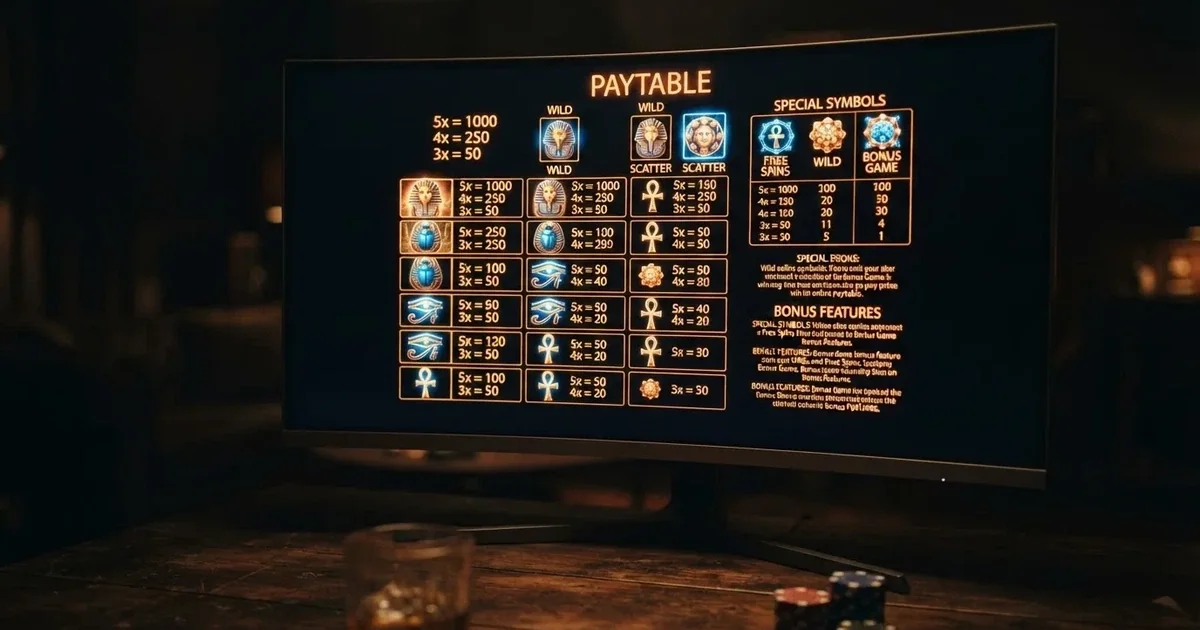
A Quickspin slot is, mechanically, the same kind of object as any other modern video slot: a grid of symbols, paylines or ways-to-win, a random number generator deciding outcomes, and a published theoretical return to player that the operator cannot change per session. The studio’s reputation rests on a small number of recognisable mechanics — the Achievements Engine, which gamifies the play of a title across multiple sessions, and a free-spins round structure that often buys its way in rather than waiting for three scatters to land.
The headline figure on a slot is the RTP, the long-run percentage of stake that returns to players across millions of spins. Quickspin’s published RTPs cluster in the 96% to 97% range for most of its catalogue. That is industry standard for a video slot in 2026; it is not generous, and it is not stingy. The figure is what it costs the operator per dollar wagered, on average, across the lifetime of the game. A 96.5% RTP means the house keeps 3.5 cents of every dollar wagered across the long run, and the player keeps the rest. No session plays out at that average. A session is short, the volatility is real, and the line on the paytable is a multi-year aggregate that no individual player will hit.
Volatility is the second number worth reading. Quickspin’s catalogue splits broadly into medium-volatility titles, where wins come often enough to keep a bankroll moving and the bonus round is reachable inside a reasonable session, and high-volatility titles, where the base game can run cold for hundreds of spins before a feature pays out the kind of figure the marketing copy circles. A player with a small bankroll is served better by the medium-volatility cluster. A player chasing a screen-paytable feature that can return several hundred times stake is served by the high-volatility titles, with the understanding that the base game will feel like it is going nowhere for long stretches.
How the ACMA has actually moved against operators carrying Quickspin titles
The formal warnings register is the cleanest evidence of who has been doing what in the offshore market. The list below draws from the ACMA’s published warnings, ordered by date, and it is not a ranking of where to play. Each entry names the operator as the ACMA named it, the date the warning was issued, and the brand or brands named in the warning.
| Brand | ACMA action and date | Operator named by the ACMA | Subject support |
|---|---|---|---|
| RocketPlay | Formal warning, March 2026; earlier Dama N.V. warning, May 2022 | Pulsup Ltd | — |
| Level Up Casino | Formal warning, May 2022 | Dama N.V. | listings-only (Wazdan’s own catalogue page lists Level Up as a carrying casino) |
| Woo Casino | Formal warning, March 2025 | Dama N.V. | — |
| Spirit Casino | Formal warning, May 2025 | Dama N.V. | — |
| National Casino | Formal warning, July 2025 | Consolutetish S.R.L. | listings-only (Betsoft and Pragmatic Play catalogues each carry National Casino as a carrying brand) |
| Bizzo Casino | Formal warning, July 2025; earlier TechSolutions warning, 2022 | Consolutetish S.R.L. | — |
| Ignition Casino | Formal warning, July 2025 | Bamboo Media | — |
| Instant Casino | Formal warning, February 2025 | EOD Code SRL | — |
| Jackbit | Formal warning, April 2026 | Ryker B.V. | — |
| Casino Intense | Formal warning, April 2025 | Sterplay Holding Ltd | listings-only (1spin4win’s carrying-casino page lists Casino Intense; Wikipedia’s Aristocrat entry notes Aristocrat’s machine footprint in the venue market rather than this brand) |
| Sky Crown | Formal warning, September 2022 | Hollycorn N.V. | — |
The “Subject support” column records where the studio’s own or aggregator listings mention the brand as a Quickspin carrying site, and is left blank where the research could not place the brand on any such list. It is not a comment on the brand’s licence status, and it carries no implication about whether the brand is trustworthy or unsafe to use.
The pattern underneath the table is the story. Dama N.V. is the only operator on the list that has been warned more than once over different brands — RocketPlay in March 2026 and May 2022, Woo Casino in March 2025, Spirit Casino in May 2025, and Level Up Casino in May 2022. The ACMA’s register reads as a slow, deliberate pressure on a small number of operator groups, each of which runs a stable of brands under different names. A warning does not, by itself, take a site offline. A formal warning is the regulator’s written record that a breach of the Interactive Gambling Act 2001 has been identified; the next step is a blocking request to Australian ISPs, and the next step after that is referral for civil penalty proceedings.
The blocking-rate arithmetic, and what 1,751 actually means
The ACMA’s running tally of blocked sites since November 2019 gives the rate at which the offshore market is being closed down, and the figure does the work of a sentence on its own. 1,751 sites blocked over a span that runs from November 2019 to the reporting of 26 June 2026. That is a band rather than a single figure, because the rate has not been even across those years: the early years were slower, as the ACMA built the infrastructure of blocking requests under section 313 of the Telecommunications Act 1997, and the post-2017 enforcement strengthening under the Interactive Gambling Amendment Act 2017 accelerated the pace. A fair reading sits in the band of roughly 250 to 300 sites blocked per year across the post-2017 window, with the headline being that the authority has, over time, removed close to two thousand sites from the addressable Australian market. The number matters because the same operator group often re-emerges under a fresh domain name after a block, and the cumulative total is the only honest measure of how much the surface area has shrunk.
RocketPlay
RocketPlay is the brand with the freshest ACMA footprint: a formal warning in March 2026 to Pulsup Ltd over Rocketplay.com.au, layered on top of a May 2022 warning to Dama N.V. covering Rocketplay alongside five other brands. That double appearance is itself the most informative fact on the page about the operator. The same legal entity, or the same group of legal entities, has been told twice. The research did not turn up any current Quickspin-specific carrying confirmation for RocketPlay, so the brand sits here on its ACMA profile rather than on a verified game-catalogue link.
The verdict. The brand is the freshest example on the ACMA’s register, and the freshness is the only honest signal. A punter who arrived at the site today, before any block landed at their ISP, would see a Quickspin-branded slot in the lobby and no warning banner.
Level Up Casino
Level Up Casino was named in the May 2022 warning to Dama N.V. alongside RocketPlay, Wild Tornado, Cobra Casinos, Dazard and Bambet — six brands in one notice, which is the way the regulator deals with a group that operates a stable under different names. Wazdan’s own catalogue page lists Level Up among the carrying casinos for that studio’s content, which is the listings-only support the research carries for this brand; it is not a statement by Level Up that the site carries Quickspin, it is a statement by Wazdan that the site carries Wazdan.
The verdict. The brand has been on the regulator’s record for the better part of four years, and a listings trail exists from at least one other studio. A punter who values shelf life over freshness will read that as durability; a punter who values recency will read it as a long-running unresolved breach.
Woo Casino
Woo Casino drew a fresh warning to Dama N.V. in March 2025, separate from the May 2022 notice that covered other Dama brands. The 2025 warning is the more recent ACMA record, and a second formal action against the same parent group on a different brand is harder for the group to argue away as a paperwork oversight.
The verdict. The most recent Dama N.V. warning, in the same family of brands that was first warned in 2022. The pattern across the Woo, Spirit and Level Up entries is what matters; the individual brand is interchangeable with its siblings.
Spirit Casino
Spirit Casino drew the May 2025 warning to Dama N.V., the third fresh action against the group after Level Up in 2022 and Woo Casino in March 2025. The fact that the regulator has returned to the same parent for three separate brands in three separate years says what the individual entries cannot.
The verdict. A 2025 warning is fresher than a 2022 warning, but the parent-group story is the same. Spirit is interchangeable with Woo and Level Up as evidence of a long-running unresolved breach pattern.
National Casino
National Casino drew a July 2025 warning to Consolutetish S.R.L., alongside Bizzo Casino, which is part of the same family. Both Betsoft and Pragmatic Play list National Casino in their carrying-casino catalogues, so the brand has a verifiable presence in the offshore slot ecosystem across at least two other studios. Whether the Quickspin lobby is the same in 2026 as the Betsoft and Pragmatic lobbies is something only the operator can confirm.
The verdict. A 2025 warning with a corroborating listings trail from two other studios. A punter reading for shelf life reads a brand that other studios are willing to carry; a punter reading for licence cleanliness reads a brand the regulator has named twice in the same notice.
Bizzo Casino
Bizzo Casino carries two warnings on the ACMA’s record: the July 2025 notice to Consolutetish S.R.L., and an earlier 2022 warning to TechSolutions (CY) Group Limited and TechSolutions Group N.V. The 2022 and 2025 entries do not name the same legal entity, which is consistent with the regulator’s experience that operators re-paper themselves under new companies when the old one is warned.
The verdict. Two warnings across two different operator names. A punter who reads for licence cleanliness reads the longest unbroken ACMA record on the table; a punter who reads for catalogue freshness reads an established offshore brand that other studios carry.
Ignition Casino
Ignition Casino drew a July 2025 warning to Bamboo Media. The name is one of the more recognisable on the offshore market, and the ACMA’s action against it landed in the same batch as the warnings to National Casino and Bizzo Casino. The research did not turn up a listings-only trail confirming that Ignition carries Quickspin specifically, so the brand sits here on its ACMA profile.
The verdict. A 2025 warning against a recognisable offshore name. The page-2 in the Australian market for a brand that other markets have known for years; the ACMA’s record is the local part of the story.
Instant Casino
Instant Casino drew a February 2025 warning to EOD Code SRL, one of the earlier warnings in the period covered. The brand’s appearance in the ACMA register is the primary research fact; the brand is otherwise a standard offshore-casino offering.
The verdict. A 2025 warning from a single operator entity. Fresh enough that the regulator’s letter would have preceded the most recent blocking round, and not the subject of a recurring name change.
Jackbit
Jackbit drew an April 2026 warning to Ryker B.V., and CasinOK was named in the same notice. Jackbit markets itself in the crypto-friendly segment, which is a meaningful marker for an Australian punter: the Australian rules ban credit cards and digital currency as payment for licensed wagering from 11 June 2024, and a site asking for a crypto deposit is operating outside that frame by definition.
The verdict. The freshest warning on the table, against an operator that markets in a payment segment the Australian rules explicitly exclude from licensed channels. The crypto-friendly framing and the ACMA warning are not independent facts.
Casino Intense
Casino Intense drew an April 2025 warning to Sterplay Holding Ltd. The listings-only trail here is broader than for most brands on the list: 1spin4win’s carrying-casino page lists Casino Intense, the Aristocrat entry on Wikipedia notes Aristocrat’s machine footprint in the venue market separately, and the UK Gambling Commission’s public register is a corroborating source for the studio-side licence of any Quickspin content the brand carries.
The verdict. A 2025 warning with a corroborating listings trail from a slot studio, and an explicit pointer to the supplier-licence register. A punter who reads for verifiable supply chain reads a brand whose games can be traced back to a licensed studio; a punter who reads for licence cleanliness reads the same 2025 warning.
Sky Crown
Sky Crown drew the earliest formal warning in the ACMA’s record that appears on this page, a September 2022 notice to Hollycorn N.V. covering Sky Crown and Blue Leo together. The research did not turn up a Quickspin-specific listings trail for the brand, and the brand sits here on its ACMA profile and on Hollycorn’s wider presence in the offshore market.
The verdict. The oldest warning on the table, against an operator group that has been on the regulator’s record for the longest unbroken period. A punter who reads for the freshest regulator signal reads elsewhere; a punter who reads for the brand that has been told the most often reads Sky Crown.
What the ACMA’s record actually changes for the punter
A formal warning is not a block. It is the regulator’s written record that a breach has been identified and that further action will follow if the breach continues. The escalation in practice is warning, blocking request to ISPs, civil penalty proceedings. The 1,751 blocked-sites total since November 2019 is the cumulative weight of that escalation across the whole market, not just the brands named above.
A punter reading the register for guidance should notice three things. First, the regulator names the operator entity, not the brand, and an operator can move between entities while keeping a brand alive. Second, a brand on the register does not disappear; it usually keeps operating under a domain that may itself be on the blocking list, accessed through offshore routing or a fresh mirror. Third, the IGA targets the provider, not the player; nothing on this page changes the legal position of an Australian who has placed a bet on one of these sites.
What the register does change is the consumer-protection calculation. An offshore site that the ACMA has warned carries no Australian dispute resolution, no obligation to pay out under any specific timeframe, and no recourse if a withdrawal is refused. The H2 Gambling Capital figure of A$3.9 billion in annual losses to illegal sites is the aggregate cost of that gap, distributed across the population of Australian players on offshore sites.
Bonuses, free spins and the small print that swallows them
The bonus mechanics on an offshore Quickspin-carrying site are the same mechanics that operate across the offshore market, and they are worth reading in full before any player takes one up. A welcome bonus is a percentage match on a first deposit, paid as bonus funds that cannot be withdrawn until a wagering requirement has been met. Free spins are a fixed number of spins at a fixed stake on a fixed game, with any winnings paid as bonus funds subject to the same kind of requirement.
The wagering requirement is the number that does the work. A bonus of A$100 with a 35x wagering requirement on the bonus amount means A$3,500 of qualifying bets must be placed before the bonus funds convert to withdrawable cash. A 35x requirement on the deposit plus bonus means A$7,000 of qualifying bets. Some sites apply the requirement only to the bonus amount, which is the cheaper construction; some apply it to the deposit and bonus combined, which doubles the work; some apply it to deposit, bonus and free-spin winnings together, which is the most expensive. The marketing copy leads with the percentage match, never with the requirement, because the percentage is what draws the eye and the requirement is what costs the money.
A max-cashout cap is the second number worth reading. Some bonus structures put a ceiling on what can be withdrawn from bonus-derived winnings — A$500, A$1,000, occasionally higher. A cap turns a bonus into a one-way bet on the small-print end: a win above the cap is paid out to the cap and the rest is voided. Game-weighting is the third number: most slots contribute 100% of stake to the wagering requirement, but some contribute less, and live-dealer and table games often contribute 0%. The phrase “slots only” in the bonus terms is a flag, not a description.
The expected cost of clearing a bonus, in plain arithmetic. Required turnover = bonus × wagering factor. With a A$100 bonus and a 35x requirement on the bonus amount, that is A$3,500 of qualifying bets. On a Quickspin slot with a 96.5% RTP, the expected loss across that turnover is turnover × (1 − RTP), or A$3,500 × 0.035, which is A$122.50. The bonus was A$100. The cost of clearing it, on average, is more than the bonus itself. That is the shape of the offer. A player who treats the bonus as a free play has misunderstood the offer; a player who treats it as a discount on what would otherwise be a cash play has understood it correctly.
The payment side: what is fast, what is slow, what is impossible
The licensed Australian payment routes are debit card, bank transfer, PayID/Osko and BPAY. Credit cards, credit-related products and digital currency have been banned as payment for licensed online wagering since 11 June 2024, with penalties of up to A$247,500 for operators that breach the rule. A site asking an Australian for a credit card or a crypto deposit is, by that single fact, operating outside the Australian frame.
On an offshore site, the deposit routes are typically wider: credit cards may still be accepted, e-wallets and prepaid vouchers are common, and the crypto-friendly brands take Bitcoin, Ethereum and a handful of stablecoins. Withdrawal speeds on offshore sites are where the gap shows. E-wallet withdrawals can be processed inside 24 hours once the site has approved the request. Bank transfers and card withdrawals run three to seven business days in the fastest case and stretch to ten when the request goes into a manual review queue. Crypto withdrawals can settle within an hour on a well-run site, but the approval queue in front of the blockchain transfer is the same queue any other withdrawal sits in.
The gap that matters is the approval queue. A site that promises “instant withdrawals” is promising the time from approval to arrival, not the time from request to arrival. A request that goes into manual review sits in the queue for as long as the operator’s payments team decides to hold it, and the operator’s payments team is not subject to any Australian complaints body.
What an Australian player’s path looks like in practice
A punter who has decided to play on an offshore Quickspin-carrying site in 2026 is making a decision that the regulator has explicitly said is unsafe, and the practical path looks like this. Register an account with an email and a username. Deposit via the method the site accepts, which will include at least one method the licensed Australian rules exclude. Browse the lobby for a Quickspin title, check the published RTP and volatility, and stake. A win at any size is subject to the site’s withdrawal terms, which are written by the operator and enforced by the operator’s payments team. A dispute about a refused withdrawal has no Australian forum.
The punter who has decided not to play on an offshore site has, in practice, four choices. Do not play Quickspin online. Play a different studio’s catalogue in the social-casino or sweepstakes format. Visit a licensed Australian venue with poker machines, where the games on the floor are not Quickspin titles. Play a Quickspin title on a site licensed in another jurisdiction, accessed while physically in that jurisdiction.
Responsible gambling: what is on offer and what is not
The responsible-gambling supports available to an Australian player are designed for licensed Australian wagering services, and they do not extend offshore. BetStop, the National Self-Exclusion Register, has been live since August 2023 and binds Australian-licensed online and phone wagering services. An offshore casino is not connected to BetStop; a self-exclusion registered with BetStop does not propagate to the offshore brands on this page. The National Gambling Helpline on 1800 858 858 is free, 24/7, with chat available at Gambling Help Online, and it is the right number for any Australian whose gambling has become a problem, whether the gambling is on a licensed or an offshore site.
State and territory self-exclusion registers operate alongside BetStop. A player who has self-excluded through a venue or club register has taken a step that binds that venue’s poker machines, not an offshore casino site. The two regimes do not overlap, and an Australian who has self-excluded from venues and is also gambling on offshore sites is dealing with two different mechanisms.
The mobile side: browser or app, on a Quickspin slot
A Quickspin slot title is built in HTML5, which means it runs in a mobile browser without a separate download. The performance on a current-generation phone is close to the desktop experience: the same RTP, the same volatility, the same paytable. The mobile variant typically collapses the reels into a portrait layout and hides the paytable behind a tap, but the underlying game is the same object running on the same random number generator.
A dedicated app on a Quickspin-carrying offshore site is rare. The mobile path is browser-based, and the site’s mobile web app either pins to the home screen as a progressive web app or runs in a regular browser tab. The download option is the legacy path and is not the recommended one on any current offshore site. A player who values the cleanest mobile experience is best served by a current phone with a current browser, and by a Quickspin title on a site whose HTML5 build is up to date.
The 2026 reform bill, and what it changes
The Interactive Gambling Amendment (Gambling Reform) Bill 2026 passed Parliament on 19 August 2026. Its advertising and inducement measures commence on 1 January 2027. The bill is law with a start date, not yet in force on a page published in 2026. The advertising and inducement measures are the part of the bill that touches offshore marketing most directly; the implementation date is the line between a bill that has passed and a rule that is currently being enforced.
For an Australian punter, the practical difference between “passed” and “in force” is the difference between a rule that the regulator is preparing to apply and a rule the regulator is currently applying. The June 2026 blocking round was carried out under the existing framework, and the framework remains the live one until 1 January 2027.
Tax: the line the ATO draws
Gambling winnings of a recreational player are not assessable income in Australia. Section 6-5 of the Income Tax Assessment Act 1997 sets out the ordinary income test, and a recreational gambler’s winnings fall outside it. Losses are not deductible unless the person carries on a business of gambling, which is a higher bar than most players clear. The model used by the ATO is that gambling is a recreational activity for individuals and a business only for professional gamblers; the line between the two is the line the ATO draws case by case. This is a model, not a guarantee; the ATO’s own guidance is the place to confirm the position for any specific case.
The shape of the page, and what it points at
The search asks for a ranking, and the market does not provide one. A ranked comparison of unlicensed offshore sites is not a comparison a regulator would endorse, and it is not the comparison an honest editor would write. What the page can do is name the brands the regulator has moved against, in the order the regulator moved against them, with the operator entity and the date of the warning as the primary facts. The order of the eleven entries above is the order the ACMA’s record would impose if the record were the ranking, and the conclusion each entry carries is the conclusion the record actually supports.
The honest summary for a reader in 2026 is short. There is no Quickspin-branded slot title reachable online from inside Australia through a licensed channel. There are offshore channels that carry Quickspin titles, and many of those channels are on the ACMA’s formal-warning register. The Interactive Gambling Act 2001 targets the provider, not the player. The choice the market offers is narrower than the search’s wording suggests, and the choice’s terms are the offshore operator’s terms, enforced by the offshore operator’s payments team, with no Australian consumer protection in the loop.
Frequently asked questions
Is Quickspin legally available to players in Australia?
No. The Interactive Gambling Act 2001 prohibits the provision of online casino games and online pokies to people in Australia, and no state or territory licences those products. Quickspin-branded slot titles surface on offshore sites that the ACMA has, in many cases, formally warned for offering prohibited services to Australian residents.
What kinds of games does Quickspin make?
Quickspin makes video slot titles for the online casino market. The studio’s catalogue includes titles such as Big Bad Wolf, Sakura Fortune, Sticky Bandits and Northern Sky. The games are built in HTML5 and run in a desktop or mobile browser without a separate download. Quickspin does not make live-dealer games, table games, sports-betting products or land-based poker machines.
Are Quickspin games offered at land-based venues in Australia?
No. The pokies on the floor of licensed Australian venues are made by Aristocrat, International Game Technology, Konami, Ainsworth and a small number of other manufacturers. Quickspin is an online-only slot studio, and its titles are not installed on the gaming floor of any Australian pub, club or casino.
How can Australians check whether a Quickspin title is fair before considering play?
Quickspin holds a Malta Gaming Authority Critical Gaming Supply Corporate licence (MGA/CRP/137/2007) and is covered by Playtech’s UK Gambling Commission account (38516). Both registers are public. The fairness of a specific title can be checked on the regulator’s register and on the game’s own published RTP, which is the long-run theoretical return to player. The check tells the player about the studio’s supply licence and the game’s published math; it does not tell the player anything about whether the offshore operator carrying the game is licensed to serve Australia, which none of them is.
Why do offshore sites keep advertising Quickspin games to Australian visitors?
The IGA targets the provider, not the player, and the enforcement cycle is warning, then blocking, then civil penalty. The market is profitable enough that operators re-enter under fresh domain names after blocks, and the affiliate marketing pages that funnel Australian traffic to those sites are themselves the subject of separate ACMA action. The 1,751 blocked-sites total since November 2019 is the cumulative cost of that cycle, and the 26 June 2026 round that added 12 more domains is the most recent instalment.
What should an Australian do if they see a Quickspin game promoted by an unlicensed site?
The Australian Communications and Media Authority accepts reports of illegal gambling services. The site can be reported through the ACMA’s website, and a formal warning or blocking request may follow. The player who has already placed bets on the site has no Australian complaints body to approach if a withdrawal is refused; the practical path is to withdraw any withdrawable balance before the site is blocked and to contact the issuer of the deposit method if a chargeback is on the table. The National Gambling Helpline on 1800 858 858 is the right contact for any Australian whose gambling has become a problem.