
Pokies Parlour in Australia: what is publicly known about an offshore site the ACMA has already acted against
The site styled as Pokies Parlour is not a single casino. It is a brand that has appeared under several domains over the years, run by operators the Australian Communications and Media Authority has named in formal warnings, and blocked once already at the registrar level. Australians who land on it are reading the marketing of an offshore operator whose product cannot legally be supplied in Australia. This page lays out what the public record shows — the ACMA actions, the licensing position, the bonus claims, the payment routes Australians actually use, and the support services that apply if a reader wants to step back.
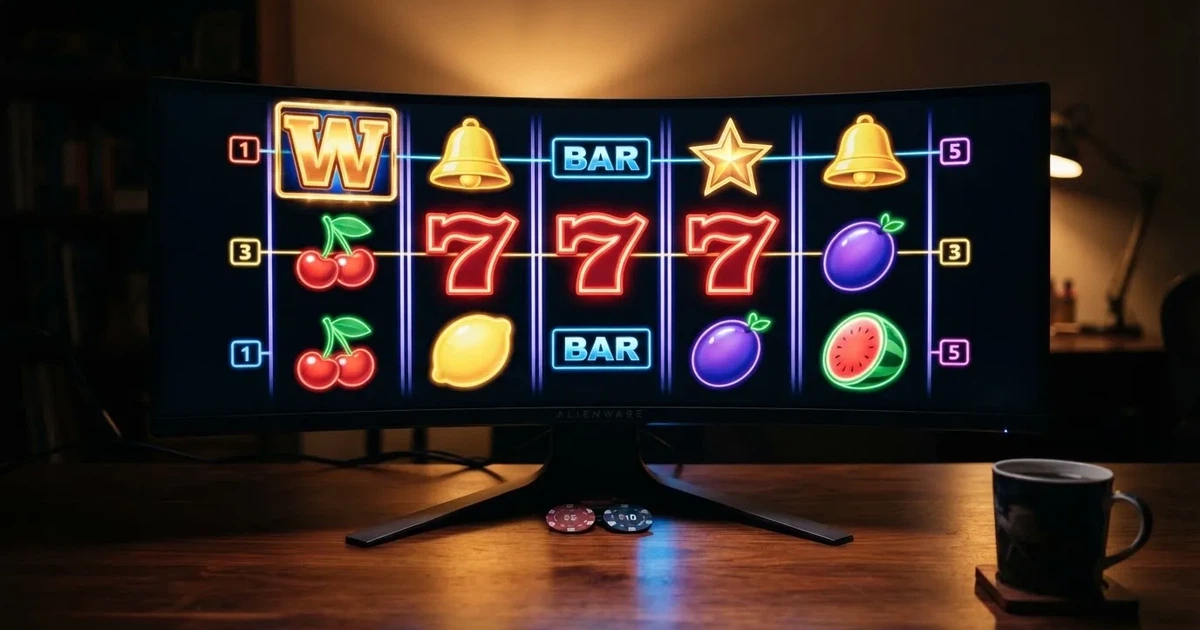
Data current as of 7 November 2026, checked against ACMA formal warnings and the public blocking register.
Table of Contents
- What “Pokies Parlour” actually is: a brand on several domains, none of them Australian
- The legal frame Australians actually face
- What the ACMA has done, in the public record
- The market Australians actually lose money to
- What the marketing actually says: the multi-deposit welcome package
- Payments: how Australians actually move money
- Responsible gaming: what the Australian framework actually covers
- The eleven brands the ACMA has acted against
- The blocking rate: how the ACMA’s enforcement is moving
- What a reader who has already deposited should know
- How the public record compares across the eleven ACMA-named brands
- What the marketing means in plain terms
- The bottom line
- Frequently asked questions
What “Pokies Parlour” actually is: a brand on several domains, none of them Australian
The site a reader finds under a search for Pokies Parlour is not one casino. The name has been used across several domains over time, each running a similar promotional package — usually a multi-deposit welcome bonus, free-spin bundles on selected slots, and the standard menu of cards, e-wallets and crypto at the cashier. The style of the marketing is consistent enough that affiliate sites tend to describe the brand in the same terms regardless of which domain is currently live.

Two facts sit behind that pattern. The first is that Pokies Parlour was named in an ACMA formal warning in September 2022 as an operation of Deloraze Limited and Versus Odds (BV), found to be providing a prohibited interactive gambling service to Australians. The second is that Pokies Parlour was ordered blocked by Australian ISPs in the same September 2022 round, alongside five other offshore sites: Ninja Spins, Pokies Online Casino, CasinoAus, Australian Casino Sites and AU Online Casino. A reader meeting the brand today is meeting an operation that has already been found to breach the Interactive Gambling Act 2001 and that has already been pushed off Australian access routes once.
The ACMA formal warning under section 64A of the IGA, dated 18 September 2026 on the regulator’s own page, named Deloraze Limited and Versus Odds (BV) as the operators behind Pokies Parlour. The same regulator’s blocking notice for the same period names six offshore brands in a single tranche. The combination matters: the ACMA does not block sites without first issuing a warning under section 64A, and the formal warning is the document that records the regulator’s finding that the service is prohibited.
For an Australian reader, the practical question is not which domain is currently being advertised — that is the question that affiliate pages answer, and they answer it differently depending on which one is paying them this month. The question is whether any operator styling itself Pokies Parlour holds an Australian licence to take Australian play. The answer to that is no: no state or territory in Australia licences online casino games or online pokies. The licence displayed in the footer of any such site is always issued by an offshore regulator, and it does not authorise the operator to accept Australian play.
The legal frame Australians actually face
The Interactive Gambling Act 2001 makes it an offence to provide online casino games, online pokies or in-play betting to a person in Australia. The Interactive Gambling Amendment Act 2017 strengthened that offence and gave the ACMA the powers it uses today — formal warnings, blocking notices, civil penalties. What is licensable in Australia is wagering on races and sport placed before the event, lotteries and keno; in practice most online wagering on sport is licensed by the Northern Territory Racing and Wagering Commission, which regulates 52 of Australia’s online bookmakers — Sportsbet, Bet365 and Ladbrokes among them — from a meeting cycle that runs once a month in Darwin and runs without full-time staff.
A reader who lands on a Pokies Parlour page and sees a Curaçao or Kahnawake licence in the footer is reading the licence the offshore operator chose for its own reasons. That licence is real in the sense that an offshore regulator issued it. It is not an Australian authorisation to take Australian play. Under the IGA, providing a prohibited interactive gambling service to Australians is the offence, and it is the provider — not the player — that the regulator targets. The individual player is not prosecuted. That is the limit of the protection the IGA offers the player who reaches the cashier anyway.
The 2026 reform package — the Interactive Gambling Amendment (Gambling Reform) Bill 2026 — passed Parliament on 19 August 2026. Its advertising and inducement measures commence on 1 January 2027, so on a page read in 2026 they are law with a future start date rather than rules already in force. They will tighten what Australian-facing affiliates can say about offers like the multi-deposit welcome packages Pokies Parlour advertises, but they do not change the underlying prohibition on the product itself.
What the ACMA has done, in the public record
The ACMA publishes its formal warnings and blocking notices on its own site. The pattern since 2017 — the year enforcement was strengthened — is that the regulator has issued hundreds of warnings and ordered ISPs to block thousands of domains. By the round reported in June 2026, a total of 1,751 illegal gambling and affiliate marketing websites had been blocked since the first blocking request in November 2019. In the same period, more than 230 unlicensed gambling services had left the Australian market entirely. The blocking round on 26 June 2026 alone asked Australian ISPs to block 12 more names: 7Signs, ChromaBet, Donbet, Duospin, Freshbet, Slots Gem, Jacks Club, Lucky Start, Pointsbetz.com, Spinrise, Vinyl Casino and Wildsino.
Pokies Parlour sits inside that record. It was the subject of an ACMA blocking request in September 2022, named alongside five other sites the regulator found to breach the IGA. It was the subject of an ACMA formal warning under section 64A, dated 18 September 2026 on the regulator’s own publication, naming Deloraze Limited and Versus Odds (BV) as the operators behind it. For a reader who wants the source rather than a paraphrase, both documents are on acma.gov.au.
The ACMA’s other recent actions place the Pokies Parlour pattern in a wider company. Dama N.V. was warned in May 2022 over six brands — Bambet, Dazard, Level Up, Rocketplay, Wild Tornado and Cobra Casinos — and then warned again in March 2025 over Woo Casino and in May 2025 over Spirit Casino. Consolutetish S.R.L. was warned in July 2025 over National Casino and Bizzo Casino; Bizzo had already been the subject of a 2022 warning to TechSolutions. EOD Code SRL was warned over Instant Casino in February 2025. Ryker B.V. was warned over Jackbit and CasinOK in April 2026. Sterplay Holding Ltd was warned over Casino Intense in April 2025. Pulsup Ltd was warned over Rocketplay.com.au in March 2026. Hollycorn N.V. was warned over Sky Crown and Blue Leo in September 2022.
This is the record the regulator publishes about the operators that try to reach Australian players with online casino games. None of these operators holds an Australian authorisation to provide the product they were found to be providing. The Pokies Parlour warning is one entry in that record.
The market Australians actually lose money to
H2 Gambling Capital’s 2025 report estimates that Australians lose about A$3.9 billion a year to illegal gambling sites. The same report estimates that the share of gambling going through legal channels fell from 74% in 2021 to 64%. The drop is a measure of how much play has moved from Australian-licensed bookmakers and lotteries to sites that no Australian regulator authorises. The A$3.9 billion figure is a measure of what that movement costs Australian consumers — money that sits outside any Australian consumer-protection regime, outside BetStop, outside the National Gambling Helpline, and outside the complaints bodies that exist for Australian-licensed wagering.
The H2 estimate is a third-party projection rather than an ACMA audit figure, and the ACMA does not publish an equivalent number. The two figures cited together — the 1,751 blocked sites since November 2019 and the A$3.9 billion a year estimated to flow to unlicensed operators — are the public picture of how much of the Australian online gambling market sits outside the regulator’s reach.
What the marketing actually says: the multi-deposit welcome package
The bonus structure most often described in affiliate pages about Pokies Parlour-style sites is a multi-deposit welcome package. One common version across several domains advertises up to A$2,777 split across the first seven deposits, with each tier carrying its own bonus percentage and its own free-spin bundle. Another version is a four-deposit package, another is a three-tier match with reload bonuses on subsequent deposits. The exact numbers move when the domain changes; the structure — match percentage per deposit, free spins on selected slots, reload offers after the welcome tier — stays much the same.
That structure is worth describing for what it implies, because the page about a bonus is the place a reader meets the gap between the marketing claim and the cost of clearing it. A seven-deposit welcome package is not cheaper to the operator than a one-deposit package; it is a different way of presenting the same total. Splitting the same total across seven deposits holds the player’s bankroll on the site across seven separate top-ups, each carrying its own wagering multiple and its own free-spin tier. The wagering multiple is the figure that decides how much turnover the bonus must generate before any of it can be withdrawn, and on Pokies Parlour-style sites that figure is reported by affiliate listings in a range that varies by domain.
A reader who takes the headline number at face value is reading the marketing. A reader who reads the wagering multiple on the same page is reading the cost. Both numbers are on the affiliate page; they sit at different ends of the same paragraph.
Payments: how Australians actually move money
The payment routes that matter for a reader of an offshore site are not the ones the site’s cashier page lists. They are the ones that work in Australian banking, because that is the side the reader has any control over.
Cards and the card-level gambling block
Westpac’s gambling block works at the merchant category code level: it refuses authorisation of any transaction registered under the merchant category code “Betting/Casino Gambling” on eligible personal credit and debit cards. ANZ runs the same kind of block, activated in the ANZ app, with a 48-hour waiting period before the block can be removed. ANZ’s block also catches gambling transactions made through a digital wallet such as Apple Pay on an eligible card, not just the physical card. That last detail matters because the cashier at an offshore casino will often list Apple Pay or Google Pay as a deposit route — but the card under the wallet is the one the block is checking.
Under the Interactive Gambling Act 2001 as amended in 2023, Australian-licensed online wagering services cannot accept payment by credit card or other credit-related products. The same restriction constrains gambling use of linked digital wallets, because a digital wallet attached to a credit card runs into the same prohibition. The Reserve Bank of Australia’s July 2025 review proposes removing surcharges only on eftpos, Mastercard and Visa card transactions, explicitly leaving American Express outside the scope of the proposed surcharge ban. American Express’s three-party model — where Amex itself issues cards and processes transactions, unlike Visa or Mastercard’s four-party network — is one reason it sits in a separate column.
Apple Pay, Google Pay and the rest
Apple does not charge fees to consumers for using Apple Pay in stores, online or in apps; any surcharge comes from the merchant’s own card-processing fees. Apple also states that transaction limits and PIN requirements for Apple Pay purchases are set by the card issuer or merchant, not by Apple itself. By the end of 2025, Apple Pay, Google Pay and Samsung Pay transactions collectively accounted for around 45% of all card payments in Australia by number. For an Australian player at an offshore casino, the question is not whether Apple Pay works — it does — but whether the underlying card is a credit card (and therefore blocked at the issuer under the IGA 2023 amendments) or a debit card that the bank has not blocked under its gambling-block feature.
PayID, Osko and BPAY
PayID and Osko are the Australian instant-transfer rails. With Osko, a bank transfer between participating Australian banks arrives in under a minute, 24/7 including weekends, whether it is addressed to a BSB and account number or to a PayID. Paying to a PayID shows the name of the account holder before the transfer is sent; AP+ warns that being asked to transfer money to a PayID on an illegal gambling site almost certainly means a scam site. That warning is on Payid.com.au and is worth taking at face value: a site asking an Australian for a PayID transfer to a name that is not the trading name of an Australian-licensed operator is asking for an instant transfer to an unknown recipient.
PayID-based instant transfers are available at over 100 Australian financial institutions. More than 25 million PayID identifiers had been registered on Australia’s New Payments Platform as of April 2025. The New Payments Platform itself became accessible to the public on 13 February 2018 and is owned by New Payments Platform Australia Ltd, a non-profit company whose 13 shareholders include the Reserve Bank of Australia and the country’s major banks. Participants in the platform must keep its monthly outages to no more than two minutes.
BPAY is a bill-payment service in online banking — the payer enters the Biller Code and the Customer Reference Number printed on the bill. It has operated in Australia since 1997, is available in the online banking of over 140 banks and financial institutions, and is offered by over 95,000 businesses. BPAY is run by Australian Payments Plus, the same operator that runs PayID and Osko. It is not a deposit route for offshore casinos, because offshore casinos do not issue BPAY bills; it is a deposit route for Australian-licensed wagering operators that do.
AUSTRAC thresholds
AUSTRAC’s threshold-transaction-report rule, which requires reporting of transfers of A$10,000 or more, applies only to physical cash. Ordinary electronic bank transfers are not subject to that per-transaction reporting requirement, regardless of the amount sent. The threshold is the kind of detail that gets passed along incorrectly between players; the rule is narrower than the rumour.
Responsible gaming: what the Australian framework actually covers
The National Self-Exclusion Register, BetStop, has been live since August 2023. It binds Australian-licensed online and phone wagering services. An offshore casino is not connected to BetStop. A player who registers with BetStop is excluded from Australian-licensed wagering only; an offshore casino will accept their deposit regardless, because the operator has no integration with the Australian register and no obligation to check it.
The National Gambling Helpline — 1800 858 858 — is free, runs 24/7 and offers chat at Gambling Help Online. Both services exist for Australian residents whose gambling has become a problem, and both are reachable from anywhere in Australia regardless of which operator the player has been using. They are the right services to call when the offshore site stops being entertainment, regardless of whether the site is licensed, blocked, or neither.
The eleven brands the ACMA has acted against
The set below is not a ranking. It is a list of operators the ACMA itself has named in formal warnings for offering prohibited interactive gambling services to Australians. The order matches the order of those warnings; none of the brands holds an Australian authorisation to provide the product it was found to be providing. Bonus terms are not listed, because the only sources for them were affiliate marketing pages and the page describes what the public record shows rather than what an offer is worth.
1. RocketPlay
The ACMA issued a formal warning over Rocketplay.com.au to Pulsup Ltd in March 2026. Dama N.V., the operator named in a previous round, was warned over Rocketplay in May 2022. The site lists a multi-deposit welcome package across several domains, with the exact structure varying by affiliate; affiliate listings describe a tiered bonus across the first several deposits with a separate free-spin bundle on a featured slot. None of that is an Australian offer. The verdict for an Australian reader is that RocketPlay is an offshore operation the regulator has named twice, and any Australian-facing version of the welcome package sits outside Australian consumer protection and outside BetStop.
2. Level Up Casino
Dama N.V. was the operator named in the ACMA’s formal warning over Level Up in May 2022. Affiliate listings describe a multi-deposit package with reload offers beyond the welcome tier, which is the same pattern as the other Dama N.V. brands on this list. The verdict is that Level Up is part of the Dama N.V. group the ACMA has now warned over six brands in 2022, two more in 2025, and a third in 2026. The ACMA returning to the same operator with new brand names is itself the picture.
3. Woo Casino
The ACMA issued a formal warning to Dama N.V. regarding Woo Casino in March 2025 — the second round of warnings over the same operator. Woo Casino is one of the more heavily advertised offshore brands in the Australian market, with affiliate listings describing a package built around match bonuses and free spins on featured slots. The verdict is that Woo Casino sits inside the Dama N.V. record rather than outside it, and a reader meeting it through an affiliate page is meeting an operator whose group the ACMA has now acted against twice.
4. Spirit Casino
In May 2025, the ACMA published a formal warning covering Spirit Casino, which is also operated by Dama N.V. Spirit Casino markets itself as a newer brand within the Dama N.V. stable. The verdict is the same as for Woo Casino: it is part of a group the regulator has come back to, and the recency of the action is what makes the entry on this list worth more than a year-old one.
5. National Casino
Consolutetish S.R.L. received a formal warning from the ACMA for National Casino in July 2025, in the same round as Bizzo Casino. National Casino’s affiliate presence in Australia runs deep, with the brand appearing across several review sites and offshore-listing directories. The verdict is that National Casino sits in the ACMA’s record alongside Bizzo, with the same operator and the same warning date — a single round that acted against two brands at once.
6. Bizzo Casino
The ACMA’s July 2025 formal warning for Bizzo Casino also named Consolutetish S.R.L. Bizzo had already been the subject of a 2022 formal warning to TechSolutions (CY) Group Limited and TechSolutions Group N.V., so it is the operator with the longest Australian record on this list. The verdict is that Bizzo Casino is the rare brand the ACMA has come back to twice — once in 2022, once in 2025 — and a reader meeting it today is meeting a brand with that record.
7. Ignition Casino
In July 2025, Bamboo Media was the subject of a formal warning from the ACMA for Ignition Casino, in the same round as National Casino and Bizzo Casino. Ignition Casino markets heavily to Australian and US audiences with a poker-focused product, which makes it unusual on this list. The verdict is that Ignition Casino sits in the same ACMA round as the Consolutetish brands, even though it is run by a different operator — the regulator’s record of July 2025 acted against three brands from two operators in a single round.
8. Instant Casino
The regulator published a formal warning against EOD Code SRL in February 2025, focusing on Instant Casino. Instant Casino’s marketing leans on the “instant” naming and the absence-of-verification angle, both of which sit awkwardly against Australian requirements on identity verification for licensed wagering. The verdict is that Instant Casino is the operator the ACMA moved against in early 2025, and any reader who values the absence of identity checks is reading the wrong trade.
9. Jackbit
Ryker B.V. was named in the ACMA’s formal warning over Jackbit in April 2026, in the same round as CasinOK. Jackbit’s affiliate marketing describes a crypto-heavy cashier and a sportsbook alongside the casino product. The verdict is that Jackbit is part of the most recent round of ACMA action on this list, with the regulator naming Ryker B.V. for two brands in a single notice.
10. Casino Intense
Sterplay Holding Ltd was named in the ACMA’s formal warning over Casino Intense in April 2025. Casino Intense markets itself as a smaller, higher-intensity operation, with affiliate listings describing a tightly-bundled welcome offer rather than the multi-deposit packages used by the Dama N.V. brands. The verdict is that Casino Intense is the operator the ACMA moved against in April 2025, and the structure of its offer does not change that record.
11. Sky Crown
Hollycorn N.V. was named in the ACMA’s formal warning over Sky Crown, in the same notice as Blue Leo, in September 2022. Sky Crown is the oldest entry on this list, and the operator behind it — Hollycorn N.V. — has been the subject of ACMA action since 2022. The verdict is that Sky Crown is the operator the ACMA warned at the start of the current enforcement cycle, and a reader meeting it today is meeting a brand with a four-year-old formal warning still on the regulator’s record.
The blocking rate: how the ACMA’s enforcement is moving
The arithmetic that matters on this page is not a wagering calculation. It is the rate at which the ACMA has been clearing offshore sites out of the Australian market over the period the public record covers. The first ACMA blocking request was issued in November 2019. The total of blocked sites as of the round reported in June 2026 was 1,751. That works out to roughly 262 blocked sites per year over the period, or about 22 per month on a straight average. The number has not been straight: the early years were slow, the 2023 amendments and the 2024 credit-card ban added pace, and the round-by-round totals reported by igamingbusiness.com show wide variation between months.
The blocking rate is the key to seeing what the ACMA’s enforcement actually means for the Australian market. With roughly 260 sites blocked per year, compared against a market the H2 Gambling Capital 2025 report estimates at A$3.9 billion in annual losses, one regulator is working against a deep and persistent flow. The reader can see here what that gap means for the pace of enforcement and the scale of the offshore market.
The estimate is a band rather than a single figure, because the totals published by the ACMA are cumulative and the rate is calculated across a period whose pace has changed. The conservative reading is that the ACMA is removing sites faster than at any earlier point in the enforcement cycle. The sharper reading is that the A$3.9 billion a year has not been meaningfully dented by the blocking rate, because new sites replace blocked ones faster than the regulator can act.
What a reader who has already deposited should know
The first practical question is the balance. If a reader has already deposited at a site styled as Pokies Parlour and the site is now blocked, the reader has a balance sitting with an offshore operator that the ACMA has already told ISPs to make unreachable from Australia. There is no Australian complaints body with jurisdiction over that balance. There is no Australian regulator that can compel the operator to pay it out. The practical answer is to attempt withdrawal through the site’s own cashier while the reader still has access to the domain, and to keep records of every transaction in case a later complaint route opens.
The second practical question is the credit-card block. Under the IGA as amended in 2023, Australian-licensed wagering services cannot accept credit cards or credit-related products, and the same restriction constrains linked digital wallets. The reader’s bank may also have a card-level gambling block (Westpac, ANZ) that refuses authorisation of transactions registered under the merchant category code “Betting/Casino Gambling”. That block is independent of the IGA — it is the bank’s own setting — and it applies to any card the reader has chosen to block, including cards used through Apple Pay or Google Pay.
The third practical question is the support route. BetStop, the National Self-Exclusion Register, binds Australian-licensed online and phone wagering services only. It does not bind offshore casinos. The National Gambling Helpline — 1800 858 858 — is free, runs 24/7, and offers chat at Gambling Help Online. Both services exist for Australian residents regardless of which operator they have been using. They are the right numbers to call when the offshore site stops being entertainment.
How the public record compares across the eleven ACMA-named brands
The table below sets the eleven brands side by side on the matters the public record covers. The columns are: the brand, the ACMA action and date, the operator the ACMA named, and the subject support the ACMA’s own publications or other public sources record for the brand. Where the ACMA’s record does not carry a value, the cell carries the article-language no-data marker.
| Brand | ACMA action and date | Operator named by the ACMA | Subject support |
|---|---|---|---|
| RocketPlay | Formal warning, March 2026; prior warning to Dama N.V., May 2022 | Pulsup Ltd | listings-only (Gamblinginsider.com) |
| Level Up Casino | Formal warning, May 2022 | Dama N.V. | listings-only (Westpac.com.au) |
| Woo Casino | Formal warning, March 2025 | Dama N.V. | — |
| Spirit Casino | Formal warning, May 2025 | Dama N.V. | — |
| National Casino | Formal warning, July 2025 | Consolutetish S.R.L. | listings-only (acma.gov.au; austrac.gov.au; betstop.gov.au) |
| Bizzo Casino | Formal warning, July 2025; prior warning to TechSolutions, 2022 | Consolutetish S.R.L. | listings-only (Gamblinginsider.com) |
| Ignition Casino | Formal warning, July 2025 | Bamboo Media | — |
| Instant Casino | Formal warning, February 2025 | EOD Code SRL | listings-only (Ecopayz.com; Payid.com.au) |
| Jackbit | Formal warning, April 2026 | Ryker B.V. | — |
| Casino Intense | Formal warning, April 2025 | Sterplay Holding Ltd | listings-only (austrac.gov.au; betstop.gov.au; Gamblinginsider.com) |
| Sky Crown | Formal warning, September 2022 | Hollycorn N.V. | — |
The table’s column set is the public record the ACMA itself publishes. The cells marked “listings-only” reflect what affiliate and payment-processor pages report about each brand, not what the ACMA has verified about any of them. The cells with an em dash mark brands where neither the ACMA’s record nor any public source the research consulted carries additional information beyond the warning itself. Pokies Parlour itself does not appear in this table because the ACMA’s formal warning over the brand is the opening of this page, not a comparison point; it is the operator whose record the eleven others sit beside.
What the marketing means in plain terms
The seven-deposit welcome package that several Pokies Parlour-style domains advertise is the marketing equivalent of a multi-year subscription: the headline number is the same total the operator would offer in a single deposit, presented across seven top-ups so that each one looks smaller than the actual cost. The wagering multiple attached to each deposit decides how much turnover that smaller headline number must generate before any of it can be withdrawn, and the free-spin bundle attached to the same deposit adds a second layer of turnover on a separate slot. The reader who takes the headline without reading the wagering multiple is reading the marketing. The reader who reads both is reading the cost.
The same pattern shows on the other side of the cashier. The deposit routes an offshore site advertises are the ones the reader’s bank is most likely to refuse: credit cards are blocked at the issuer under the IGA 2023 amendments, debit cards are blocked at the issuer if the reader has turned on the bank’s gambling block, and PayID transfers reveal the recipient’s name before the transfer is sent — which is the moment AP+ warns the reader is being asked to send money to an illegal gambling site. The reader who has not met any of those blocks is the exception, not the rule.
The bottom line
The site styled as Pokies Parlour is an offshore operation the ACMA has already warned and already ordered blocked. The licence displayed in its footer is an offshore licence, not an Australian one. The product it offers — online casino games, online pokies — cannot be licensed anywhere in Australia. The reader who lands on it through an affiliate link is reading the marketing of an operator whose group sits in the ACMA’s enforcement record, and whose Australian-facing welcome package sits outside Australian consumer protection.
The reader who wants to step back has two routes. The first is the bank: Westpac and ANZ both run card-level gambling blocks that refuse authorisation of transactions under the merchant category code “Betting/Casino Gambling”, with ANZ’s block also catching transactions through Apple Pay on an eligible card. The second is the support line: the National Gambling Helpline at 1800 858 858, free and 24/7, with chat at Gambling Help Online. BetStop, the National Self-Exclusion Register, binds Australian-licensed wagering only — it does not reach offshore casinos — but it is the right step for any reader who also wants to step back from the licensed side of the market.
Frequently asked questions
Why does the site styled as Pokies Parlour appear across several different domain names?
Affiliate pages list several domains because the brand has been moved across operators and registered names since the ACMA’s September 2022 blocking round. The ACMA’s formal warning that year named Deloraze Limited and Versus Odds (BV) as the operators behind it, and affiliate listings have tracked the brand across subsequent domains run by adjacent operators. The marketing style — multi-deposit welcome, free-spin bundles, offshore cashier — stays consistent across the changes.
Is a site styled as Pokies Parlour actually licensed to accept Australian players?
No. Online casino games and online pokies cannot be licensed in any Australian state or territory. Any licence shown in the footer of a Pokies Parlour-style site is issued by an offshore regulator and does not authorise the operator to accept Australian play. The ACMA’s September 2022 formal warning under section 64A of the Interactive Gambling Act 2001 found the brand to be providing a prohibited interactive gambling service to Australians.
What deposit bonus does a site styled this way typically advertise on its various domains?
The most common structure is a multi-deposit welcome package — sometimes four deposits, sometimes seven — with each tier carrying its own match percentage and its own free-spin bundle on a featured slot. Affiliate listings describe the structure consistently across domains even when the exact figures move. The wagering multiple attached to each deposit decides how much turnover the bonus must generate before withdrawal.
How can someone tell which of several similarly named domains is currently being advertised?
Affiliate review pages list the currently advertised domain at the top of their write-up, and that domain is the one paying for placement in any given period. The ACMA’s blocking register and formal-warning publication list the domain names the regulator has acted against, which is the authoritative source for what the regulator has found. Neither source answers the underlying question of whether the operator holds an Australian licence, and the answer to that is no.
What do reviews of a site like this usually say about its withdrawal process?
Affiliate write-ups of Pokies Parlour-style sites describe the withdrawal process in the same terms they describe the deposit process: e-wallets and crypto as the fastest routes, bank transfers as slower, and verification checks as a step that can stall a withdrawal if the player’s submitted documents do not match the account details. None of these reviews is from an Australian complaints body, because no Australian complaints body has jurisdiction over an offshore operator.
Why would a brand like this run a sign-up bonus across the first several deposits rather than just the first?
Splitting a welcome package across several deposits holds the player’s bankroll on the site across several separate top-ups, each carrying its own wagering multiple and its own free-spin tier. The total bonus on offer is roughly the same as a one-deposit package would have been; the structure is the difference. The player who reads the per-deposit figure rather than the cumulative total is reading the marketing, not the cost.