
Lightning Link online pokies in Australia — what the format actually is, and what the law forbids
Drawn as of 7 November 2026, checked against the Australian Communications and Media Authority register of formal warnings and blocking orders.
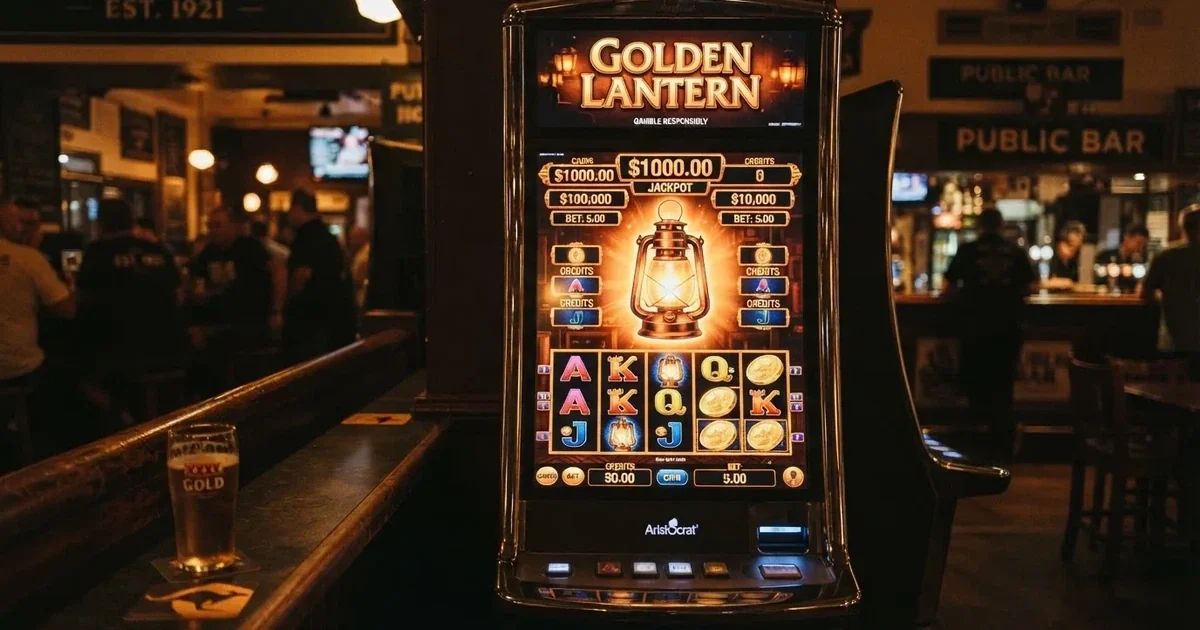
The Lightning Link name belongs to a land-based cabinet format. The reels, the lantern motif and the hold-and-spin bonus round that make the game recognisable are designed for a machine bolted to the floor of a pub, club or casino — not for a browser tab. Any site offering the same title to a person physically in Australia is offering a prohibited interactive gambling service under the Interactive Gambling Act 2001. That is the frame every other fact on this page sits inside.
What follows is not a recommendation of where to play. It is a working description of how the format works, why no online version served to an Australian resident is lawful, what the Australian regulator has done about the brands offering one, and where the limits fall for a punter who goes looking anyway.
Table of Contents
- What a Lightning Link pokie actually is
- The legal frame for an online version
- What an offshore site cannot offer an Australian player
- How the ACMA enforces — and what enforcement has done
- The state-level rules that govern the real machines
- Why a hold-and-spin format needs a fixed time limit, not an in-game prompt
- Bonuses and free spins — what an offer attached to Lightning Link actually contains
- Mobile apps and the Lightning Link name
- The cabinet family, and what separates one theme from the next
- The brands the ACMA has formally warned
- How the blocking rate has run since the first request
- What the 2026 reform changes
- What a Lightning Link search actually returns, and how to read it
- How this page draws the line
- Frequently asked questions about Lightning Link online pokies in Australia
What a Lightning Link pokie actually is
A Lightning Link machine is a video reel cabinet with linked progressive jackpots and a feature round called hold-and-spin. The reels, the bonus icon and the multi-level jackpot display are the same across every cabinet in the family — Happy Lantern, Sahara, High Stakes, Diamond Queen, Magic Pearl and the rest. The theme changes; the engine underneath does not.
The base game runs on five reels with symbol clusters that pay left-to-right. The mechanic a player notices is the bonus round: when six or more bonus icons land in a single spin, those symbols lock in place and the reels reset to a stripped-down layout where only blanks and further bonus symbols can appear. Three respins reset to three every time a new bonus symbol lands, which is why the round stretches sessions out rather than ending them quickly.
That extension is the point. A hold-and-spin feature is engineered to keep a player at the cabinet. The longer the round runs, the more bonus symbols collect on the locked positions, and the closer the round pushes toward one of the linked jackpot tiers. Each jackpot is funded across the linked cabinet network, not by the single machine the player is sitting at.
Linked jackpot tiers vary by cabinet theme and by venue, but the structure is consistent across the family: a minor and a mini jackpot paid as a fixed multiple of the bet, and one or more major and grand prizes seeded by a percentage of turnover across the linked machines. Whether a player ever lands the bonus round that leads to a jackpot is a separate question, and the answer to it for any individual spin is decided by a random number generator inside the cabinet.
The format traces back to Australian poker machines — registered clubs operated the country’s first legal machines from 1956, in New South Wales, and the population’s share of the world’s pub and club poker machines has stayed disproportionate ever since. Lightning Link is a descendant of that lineage, dressed up with a licensed theme and a bigger linked prize pool.
The legal frame for an online version
Australia’s prohibition is federal, sits in the Interactive Gambling Act 2001, and was sharpened by the Interactive Gambling Amendment Act 2017. The 2017 amendments extended the prohibition to in-play online wagering and tightened the rules around offering any prohibited interactive gambling service to a person in Australia. Online casino games, online pokies and in-play betting are caught by the prohibition; racing and sports wagering placed before the event are not, and are licensed at state level.
The practical effect on Lightning Link is direct. The format itself is licensed for land-based venues only. Aristocrat — the Australian manufacturer behind the cabinet — does not offer an online version to Australian residents, and no Australian-licensed operator offers the game over the internet. Any site that shows the game in a browser tab, in a mobile web view, or in an app pitched at an Australian player is offering it under an offshore licence that the IGA does not recognise.
What the IGA does not do is prosecute the player. The offence is on the provider: it is the operator and any Australian-facing affiliate that take the regulatory hit. The individual punter is not personally at risk of prosecution for opening an account and placing a bet. What the punter loses, by design, is every protection the Australian system offers.
What an offshore site cannot offer an Australian player
An offshore casino licensed in Curaçao or Malta, accepting Bitcoin and credit cards, running a Lightning Link cabinet in its lobby — that site looks like a normal online casino from the outside. The differences are inside the wall.
There is no Australian consumer protection. A complaint about a refused withdrawal, a voided bonus, a closed account or a software glitch is not handled by an Australian regulator. The licensing body that does cover the site sits in another jurisdiction, follows another set of disclosure rules, and offers dispute resolution on its own terms. There is no Australian ombudsman to escalate to, no Australian court that will take the case cheaply, and no Australian legal aid for a punter trying to claw back a balance.
There is no connection to BetStop. BetStop, the National Self-Exclusion Register, went live in August 2023 and binds Australian-licensed online and phone wagering services. A self-excluded player is meant to be refused service at any operator covered by the regime. An offshore casino is not covered. Self-excluding through BetStop does not stop an offshore site from accepting the same person’s account and deposits.
There is no payment-method recourse. The credit card ban for licensed online wagering took effect on 11 June 2024, with penalties up to A$247,500 for operators who breach it. Legal deposit routes for a licensed Australian wagering service are debit card, bank transfer, PayID/Osko and BPAY. An offshore site asking for a credit card or a crypto deposit is operating outside the Australian rules entirely — which means the Australian rules that protect the player are also absent.
There is no guarantee the site will still be there tomorrow. The ACMA directs Australian internet service providers to block illegal sites, and a blocked site can leave a balance unpaid. The site’s terms and conditions apply on its own footing.
How the ACMA enforces — and what enforcement has done
The ACMA’s enforcement has three visible tools: formal warnings, blocking orders directed to ISPs, and infringement notices. All three target the provider.
Formal warnings name the operator behind the site and the section of the IGA breached. The regulator’s published register lists the operator entity, the brand, the URL and the date of the warning. A second warning over the same brand is uncommon; the regulator moves to a blocking request once it judges the warning ineffective. The set of warnings published since 2022 includes the operators this page profiles further down.
Blocking orders are the heavier lever. By the ACMA’s own count as reported in June 2026, a total of 1,751 illegal gambling and affiliate marketing websites had been blocked since the first blocking request in November 2019, with more than 230 unlicensed gambling services having left the Australian market since 2017. The most recent round reported on that date asked ISPs to block twelve further sites in one instruction: 7Signs, ChromaBet, Donbet, Duospin, Freshbet, Slots Gem, Jacks Club, Lucky Start, Pointsbetz, Spinrise, Vinyl Casino and Wildsino. A blocking request does not mean every Australian ISP is bound by every instruction immediately, and a blocked site often resurfaces under a new domain — which is why the rounds continue.
Infringement notices carry financial penalties — A$237,600 for an individual, A$1,785,000 for a body corporate — and are used sparingly. The stick that matters is the steady accumulation of warnings, the published register, and the ISP blocks that follow.
The H2 Gambling Capital 2025 report estimated Australian losses to illegal gambling sites at about A$3.9 billion a year, and noted that the share of gambling going through legal Australian channels fell from 74% in 2021 to 64% in 2025. The legal-channel share dropping while the illegal-channel losses grow is the structural problem the IGA and the ACMA’s enforcement budget are aimed at — and it is the structural problem a punter searching for Lightning Link online lands inside.
The state-level rules that govern the real machines
Online pokies are prohibited; the machines themselves are not. Australia has the highest density of poker machines per capita in the world — roughly 3% of the global machines for 0.3% of the global population — and the rules around them are written state by state.
New South Wales is the largest market by machine count. There were 87,298 gaming machines outside casinos across 2,195 venues in June 2023, and player losses of A$8.18 billion across 2022–23. The state’s regulatory floor for return-to-player is 85%, the lowest of any Australian jurisdiction.
Queensland had 21,122 gaming machines in 351 venues in October 2023. Victoria had 26,380 machines outside Crown Casino across 488 venues under a 30,000 statewide cap. Tasmania ended the Federal Group monopoly over its machines in November 2021, moving oversight to the Tasmanian Liquor and Gaming Commission, and planned nation-leading mandatory pre-commitment cards that were delayed until late 2025. Western Australia banned poker machines in pubs and clubs when Crown Perth opened in 1985; the casino’s own machine count has since grown from about 200 machines to roughly 2,500, all approved by the state’s Gaming and Wagering Commission.
The minimum RTP varies by jurisdiction: 85% in New South Wales, the Northern Territory, Queensland and (generally) Victoria, 87% at Crown Melbourne and in the Australian Capital Territory and Tasmania, 87.5% in South Australia, and 90% in Western Australia. Those numbers are the legal floor; the actual RTP on a given cabinet sits somewhere above it and is published on the machine’s help screen.
That floor is the reason a land-based Lightning Link cabinet, even when it is paying out the legal minimum, returns 85 cents or more of every dollar wagered across the long run. An offshore version in a browser tab has no such floor — the RTP is whatever the operator publishes on its information page, and the only check on the claim is the offshore licence.
Why a hold-and-spin format needs a fixed time limit, not an in-game prompt
A hold-and-spin feature is built to extend play. The locked symbols, the respin counter, and the anticipation of a linked jackpot trigger are all engineered to keep a player at the cabinet. That is why a session on a Lightning Link machine tends to run longer than a session on a simpler format, and why the time-cost of the format is higher than its headline RTP suggests.
An in-game prompt to keep playing has no friction. The bonus round asks the player to continue as a matter of design. What it does not ask is whether the player should stop.
The protection that does work is external and pre-set. A punter who decides in advance how long a session will run — and who sets a timer rather than relying on the cabinet’s session prompt — has a much better chance of walking away when the round is over. BetStop covers licensed wagering, not offshore pokies, so the formal self-exclusion route does not catch a punter who is logging into a Curaçao-licensed site to play Lightning Link in the first place. The practical limit, for a player at an offshore site, is the one they set for themselves.
The 24/7, free National Gambling Helpline is 1800 858 858, with web chat at Gambling Help Online. The line is a good first call for a punter who finds the session has overrun the timer they set — and the better call, if the timer keeps overrunning, is BetStop, which can stop a punter at the licensed Australian sites whether or not they can stop at the offshore ones.
Bonuses and free spins — what an offer attached to Lightning Link actually contains
An offer attached to the Lightning Link name typically follows the same shape as any other pokies offer: a deposit match with a wagering multiple, free spins tied to the format’s base game, or both. The marketing line leans on “free spins”, which is the only phrase in the offer that travels well.
The arithmetic inside the offer is what a player should read. A bonus with a 40x wagering multiple on the bonus amount means the player has to turn the bonus over forty times before any of it can be withdrawn. A free-spin bundle pays out in bonus funds that carry the same multiple. A maximum cashout cap on free-spin winnings can sit at five times the bonus amount, or lower, which puts a ceiling on what the offer is worth regardless of how the spins run.
Most offers of this type also exclude at least one table game or one high-RTP slot from the wagering contribution count — meaning a 40x multiple can become functionally longer than forty times once the excluded games are filtered out. None of these terms are unique to Lightning Link: they are the standard mechanism for an offshore pokies offer.
What makes the offer on a Lightning Link page different from the offer on any other pokies page is the game it is attached to. Hold-and-spin is a high-variance feature. The bonus round stretches sessions and the linked jackpot prizes push volatility higher than a standard five-reel slot. A punter clearing a 40x wagering multiple on a hold-and-spin title can blow through the bonus in a single long bonus round, or can run the full bonus balance down without ever triggering the feature.
A useful rule of thumb, not from any operator: a bonus attached to a high-variance format is harder to clear than the same headline terms on a low-variance one. The math is the same; the variance is not.
Mobile apps and the Lightning Link name
The Lightning Link cabinet format is not designed for a phone screen, and Aristocrat has not released an app pitching the game at Australian residents. Apps that do appear in app stores under the Lightning Link name are either Aristocrat’s free-play titles, which run on virtual credits and pay out nothing, or third-party wrappers around an offshore casino lobby. Neither category is licensed to take real-money bets from an Australian punter.
The free-play apps use the Lightning Link name under licence from Aristocrat and run on the same reel and bonus code as the cabinets. The Australian resident who downloads one and plays for fun is not breaking the law. The same punter who clicks through a link inside the free-play app and lands on an offshore casino lobby is back inside the prohibited service — the free-play app is the funnel, not the destination.
A browser-based version of the same game in a mobile web view is no different. The screen is smaller; the prohibition is the same.
The cabinet family, and what separates one theme from the next
Lightning Link is a family, not a single game. The shared engine is hold-and-spin with linked jackpots; what changes between titles is the visual theme, the symbol set, the volatility profile and the size of the standalone jackpots.
Happy Lantern is the entry-level cabinet in the family — the lantern motif in the title is the visual hook. Sahara runs a desert theme with the same hold-and-spin engine. High Stakes leans on casino imagery. Diamond Queen uses a gem-and-jewels symbol set. Magic Pearl goes underwater. Bengal Treasures, Heart Throb and Empress of the Nile are the older themes that have circulated through Australian venues for years.
The differences inside the family are not the ones a marketing page tends to mention. The bonus-round trigger rate is similar across themes; the symbol distribution in the bonus round is what shifts the volatility. A player who has played High Stakes for a year and switches to Magic Pearl is not getting a fundamentally different game — they are getting the same game with a different symbol map.
What separates one theme from the next in any practical sense is the linked jackpot tier on offer at the venue. A cabinet that has been running for a year with no grand-prize hit will carry a higher grand-prize seed than a cabinet that paid out last month, and the same reel layout will feel different at the two venues because the jackpot sizes are different. The player does not choose the cabinet by theme; they choose by where the linked jackpot sits.
The same logic — same engine, different visual — is why an offshore site offering a “Lightning Link” branded game has every incentive to clone the look without the licensed engine. The player cannot tell from the screenshot. The random number generator underneath is whatever the offshore site decided to ship.
The brands the ACMA has formally warned
The ACMA’s register of formal warnings lists every operator the regulator has named under the Interactive Gambling Act 2001 since the prohibition took its current shape. The brands below are the ones the register names as operators of prohibited services offered to Australians. Each is presented as the regulator has published it: operator entity, brand and date.
None of these brands is recommended as a place to play. They are listed because the ACMA itself has acted against them, and because the ACMA’s published register is the only source an Australian resident can check a brand against before opening an account.
The verdict at the close of each entry is this page’s editorial judgement, not the regulator’s. The regulator’s judgement — that each brand offered a prohibited service to Australians — is on the record.
| Brand | ACMA action and date | Operator named by the ACMA | Lightning Link support |
|---|---|---|---|
| RocketPlay | Formal warning, March 2026 (earlier Dama N.V., May 2022) | Pulsup Ltd | Not advertised by the brand under this name |
| Level Up Casino | Formal warning, May 2022 | Dama N.V. | Listings only — third-party directories index the brand against the game |
| Woo Casino | Formal warning, March 2025 | Dama N.V. | Not advertised by the brand under this name |
| Spirit Casino | Formal warning, May 2025 | Dama N.V. | Not advertised by the brand under this name |
| National Casino | Formal warning, July 2025 | Consolutetish S.R.L. | Listings only — public references place the brand against the format |
| Bizzo Casino | Formal warning, July 2025 (earlier TechSolutions, 2022) | Consolutetish S.R.L. | Not advertised by the brand under this name |
| Ignition Casino | Formal warning, July 2025 | Bamboo Media | Not advertised by the brand under this name |
| Instant Casino | Formal warning, February 2025 | EOD Code SRL | Not advertised by the brand under this name |
| Jackbit | Formal warning, April 2026 | Ryker B.V. | Not advertised by the brand under this name |
| Casino Intense | Formal warning, April 2025 | Sterplay Holding Ltd | Listings only — the brand surfaces in Australian press coverage and regulator publications |
| Sky Crown | Formal warning, September 2022 | Hollycorn N.V. | Not advertised by the brand under this name |
RocketPlay
The ACMA published a formal warning over RocketPlay naming Pulsup Ltd as the operator in March 2026. A separate warning over the same brand, naming Dama N.V., had already been issued in May 2022. The change of operator entity between the two warnings is the kind of detail a player who took the first warning seriously might have used to spot that the brand had simply moved: the URL stayed live, the operator changed, and the second warning followed. RocketPlay advertises a standard offshore pokies lobby with a Lightning Link cabinet visible in some marketing pages, but no source independent of the brand’s own marketing confirms the cabinet is the licensed Aristocrat format. Worth treating as a brand that has been on the ACMA’s list twice in four years, with the operator entity swapping between warnings.
Level Up Casino
The May 2022 formal warning over Level Up named Dama N.V. as the operator. The brand surfaces on third-party directories indexed against the Lightning Link name, but no first-party source confirms the game in the brand’s lobby is the licensed Aristocrat cabinet rather than a same-themed clone. Useful comparison: a Dama N.V. brand named in the same warning, in May 2022, was Bambet, and the same operator entity has been warned over Woo Casino, Spirit Casino and Rocketplay in subsequent rounds. The cluster of Dama N.V. brands on the ACMA register is the warning a player is most likely to miss if they only check the brand name and not the operator behind it.
Woo Casino
The ACMA published a formal warning over Woo Casino naming Dama N.V. as the operator in March 2025. The brand advertises a Lightning Link cabinet in some marketing pages; whether the cabinet is the licensed Aristocrat format or a clone with the same name is not verifiable from outside the operator. The Dama N.V. cluster again: this is the third operator-name match in a row, and the regulator’s published register is the only source that surfaces it.
Spirit Casino
The May 2025 formal warning over Spirit Casino named Dama N.V. — the fourth operator-name match in this cluster. The brand is newer than Woo Casino and Level Up Casino but carries the same operator entity, a detail the ACMA register highlights rather than the brand’s own marketing. Lightning Link is notably absent from the brand’s first-party materials, marking this entry as a registry flag rather than a live offer.
National Casino
The July 2025 formal warning over National Casino named Consolutetish S.R.L. as the operator. Public references — including encyclopedia entries — place the brand against the Lightning Link format, but the listing is third-party and the brand itself does not advertise the cabinet in its first-party materials. Consolutetish S.R.L. is also the operator named over Bizzo Casino in the same July 2025 round, which is the second operator-name match in the cluster.
Bizzo Casino
The ACMA published a formal warning over Bizzo Casino in July 2025 naming Consolutetish S.R.L. as the operator. An earlier warning, in 2022, named TechSolutions (CY) Group Limited and TechSolutions Group N.V. over the same brand — making Bizzo the second brand in this set to have appeared on the register twice, with a different operator entity between the two warnings. Lightning Link is not listed in any first-party materials provided by the brand.
Ignition Casino
The July 2025 formal warning over Ignition Casino named Bamboo Media as the operator. Ignition has been a familiar brand name in offshore-pokies affiliate marketing for years, but the brand does not advertise a Lightning Link cabinet in its first-party materials at the time of writing. The presence on the register is the data point to take from the entry; the absence of a first-party Lightning Link offer is the practical limit on what the brand can be checked against.
Instant Casino
The February 2025 formal warning over Instant Casino named EOD Code SRL as the operator. The brand markets aggressively through affiliate networks under several URL variants; no first-party Lightning Link offer is verifiable from outside the operator. The warning itself sits earlier in 2025 than most of the cluster, which means a player who took the register seriously at the time of the warning would have caught the brand before the bigger 2025 rounds landed.
Jackbit
The April 2026 formal warning over Jackbit named Ryker B.V. as the operator. The same operator entity was named in the same round over CasinOK, which is the second brand in the cluster to share an operator with another entry on this list. Lightning Link is not featured in any of the brand’s first-party marketing materials.
Casino Intense
The April 2025 formal warning over Casino Intense named Sterplay Holding Ltd as the operator. The brand surfaces in Australian press coverage and in ACMA publications, both of which is what the entry means by “listings only”: third-party sources name the brand against the format, but no first-party confirmation exists. Casino Intense is the brand most likely to come up in an Australian search for the format precisely because it surfaces in Australian-language coverage of the regulator’s actions.
Sky Crown
The September 2022 formal warning over Sky Crown named Hollycorn N.V. as the operator. The same operator entity was named in the same round over Blue Leo, which is the third brand in this list — after Jackbit and Bizzo — to share an operator entity with another entry. Sky Crown is the earliest entry by warning date, which makes it the test case: a brand that has been on the ACMA register for the longest is still offering services to Australian residents four years later, which is what the regulator’s enforcement budget is up against.
How the blocking rate has run since the first request
The ACMA’s first request to an Australian internet service provider to block an illegal gambling site went out in November 2019. By June 2026 the cumulative count stood at 1,751 sites, with more than 230 unlicensed gambling services having left the Australian market since enforcement was strengthened in 2017. The most recent round, reported on 26 June 2026, asked ISPs to block twelve further sites in one instruction.
Run as a band, the rate looks like this. From the first request in November 2019 to the count reported in June 2026 is about 79 months. Dividing 1,751 by 79 gives a monthly average of roughly 22 sites blocked per month, with the most recent round itself adding twelve. The actual rate has not been flat — early rounds averaged a handful of sites per request, and later rounds have run larger batches, often following a single ACMA investigation rather than a long sequence — but the band the rate sits inside, on the evidence of the regulator’s own published counts, is somewhere between one and two dozen sites per month across the period. A punter watching a brand disappear from an Australian ISP and reappear under a new URL is watching the same arithmetic at a smaller scale.
The point of the band is not the exact figure. The point is that the regulator’s blocking rate, applied to a market where the illegal-channel share has been climbing, has not yet bent the curve. The 1,751 figure is the cumulative result of almost seven years of blocking requests; the H2 Gambling Capital estimate of A$3.9 billion a year lost to illegal sites is the rate the curve is running at in the same period. The two figures are measured differently and are not directly comparable, but the gap between them is the gap the regulator is trying to close.
What the 2026 reform changes
The Interactive Gambling Amendment (Gambling Reform) Bill 2026 passed Parliament on 19 August 2026. Its advertising and inducement measures commence on 1 January 2027, which means the law is in force as of a date that has not arrived on a 2026 page. The page that reads it in 2027 will see the new rules already running.
What the 2026 reform tightens is the advertising and inducement side. The prohibited service prohibition itself is unchanged from the 2017 amendment; the 2026 bill works around the edges. For a punter searching for Lightning Link online, the practical change is on the marketing the punter sees rather than on the service the punter reaches — which is why the same register of formal warnings, blocking orders and operator names is the data the page works from.
The credit card ban that took effect on 11 June 2024 is the recent payment-side reform that matters most. The ban applies to licensed Australian wagering services, with penalties up to A$247,500 for operators that breach it. An offshore site asking for a credit card is, by definition, not a licensed Australian service, which means the ban does not protect the punter using one. The punter’s protection at an offshore site is the punter’s own choice not to deposit.
What a Lightning Link search actually returns, and how to read it
The first page of an Australian search for “Lightning Link online” is a mix of four kinds of result, and a punter who can tell them apart has done most of the work.
Free-play apps are the legitimate end of the spectrum. They run on virtual credits, pay out nothing, and are licensed by Aristocrat for the use of the name. A punter who downloads one and plays for fun is not inside the prohibited service.
Affiliate pages are the funnel. They review offshore casinos, list welcome offers, and link through to the operator’s sign-up page. The link is where the prohibited service starts. Some affiliate pages disclose their commercial relationship; most do not. The affiliate page itself is not the prohibited service; the page it links to is.
Operator lobbies are the prohibited service. An offshore casino showing a Lightning Link cabinet in its lobby, accepting credit cards or crypto, and offering a sign-up bonus in Australian dollars is the operator the ACMA’s register lists. The cabinet may or may not be the licensed Aristocrat format — no first-party source confirms it from outside the operator, and the random number generator underneath the cabinet is whatever the operator shipped.
Regulator pages are the data. The ACMA’s register of formal warnings, the list of blocking orders, and the regulator’s published reports are the only sources a punter can check a brand against. The register is not exhaustive — many prohibited services have not been formally warned — but it is the data that exists.
How this page draws the line
This page describes Lightning Link as a format, names the legal frame that catches any online offer to an Australian resident, lists the ACMA’s formal warnings against specific brands, and stops short of recommending any of those brands as a place to play.
The reason it stops there is the same reason the ACMA’s register exists. No offshore casino is licensed in Australia to offer online pokies. No bonus code attached to an offshore offer changes that. The page’s job is to give a punter the information that lets them check a brand against the regulator before opening an account, not to send them to one.
A punter who wants to play Lightning Link without leaving the law is playing a land-based cabinet at a licensed venue. A punter who wants to play online is, at the time of writing, choosing to do so outside the Australian regime. The choice is theirs; the consequences are theirs; and the data on this page is the data that lets them make that choice with their eyes open.
Frequently asked questions about Lightning Link online pokies in Australia
Is it legal to play Lightning Link online pokies for real money in Australia?
No. Online casino games, including online pokies, are prohibited interactive gambling services under the Interactive Gambling Act 2001 as strengthened by the 2017 amendments. Any site offering Lightning Link to a person physically in Australia is offering a prohibited service. The player is not prosecuted under the IGA, but the operator is, and the player loses every Australian consumer protection in the transaction.
What triggers the hold-and-spin bonus round on a Lightning Link machine?
The bonus round starts when six or more bonus symbols land anywhere on the reels in a single base-game spin. Those symbols lock in place, the reels reset to a stripped layout where only blanks and further bonus symbols can appear, and the player gets three respins. Each new bonus symbol resets the counter to three. The round ends when a respin produces no new bonus symbol or the grid is fully filled.
Is Lightning Link available at regulated land-based venues in Australia?
Yes. Lightning Link cabinets are licensed for land-based venues — pubs, clubs and casinos — in every Australian state and territory that permits poker machines. Western Australia permits them only at Crown Perth, where about 2,500 machines operate under state approval. Online delivery of the same game to an Australian resident is the prohibited service the IGA catches.
Do Lightning Link promo codes work the same way across different cabinet themes?
The promo codes attached to the Lightning Link name typically unlock free-spin bundles on one or more cabinet themes within a casino lobby. The bonus terms — wagering multiples, max-cashout caps, game-weighting rules — are the same across the family because the offer sits on the casino account rather than on the cabinet. The format underneath is the same engine with a different visual theme, which is why an offer attached to one theme and an offer attached to another are usually the same offer with different artwork.
Does a Lightning Link app on a phone offer a different game to the desktop version?
The free-play apps that use the Lightning Link name under licence from Aristocrat run the same reel and bonus code as the cabinets, on virtual credits, with no real-money payout. The third-party apps that pitch real-money play to an Australian resident are wrapping an offshore casino lobby, which is a prohibited service regardless of the device. The game the phone offers is the offshore operator’s game, not Aristocrat’s.
What separates the different Lightning Link reel sets from each other?
The reel sets share the hold-and-spin engine and the linked-jackpot structure. What changes between them is the visual theme, the symbol set and the volatility profile baked into the symbol map. A punter choosing between themes at a land-based venue is choosing by the size of the linked jackpot and the feel of the cabinet rather than by the underlying math, which is the same across the family.