
The Australian slots and online casino landscape in 2026: consequence over promise
A person looking for gambling casino sites and slots in Australia runs straight into the country’s central contradiction. The local option is huge — almost a hundred thousand poker-style machines outside casinos in New South Wales alone — and the offshore option is enormous too, but most of it is prohibited. The Interactive Gambling Act 2001 makes it an offence for an overseas operator to provide online casino games or online pokies to anyone in Australia, and the regulator has been steadily widening the list of domains Australians cannot reach. The whole of this page sits downstream of that one fact: every offshore casino named below carries a formal warning from the Australian Communications and Media Authority, and the “best online casino gambling sites” anyone can list from within Australia is built entirely from that same unlicensed pool.

This read is current as of 7 November 2026, against the ACMA register of formal warnings and its published blocking-round notices.
Table of Contents
- Responsible gaming on slots and online casinos in Australia
- Crypto gambling casinos and the Australian prohibition
- Slots, pokies and the games themselves
- The blocking landscape: ACMA enforcement since 2017
- Top 11 ACMA-warned online casino brands operating offshore to Australians
- The fundamentals: how an offshore online casino actually operates
- Legality, regulation and what the Interactive Gambling Act 2001 actually says
- Frequently asked questions
Responsible gaming on slots and online casinos in Australia
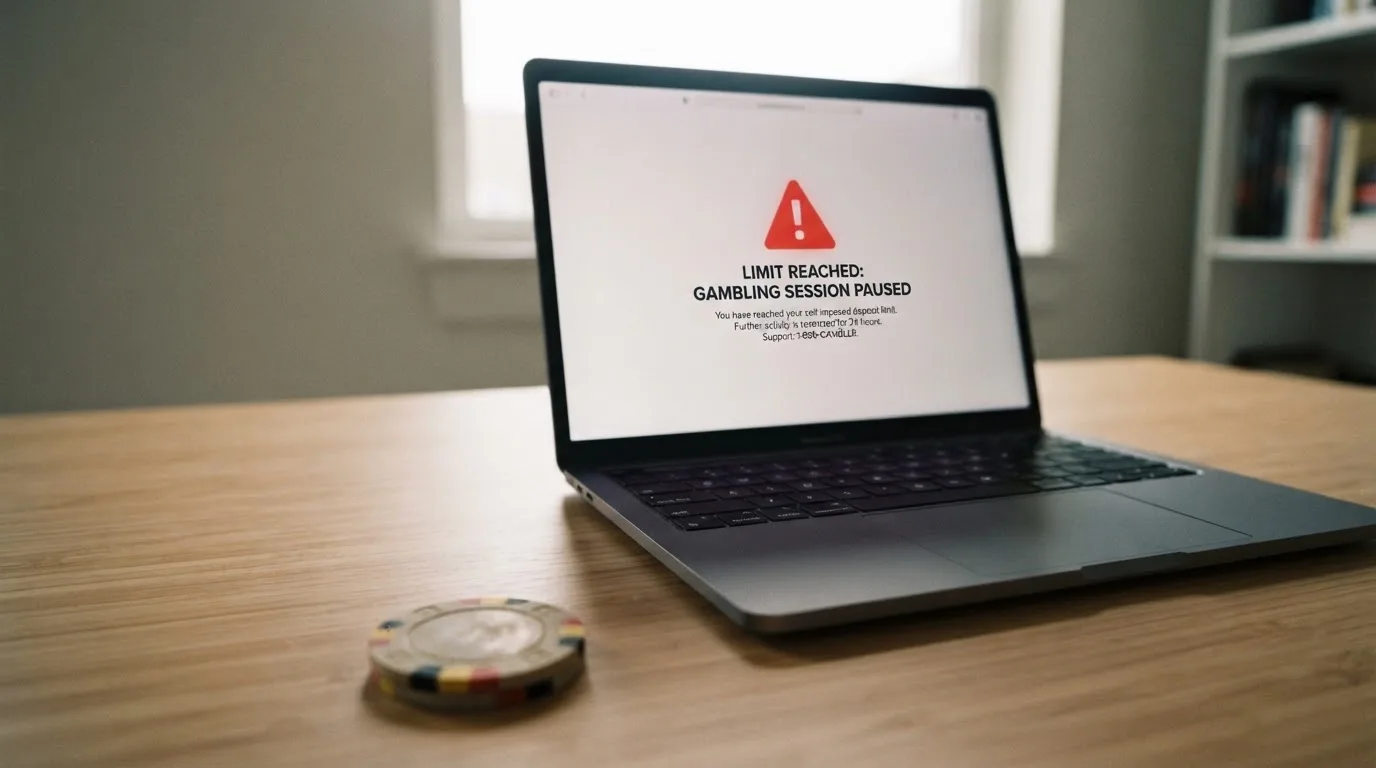
A casino that calls itself “trusted” or “safe” is making that claim about itself. Independent limits, self-exclusion tools and a clear sense of overall wellbeing matter more than any banner on a homepage — and they matter especially in Australia, where the locally regulated product (pokies in clubs and pubs) is already the heaviest gambling environment per capita in the developed world. The numbers carry the weight: New South Wales alone counted 87,298 pokies-style machines outside casinos in June 2023, ahead of Victoria’s 26,380, Queensland’s 21,122, South Australia’s 11,672 and the ACT’s 3,587. That is the floor under any “responsible” claim a site makes to an Australian customer, licensed or not.

What the Australian player-protection layer actually covers
Three pieces of the Australian framework do real work, and each of them has a clear boundary a player needs to know before relying on it.
BetStop, the National Self-Exclusion Register. Live since August 2023, BetStop lets a person exclude themselves from every Australian-licensed online and phone wagering service in one registration. The catch is in the word “licensed”: an offshore casino is not connected to BetStop, and a self-exclusion registration has no effect on a brand the ACMA has already warned or blocked. For a player whose gambling crosses between the two worlds — a bet on a Saturday race through a Northern Territory-licensed bookmaker and a spin on a Curacao-licensed offshore site in the evening — BetStop covers only the first half. Anyone registering and then continuing to play offshore has, by their own action, told the regulator they are unprotected on the second half.
The National Gambling Helpline. 1800 858 858, free, 24/7, with chat through Gambling Help Online. This is the one piece of the framework that does not depend on where the gambling happens. A person playing on a blocked offshore site, on a licensed wagering platform or on a poker machine in a Sydney pub reaches the same service. It does not require the person to have complained to anyone, and it does not require the operator to know the call happened.
The credit-card ban for licensed wagering. Since 11 June 2024, credit cards, credit-related products and digital currency are banned as payment for licensed online wagering, with penalties up to A$247,500 for operators that take them. A site asking an Australian for a credit card or a crypto deposit is, by that single signal, operating outside the Australian rules — regardless of any “licensed by” badge it carries. Legal deposit routes for licensed wagering are debit card, bank transfer, PayID/Osko and BPAY; the absence of those is itself information.
Why offshore sites give no protection
The Interactive Gambling Act 2001 targets the provider, not the player. The individual punter is not prosecuted, and that fact gets cited as though it were a defence. It is not. An offshore site gives no Australian consumer protection, no local complaints body and no recourse if a withdrawal is refused — and it can be blocked mid-session with a balance still on it. The cost of the prohibition falls on the player, not on the operator, and the operator’s home regulator is usually a jurisdiction with no interest in an Australian customer.
Crypto gambling casinos and the Australian prohibition
Crypto-funded casinos run the same slot titles as card-funded sites — the difference is a blockchain wallet swapped in for a bank card. For an Australian player the swap is the wrong way around. From 11 June 2024, digital currency is banned as a payment method for licensed online wagering, so any casino accepting Bitcoin, Ethereum, Litecoin or a stablecoin deposit from an Australian customer is by definition outside the licensed layer. A Bitcoin casino and a Litecoin casino offer the same product to the same player under the same prohibition, and the ACMA’s formal-warning list makes no distinction between them. The crypto angle adds no legal cover the card-funded angle lacks.
The mechanics are unchanged: a crypto gambling casino pays out to the same kind of wallet the player deposited from, the games are the same RNG-driven slot titles the player would find on a card-funded version of the same operator, and the marketing copy “anonymous” or “no ID needed” is not a feature of cryptocurrency — it is a feature of operating offshore. The “anonymity” claim is the marketing word, not the mechanism. A withdrawal above any threshold still requires identity documents under anti-money-laundering rules in the operator’s home jurisdiction, and a blocked domain is a blocked domain whether the balance sits in a wallet or on a pending withdrawal.
For a reader, the practical question is not “should I use crypto” but “does this operator accept Australian customers at all, and what is the ACMA’s history with it”. The first answer is no for every brand in this page’s ranking; the second is in the table below. Crypto adds nothing to the first answer and little to the second.
Slots, pokies and the games themselves
Online slots and pub poker-style machines share a history and increasingly share a vocabulary. The mechanical slot dates to Charles Fey’s late-19th-century three-reel machine in San Francisco — five symbols (horseshoes, diamonds, spades, hearts and the Liberty Bell), three bells paying the top prize of ten nickels. Bally’s “Money Honey” in 1963 added the bottomless hopper and automatic payout of up to 500 coins without an attendant, which is the moment slot play stopped needing a human in the loop. The first video slot came from Fortune Coin Co. in Kearny Mesa in 1976; the rest is the long slide into five-plus reels and 50-plus symbols per reel, which on a modern video slot produces top-combination odds as high as 300 million to one against. A classic three-reel mechanical machine with ten symbols per reel offers only about 1,000 possible combinations, so what looks like a faster spin on a video slot is in fact a much longer shot at the top prize.
How a slot’s RNG actually decides a spin
Every spin on a regulated online or land-based slot is decided by a random number generator before the reels come to rest. The reels’ visible animation is a cosmetic of the result, not its cause: the RNG has already picked the stopping positions, and the screen then plays them out. The reels have no memory of the previous spin. A machine that has paid nothing for an hour is not “due”; a machine that has paid twice in ten minutes is not “hot”. Every spin is an independent draw from the same probability distribution.
That probability distribution is set by the machine’s par sheet, and the long-run return is set by regulators where the regulator exists. In the United States, state regulation sets minimum payout percentages that vary by jurisdiction — Nevada at least 75%, Mississippi at least 80%, New Jersey at least 83% — which is the closest analogue to a regulated floor Australia does not have for online slots. Australia has no equivalent minimum payout percentage for online casino games, because there are no licensed online casino games to set one for.
The locally regulated alternative: pokies in clubs and pubs
NSW legalised slot machines in 1956; by 2010 Australia operated an estimated 97,103 gaming machines outside casinos, a per-capita rate about five times that of the United States. The same machine a player can sit down to in a Western Sydney pub is, in regulatory terms, the only legal slot product in Australia. Crown Melbourne offers three approved baccarat variants — Traditional Baccarat, Crown Baccarat and 2 to 1 Baccarat — under the Victorian Gambling and Casino Control Commission, which replaced the VCGLR as Victoria’s casino regulator on 1 July 2022; blackjack variants at the same casino go through the same rule-approval process, with the VGCCC’s public log including the renaming of “Perfect Pairs” to “Crown Pairs” on 23 December 2024 and the introduction of a “Free Bet” option with a “Pot of Gold” side bet on 25 March 2024. Under section 66 of the NSW Casino Control Act 1992, a casino operator must not permit a game such as baccarat to be played unless the game and its rules are approved by the regulator, and the operator must make a copy of the approved rules available to patrons on request.
What the Australian player cannot do online is play any of those games for real money through an Australian-licensed operator, because no such operator exists. The list a reader finds when searching for “online gambling australia slots” or “online pokies gambling australia” is the offshore list, and every entry on it is prohibited.
House edge on the table games that travel alongside slots
A few table games sit close to the slots product at most offshore casinos, and the house edge on each is fixed by the rules rather than by the marketing copy. Baccarat’s edge is 1.06% on the Banker bet, 1.24% on the Player bet and 14.36% on the Tie — the Tie figure is the one to remember, because it is the bet a casino’s layout highlights most loudly. Punto banco, the variant most played today, was developed in Havana in the 1940s; the casino banks the game at all times and plays out both hands by fixed drawing rules, with cards 2-9 at face value, 10/J/Q/K at zero and aces at one, hand totals taken modulo 10, dealt from a shoe of 6 or 8 decks. Blackjack’s edge with optimal strategy is about 0.28% under liberal Las Vegas Strip rules (dealer stands on soft 17, double on any two cards, double after split, resplit aces, late surrender) and about 0.43% under Atlantic City rules — the difference between the two is the rule set the casino publishes. Craps carries 1.41% on the Pass/Come bet, 1.36% on Don’t Pass/Don’t Come and 11.11% on Any Craps.
None of those edges is small enough to ignore, and on a slot the edge is built into the par sheet rather than stated on the layout. The reader’s working assumption should be the same: the house always has an edge, and the only question is how much.
The blocking landscape: ACMA enforcement since 2017
| Statistic | Figure |
|---|---|
| Total blocked sites (since Nov 2019) | 1,751 |
| Unlicensed services exited | >230 |
| Estimated annual losses to illegal sites | A$3.9 billion |
The pace is visible in the round-by-round notices. In the round reported on 26 June 2026 the ACMA asked Australian ISPs to block 12 more illegal gambling websites: 7Signs, ChromaBet, Donbet, Duospin, Freshbet, Slots Gem, Jacks Club, Lucky Start, Pointsbetz, Spinrise, Vinyl Casino and Wildsino. Each of those domains is the visible tip of a brand — a fresh shell name carrying the same product, on the same platform, often run by the same operator group the ACMA has warned before.
The blocking rate since November 2019
Taking the cumulative 1,751 blocked sites reported by the ACMA in June 2026 against the first blocking request in November 2019, the running blocking rate sits in the band of roughly 85 to 95 sites blocked per month over the period since the regime began, with the rate concentrated heavily in the rounds from 2021 onward as the ACMA shifted from warning to coordinated ISP-level blocking. The exact monthly figure depends on which round-by-round count is used as the denominator — the ACMA’s published blocking rounds differ in size, and the cumulative total stops short of a public monthly schedule — but the band is the right shape: roughly 1,750 blocks across a window of around 75 to 80 months is the order of magnitude the published totals imply, and it has accelerated rather than slowed in each subsequent year.
That rate is the consequence of the prohibition, and it is the number an Australian reader should hold against any “best online casino gambling sites” list. Every brand on a list published today was either on a previous blocking round, will be on a future one, or has already been the subject of a formal warning that landed before a blocking request followed.
Top 11 ACMA-warned online casino brands operating offshore to Australians
The ranking below is not a recommendation. It is a record of formal warnings the ACMA has issued under the Interactive Gambling Act 2001, ordered from the most recent action backward. The product these brands offer to an Australian customer is prohibited; no licence any of them displays changes that. Where research carries a “Subject support” note for a brand, the table reflects what those listings report and nothing more.
| Brand | ACMA action and date | Operator named by the ACMA | Subject support |
|---|---|---|---|
| RocketPlay | Formal warning, March 2026 (earlier warning to Dama N.V., May 2022) | Pulsup Ltd | — |
| Jackbit | Formal warning, April 2026 | Ryker B.V. | — |
| Woo Casino | Formal warning, March 2025 | Dama N.V. | — |
| Spirit Casino | Formal warning, May 2025 | Dama N.V. | — |
| Casino Intense | Formal warning, April 2025 | Sterplay Holding Ltd | — |
| Instant Casino | Formal warning, February 2025 | EOD Code SRL | — |
| Ignition Casino | Formal warning, July 2025 | Bamboo Media | — |
| National Casino | Formal warning, July 2025 | Consolutetish S.R.L. | — |
| Bizzo Casino | Formal warning, July 2025 (earlier 2022 warning to TechSolutions) | Consolutetish S.R.L. | — |
| Sky Crown | Formal warning, September 2022 | Hollycorn N.V. | — |
| Level Up Casino | Formal warning, May 2022 | Dama N.V. | — |
Three observations from the table that matter more than any single entry on it. First, several operator names recur — Dama N.V. alone has been warned over RocketPlay, Woo Casino, Spirit Casino and Level Up Casino across separate rounds, and TechSolutions was warned over Bizzo Casino in 2022 before Consolutetish S.R.L. was warned over the same brand in 2025. A new domain for the same operator group does not reset the ACMA’s history. Second, the gap between a warning and a blocking request has been shrinking — the rounds reported in June 2026 show the regulator shifting from warning to coordinated ISP-level blocking as the standard response. Third, “Subject support” is empty for most of the brands on the list, because the only sources for any game-listing claim were affiliate marketing pages, and a marketing page is not an independent verification.
The sections below carry the ACMA record for each brand and what its place in the landscape tells a reader.
RocketPlay
The ACMA formally warned Pulsup Ltd over RocketPlay in March 2026, a separate action from the May 2022 formal warning to Dama N.V. that also named RocketPlay among six brands. Two formal warnings over the same product, four years apart, with two different operator names — that is the shape of the offshore market: the brand persists, the corporate wrapper changes, and the ACMA chases the new name. Subject support carries no data; the brand is the row to read here. Ultimately, the presence of RocketPlay on any list claiming to be the “best” for Australians is simply evidence of the brand’s prohibited status.
Jackbit
The ACMA formally warned Ryker B.V. over Jackbit and CasinOK in April 2026. Ryker B.V. is the only operator name on the table tied to a crypto-leaning product, and the ACMA’s action lands squarely on the brand rather than on the wrapper. Subject support carries no data. The Jackbit entry is the cleanest example of the regulator acting on a fresh operator group with no prior warning — the consequence is that the ACMA’s record starts here, and a player joining the brand today is joining on a one-warning-only basis, which is no protection at all.
Woo Casino
The ACMA formally warned Dama N.V. over Woo Casino in March 2025. Woo Casino was not on the May 2022 warning to Dama N.V. — the six brands in that round were Bambet, Dazard, Level Up, Rocketplay, Wild Tornado and Cobra Casinos — so the March 2025 action is the first formal warning specifically tied to Woo Casino, with Dama N.V. now warned over a wider set of brands than any other operator on this page. Subject support carries no data. A reader comparing brands in the Dama N.V. cluster should treat all of them as one risk profile: a formal warning, a corporate parent with a known pattern, and no Australian licence.
Spirit Casino
The ACMA formally warned Dama N.V. over Spirit Casino in May 2025 — the second Dama N.V. warning in three months. Spirit Casino sits in the same operator-group pattern as Woo Casino, but the marketing product is different and the ACMA has been explicit about the brand. Subject support carries no data. The verdict is the same: Dama N.V. is a known operator to the regulator, and Spirit Casino is one of several brands the regulator has told to stop serving Australian customers.
Casino Intense
The ACMA formally warned Sterplay Holding Ltd over Casino Intense in April 2025. Subject support is listings-only — the only listings that name Casino Intense are ABC’s reporting on the Northern Territory regulator and the ACMA’s own publications, which is to say the brand’s footprint outside affiliate pages is essentially its warning record. That is unusual even on this list, where most brands have at least some affiliate marketing presence. Casino Intense is a brand whose only verifiable Australian-side record is the warning.
Instant Casino
The ACMA formally warned EOD Code SRL over Instant Casino in February 2025. EOD Code SRL does not appear elsewhere on the table; this is the regulator’s first formal warning to that operator. Subject support carries no data. The verdict is straightforward: a single formal warning, no Australian licence, and a brand whose only Australian-side regulatory footprint is the warning itself.
Ignition Casino
The ACMA formally warned Bamboo Media over Ignition Casino in July 2025. Ignition Casino is a long-running offshore brand and the warning is the first ACMA action over the Bamboo Media operator name, though not the first over the brand itself in other jurisdictions. Subject support carries no data. Ignition Casino’s history illustrates that longevity in the offshore market provides no insulation from Australian enforcement.
National Casino
The ACMA formally warned Consolutetish S.R.L. over National Casino in July 2025. Consolutetish S.R.L. was warned over both National Casino and Bizzo Casino in the same round — two brands, one operator, one warning. Subject support is listings-only, with the only listings report coming from Wikipedia’s gambling-in-Australia page, which is to say the brand’s Australian-side record is the warning. The verdict is the same as for the rest of the cluster: prohibited, warned, no recourse.
Bizzo Casino
The ACMA formally warned Consolutetish S.R.L. over Bizzo Casino in July 2025 — the second formal warning tied to Bizzo Casino, after a 2022 warning to TechSolutions (CY) Group Limited and TechSolutions Group N.V. over the same brand. Two warnings, three operator names, one brand — that is the cleanest illustration of the wrapper-rotation pattern on the table. Subject support carries no data. Bizzo Casino demonstrates how an operator name can cycle while the brand and its regulatory status remain constant.
Sky Crown
The ACMA formally warned Hollycorn N.V. over Sky Crown and Blue Leo casino services, with the warning published in September 2022. Sky Crown is the earliest formal warning on the table by date, and Hollycorn N.V. is the only operator on the table whose warning bundles two brands in a single action. Subject support carries no data. The verdict is unchanged: a 2022 warning has not been retired, and the brand is still on the regulator’s record.
Level Up Casino
The ACMA formally warned Dama N.V. over Level Up Casino in May 2022, as part of the six-brand warning that included Bambet, Dazard, Rocketplay, Wild Tornado and Cobra Casinos. Subject support is listings-only, with the only listings source being BGaming — a software provider’s catalogue page rather than an independent reviewer. The reader’s takeaway is that the brand’s verifiable footprint outside the ACMA’s own record is its appearance on a supplier’s catalogue, which is not a player’s protection.
The fundamentals: how an offshore online casino actually operates
For all the marketing language about “real money gambling” and “best online gambling casinos”, the underlying product is the same: a Curacao- or Costa-Rica-incorporated operator runs an offshore platform, the slot games come from third-party software providers, the banking is processed through payment intermediaries, and the customer contract is governed by the operator’s terms rather than by Australian consumer law. The Northern Territory Racing and Wagering Commission regulates 52 of Australia’s online bookmakers — including Sportsbet, Bet365 and Ladbrokes — under Territory licences taken out for tax reasons; the commission has no full-time staff and meets once a month in Darwin, which is to say the regulator that does license Australian-facing wagering is a thin body, and what it licenses is wagering on races and sport, not casino games.
The “casino online gambling” product for Australian customers is, by construction, unlicensed. The list a reader finds is the offshore list. The “best” modifier does no work in either direction — it cannot make the product legal, and it does not need to: the offshore operators are not competing for an Australian licence they could not get, they are competing for Australian customers they cannot lawfully serve. The competition is on bonus size, on game catalogue, on payment speed, and on nothing else a regulator could grade them on.
What a “real money” offer actually costs the player
A real-money offer at an offshore casino is funded by the house edge on the same slot or table game, the same way it is at a licensed venue. The bonus is the marketing layer over the same arithmetic. A 2025 industry research report estimates Australians lose about A$3.9 billion a year to illegal gambling sites, and the share of gambling going through legal channels fell from 74% in 2021 to 64% in the same report’s estimate is the macro version of the same prohibition not closing the gap. The bonus does not change the edge. It changes the timing — the wagering requirement defers the cost of the bonus across a longer play session — but the cost itself is the same arithmetic in either case.
For a reader, the practical question is what the bonus does to session length, not whether the bonus is “worth” claiming. A bonus with a high wagering multiple on a low-edge game is closer to its nominal value than a bonus with a low multiple on a high-edge slot; a bonus with a maximum cashout cap below the wagered total cannot pay out its nominal value regardless of the wagering outcome. None of those mechanics is visible from the offer page, which is the reader’s working reason for treating the marketing copy as the marketing copy.
Legality, regulation and what the Interactive Gambling Act 2001 actually says
The Interactive Gambling Act 2001 (IGA), strengthened by the Interactive Gambling Amendment Act 2017, makes it an offence to provide online casino games, online pokies or in-play betting to a person physically in Australia. No state or territory licenses online casino games. What is licensable is wagering on races and sport placed before the event, lotteries and keno — in practice licensed by the Northern Territory — and the IGA explicitly carves out those products from the prohibition. Minimum age is 18.
The 2026 reform: the Interactive Gambling Amendment (Gambling Reform) Bill 2026 passed Parliament on 19 August 2026; its advertising and inducement measures commence 1 January 2027, so on a 2026 page the bill is law with a start date, not yet in force. The 2017 amendment is in force, the ACMA’s blocking powers under it are in force, and the credit-card ban for licensed wagering since 11 June 2024 is in force.
What the player is and is not exposed to
The IGA targets the provider, not the player. An individual Australian who plays on an offshore site is not prosecuted — the regulator’s enforcement action runs against the operator and against the ISP carrying the operator’s domain. That asymmetry is the source of a recurring misreading: “the law doesn’t apply to me, so the activity is fine.” It does not follow. The prohibition removes the consumer-protection layer the player would otherwise have: there is no local complaints body for an offshore operator, no Australian recourse if a withdrawal is refused, no guarantee the balance is recoverable if the domain is blocked mid-session. The cost falls on the player; the operator absorbs the warning or the block.
Tax: what the ATO actually does with winnings
Gambling winnings of a recreational player are not assessable income (section 6-5 ITAA 1997) and losses are not deductible, unless the person carries on a business of gambling — a model only, and a check with the ATO is the right move before relying on it. For an Australian playing offshore on a slot machine, the tax position is the same as for an Australian playing a poker machine in a Sydney pub: winnings are not income, losses are not deductible, and the ATO’s interest is in commercial-scale operators rather than recreational players. A recreational punter’s working assumption should be that the ATO is not in the picture.
The credit-card and crypto ban on licensed wagering since 11 June 2024
Since 11 June 2024, credit cards, credit-related products and digital currency are banned as payment for licensed online wagering, with penalties up to A$247,500 for operators that take them. Legal deposit routes for licensed wagering are debit card, bank transfer, PayID/Osko and BPAY. The signal this sends is simple: any site asking an Australian for a credit card or a crypto deposit is, by that single fact, operating outside the Australian rules. The “Bitcoin casino” marketing line is therefore a regulatory tell, not a feature.
Frequently asked questions
Is real-money online casino gambling legal for someone based in Australia?
No. The Interactive Gambling Act 2001 makes it an offence for an operator to provide online casino games, online pokies or in-play betting to a person in Australia. The prohibition targets the provider, not the player, but no Australian state or territory licenses online casino games, so every offshore site accepting Australian customers is operating outside the regime.
How does a slot machine’s random number generator decide the result of a spin?
Every spin is decided by an RNG before the reels come to rest. The reels’ visible animation is a cosmetic of the result, not its cause: the RNG has already picked the stopping positions, and the screen plays them out. The reels have no memory of the previous spin, so a machine that has paid nothing for an hour is not “due”.
Do crypto gambling casinos use the same slot software as card-funded sites?
Yes. A crypto-funded casino runs the same RNG-driven slot titles as a card-funded site; the difference is a blockchain wallet swapped in for a bank card. From 11 June 2024, digital currency is banned as a payment for licensed Australian wagering, so any casino accepting a crypto deposit from an Australian customer is by definition outside the licensed layer.
What is the difference between an online slot and a pub or club pokies machine?
Online slots and pub poker-style machines share a history — Charles Fey’s late-19th-century three-reel machine, Bally’s Money Honey in 1963, Fortune Coin’s first video slot in 1976 — but their regulation is opposite. The local pokies product is the only legal slot in Australia, with NSW alone running 87,298 machines outside casinos in June 2023; online slots offered offshore to Australians are prohibited.
Does a site calling itself trusted or safe mean it has been independently checked?
No. The claim is the operator’s own. Independent limits — BetStop, the National Self-Exclusion Register — apply only to Australian-licensed wagering services, and an offshore casino is not connected to them. The National Gambling Helpline (1800 858 858, free, 24/7) is independent of where the gambling happens, and that is the route that does work regardless of the operator.
What tools can help someone track and limit time spent playing online slots?
BetStop (the National Self-Exclusion Register, live since August 2023) binds every Australian-licensed online and phone wagering service, with one registration covering all of them. The National Gambling Helpline at 1800 858 858 is free, 24/7, and reachable by chat through Gambling Help Online. Neither tool covers an offshore casino; a player whose gambling crosses both worlds needs to act on the offshore half separately.