
Best RTP Slots in Australia: What the Figure Actually Means
A return-to-player percentage is not a promise. It is a long-run average across millions of spins, calculated by the game’s developer and independently tested before release. For Australian players, the landscape splits sharply: licensed pokies in clubs, pubs and casinos operate under state-level regulations with published RTP figures; offshore sites advertising “high RTP slots” to Australians are offering a product the Interactive Gambling Act 2001 makes illegal to supply. Understanding the difference is where an honest assessment of “best RTP slots” in Australia actually starts.
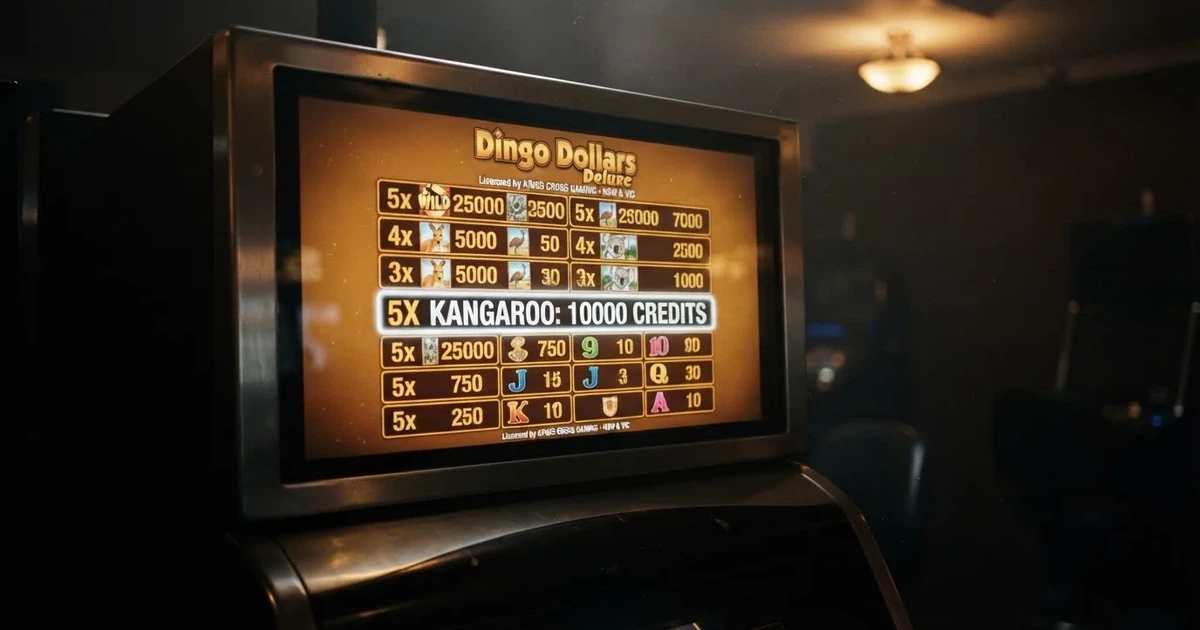
The data behind this page is current as of 7 November 2026, cross-referenced against the Australian Communications and Media Authority’s (ACMA) formal warning register and blocking requests, the Interactive Gambling Act 2001 (IGA), and state-level gaming machine regulations.
Table of Contents
- Brands the ACMA Has Acted Against
- What “RTP” Actually Means
- The Legal Landscape: Why “Best RTP Slots Online” Is a Contradiction in Australia
- Responsible Gambling: What Support Exists
- The Slot Machine Itself: How the Game Works
- Offshore Slots: What the Numbers Mean Without Local Verification
- What an RTP Figure Cannot Tell You
- Tax and the Recreational Player
- The Geography of Australian Online Gambling
- Offshore Sites and the Legal Risk to the Player
- The Honest Comparison
- A Note on What This Page Does Not Cover
- Frequently Asked Questions
Brands the ACMA Has Acted Against
This is not a recommendation list. None of these operators can legally offer online casino games to Australians under the Interactive Gambling Act 2001. Each brand appears because the ACMA itself issued a formal warning to its operating company for providing prohibited interactive gambling services to people in Australia. The warnings are public; the products are not licensed for the Australian market.

| Brand | ACMA action and date | Operator named by the ACMA | Subject support |
|---|---|---|---|
| RocketPlay | Formal warning, March 2026 | Pulsup Ltd | — |
| Level Up Casino | Formal warning, May 2022 | Dama N.V. | listings-only |
| Woo Casino | Formal warning, March 2025 | Dama N.V. | — |
| Spirit Casino | Formal warning, May 2025 | Dama N.V. | — |
| National Casino | Formal warning, July 2025 | Consolutetish S.R.L. | listings-only |
| Bizzo Casino | Formal warning, July 2025 | Consolutetish S.R.L. | — |
| Ignition Casino | Formal warning, July 2025 | Bamboo Media | — |
| Instant Casino | Formal warning, February 2025 | EOD Code SRL | — |
| Jackbit | Formal warning, April 2026 | Ryker B.V. | — |
| Casino Intense | Formal warning, April 2025 | Sterplay Holding Ltd | listings-only |
| Sky Crown | Formal warning, September 2022 | Hollycorn N.V. | — |
The table’s third column marks where the brands appear in independent listings — game aggregators or industry directories that catalogue their slot libraries. A “listings-only” tag means the brand surfaces in third-party catalogues; no independent RTP verification has been confirmed against it. The absence of a tag for the remaining eight means the research found no reliable directory presence to cite.
What follows is not a ranking. It is an account of what each brand’s ACMA entry reveals, and what that entry costs the player who considers signing up anyway.
RocketPlay
The ACMA issued a formal warning to Pulsup Ltd in March 2026 over RocketPlay. Pulsup Ltd is not the first operator the regulator has flagged at this address: Dama N.V. received a warning in May 2022 covering Rocketplay among six brands. The brand has changed hands at least once between those warnings. For a player, the practical takeaway is that the site has cycled through operators without resolving the underlying prohibition. The same URL, a new company behind it, the same legal exposure for anyone in Australia who deposits.
Level Up Casino
Dama N.V. received the original warning covering Level Up in May 2022. Level Up appears in third-party slot directories, which list its library of games from providers such as BGaming. The listings confirm the brand exists and what it offers; they do not confirm that any of those games are available to Australian players under any legitimate licence. The ACMA’s action predates the current wave of enforcement by several years, and the brand continues to operate offshore.
Woo Casino
Another Dama N.V. property, flagged in March 2025. Woo Casino surfaces in the same enforcement cohort as Spirit Casino (May 2025) and the earlier Rocketplay warning (May 2022). Dama N.V. has accumulated at least four ACMA formal warnings across its brand portfolio since 2022. The pattern matters because it shows the regulator returns to the same operator repeatedly; a warning does not necessarily end the offering. It opens a file.
Spirit Casino
Flagged in May 2025, also under Dama N.V. Spirit Casino entered the ACMA’s register within two months of Woo Casino, suggesting a coordinated enforcement sweep against the operator’s portfolio rather than isolated incidents. For a player comparing brands, the cluster of warnings around one operator is more telling than any single entry.
National Casino
The ACMA issued a formal warning to Consolutetish S.R.L. in July 2025 over National Casino. The brand appears in Wikipedia’s coverage of the Australian offshore gambling market, which documents its presence among sites blocked or warned in successive ACMA rounds. National Casino had not been the subject of a prior formal warning at the time of the 2025 action, which sets it apart from brands like Bizzo with a longer enforcement history.
Bizzo Casino
Consolutetish S.R.L. received the July 2025 warning, but Bizzo’s file with the ACMA goes back further: TechSolutions (CY) Group Limited and TechSolutions Group N.V. were warned over Bizzo in 2022. Two operators, three years apart, same brand. The history means the ACMA has had Bizzo on its radar for longer than most operators on this list.
Ignition Casino
Bamboo Media received the July 2025 warning. Ignition Casino targets an Australian audience despite holding no Australian licence; its branding and currency options suggest it is pitched at the local market. The ACMA’s action names Bamboo Media as the entity providing the prohibited service, not a parent company or licence holder.
Instant Casino
The ACMA issued a formal warning to EOD Code SRL in February 2025. Instant Casino operates under a Curaçao-issued authorisation; that licence does not authorise it to offer online casino games to Australians. The EOD Code SRL entity is relatively new to the ACMA’s register compared with operators like Dama N.V., which has accumulated warnings over years.
Jackbit
Ryker B.V. received a formal warning in April 2026 covering both Jackbit and CasinOK. The two-brand warning is unusual; most ACMA actions name a single operator per brand. CasinOK and Jackbit share the same corporate entity, which suggests they are run from the same backend under different front-ends. A player signing up to either is interacting with the same company under two names.
Casino Intense
Sterplay Holding Ltd received a formal warning in April 2025. Casino Intense appears in listings maintained by ABC News coverage of the offshore market and in ACMA enforcement summaries. The brand’s name recurs in state-level reporting on the scale of illegal gambling losses, which is where the broader context of these warnings sits.
Sky Crown
Hollycorn N.V. received a formal warning covering Sky Crown and Blue Leo Casino in September 2022. The warning is older than most on this list, and the brand has continued to operate through subsequent ACMA enforcement rounds. Hollycorn N.V. has not been named in a fresh warning since 2022, which is not the same as compliance — it may simply mean the brand has stayed below the threshold that triggers a new action.
What “RTP” Actually Means
Return-to-player, expressed as a percentage, is the portion of all wagered money a slot returns to players over the lifetime of the game. A slot with 96% RTP returns, on average, A$96 for every A$100 wagered across all spins by all players. The remaining 4% is the house edge, the operator’s built-in margin.
This figure is calculated across an enormous number of spins, often millions or billions in simulation. A single session of a few hundred spins will almost certainly deviate from the published RTP, sometimes dramatically. A player who sits down at a 96% slot and plays 200 spins might be up, might be down, or might be roughly even — the percentage does not predict what happens in the time a real person spends at the machine.
The percentage is set by the game’s mathematical design: the symbol distribution across virtual reels, the pay table for combinations, and the structure of any bonus features. Independent testing laboratories — GLI (Gaming Laboratories International), eCOGRA, BMM Testlabs — verify these figures before the game is released. Certification from one of these bodies is the standard mark that an RTP claim has been checked against the actual game logic.
Why Two Slots with the Same Theme Can Carry Different RTPs
Game developers release the same title in multiple configurations. A 96% version and a 94% version may share artwork, soundtrack, and bonus mechanics; what differs is the mathematical configuration underneath. Operators sometimes select which configuration to host, which means the “same” game at two different sites can pay out at different rates.
Regulators in some jurisdictions mandate a minimum RTP or restrict which configurations an operator may offer. In Australia, the regulations apply to electronic gaming machines (EGMs, colloquially “pokies”) in licensed venues. Online slots offered to Australians are outside that regulatory frame entirely, which is why the configuration question becomes harder to verify for offshore sites.
The Legal Landscape: Why “Best RTP Slots Online” Is a Contradiction in Australia
The Interactive Gambling Act 2001, strengthened by the Interactive Gambling Amendment Act 2017, makes it an offence to provide online casino games — including online pokies and slot games — to a person physically in Australia. No state or territory issues licences for this product. What is licensable is wagering on racing and sport (placed before the event, not in-play), lotteries, and keno.
The distinction matters because it explains the shape of every “best RTP slots Australia” search result. Sites ranking offshore casinos and listing their slot RTPs are describing products that cannot legally be supplied to Australians. The brands themselves may hold licences in Curaçao, Malta, or other jurisdictions, but those licences do not authorise them to target the Australian market.
What the ACMA Does
The ACMA investigates complaints, issues formal warnings, asks federal court for injunctions, and directs Australian internet service providers to block illegal sites. By June 2026, the ACMA had asked for 1,751 illegal gambling and affiliate marketing websites to be blocked since the first blocking request in November 2019. In a single round reported on 26 June 2026, the regulator named 12 more sites for blocking: 7Signs, ChromaBet, Donbet, Duospin, Freshbet, Slots Gem, Jacks Club, Lucky Start, Pointsbetz, Spinrise, Vinyl Casino, and Wildsino.
The individual player is not the target of enforcement. The IGA targets the provider. A punter who signs up with an offshore casino is not prosecuted; they simply have no Australian consumer protection if the site refuses a withdrawal, changes its terms, or disappears with a balance.
Offshore Sites and Australian Consumer Recourse
A Curaçao-licensed casino has no obligation to an Australian player beyond what its own terms say. There is no Australian complaints body, no local ombudsman, no Banking Code-style recourse. If the site blocks a withdrawal, the player’s options are an overseas regulator (slow, uncertain) or a court action in a jurisdiction where the operator is based (expensive, impractical for a few hundred dollars).
This is the practical cost the “best RTP slot” framing leaves out. A 97% RTP at an offshore site that delays a withdrawal for three months and refuses the payout on a bonus-abuse clause is a worse proposition than a 94% RTP at a venue where the winnings are paid in cash on the spot.
The 2026 Reform
The Interactive Gambling Amendment (Gambling Reform) Bill 2026 passed Parliament on 19 August 2026. Its advertising and inducement measures commence on 1 January 2027 — law with a future start date, not yet in force. Once commenced, the reforms will tighten what offshore operators can say to Australian audiences, including restrictions on bonus offers and targeted advertising. For a player in 2026, the rules in force are still those from the 2017 amendments.
Responsible Gambling: What Support Exists
The supports relevant to anyone concerned about their slot play, onshore or offshore, are Australian-funded and Australian-run. They are free.
Gambling Help Online
Gambling Help Online provides free counselling, information, and support for anyone affected by gambling harm. Access is via the website or by calling the National Gambling Helpline on 1800 858 858, twenty-four hours a day, seven days a week. The service is confidential and staffed by professionals who understand the Australian regulatory environment.
BetStop — National Self-Exclusion Register
BetStop, the National Self-Exclusion Register, has been live since August 2023. A person who registers with BetStop is excluded from all Australian-licensed online and phone wagering services. The exclusion periods range from three months to a lifetime.
The critical caveat: BetStop binds Australian-licensed operators. An offshore casino is not connected to the register, which means registering with BetStop does not stop an offshore site from accepting deposits. For a player who wants comprehensive exclusion, BetStop is the onshore half; the offshore half requires either not signing up, or using tools the offshore site provides (most reputable ones do, but they are not bound by Australian law).
State and Territory Self-Exclusion
Each Australian state and territory operates its own exclusion scheme for licensed venues — pubs, clubs, and casinos. These schemes ban the registered person from entering gaming areas at participating venues. The schemes are administered at the state level, and the rules, registration periods, and removal processes differ between jurisdictions.
For someone whose slot play takes place at a licensed venue, state-level exclusion is the direct tool. For someone whose play has migrated offshore, state exclusion closes the onshore doors but leaves the offshore accounts untouched.
The Slot Machine Itself: How the Game Works
The three-reel mechanical slot machine dates to the late nineteenth century. Charles Fey of San Francisco developed the first automatic payout mechanism, a three-reel machine with five symbols — horseshoes, diamonds, spades, hearts, and the Liberty Bell — where three bells in a row paid the top prize of ten nickels. The Liberty Bell is the eponym and the ancestor of every slot machine played since.
From Mechanical to Electronic
Bally’s Money Honey, released in 1963, was the first slot with a bottomless hopper and automatic payout of up to 500 coins without an attendant. The hopper removed the need for a staff member to refill the machine mid-session, which is what made the slot machine a viable mass-market product in bars and casinos.
The first video slot machine followed in 1976, developed by Fortune Coin Co. in Kearny Mesa, California. Video slots replaced physical reels with a screen displaying a simulated reel set. The shift to video opened the door to five or more reels, fifty or more symbols per reel, and odds as high as 300 million to one against the top combination. A classic mechanical three-reel machine with about ten symbols per reel offers roughly 1,000 possible combinations; a modern video slot offers orders of magnitude more, and far longer odds against hitting the top prize.
Australian Pokies: A Distinctive Market
New South Wales legalised slot machines in 1956. By 2010, Australia operated an estimated 97,103 gaming machines outside casinos, a per-capita rate about five times that of the United States. The machine count outside casinos, by state, as of the most recent published figures:
| State/territory | Machines outside casinos | Reporting date |
|---|---|---|
| New South Wales | 87,298 | June 2023 |
| Victoria | 26,380 | 2021–22 |
| Queensland | 21,122 | October 2023 |
| South Australia | 11,672 | September 2023 |
| ACT | 3,587 | November 2023 |
New South Wales has more pokies outside casinos than every other state and territory combined, and roughly four times as many as the next-largest jurisdiction (Victoria). The figure explains why “pokies” is the term a New South Wales punter uses, while “slot machines” or “gaming machines” sounds like the official vocabulary in state regulatory documents.
RTP Disclosure in Australian Venues
Electronic gaming machines in licensed Australian venues are subject to state-level regulation, and the regulations differ. New South Wales, Victoria, Queensland, South Australia, and the ACT each set their own requirements for return-to-player disclosure, game design, and machine monitoring.
For a player, this means the RTP on a pokie in a Sydney club and the RTP on a similarly branded machine in a Melbourne casino can differ. The game’s name and artwork may be the same; the configuration underneath may not be. In New South Wales, the state regulator publishes return-to-player monitoring data for monitored machines, which is what allows a venue or player to verify what the machine has actually paid back over time.
A player who wants to check the RTP of a specific machine at a licensed venue can ask venue staff, who are required to provide the information on request. Some venues also publish the figures on their websites or on printed material near the gaming floor entrance. The information is not always prominent, but it is available.
Offshore Slots: What the Numbers Mean Without Local Verification
An offshore slot’s RTP claim comes from the game’s developer and the testing laboratory that certified it. For a player in Australia, the verification chain runs through the developer’s submission, the lab’s test report, and the operator’s deployment configuration. None of these checks happen under Australian law.
This is not to say offshore slots are rigged — the major developers (NetEnt, Microgaming, Play’n GO, Pragmatic Play, BTG, Nolimit City) build games that perform to their mathematical design. The certification process is real. What is missing is the Australian regulatory layer that would verify the deployment configuration at the specific site and enforce recourse if a withdrawal is blocked or terms changed.
The Licensing Question
Offshore operators commonly hold licences from Curaçao, Malta, the Isle of Man, or Kahnawake. These licences permit the operator to run a casino business; they do not permit the operator to target Australian residents for online casino games. A site displaying a Curaçao logo is licensed in Curaçao for the Curaçao market; the same site offering “AUD deposit” and “Australian player welcome” is exceeding its licence’s authorisation.
The Payment Layer
Since 11 June 2024, credit cards, credit-related products, and digital currency have been banned as payment methods for licensed online wagering in Australia. Penalties for operators accepting them reach A$247,500. Legal deposit routes for licensed wagering are debit card, bank transfer, PayID/Osko, and BPAY.
An offshore casino is not bound by these rules. A site asking an Australian for a credit card deposit or a Bitcoin transfer is not operating under Australian law, which means the consumer protections attached to those payment bans — chargeback rights, local dispute resolution — do not apply. The deposit clears, the player has no Australian recourse if the site refuses the withdrawal.
Blocking Rate: How Fast the ACMA Closes the Door
Since the first blocking request in November 2019, the ACMA has asked Australian ISPs to block 1,751 illegal gambling and affiliate marketing websites. By June 2026, more than 230 unlicensed gambling services had left the Australian market entirely since enforcement was strengthened in 2017.
The blocking rate is best read as a band rather than a single figure. The first blocking request opened the file in November 2019; by June 2026, 1,751 sites had been blocked across roughly 80 months. The average works out to roughly 22 sites per month, but the round sizes vary — the round reported on 26 June 2026 alone named 12 sites in a single request. Some months bring no new blocks; some bring batches of a dozen or more.
The practical meaning: the offshore market a player sees today is not the same market that existed a year ago, or two years ago. Sites cycle in and out of accessibility, and a site accessible today may be blocked next month. A balance sitting on an offshore site is exposed to that instability.
What an RTP Figure Cannot Tell You
A higher RTP does not mean a better slot. It means a slot that, on average, returns a larger share of wagers to players over its lifetime. The selection criteria that matter for a single session are different: volatility, bonus frequency, hit rate, and the structure of the top prize.
A low-volatility slot pays out smaller amounts more often. A high-volatility slot pays out larger amounts less often. Both can carry the same RTP; the player experience is entirely different. A punter who plays for an hour on a low-volatility slot will likely see many small wins and end roughly flat or slightly down. The same hour on a high-volatility slot may produce nothing, or may produce a single payout large enough to cover hours of losses.
RTP does not distinguish between these. A 96% low-volatility slot and a 96% high-volatility slot return the same percentage across millions of spins; the distribution of outcomes around that average is completely different.
The Top Prize
Modern video slots can offer top prizes with odds as high as 300 million to one. The RTP includes the contribution those rare top prizes make to the overall return. A slot where one outcome in 300 million spins pays a million times the line bet and everything else pays nothing can still have a 96% RTP — the maths works out, because the long-run average absorbs the rarity.
For a player, this means the slot’s advertised RTP includes outcomes the player will almost certainly never see. The “average” is real, but it is an average over a population that includes outcomes no individual player will experience.
Tax and the Recreational Player
For a recreational Australian player, gambling winnings are not assessable income. Section 6-5 of the Income Tax Assessment Act 1997 (ITAA 1997) treats them as the result of luck or chance, not as income from a business. Losses are similarly not deductible — they cannot be offset against other income.
The exception is a person who carries on a business of gambling, which the Australian Taxation Office defines narrowly. Professional poker players and sports bettors who treat the activity as a trade may be assessable on their winnings, with losses deductible as business expenses. The threshold is high; the vast majority of slot players fall clearly on the recreational side.
For a recreational slot player, the tax treatment is simple: winnings are tax-free, losses are real money spent. The net cost of playing slots is the total amount wagered minus the total amount won, which over the long run equals the house edge.
The Geography of Australian Online Gambling
Australia’s online wagering licences sit predominantly with the Northern Territory. The Northern Territory Racing and Wagering Commission (NTRWC) regulates 52 of Australia’s online bookmakers — including Sportsbet, Bet365, and Ladbrokes — which are licensed in the Territory for tax reasons. The commission has no full-time staff and meets once a month in Darwin.
The arrangement explains how a company headquartered in Melbourne or London can hold an Australian wagering licence through a Northern Territory entity. The NTRWC is the regulator; the licensee is the company. The NTRWC’s limited capacity has drawn attention from reformers, including a bill introduced in April 2026 to restructure the commission’s oversight.
For casino games, no such arrangement exists. The Interactive Gambling Act prohibits online casino products outright; there is no jurisdiction that issues licences for them, and no operator can structure around the prohibition the way wagering companies structure around the NTRWC.
Offshore Sites and the Legal Risk to the Player
A player who signs up with an offshore casino is not breaking Australian law. The IGA targets the provider, not the customer. What the player gives up is recourse: no Australian complaints body, no local court with jurisdiction over the operator, no guarantee that the site’s terms will be honoured.
The scenarios that bring this home are common enough to be unremarkable in offshore gambling forums. A player wins a large amount; the operator invokes a maximum-cashout clause buried in the bonus terms. A player requests a withdrawal; the operator demands documentation not mentioned at signup. A player stops playing; the operator continues to charge a dormant-account fee that the player never agreed to.
None of these are illegal under the operator’s home jurisdiction. All of them are illegal under Australian consumer law — but the player is not dealing with an Australian company, and Australian consumer law does not reach them.
The Honest Comparison
For an Australian who wants to play slots, the options are:
-
Licensed venues — pubs, clubs, and casinos regulated at the state level. Pokies here operate under local rules, with published RTPs, state-level complaints bodies, and consumer recourse. The product is legal, the protection is real, and the machines are not the “online slots” the search query describes.
-
Offshore sites — online casinos offering slot games to Australians in violation of the IGA. The games may have certified RTPs at or above 96%, the platforms may run smoothly, the bonuses may be generous. None of this changes the legal status of the product or the absence of Australian recourse.
-
Not playing — the option the framing of “best RTP slots Australia” tends to obscure. The math always favours the house, and the RTP figure is an average over an enormous number of spins that no individual session will replicate.
The “best” in the search query is doing a lot of work. It asks which slot pays back the most, which is a question with a clean answer in the maths and a complicated one in the law. A 97% RTP at an offshore site that vanishes with a balance is not better than a 92% RTP at a venue where the winnings are paid in cash. The RTP is one variable; legality, recourse, and reliability are others.
A Note on What This Page Does Not Cover
This page does not list RTP figures for individual slot titles at specific offshore sites. Research did not surface verified, independently tested RTP data for the specific games hosted at the brands named in ACMA warnings, and inventing figures or copying figures from affiliate marketing pages would mislead anyone using them to choose where to play.
For verified RTP data on a specific slot title, the relevant sources are the developer’s published game specification, the testing laboratory’s certification report (where available), and for Australian venues, state-level monitoring data published by the relevant regulator.
Frequently Asked Questions
How is a slot’s RTP percentage calculated over the long run?
RTP is calculated by simulating a very large number of spins — often millions or billions — and dividing total winnings paid out by total amounts wagered. The resulting percentage is the mathematical average the game returns over its entire operating life. It is not a prediction for any individual session or player.
Does a slot’s RTP figure guarantee any result over a single session?
No. RTP is a long-run average. A single session of a few hundred or even a few thousand spins will almost certainly deviate from the published figure, sometimes by a wide margin. The percentage describes the game’s behaviour across its entire lifetime, not what any individual player will experience in a session of any practical length.
Are RTP figures independently tested before a slot is released?
Yes, for slots released by major developers. Independent testing laboratories — GLI, eCOGRA, and BMM Testlabs among them — verify the game’s mathematical design against its claimed RTP before the game is certified for release. Certification from one of these bodies is the standard marker that an RTP claim has been checked against the actual game logic.
How many licensed gaming machines operate outside casinos in Queensland compared with New South Wales?
As of October 2023, Queensland had 21,122 gaming machines outside casinos. New South Wales had 87,298 as of June 2023. New South Wales operates roughly four times as many machines outside casinos as Queensland, and more than every other state and territory combined.
Why do two slots with the same theme sometimes carry different RTP figures?
Developers release the same title in multiple mathematical configurations. A 96% version and a 94% version may share artwork, soundtrack, and bonus features, but the symbol distribution or pay table differs, which changes the long-run return. Operators select which configuration to host, which means the same game at two different venues can pay out at different rates.
Can a player request the RTP figure for a specific licensed pokies machine in Australia?
Yes. Venue staff at licensed Australian venues are required to provide RTP information on request, and some venues publish the figures on their websites or in printed material near the gaming floor. For machines in New South Wales, the state regulator also publishes monitoring data that allows players to verify what a specific machine has paid back over time.