
Best RTP Pokies in Australia: What the Return-to-Player Number Actually Buys You
Data current as of 7 November 2026, verified against the Australian Communications and Media Authority’s published formal-warning register.
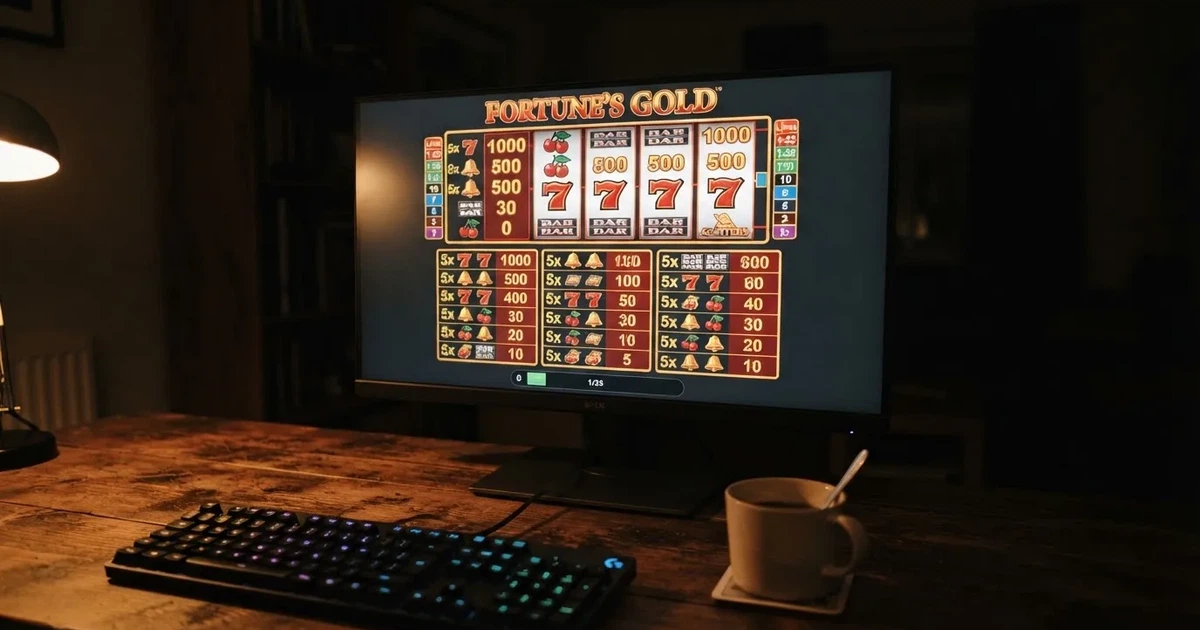
A high RTP figure is the cleanest-looking number in pokies marketing. It is also the one most easily quoted out of context. A venue can advertise a 96% return and still keep the player on the wrong side of a long session, because RTP is a statistical average over millions of spins, not a promise on the next ten. Australian regulation tells the player where that number has to appear on a real machine, but the offshore sites doing most of the “best RTP” advertising are not licensed here, are not subject to that disclosure rule, and cannot be reached by the regulator when the withdrawal stalls.
This page works through what RTP really says, where Australian rules force it to appear, what the state-by-state minimums look like, and how to read an offshore site’s RTP claim when the ACMA has already acted against the operator behind it.
Table of Contents
- How This Shortlist Was Put Together
- What RTP Means on a Real Machine
- Where Australian Rules Force the RTP to Appear
- What Offshore Sites Advertise, and What That Marketing Is Worth
- The Brands the ACMA Has Acted Against
- What an Offshore Pokies Site Actually Gives the Player
- Reading an Operator’s RTP Claim
- Responsible Gambling and the Limits of Self-Exclusion
- What 2026 Looks Like for Offshore Enforcement
- What the Long-Term Average Looks Like in a Real Session
- The Bottom Line on “Best RTP Pokies” in Australia
- Frequently Asked Questions
How This Shortlist Was Put Together
The list of eleven brands below is not a ranking of “best places to play high-RTP pokies.” It is the set of operators the ACMA itself has issued formal warnings against for offering prohibited interactive gambling services to people in Australia — the population of brands the regulator has actually moved on, not a curated selection of where to deposit.

That framing matters. Most “best RTP pokies” comparison pages are built from affiliate marketing data: the site ranks the operator willing to pay the highest commission, not the one whose return-to-player claims are independently verified. The ACMA register gives a different starting point. It is the regulator’s own list, with the operator name, the warning date, and the statute the warning was issued under. If an offshore operator shows up there, the question shifts from “how high is the RTP” to “is anyone accountable when the site stops paying out.”
The selection criteria, in order: (1) a published ACMA formal warning, (2) a unique operator-and-brand pairing in the register, (3) coverage across at least two separate warning years, so the page reflects an enforcement pattern rather than a one-off. Eleven names met that bar. They are not interchangeable: one was warned twice across two operators, several sit under offshore holding companies that rebrand frequently, and the ACMA register itself lists far more brands than any article can cover — none of these eleven carries an exclusivity claim.
What separates one operator from another here is mostly the date and the corporate history. The discipline of paying out a withdrawal is not something the ACMA register measures, and an RTP figure on an offshore site is not something a reader can verify.
What RTP Means on a Real Machine
RTP — return to player — is the percentage of all money wagered on a machine that the machine is programmed to return to players over a very long run. A 95% RTP means that, across millions of spins, the machine returns A$0.95 for every A$1.00 put in. The remaining A$0.05 is the house edge, the operator’s margin, and it is the number that has to be paid to keep the lights on.

The figure is theoretical, not predictive. A 95% machine can pay nothing for an hour and then return A$5.00 on a single spin; the average only settles out over the volume the math assumes. Pokies are the most volatile product on a casino floor precisely because the RTP is delivered in concentrated wins rather than steady dribbles. The arithmetic in a moment shows what that volatility does to a session.
RTP is set at the machine level, not by the player, not by the venue, and not by the session. A machine in a Sydney pub has the same programmed RTP on a Tuesday morning at 10am as it does on a Saturday night, and the state regulator sets a legal floor below which the manufacturer cannot go. The floor is the only number a regulator enforces. Above it, manufacturers and venues choose where to sit.
RTP Is Not the Same as Win Probability
This is the easiest thing to misread. A 96% RTP machine does not give the player a 96% chance of winning on the next spin. Every individual spin on a modern pokie is an independent event, generated by the machine’s random number generator, and the chance of any specific outcome is set by the game’s design, not by the overall return. Most spins lose. A small share pays out the small prizes. A very small share pays out the jackpots that, mathematically, drag the long-run average up to the advertised figure.
Confusing the two is a common marketing move. A site saying “96% payout rate” next to a slot screenshot is not promising you win 96% of the time — it is quoting the long-run machine statistic and counting on the reader not to notice the difference. The distinction matters because the house edge, the 4% the machine keeps, compounds over a session of hundreds of spins. The smaller the wins and the longer the play, the more the house edge is what actually gets paid.
High RTP Does Not Mean Smaller or Larger Individual Wins
A high RTP figure says nothing about the size of any individual prize. Two machines can both be programmed to 96% and have completely different prize profiles — one paying out frequently in small amounts, the other holding back for occasional larger combinations. In industry parlance, that is the volatility of the game: low volatility for the small-frequent payer, high volatility for the rare-large payer.
High volatility is the harder one to budget against, because the long-run average is built out of a small number of large events rather than many small ones. The machine can run “cold” — returning less than the average for an extended period — and the only thing the RTP figure tells the player is that the average will be made up eventually, across a volume of spins most players will never reach. Australian state regulators require the return figure to be disclosed, but they do not standardise volatility. Two 96% machines across the pub and the club next door may feel nothing alike.
Where Australian Rules Force the RTP to Appear
Under Australian state regulation, a poker machine’s RTP has to be disclosed — but the disclosure rule varies by jurisdiction, and not every state publishes it on the same surface. New South Wales requires the return figure to be available on the machine’s help screen, accessible through the game’s information menu, alongside a statement that the figure is theoretical. Other states follow a similar model. The common thread is that the figure is available, but it is rarely on the front of the machine. A player has to look for it.
That asymmetry is the one that matters for someone comparing machines. The RTP is on the machine. The “best RTP pokies” claim from an offshore affiliate site is not on any machine the player can sit at — it is on a webpage the site controls, advertising a product the ACMA has acted against.
The single clearest signal a comparison page can give a reader: the highest-RTP pokie the player can actually sit down and play, in the jurisdiction they live in, is the one published on that machine’s help screen, not the one ranked highest on a site the regulator has already warned.
State-by-State Minimum Return Figures
The legal minimum RTP for poker machines varies by Australian jurisdiction, and the gap between states is wide enough to matter. The minimum is the floor; machines may sit above it, but cannot sit below.
| Jurisdiction | Minimum RTP |
|---|---|
| New South Wales | 85% |
| Northern Territory | 85% |
| Queensland | 85% |
| Victoria (general venues) | 85% |
| Victoria (Crown Melbourne) | 87% |
| Australian Capital Territory | 87% |
| Tasmania | 87% |
| South Australia | 87.5% |
| Western Australia | 90% |
Western Australia’s 90% floor is the country’s strictest, reflecting that the state allows poker machines only at Crown Perth, which sits outside the pubs and clubs. Tasmania and South Australia sit a step above the mainland’s east coast floor. The 85% floors in NSW, the Northern Territory, Queensland and (general) Victoria mark the legal minimum, not the typical figure — most machines on the floor are programmed above the minimum, though not necessarily by a wide margin.
A machine’s published RTP may sit above its jurisdiction’s floor; the regulator is checking it does not sit below. The figure a player sees in the help screen is the actual setting on that unit.
Pub, Club and Casino Machines Across the Country
Electronic gaming machines operate in every Australian state and territory, with each jurisdiction separately regulating their design, deployment and player-protection rules. New South Wales had 87,298 gaming machines outside casinos across 2,195 venues as of June 2023, with player losses of A$8.18 billion in 2022-23 — the largest single jurisdiction by machine count. Queensland had 21,122 machines across 351 venues in October 2023. Victoria had 26,380 outside Crown Casino across 488 venues in 2021-22, under a 30,000-machine statewide cap.
Australia carries roughly 3% of the world’s pub and club poker machines, on about 0.3% of the global population — a density that has made the machines a recurring subject of state-level reform.
What Offshore Sites Advertise, and What That Marketing Is Worth
An offshore site offering pokies to Australians is offering a prohibited interactive gambling service. The Interactive Gambling Act 2001, as strengthened by the Interactive Gambling Amendment Act 2017, makes it an offence to provide online casino games, online pokies or in-play betting to a person physically in Australia. No Australian state or territory licenses these products. A licence from Curaçao, from Anjouan, from any other offshore jurisdiction is not an Australian licence and does not change the IGA analysis.
The “best RTP pokies” comparison pages that read like rankings are typically built on affiliate data. The affiliate gets paid a share of the player’s first deposit, or of net losses, in exchange for sending the player to the operator. The operator pays more for players from sites that rank them higher. The ranking is not an RTP measurement.
The site’s claim — “96% RTP,” “highest payout rate in Australia,” “best pokies” — is the operator’s own marketing copy or its provider’s published figure. Neither is verified by an Australian regulator. The machine the player sees on a laptop screen is a software emulation, not a unit installed under any state gaming authority. There is no venue to walk into, no machine help screen to check, no Australian complaints body to contact if the withdrawal stalls, and no recourse under the IGA for the player as an individual — the statute targets the provider.
When the ACMA issues a formal warning to an operator, the warning names the operator and the brand and is published on the regulator’s website. Once warned, the operator is on notice that continued service to Australian customers is a breach of the IGA. The next step is a direction to Australian internet service providers to block the site. According to the ACMA as reported in June 2026, a total of 1,751 illegal gambling and affiliate marketing websites had been blocked since the first blocking request in November 2019.
A site that is on the ACMA’s formal-warning register, has not been blocked yet, and is still taking Australian deposits is one warning away from a block. A player with a balance on it when that block lands has no Australian consumer protection to call on. The site may still be reachable through a virtual private network, but the operator’s compliance posture does not improve because the player changed their internet routing.
H2 Gambling Capital’s Estimate of Offshore Losses
According to H2 Gambling Capital’s 2025 report, Australians lose about A$3.9 billion a year to illegal gambling sites, and the share of gambling going through legal channels fell from 74% in 2021 to 64%. The fall is not a story about Australians gambling more on the whole — it is a story about a larger share of the existing spend migrating to sites the regulator cannot reach. The legal channels are licensed wagering on races and sport, lotteries and keno; everything else, including online pokies, sits outside them.
The Blocking Rate Since November 2019
The blocking rate is the cleanest single measure of how quickly the ACMA has been able to convert a formal warning into a website that is no longer reachable from an Australian IP address. As at June 2026, the ACMA’s cumulative count of blocked illegal gambling and affiliate marketing websites since the first blocking request in November 2019 stood at 1,751. Across the roughly 79 months between November 2019 and June 2026, that is a band of roughly 22 blocked sites per month on average — with the actual monthly rate varying sharply as new blocking rounds land.
The most recent reported round, on 26 June 2026, added 12 sites in a single action: 7Signs, ChromaBet, Donbet, Duospin, Freshbet, Slots Gem, Jacks Club, Lucky Start, Pointsbetz, Spinrise, Vinyl Casino and Wildsino. A 12-site round in one day is more than half the long-run monthly average, which is why a single round can move the band. The history of blocks is not a smooth line; it is a series of enforcement actions of uneven size, and any reader treating the cumulative count as a steady-state rate will misread what the regulator can actually do.
What the count does not show is the replacement rate — how many new offshore sites appear for every site that gets blocked. The ACMA’s published figures do not include that number, and the affiliate marketing pages that get blocked in the same enforcement round are arguably the bigger lever, because they are the channels that send Australian players to the operator.
The Brands the ACMA Has Acted Against
| Brand | ACMA action and date | Operator named by the ACMA | Subject support |
|---|---|---|---|
| RocketPlay | Formal warning, March 2026 | Pulsup Ltd | No-data |
| Level Up Casino | Formal warning, May 2022 | Dama N.V. | Listings-only |
| Woo Casino | Formal warning, March 2025 | Dama N.V. | No-data |
| Spirit Casino | Formal warning, May 2025 | Dama N.V. | No-data |
| National Casino | Formal warning, July 2025 | Consolutetish S.R.L. | Listings-only |
| Bizzo Casino | Formal warning, July 2025 | Consolutetish S.R.L. | No-data |
| Ignition Casino | Formal warning, July 2025 | Bamboo Media | No-data |
| Instant Casino | Formal warning, February 2025 | EOD Code SRL | No-data |
| Jackbit | Formal warning, April 2026 | Ryker B.V. | No-data |
| Casino Intense | Formal warning, April 2025 | Sterplay Holding Ltd | Listings-only |
| Sky Crown | Formal warning, September 2022 | Hollycorn N.V. | No-data |
The eleven brands below all sit on the ACMA’s published formal-warning register. They are listed because the regulator itself named them; nothing on the page ranks them as a place to play. Each write-up carries the operator, the date, and the regulatory context. None is licensed in Australia for the product on offer. None provides Australian consumer protection on disputes. The verdict on each is the page’s own reading of what the brand is worth against that backdrop.
RocketPlay
The ACMA issued a formal warning to Pulsup Ltd over RocketPlay in March 2026. The same brand was the subject of an earlier warning to Dama N.V. in May 2022, part of a six-brand action that also named Bambet, Dazard, Level Up, Wild Tornado and Cobra Casinos. Two warnings across two operators, four years apart, on the same brand: that is the ACMA’s clearest signal of an enforcement pattern, not a single instance of compliance drift. As a pokies product, RocketPlay carries no Australian licence, no Australian complaints body, and no verified RTP disclosure on the actual machine — only the marketing copy on the website. The pattern the regulator has documented is the reason this page names it first.
Level Up Casino
Level Up Casino was named in the May 2022 ACMA warning to Dama N.V., one of six brands in that single enforcement action. The site’s pokies library has been listed by software providers as carrying titles from BGaming and other studios, but the RTP figures published on those provider pages are studio-side claims, not figures verified by any Australian regulator. The same caveat as the rest of the page applies: no Australian licence, no Australian consumer protection. The brand is on the regulator’s record because Dama N.V. was warned once, and the parent operator has continued to surface across multiple brands.
Woo Casino
The ACMA issued a formal warning to Dama N.V. over Woo Casino in March 2025. Woo sits under the same parent operator as RocketPlay, Level Up, Bambet, Dazard, Wild Tornado and Cobra Casinos, and the warning to Dama N.V. is one of two the ACMA has issued to that operator over the period covered by the register. An offshore site that has been formally warned by the regulator and continues to operate the same product offering is making a deliberate choice about compliance. The site’s own RTP claims are unverifiable from outside the operator’s own marketing pages.
Spirit Casino
Spirit Casino was named in an ACMA formal warning to Dama N.V. in May 2025. Two months after Woo Casino and under the same parent operator, the action suggests Dama N.V. was treated as a single compliance problem across its brand portfolio rather than a series of unrelated incidents. The Australian player considering Spirit Casino is dealing with the same regulatory reachability as the rest of the Dama N.V. portfolio.
National Casino
The ACMA issued a formal warning to Consolutetish S.R.L. in July 2025, covering both National Casino and Bizzo Casino. National Casino’s pokies library has been catalogued on general industry reference pages, but the figures there reflect the listings the reference page accepts as inputs, not the machine-level RTP the player would see on a regulated Australian machine. The same IGA framework applies: National Casino cannot be licensed in Australia, and the ACMA warning is the regulator’s own statement that the operator has been offering the prohibited product.
Bizzo Casino
Bizzo Casino was named in the ACMA’s July 2025 warning to Consolutetish S.R.L., and had earlier been the subject of a 2022 formal warning to TechSolutions (CY) Group Limited and TechSolutions Group N.V. Two warnings, two different operators, four years apart — the same shape as RocketPlay’s record, with a different set of corporate names. The repeated appearance of the same brand under different parent operators is consistent with the offshore industry’s pattern of restructuring around enforcement actions. Bizzo’s published RTP figures are marketing-side claims, not regulator-verified.
Ignition Casino
The ACMA issued a formal warning to Bamboo Media over Ignition Casino in July 2025. Ignition is one of the longer-established offshore brands, and the ACMA warning is the Australian regulator’s first formal action over it under the IGA framework, on the evidence of the published register. As with the rest of the list, the RTP claims on the site are the operator’s own. The withdrawal and complaints process sits entirely outside Australian consumer law.
Instant Casino
The ACMA issued a formal warning to EOD Code SRL over Instant Casino in February 2025. The site advertises a high-RTP pokies catalogue and is on the same regulatory footing as the rest of the list: not licensed in Australia, no recourse under Australian consumer law, no entry in the National Self-Exclusion Register. The formal warning is the ACMA’s published position that the service is being offered in breach of the IGA.
Jackbit
The ACMA issued a formal warning to Ryker B.V. over Jackbit and CasinOK in April 2026. The pair-action against the same operator is one of the more recent on the register and one of the more recent in the calendar. Ryker B.V.’s RTP claims for its pokies catalogue are marketing-side figures, not regulator-verified disclosures.
Casino Intense
The ACMA issued a formal warning to Sterplay Holding Ltd over Casino Intense in April 2025. The site has appeared on Australian industry coverage and on the ACMA’s own register; the only Australian-licence-adjacent coverage in the research is the regulator’s warning and the regulator’s action, both of which sit on the same side of the question.
Sky Crown
The ACMA issued a formal warning to Hollycorn N.V. over Sky Crown and Blue Leo in September 2022, one of the earlier entries on the published register. Sky Crown’s pokies offering has the same offshore marketing posture as the rest of the list. The warning is the regulator’s formal position; the brand has remained on the ACMA’s published register without a corresponding Australian-licence conversion, because no such conversion is available under the IGA for online casino games.
What an Offshore Pokies Site Actually Gives the Player
The functional difference between an offshore site and a regulated Australian machine is not the RTP figure — both can be programmed at the same number on paper. The difference is what the figure is attached to.
A regulated Australian machine has the RTP published in its help screen, the venue licensed by a state authority, the player able to complain to a state gaming regulator, the player able to enter the National Self-Exclusion Register if they want to be excluded from licensed wagering services, the machine physically present in a venue subject to responsible-gambling requirements under state law. An offshore site has the operator’s word that the RTP is what it says it is, no Australian regulator with jurisdiction, no entry in BetStop, no state-licensed venue to walk into, no Australian consumer law recourse on a refused withdrawal.
The National Self-Exclusion Register, BetStop, has been live since August 2023. It binds Australian-licensed online and phone wagering services. An offshore casino is not connected to it — self-exclusion through BetStop does not stop the offshore site from accepting deposits, and the offshore site is not bound to honour a self-exclusion request from a BetStop enrolment. The two systems do not overlap.
The National Gambling Helpline — 1800 858 858, free, 24 hours a day, with chat at Gambling Help Online — is the right call for any Australian whose play has moved from discretionary spending into something they cannot stop. The helpline is not bound to the offshore site’s regulatory posture; it is a service to the player, regardless of where the player has been playing.
What the ACMA Can and Cannot Do
The ACMA investigates complaints, issues formal warnings to operators, and directs Australian internet service providers to block illegal sites. As at June 2026, the cumulative total of blocked sites and affiliate pages since November 2019 was 1,751. The most recent reported round alone added 12 sites. The regulator does not refund player losses, does not arbitrate withdrawal disputes with offshore operators, and does not have jurisdiction over the offshore operator’s corporate decisions about who they accept as a customer.
The individual player is not prosecuted under the IGA — the statute targets the provider. The player’s protection is the act of not depositing with the provider in the first place. The page’s strongest claim is that one: a player who does not deposit with an offshore site that has been formally warned by the ACMA is not exposed to the regulator’s already-documented concern that the operator is offering a prohibited service.
Reading an Operator’s RTP Claim
A page reader who has reached the offshore site — through an affiliate link, an advertisement, a search result — needs a way to read what the site’s RTP claim is actually worth. Three tests, in order.
First, is the operator on the ACMA’s formal-warning register. The register is published on the ACMA’s website; the operator name and the brand name are both on the entry. If the answer is yes, the regulator has already determined that the operator is offering a prohibited service. The RTP figure on the site is the operator’s own marketing claim, and there is no Australian complaints body to take it to if the claim turns out to be wrong.
Second, is the figure presented as “theoretical” or as a “win rate.” If the site calls it a win rate, the operator is conflating RTP with win probability, which the first section of this page argued is a different number. The correct framing is “theoretical return over the long run,” and the operator’s wording is itself a signal of how carefully the marketing is being put together.
Third, is the figure tied to a specific machine, a specific title, or the operator’s whole catalogue. A 96% claim at the site level is weaker than a 96% claim at the title level, and a title-level claim is weaker than the figure published on the actual machine’s help screen under Australian regulation. Each step down the chain moves the figure further from anything the player can verify themselves.
A reader who follows those three tests will reach one of two conclusions. Either the operator is not on the ACMA register, the figure is clearly stated, and the title is named — in which case the player still has to weigh it against the IGA framework, because the prohibition is on the act of offering the product, not on the truthfulness of the marketing. Or the operator is on the register, the figure is ambiguous, and the title is not specifically named — in which case the comparison is over before it starts, and the page’s advice is to walk away.
Responsible Gambling and the Limits of Self-Exclusion
The state-based and national support services for Australian players are designed for the licensed market, and the unlicensed offshore market sits outside most of them.
Gambling Help Online, run by a consortium of Australian state and territory health agencies, offers free 24/7 chat, email and phone support, with the National Gambling Helpline at 1800 858 858. The service is the right call for any player whose gambling is moving from discretionary spending into something they cannot stop, regardless of whether the play is on a licensed Australian machine or on an offshore site.
State-level self-exclusion schemes exist in New South Wales, Victoria, Queensland, South Australia, Western Australia, the Northern Territory, the Australian Capital Territory and Tasmania. Each scheme binds the venues and licensed operators in that state, and the scope of each scheme is set by state law. BetStop, the National Self-Exclusion Register, has been live since August 2023 and binds Australian-licensed online and phone wagering services; it does not bind offshore casinos, and enrolment in BetStop does not stop an offshore site from accepting deposits.
For players who have used offshore sites and want to stop, the practical answer is two-part: enrol in BetStop if the player is using licensed wagering services as well, and contact Gambling Help Online to put a support plan in place that covers the offshore side. The helpline does not have a regulatory lever over the offshore operator, but it does have a working knowledge of how to support a player whose self-exclusion is voluntary on one side and ineffective on the other.
The Payment Side: Credit Cards and Crypto
Since 11 June 2024, credit cards, credit-related products and digital currency have been banned as payment for licensed online wagering in Australia, with penalties up to A$247,500 for operators. The legal deposit routes for licensed wagering are debit card, bank transfer, PayID/Osko and BPAY.
An offshore site asking an Australian for a credit card or a crypto deposit is asking for a payment method the Australian-licensed market has explicitly banned. The payment-method request is itself a signal: a site asking for the payment routes Australian law has prohibited is not operating inside the Australian rules, regardless of what the licence displayed at the bottom of its webpage says. The payment-side test is faster than the ACMA register lookup and a reasonable first filter.
What 2026 Looks Like for Offshore Enforcement
The cumulative block count of 1,751 sites since November 2019 is the headline figure for the regulator’s reach. The most recent published round added 12 sites in a single action, including several brands the affiliate marketing pages had been directing Australian players to. The pattern is not a slow tightening — it is a series of enforcement actions of uneven size, with the affiliate pages blocking at higher rates than the operator pages themselves.
H2 Gambling Capital’s estimate of A$3.9 billion in annual Australian losses to illegal gambling sites, and the fall in the legal-channel share from 74% in 2021 to 64%, are the underlying numbers. The legal-channel figure is the share of gambling spend going through licensed wagering on races and sport, lotteries and keno — the only products that can be licensed in Australia. A 10-percentage-point fall in four years is a large shift, and it is happening while the ACMA’s blocking rate has been at its highest.
The 2026 reform — the Interactive Gambling Amendment (Gambling Reform) Bill 2026, which passed Parliament on 19 August 2026 — adds advertising and inducement measures commencing on 1 January 2027. The advertising measures are law with a start date, not law in force on a 2026 page. The shape of the change is that Australian-facing affiliate marketing pages and inducement offers will be in scope under the same IGA framework that the offshore operators themselves are in.
The Northern Territory’s Quiet Regulatory Role
The Northern Territory Racing and Wagering Commission regulates 52 of Australia’s online bookmakers, including Sportsbet, Bet365 and Ladbrokes. The licences are issued in the Territory for tax reasons, and the commission operates without full-time staff and meets once a month in Darwin. The arrangement is the source of the practical regulatory architecture for licensed Australian online wagering, and it is the same arrangement the IGA carves out as the licensable surface — wagering on races and sport placed before the event, lotteries and keno.
Online casino games and online pokies are not within the licensable surface. That is why every operator on the ACMA’s formal-warning register, however they present themselves on their own pages, is offering a product the Northern Territory and the rest of Australia’s licensing system do not and cannot issue a licence for.
What the Long-Term Average Looks Like in a Real Session
A 96% RTP machine, played at A$1.00 per spin over a session of 600 spins, expects to return A$576.00 against A$600.00 wagered — an expected loss of A$24.00 on the session, before any of the volatility of the actual game is priced in. The 4% house edge is the operator’s margin across all sessions, and over a single session the result can sit anywhere in a wide band around that average.
The expected-loss arithmetic is the cleanest way to read an RTP claim. It says nothing about whether the player will win on any particular spin, and nothing about how long a session will run before the player stops. It says that, across many sessions under the same assumptions, the operator keeps 4% of what is wagered. The arithmetic does not depend on which of the eleven ACMA-warned brands is being played, and it does not depend on whether the RTP figure is regulator-verified or operator-published. It depends on the RTP figure being accurate, and that is the assumption the rest of this page has been arguing is hardest to verify on an offshore site.
For the Australian player who wants to act on the RTP figure, the practical decision is where to find the figure in a form they can verify. The answer, for online pokies, is: nowhere in Australia, because online pokies are prohibited. The answer, for land-based machines, is the help screen on the machine itself, with the regulator’s enforcement of the floor as the verification.
The Bottom Line on “Best RTP Pokies” in Australia
“Best RTP pokies” is a phrase that points offshore by default, because Australian regulation does not license online pokies. The list of eleven brands is the ACMA’s register of offshore operators that have been formally warned for offering the prohibited product. The list is not a recommendation; the regulator’s own action is the reason the list exists.
The high-RTP question for an Australian player is not which offshore site pays the highest return. It is whether the comparison the player is reading is built from affiliate marketing data, from operator-published claims, or from a regulator’s enforcement record. The first two are unverifiable; the third is public.
The Australian land-based machine has its RTP in the help screen, the venue licensed under state regulation, the player able to complain to a state authority, the player able to use BetStop if they want to be excluded from licensed wagering. The offshore site has none of those. The marketing-language “best” is doing a lot of work to bridge the gap, and the arithmetic on RTP does not close it.
Frequently Asked Questions
What counts as a ‘high’ RTP figure on an Australian pokies machine?
There is no statutory definition of “high” in Australian regulation. The legal minimum RTP is set state by state — 85% in NSW, the Northern Territory, Queensland and general-venue Victoria, 87% at Crown Melbourne, in the ACT and Tasmania, 87.5% in South Australia, and 90% in Western Australia. Most machines on the floor are programmed above the minimum, with figures in the 90-96% range commonly advertised. Anything described as “high” without a stated number is a marketing phrase, not a measurement.
Is RTP the same as the chance of winning on any single spin?
No. RTP is the long-run percentage of money wagered that the machine is programmed to return, averaged across millions of spins. The chance of any individual spin landing on a win is set by the game’s design, and is typically much lower than the RTP figure. A 96% RTP machine can still lose on 80% of spins; the average is made up by a small number of larger payouts distributed across the long run.
Where is a pokies machine’s RTP figure legally required to be disclosed in Australia?
The disclosure rule varies by state. New South Wales requires the theoretical return figure to be available on the machine’s help screen, accessible through the game’s information menu. Other states follow similar models, generally requiring the figure to be available on request or on the machine interface. The figure is rarely on the front of the machine. The offshore sites advertising “best RTP pokies” are not subject to any Australian disclosure rule.
Can a venue change a machine’s RTP setting after it’s installed?
The machine’s RTP is set at the manufacturer level and locked under state regulation. Venues cannot adjust the return figure to favour themselves on a slow night, and the state regulator audits the setting on licensed machines. An offshore site has no equivalent restriction on changing the published figure, which is part of why the figure on the site is harder to verify than the figure on the machine.
Does a high RTP figure mean smaller or larger individual wins?
Neither, directly. Two machines can both be programmed at the same RTP and have completely different prize profiles — low volatility with frequent small wins, high volatility with rare large wins. The RTP figure describes the average return; volatility describes the distribution of wins around that average. A high-volatility high-RTP machine can run cold for an extended period before paying out a large combination that brings the long-run average back to the advertised figure.
How does the number of pokies machines vary between Australian states?
New South Wales has the largest installed base outside casinos, at 87,298 machines across 2,195 venues as of June 2023, with player losses of A$8.18 billion in 2022-23. Victoria had 26,380 machines outside Crown Casino across 488 venues in 2021-22, under a 30,000 statewide cap. Queensland had 21,122 machines across 351 venues in October 2023. Western Australia restricts poker machines to Crown Perth, with roughly 2,500 machines in the venue under state approval, and no machines in pubs or clubs.