
Real money online pokies in Australia: the gap between search terms and the law
Real money online pokies cannot be licensed for Australians in 2026, and no state or territory issues a licence that would let an offshore casino take a real-money bet from someone sitting in Sydney, Melbourne or a regional town. That single fact reshapes what a search for the best online pokies real money actually returns. The page that follows is not a list of recommended casinos; the Interactive Gambling Act 2001 prohibits that product outright, and an Australian reader who lands on one anyway is on a site the ACMA has, in many cases, already warned, and whose balance can be blocked with the click of an internet-service-provider request. What this page does is lay out the prohibition plainly, name what has been acted against, and point to what is actually lawful: licensed Australian venues, land-based casinos, BetStop for self-exclusion and the National Gambling Helpline for anyone who needs it.
Verified against ACMA enforcement records and the Interactive Gambling Act 2001 as of 7 November 2026.
Table of Contents
- How the Australian market for real money online pokies actually works in 2026
- What the Interactive Gambling Act 2001 actually prohibits, and what it does not
- The ACMA’s enforcement record and what it tells a reader
- Responsible gambling tools that actually reach an Australian reader
- Payments: what an Australian punter can actually deposit with
- The mobile and app experience for an Australian reader
- The gameplay and the catalogue behind the marketing
- The blocking rate: how often the ACMA’s requests actually clear the offshore supply
- What an Australian reader can legally play
- The eleven brands the ACMA has acted against, and what each tells a reader
- What the picture looks like once the eleven entries are read together
- Tax, winnings and what an Australian reader needs to know at year-end
- What changes in 2027 and what does not
- FAQ
How the Australian market for real money online pokies actually works in 2026
The phrase “real money online pokies” carries an expectation a reader usually arrives with — that somewhere, in the way online bookmakers are licensed, there is an equivalent licence for casino games. There is not. The Interactive Gambling Act 2001, tightened by the Interactive Gambling Amendment Act 2017, makes it an offence to provide online casino games — and that is the legal category a pokie falls into — to a person physically in Australia. No state or territory has issued a licence for that product, and none can; the Commonwealth Act overrides them. Wagering on races and sport before the event is licensable, lotteries and keno are licensable, and the rest is not.
The consequence is a market that splits in two. On one side sit the Australian-licensed bookmakers — Sportsbet, Bet365, Ladbrokes and roughly fifty more, all regulated for tax reasons by the Northern Territory Racing and Wagering Commission. On the other sit the offshore casinos the ACMA has spent the last decade warning and blocking. They accept Australian players, they advertise in Australian dollars, and the deposit rails they offer look local, but the licence on the footer is from Curaçao, Anjouan or Kahnawake and is not recognised under Australian law. The site works because no Australian agency is paid to stop it from working at the moment a punter signs up; the prohibition targets the provider, not the player.

The marketing language around these offshore sites reads as if they were licensed. They publish responsible-gaming pages, they list a regulator at the bottom of the homepage, and their affiliate reviews repeat the licence number as though it were a quality mark. None of that changes what an Australian reader is consenting to: a site the ACMA can direct an ISP to block, with no Australian complaints body behind a disputed withdrawal and no Australian recourse if the balance disappears. The minimum age for legal play is 18; that age limit applies to the licensed side, and an offshore site asks for it as a formality of payment rather than a binding rule.
The 2026 reform picture is worth knowing about because it is news readers will see in trade press, even though it has not yet changed what is legal. The Interactive Gambling Amendment (Gambling Reform) Bill 2026 passed Parliament on 19 August 2026, and its advertising and inducement measures commence on 1 January 2027. The bill is law with a start date — it is not in force on a 2026 page, and what an Australian reader can and cannot do at an offshore casino does not change until those commencement provisions activate. The substantive prohibition on online casino games predates the bill and is unaffected by it.
What the Interactive Gambling Act 2001 actually prohibits, and what it does not
The prohibition sits in two pieces of Commonwealth legislation that work together. The Interactive Gambling Act 2001 created the original offence of providing a prohibited interactive gambling service to a person in Australia; the Interactive Gambling Amendment Act 2017 expanded the definition, added civil penalty provisions and gave the ACMA the powers it now uses to issue formal warnings and direct ISPs to block sites. The “prohibited interactive gambling service” category covers online casino games — pokies, blackjack, baccarat, roulette — and in-play betting on sport. What is not prohibited is wagering on a race or sporting event before it starts, lotteries and keno.
The age threshold is 18 across Australia. A wagering or lottery product licensed under the regime enforces it through KYC checks at the point of deposit and at the point of withdrawal; an offshore casino’s enforcement is whatever the operator chooses to put on the sign-up form. The structural difference matters for a reader who has been locked out of a licensed site: an offshore site does not inherit that protection, and the lockout a punter relies on at a Sportsbet or Ladbrokes account does not extend to a Curaçao-licensed casino running parallel marketing.
Penalties attach to the provider, not the player. A person in Australia who opens an account and deposits is not committing an offence under the IGA; the offence is committed by the operator, and the ACMA’s enforcement record is a record of warnings issued to operators, not charges laid against individuals. That asymmetry is part of why the offshore market persists. The site closes, the operator opens a new one under a fresh company name, and the same marketing reaches the same inboxes within weeks. The ACMA’s blocking list has now passed 1,750 entries since the first blocking request in November 2019, which gives a sense of the throughput: a slow leak of domains rather than a single decisive shutdown.
The ACMA’s enforcement record and what it tells a reader
The ACMA’s public register of formal warnings and blocking rounds is the closest thing to a buyer-beware list an Australian reader can read in plain English. A formal warning is not an arrest; it is a written notice that an operator’s services appear to contravene the IGA, that further enforcement action will follow, and that the warning itself will be published. The register is searchable by company name and by domain, and it is updated as new rounds are issued.
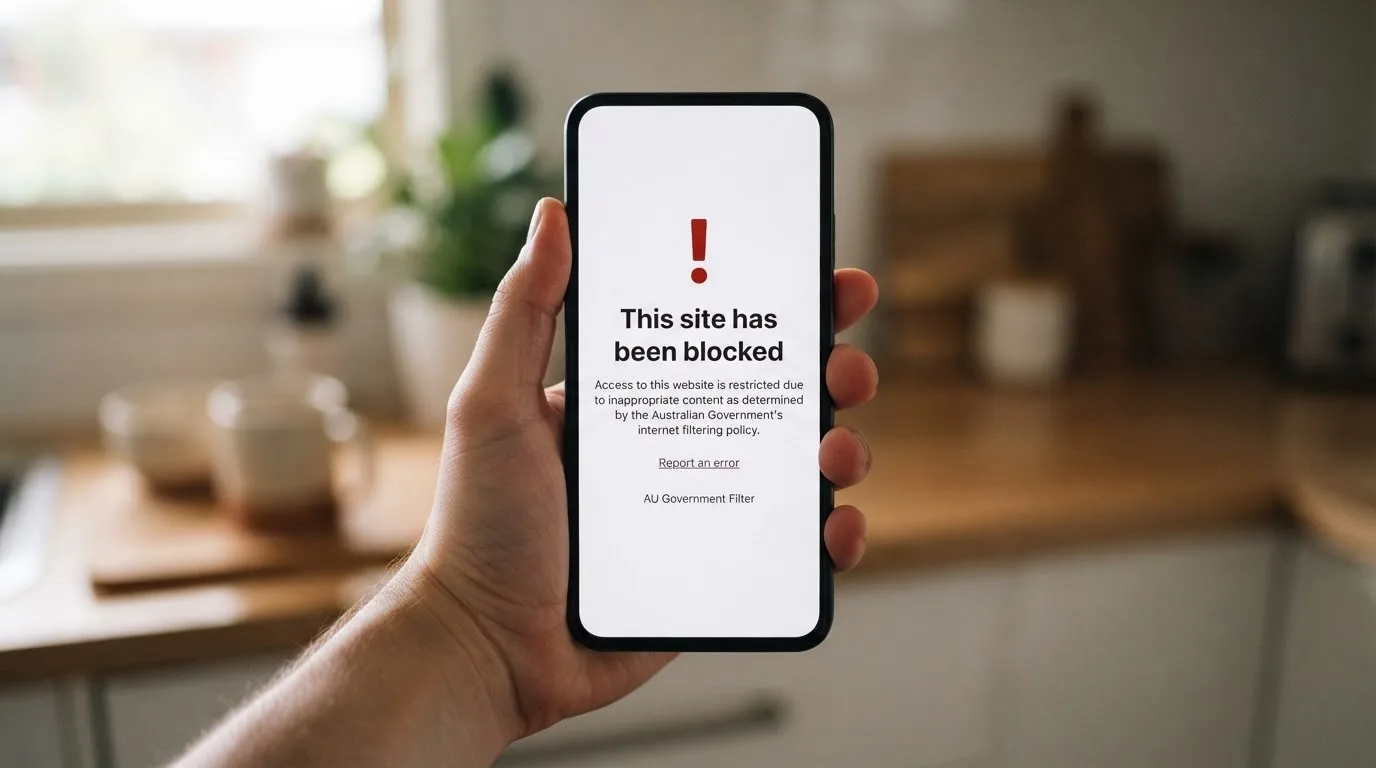
A blocking round is the heavier tool. Once the ACMA has issued a formal warning and the operator has not brought its services into compliance, the ACMA can request that Australian ISPs prevent end-user access to the offending sites. The first such request went out in November 2019, and the cumulative total reached 1,751 illegal gambling and affiliate-marketing websites by the round reported on 26 June 2026. In that same June 2026 round, twelve more domains were added: 7Signs, ChromaBet, Donbet, Duospin, Freshbet, Slots Gem, Jacks Club, Lucky Start, Pointsbetz.com, Spinrise, Vinyl Casino and Wildsino. The pattern across these rounds is instructive. The same operators recycle names: a brand warned in one round reappears under a different corporate vehicle within months, and the ACMA warns the new vehicle in turn.
The formal warnings research has collected for this page read like a directory of the offshore brands an Australian punter will see in search results. Dama N.V., one of the most-recurring operators, received a warning in May 2022 covering six brands — Bambet, Dazard, Level Up, Rocketplay, Wild Tornado and Cobra Casinos — and was then warned again in March 2025 over Woo Casino and in May 2025 over Spirit Casino. The corporate vehicle stays the same; the brand portfolio rotates. Consolutetish S.R.L. was warned in July 2025 over National Casino and Bizzo Casino; Bizzo Casino had already been the subject of a 2022 warning to TechSolutions (CY) Group Limited and TechSolutions Group N.V. EOD Code SRL was warned in February 2025 over Instant Casino; Bamboo Media in July 2025 over Ignition Casino; Sterplay Holding Ltd in April 2025 over Casino Intense; Hollycorn N.V. over Sky Crown and Blue Leo; Ryker B.V. in April 2026 over Jackbit and CasinOK; and Pulsup Ltd in March 2026 over Rocketplay.com.au, after Dama N.V. had already been warned over an earlier version of the same brand.
Read in chronological order the register tells a reader two things. First, the ACMA’s enforcement is real and ongoing — the rounds are months apart, not years. Second, the offshore supply side is structured to outlast that enforcement: the same parent company can rotate brands faster than the register can be updated, and a domain that is blocked today will resurface under a new one next quarter. A reader who treats the register as a blacklist and assumes any brand not yet on it is therefore safe is reading the wrong way around. The register lists the brands the ACMA has acted against; the absence of a brand from the register says nothing about its legality.
Responsible gambling tools that actually reach an Australian reader
The Australian player-protection regime is built around licensed wagering and the people who use it. The principal tool is BetStop, the National Self-Exclusion Register, which has been live since August 2023. A punter who registers with BetStop is excluded, by force of law, from every Australian-licensed online and phone wagering service for the period they nominate. The exclusion applies across operators; a person on BetStop cannot open a new account with Sportsbet, Bet365, Ladbrokes or any of the other licensed bookmakers while the exclusion is in force. The mechanism works because the licensed operators share a register and honour it on the same day.
BetStop does not cover offshore casinos. A punter who joins the register, then opens an account with a Curaçao-licensed site, will not be stopped at the sign-up page — the offshore operator is not connected to the Australian register, has no obligation to check it, and has no incentive to refuse business the Australian licensed market has declined. The protection is real on the licensed side and absent on the offshore side, and that asymmetry is the single most important thing a reader comparing “real money online pokies” to “real money wagering” needs to internalise. Self-exclusion from a Curaçao casino is whatever the operator chooses to honour, and the operator’s choice is to keep the account open.
Help lines sit alongside the register. The National Gambling Helpline is 1800 858 858, free, 24/7, with a chat option at Gambling Help Online. The helpline is the route to counselling, financial advice and referral to face-to-face support in each state and territory. It is also the route a reader on the licensed side uses to register with BetStop, because registration is processed through the same provider network. A reader who wants self-exclusion to extend to offshore sites as well has to rely on a combination of the helpline, blocking software on their own devices, and a deliberate decision not to sign up; the regulatory regime cannot do that work for them.
State-level protections apply to the land-based pokies the IGA leaves untouched. Tasmania had planned nation-leading mandatory pre-commitment cards for its poker machines, with implementation delayed until late 2025; the cards were meant to require a punter to set a loss limit before play and to enforce it at the machine. Western Australia has banned poker machines in pubs and clubs since Crown Perth opened in 1985; Crown Perth’s own machine count has grown from about 200 in 1985 to roughly 2,500, all approved by the state’s Gaming and Wagering Commission. New South Wales had 87,298 gaming machines outside casinos across 2,195 venues as of June 2023, with player losses of A$8.18 billion in 2022–23; Queensland had 21,122 gaming machines in 351 venues in October 2023; Victoria had 26,380 outside Crown Casino in 488 venues in 2021–22, under a 30,000-machine statewide cap. Each jurisdiction regulates the machines separately, and the design rules — the minimum return-to-player, the betting limits, the location rules — vary state by state.
The minimum return-to-player on a land-based pokie is a useful number for a reader who has only ever seen it as marketing copy on an offshore site. New South Wales, the Northern Territory, Queensland and (generally) Victoria set 85%; the Australian Capital Territory and Tasmania set 87%; South Australia sets 87.5%; and Western Australia, for the limited machines at Crown Perth, sets 90%. These are floors, not averages — the actual return on a given machine in a given venue depends on its configuration, but the floor is the legal minimum the operator cannot go below. A reader comparing this to a 96% return advertised by an offshore online pokie should read the offshore figure as a publisher’s claim about a publisher’s game; the Australian figure is enforced by a state regulator that audits the machines.
Payments: what an Australian punter can actually deposit with
The payment picture splits along the same line as the licensing picture. For Australian-licensed wagering, credit cards, credit-related products and digital currency have been banned as methods of deposit since 11 June 2024, with penalties of up to $247,500 for an operator that accepts them. Legal deposit routes for a licensed bookmaker are debit card, bank transfer, PayID/Osko and BPAY. PayID is the rail most readers will recognise: it is the instant settlement layer on top of the New Payments Platform that links a phone number or email address to a bank account, and a deposit from a PayID-enabled account lands in seconds, including on weekends. A licensed bookmaker pays out to the same rails, and a withdrawal back to an Australian bank account is typically same-day or next-business-day depending on the operator’s processing window.
An offshore casino accepts whatever it can route, and that includes the same PayID rails for deposits when the operator wants Australian dollars to land cheaply. PayID does not change the legal status of the receiving site; the money arrives because PayID does not check what the recipient is selling. A reader who searches for “PayID online pokies” and lands on a casino that promises PayID deposits is reading a payment-method landing page that the regulator has not licensed for the product on offer. PayID works because the Australian banking system does not know — and is not paid to know — what the recipient does with the funds once they clear.
A site asking an Australian for a credit card or a crypto deposit is operating outside the Australian rules on both counts. Crypto is not a payment the licensed market accepts, and a credit card is explicitly prohibited for licensed wagering; an offshore site that takes either is not subject to either rule. The same is true for a withdrawal. An offshore casino that promises a 24-hour payout to PayID is making a promise the casino is free to break, and the recourse when it does is the casino’s own complaints process, a Curaçao or Anjouan licensing authority, or a chargeback through the punter’s bank — none of which an Australian reader can use as easily as they can use an Australian-licensed bookmaker’s regulated complaints process.
The unit economics of an offshore payout are not in the punter’s favour. The casino pays a fee to receive PayID, pays a fee to settle in AUD, and pays a fee to convert any winnings the punter wants to withdraw back into the punter’s bank. Those fees are absorbed by the operator when the deposit is large enough and are deducted from the payout when it is not; a punter withdrawing A$200 may find that the conversion and processing fees consume a meaningful share of the payout, and the punter has no Australian regulator to complain to about the deduction. The licensed market does not have this problem because the operator is paid to settle in AUD and is subject to a complaints body that will reverse an unfair deduction.
The mobile and app experience for an Australian reader
Real money wagering apps in Australia are the apps of the licensed bookmakers: Sportsbet, Bet365, Ladbrokes, Betfair, Neds, PointsBet and roughly fifty more, all downloadable from the Australian App Store and Google Play stores after the platforms’ own content reviews. The apps are functional, well-supported, and tied to the licensed operator’s deposit and withdrawal rails. A punter who wants to bet on a horse race or a sporting event before it starts opens one of these apps; the deposit clears via PayID or debit card, the bet settles in the same app, and the winnings come back to the same bank account through the same rails.
A real money online pokie app does not exist on these stores for an Australian reader, because no such product is licensed. What an Australian reader who searches “best real money pokies app” will find is the offshore brands’ mobile-optimised websites — web apps that load in a phone browser and behave like native apps for the duration of a session. Some of these web apps are technically polished. The visual quality of an offshore pokie on a modern phone is comparable to the visual quality of a licensed wagering app, and the marketing for that polish is part of why readers search for it. The polish does not change the legal status, and a web app on a phone is still a site the ACMA can direct an ISP to block.
The blocking applies at the network layer. When the ACMA asks an ISP to block a domain, the request reaches the ISP’s resolver, and the domain stops resolving for that ISP’s customers. A reader who has the web app open on their phone at the moment the block lands will see the app fail to load on the next refresh; the punter’s session is interrupted, any in-progress balance is held by the offshore operator, and the punter’s recourse is whatever the operator’s terms say about withdrawals during a regulatory event — which is, in practice, that the operator will process withdrawals it chooses to process.
A reader comparing the licensed wagering app to the offshore casino web app on phone-screen experience alone will see a similar surface. The decision to use one or the other is a decision about the legal status of the product, not the quality of the mobile interface, and the answer to “best real money pokies app Australia” is that the licensed side does not offer one and the unlicensed side offers the kind of thing that gets blocked.
The gameplay and the catalogue behind the marketing
What an offshore casino actually offers, once a punter is past the marketing page, is a catalogue of pokie titles supplied by a handful of studios — Pragmatic Play, BGaming, NetEnt, Microgaming and a few dozen smaller ones — running on the casino’s own platform. The titles are the same ones a reader would see on any offshore casino licensed anywhere in the world: Book of Dead, Gates of Olympus, Sweet Bonanza, Wolf Gold, the Big Bass Bonanza series, the pokies clustered around the “Megaways” mechanic licensed from Big Time Gaming, and a long tail of branded and unbranded slots. The catalogue is large because the studios license the same games to every operator that pays the integration fee, and the catalogue is interchangeable because the studio, not the casino, owns the game.
Return-to-player on an offshore pokie is a number the publisher sets and the casino displays. A 96% RTP on a given title is the publisher’s published number, audited by a testing lab the publisher has hired, and is the figure the casino shows on its information page. The figure is not enforced by an Australian regulator and is not verified by an Australian audit; the reader is taking the publisher’s word, filtered through the casino’s marketing. The house edge sits at the publisher’s set figure, and the punter’s variance is whatever the publisher’s math model produces. A 96% RTP title played at A$1 a spin over thousands of spins will, on average, return A$960 per A$1,000 wagered — and “on average” is the operative phrase, because variance on a single session is wide enough that the punter can leave with either a multiple of the deposit or a fraction of it.
Table games sit alongside the pokies. Baccarat, blackjack and roulette are universal in the offshore catalogue; baccarat is a publisher’s product with a published house edge of 1.06% on the Banker bet, 1.24% on the Player bet and 14.36% on the Tie, blackjack has an optimal-strategy house edge of about 0.28% under liberal Las Vegas Strip rules or about 0.43% under Atlantic City rules, and roulette sits in the 2.7%-5.4% band depending on whether the wheel is single-zero or double-zero. Live dealer tables — Evolution, Pragmatic Play Live, Asia Gaming — stream the same games with a real dealer and a real wheel, and the live-dealer house edge is identical to the RNG version because the underlying math is the same.
The catalogue’s diversity does not change the legal frame. A reader who recognises a title from a land-based casino — and many of the titles above have land-based siblings in Australian venues — is not playing the land-based machine; the offshore version is a different product, supplied by a different operator, with no connection to the state regulator that licenses the physical machine. The state-level RTP floors noted above apply to the physical machines only. The offshore version’s RTP is the publisher’s number, and the publisher is not bound by the state floor.
The blocking rate: how often the ACMA’s requests actually clear the offshore supply
Two numbers from research make the calculation possible. As reported on 26 June 2026, a total of 1,751 illegal gambling and affiliate-marketing websites had been blocked since the first blocking request went out in November 2019 — a span of just over six and a half years, or roughly 79 months. The arithmetic that follows clarifies the scale of the enforcement: 1,751 blocks across roughly 79 months comes out to an average of about 22 blocking actions per month, with the rate varying round by round (the June 2026 round alone added 12 domains).
The rate tells a reader two things at once. First, the ACMA is not standing still: more than twenty blocking actions a month, sustained across years, is a real throughput, and the cumulative list has crossed the 1,700 mark. Second, the rate is dwarfed by the supply side. Offshore operators rotate brands faster than the ACMA can log them; a domain blocked this week can be replaced by a fresh one next week under the same parent company, and the affiliate-marketing pages that drive traffic to the blocked domains are themselves on the blocking list. The result is a market where the ACMA removes the visible top of the iceberg every month and a larger body of supply continues to operate beneath. The 230-plus unlicensed services that have left the Australian market since 2017, by contrast, are exits — operators that withdrew rather than being blocked — and the exit rate is a small fraction of the blocking rate.
The blocking-rate calculation also frames what “best” means in this market. A punter looking for the best real money online pokies is implicitly asking which operator offers the strongest combination of game catalogue, deposit convenience and payout reliability. None of those attributes can be evaluated against an Australian benchmark because no Australian benchmark exists. The blocking rate makes the gap explicit: a market where the regulator issues more than 250 blocking requests a year and more than 230 operators have left since 2017 is not a market in which a responsible comparison of operator quality can be made. The legal alternatives are the basis on which the comparison has to be built.
What an Australian reader can legally play
The legal alternatives divide into three categories, and each is regulated differently. The first is licensed Australian wagering — racing and sports betting before the event, placed with a bookmaker licensed by the Northern Territory Racing and Wagering Commission or, for some operators, by a state regulator. The minimum age is 18; deposit and withdrawal are via PayID, debit card, BPAY or bank transfer; credit cards and crypto are prohibited. The minimum-RTP floors and the state-level machine regulations noted above do not apply to wagering, because wagering is not a machine game; they apply to the second category.
The second category is licensed Australian venues — pubs, clubs and casinos operating under state-level regulation. These are the land-based pokies an Australian reader can play legally, and the regulatory frame is the state-by-state framework described in the responsible-gaming section above. The machines are licensed, audited and subject to state-level harm-minimisation measures: pre-commitment in Tasmania once implemented, the 30,000-machine cap in Victoria, the venue density rules in NSW, the Crown-only framework in Western Australia. Punters who want to play a real money pokie in Australia today play one of these machines.
The third category is the Australian-licensed lotteries and keno products. Keno is offered in pubs and clubs alongside the pokies in most jurisdictions, and Tatts, Tabcorp and the state lottery operators run the larger lottery products. The minimum age for lottery products is 18 in most states, with 17 in some for some lottery products — readers should check their own jurisdiction. Lotteries are not pokies and the comparison to “real money online pokies” is structural rather than competitive; the reader looking for an online game finds licensed wagering, not licensed pokies.
The gap between these categories and the offshore supply is the page’s central finding. The categories are what an Australian reader can do today; the offshore supply is what an Australian reader is searching for when they type “best online pokies real money australia 2026.” The legal alternatives do not include a licensed online pokie, and the offshore supply is not a lawful substitute for one.
The eleven brands the ACMA has acted against, and what each tells a reader
The brands listed below are not a recommendation. Each is named because the ACMA itself issued a formal warning to the operator behind it, and the ACMA register is the public record of that action. The list is ordered by the order research gave, which is the order the ACMA’s enforcement has touched them over the page’s review window. None of the brands is licensed in Australia, and none can be, because online casino games are prohibited for Australian players under the Interactive Gambling Act 2001. The licence a brand displays on its footer — Curaçao, Anjouan, Kahnawake — is a foreign jurisdiction’s permission to operate, not an Australian licence, and it does not change the status of the site for a punter sitting in Australia.
The same applies to the offshore parent companies. Several of these warnings went to the same operator, often months or years apart, covering different brands from the same portfolio. Dama N.V. has been warned in May 2022, March 2025 and May 2025, covering at least nine distinct brand names across those rounds. Consolutetish S.R.L. was warned in July 2025 over National Casino and Bizzo Casino. Ryker B.V. was warned in April 2026 over Jackbit and CasinOK. The repetition is not an accident; the ACMA’s enforcement record is what an Australian reader sees when an operator rotates brands faster than the regulator can update its register.
A reader who has encountered one of these brands in marketing and is wondering whether it is “safe” should read the brand entry as evidence the ACMA has acted against it, and should treat any licence displayed on the site as a foreign-licence assertion that has no standing in Australia. The brand entries that follow are organised by the order research gave.
RocketPlay
The ACMA issued a formal warning to Pulsup Ltd over Rocketplay.com.au in March 2026, after Dama N.V. had already been warned over an earlier version of the same brand in May 2022. The site is therefore a recycled brand, with the original operator warned years before the new corporate vehicle took over. The catalogue, the deposit rails and the marketing have rotated around the same parent group. For a reader who has seen the brand in affiliate marketing, the ACMA action is the regulatory answer to the marketing claim, and the brand cannot be licensed in Australia because online casino games are prohibited.
Level Up Casino
Dama N.V. was warned over Level Up Casino as part of the May 2022 round that covered six Dama brands at once. Level Up Casino runs the standard offshore pokie catalogue and the same deposit rails as the rest of the Dama portfolio. The site has continued to accept Australian players since the warning; the ACMA’s enforcement in 2022 was the start of an ongoing process, not the end of one. Research lists the brand as a subject of a BGaming listing page — a third-party game studio’s catalogue entry — which means the brand exists as a customer of the studio, not as a partner in the game’s regulation.
Woo Casino
The ACMA warned Dama N.V. over Woo Casino in March 2025. Woo Casino is one of the more heavily marketed Dama brands and has been a regular presence in affiliate lists aimed at Australian search terms. The 2025 warning was the second time the ACMA had named a Dama brand in close succession; the May 2025 warning over Spirit Casino followed within weeks. For a reader who reached Woo Casino via an Australian-facing affiliate page, the warning is the same regulatory answer as the others: the operator has been formally told the service is prohibited for Australians.
Spirit Casino
Dama N.V. was warned over Spirit Casino in May 2025, the second Dama warning of that month. Spirit Casino is part of the same Dama portfolio as Woo Casino and the May 2022 six-brand group, and the 2025 warnings were a renewed round against the same operator over different brand names. The pattern of multiple warnings to the same operator under different brand names is the structural feature of the offshore supply the ACMA’s enforcement has to work against.
National Casino
Consolutetish S.R.L. was warned in July 2025 over National Casino. National Casino is part of a portfolio that also includes Bizzo Casino, with both warned in the same month by the same operator. The site displays a Curaçao-licence footer and the standard offshore pokie catalogue; for a reader who reached the site through an Australian-facing affiliate link, the ACMA’s warning is the regulator’s answer to the licence footer.
Bizzo Casino
In July 2025, the ACMA warned Consolutetish S.R.L. over Bizzo Casino, and Bizzo Casino had already been the subject of a 2022 warning to TechSolutions (CY) Group Limited and TechSolutions Group N.V. The two-step warning — first to TechSolutions, then to Consolutetish — is the clearest example on this list of brand rotation: the brand persisted through a change of corporate vehicle, and the ACMA warned each vehicle in turn. The catalogue and the marketing continued under the same brand name while the operator above it changed.
Ignition Casino
The ACMA warned Bamboo Media over Ignition Casino in July 2025. Ignition Casino is part of a separate portfolio from the Dama and Consolutetish groups, and the warning came as part of a round that also named Consolutetish. For a reader who has encountered the brand in search results, the warning is the same regulatory answer: an offshore operator, formally warned for offering a prohibited service to Australians.
Instant Casino
EOD Code SRL was warned over Instant Casino in February 2025. The brand is one of the more heavily marketed entries in the offshore space and runs the standard pokie catalogue. The 2025 warning is the ACMA’s formal action, and the brand continues to accept Australian players pending further enforcement.
Jackbit
Ryker B.V. was warned over Jackbit and CasinOK in April 2026. Jackbit is the more heavily marketed of the two, with a sportsbook and casino combination. The April 2026 warning was the ACMA’s first against the operator, and the brand’s catalogue is the standard offshore offering across pokies, table games and live dealer.
Casino Intense
Sterplay Holding Ltd was warned over Casino Intense in April 2025. Research notes the brand in the context of Australian coverage via the ABC’s reporting on the broader offshore space, and the ACMA register is the formal record of the warning. The brand operates the standard pokie catalogue and the same deposit rails as the rest of the offshore space.
Sky Crown
Hollycorn N.V. was warned over its Sky Crown and Blue Leo casino services, with the warning published in September 2022. Hollycorn is one of the larger Curaçao-licensed operators and runs a portfolio of brands across the offshore market; Sky Crown is the most heavily marketed of the two named in the warning. The 2022 warning has been on the ACMA register for years and the brand has continued to operate since.
What the picture looks like once the eleven entries are read together
Eleven brands, drawn from four parent groups, covering warnings from 2022 to 2026: the structural finding is that the ACMA’s enforcement has to work against a supply side that rotates faster than the regulator’s register can be updated. Dama N.V. alone accounts for at least four of the eleven brands, with warnings across four years. Consolutetish S.R.L. accounts for two. The remaining five are spread across Bamboo Media, EOD Code SRL, Ryker B.V., Sterplay Holding Ltd and Hollycorn N.V. The pattern of repetition at the parent-company level is the most important data point the table tells a reader.
| Brand | ACMA action and date | Operator named by the ACMA | Subject support |
|---|---|---|---|
| RocketPlay | Formal warning, March 2026 | Pulsup Ltd | — |
| Level Up Casino | Formal warning, May 2022 | Dama N.V. | BGaming listings |
| Woo Casino | Formal warning, March 2025 | Dama N.V. | — |
| Spirit Casino | Formal warning, May 2025 | Dama N.V. | — |
| National Casino | Formal warning, July 2025 | Consolutetish S.R.L. | Wikipedia listings |
| Bizzo Casino | Formal warning, July 2025 (earlier 2022 to TechSolutions) | Consolutetish S.R.L. | — |
| Ignition Casino | Formal warning, July 2025 | Bamboo Media | — |
| Instant Casino | Formal warning, February 2025 | EOD Code SRL | — |
| Jackbit | Formal warning, April 2026 | Ryker B.V. | — |
| Casino Intense | Formal warning, April 2025 | Sterplay Holding Ltd | ABC and ACMA listings |
| Sky Crown | Formal warning, September 2022 | Hollycorn N.V. | — |
The table’s fourth column is the subject-support column, drawn from research’s §6 entries. Most of the brands carry no-data on subject support — research has nothing more specific to say about them beyond the ACMA action. Three carry listings-only entries from third-party sources: Level Up Casino via BGaming’s catalogue page, National Casino via a Wikipedia listing, and Casino Intense via ABC and ACMA references. The listings-only entries are exactly what the marker means: what third-party listing pages report, named as the listings report them. No brand has a confirmed subject-support line, because no brand is licensed in Australia and no operator’s own marketing claim can be carried as research’s confirmed data.
The table’s pattern is the pattern of the offshore market as a whole: a small number of parent companies running a large number of brands, with the ACMA’s register catching each brand in turn and the parent company moving on. A reader looking for a “best” brand in this table is asking the wrong question. The brands are interchangeable at the level of catalogue, deposit rails and payout processing, and they are identical at the level of legal status — prohibited for Australian players under the Interactive Gambling Act 2001, whatever licence the site displays on its footer. The decision a reader faces is not which of these brands is best, but whether to use any of them.
Tax, winnings and what an Australian reader needs to know at year-end
The tax treatment of gambling winnings for an Australian recreational player is set out in section 6-5 of the Income Tax Assessment Act 1997: winnings are not assessable income, and losses are not deductible, unless the person carries on a business of gambling. The phrase “carries on a business” is the operative one; the ATO’s published guidance treats a recreational punter as someone whose gambling is a personal activity, not a trading activity, and the line is drawn on the frequency, scale and systematic nature of the wagering. A punter who plays offshore pokies occasionally and reports the winnings on a tax return is over-reporting; a punter who runs the activity as a business with a track record, systems and a profit motive may be running a trading business, in which case the income is assessable and the losses are deductible.
The model is a model. The ATO’s actual position depends on the facts of the individual case, and a punter whose gambling crosses into the business zone should check with a tax agent or the ATO directly. The offshore side of the picture adds a reporting wrinkle: an offshore casino does not issue an Australian-equivalent tax statement, and an ATO audit that asks for income from gambling may not have a third-party record to match against. A punter who has withdrawn from an offshore casino and is unsure whether to declare should assume the ATO treats the receipts as reportable if the activity looks business-like, and should ask the ATO before assuming it does not.
For most readers on this page, the practical answer is that recreational gambling winnings are not taxable in Australia and the offshore casino will not be sending the ATO a year-end summary. The win is the punter’s, the loss is the punter’s, and the ATO is not in the loop. That fact does not change the legal status of the activity — the prohibition is on the provider, not the player — but it does answer the year-end question that a reader moving from a Sportsbet account to an offshore pokie account often has.
What changes in 2027 and what does not
The Interactive Gambling Amendment (Gambling Reform) Bill 2026, passed on 19 August 2026, will commence its advertising and inducement measures on 1 January 2027. The bill’s substantive changes affect advertising and consumer-facing inducements — bonus offers, “free bet” promotions, the affiliate-marketing pages that drive offshore sign-ups — rather than the underlying prohibition on providing online casino games to Australians. The IGA’s core prohibition predates the bill and is unaffected by it.
What this means for a reader on a 2026 page: nothing changes on 1 January 2027 about whether an offshore casino can lawfully offer a pokie to an Australian. What changes is the inducement environment around the offer — the way those casinos are advertised to Australians, the way affiliate pages can promote them, and the inducements that can be offered. The substance of the prohibition is unchanged; the marketing around it becomes more constrained. For an Australian reader who has been searching for “real money online pokies” through affiliate pages, the inducement reform is likely to make those affiliate pages less visible, not to make the underlying product lawful.
FAQ
What is the difference between a free-play pokie and a real money one?
A free-play pokie uses demo credits the operator supplies and pays out winnings that cannot be withdrawn; the player is testing the game, not betting. A real money pokie takes a deposit, charges the stake against the player’s balance, and pays out winnings that can (in principle) be withdrawn. In Australia the real money version is the prohibited one — the Interactive Gambling Act 2001 makes it an offence to provide online casino games, including real money pokies, to a person in Australia, and offshore operators offering the product have been subject to ACMA warnings and blocking.
Can real money online pokies be played using PayID in Australia?
PayID works as a deposit rail to an offshore casino, because the New Payments Platform does not check what the recipient sells. The deposit clearing in seconds is not the same as the deposit being lawful. The Interactive Gambling Act 2001 prohibits the offering of online casino games to Australians, and a credit card or crypto deposit would breach Australian rules; a PayID deposit clears the rail but not the legal status of the receiving site. BetStop self-exclusion does not extend to offshore casinos, and an offshore operator’s complaints process is not an Australian one.
Is it legal for an online casino to offer real money pokies to Australians?
No. The Interactive Gambling Act 2001, strengthened by the Interactive Gambling Amendment Act 2017, prohibits the offering of online casino games, including online pokies, to a person in Australia. No Australian state or territory issues a licence for the product, and the ACMA enforces the prohibition through formal warnings, blocking requests to ISPs and other civil penalties. A licence footer from Curaçao, Anjouan or Kahnawake is a foreign-jurisdiction assertion and has no standing under Australian law. The individual player is not prosecuted; the operator is.
Is there a dedicated real money pokies app for Australian players?
No licensed app exists because no such product is licensed in Australia. The Australian App Store and Google Play carry the licensed wagering apps — Sportsbet, Bet365, Ladbrokes and roughly fifty more — and those apps are for racing and sports betting before the event, not for online pokies. The “real money pokies app” an Australian reader finds in search results is a web app on a phone browser from an offshore operator, and the ACMA can direct Australian ISPs to block the underlying domain. The polish of the web app is comparable to a native app; the legal status is not.
How much did Australians wager on gaming machines in 2020-21?
Australians bet almost A$150 billion through gaming machines in 2020-21 and lost A$12.18 billion on them, against a population share of about 0.3% of the world and a pub-and-club machine share of about 3%. The figures cover licensed land-based machines in pubs, clubs and casinos, regulated state by state — not online pokies, which are prohibited. New South Wales alone had 87,298 gaming machines outside casinos across 2,195 venues as of June 2023, with player losses of A$8.18 billion in 2022-23; Queensland and Victoria had 21,122 and 26,380 machines respectively.
What free spins terms are typically attached to a real money pokies offer?
Free spins offers in the offshore space — and there are no licensed free spins offers on online pokies in Australia because the underlying product is prohibited — carry a wagering requirement that must be met before winnings become withdrawable, often expressed as a multiple of the bonus, and frequently a maximum-cashout cap that limits how much of the winnings can actually be withdrawn. A “50 free spins” headline figure can sit behind a wagering multiple of 40x or 50x on the bonus amount, and the time the punter has to clear the requirement is usually days rather than weeks. An Australian reader evaluating such an offer is evaluating a product on an offshore site that is itself prohibited for Australian players; the offer’s terms cannot rescue the site’s status.