
online pokies payid australia: the operator record, the settlement promise, and what the law does to both
Data current as of 8 November 2026; cross-checked against the Australian Communications and Media Authority register of formal warnings and the Reserve Bank of Australia’s New Payments Platform pages.

PayID is marketed on two promises: speed and trust. It is a payment system that transfers funds in under a minute, addressed by a mobile number, and it is already built into the online banking of over one hundred Australian institutions. Because it is widely available, offshore casinos targeting Australians have adopted it for their deposit pages. However, while these sites feature PayID, they do not hold Australian licences. The reality is that PayID’s convenience as a payment rail is separate from the legality of the gambling sites that use it, and the term instant in a marketing banner often refers to the payment rail itself, not the operator’s own settlement time.
Table of Contents
- The settlement promise versus the licence reality
- What PayID is, in plain English
- The regulator’s record on pokies sites that take PayID
- Eleven brands the ACMA has warned: what each warning covers, and where the page’s evidence runs out
- What a real Australian payments stack looks like for a punter
- What responsible play looks like inside this market
- How this page read the data, and where it stops
- Frequently asked questions about pokies sites that take PayID in Australia
The settlement promise versus the licence reality
A PayID transfer runs on the New Payments Platform that the Reserve Bank oversees — launched in February 2018, with the Fast Settlement Service settling individual transactions close to real time around the clock. Osko, the consumer brand of that rail, lands between participating Australian banks in under a minute, twenty-four hours a day, including weekends and public holidays. PayID itself is the addressing layer on top — a mobile number, an email, an ABN or an Organisation Identifier linked to an account, and over 25 million of them were registered by April 2025. Payer sees the recipient’s name before sending. It is, by any measure, a serious piece of national payments infrastructure.

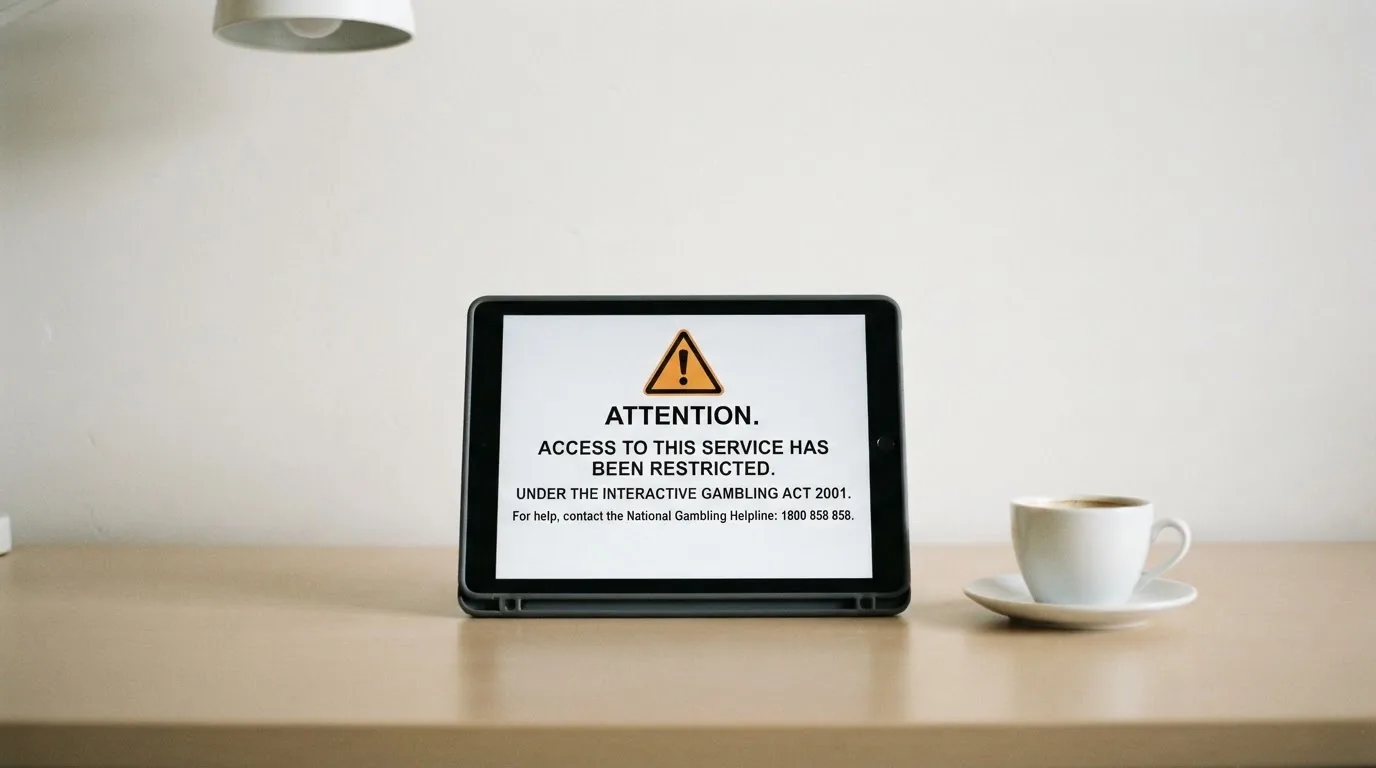
None of which makes it a payment method an offshore casino has any special permission to advertise to Australians. The Interactive Gambling Act 2001, as tightened in 2017 and again in 2023, makes it an offence to provide online casino games — online pokies, table games, in-play betting — to a person in Australia; no state or territory issues that licence. What is licensed is wagering on races and sport placed before the event, lotteries and keno, and even that licences through the Northern Territory Racing and Wagering Commission, which regulates fifty-two of the country’s online bookmakers with no full-time staff and a single monthly meeting in Darwin. The ACMA investigates, issues formal warnings and asks internet providers to block illegal sites. As of June 2026, the running total since November 2019 is 1,751 blocked gambling and affiliate websites, with more than 230 unlicensed services having left the Australian market since enforcement tightened in 2017. An Australian punter who funds an offshore pokies account with PayID is not transacting with an Australian-licensed operator — full stop — and the platform’s own name-check becomes a piece of evidence that the payment went where it went, not a guarantee that it was lawful to send.
The price the operator pays for the marketing line is also one the player ends up paying. AP+, the domestic payments body that runs PayID, names the category directly: scambling — illegal online gambling platforms advertised on social media and messaging apps that trick people into gambling on a scam website. The same body warns that anyone asked to transfer funds to a PayID on an illegal gambling site is “almost certainly” on one. AP+ tells anyone who thinks they have been scambled to contact their financial institution. PayID itself will never contact a customer directly; emails and texts claiming to be from PayID are scams. None of that is a comment on the rail — it is a comment on who is using it for what.
What PayID is, in plain English
A PayID is an alias. It stands in for a BSB and account number, in the same way an email address stands in for a server. The payer types the alias into their banking app; the app resolves it through PayID to the underlying account; the recipient’s name is shown before the transfer is sent; the transfer clears through Osko on the New Payments Platform in close to real time.
Two pieces of that matter to a punter. The first is the name check. AP+ built the name display specifically as the control against scams and mistaken payments. If the name on screen does not match the operator the punter thinks they are paying, the transfer can be cancelled before it leaves the account. The second is the settlement window — the under-a-minute Osko arrival, twenty-four hours a day, weekends included. It is that window that an offshore pokies site calls instant in its deposit banner.
Three further details shape how it actually behaves at the cashier. Credit cards and credit-related products are banned as payment for Australian-licensed online wagering; the same prohibition closes off the credit side of a PayID-linked account where the wallet is digital and draws on a credit line. Some banks run a gambling transaction block at the card level that refuses authorisations on the Betting/Casino Gambling merchant category code, and the block extends to digital wallets linked to the card, not just the plastic. Once the block is on, switching it off again takes forty-eight hours — and the bank’s own warning is that not every gambling transaction will be blocked and some non-gambling ones may be blocked by mistake. The settlement promise is real; the path from a casino’s deposit page to the bank accepting the transfer is the part that is not in the operator’s hands.
The Reserve Bank of Australia owns and operates the Fast Settlement Service that completes NPP transactions individually in close to real time around the clock. Over a hundred Australian financial institutions offer PayID through their online banking. The published data on the rail itself is unambiguous. The question the rest of this page answers is who is at the other end of the PayID that a pokies site asks for.
The regulator’s record on pokies sites that take PayID
The Australian Communications and Media Authority’s enforcement log, between February 2025 and April 2026, names eleven operators that took — or were advertising — real-money play to Australians. None of them is licensed for online casino games in Australia. The list below is not a ranking of the operators; it is the regulator’s own publication order, with the date and operator the ACMA named on each formal warning. The order matters because warnings to the same parent repeat, and a repeat is itself information.
ACMA formal warnings on pokies sites, February 2025 to April 2026
| brand | ACMA action and date | operator named by the ACMA | subject support |
|---|---|---|---|
| Instant Casino | formal warning, February 2025 | EOD Code SRL | listings-only (Ecopayz, PayID) |
| Casino Intense | formal warning, April 2025 | Sterplay Holding Ltd | listings-only (AUSTRAC, ITNews, NAB) |
| Woo Casino | formal warning, March 2025 | Dama N.V. | — |
| Spirit Casino | formal warning, May 2025 | Dama N.V. | — |
| Ignition Casino | formal warning, July 2025 | Bamboo Media | — |
| National Casino | formal warning, July 2025 | Consolutetish S.R.L. | listings-only (AUSTRAC, Wikipedia) |
| Bizzo Casino | formal warning, July 2025; earlier 2022 | Consolutetish S.R.L. (2025); TechSolutions (2022) | — |
| Level Up Casino | formal warning, May 2022 | Dama N.V. | listings-only (Westpac) |
| Sky Crown | formal warning, September 2022 | Hollycorn N.V. | — |
| RocketPlay | formal warning, March 2026; earlier May 2022 | Pulsup Ltd (2026); Dama N.V. (2022) | — |
| Jackbit | formal warning, April 2026 | Ryker B.V. | — |
Two patterns jump out. The first is repetition: Dama N.V. appears under five brands in this set alone — Level Up, RocketPlay, Woo, Spirit, and Cobra Casinos (named on the same 2022 warning but not in this page’s branded list) — and a single warning to a parent does not, in practice, retire the brands behind it. The second is that a brand can be warned twice under two different owners: Bizzo Casino was warned in 2022 to TechSolutions and again in 2025 to Consolutetish S.R.L.. RocketPlay repeats the same pattern, with Dama N.V. in 2022 and Pulsup Ltd in March 2026. The regulator’s enforcement is per operator-as-it-stands, not per historical name.
What the ACMA’s blocking numbers mean at the rate they are running
The blocking round reported on 26 June 2026 added twelve sites to the block list: 7Signs, ChromaBet, Donbet, Duospin, Freshbet, Slots Gem, Jacks Club, Lucky Start, PointsBetz, Spinrise, Vinyl Casino and Wildsino. The cumulative total since November 2019 is 1,751 blocked gambling and affiliate marketing websites, with more than 230 unlicensed services having left the Australian market entirely since 2017. H2 Gambling Capital’s 2025 estimate puts the dollar flow at around A$3.9 billion a year to illegal sites, and the share of gambling going through legal channels fell from 74% in 2021 to 64%.
The arithmetic the regulator is running at is straightforward to derive. From November 2019 to June 2026 is roughly seventy-nine months; the ACMA’s running total of 1,751 blocked sites against that span is a band of roughly twenty to twenty-four sites a month — a moving band, because individual rounds vary, but the order of magnitude is what the regulator’s monthly cadence actually delivers. Pair that with the 230 services that have left voluntarily since 2017, spread across roughly one hundred and seven months, and the exit rate is in the order of two services a month. The blocking rate is the figure that matters for an Australian punter who is about to fund an account: a site that exists at deposit time may not exist at withdrawal time, and the regulator’s stated pace is the pace at which the platform that just took the PayID transfer is being delisted.
Eleven brands the ACMA has warned: what each warning covers, and where the page’s evidence runs out
What follows is the regulator’s record on each of the eleven brands in this set, written in the order they appear in the ACMA’s own list, with one short closing judgement on each block. The judgement is on the regulatory position, not on whether to deposit; the page does not recommend offshore operators to Australians, and a brand being named here is a piece of public record, not an endorsement. The figures, dates and named operators come from the ACMA’s formal warning publications and are not paraphrased.
RocketPlay — Dama N.V., May 2022; Pulsup Ltd, March 2026
The May 2022 warning covered Rocketplay among six Dama N.V. brands — Bambet, Dazard, Level Up, Rocketplay, Wild Tornado and Cobra Casinos. The March 2026 warning is to Pulsup Ltd over RocketPlay specifically. The same brand under two operators is the cleanest signal that a parent-company warning does not retire the player-facing brand; the brand resurfaced under a new corporate wrapper within four years and was warned again. No PayID-specific listing is verified for RocketPlay in this set, and the page does not assert one.
Verdict: two warnings across four years, two different parent companies, the same brand. The pattern is repeated in this set more than once.
Level Up Casino — Dama N.V., May 2022
One of the original six Dama N.V. brands warned in May 2022, alongside RocketPlay. A Westpac page carries a Level Up listing in the context the page can cite; that is the only piece of independent material this set holds, and it does not, by itself, describe a settlement speed or a payment offering.
Verdict: the ACMA has warned the parent; an Australian bank pages on it. Neither is an Australian licence.
Woo Casino — Dama N.V., March 2025
A second warning to Dama N.V., this time over Woo Casino in March 2025, after the original 2022 action. The brand was already on the regulator’s record under the parent; the 2025 action is a new publication, not a continuation. No independent subject listing is verified for Woo Casino.
Verdict: the same parent, a new warning, a reminder that a 2022 action did not end the issue.
Spirit Casino — Dama N.V., May 2025
A third Dama N.V. warning in this set, dated May 2025. The pattern is by now clear: a parent warned in 2022 has continued to operate brands that attract further action. No independent subject listing is verified for Spirit Casino.
Verdict: the third Dama N.V. brand to be named separately since the original 2022 warning round.
National Casino — Consolutetish S.R.L., July 2025
Warned in July 2025, in the same round as Ignition Casino and Bizzo Casino. AUSTRAC and Wikipedia both carry a National Casino listing in this set’s reference material; that is the only material the page can cite, and neither is a settlement-time claim.
Verdict: part of a three-brand warning round in July 2025.
Bizzo Casino — TechSolutions, 2022; Consolutetish S.R.L., July 2025
The clearest example of a brand surviving an ownership change. Warned in 2022 to TechSolutions (CY) Group Limited and TechSolutions Group N.V., then warned again in July 2025 to Consolutetish S.R.L.. The regulator’s record crosses the corporate boundary; the player-facing brand did not.
Verdict: one brand, two operators, two warnings. The page’s evidence on PayID-specific behaviour at Bizzo is empty, and the warning record is what it is.
Ignition Casino — Bamboo Media, July 2025
Warned in July 2025 to Bamboo Media. The same publication round as National Casino and Bizzo Casino, but a separate operator entity on the warning. No independent subject listing is verified for Ignition Casino in this set.
Verdict: a single warning to a single operator in the July 2025 round.
Instant Casino — EOD Code SRL, February 2025
Warned in February 2025 to EOD Code SRL. Two of the listings in this set’s reference material — Ecopayz and PayID — carry an Instant Casino listing in the context the page can cite. The Payid.com.au listing, in particular, is a piece of AP+’s own material flagging the category rather than the brand’s marketing claim.
Verdict: an early 2025 warning, and the one brand in the set where the page’s PayID-adjacent reference material is most direct.
Jackbit — Ryker B.V., April 2026
Warned in April 2026 to Ryker B.V. over Jackbit and CasinOK. The most recent warning in the set, alongside the April 2026 RocketPlay update. No independent subject listing is verified for Jackbit.
Verdict: a 2026 warning, paired with CasinOK on the same publication, and one of the freshest entries in the ACMA’s record.
Casino Intense — Sterplay Holding Ltd, April 2025
Warned in April 2025 to Sterplay Holding Ltd. AUSTRAC, ITNews and NAB each carry a Casino Intense listing in this set’s reference material; the page can cite the listings, but no single one of them is a settlement-time or PayID-specific claim.
Verdict: a single warning in the middle of 2025.
Sky Crown — Hollycorn N.V., September 2022
Warned under the ACMA’s formal-warning publication to Hollycorn N.V. over its Sky Crown and Blue Leo casino services, dated September 2022. The oldest warning in the set, and one of the few where a single operator entity covers two named brands on the same publication. No independent subject listing is verified for Sky Crown.
Verdict: a 2022 warning covering two Hollycorn N.V. brands in one publication, and the oldest record in the table.
What a real Australian payments stack looks like for a punter
The legal deposit routes for an Australian-licensed online wagering service are debit card, bank transfer, PayID/Osko and BPAY. Credit cards and credit-related products have been banned as payment for those services since 11 June 2024, with penalties up to A$247,500 for the operator. Digital currency is outside the permitted list. The list is a closed one, not a menu — a site asking for a credit card or a crypto deposit is asking for a payment method the Australian rules have ruled out, and a site accepting PayID while accepting credit cards is operating on a stack the Australian framework does not provide for.
The way PayID settles at the bank end matters here, separately from the operator’s deposit claim. The New Payments Platform settles individual transactions in close to real time around the clock. Osko, the consumer brand on top of NPP, lands transfers between participating banks in under a minute, including on weekends and public holidays. That is the upper bound of the rail. Anything the operator markets as instant on its deposit banner is bounded by that minute-and-a-round settlement window — and bounded the other way by the bank’s own payment controls.
Card-level gambling blocks reach the PayID path through the wallet
Westpac’s gambling transaction block works at card level: it refuses authorisation of transactions registered under the Betting/Casino Gambling merchant category code on eligible personal credit and debit cards. ANZ’s block, activated in the ANZ app, blocks gambling transactions made through a digital wallet such as Apple Pay on an eligible card, not just the physical card. Apple Pay itself does not charge consumer fees and does not set transaction limits or PIN requirements — those are set by the card issuer or the merchant. What that means in practice: a card-level gambling block at ANZ or Westpac can intercept a PayID-funded deposit the punter thinks is going through a wallet, because the wallet is funded from the card and the block sits at the card, not at the merchant. Removing ANZ’s block requires a forty-eight-hour wait, and the bank warns that not every gambling transaction will be blocked and some non-gambling transactions might be blocked by mistake. The published Apple Pay data — over 45% of all card payments in Australia by number by the end of 2025, in aggregate across Apple Pay, Google Pay and Samsung Pay — is a measure of how much of the retail payments stack sits inside those wallets, and therefore how much of the instant path the card-level block can reach.
The American Express detail is narrower but useful. Amex traditionally operates as a three-party scheme rather than Visa or Mastercard’s four-party model; it issues cards and processes transactions itself, after starting life as a freight-forwarder in 1850 and launching its first charge card on 1 October 1958. The Reserve Bank’s July 2025 surcharge review proposes removing surcharges only on eftpos, Mastercard and Visa card transactions, leaving American Express outside the proposed surcharge ban. A punter on a personal Amex funding a PayID-linked deposit is on a rail the RBA is treating separately, with the card-level gambling block depending on the issuer’s own policy.
What responsible play looks like inside this market
Australian-licensed online wagering is the only part of this market with Australian consumer protection. BetStop, the National Self-Exclusion Register, has been live since August 2023, and binds Australian-licensed online and phone wagering services — an offshore casino is not connected to it. The National Gambling Helpline, 1800 858 858, is free, twenty-four hours a day, with chat at Gambling Help Online. The Interactive Gambling Amendment (Gambling Reform) Bill 2026 passed Parliament on 19 August 2026; its advertising and inducement measures commence 1 January 2027 — law with a start date, not yet in force on a 2026 page.
The individual Australian player is not the target of IGA prosecution — the Act targets the provider. The offshore site, by contrast, gives no Australian consumer protection, no complaints body and no recourse if a withdrawal is refused. The site can also be blocked while a balance sits on it; the ACMA’s blocking rate of roughly twenty to twenty-four sites a month, against seventy-nine months of running total, is the pace at which that happens. For tax purposes: gambling winnings of a recreational player are not assessable income and losses are not deductible (section 6-5 ITAA 1997), unless the person carries on a business of gambling, which is a model only — check with the ATO is the only safe answer for an individual.
How this page read the data, and where it stops
The figures above are the ACMA’s, AP+’s, the RBA’s and H2 Gambling Capital’s, transcribed rather than rounded. The blocking rate is presented as a band with the time-span it was measured across, not as a single figure, because that is the form the regulator’s own monthly cadence produces. The named PayID settlement window — under a minute, twenty-four hours a day — is the rail’s published behaviour, not any operator’s deposit-page claim. The brand-by-brand record is the ACMA’s formal-warning publication, with the operator and date as the regulator names them. The card-level block detail is each bank’s own product page. The Apple Pay consumer-side detail is Apple’s own published pages. The thirteen mobile-wallet share of card payments is the RBA’s aggregate figure for the end of 2025.
What the page does not have, and will not invent: a settlement-time figure for any of the eleven brands’ deposit queues, a withdrawal-time figure for any of them, a wagering multiple for any of them, an RTP for any title any of them publishes. Each of those is a marketing-page claim, and the only sources for them in this set were affiliate marketing pages, which is why the table does not carry a settlement-time column and the operator paragraphs do not name one. The ACMA’s record is the public, attested record; the rest is what each operator says about itself, which is exactly what an enforcement action is the regulator’s response to.
The last thing the page says is the one the law has been saying since 2001: no Australian state or territory licenses an online casino game or an online pokie, and no offshore operator that takes PayID from an Australian is licensed to do so. The settlement is real, the rail is real, and the licence is not. Reading the ACMA’s record is the part of the comparison the page can stand behind.
Frequently asked questions about pokies sites that take PayID in Australia
Why do pokies sites specifically advertise PayID rather than a regular bank transfer?
Because PayID is the rail the punter can resolve. The operator’s deposit page can ask for a mobile number, an email or an ABN; the punter types it into a banking app they already use; the recipient’s name is shown before the transfer is sent; Osko settles it between participating banks in under a minute, around the clock. A regular BSB-and-account transfer runs through the same NPP infrastructure when the recipient is enrolled, but PayID lets the operator’s cashier page reduce the address entry to one familiar field. That is the marketing reason. It is independent of whether the operator holds an Australian licence — it almost always does not.
Is a pokies site described as trusted actually any safer than one that isn’t?
No, and the word trusted in a banner is doing the marketing’s work, not the regulator’s. The ACMA’s enforcement record does not track a trusted category; it tracks operators it has warned under the Interactive Gambling Act 2001. Of the eleven brands in this set, all eleven have been named on a formal warning, and several under more than one parent company. Trusted is the operator’s claim; the regulator’s record is the only public, attested fact the page holds, and the two do not line up.
Can an Australian legally use PayID to fund an offshore pokies account?
The IGA targets the provider, not the individual player, so an Australian is not personally prosecuted for sending the transfer. What they lose is the Australian consumer protection layer: no complaints body, no recourse if the operator refuses a withdrawal, no connection to BetStop, and a real risk the site is blocked while a balance is still on it. The PayID rail itself is legal; what it is being used to fund is the part the regulator has acted against.
How does an instant PayID pokies claim compare with the real Osko settlement times banks describe?
Osko between participating banks is published as under a minute, twenty-four hours a day including weekends and public holidays. The operator’s deposit banner is bounded above by that window — the rail will not beat it. It is also bounded below by the bank’s own payment controls: a card-level gambling block at Westpac or ANZ, including the wallet-funded path, can refuse an authorisation the operator’s cashier has already accepted. Instant in the banner describes the rail; the deposit queue describes the operator; the bank’s block describes what actually reaches the account.
What’s the difference between payid pokies and online pokies payid as search terms — is it the same content?
Comparing terms like these reveals the same underlying situation. The category of offshore sites offering PayID has been monitored by the regulator for years, and modifying search terminology does not alter the underlying legal status of the operator offering these games.
What should someone check about a site before trusting its own claim to be licensed for PayID pokies?
Whether the licence the site displays is an Australian one. No state or territory issues an Australian licence for online casino games or online pokies; the only Australian licences the page holds are wagering on races and sport before the event, lotteries and keno, and the regulator that issues those is the NTRWC. An offshore Curaçao, Anjouan or Costa Rica licence does not become an Australian one because the deposit page says PayID. The name check on the PayID transfer is the second thing — if the recipient name on screen does not match the operator the punter thinks they are paying, the transfer can be cancelled before it leaves the account.