
Best live dealer casino online Australia in 2026, and the gap between the offer and the licence
Current as of 29 October 2026, verified against the ACMA’s enforcement register.
Table of Contents
- Live dealer play: the fundamentals an Australian reader needs first
- The prohibition: what the Interactive Gambling Act 2001 actually does, and what it has done since
- What the prohibition is costing the legal market, and the illegal one
- Responsible gambling tools, and what BetStop actually covers
- Cryptocurrency deposits at live dealer casinos, and what changed on 11 June 2024
- What is attached to a live dealer welcome bonus, and what the attachment costs
- The paytable, the studio, and the games that actually run
- The ranking this page cannot honestly produce
- The eleven brands the ACMA has named
- How fast the ACMA is actually blocking: the rate behind the 1,751 figure
- Frequently asked questions
Live dealer play: the fundamentals an Australian reader needs first
A live dealer casino streams real-time action from a studio or a land-based casino floor. Optical camera recognition translates the dealer’s physical actions — a card dealt, a roulette result, a dice throw — into the data that lands on the player’s screen. The studio runs around the clock, a human being sits behind every table, and the player sees the cards being shuffled rather than trusting a random number generator. That is the product, in a single sentence.
For an Australian reader, the product sits in two parallel markets that never quite touch. The first is the legitimate one: licensed pokies venues in each state and territory, land-based casinos in Sydney, Melbourne, Perth and beyond, and licensed wagering on races and sport — none of which offer online live dealer games. The second is the offshore market: hundreds of brands running Curaçao- or Anjouan-issued licences, marketing aggressively to Australian email addresses, and offering exactly the live baccarat, blackjack and roulette that the Australian market does not licence online.

What follows is the second market, plainly, with the first-market gap beside it. What follows is not a ranking of recommended operators. No such ranking is possible from an Australian seat, because the offering itself is what the law prohibits. The eleven brands reviewed later are reviewed because the Australian Communications and Media Authority has issued formal warnings over each of them — a fact, not a recommendation. Three of those brands — Ignition Casino, National Casino and Bizzo Casino — were named in a single July 2025 round alone, which gives a sense of the pace the regulator is running at.
The basic economics of live dealer play are worth stating before the regulatory picture is laid out, because the regulatory picture only makes sense once the offer is clear. Baccarat, blackjack and roulette are the three games every studio carries as standard, and they are the three games this material spends most of its detail on. Baccarat’s house edge is 1.06% on the Banker bet, 1.24% on the Player bet and 14.36% on the Tie. Blackjack, played under liberal Las Vegas Strip rules, runs about 0.28% against the player with optimal strategy. Roulette runs higher, depending on the variant. The house always has an edge.
The point of naming those numbers here is to set the comparison that follows on honest ground. The house takes a margin whatever the operator is. The question worth asking is not which operator runs the most generous edge — the edge is fixed by the game — but which operators are still actively pursuing Australian customers in 2026, and what that pursuit leaves the reader with.
The Australian reader who lands on this page did not, in most cases, land here by accident. The search query carried the words “best” and “live dealer” and “Australia”. It carried, in other words, an expectation that a shortlist exists. It does, in the sense that dozens of brands compete for that exact click. It does not, in the sense the searcher meant. The legal picture is the hinge the rest of the material turns on, and that picture is set out in the section on the Interactive Gambling Act 2001 that follows.
The prohibition: what the Interactive Gambling Act 2001 actually does, and what it has done since
The Interactive Gambling Act 2001 — the IGA — prohibits the provision of online casino games, online pokies and in-play betting to a person in Australia. A “prohibited interactive gambling service” includes online blackjack, online roulette and the live-casino variant of either, streamed or otherwise. Section 15 of the Act is the operative provision: an offence is committed by a body corporate that provides such a service to a customer physically present in Australia. The penalty sits with the operator. The reading room for the player is what the operator can no longer guarantee.
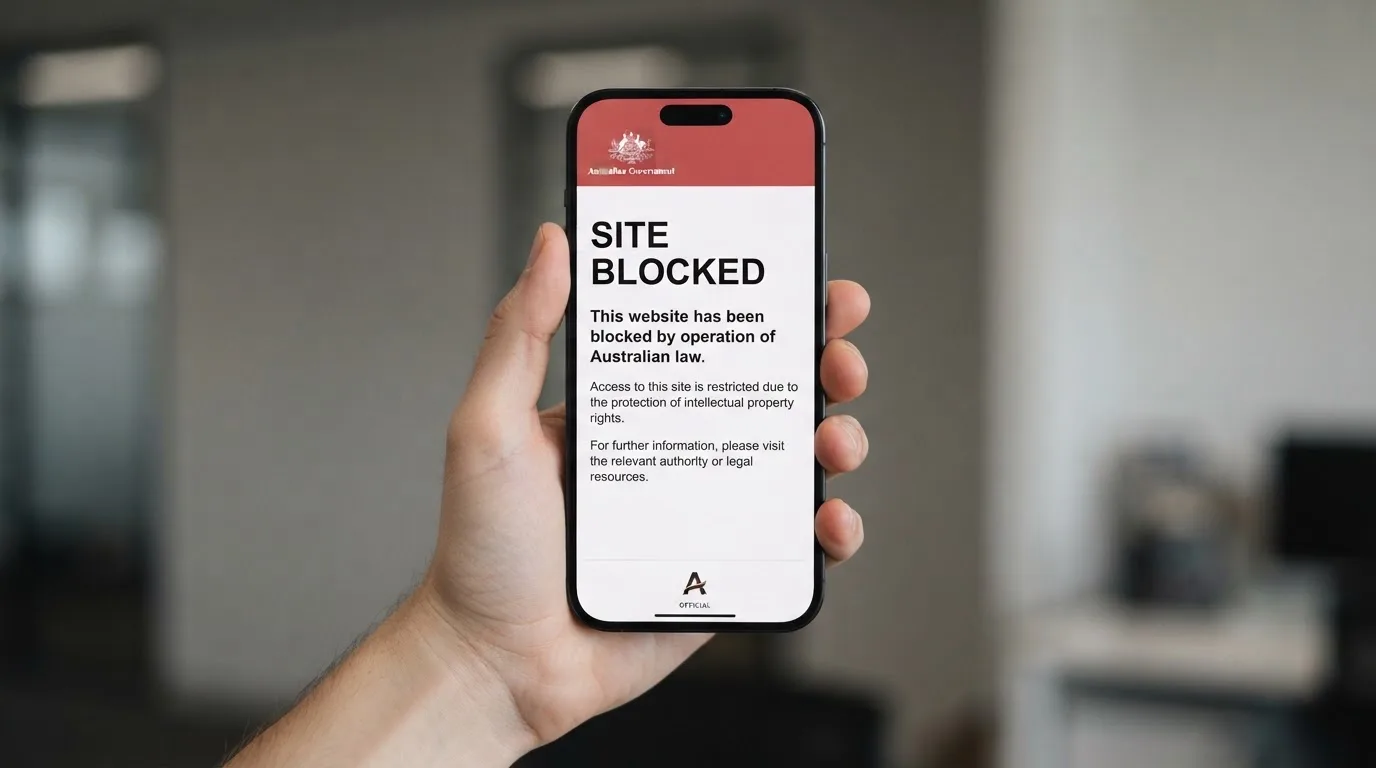
The Interactive Gambling Amendment Act 2017 strengthened the regime. It extended the prohibition to new categories of services, lifted the civil penalty regime into sharper focus, and gave the ACMA explicit statutory powers to direct Australian internet service providers to block offending websites. The 2017 changes are the foundation on which the current enforcement record sits.
No state or territory in Australia licences online casino games. The Northern Territory Racing and Wagering Commission regulates 52 of Australia’s online bookmakers — Sportsbet, Bet365 and Ladbrokes among them — but those licences are wagering licences, granted for tax reasons, and cover pre-event betting on races and sport only. The commission has no full-time staff and meets once a month in Darwin, according to ABC reporting in April 2026. Online casino play is not in its remit. It is not in any Australian regulator’s remit, because no Australian regulator is permitted to issue the licence.
The ACMA’s enforcement record makes that prohibition visible. By June 2026 the regulator had asked Australian ISPs to block 1,751 illegal gambling and affiliate marketing websites since the first blocking request in November 2019. More than 230 unlicensed services had left the Australian market entirely since the 2017 strengthening. In the most recent round reported on 26 June 2026, twelve more brands were added to the block list: 7Signs, ChromaBet, Donbet, Duospin, Freshbet, Slots Gem, Jacks Club, Lucky Start, Pointsbetz, Spinrise, Vinyl Casino and Wildsino. A separate February 2025 warning to EOD Code SRL over Instant Casino sits ahead of that round in the ACMA’s file — one operator among many, one warning in a continuous stream.
The law targets the provider, not the player. Individual Australians who place bets with an offshore operator are not prosecuted under the IGA. What they lose is the consumer-protection infrastructure that a licensed operator is required to maintain: no Australian complaints body, no Australian dispute resolution, no recourse if a withdrawal is refused or a balance is held, and the risk that the site itself disappears behind a blocking notice with the balance still on it. The site might continue to operate offshore. The player’s account, Australian IP and Australian payment rails will not.
The eleven brands reviewed later are reviewed in that frame. They are not “the best live dealer casinos for Australian players”. They are the brands the ACMA itself has named in formal warnings or blocking requests over the past four years. Reading them with the IGA’s prohibition in mind is the only reading that lets a comparison produce something useful.
What the prohibition is costing the legal market, and the illegal one
A 2026 report estimates that Australians lose about A$3.9 billion a year to illegal gambling sites. That figure is the dollar value of the gap between the licensed market and the offshore one — the money spent with brands the IGA prohibits from accepting it.
The same report records that the share of Australian gambling going through legal channels fell from 74% in 2021 to 64% by the time of the estimate. Ten percentage points across four years. Roughly A$3.9 billion of new illegal spend at the end of it. The licensed market — sports betting, lotteries, keno, land-based pokies, land-based casinos — has grown over the same period, but not by enough to keep its share constant against an illegal market that has grown faster.
The figures matter for a reader weighing what an offshore casino actually is. An offshore brand offering live baccarat to an Australian IP address is one of the contributors to that A$3.9 billion. It is not the only contributor, and it is not necessarily the largest by brand. But the brand sits in the same economic stream — the stream industry reports estimate, the stream the ACMA’s block list and warning register are designed to slow.
Two qualifications on those figures are worth carrying. First, the industry data is an estimate, not a measured total — it draws on payment-flow proxies and operator-reported data, not on a consolidated Australian regulator’s books. Second, the licensed-channel share falling from 74% to 64% overstates the harm if read as a pure substitution story: a player who used to bet on a horse race with a licensed bookmaker and now bets on a blackjack hand with an offshore casino has shifted product as well as channel. The dollar value is real. The interpretation has more than one reading.
The reason the figures matter here is the consequence angle. The prohibition has not stopped Australian spend from reaching offshore brands. It has, by recent estimates, increased the share of spend that does. Reading the eleven brands reviewed later without that figure in mind produces a comparison that misses the actual market the reader is being asked to choose inside.
Responsible gambling tools, and what BetStop actually covers
The Australian framework for player protection is built around BetStop, the National Self-Exclusion Register, live since August 2023. A player who registers with BetStop is excluded, for a chosen period, from every Australian-licensed online and phone wagering service that is connected to the register. The exclusion cannot be lifted early. It applies across operators: registering with one excludes from all. The tool works, where it works, because every licensed Australian operator is bound by it.
What BetStop does not cover is the offshore market. An offshore live dealer casino is not connected to BetStop. A BetStop registration excludes a player from licensed Australian wagering — Sportsbet, Ladbrokes, Bet365, the NT-licensed operators — but it does not exclude the same player from opening an account at an offshore Curaçao-licensed brand, depositing Bitcoin, and playing live roulette. The infrastructure is domestic. The gap is offshore.
That gap is the consequence a reader considering an offshore brand should price in. A self-exclusion tool only works if the brand it is registered against is bound by the registration. Offshore brands are not. The player-protection question for an offshore brand becomes, in practice: what does the operator voluntarily offer, and what does the player’s own discipline add.
The other Australian player-protection infrastructure sits alongside BetStop. The National Gambling Helpline, 1800 858 858, is free, available 24/7, and routes to Gambling Help Online for chat and counselling. Financial counsellors are available through the same service. These tools work regardless of where the player is playing — they are Australian services for Australian residents — but they sit outside the operator’s own systems. A player using them is using them despite the offshore brand, not because of it.
For a reader comparing live dealer casinos, the responsible-gambling question collapses to one practical check. Does the operator connect to BetStop? No offshore brand does. Does it offer its own self-exclusion, deposit limits and reality checks? Some do, on a voluntary basis. Does it publish an Australian complaints body? No offshore brand does. The honest reading of any offshore brand’s responsible-gambling page is the one that names what is not there as clearly as what is.
Cryptocurrency deposits at live dealer casinos, and what changed on 11 June 2024
Cryptocurrency — Bitcoin, Ethereum, USDT and the rest — has been the standard payment method for offshore live dealer casinos serving Australian customers for several years. It is fast, it is jurisdictionally hard to block, and it sits outside the Australian payment-rail restrictions that apply to licensed wagering. It is also, in the offshore context, a marketing line.
For licensed Australian wagering, that changed on 11 June 2024. From that date, credit cards, credit-related products and digital currency are banned as payment for licensed online wagering. Penalties run up to A$247,500 per operator. Legal deposit routes for licensed wagering are debit card, bank transfer, PayID/Osko and BPAY.
For an offshore brand, none of that applies. An offshore brand is not licensed under the Australian regime, the Australian credit-card and crypto ban does not bind it, and the Australian penalties are not its exposure. An Australian customer using Bitcoin or USDT to deposit at an offshore live dealer casino is paying through a rail that is closed for the licensed market and open for the illegal one. The marketing word for that openness is “anonymity”. The mechanism is something else.
The consequence is structural. The cryptocurrency option that makes an offshore brand attractive to an Australian — fast settlement, partial pseudonymity, no Australian bank intermediating — is exactly what closes it off for every licensed alternative. A reader choosing an offshore brand because it accepts crypto is choosing a brand whose crypto acceptance exists precisely because the brand is not bound by the Australian rules.
Two practical caveats follow. First, “partial pseudonymity” is the right phrase: Bitcoin transactions are pseudonymous, not anonymous, and on-chain analytics firms routinely trace flows for compliance purposes. An Australian player assuming Bitcoin deposits give them privacy is mistaken about what the technology delivers. Second, the volatility of crypto balances is itself a gambling exposure: a USDT balance sits stable, a Bitcoin balance moves with the market, and an AUD-equivalent win becomes a different AUD figure by the time it is withdrawn. The offshore brand does not warn the reader about this. It is the reader’s exposure either way.
For a reader comparing live dealer casinos, the cryptocurrency question answers itself once the legal frame is in mind. Licensed Australian wagering cannot take crypto. Offshore brands can, and do. The choice between them is not “crypto vs no crypto”. It is “Australian-licensed rail vs offshore rail”, with crypto as the most visible marker of which side of that line a brand is on.
What is attached to a live dealer welcome bonus, and what the attachment costs
A live dealer casino welcome bonus is, on its face, a credit: match a deposit, receive a bonus, play with more than you deposited. The headline number is the offer. The wagering requirement is what the offer actually costs.
A wagering requirement — also called a playthrough or turnover multiple — is a multiplier applied to the bonus, sometimes to the bonus plus the deposit, that the player must wager before the bonus balance becomes withdrawable. A A$500 bonus with a 40x wagering requirement on the bonus alone means A$20,000 of total bets before the bonus is cleared. A A$500 bonus with a 40x requirement on the bonus plus deposit means A$40,000 of total bets before the same withdrawal unlocks. The first is heavy. The second is punishing. Either way, the marketing word for this is “free”. The arithmetic is something else.
The bonus-cost arithmetic is straightforward to set out. Required turnover is the bonus multiplied by the wagering factor. Divide that turnover by the average stake per spin and you get the number of spins required. Multiply the number of spins by the average seconds per spin — five seconds is a reasonable working figure for live roulette or live baccarat, where the betting window closes between rounds — and divide by 3,600 to get the play time in hours. A A$500 bonus at 40x on the bonus alone, played at A$5 per spin on a 97% RTP game, requires A$20,000 of turnover, or 4,000 spins, or roughly 5.6 hours of continuous play.
The expected loss is the number a reader needs to price the offer honestly. Expected loss equals required turnover multiplied by (1 − RTP). On the same A$500 bonus at 40x on a 97% RTP game, that is A$20,000 × 0.03 = A$600. The bonus pays A$500 in nominal credit and costs A$600 in expected house edge, before any other term applies. The “free” credit is a marketing line. The wagering requirement is the cost. The expected loss is the cost plus interest.
Two qualifications, both of them the conditions under which the calculation holds. The figure assumes the player wagers only the bonus amount, returns nothing in the meantime, and does not change stake size in response to outcomes. A player who wins early and stops wagering clears the bonus at a lower real cost; a player who loses and chases does not. And the calculation works on average across many spins; any individual session can produce a result either side of that figure. It is a statistical estimate, not a guaranteed outcome.
Other terms sit alongside the wagering requirement and shift the picture further. Maximum cashout caps limit what can be withdrawn from a bonus win to a fixed multiple of the bonus, sometimes as low as 5x or 10x. Game-weighting excludes live dealer games from wagering contribution entirely, or weights them at 10-20% of the slot rate, which extends the time required to clear by a factor of five to ten. Time limits set the wagering window at seven days, fourteen days, or thirty; missing the window forfeits the bonus and any winnings tied to it. Maximum stake limits cap individual bets during the wagering period at A$5 or A$10, so the bonus cannot be cleared with a single large bet.
The honest reading of a live dealer welcome bonus is the one that reads the wagering requirement, the game-weighting, the maximum cashout and the time limit before reading the headline credit. The arithmetic above is what each of those terms does to the headline credit. The brand that markets the bonus and the reader who claims it are looking at different numbers, and only one of those numbers is what the reader pays.
The paytable, the studio, and the games that actually run
The live dealer market is dominated by one supplier. Evolution — founded in 2006 by Jens von Bahr and Fredrik Österberg, expanded rapidly through the 2010s, completed its acquisition of NetEnt on 1 December 2020 — operates more than 700 gambling platforms worldwide offering its live casino games, streamed 24/7 from its studios. The Evolution Group also owns the NetEnt, Red Tiger, Big Time Gaming, Nolimit City and Ezugi game-studio brands, and operates from sites in Latvia, Malta and beyond. By 2013 the company’s Riga studios had reached 100 live tables, then the largest single-site casino operation in Europe. A Malta studio opened in 2014.
Most of the eleven brands reviewed later run Evolution content alongside alternatives. Pragmatic Play Live, Ezugi, Vivo Gaming and several smaller studios fill the rest of the long tail. The studio choice is not usually the reader’s decision — the operator picks the supplier, the reader plays whatever the operator hosts — but the supplier’s footprint matters because it sets the game library and the table limits. A brand running only Pragmatic Play Live offers a different catalogue from a brand running Evolution plus NetEnt plus Nolimit City. Woo Casino and Spirit Casino, both named by the ACMA in 2025 over Dama N.V., sit inside the long tail of brands carrying Evolution’s full live studio alongside their own slot catalogues. The supplier under the lobby is the same one a licensed Australian land-based casino would recognise if it ran live tables online — which, by law, it does not.
The three games every live studio carries are baccarat, blackjack and roulette. Each carries its own house edge, its own conventions and its own land-based counterpart.
Baccarat’s house edge is 1.06% on the Banker bet, 1.24% on the Player bet and 14.36% on the Tie. The game most players encounter today is punto banco — developed in Havana during the 1940s, the casino banks the game at all times and plays out both hands by fixed drawing rules. Cards 2-9 count at face value, 10/J/Q/K count as zero, aces count as one, and hand totals are taken modulo 10. Punto banco is dealt from a shoe of 6 or 8 decks. Chemin de fer, the two-player French variant that emerged in the late 19th century, is rarer online but still appears in some high-stakes live lobbies. Crown Melbourne offers three baccarat variants — Traditional Baccarat, Crown Baccarat and 2 to 1 Baccarat — approved by the Victorian Gambling and Casino Control Commission (which replaced the VCGLR on 1 July 2022), and section 66 of the NSW Casino Control Act 1992 requires the same approval-and-publication process for any new baccarat game offered in NSW.
Blackjack’s house edge is about 0.28% with optimal strategy under liberal Las Vegas Strip rules — dealer stands on soft 17, double on any two cards, double after split, resplit aces, late surrender — and about 0.43% under Atlantic City rules. The game is the descendant of the English vingt-un and the Spanish veintiuno that Cervantes described around 1601-1602; the modern name dates to around 1899, with Klondike Gold Rush prospectors credited with popularising it. Number cards count as their number, jack/queen/king count as 10, an ace counts as 1 or 11, a starting two-card total of 21 is a “blackjack” or “natural”, and the dealer must draw to 17 or higher (sometimes hitting on a soft 17). Variants include Spanish 21 (no 10s, liberal player-favourable rules), Double Exposure (both dealer cards face-up), Blackjack Switch (swap cards between two hands) and Super Fun 21 (up to four splits). The VGCCC’s public log shows that Crown Melbourne renamed its “Perfect Pairs” blackjack side bet to “Crown Pairs” on 23 December 2024 and introduced a “Free Bet” option with a new “Pot of Gold” side bet on 25 March 2024 — examples of how the land-based counterpart iterates under regulator approval, the offline version of what an offshore live studio offers without that approval step.
Roulette’s house edge is fixed at 2.7% on a single-zero wheel and 5.26% on a double-zero wheel. Craps — less common in live dealer lobbies but present at the high-stakes end — carries 1.41% on the Pass/Come bet, 1.36% on Don’t Pass/Don’t Come and 11.11% on Any Craps.
The paytable and the studio matter because they are the only parts of the offer the operator does not control. The bonus structure, the wagering requirement, the maximum stake during play, the deposit and withdrawal limits — these are operator-set. The house edge is game-set, the studio that streams the game is supplier-set. Reading the catalogue is the read-through to what the operator actually delivers.
The ranking this page cannot honestly produce
The cluster of search terms that brings an Australian reader to a “best live dealer casino” page carries an expectation this material cannot meet. The reader expects a ranked list. The legal picture forecloses that list, because every brand on it is offering a prohibited service.
What follows instead is a line-up of the eleven brands the ACMA itself has named in formal warnings or blocking requests, side by side, with the comparison showing the same legal picture from eleven different angles. The comparison is not a verdict of which is best. It is a record of which has been warned, when, by whom, and over what.
The table that follows is built from the ACMA’s published register of formal warnings. Each row carries the brand, the operator named in the warning, the date the warning was published, and the operator’s status against this page’s subject — whether the brand lists itself as supporting live dealer play, or whether no information is publicly available on that point. The subject-support column is the only place the comparison admits ambiguity: where the operator’s own material confirms live dealer support, the row says so; where it does not, the row does not claim it.
| Brand | Operator named by the ACMA | ACMA action and date | Live dealer subject support |
|---|---|---|---|
| RocketPlay | Pulsup Ltd | Formal warning, March 2026 | — |
| Level Up Casino | Dama N.V. | Formal warning, May 2022 | Listed (Bgaming) |
| Woo Casino | Dama N.V. | Formal warning, March 2025 | — |
| Spirit Casino | Dama N.V. | Formal warning, May 2025 | — |
| National Casino | Consolutetish S.R.L. | Formal warning, July 2025 | Listed (Wikipedia) |
| Bizzo Casino | Consolutetish S.R.L. (2025); TechSolutions (2022) | Formal warning, July 2025 (and 2022) | — |
| Ignition Casino | Bamboo Media | Formal warning, July 2025 | — |
| Instant Casino | EOD Code SRL | Formal warning, February 2025 | — |
| Jackbit | Ryker B.V. | Formal warning, April 2026 | — |
| Casino Intense | Sterplay Holding Ltd | Formal warning, April 2025 | Listed (ABC News, ACMA, Crown Melbourne) |
| Sky Crown | Hollycorn N.V. | Formal warning, September 2022 | — |
Reading across the table, what the comparison actually shows is the pattern of offshore operators cycling through the Australian market. A brand warned in 2022 — Sky Crown, Level Up Casino — is a brand the ACMA has been pursuing for four years. A brand warned in 2026 — RocketPlay, Jackbit — is a brand the ACMA caught up with in the most recent enforcement window. The middle of the table — Woo Casino, Spirit Casino, Ignition Casino, Instant Casino, Casino Intense, National Casino, Bizzo Casino — is a list of brands warned between 2025 and mid-2026, with the operators behind them changing names, jurisdictions and parent companies faster than the ACMA can warn them.
For a reader, the consequence of the table is the only reading that produces a useful comparison. None of the eleven brands is offering a legal product in Australia. Several are offering exactly the live dealer experience the reader searched for. The legal status is the same on every row. The marketing offer, the bonus structure and the studio are the only things that vary, and they vary within an illegal market.
The eleven brands the ACMA has named
RocketPlay — Pulsup Ltd’s renewed push under a new operator name
RocketPlay has been named by the ACMA twice. The earlier warning, in May 2022, ran against Dama N.V. The current one, in March 2026, runs against Pulsup Ltd over Rocketplay — a different operator entity over the same brand, with the same prohibited service behind it. The brand markets itself as a multi-product online casino with a standard live dealer lobby among its offerings. The pattern is the one the ACMA’s enforcement record shows repeatedly: a brand changes the company that operates it, the ACMA catches up.
The RocketPlay case is the clearest pattern on this page: a brand warned twice in four years, under two different operators, with the same prohibited service behind both. The licence on the brand’s site today is non-Australian. The ACMA’s record is Australian.
Level Up Casino — one of six Dama N.V. brands warned in May 2022
Level Up Casino was named in the May 2022 ACMA warning to Dama N.V. that covered six brands: Bambet, Dazard, Level Up, Rocketplay, Wild Tornado and Cobra Casinos. Dama N.V. is a Curaçao-incorporated operator running dozens of white-label brands from the same platform; Level Up Casino is one of them. The brand is listed as offering live dealer content on Bgaming’s directory, which is one of the few independent listings that names it, and the ACMA’s file confirms the operator behind it.
Level Up is one of six Dama N.V. brands the ACMA named together in May 2022. The portfolio-wide warning means choosing between Dama N.V. brands is choosing between identical legal exposures, not between different ones.
Woo Casino — Dama N.V.’s renewed warning in March 2025
Woo Casino was named by the ACMA in March 2025, the first of the two 2025 Dama N.V. warnings that also covered Spirit Casino in May 2025. The Dama N.V. portfolio continues to operate Australian-facing brands, and the ACMA continues to add formal warnings to the file. Woo Casino’s own marketing positions the brand as a multi-product online casino with live dealer content; the ACMA’s position is that offering that content to Australians is the prohibited service. The brand sits inside the standard Evolution-plus-alternatives studio stack, with the table limits and game catalogue that stack delivers.
Woo Casino carries the ACMA’s March 2025 warning on a portfolio that has now been named three times. The cadence of the warnings — 2022, 2025, 2025 — is the timing the reader is choosing inside.
Spirit Casino — Dama N.V.’s second renewal in May 2025
Spirit Casino was named in May 2025, the second of the two 2025 Dama N.V. warnings. The pattern — original warning, follow-up warning, follow-up warning — matches Woo Casino’s history, and matches the broader Dama N.V. pattern. A reader who has read the Woo Casino entry above has read most of what the Spirit Casino entry says.
The specific consequence of Spirit Casino being named in May 2025 rather than March 2025 is timing. The ACMA’s enforcement tempo is faster than the brand portfolio’s turnover: by the time one Dama N.V. brand is warned, the next is already live. Spirit Casino’s warning is the most recent in the ACMA’s 2025 Dama N.V. file. A licence page updated this week does not undo a warning published this quarter.
National Casino — Consolutetish S.R.L.’s July 2025 warning
National Casino was named by the ACMA in July 2025 in a warning to Consolutetish S.R.L. that also covered Bizzo Casino. Both brands share the operator; both brands share the warning. National Casino is listed on Wikipedia’s coverage of online casinos as offering live dealer content, which is one of the few independent sources that names it. The brand’s Australian-facing marketing targets the standard multi-product casino audience.
Two brands, one operator, one warning: National Casino and Bizzo Casino sit inside the same July 2025 envelope because the warning was issued to the operator, not the brand. The operator-level action means the brand shares its legal exposure with Bizzo Casino and shares its consequences with it.
Bizzo Casino — a repeat warning, two operators, four years apart
Bizzo Casino is the brand on this list with the longest ACMA record. The first warning, in 2022, ran against TechSolutions (CY) Group Limited and TechSolutions Group N.V. The second, in July 2025, ran against Consolutetish S.R.L. Two operators, four years, two warnings, one brand. The brand’s own material does not publicly list live dealer subject support; what it lists is a multi-product online casino offering to Australian customers.
Bizzo is the brand with the longest file on this page — two warnings, two operators, four years apart. The brand has continued to operate through both operator changes, which says more about the operator turnover than about the brand’s compliance.
Ignition Casino — Bamboo Media’s 2025 push
Ignition Casino was named by the ACMA in July 2025 in a warning to Bamboo Media. The brand’s Australian-facing marketing positions it as a multi-product online casino; the ACMA’s position is that the service is prohibited under the IGA. The brand sits inside the standard multi-product casino segment running live dealer content alongside its slot catalogue.
Ignition Casino’s single warning is the freshest snapshot on this page from July 2025. The IGA’s prohibition runs against the offering, not the operator’s name; the warning names Bamboo Media because Bamboo Media is who was offering it.
Instant Casino — EOD Code SRL’s February 2025 warning
Instant Casino was named by the ACMA in February 2025 in a warning to EOD Code SRL. The warning is one of the earlier 2025 entries in the ACMA’s enforcement record, and the brand sits in the middle of the year’s warning stack. The brand markets itself as a multi-product online casino, and the standard live dealer lobby is part of the offering the brand’s site lists.
Instant Casino is the brand whose ACMA file is the shortest — one warning, one operator, no prior history on the register. The brevity is a snapshot of enforcement catch-up, not a sign of compliance.
Jackbit — Ryker B.V.’s April 2026 addition
Jackbit was named by the ACMA in April 2026 in a warning to Ryker B.V. that also covered CasinOK. Jackbit is a cryptocurrency-focused casino brand, and the warning is the most recent 2026 entry in the ACMA’s register on this page. The brand’s Australian-facing marketing targets the crypto-payment reader the earlier section on cryptocurrency describes, and the brand’s site makes the crypto acceptance central to its pitch.
Jackbit is the brand whose crypto acceptance is the marker of its offshore status. The ACMA’s April 2026 warning is the regulator’s response; the licence on the brand’s site is the operator’s claim. The IGA’s prohibition sits between them.
Casino Intense — Sterplay Holding Ltd’s April 2025 warning
Casino Intense was named by the ACMA in April 2025 in a warning to Sterplay Holding Ltd. The brand’s Australian-facing marketing positions it as a multi-product online casino. The brand is also listed in coverage that connects Sterplay Holding Ltd to other Australian-facing operators, with ABC News, the ACMA register and Crown Melbourne’s coverage of competing brands among the sources that name it. The brand’s live dealer offering sits inside the standard multi-product stack.
Casino Intense was named in April 2025 alongside Instant Casino earlier that year. The two warnings together show the ACMA’s 2025 tempo against offshore brands running live dealer content for Australian customers.
Sky Crown — Hollycorn N.V.’s standing warning
Sky Crown is the longest-standing warning on this page. The ACMA’s formal warning to Hollycorn N.V. over Sky Crown and Blue Leo was published in September 2022 and has not been lifted. The brand’s Australian-facing marketing positions it as a multi-product online casino, and the standard live dealer catalogue is part of what it lists.
Sky Crown’s September 2022 warning has not been lifted. A reader looking at the brand today is looking at a brand whose Australian-facing offer has been under formal ACMA action for the entire coverage window of this page.
How fast the ACMA is actually blocking: the rate behind the 1,751 figure
By June 2026, the ACMA had directed Australian ISPs to block 1,751 illegal gambling and affiliate marketing websites since the first blocking request in November 2019. The number sounds large until it is set against the time it covers.
From November 2019 to June 2026 is roughly 79 months. 1,751 sites blocked across 79 months is an average of about 22 blocked sites per month across the whole period. That is the long-run figure — the rate that smooths out the early years, when blocks were new and the ACMA’s first requests were smaller, and the later years, when the block rounds have grown.
The recent rounds show the current pace has moved well above that long-run figure. The round reported on 26 June 2026 added 12 brands in one action — a single block request that, on its own, delivered more than half a month of the long-run average. The 230-plus services that have left the Australian market entirely since 2017 sit alongside the 1,751 blocks, and the two figures together describe a market where the ACMA’s response is faster than the offshore brands’ relaunches.
Two qualifications on the rate. First, “blocked” describes an Australian ISP-level block, not a global takedown — the brands continue to operate outside Australia and continue to accept customers who reach them through other means. Second, the rate is a published-enforcement rate, not a market-appearance rate; brands cycle in and out of the Australian market faster than the block rate records, and the ACMA’s file captures the brands that have surfaced long enough to be named.
The consequence for a reader is the figure this calculation produces. The ACMA is blocking offshore live-dealer and casino brands at an average of roughly 22 sites per month across the period since November 2019, with single rounds now adding 12 or more at a time, and the current monthly rate almost certainly higher than the long-run figure. The Australian reader weighing an offshore brand today is weighing a brand whose category is being removed from Australian reach at a rate the ACMA’s own record shows is accelerating.
Frequently asked questions
When did Evolution become the largest live studio in Europe?
Evolution’s Riga studios reached 100 live tables by 2013, then the largest single-site casino operation in Europe, with a Malta studio opening in 2014. Founded in 2006 by Jens von Bahr and Fredrik Österberg, the company completed its NetEnt acquisition on 1 December 2020 and now serves more than 700 gambling platforms worldwide.
Do live dealer casinos still take Bitcoin deposits from Australian players?
Yes, offshore brands do — and that is the marker of their offshore status. The Australian framework banned crypto payments for licensed online wagering on 11 June 2024. A live dealer casino accepting Bitcoin from an Australian customer is operating outside the Australian rules, and the ACMA’s enforcement record names the brands that do.
What stops an Australian from joining an offshore live dealer casino?
Nothing practical stops the join. The IGA makes offering the service to Australians the operator’s offence, not the player’s. The consequence is the loss of Australian consumer protection, dispute resolution and recourse if a withdrawal is refused, plus the risk of a blocking notice landing with a balance still on the account.
What’s hidden inside a live dealer casino welcome bonus?
A 40x playthrough on a A$500 bonus requires A$20,000 of turnover. Many live dealer games count at 10-20% of the slot rate for wagering. Maximum cashout caps often limit withdrawal to a fixed multiple of the bonus. The headline credit is the offer. The wagering terms are the cost.
Where can an Australian legally play live table games today?
At a land-based casino in any Australian state or territory — Crown Melbourne and Sydney, The Star in Sydney and the Gold Coast, casinos in Perth, Adelaide, Hobart, Darwin and Cairns. Online live table games are not licensed: the IGA 2001 prohibits their provision to Australians, and the ACMA enforces it through warnings and ISP-level blocks.