
Instant withdrawal casinos in Australia — what the marketing claim is really promising
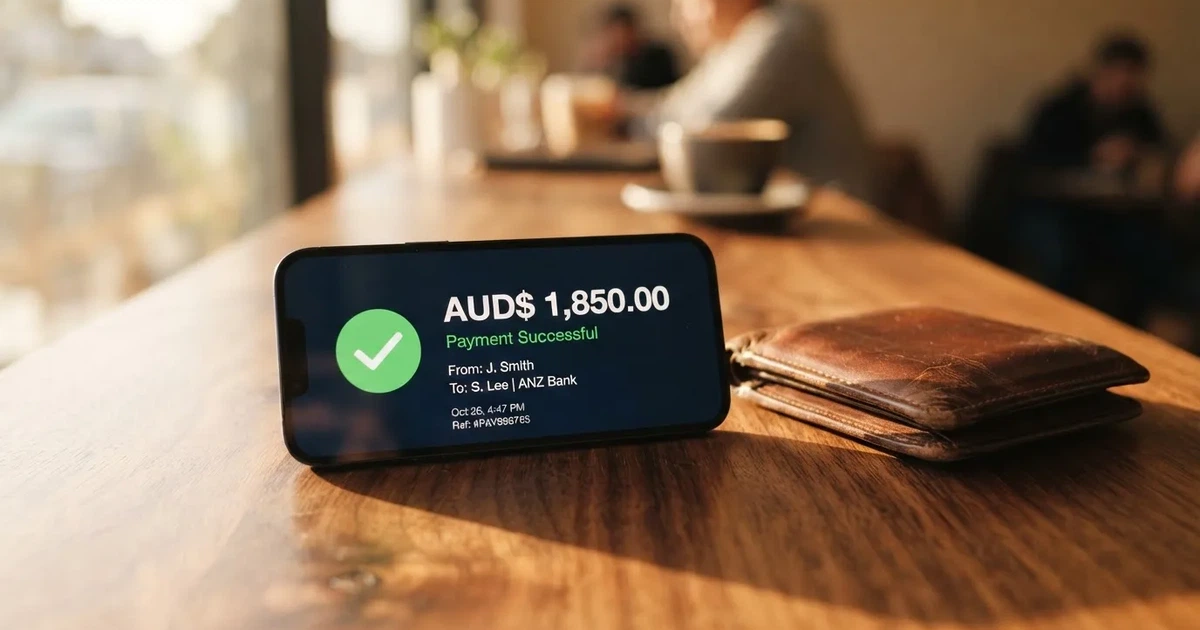
A player searching for an “instant withdrawal casino” in Australia is chasing one specific thing: a site that returns winnings to a bank account in minutes, not days. The promise is real in technical terms — Australia’s own New Payments Platform and PayID-and-Osko system can land a bank transfer in under sixty seconds when both ends are participating institutions. The problem is what that transaction is funding, because the Interactive Gambling Act 2001 prohibits offering online casino games to anyone physically in Australia, and the Australian Communications and Media Authority (ACMA) has been issuing formal warnings and ordering internet service providers to block precisely the offshore brands that market themselves on speed. There is no Australian licence for online casino, no state or territory licence for online casino, and no path to one. That gap is the substance of this page, not a footnote to it. The rest of the article works out what a withdrawal request actually waits for, which bank and wallet pieces still hold up for an Australian player, and where the responsible-gambling tools sit when the site they reach is outside the local scheme.
Verified against the ACMA register and Australian Payments Plus guidance as of 2 November 2026.
Table of Contents
- Responsible gaming in Australia when the site is offshore
- Crypto and the no-verification pitch
- Payments and payout speed, plumbing-first
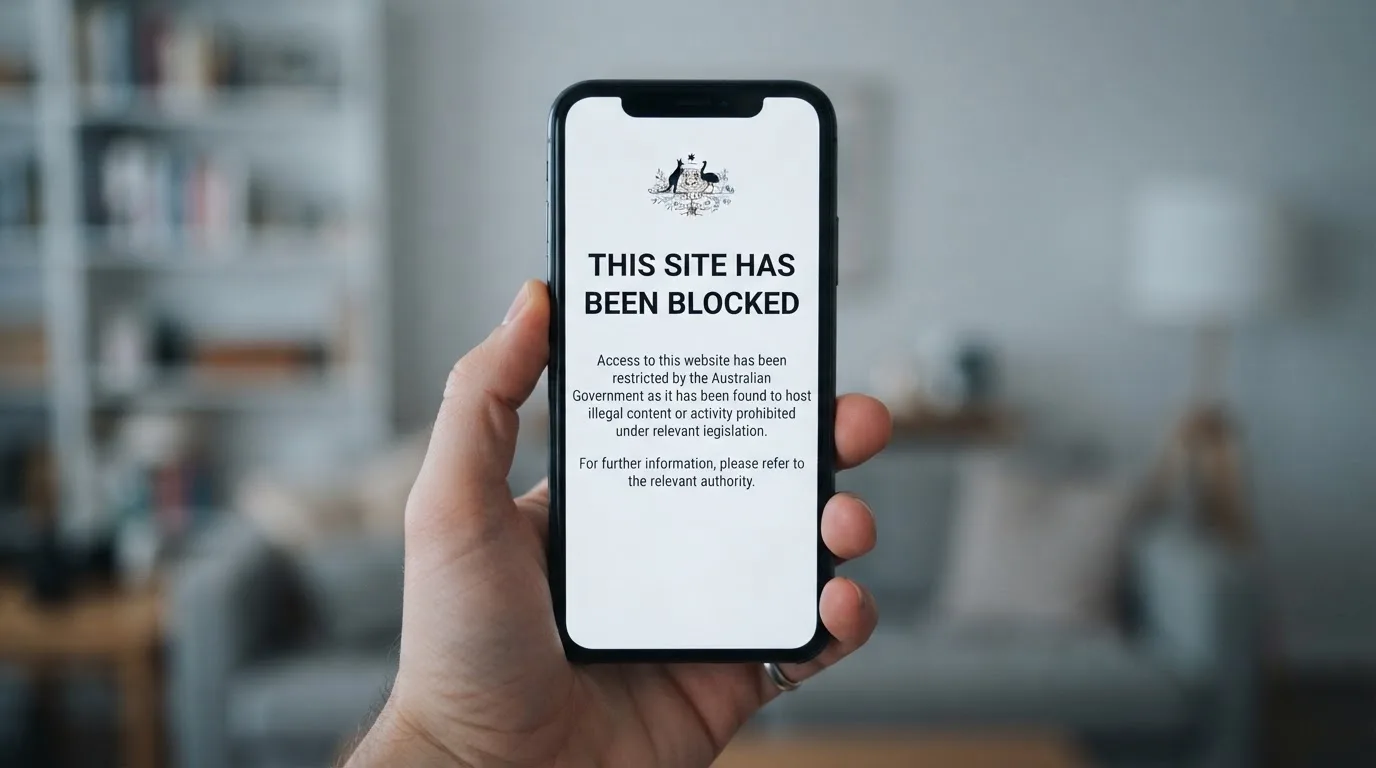
- How the ACMA has moved against the brands on this list
- A short read on each brand
- What the ACMA-blocking picture looks like, in numbers
- Why there is no licensed online casino in Australia
- What an Australian player can do lawfully
- The withdrawal request versus the payout
- Why a bank transfer still takes a day in Australia when the rail is under a minute
- Frequently asked questions
Responsible gaming in Australia when the site is offshore
The first shelf any review of these brands has to clear is the one most offshore marketing prefers to keep off the page: what protections an Australian player actually has when they open an account at a casino the ACMA has already warned. The honest answer is short and uncomfortable. Australia’s responsible-gambling infrastructure is built around the locally licensed system, and offshore operators are not connected to any of it.
BetStop — the National Self-Exclusion Register. BetStop went live in August 2023 and covers every Australian-licensed online and phone wagering service. A punter who signs up cannot open new accounts, deposit or receive marketing from those operators for the period they choose (three months, one year or five years). What BetStop cannot do is keep a player off an offshore site. Offshore brands are not enrolled in the scheme because they are not licensed under it, so an exclusion is a personal pledge, not a system-level lockout. That distinction matters more than it first reads as: a player in distress who excludes themselves under the impression that every gambling site they can reach will refuse them is missing the largest single category of sites they can in fact reach.
The bank-side tools. The big four Australian banks have spent the last three years adding their own layer on top of that. Westpac refuses authorisation at the merchant category level for transactions coded “Betting/Casino Gambling” on eligible personal credit and debit cards. ANZ’s gambling transaction block, toggled inside the ANZ app, blocks gambling payments routed through a linked digital wallet such as Apple Pay on the underlying card, not just the plastic — and once switched on, the block needs a 48-hour cooling-off period before the customer can turn it off again. ANZ and Westpac both warn that the block catches the category the card scheme codes as gambling, which means it can throw up false positives on a hotel booking or a lottery ticket whose merchant code happens to fall in that bucket, and miss a deposit to a site whose merchant description has been registered under something else. Commonwealth Bank offers the same lock inside the CommBank app. These tools blunt what a player with an Australian debit card can do, but again only against transactions the card network can recognise as gambling — which an offshore casino can often route around.
The credit card and crypto rule. The 2023 amendments to the Interactive Gambling Act banned credit cards and credit-related products as a payment method for any Australian-licensed wagering service, with penalties for operators of up to $247,500. The same set of rules treats digital currency the same way, on the principle that an unbacked token cannot be a legitimate deposit route for a licensed service. Digital currency is not, on its own, unlawful for an individual to hold or send — the ban targets the receiving operator. A player looking at a casino that openly accepts credit cards or Bitcoin from an Australian IP is looking at a casino outside the licensed system before anything else is examined.
The channelled-offshore reality. H2 Gambling Capital’s 2025 estimate is that Australians lose about A$3.9 billion a year to illegal gambling sites, and that the share of gambling going through legal channels fell from 74% in 2021 to 64%. Those numbers are not disputed by the ACMA, which is the agency publishing the warnings on the brands in this article. The size of the migration is itself part of why this page exists: the marketing the reader is searching for is working on enough Australians that the regulator has had to escalate from warnings to blocking requests on a roughly monthly cadence.
Where to get help. Gambling Help Online runs chat and email around the clock and the National Gambling Helpline is 1800 858 858, free from any Australian phone. Both are reachable whether the gambling in question is legal or offshore, and neither requires the player to have called from a licensed site first.
Crypto and the no-verification pitch
The search terms that frame this page also include “instant withdrawal no verification casino”, “instant withdrawal crypto casino”, “no KYC casino instant withdrawal”, and the bitcoin variants of the same idea. The pitch that ties them is a clean one — open an account, deposit a coin, withdraw a coin, no documents, no waiting — and it deserves to be read against what an Australian player is actually able to do with the pieces.
Why the marketing exists. Cryptocurrency settlement is genuinely near-instant at the protocol layer once a transaction is signed, and a casino that runs on a self-custody wallet does not have to wait for a correspondent bank to clear the payout. That is the underlying truth the marketing is built on. The part it leaves out is that the same operators are almost always the ones the ACMA has been warning and blocking: the ones on the table later in this article are the same operators whose sites were on a blocking request dated within the last four reporting rounds.
The Australian end of the chain. Under the 2023 amendments to the Interactive Gambling Act, digital currency is a banned payment method for any Australian-licensed wagering service — see the rule on the credit card ban above. The ban is on the operator, not on the player, which means an Australian can still move coin through a self-hosted wallet, but cannot do so into a licensed wagering service, and is on notice that any site accepting the deposit is operating outside the Australian system.
What “no verification” usually means in practice. Where it does exist, it sits in one of two places. Some sites delay verification until the first withdrawal above a threshold or until the first time a payment method is changed — which is not “no KYC” so much as KYC deferred to the moment a player has accumulated something the operator wants to inspect. Others are licensed in jurisdictions with genuinely light customer-due-diligence regimes (Curaçao’s master-licence framework being the common case) and rely on the limit of those rules. In both cases the verification, when it arrives, tends to come at the worst possible time — when the player has a balance they want out and the operator has decided they cannot have it without a passport, a proof of address and a source-of-funds declaration. The phrase the marketing uses for this is “enhanced due diligence on withdrawal”; the effect on the player is that the instant withdrawal turns into an instant pause.
Limits even when the operator is willing. The AUSTRAC threshold-transaction-report rule requires reporting of transfers of A$10,000 or more, but applies only to physical cash — ordinary electronic bank transfers are not subject to that per-transaction reporting requirement, regardless of the amount. That piece of the compliance map does not bite a player moving a few hundred dollars through a casino, but it explains why an Australian bank becomes notably slower and more inquisitive when an incoming transfer has come from an entity it does not recognise and the amount is in five figures. The bank’s caution is not law the player has broken; it is the bank’s own compliance posture, and it can turn a crypto withdrawal that cleared the operator in seconds into a multi-day hold once the rail reaches an Australian institution.
Where this leaves a crypto-curious Australian. The combination of the local payment ban, the ACMA’s enforcement record and the bank’s discretion is enough that any “no verification crypto casino” an Australian punter can actually deposit to is, by the ACMA’s own statements, an illegal gambling service for an Australian player. That does not stop the marketing pages from appearing at the top of search; it explains why they do.
Payments and payout speed, plumbing-first
The payment side of this topic is where the question gets an answer that is genuinely useful, because the Australian payments system is fast and well documented at every layer. The slow part, in almost every case, is the operator at the front of the chain, not the bank or wallet at the back of it.
Osko and the New Payments Platform. Osko is the instant-transfer service that runs over Australia’s New Payments Platform, a piece of infrastructure the public got access to on 13 February 2018 and which is now owned by Australian Payments Plus, the same non-profit that runs BPAY. A bank transfer between participating institutions addresses to either a BSB-plus-account-number or a PayID will arrive in under a minute, twenty-four hours a day, seven days a week, including weekends and public holidays. The platform’s contract with participants keeps its monthly outage budget to no more than two minutes, which is why “under a minute” is a service-level promise the page can repeat rather than a marketing line.
PayID as the address. PayID is the easy-to-remember address on top of Osko: a mobile number, an email address, an ABN or an organisation name, all of which resolve to a BSB and account number in the background. By April 2025 more than 25 million PayID identifiers had been registered. Paying to a PayID shows the account-holder name before the transfer is sent, which Australian Payments Plus uses as a guardrail for exactly this kind of transaction — AP+ warns, on its own materials, that being asked to transfer money to a PayID on an illegal gambling site almost certainly means the player has reached a scam. The covered institutions number over 100, and the four majors are on the list.
BPAY as the slower, still-legitimate route. BPAY has been live since 18 November 1997, is available through the online banking of over 140 Australian banks and credit unions, is offered by over 95,000 billers and is run by Australian Payments Plus. It is a bill-payment service: the payer enters the Biller Code and the Customer Reference Number from the bill, and the money clears next-business-day in most cases. BPAY is, accordingly, the right rail for an Australian player depositing to a licensed wagering service — and is almost never the right rail for a casino payout, because the casino is not structured as a BPAY biller and is in most cases not licensable as one.
Apple Pay, Google Pay and Samsung Pay. By the end of 2025, those three wallets together accounted for around 45% of all card payments in Australia by number. Important nuance for any wallet discussion: Apple does not charge consumers fees for using Apple Pay, and the limits and PIN requirements on Apple Pay transactions are set by the issuing bank or merchant, not by Apple itself. The card sits underneath the wallet, which means an Australian bank’s gambling-block at card level — including ANZ’s, which blocks gambling transactions made through a linked digital wallet on the underlying card, not only the plastic — still catches the wallet transaction. The wallet is a window onto a card; the bank’s rules are the rules of the card.
The American Express special case. American Express was founded as a freight-forwarding company in 1850, issued its first charge card on 1 October 1958 and runs as a three-party scheme rather than the four-party structure Visa and Mastercard use. The Reserve Bank of Australia’s July 2025 review proposes removing surcharges only on eftpos, Mastercard and Visa — Amex is explicitly outside the scope of that proposed surcharge ban. That detail does not matter for the offshore-casino question, because the offshore-casino question is settled before the card choice arrives, but it explains why Amex is rarer on the deposit pages of locally licensed operators and why the marketing pages that advertise “Amex welcome” tend to be the offshore ones.
Why the operator matters more than the rail. A bank transfer over Osko can land in sixty seconds, but only once the originating side has actually pushed it. The slow steps in a “withdrawal” — the audit window, the bonus-check, the manual approval queue, the KYC re-check — happen on the operator’s side, and they happen before the player sees anything that looks like an instant transfer. A site that genuinely clears a withdrawal in minutes has built its back office to do so; a site that does not has its sixty-second figure as marketing copy, not a service-level commitment. The eleven brands below sit on the ACMA’s formal-warning list, and the ACMA’s reason for warning them is the offer of prohibited services, not the speed of the payout — which is itself the answer to “is the instant withdrawal real”.
How the ACMA has moved against the brands on this list
The ranking this page does is not a ranking in the conventional sense. It is a record. Each of the eleven brands below was chosen because the Australian Communications and Media Authority has issued a formal warning to the operator behind it for offering a prohibited interactive gambling service to Australians. The order is the chronological order of the warnings as published on the ACMA register, beginning with the most recent.
| Brand | ACMA action and date | Operator named by the ACMA | Subject support |
|---|---|---|---|
| RocketPlay | Formal warning, March 2026 (Pulsup Ltd, Rocketplay.com.au) | Pulsup Ltd (earlier Dama N.V., May 2022) | Listings only |
| Jackbit | Formal warning, April 2026 (Ryker B.V., Jackbit and CasinOK) | Ryker B.V. | No data |
| Casino Intense | Formal warning, April 2025 (Sterplay Holding Ltd) | Sterplay Holding Ltd | Listings only |
| National Casino | Formal warning, July 2025 (Consolutetish S.R.L.) | Consolutetish S.R.L. | Listings only |
| Bizzo Casino | Formal warning, July 2025 (Consolutetish S.R.L.; earlier TechSolutions, 2022) | Consolutetish S.R.L. | Listings only |
| Ignition Casino | Formal warning, July 2025 (Bamboo Media) | Bamboo Media | No data |
| Spirit Casino | Formal warning, May 2025 (Dama N.V.) | Dama N.V. | No data |
| Woo Casino | Formal warning, March 2025 (Dama N.V.) | Dama N.V. | No data |
| Instant Casino | Formal warning, February 2025 (EOD Code SRL) | EOD Code SRL | Listings only |
| Sky Crown | Formal warning, Hollycorn N.V. (Sky Crown and Blue Leo) | Hollycorn N.V. | No data |
| Level Up Casino | Formal warning, May 2022 (Dama N.V., six-brand action) | Dama N.V. | Listings only |
Three patterns in the table matter more than any single row. First, several operators run more than one brand off the same licence and the same back office — Dama N.V. alone accounts for five of the eleven rows (RocketPlay, Level Up, Woo, Spirit and the original 2022 cohort that included Cobra, Bambet, Dazard, Wild Tornado). Second, the cadence is tightening: the ACMA’s formal warnings have clustered in 2025 and 2026, not because the prohibition is new but because the agency’s enforcement capacity has caught up. Third, “no data” in the subject-support column is not a clean bill of health — it is the absence of an Australian-facing review from the listed sources the research consulted, which says nothing about whether the brand accepts Australian customers.
A short read on each brand
The notes below are not endorsements. Each one ends on what the brand is, what the ACMA named it for, and where it sits against an Australian player who tries to use it. The recurring line — that no Australian licence exists for online casino games — is stated once, in the section on legality, and is not repeated under every brand.
RocketPlay
Pulsup Ltd, trading as Rocketplay.com.au, drew a formal warning in March 2026 for offering prohibited interactive gambling services. The brand had earlier been caught up in the Dama N.V. six-brand action of May 2022, which is the same warning that named Level Up Casino further down this page. The Australian-facing URL is the more interesting of the two: “.com.au” gives the site the appearance of a local address without the substance of one, because there is no Australian-licensed online casino to operate such a domain. The brand’s subject-support evidence is listings-only: Gambling Insider catalogues it as an offshore operator.
Jackbit
Ryker B.V. received an April 2026 warning covering both Jackbit and a sister site, CasinOK. Jackbit markets heavily on crypto rails and is the kind of “instant withdrawal” property the claims this page is designed to investigate tends to surface. The subject-support column reads no-data, which means none of the Australian-facing sources consulted had a current review on file, and which says nothing about the brand’s operational footprint. For an Australian player the warning carries the same weight as every other row on the table — the warning targets the operator, but the operator’s reach is into Australian households.
Casino Intense
Sterplay Holding Ltd’s April 2025 warning covered Casino Intense on its own, which gives the brand an uncluttered entry on the register but does the player no favours. The subject-support column lists it through AUSTRAC, BetStop and Gambling Insider — a split that tells you where the brand has been catalogued in Australian-facing systems rather than anywhere the player can use. Casino Intense is the kind of single-property operator most likely to lean on crypto rails and minimal account verification.
National Casino
Consolutetish S.R.L. drew the ACMA’s attention in July 2025 alongside Bizzo Casino and on the same warning document. The brand is catalogued through Australian-facing sources — acma.gov.au itself, AUSTRAC and BetStop — which makes it one of the more visible entries in the ACMA’s distribution pipeline to Australian consumers. From a player’s perspective, the warning pre-dates any deposit the player has made: by the time the consumer-facing messaging reaches them, the regulator has already named the operator.
Bizzo Casino
Consolutetish S.R.L.’s second brand on the same warning, plus a separate earlier warning against TechSolutions (CY) Group Limited and TechSolutions Group N.V. in 2022. Two operators, two warnings, one player-facing brand — the ACMA has had to act against this site twice. The Gambling Insider listing is the only consultable Australian-facing source, which is itself a thin read on an operator that has been on the local radar for four years.
Ignition Casino
Bamboo Media is the named operator in the July 2025 warning. Ignition is the most widely advertised of the offshore-poker-and-casino brands in the broader market, and the Australian-facing review set is no-data — the brand has not been catalogued through the Australian-facing sources consulted. That is a thinner signal than a positive one, and the warning is what should weigh on a player.
Spirit Casino
Dama N.V., May 2025. The same operator as Woo Casino below and as Level Up further down, and one of the group’s newest brands. Subject-support is no-data — i.e. the brand has not been catalogued through the Australian sources consulted — which from a player’s perspective is not a meaningful distinction. The warning applies to the operator; the operator is the same across five of the eleven entries here.
Woo Casino
Dama N.V., March 2025, two months before the Spirit warning. Woo is one of the group’s longer-running brands and the kind of site that has been advertised in affiliate marketing for years. The subject-support evidence is no-data, meaning the brand is not catalogued in the Australian-facing sources the research consulted. The warning itself is what counts: the ACMA has named Dama N.V. four times in this period alone.
Instant Casino
EOD Code SRL received the February 2025 warning, one of the earlier warnings in the 2025 cluster. Instant Casino is the brand whose name most directly mirrors the search claims this page explores — “instant casino” — and that is itself a marketing signal worth reading. The brand is catalogued through EcoPayz and PayID.au, both of which are payment-rail sources rather than gambling-specific ones.
Sky Crown
Hollycorn N.V. received the warning over Sky Crown and Blue Leo jointly, in the PDF the ACMA published in September 2022. Sky Crown is one of the older entries on the table. Subject-support is no-data, and the brand’s relative age on the list does not help it: the warning still applies, and Hollycorn continues to operate the brand.
Level Up Casino
The May 2022 Dama N.V. action covered six brands in one document — Bambet, Dazard, Level Up, Wild Tornado, Cobra and RocketPlay — of which Level Up and RocketPlay are on this list. That is the oldest entry on the table and the only one with a confirmed 2022 warning. Westpac’s gambling-block page is the Australian-facing source the brand is catalogued through, which is one place Level Up’s transactions have ended up being declined before they cleared.
What the ACMA-blocking picture looks like, in numbers
The blocking-rate calculation this page owns is a straight read of two figures carried in the fact bank. The ACMA reported on 26 June 2026 that a total of 1,751 illegal gambling and affiliate marketing websites had been blocked since the first blocking request in November 2019 — roughly six and a half years of enforcement. Reporting its request rate as the cumulative total divided by the span of enforcement gives roughly 269 blocked sites per year across that whole window, or just over 22 per month; the rate has visibly accelerated in the last two reporting rounds, but the running number is the conservative read.

Take that running total against the 12 sites in the most recent blocking request — 7Signs, ChromaBet, Donbet, Duospin, Freshbet, Slots Gem, Jacks Club, Lucky Start, Pointsbetz, Spinrise, Vinyl Casino and Wildsino — and the picture is that the latest round alone is just under 0.7% of the cumulative tally, with the rest of the historical total made up of earlier rounds that are not itemised on the fact bank. That last percentage understates the recent pressure on operators because the cumulative denominator dilutes the trend; the cleaner read is the year-on-year rate, which is the band the page commits to.
The condition on the number matters. The 1,751 figure counts unique domains blocked under ACMA direction, not unique brands, not unique operators, and not unique player accounts. A single operator behind several skins — Dama N.V. alone accounts for five of the brands above — can account for several of the 1,751. H2 Gambling Capital’s 2025 figure of A$3.9 billion a year lost to illegal gambling, against an estimated 64% legal-channel share, is the read on what those blocks are up against.
Why there is no licensed online casino in Australia
The legal architecture behind every warning in the table above is short enough to fit on one page, and the section that owns it is here, so that every other section can refer back to it in a few words rather than restating it in full.
The Interactive Gambling Act 2001. Offering online casino games, online pokies or in-play betting to a person physically in Australia is prohibited under the Interactive Gambling Act 2001, as tightened by the Interactive Gambling Amendment Act 2017. The prohibition targets the provider, not the individual player: Australians are not prosecuted for placing a bet. What they do lose access to is the consumer protection that comes with a licensed operator — a complaints body, an external dispute resolution service, recourse if a withdrawal is refused — and the offshore operator gains no obligation to honour a withdrawal that an Australian player has won.
Licensing, as far as it goes. The Northern Territory Racing and Wagering Commission regulates 52 of Australia’s online bookmakers, including Sportsbet, Bet365 and Ladbrokes, and the commission is funded mostly by the wagering tax it raises. The commission has no full-time staff and meets once a month in Darwin, which is a useful fact about the regulatory depth behind the licensed end of the market — wagering on sport and racing is licensable under the IGA, casino games are not, and the single regulator that does the bulk of the licensing is small.
Payment rails inside the framework. Credit cards, credit-related products and digital currency were banned as payment methods for licensed online wagering on 11 June 2024, with penalties of up to $247,500 for operators that ignore the rule. Legal deposit routes for licensed wagering — debit card, bank transfer, PayID and Osko, BPAY — are the only ones a licensed operator will offer an Australian player, and any site asking for a credit card or a crypto deposit is, by definition, not one of them.
Reform waiting on a commencement date. The Interactive Gambling Amendment (Gambling Reform) Bill 2026 passed Parliament on 19 August 2026. Its advertising and inducement measures commence on 1 January 2027, which means the bill is law with a future start date rather than law in force on a page read this year. What it will change is the marketing layer around licensed wagering; it does not legalise online casino games.
Tax position. Gambling winnings of a recreational player are not assessable income under section 6-5 of the Income Tax Assessment Act 1997, and losses are not deductible. The position changes only when the ATO is satisfied that the person is carrying on a business of gambling, which is a high bar for a recreational player and worth raising with a tax agent before acting on it.
What an Australian player can do lawfully
The lawful end of the market is not the focus of this topic, but the focus of every warning on the ACMA’s register is that the player is the one who ends up holding the consequences. The honest reading is that an Australian player who wants to bet online is choosing between three buckets, each of which has a real cost.
Licensed wagering on sport and racing. Sportsbet, Bet365 and Ladbrokes are licensed in the Northern Territory and offer sports and racing markets under the Interactive Gambling Act’s carve-out. They are connected to BetStop and to the bank-side blocks. They are not casinos and do not offer online pokies, online roulette or any other casino game — the prohibition in the 2001 Act is not subject to negotiation.
Land-based venues. Licensed pokies are available in clubs and pubs in every state and territory except Western Australia, where the law is more restrictive. Licensed land-based casinos operate in every state and territory. Both are the lawful home of the products the offshore casinos are marketing.
The responsible-gambling referral. Gambling Help Online runs chat and email around the clock; the National Gambling Helpline is 1800 858 858, free from any Australian phone. Either is reachable whether the gambling in question is legal wagering, a land-based venue or an offshore site, and neither requires the player to have called from a licensed site first.
The lawful game is not what this page is selling. It is what every page on this topic should be pointing the reader towards, and it is named here once for the reader who reaches this point and would otherwise read past it.
The withdrawal request versus the payout
The phrasing on the marketing page is “instant withdrawal”, and the first question most readers will have is what the two words actually describe. A withdrawal request is the moment the player tells the casino they want their money; a payout is the moment the money actually moves. The two are not the same operation.
Where the request goes. When a player hits “withdraw” the request enters the operator’s pending-queue. The pending queue is where the back-office checks happen: the bonus-wagering status, the active-play requirement, the deposit-versus-withdrawal method rule (a player who deposited by Visa cannot usually withdraw to Mastercard), and the manual approval queue for any withdrawal above a floor. Pending queues can run to seventy-two hours on the operator’s own terms; some sites cut that to minutes for verified accounts.
Where the payout sits. Once the operator releases the funds, they enter the payment rail. For an Australian bank account via Osko or a PayID-to-account transfer, that leg is genuinely under a minute when both ends participate. For a card payout it can be one to three business days because of the card network’s settlement window. For a crypto payout, it is seconds once signed, less any confirmation depth the casino requires.
The slow leg is almost never the rail. When an Australian player reports being kept waiting, the wait is on the operator’s side, not the bank’s. The rail that delivers the in-app “withdrawal successful” message is doing its job in well under the time the marketing copy claims; the time the marketing copy elides is everything before that message appeared.
Identity verification as the variable. A site that runs serious Know Your Customer (KYC) checks at deposit and at first withdrawal is not slower than a site that does not — the time spent on KYC is a known cost the operator absorbs, and the payout after that point is genuinely instant. A site that defers KYC to the second or third withdrawal, or to any withdrawal above a threshold, accumulates a queue of checks it has not done, and dispenses them when the player attempts to collect. That deferred design is what produces the “instant withdrawal that wasn’t” reviews, and it is what the no-verification marketing is built around.
Why a bank transfer still takes a day in Australia when the rail is under a minute
The Australian leg is fast; the operator leg is what is up for negotiation. The element most readers miss is that the “instant” in “instant withdrawal casino” is the operator’s description of the rail it intends to use to the player, not a commitment to the entire trip from the click of the button to the player’s account. A player checking their CommBank app an hour after they hit “withdraw” on an offshore casino and seeing nothing is not seeing a slow rail; they are seeing a slow operator.
The rail is genuine. The operator’s promise is the variable. The marketing is built to elide the difference.
Frequently asked questions
What is the difference between a payout and a withdrawal request?
A withdrawal request is the instruction the player gives the casino to release funds; it enters the operator’s pending queue, which is where bonus checks, payment-method matching and any identity verification happen. A payout is the actual movement of money onto the chosen rail. The rail between a participating Australian bank and another (Osko, to a PayID or BSB-and-account) settles in under a minute. The queue before that is where most of the wait sits, which is why the marketing word “instant” describes only the second half of the trip.
Why might a casino require identity verification before an instant withdrawal?
Because “no verification” is rarely the absence of checks and more commonly the deferral of them. A site running genuine KYC at sign-up and at first withdrawal absorbs the cost of compliance up front and can release the payout on the first request without delay. A site that defers verification until a larger withdrawal or a change of payment method accumulates the work and dispenses it at the worst possible moment for the player — when there is a balance they want out and the operator wants documents.
Is it legal for an online casino to process withdrawals for players in Australia?
No. Under the Interactive Gambling Act 2001, as amended in 2017 and again in 2023, offering online casino games or online pokies to anyone in Australia is a prohibited interactive gambling service. The prohibition targets the provider, not the individual player, so an Australian is not prosecuted for placing a bet, but the offshore operator has no obligation to honour a withdrawal the ACMA has not approved, no local complaints body to escalate to, and no consumer protection framework of any kind.
Can a bank transfer withdrawal arrive within minutes in Australia?
Yes, when the rail is Osko and the recipient is a PayID or participating BSB-and-account, the arrival time is genuinely under a minute, including weekends and public holidays. The catch is that the operator must have already pushed the funds; the rail does its work once the operator hands it the payment. For card payouts the card network’s own settlement window applies, which can be one to three business days. The Australian rail is fast; the operator’s release is the variable.
Does a crypto withdrawal skip identity checks entirely?
Sometimes, but rarely in the way the marketing suggests. Many offshore sites accept the deposit without checks and run them on the first withdrawal above a threshold or any withdrawal to a new address. The exception is sites licensed in regimes with light customer-due-diligence rules, which can be genuinely no-KYC for amounts below the licence’s threshold. Under the Interactive Gambling Act’s 2023 amendments, digital currency is a banned payment method for Australian-licensed wagering — so a site accepting crypto from an Australian IP is by definition outside that system.
What red flags suggest an instant withdrawal claim is not genuine?
A withdrawal advertised as instant when the site’s terms reserve a pending period, a maximum-payout cap on a win, or a manual-approval queue for amounts above a low floor. A “no verification” claim that is contradicted by a withdrawal-request page asking for documents on the first payout. A payment method list that includes credit cards (banned for licensed wagering since the 2023 amendments) or a digital currency (banned for the same reason). A site whose terms put the player’s recourse in a jurisdiction outside Australia and outside any of the country’s dispute-resolution schemes. Each of those is a flag the marketing copy walks past.