
KA Gaming and Online Casinos in Australia: What the Law Actually Allows in 2026
A page called “best KA Gaming online casinos Australia” is a page built around a gap. The Interactive Gambling Act 2001 prohibits offering online casino games to anyone in Australia, and no state or territory licenses them. KA Gaming is a slot and table-game provider licensed in other jurisdictions, not in Australia, and the brands that stock its library are offshore operators the ACMA has been warning and blocking for years. The honest answer is therefore shorter than the search query suggests — and more useful, because it points readers to what is actually available to them.

Current as of 7 November 2026, checked against the ACMA’s published formal warnings register and the Interactive Gambling Act 2001 as in force on that date.
Table of Contents
- KA Gaming Software Overview
- KA Gaming: The Provider Behind the Library
- What the Interactive Gambling Act 2001 Actually Says
- The ACMA Enforcement Record in Detail
- ### Enforcement Landscape
- Why No Australian Licence Holder Stocks This Library
- What’s Actually Lawful to Play
- Player Protection: BetStop and the Helpline
- How Money Moves at an Offshore Casino — and How It Doesn’t Reach You
- Bonuses and Free Spins: What the Marketing Word Actually Means
- Mobile: How the Library Runs on a Phone
- Frequently Asked Questions
- The Bottom Line
KA Gaming Software Overview
| Game Type | Number of Titles | Portfolio Share |
|---|---|---|
| Slots | 816 | 80% |
| Fish-shooter | 122 | 12% |
| Arcade | 44 | 4% |
| Table Games | 26 | 3% |
| Crash Games | 11 | 1% |
KA Gaming: The Provider Behind the Library
KA Gaming is a slot and table-game studio using the slogan “Makers of Kick A$$ Games, from Asia to World!”. Its published portfolio spans 1,019 titles, broken down as 816 slots, 122 fish-shooter games, 44 arcade titles, 26 table games and 11 crash games. Among named titles are Golden Dragon, Blazing Buffalo, Sunken Empire, Fire Hit 2 and Mega Roulette, and the company states its games support more than 130 currencies and 13 languages. The studio is listed as a gaming content supplier operating in the Oceania region in the iGaming Business directory.

KA Gaming states it holds licences in 16 jurisdictions, naming Curaçao, Anjouan, the Philippines (PAGCOR), Brazil (SPA), Argentina (LOTBA), Malta (MGA), the UK (UKGC), Gibraltar, the Isle of Man and Kahnawake. Australia does not appear on that list. None of those licences authorises the holder to offer online casino games to Australians — that would require an Australian licence, and no Australian jurisdiction issues one. A foreign licence is not a passport; it is a permission in its own jurisdiction only.
What the Interactive Gambling Act 2001 Actually Says
The Interactive Gambling Act 2001, strengthened by the Interactive Gambling Amendment Act 2017, makes it an offence to provide online casino games, online pokies or in-play betting to a person physically in Australia. What is licensable in Australia is wagering on races and sport placed before the event, lotteries and keno — in practice licensed by the Northern Territory through the Northern Territory Racing and Wagering Commission, which regulates 52 of Australia’s online bookmakers including Sportsbet, Bet365 and Ladbrokes.
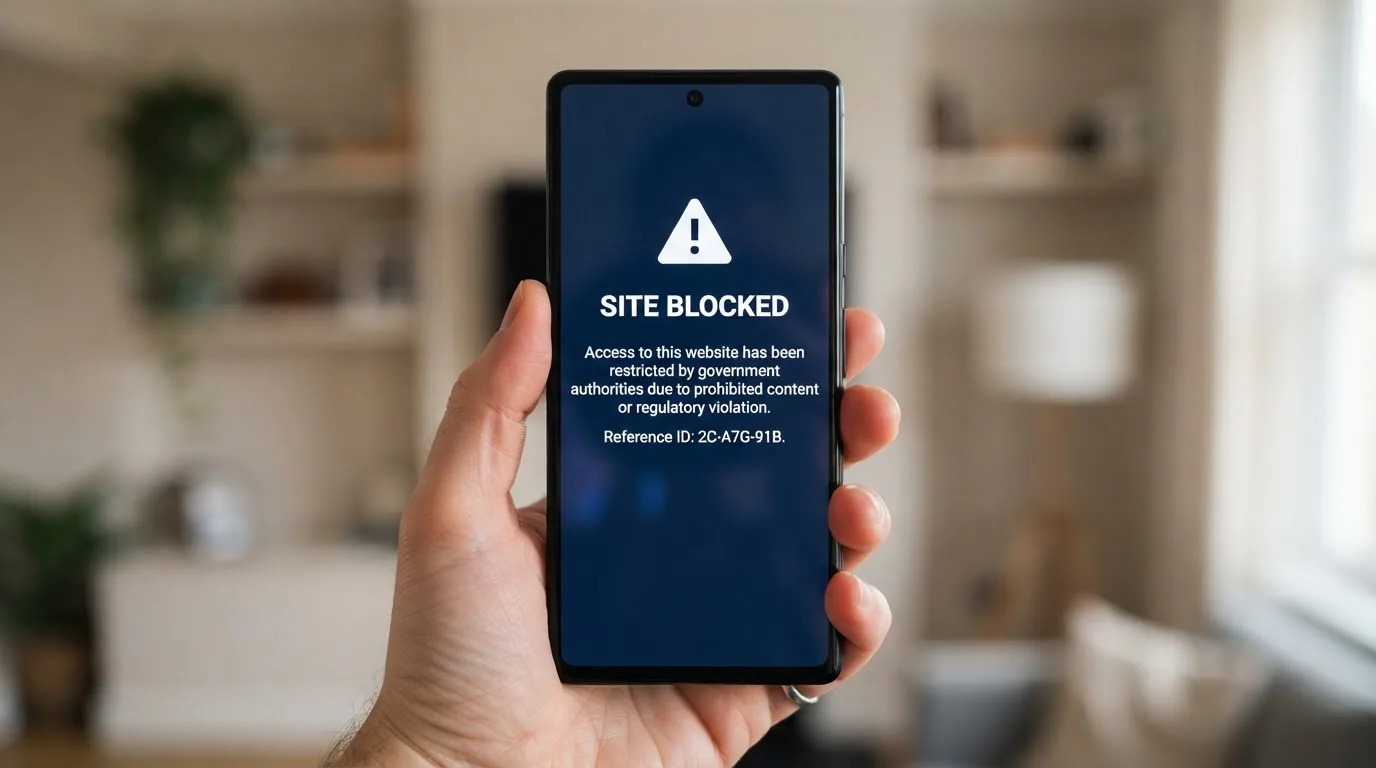
Two things follow for any reader looking at an offshore casino brand:
- The provider is the target, not the player. The IGA’s offence is offering prohibited services to Australians; individual Australians are not prosecuted for opening an account.
- The site can be switched off with money on it. The ACMA investigates and directs internet service providers to block illegal sites. A balance sitting in an account at the moment a block lands is money the reader may not be able to recover.
The enforcement record, year by year, is the load-bearing evidence behind that second point. It is not a thought experiment — the block list is published and the warnings are dated.
The ACMA Enforcement Record in Detail
The ACMA has issued formal warnings to KA Gaming-stocking operators since 2022. The chronological record reads:
- May 2022: Dama N.V., covering six casino brands — Bambet, Dazard, Level Up, Rocketplay, Wild Tornado and Cobra Casinos.
- September 2022: Hollycorn N.V. over its Sky Crown and Blue Leo casino services.
- February 2025: EOD Code SRL over Instant Casino.
- April 2025: Sterplay Holding Ltd over Casino Intense.
- March 2025 and May 2025: further formal warnings to Dama N.V. over Woo Casino and Spirit Casino.
- July 2025: Bamboo Media over Ignition Casino, and Consolutetish S.R.L. over National Casino and Bizzo Casino; Bizzo Casino had already been the subject of a 2022 formal warning to TechSolutions (CY) Group Limited and TechSolutions Group N.V..
- March 2026: Pulsup Ltd over Rocketplay — a second warning on the Rocketplay brand after the 2022 Dama action.
- April 2026: Ryker B.V. over Jackbit and CasinOK.
- 26 June 2026 reporting round: the ACMA asked Australian internet service providers to block 12 more illegal gambling websites — 7Signs, ChromaBet, Donbet, Duospin, FreshBet, Jacks Club, Lucky Start, Pointsbetz, Slots Gem, Spinrise, Vinyl Casino and Wildsino.
A formal warning is not the end of the ACMA’s reach. The blocking request is the next step: since November 2019, when the first blocking request went out, the ACMA had by June 2026 directed the block of 1,751 illegal gambling and affiliate marketing websites, and more than 230 unlicensed gambling services had left the Australian market since enforcement was strengthened in 2017. That gives a current blocking rate of roughly 262 sites per year averaged across the period since the first block in November 2019 — a figure that states the shape of the regime rather than any one year’s outcome, since enforcement speed varies with investigation cycles and operator behaviour. Either way, the regime is not static: it is in motion, and a site operating in the open today can be the same site behind a block tomorrow.
The H2 Gambling Capital 2025 report puts the price of that regime at about A$3.9 billion a year in losses to illegal sites, with the share of gambling going through legal channels falling from 74% in 2021 to 64%. The legality of the offer and the volume of the demand are two separate facts, and the second does not soften the first.
### Enforcement Landscape
A Snapshot of the Eleven Operators the ACMA Has Named
The brands below are listed because the ACMA itself issued a formal warning over each of them for offering prohibited services to Australians. They are not ranked, scored or recommended. Each row shows the warning, the operator the regulator named, and what is known about the brand’s stocking of KA Gaming or related providers.
| Brand | ACMA action and date | Operator named by the ACMA | Subject support |
|---|---|---|---|
| RocketPlay | Formal warning, March 2026 (earlier Dama N.V., May 2022) | Pulsup Ltd | — |
| Level Up Casino | Formal warning, May 2022 | Dama N.V. | listings-only (Wazdan) |
| Woo Casino | Formal warning, March 2025 | Dama N.V. | — |
| Spirit Casino | Formal warning, May 2025 | Dama N.V. | — |
| National Casino | Formal warning, July 2025 | Consolutetish S.R.L. | listings-only (Betsoft, en.wikipedia.org, Pragmatic Play) |
| Bizzo Casino | Formal warning, July 2025 (earlier TechSolutions, 2022) | Consolutetish S.R.L. | — |
| Ignition Casino | Formal warning, July 2025 | Bamboo Media | — |
| Instant Casino | Formal warning, February 2025 | EOD Code SRL | — |
| Jackbit | Formal warning, April 2026 | Ryker B.V. | — |
| Casino Intense | Formal warning, April 2025 | Sterplay Holding Ltd | listings-only (1spin4win, en.wikipedia.org, gamblingcommission.gov.uk) |
| Sky Crown | Formal warning, September 2022 | Hollycorn N.V. | — |
The em dashes in the right-hand column are doing work. Where the ACMA has named the brand but the research does not list a provider-level confirmation that KA Gaming or its peers are stocked, the row stays blank rather than inventing a connection. “Listings-only” means the brand appears in industry listings for those providers — that is what those listings say, and no more. It does not mean a working KA Gaming library is confirmed, nor does it mean a reader can rely on it.
What the table actually shows is the regulator’s case file. Eleven brands, eleven ACMA actions, eleven offshore operating companies. None of the licence plates on those operations — Curaçao, Anjouan — makes the offer lawful in Australia; the licence plate is a permission in the jurisdiction that issued it, not a permission everywhere else.
Why No Australian Licence Holder Stocks This Library
The reason is mechanical, not bureaucratic. No Australian jurisdiction issues a licence for online casino games. The closest thing to a regulator with that footprint is the NTRWC, which regulates 52 online bookmakers licensed in the Territory for tax reasons and meets once a month in Darwin with no full-time staff. That commission licences wagering services — sports betting, racing — not casinos. The wagering operators it licences take bets on events; they do not host slot or table libraries from third-party providers.
Australian slot manufacturing, separately, is a real industry. Aristocrat Leisure Limited, founded in 1953 by Leonard Ainsworth and ASX-listed since 1996 under the ticker ALL, is the largest gambling-machine manufacturer in Australia and the second-largest slot-machine manufacturer worldwide. Its 2025 revenue was A$6.30 billion, with normalised net profit after tax and amortisation of A$1.55 billion and 7,400 employees. Its online real-money arm is Aristocrat Interactive, formed in April 2024 by combining Anaxi with the newly acquired NeoGames group — a roughly US$1 billion deal completed that April after announcement in 2023. Aristocrat’s earlier moves include buying Video Gaming Technologies in 2014 for about US$1.3 billion, then Plarium in 2017 for US$500 million and Big Fish Games in 2017 for US$990 million; its US$3.7 billion bid for Playtech was rejected by Playtech shareholders in 2021.
What this list establishes is that Australia has the manufacturing capability. What it does not establish is a licensed online channel through which the capability is sold to Australian residents. The IGA draws that line; the manufacturers have not been lobbying to redraw it.
What’s Actually Lawful to Play
Three doors are open to an Australian reader interested in casino-style games. Each has the protection the offshore route does not.
The first door is licensed pubs and clubs. Poker machines — pokies — operate under state and territory legislation, with each jurisdiction setting its own rules on numbers of machines, hours of operation and harm-minimisation measures. Crown Melbourne, The Star Sydney and similar venues run table games under their own casino licences. These are land-based operations regulated by state gaming authorities.
The second door is licensed online wagering. Sports betting and racing are licensed in Australia, with 52 bookmakers licensed through the NTRWC alone. Minimum age is 18. Since 11 June 2024, credit cards, credit-related products and digital currency are banned as payment for licensed online wagering, with penalties up to A$247,500 for operators that accept them. Legal deposit routes are debit card, bank transfer, PayID/Osko and BPAY. A wagering operator asking for a credit card or crypto deposit is operating outside the Australian rules.
The third door is lotteries and keno, licensable in their respective jurisdictions.
What is not open is an online casino stocking KA Gaming — or any other provider’s — slot and table library for Australian residents.
Player Protection: BetStop and the Helpline
BetStop, the National Self-Exclusion Register, has been live since August 2023. It binds Australian-licensed online and phone wagering services: a person who registers is excluded across all of them. What it does not do is reach offshore casinos. An operator connected to BetStop must be an Australian licensee, and Australian licensees do not run online casino games.
The National Gambling Helpline on 1800 858 858 is free and runs 24/7, with chat available through Gambling Help Online. Both work for anyone whose gambling — legal or otherwise — has become a problem, and they do not require the caller to be using an Australian-licensed operator.
Self-exclusion from an offshore casino is therefore a different act from self-exclusion from BetStop: it requires writing to the operator directly, depends on the operator honouring the request, and offers no Australian recourse if the operator does not.
How Money Moves at an Offshore Casino — and How It Doesn’t Reach You
The research carries no Australian-bank payout-time figure for any KA Gaming-stocking brand, so the picture has to be drawn from the regime, not from any one operator’s published times.
Deposits at an offshore casino typically clear in minutes: card payments, e-wallets and crypto deposits are the usual paths. The question for an Australian reader is not the deposit but the settlement back into an Australian bank account once a withdrawal is requested.
Three structural features of an offshore site govern that question. The first is KYC: the operator verifies identity documents before processing a withdrawal, and a verification step that drags beyond a week is a known pressure point for stalling payouts. The second is bonus conditions: a withdrawal request while an active bonus is on the account is typically refused or only partially paid out until wagering requirements are met. The third is the site itself: an offshore operator can refuse a withdrawal on a term-and-condition basis, and the Australian reader has no complaints body, no regulator to escalate to and no legal route that meaningfully runs from an Australian address through a Curaçao or Anjouan licence back to a payout.
The Australian rules on payment, where they bite, do not bite the offshore operator directly — the operator is outside the regime. What they do is close off convenient paths. A credit card deposit is not a path available to an Australian at a licensed wagering operator; using one at an offshore casino is not the same act legally, though the same banking-fraud and chargeback protections do not apply either.
Bonuses and Free Spins: What the Marketing Word Actually Means
KA Gaming-stocking brands advertise welcome packages, deposit matches, free spin bundles and “no deposit” credits. These are not Australian offers; they are offers posted on sites the ACMA has warned or blocked, with terms the ACMA does not oversee.
The mechanical shape of the offer is universal enough to be worth naming. A “100% match up to A$500 with 40x wagering on the bonus” is the canonical structure: deposit A$500, receive A$500 in bonus funds, and wager that A$500 forty times over before any of it converts to withdrawable cash. At a 40x multiplier on a A$500 bonus, the required turnover is A$20,000 — a number that has nothing to do with what was deposited and everything to do with what the marketing page asked for.
Free spin offers carry a similar arithmetic. A bundle of 200 free spins on a KA Gaming slot with each spin valued at A$0.20 and winnings subject to a 35x wagering requirement means A$40 of gross winnings need to be turned over A$1,400 times before any of it can be withdrawn — assuming the slot’s RTP supports that turnover in the first place.
The expected loss from clearing a bonus is the simpler calculation: required turnover multiplied by one minus the slot’s RTP. On a 96% RTP slot with A$20,000 of required turnover, expected loss is A$20,000 × 0.04 = A$800. That is the average cost of clearing a A$500 bonus at those terms on that kind of slot — an average over many sessions, never a guaranteed outcome for the player sitting at the screen. The expected loss is the house edge, expressed in dollars rather than as a percentage, and it is the same edge the house has on every spin, whether or not a bonus is involved.
The “no deposit” credit is the marketing move that most needs reading carefully. A A$20 no-deposit credit with a 50x wagering requirement and a A$100 maximum cashout looks free; the wagering requirement asks for A$1,000 of play, the maximum cashout caps any winnings at five times the credit, and the expected loss on that turnover at 96% RTP is A$40. A free A$20 with a negative expected value of A$40 is not, in any meaningful sense, free.
The point that the marketing pages do not draw is the structural one: every offer of this shape is the same offer, with the wagering multiple and the maximum cashout cap setting the cost. Where the regulator of an Australian licensee would write those terms in plain English and enforce them, no equivalent oversight sits over an offshore brand’s promotional page.
Mobile: How the Library Runs on a Phone
The KA Gaming catalogue is built for HTML5 playback, so a modern smartphone browser loads its games without a separate app download. There is no KA Gaming mobile app; the studio is a content provider, not an operator, and operators running KA Gaming content deliver it through their own browser-based or app-based front ends.
On a phone, the experience is the standard HTML5 slot format: portrait or landscape play, touch controls, paytable access. Game loading depends on the operator’s hosting rather than on KA Gaming’s specifications. Connectivity matters more than handset capability; a slow connection produces the same spinning-pinwheel delay on a flagship phone as on a budget handset.
Frequently Asked Questions
What kind of games does KA Gaming make?
KA Gaming publishes 816 slots, 122 fish-shooter games, 44 arcade titles, 26 table games and 11 crash games — a catalogue of more than 1,000 titles. Named releases include Golden Dragon, Blazing Buffalo, Sunken Empire, Fire Hit 2 and Mega Roulette. The studio is licensed in 16 jurisdictions, none of them Australian.
Is KA Gaming used by any casino licensed to operate in Australia?
No Australian licence covers online casino games, so no Australian-licensed casino can stock KA Gaming’s library for Australian residents. The brands carrying its content are offshore operators — and the ACMA has issued formal warnings against several of them.
Can Australians legally play KA Gaming slots at an online casino?
The Interactive Gambling Act 2001 prohibits offering online casino games to anyone in Australia. The provider is the legal target, not the player; the player is not prosecuted for opening an account, but the site can be blocked with a balance on it and the player has no Australian recourse if a withdrawal is refused.
Are KA Gaming games available at land-based Australian casinos?
KA Gaming’s portfolio is built for online play, and the Australian-licence question cuts the same way: no Australian licence covers the games, whether online or in a venue. Australian land-based casinos run table games under their state casino licences and poker machines under state gaming regulations; KA Gaming titles are not part of that offering.
What should someone check before trusting a site that claims to offer KA Gaming games?
Check the ACMA’s published formal warnings register, which lists the brands the regulator has acted against. Check the payment method: credit cards and crypto are banned for Australian-licensed wagering, and a site accepting either is operating outside the Australian rules. Check that the licence plate on the operator is not being used as a passport: a Curaçao or Anjouan licence is permission in those jurisdictions, not permission to take Australian players. None of these checks produces a lawful Australian online casino stocking KA Gaming — because none exists.
Does KA Gaming software run on mobile browsers?
Yes. The studio’s catalogue is built for HTML5, so a modern smartphone browser loads the games without a separate app. The operator’s hosting quality matters more than the handset’s capability, and a slow connection produces the same delays on a flagship phone as on a budget one.
The Bottom Line
The phrase “best KA Gaming online casinos Australia” is a phrase that names a thing that does not exist, in a jurisdiction where the thing is prohibited. KA Gaming publishes a real catalogue of more than 1,000 games. The ACMA has warned or blocked eleven of the operators that carry that catalogue for Australians. The publisher of any Australian-facing “top” list is naming operators the regulator has named, and the reader is meant to take the regulatory record as the verdict.
What is available is licensed wagering on racing and sport — bookmakers licensed through the NTRWC and its equivalents, with bets paid out in Australian bank accounts, with Australian complaints bodies, and with credit card and crypto deposit rules enforced since 11 June 2024. What is also available is the land-based pub, club and casino floor, with its own state-based rules. What is not available is an online casino, KA Gaming-stocked or otherwise, lawfully offered to an Australian resident.