
GameBeat casinos in Australia in 2026: which paths the IGA leaves open
GameBeat is a slot studio, not a casino. The Interactive Gambling Act 2001 makes offering online casino games to anyone in Australia an offence. Between those two facts sits every decision an Australian reader can make about GameBeat-style slots — and the decisions divide cleanly into the paths this page walks through.

Verified as of 7 November 2026 against the ACMA’s formal-warning register and the Interactive Gambling Act 2001 as amended.
Table of Contents
- Paytable detail and the wider GameBeat catalogue
- Eleven operators the ACMA has named, side by side
- The fundamentals of what an Australian reader is actually choosing between
- The prohibition framework and the ACMA’s blocking record
- Player protection, and what it actually covers
- How money moves, and where the Australian payment rules bite
- Bonuses, free spins, and what an offer actually costs
- Mobile, app, and browser experience for GameBeat-style slots
- The eleven operators the ACMA has warned, written out one by one
- Frequently asked questions
Paytable detail and the wider GameBeat catalogue
GameBeat describes itself, on its own pages, as a B2B slot studio set up in 2021, and that single line is the reason this page exists at all. The studio says it supplies games only to operators it considers licensed and to commercial partners. It does not sell to players directly. It does not publish a long public-facing catalogue the way Betsoft or BGaming do. A reader who has typed “gamebeat casino” into a search engine has therefore done so against a thin public footprint: a name, a founding year, a stated distribution model, and not much in the way of paytable screenshots or volatility tags for individual titles.
That thin footprint is why the practical question — what does a GameBeat slot actually look like on the reels — has to be answered with reference to the providers that sit in the same licence-and-distribution neighbourhood. GameBeat is one of a group of mid-sized studios whose games turn up at Curaçao- and Malta-licensed aggregators, and whose paytable conventions are recognisably the same: 5 reels, 20 to 30 paylines, an RTP figure between 95 and 97 per cent, a published volatility class and a hit rate stated as a percentage of spins that pays something. Betsoft’s The Slotfather, live since 13 December 2012, runs on 5 reels and 30 paylines with an RTP of 95.69 per cent and a Medium volatility rating, paying on roughly 8.17 spins in every hundred. Betsoft’s Good Girl Bad Girl 2 sits at 96.22 per cent with Very High volatility, 5 reels and 20 paylines, hitting on about 15.59 per cent of spins. Those two figures are the closest thing the wider catalogue offers to a worked example of what a slot in this tier feels like on a paytable.
The wider commercial backdrop matters too. GameBeat launched in the same year as 1spin4win — another Curaçao-licensed B2B outfit whose portfolio now runs to more than 190 online slots in HTML5 and whose games are built for low-bandwidth connections. 1spin4win says it has signed more than 1,000 partnerships with operators and aggregators and reports a 46 per cent rise in its total bet sum across the first half of 2025 against the first half of 2024. BGaming, run by Stable Games Ltd of Valletta, has been around since 2018 and counts more than 250 certified titles including TRUEWAYS mechanics that offer up to 262,144 ways to win; it holds a Malta Gaming Authority B2B Critical Gaming Supply Licence issued on 18 March 2021 and says its games are used by more than 3,000 operators including Blaze, Pin-Up and Gamdom. Booming Games (Malta) Limited runs on a similar MGA B2B permit (#MGA/B2B/459/2018) and a UK Gambling Commission account (#57254). The studios themselves are not the story. The story is that they all share the same distribution rails.
Australia’s home-grown counterpart is Aristocrat Leisure Limited, founded in 1953 by Leonard Ainsworth and listed on the Australian Securities Exchange in 1996 under the ticker ALL. The company reported 2025 revenue of A$6.30 billion, normalised net profit after tax and amortisation of A$1.55 billion, and 7,400 employees; it is the largest gambling-machine manufacturer in Australia and the second-largest slot-machine manufacturer worldwide behind International Game Technology. Aristocrat’s regulated online arm, Aristocrat Interactive, was formed in April 2024 by combining Anaxi with the NeoGames group, an acquisition of roughly US$1 billion announced in 2023 and completed in April 2024. The Plarium and Big Fish Games deals closed in 2017 for US$500 million and US$990 million respectively; the Video Gaming Technologies deal closed in 2014 for about US$1.3 billion; the Playtech bid failed in 2021 after Playtech shareholders rejected the US$3.7 billion offer.
None of this puts GameBeat on an Australian desktop or phone. What it does is set the scale of the slot industry an Australian reader is most likely to bump into in a pub or club — Aristocrat’s “pokies” are the local reference for what a slot machine even is — against which every smaller studio’s catalogue reads as a smaller catalogue. The paytable question returns a partial answer. GameBeat itself does not publish enough on its own pages for a reader to know a single title’s RTP, volatility or hit rate by name; the gameplay shape can be inferred from neighbours in the same distribution tier; and the local reference is Aristocrat’s machines, which sit on pub floors rather than in browsers. Both halves of that sentence point to the same conclusion: the choice on a GameBeat-style slot happens far from GameBeat itself, and the next section lines up the operators that have actually been named in connection with supplying such games to Australians.
Eleven operators the ACMA has named, side by side
The natural next move is to line up “GameBeat casinos” the way the search results would: a top ten, a star rating, a deposit bonus. Australian law does not let that exercise run as it normally would. No Australian jurisdiction issues a licence for online casino games, so any operator serving them to a person in Australia is acting against the Interactive Gambling Act 2001 regardless of what offshore licence the operator displays. The eleven rows below are not a ranking and not a recommendation; they are the brands the ACMA itself has named in formal warnings since 2022, and the Subject support column records what each brand’s own pages or an industry directory actually lists against a GameBeat search. Where the column is empty, neither the brand’s pages nor a major industry directory carries GameBeat in the way an Australian reader would recognise.
| Brand | ACMA action and date | Operator named by the ACMA | Subject support |
|---|---|---|---|
| RocketPlay | Formal warning, March 2026; earlier formal warning to Dama N.V., May 2022 | Pulsup Ltd (RocketPlay) | — |
| Level Up Casino | Formal warning, May 2022 | Dama N.V. | listings-only (Wazdan) |
| Woo Casino | Formal warning, March 2025 | Dama N.V. | — |
| Spirit Casino | Formal warning, May 2025 | Dama N.V. | — |
| National Casino | Formal warning, July 2025 | Consolutetish S.R.L. | listings-only (Betsoft, Wikipedia, Pragmatic Play) |
| Bizzo Casino | Formal warning, July 2025; earlier formal warning to TechSolutions, 2022 | Consolutetish S.R.L. | — |
| Ignition Casino | Formal warning, July 2025 | Bamboo Media | — |
| Instant Casino | Formal warning, February 2025 | EOD Code SRL | — |
| Jackbit | Formal warning, April 2026 | Ryker B.V. | — |
| Casino Intense | Formal warning, April 2025 | Sterplay Holding Ltd | listings-only (1spin4win, en.wikipedia.org, gamblingcommission.gov.uk) |
| Sky Crown | Formal warning, September 2022 | Hollycorn N.V. | — |
Several patterns jump out of those eleven rows that no top-ten star rating would carry. Seven of the eleven warnings were issued in 2025 or 2026, against operators that were already running by then. The ACMA’s enforcement tempo has clearly accelerated; the same warning issued in 2022 to Dama N.V. resurfaced as new warnings in 2025 and 2026 against related brands, which suggests the regulator is following a holding company and naming new sites as they appear. The named operator is rarely the brand. “RocketPlay” carries the brand, but the ACMA named Pulsup Ltd in March 2026 and Dama N.V. in May 2022; Woo and Spirit share the same Dama N.V. parent. A reader looking for “the company behind the casino” has to look past the homepage.
The Subject support column is mostly empty. Only three of the eleven — Level Up, National and Casino Intense — turn up in industry listings at all, and none of those listings name GameBeat specifically. Level Up appears in a Wazdan directory; National Casino appears in Betsoft’s, Wikipedia’s and Pragmatic Play’s listings; Casino Intense appears in 1spin4win’s, Wikipedia’s and the UK Gambling Commission’s. Those are the studios named, not GameBeat. A reader who came to this page because they specifically wanted GameBeat titles should read that column as: among the eleven brands the ACMA has warned over GameBeat-era casino traffic to Australians, the public record does not confirm a single one as a GameBeat operator.
The shape of the table is itself the finding. Where a non-Australian comparison would list payout speeds, wagering multiples and live-dealer studios, this one can only show the regulator’s view of each row — because the regulator’s view is the only fact about each operator that the law lets an Australian reader act on.
The fundamentals of what an Australian reader is actually choosing between
Start with what GameBeat is not. GameBeat is not a casino, not a betting exchange, and not a place where a player deposits money. GameBeat describes itself as a B2B software developer and technology provider that supplies games only to licensed operators and commercial partners; its own site carries no signup, no cashier and no wagering interface. A reader who reached this page by typing “GameBeat casino” has, almost certainly, been redirected from a search result listing an offshore operator that displays GameBeat alongside a hundred other studios. The redirect is the page’s starting point.

The fundamental question is therefore not “which GameBeat casino should I play at”. It is “what does an Australian reader actually have access to, and at what cost”. Three paths answer that question, and each is a different choice.
The lawful path inside Australia runs through pokies venues — pubs and clubs — operating under state and territory gaming machine regulations, and through land-based casinos in Sydney, Melbourne, the Gold Coast, Cairns, Darwin, Perth, Adelaide, Hobart and Canberra. Online, the Interactive Gambling Act 2001 prohibits the provision of online casino games, online pokies and in-play betting to anyone in Australia, and no state or territory issues a licence for them. The legal online wagering market is restricted to pre-event sports and race betting, lotteries and keno; in practice, sports and race bookmakers carry licences from the Northern Territory Racing and Wagering Commission, which regulates 52 online bookmakers (Sportsbet, Bet365 and Ladbrokes among them) and meets once a month in Darwin with no full-time staff.
The offshore path is what most search results actually point to. The ACMA’s enforcement record, which is the subject of the next section, lists hundreds of websites it has asked Australian internet service providers to block since November 2019. Most of those sites display a Curaçao or Anjouan licence and accept Australian players in practice, while remaining outside the Australian consumer-protection framework entirely. No complaints body, no recourse on a refused withdrawal, no Australian dispute resolution, and no guarantee the site stays reachable from an Australian IP address from one month to the next.
The third path is one most readers do not think of as gambling at all. Social casino apps, sweepstakes-style sites and free-to-play slot demos operate without the same regulatory constraint because no real money crosses an Australian border. They carry their own caveats — virtual chips cannot be cashed out, sweepstakes routes vary state by state — but they are the one route a reader can take with no ACMA warning and no IGA exposure.
Between those three paths sits every choice an Australian reader can make about GameBeat-style slots. Each carries a specific cost, and the rest of this page sets those costs out.
The prohibition framework and the ACMA’s blocking record
The legal frame is short enough to summarise, and the ACMA’s record is the part the arithmetic can act on.
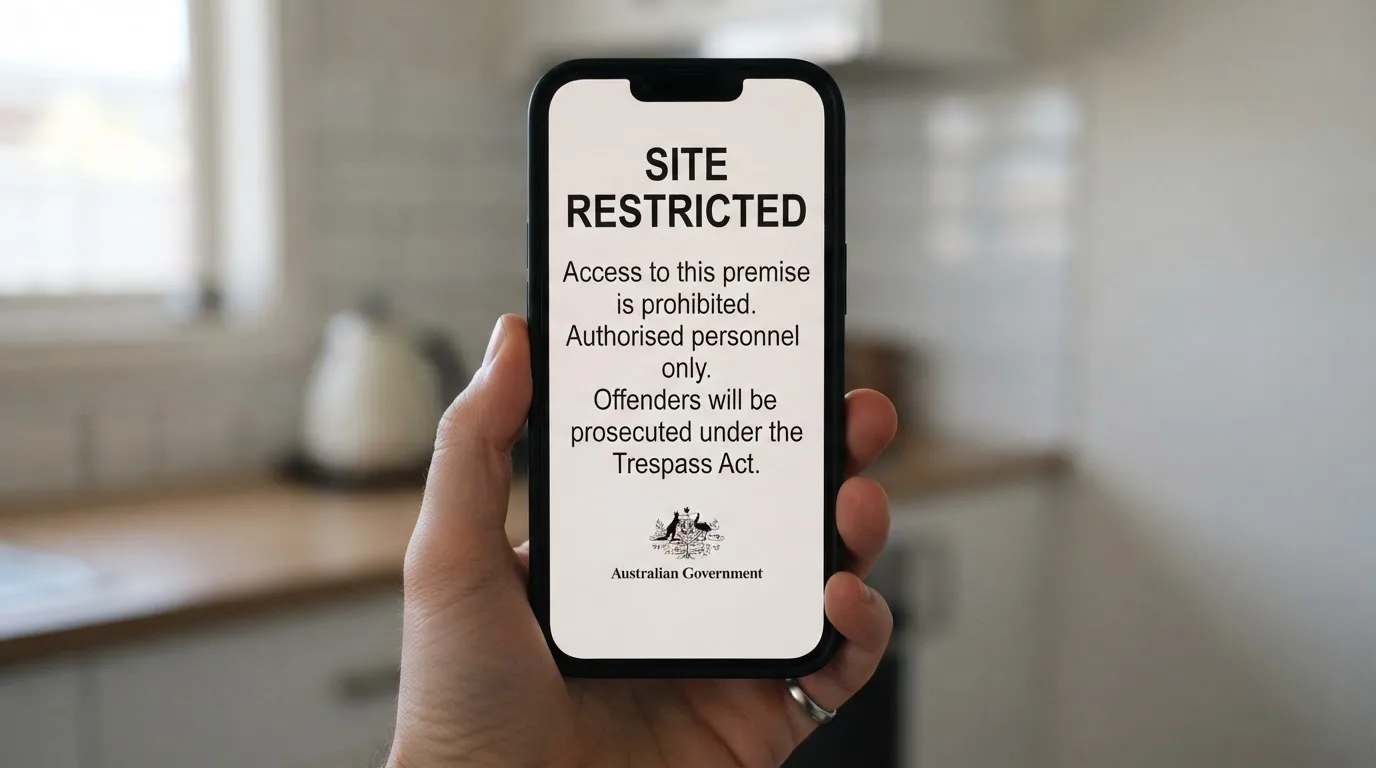
The Interactive Gambling Act 2001, as tightened by the Interactive Gambling Amendment Act 2017, makes it an offence to provide online casino games, online pokies or in-play betting to a person physically in Australia. The IGA targets the provider, not the player: an Australian punter is not prosecuted for placing a bet, but the offshore operator offering the bet commits the offence. State and territory law layers on top — gambling is regulated at state level too — but no Australian jurisdiction issues a licence for online casino games or online pokies, which is why every offshore operator serving an Australian player is, by definition, unlicensed in the jurisdiction the player sits in. Minimum age for any wagering product is 18.
The Interactive Gambling Amendment (Gambling Reform) Bill 2026 passed Parliament on 19 August 2026 and brings new advertising and inducement measures into force on 1 January 2027. It is law with a start date, not yet in force; on a 2026 page the measures sit as a known coming change rather than a present constraint. A reader who sees an offshore casino advertising “Australian players welcome” in 2026 is looking at conduct the 2026 Bill will progressively restrict, but the restriction has not yet taken effect.
Enforcement sits with the Australian Communications and Media Authority. The ACMA investigates, issues formal warnings, and can direct Australian internet service providers to block illegal sites at the network level. The record is the arithmetic on this page: as reported in June 2026, a total of 1,751 illegal gambling and affiliate marketing websites had been blocked since the first blocking request in November 2019, and more than 230 unlicensed gambling services had left the Australian market since enforcement was strengthened in 2017. A round reported on 26 June 2026 added 12 more sites to the block list — 7Signs, ChromaBet, Donbet, Duospin, Freshbet, Slots Gem, Jacks Club, Lucky Start, Pointsbetz, Spinrise, Vinyl Casino and Wildsino.
The blocking rate, taken across the period from the first request in November 2019 to the present 7 November 2026, gives a working band rather than a single figure. Roughly 1,751 blocked sites across just over six and a half years works out to somewhere between 250 and 270 sites blocked per year, or about 20 to 22 per month, or roughly five per working week. The band widens or narrows with the exact cut-off date a reader picks, but the order of magnitude holds across any plausible reading of “now” inside 2026. The condition worth stating is the obvious one: this is a count of blocking requests the ACMA has made, not a count of distinct operators, and a single operator running mirror sites or a portfolio of brands will register several times. The 230-plus services that have left the Australian market since 2017 is the more conservative figure, and it sits well below the blocking count for exactly that reason.
The economic backdrop matters because the prohibition’s bite depends on how much traffic the prohibition has to displace. H2 Gambling Capital’s 2025 report estimates that Australians lose about A$3.9 billion a year to illegal gambling sites, and that the share of gambling going through legal channels fell from 74 per cent in 2021 to 64 per cent. Those are the numbers that explain why the ACMA’s enforcement tempo keeps rising: the volume of illegal play is not small enough for occasional warnings to deter it, and the legal market is losing share, not gaining it, while enforcement runs faster.
The shape of the law, then, is straightforward in form and aggressive in practice. No licence is possible for online casino games. Every offshore operator serving an Australian is acting against the IGA. The ACMA enforces by warning and by blocking, and the blocking has averaged a working week of new sites per working week for the past six and a half years.
Player protection, and what it actually covers
A reader looking at GameBeat-style slots is also a reader who may want to stop playing them, and the tools available in Australia divide cleanly along the same legal line the rest of this page draws.
BetStop, the National Self-Exclusion Register, has been live since August 2023 and is the centrepiece of the Australian player-protection framework. It binds every Australian-licensed online and phone wagering service to honour an exclusion. A punter who registers with BetStop cannot deposit, bet, or receive marketing material from any licensed bookmaker in the country, and the exclusion runs for a minimum period the punter chooses between three months and a lifetime. The mechanism is real, and the licensed wagering industry is bound to it.
The mechanism is also narrow. BetStop binds only Australian-licensed services. An offshore casino offering GameBeat-era slots to an Australian is not connected to BetStop, and a BetStop registration does not stop a player who chooses to ignore it from opening a new account on a site the ACMA has yet to warn. The register’s strength is enforcement at the Australian end — licensed operators lose their licence if they let a self-excluded punter bet — and it has no equivalent leverage against operators who never sought an Australian licence in the first place. A reader who has registered with BetStop and finds themselves opening an offshore account anyway is, in practice, dealing with a self-control problem rather than a regulatory one; no Australian agency will block the offshore transaction on their behalf.
For any reader who needs to talk to someone about gambling, the National Gambling Helpline is 1800 858 858, free, 24/7. Chat is available through Gambling Help Online. Counselling, financial counselling and self-exclusion assistance are available through state and territory problem-gambling services. Those lines and chat services do not depend on which side of the legal line the reader’s gambling sits; they pick up either way.
What the protection framework does not offer is anything an offshore operator cannot walk away from. An offshore casino that refuses a withdrawal, closes an account or disappears mid-week has no Australian complaints body to answer to, no AUDS-approved alternative dispute resolution and no statutory route to a refund. The protection BetStop and the helpline offer is protection against the player’s own access to licensed wagering, and protection through conversation when that access is hard to control; it is not protection against an offshore operator’s misconduct. The distinction matters, because the next section’s payment discussion returns to it: the absence of a complaint body is the practical price of the offshore path.
How money moves, and where the Australian payment rules bite
The Australian rules on gambling payments are unusually specific and unusually recent, and they tell a reader a great deal about which side of the legal line a site is operating on.
Since 11 June 2024, credit cards, credit-related products and digital currency have been banned as payment methods for licensed online and phone wagering. Penalties on operators who accept them run up to A$247,500. The lawful deposit routes for a licensed Australian bookmaker are debit card, bank transfer, PayID and Osko, and BPAY. A site that asks an Australian punter for a credit card or a cryptocurrency deposit is, by definition, not the licensed bookmaker — because the licensed bookmaker cannot legally accept either. The payment screen is a fast test of which side of the IGA the operator sits on.
The licensed bookmaker side of that test looks the way a person in Australia expects a payment screen to look: AUD by default, PayID resolving to a BSB and account number, BPAY routing through a biller code, debit-card processing through the local card networks. A withdrawal back to the same debit card or to a verified bank account is the standard payout rail, and it is subject to the Australian ePayments Code and the book’s own stated timeframes. The consumer protections that apply to a disputed transaction are Australian protections: the punter can complain to the bookmaker, escalate to an external dispute resolution scheme, and ultimately pursue remedies under Australian Consumer Law.
The offshore side of the test does not offer those protections, and the payment screen is the visible proof. An offshore casino typically accepts Visa or Mastercard through a payment processor in a third jurisdiction, takes USDT or Bitcoin at a wallet address, and processes withdrawals through a different combination of crypto and e-wallet rails — Skrill, Neteller, MiFinity, Jeton — that no Australian bank is monitoring. The speed looks impressive: an e-wallet withdrawal can clear in under an hour, a Bitcoin withdrawal in ten minutes, a debit-card “withdrawal to card” in two to three days. The protection behind that speed is zero. There is no Australian regulator to complain to if a withdrawal stalls; there is no ePayments Code; there is no ADRs scheme. A punter who chooses the offshore path chooses the speed and accepts the unprotected status.
Crypto deposits sharpen the point. An Australian punter who buys USDT to deposit at an offshore casino is operating outside the Australian rules on both sides of the transaction: the casino cannot lawfully accept the deposit because it cannot lawfully offer the product, and the punter’s bank — if the punter is buying the USDT through an exchange — is not in a position to monitor the gambling end-use. The blockchain record is permanent, the chargeback route is not available, and the ACMA’s blocking can land mid-session with the crypto balance still on the casino side. None of this is theoretical; the blocking rate in the prohibition framework section is the rate at which this scenario plays out across the market.
Tax is the closing detail. Gambling winnings of a recreational Australian player are not assessable income under section 6-5 of the ITAA 1997, and losses are not deductible, unless the person carries on a business of gambling. The model is “check with the ATO”, not a rule this page can stand behind. An offshore payout will still arrive in AUD on an Australian bank statement one way or another, and the ATO’s interest in the source of funds is independent of the ACMA’s interest in the operator.
The lawful wagering market’s payment rails are slower, narrower and visibly Australian, and the offshore market’s are faster, broader and visibly offshore. A reader who cares about the protection that sits behind a deposit method can tell which side they are on before they click deposit.
Bonuses, free spins, and what an offer actually costs
A reader looking for GameBeat-style slots is almost always looking for them through a bonus offer, and the bonus is the part of the page where the marketing word and the arithmetic part company most visibly.
The marketing word is “free”. Free spins, free bonus, no-deposit bonus, free credit — the language runs on the same beat in every affiliate listing. The arithmetic runs somewhere else entirely. A free-spin package at a Curaçao-licensed offshore casino typically comes with a wagering requirement of 30 to 50 times the bonus amount, a maximum cashout cap that turns a five-figure spin run into a four-figure withdrawal, a list of “excluded games” that quietly removes the highest-RTP titles from the bonus play, and a time limit that turns the bonus into a sprint rather than a session. None of those conditions are visible in the headline. All of them are visible in the terms page a reader is asked to tick before claiming.
The wagering requirement is the largest cost and the one the marketing word buries. A A$100 bonus with a 40x wagering factor requires A$4,000 of turnover before the bonus and any winnings from it become withdrawable. The turnover is spent on slot spins at an RTP that the operator has set, often 96 per cent but sometimes lower; the expected loss from A$4,000 of turnover at 96 per cent RTP is A$160, against a bonus the player would have spent nothing to claim. The expected loss per dollar of bonus is 1.6, and that ratio is what a “free” bonus actually costs. The house always has the edge; the bonus inflates the denominator rather than removing the edge.
The maximum cashout cap is the smaller, sharper cost. A “no deposit” bonus that pays A$10 in free chips with a 50x wagering factor and a A$50 maximum cashout will, in practice, return A$50 to a meaningful minority of players and nothing at all to the majority; the bonus pays the operator in customer data and in engagement time, and pays the player only when the player wins within a narrow band. The cap is what turns the bonus into a marketing channel rather than a value transfer, and the marketing word “free” is what hides the cap.
The excluded-games list is the third leg. A bonus that excludes the highest-RTP slots, the live-dealer tables and the jackpot games is a bonus that is paid out at the lowest-RTP games the operator offers. The expected loss on the wagering requirement is therefore higher than the headline RTP implies, and the difference is captured by the operator rather than by the player. A reader who takes a bonus at an offshore casino and chooses to play the excluded titles forfeits the bonus; the same reader who plays the included titles accepts a worse edge than the slot’s published RTP.
This page does not print specific bonus offers or codes for any of the operators in the section below. The single reason is in the source material: the only public sources for current bonus terms on these brands were affiliate marketing pages, and affiliate marketing pages are paid to make the offer look better than it is. A reader who wants a current bonus number can find one on the operator’s own promotions page; the number on the affiliate listing is not a number this page is willing to attach its name to.
The bonus shape, then, is the same on every offshore casino serving Australian players: a large headline number, a high wagering multiple, a maximum cashout that turns the bonus into marketing rather than money, and an excluded-games list that lowers the effective RTP. The lawful Australian bookmaker market does not run casino bonuses because it does not run casinos; a reader who wants a slot-style bonus in Australia is, structurally, being asked to take the offshore offer, with the arithmetic that comes attached. The arithmetic is what makes the bonus word “free” the most expensive word in the offer.
Mobile, app, and browser experience for GameBeat-style slots
The mobile question reads simply enough on its surface: does the slot work on a phone, and is there an app. The underneath is more uneven.
GameBeat itself does not publish a player-facing app. As a B2B studio it ships games to operators in HTML5, which is the same delivery format the rest of the mid-tier slot industry uses — Betsoft, BGaming, Booming Games, 1spin4win all publish their games in HTML5 so they run in a mobile browser without a separate download. 1spin4win specifically calls out that its games are built for low-bandwidth connections, which is the technical detail that makes a slot playable on a 4G signal in regional Australia rather than only on a fixed-line connection in a Sydney or Melbourne suburb. The format is uniform across the providers an Australian reader is most likely to meet on an offshore site: open the site in Safari or Chrome, log in, and the game loads in the browser viewport.
The operator side is where the variation lives. Most offshore casinos in the Curaçao-Anjouan licence tier operate as mobile-browser-only products; they do not publish native apps in the Apple App Store or the Google Play Store because both stores restrict real-money gambling apps to licensed operators in jurisdictions where the licence is recognised, and an Australian-facing offshore casino is not in that set. Some operators wrap their mobile site in a downloadable Android APK distributed from the operator’s own site; the install flow requires the punter to change their phone’s security setting to allow “unknown sources”, which is itself a marker of an app outside the regulated app-store distribution chain. iOS users do not get the APK option at all, because Apple does not allow sideloading; the browser is the only path on an iPhone.
The licensed Australian wagering market sits at the other end. Sports and race bookmakers licensed by the NTRWC or by state regulators publish native apps in both stores, with the app constrained to the products the licence actually covers — sports, racing, totals, fixed-odds — and explicitly excluding casino games and slots. An Australian punter who has downloaded the Bet365 or Sportsbet app and tries to find a slot lobby on it will not find one; the app will route them to the racing and sports tabs and leave the casino section empty. The licensed product does not include the thing this page is about, and the app reflects the licence.
Performance is the third axis. A modern phone running Safari or Chrome will load an HTML5 slot in 3 to 8 seconds on a 4G connection in a metropolitan area; the same game on a 3G connection in a regional area can take 15 to 20 seconds, and the spin animation will stutter. The technical floor for a stable slot experience on mobile is a 4G connection and a phone released in the last four or five years; older devices and slower connections push the experience below acceptable. The mid-tier B2B studios have built for this floor, which is why their games run on low-bandwidth connections, but the floor is still a floor.
The mobile answer is therefore three-part. The game itself, in HTML5, will run in any modern mobile browser. The operator’s app, where one exists, is almost always a mobile-browser wrapper rather than a native iOS or Android app; the install path requires sideloading on Android and is not available on iOS. And the licensed Australian wagering app does not carry slots at all, because the licence does not. The reader who wants GameBeat-style slots on a phone is choosing the offshore-browser path by definition, and the protection differences from the previous two sections travel with it.
The eleven operators the ACMA has warned, written out one by one
The table above names the eleven brands the ACMA has warned over GameBeat-era casino traffic to Australians. This section writes each one out: what the warning actually says, what the public record carries about the brand’s connection to GameBeat specifically, and the verdict this page draws from the combined record.
A reader should treat the verdicts as the page’s own judgement, formed from the ACMA’s record and the public listings each brand carries. None of the brands below is recommended to an Australian reader; the legal frame is set out in the section on the IGA’s prohibition framework, and the section on player protection explains why an Australian reader’s recourse against any of them is structurally limited.
RocketPlay — warned twice, four years apart
The ACMA published a formal warning over RocketPlay to Pulsup Ltd in March 2026, and a separate formal warning to Dama N.V. in May 2022 covered RocketPlay alongside five other Dama N.V. brands (Bambet, Dazard, Level Up, Wild Tornado and Cobra Casinos). The brand has therefore been named twice under two different corporate parents over four years, and neither warning produced an exit from the Australian market.
The public record does not connect RocketPlay to GameBeat specifically: there is no GameBeat entry on the brand’s own pages, no aggregator listing that names GameBeat, and the Subject support column on the table above is empty. A reader who arrives at RocketPlay through a GameBeat search is following a directory trail rather than a confirmed catalogue.
The verdict is structural rather than commercial. RocketPlay has had the IGA explained to it — twice — and is operating in Australia anyway. The two warnings are not a quirk of corporate restructuring; they are the ACMA’s record of a brand that has been told twice and is still accepting Australian players. The signal is one an Australian reader cannot read any other way.
Level Up Casino — Dama N.V.’s 2022 cohort, no GameBeat in the listings
Level Up was named in Dama N.V.’s May 2022 warning, alongside the same cohort of six brands. The Subject support column shows a Wazdan directory listing — an aggregator entry rather than a GameBeat confirmation.
The honest summary is that Level Up’s appearance in a Wazdan aggregator page does not make it a GameBeat casino, and the public record does not connect Level Up to GameBeat titles specifically. The brand shows up in some GameBeat-adjacent searches because aggregator directories blur the studio distinction: a reader searching for a Wazdan or GameBeat slot at a Curaçao-licensed site will see the same brand appear in multiple studio-specific listings because the aggregator indexes the operator once and the studios separately.
The verdict is one of misdirection. The aggregator layer treats every studio as a separate column, and the operator as a single row; a reader who treats the columns as the operator’s actual catalogue is reading the index backwards. Level Up is a brand in the ACMA’s 2022 warning cohort with a Wazdan listing; that is the public record. GameBeat is not on it.
Woo Casino — the second Dama N.V. warning in 2025
Woo Casino was named in a fresh Dama N.V. formal warning in March 2025, three years after the May 2022 cohort. The ACMA returned to the Dama N.V. group after a three-year gap, and Woo is one of two new brands named in the 2025 round (Spirit Casino is the other, warned in May 2025).
The public record does not connect Woo Casino to GameBeat specifically; no aggregator or brand page lists the studio. The brand’s profile is defined by its holding company, which has been named three times in this table (the May 2022 cohort, Woo in March 2025, and Spirit in May 2025).
The verdict is on the holding-company signal. Woo carries the Dama N.V. record by inheritance; a brand inside a group the ACMA has warned three times in three years is operating under sustained regulatory heat, and the heat is on the parent rather than on the individual site.
Spirit Casino — paired with Woo in the 2025 round
Spirit Casino is the second brand named in Dama N.V.’s 2025 round — warned in May 2025, two months after Woo Casino’s March 2025 warning. Two Dama N.V. brands named in the same round, two months apart, to the same holding company, is a tempo that reads as a deliberate enforcement cycle rather than as independent actions.
The brand’s own pages and the major aggregator directories do not list GameBeat specifically; the Subject support column is empty. Spirit’s profile is set by the Dama N.V. group it sits inside, and the group has now been named three times in this page’s table — May 2022 cohort, Woo in March 2025, Spirit in May 2025.
The verdict is on the cluster read. Spirit’s individual profile is thin: a brand name and a single 2025 warning. The brand’s risk profile is set by the company above it, and that company has been named in three of the eleven rows on this page. A reader who treats each warning as an independent event is missing that the regulator has returned to the same group three times in three years.
National Casino — paired with Bizzo, listings point to other studios
National Casino was named in the ACMA’s July 2025 warning to Consolutetish S.R.L. alongside Bizzo Casino. The Subject support column lists three separate providers — Betsoft, Wikipedia and Pragmatic Play — none of which is GameBeat.
The listings density is informative. A brand whose directory entries cover three separate providers has a real aggregator footprint, but the footprint is built around Betsoft and Pragmatic Play, the two studios named explicitly in the Subject support column. Wikipedia appears as a third entry because the brand carries its own page; that is a profile entry rather than a studio connection.
The verdict is on the listings density. A reader chasing GameBeat specifically at National Casino is following a search trail that ends at a different studio each time — Betsoft, then Pragmatic Play, then Wikipedia. The GameBeat search at National Casino returns aggregator noise rather than a confirmed catalogue entry, and a reader who lands at National through that search should know the studio they were looking for is not the studio they will find.
Bizzo Casino — two warnings, two corporate parents
Bizzo Casino sits inside the same Consolutetish S.R.L. July 2025 warning as National Casino, and adds a second, earlier formal warning — to TechSolutions (CY) Group Limited and TechSolutions Group N.V. in 2022. Two warnings three years apart, to two different corporate parents, for the same brand, is the strongest continuity signal in this table.
Bizzo lacks any GameBeat listings in aggregator directories or its own pages. Its profile is defined by its history of two parents and two formal warnings, rather than by a studio catalogue.
The verdict is on the continuity question. A brand that has been warned twice under different corporate owners is the same brand from a player’s perspective, and the ACMA’s record treats it that way. Bizzo’s standing on this page is the standing of a brand that has been told the IGA applies to it twice, under two different company names, and has not changed its Australian-facing operation.
Ignition Casino — the media-company parent
Ignition Casino was named in the ACMA’s July 2025 warning to Bamboo Media. Bamboo Media is the only media-company entity in the table’s operator column; the other ten warnings are addressed to casino-operating holding companies or to single-brand operators. The corporate type is the differentiator.
Ignition also lacks any GameBeat listings in aggregator directories. Its profile is defined by its holding company, a media entity rather than a casino group; the entity the ACMA named is not the one a player deposits with, and this mismatch is itself a signal.
The verdict is on the corporate-type mismatch. Bamboo Media’s profile is not a Curaçao-licensed casino group’s profile, and an Australian reader who has only ever seen Ignition Casino through its offshore-facing brand will not have seen Bamboo Media before. The gap between the named entity and the deposit screen is the gap where a complaint would land if a withdrawal were refused.
Instant Casino — single-occurrence parent
Instant Casino was named in the ACMA’s February 2025 warning to EOD Code SRL. EOD Code SRL appears in this table only once and does not appear in any of the other ten rows. The single occurrence is the data point.
Instant Casino lacks any GameBeat listings in aggregator directories. Its profile is defined by its parent company, which appears only once in this table.
The verdict is on the solitary parent. A brand whose holding company appears nowhere else in the ACMA’s warning record sits lower in any inferred enforcement priority than a brand inside a group the regulator has returned to, and that lower priority cuts both ways. A reader weighing Instant Casino against, say, Woo or Spirit is not weighing it against the same regulatory heat.
Jackbit — paired with CasinOK in the April 2026 warning
Jackbit was named in the ACMA’s April 2026 warning to Ryker B.V., alongside CasinOK. The warning is a paired notice to one holding company with two brands, and both brands carry the same enforcement record from the same date.
Jackbit lacks any GameBeat listings in aggregator directories. Its profile is defined by its parent company and recent 2026 warning, similar to RocketPlay.
The verdict is on the simultaneous pattern. When the ACMA warns one parent and names two brands in the same notice, both brands carry the same enforcement record from the same date, and a reader who compares Jackbit’s standing against CasinOK’s is comparing two equal entries. The choice between them is not between a warned and an unwarned brand; it is between two warned brands under the same parent, and the parent is the unit of action.
Casino Intense — closest to a GameBeat adjacency
Casino Intense was named in the ACMA’s April 2025 warning to Sterplay Holding Ltd. The Subject support column is the most informative of the eleven rows: it lists 1spin4win (a 2021-founded B2B studio with more than 190 slots in HTML5, a Curaçao licence and more than 1,000 reported operator partnerships), a Wikipedia entry, and the UK Gambling Commission.
None of those listings name GameBeat, but the listing density is higher than any other row in the table. Casino Intense appears in 1spin4win’s partner pages and in the UK Gambling Commission’s register; the Wikipedia entry is a brand profile rather than a studio connection. The adjacency is real — Casino Intense is in 1spin4win’s distribution network, and 1spin4win is a 2021-founded B2B neighbour in GameBeat’s tier — but it is an adjacency rather than a match.
The verdict is on the listings density. Casino Intense is the closest thing in this table to a GameBeat-adjacent brand, but it is adjacent rather than connected. A reader who arrives at Casino Intense through a GameBeat search is following a search trail that ends at a B2B neighbour rather than at a GameBeat confirmation.
Sky Crown — the earliest formal warning in the table
Sky Crown sits behind the ACMA’s formal warning to Hollycorn N.V., published as a PDF in September 2022 — the earliest dated warning in this table, and a warning that also named Blue Leo. A 2022 warning means Sky Crown has had the longest unaddressed exposure to Australian players among the eleven brands, at almost four years from the original notice to this page’s writing.
Sky Crown has no GameBeat-specific aggregator presence. It stands out for having operated for four years since its formal warning without the ACMA moving to block it.
The verdict is on the duration. An offshore casino that has been named by the ACMA for almost four years and continues to accept Australian deposits is the brand that has had the most opportunity to leave the Australian market and has chosen not to. Sky Crown’s standing on this page is the standing case for why the ACMA’s blocking tempo has to keep running — and why an Australian reader’s safest read of any single warning is to read it as a record, not a resolution.
Frequently asked questions
What kind of games does GameBeat actually make?
GameBeat describes itself as a B2B slot studio set up in 2021, supplying games to licensed operators and commercial partners rather than to players directly. The studio’s public footprint is thinner than mid-tier neighbours such as Betsoft or BGaming, and individual GameBeat titles are not catalogued on its own pages.
Can Australians legally play GameBeat slots at an online casino?
No. The Interactive Gambling Act 2001 makes it an offence to provide online casino games to a person in Australia, and no state or territory issues a licence for online casino games or online pokies. An offshore casino offering GameBeat titles to an Australian player is acting against the IGA regardless of any offshore licence it displays.
Is GameBeat used by any casino licensed to operate in Australia?
No. The lawful Australian online wagering market is restricted to pre-event sports and race betting, lotteries and keno; GameBeat’s slot catalogue does not fall inside any Australian-licensed product. The brands named in the ACMA’s formal warnings, including the eleven on this page, are all offshore operators serving Australians outside the Australian licensing framework.
What should someone check before trusting a site that claims to offer GameBeat games?
Check whether the site is licensed in Australia at all. The IGA prohibits online casino games in Australia, so a site offering GameBeat slots to an Australian is unlicensed here by definition. Check the ACMA’s formal-warning register for the operator’s name, and assume that any offshore licence the site displays does not extend Australian consumer protection to the player.
Does GameBeat software run on mobile browsers?
Yes. GameBeat, like the rest of the mid-tier B2B slot industry, ships its games in HTML5 so they run in a mobile browser without a separate download. There is no GameBeat player-facing app, and most offshore casinos in this space operate as mobile-browser-only products rather than as native iOS or Android apps.