
Best Booongo online casinos Australia: what the search really returns
Current as of 7 November 2026, verified against the Australian Communications and Media Authority’s published list of formal warnings and blocking actions.
The phrase “best Booongo online casinos Australia” reads like a question with a shopping list attached: which sites, which bonuses, which payout times. In Australia the answer comes before the list. No Australian-licensed casino offers online pokies or online casino games at all, so no locally licensed site offers Booongo’s library either — and Booongo itself, since a 2021 restructuring, has continued under the name 3 Oaks Gaming in the regulated markets where it still operates. The brands that surface in an Australian search for “Booongo casinos” sit entirely offshore, sit outside the Interactive Gambling Act 2001 (IGA), and have been the subject of formal warnings from the ACMA in some cases more than once.
This page lays out that picture rather than pretending a clean list sits behind it. It walks through what Booongo and its successor actually publish as game studios, what a paytable from one of their titles looks like, what the Australian legal frame does and does not cover, and how the eleven operators most often named in this kind of search sit against the ACMA’s published record. The arithmetic at the centre is the ACMA’s blocking rate since 2019 — how fast the regulator’s list of blocked sites has actually grown, given when it started.
Table of Contents
- What “Booongo” actually refers to in 2026
- How a Booongo-style paytable reads
- Where this kind of play is legal — and where it isn’t
- How to read the ACMA record on a brand
- The operators the ACMA has warned
- The arithmetic behind the ACMA’s blocking rate
- Bonuses, free spins and what they cost in this segment
- Mobile, app and the offline segment
- What a player should actually take from this
- Frequently asked questions
What “Booongo” actually refers to in 2026
A searcher typing the studio’s name in 2026 is usually looking at a transitional shape. Booongo Gaming was a Curaçao-registered slot developer that produced a recognisable catalogue of hold-and-win and “ways” pokies — Sun of Egypt, 3 Pots of Egypt, Coin Up, Tiger Jungle, the Book of Sun series. After the company’s 2021 restructuring, the regulated-market business continued under the trading name 3 Oaks Gaming, while the older Booongo brand still appears on aggregator pages, on operator lobbies and in marketing copy aimed at players who recognise the earlier name.

3 Oaks Gaming is the entity that holds the licences the studio now operates under. In February 2024 the UK Gambling Commission granted 3 Oaks a remote operating licence under number 063055-R-338209-005; the company operates through Green Rock Ltd from Douglas on the Isle of Man. The Commission subsequently certified more than fifty of 3 Oaks’ slot titles for the UK market, including 3 Pots of Egypt, Storm of Olympus, 777 Fruity Classic and Hawaii Riches. In August 2025 the Malta Gaming Authority issued a recognition notice, letting the studio supply Sun of Egypt 4, Coin Up: Lightning, 3 Hot Chillies and other titles to MGA-licensed operators. Earlier approvals in Portugal and Romania rounded out the regulated footprint.
None of those licences extends to Australia. The IGA does not recognise licences issued by overseas regulators for the supply of online casino games or online pokies to people physically in Australia, and the Australian states and territories do not issue such licences themselves. What that means in practice is that any site an Australian player reaches by searching “Booongo casino” is operating under a Curaçao or Anjouan master licence at best — and that, in the cases named below, has already drawn the ACMA’s attention.
The distinction matters because the older Booongo content and the newer 3 Oaks content are technically the same studio’s lineage. Players who recognise “Booongo” in a casino lobby are looking at a back catalogue that, in regulated markets, ships under a different brand — and an Australian-facing site carrying that back catalogue is doing so without any Australian sanction.
How a Booongo-style paytable reads
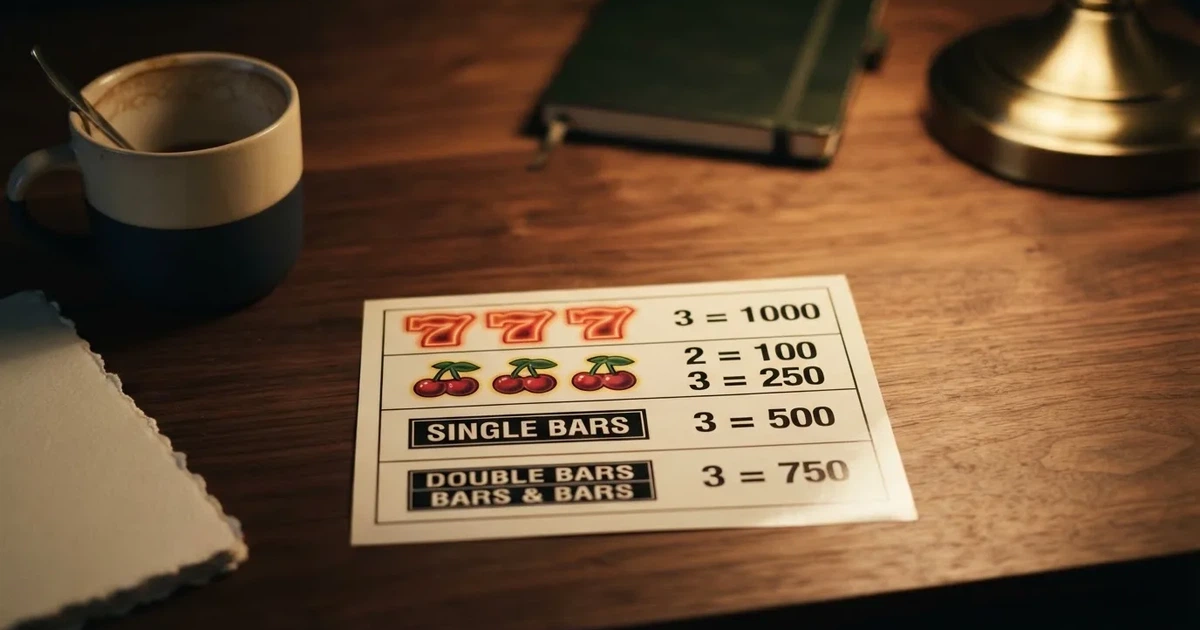
A Booongo paytable, like most modern video-slot paytables, is a short reference card sitting inside the help screen of the game itself. It lists the symbol set, the line structure, the value of each symbol across combinations of three, four and five, and the rules of any feature the title is built around — the hold-and-win bonus, the scatter-triggered free spins, the wild substitution rules. The maths sits at the bottom: the return-to-player percentage, the volatility class the studio publishes, and a hit rate that tells you how often a spin of any kind returns something.
To make the shape concrete, here is what a non-Booongo but representative modern paytable looks like, drawn from Betsoft’s published game pages. Good Girl Bad Girl 2 — five reels, twenty paylines, RTP 96.22%, volatility “Very High”, hit rate 15.59%. The Slotfather — five reels, thirty paylines, RTP 95.69%, volatility “Medium”, hit rate 8.17%. Neither of those is a Booongo or 3 Oaks title, but the layout is what a player meets across the segment: low-90s to mid-90s RTP, a volatility band the studio names, and a hit rate that explains how often a spin returns anything at all. Booongo and 3 Oaks titles typically publish in the same neighbourhood, with hold-and-win mechanics layered on top of the base game.
The figure that does the most work is volatility. A “Very High” volatility title pays out less often but pays more when it does; a “Medium” volatility title pays out more often but in smaller increments. Both figures sit on the same RTP in the long run, by definition — but the experience of a hundred spins is not the long run, and a player who hits a “Very High” volatility title with a small bankroll will sit through long dry stretches to reach the bonus round the title is built around. Anyone reading a paytable before they play should read volatility first, RTP second, and the hit rate as a sanity check on the two.
A line that pays three-of-a-kind at one coin and five-of-a-kind at fifty looks generous on the paytable. It is. The cost of that generosity is what the line takes from the player on every spin that doesn’t hit it — which is most of them.
Where this kind of play is legal — and where it isn’t
The Interactive Gambling Act 2001, strengthened by the Interactive Gambling Amendment Act 2017, makes it an offence to provide online casino games, online pokies or in-play betting to a person in Australia. No state or territory issues a licence for those services; the only online wagering Australia permits, under Australian licences, is pre-event betting on races and sport, lotteries and keno. Wagering providers are licensed federally but most are physically licensed through the Northern Territory — the Northern Territory Racing and Wagering Commission regulates fifty-two online bookmakers, including Sportsbet, Bet365 and Ladbrokes, and meets once a month in Darwin with no full-time staff of its own.
The Australian Communications and Media Authority — the ACMA — does the enforcement. The agency investigates complaints, issues formal warnings to operators, and directs Australian internet service providers to block illegal services. The player is not the target of the IGA; the law aims at the provider. The practical effect for the player is that any offshore site offering online casino games to Australians sits outside the Australian consumer-protection frame, gives the player no complaints body to approach, and can be blocked by the regulator with whatever balance happens to sit on the account at that moment.
The other side of the legal frame is the payment side. Since 11 June 2024 credit cards, credit-related products and digital currency have been banned as payment for licensed online wagering in Australia; the penalties for an operator breaching that rule run up to A$247,500. The deposit routes that remain legal for licensed wagering are debit card, bank transfer, PayID/Osko and BPAY. An offshore casino asking an Australian for a credit card or a crypto deposit is operating outside the Australian rules; it is also operating outside the rules its own licence would normally require, because the Australian ban on credit-card gambling applies to the operator, not to the player.
In June 2026 the ACMA’s blocking list stood at 1,751 illegal gambling and affiliate marketing websites blocked since the first blocking request went out in November 2019. More than 230 unlicensed gambling services have left the Australian market since enforcement was strengthened in 2017. H2 Gambling Capital’s 2025 estimate puts Australian losses to illegal gambling sites at around A$3.9 billion a year, with the share of gambling going through legal channels falling from 74% in 2021 to 64%. None of those figures make offshore play impossible; they frame what offshore play is.
How to read the ACMA record on a brand
A formal warning from the ACMA is the lightest published sanction the regulator uses. It is a public notice that the named operator has been told, in writing, that its service is or has been in breach of the IGA, and that further enforcement action may follow. The warning names the legal entity behind the service, the brand or URL it operates, and the date of the notice. After a warning, the ACMA can move to blocking — asking Australian ISPs to make the site unreachable from Australian connections — and, in some cases, to civil penalty proceedings.
The important reader-side habit is to treat the warning as a fact about the operator, not as a personal recommendation against the site. The regulator’s list is the only publicly auditable paper trail of which brands have been formally told they are in breach. An operator with one warning and no follow-up blocking order is in a different position from an operator whose URL has been added to the ISP blocking list; an operator with two warnings, sometimes years apart, is in a third position again. The list below sets each operator’s ACMA record out in that order: warning, date, operator behind it, any follow-up enforcement. What the record does not do is tell a reader which offshore casino to play at, because no offshore casino is licensed to offer what it offers in Australia at all.
The narrower point about Booongo specifically is that “Booongo support” on a casino page is not a claim anyone at 3 Oaks verifies from the Australian end. Some sites list Booongo among their providers because they carry 3 Oaks content through an aggregator; some list it because the brand name still travels; some carry the older catalogue under the older label without any current relationship to the studio at all. The brand on the page is the brand the ACMA acted against, and the link between that brand and any specific game provider is something the operator’s own marketing page is the only source for. Treat that source as marketing.
The operators the ACMA has warned
The eleven brands below are not a ranked shortlist. They are the operators the ACMA itself has named in formal warnings over the period covered by the fact bank, ordered as research orders them. The repeated line at the foot of each — that online casino games cannot be licensed anywhere in Australia, whatever licence the site displays — is the legal frame applied to each brand individually rather than a fresh finding.
| Brand | ACMA action and date | Operator named by the ACMA | Subject support |
|---|---|---|---|
| RocketPlay | Formal warning, March 2026 (earlier warning to Dama N.V., May 2022) | Pulsup Ltd | — |
| Level Up Casino | Formal warning, May 2022 | Dama N.V. | Wazdan-listed |
| Woo Casino | Formal warning, March 2025 | Dama N.V. | — |
| Spirit Casino | Formal warning, May 2025 | Dama N.V. | — |
| National Casino | Formal warning, July 2025 | Consolutetish S.R.L. | Betsoft, Pragmatic Play-listed |
| Bizzo Casino | Formal warning, July 2025 (earlier warning to TechSolutions, 2022) | Consolutetish S.R.L. (and TechSolutions) | — |
| Ignition Casino | Formal warning, July 2025 | Bamboo Media | — |
| Instant Casino | Formal warning, February 2025 | EOD Code SRL | — |
| Jackbit | Formal warning, April 2026 | Ryker B.V. | — |
| Casino Intense | Formal warning, April 2025 | Sterplay Holding Ltd | 1spin4win, others-listed |
| Sky Crown | Formal warning (ACMA PDF, September 2022) | Hollycorn N.V. | — |
A row marked “listings-only” in research means the studio or game is mentioned on the operator’s own pages or in public aggregator listings — not that the studio verifies the relationship. A row marked “—” carries no data in research on which studios the operator’s lobby actually runs.
RocketPlay
The most recent ACMA action on the list. A formal warning was issued in March 2026 to Pulsup Ltd over the RocketPlay URL — a separate legal entity and a separate brand from the Dama N.V. brand that drew a warning for the same operator name in May 2022. Two warnings, four years apart, against what is effectively the same offshore product under different shells, tells a reader what one warning on its own does not: that the operator continues to surface under new corporate entities as the older ones are warned. The figure the ACMA publishes — 1,751 sites blocked, more than 230 operators out of the market — describes the same dynamic at scale. For a player comparing this brand against the rest of the list, the question is not whether the brand is licensed in Curaçao; it is whether another warning a year from now would land on yet another shell.
Level Up Casino
A May 2022 formal warning to Dama N.V., which was the corporate vehicle at the time behind six Dama brands including Level Up. Subject-support research lists Wazdan among the studios named on Level Up’s own pages — a Wazdan listing is not a Wazdan endorsement, and the studio has no Australian presence. The interesting feature of Level Up’s row is that the corporate parent Dama N.V. also drew the May 2025 warning for Spirit Casino and the March 2025 warning for Woo Casino, both below. One operator, three ACMA entries, three brand names.
Woo Casino
A March 2025 formal warning to Dama N.V. Woo Casino is one of the better-known Dama brands in offshore marketing, and its appearance on the ACMA list confirms what its licence footnote usually only hints at: that an overseas regulator’s licence does not extend to taking Australian players for online casino games. Woo Casino’s subject-support research carries no listing — meaning no studio names it as a partner in the research’s records. That is a meaningful absence on a brand whose marketing leans on studio partnerships.
Spirit Casino
A May 2025 formal warning to Dama N.V. Spirit sits between Woo and the older Dama warnings on the timeline: two warnings inside three months, on the same parent. Like Woo, no studio in research’s records names Spirit Casino as a partner, which leaves the studio names on the operator’s own pages as the only source for what its lobby actually contains.
National Casino
A July 2025 formal warning to Consolutetish S.R.L. National Casino’s research carries listings for Betsoft and Pragmatic Play among its named studios — both well-known studios whose titles appear on hundreds of operator lobbies worldwide, which is closer to a marketing credential than an Australian one. The interesting wrinkle on National Casino is the operator behind it: Consolutetish S.R.L. is not Dama N.V., and the warning is six months after the Woo and Spirit warnings rather than on the same corporate vehicle. The ACMA’s list of warned operators is longer than this page can show, and Consolutetish appears on it elsewhere.
Bizzo Casino
A July 2025 formal warning to Consolutetish S.R.L. — and a 2022 warning, earlier in the timeline, to TechSolutions (CY) Group Limited and TechSolutions Group N.V. Two warnings, three years apart, on overlapping but distinct corporate structures. Bizzo is the most striking case on the list for repetition: it is one of the more heavily marketed offshore brands aimed at Australian traffic, and it is also one of the few to have drawn ACMA attention twice. No studio in research’s records names Bizzo as a partner, which leaves the operator’s own marketing pages as the only source for what its lobby runs.
Ignition Casino
A July 2025 formal warning to Bamboo Media. Ignition’s row carries no studio listings in research — the brand is one of the older offshore names in the segment and is named here specifically because the ACMA’s warning is recent. The corporate parent Bamboo Media is the new name; the brand has changed hands more than once across its offshore life.
Instant Casino
A February 2025 formal warning to EOD Code SRL. Instant Casino is the brand most often named in affiliate copy aimed at Australian traffic under the “instant withdrawal” banner. The ACMA’s action against EOD Code SRL is the only public record of regulatory attention on the operator behind the brand — no earlier warning, no follow-up blocking order recorded in the research. The warning is enough on its own to put the brand on the regulator’s list, and that list is the only publicly verifiable record a reader has to work from.
Jackbit
An April 2026 formal warning to Ryker B.V. Jackbit is the second-most-recent ACMA action on the list and the only 2026 entry besides RocketPlay. Jackbit and CasinOK were warned together under the same Ryker B.V. parent. Like RocketPlay, no studio listings sit in research for the brand — the lobby contents come from the operator’s own pages alone.
Casino Intense
An April 2025 formal warning to Sterplay Holding Ltd. Casino Intense’s row is the only one on this list with multi-studio research listings: 1spin4win, Aristocrat’s wider corporate footprint, and the UK Gambling Commission appear in the supporting records. That is a wider trail of verifiable information than most of the other operators carry, but it is worth noting that 1spin4win is a Curaçao-licensed slot studio founded in 2021 with a catalogue of more than 190 HTML5 slots — its presence on an operator’s page does not change the Australian legal position. Aristocrat Leisure, Australia’s largest gambling-machine manufacturer, is named through its global corporate footprint rather than through any Australian-licensed online channel. Its 2025 revenue was A$6.30 billion and it employs 7,400 people — but its online arms (Product Madness for social casino, Aristocrat Interactive for regulated real-money online) do not operate Australian online casino products either.
Sky Crown
A formal warning to Hollycorn N.V., published in the ACMA’s PDF record in September 2022. Sky Crown and Blue Leo share the same operator. Hollycorn N.V. is a Curaçao-registered company that operates multiple offshore casino brands; this is the only warning in research that names both Sky Crown and Blue Leo together. No studio listings sit in research for either brand.
The arithmetic behind the ACMA’s blocking rate
The number that does the most work on this page is the regulator’s blocking rate: how fast the ACMA’s list of blocked sites has grown since it started. Research pins two figures — a running total of 1,751 illegal gambling and affiliate marketing websites blocked as of June 2026, and a first blocking request issued in November 2019. The arithmetic the page owes the reader is the implied monthly rate across that period.
1,751 sites blocked across roughly 79 months — November 2019 to June 2026 — works out to a band of roughly 22 sites blocked per month on average. The actual rate is uneven: some months bring a published round of a dozen or more; some quarters go quiet; the June 2026 round alone added twelve sites in one announcement. The figure to take away is the order of magnitude rather than the precise monthly count — somewhere in the high teens to low twenties of sites a month, on a long-run average, with bursts above that when a new round is published. The condition on that band is the published reporting rate: it counts only the sites the ACMA has chosen to announce, which is a subset of the sites it has acted against.
The same arithmetic explains why the warning list above reads the way it does. The regulator’s list of warned operators is much shorter than its list of blocked sites, because warnings are issued one operator at a time and blocking rounds move in batches. A reader who treats the warning list as a complete catalogue of every offshore brand offered to Australians will undercount the segment materially; a reader who treats the blocking list as a complete catalogue of every warned brand will overcount it, because the warning is the public precursor to a possible blocking order, not its automatic follow-up.
Bonuses, free spins and what they cost in this segment
A welcome offer on an offshore casino aimed at Australian traffic typically bundles a deposit match with a tranche of free spins on named slot titles. The shape varies — 100% match up to a stated cap plus two hundred spins, or a smaller match plus a larger spin tranche, or a multi-deposit package that extends over the first three or four deposits. The marketing copy names the headline number and stops there.
The two clauses that do the work sit further down the terms. The first is the wagering requirement — the multiple of the bonus (and sometimes the deposit) that the player must turn over before any of the bonus balance converts to withdrawable cash. A 35x bonus-only multiple is on the lower end of what offshore casinos publish; 40x on bonus plus deposit is on the higher end; anything above that is what the marketing page does not lead with. The second clause is the max-cashout cap on free-spin winnings — a ceiling on what a free-spin bonus can convert to, sometimes set at a few hundred dollars regardless of how the spins actually perform.
The arithmetic a reader can do on the offer’s terms is the conversion cost: how much of their own money they must put through the casino before the bonus money becomes theirs. A$500 bonus at 40x on bonus-plus-deposit requires A$40,000 of turnover before the A$500 becomes withdrawable; at the same stake-per-spin level, that is many thousands of spins and a house edge the player pays on every one of them. A max-cashout cap turns a fifty-dollar free-spin win into a capped fifty-dollar payout no matter what the bonus round actually produced. Both clauses are the marketing page’s missing second page.
Booongo-specific bonus copy usually hangs on the studio’s hold-and-win titles — Sun of Egypt 4, 3 Pots of Egypt, Coin Up: Lightning. Free-spin tranches aimed at these titles look generous because the underlying games can produce large single-spin wins during the bonus round; the wagering requirement and the cashout cap decide whether the player sees any of that generosity.
Mobile, app and the offline segment
A modern offshore casino lobby is built in HTML5 and runs in a mobile browser without a separate app — the studio pages themselves, including 1spin4win’s, are built for low-bandwidth connections on that premise. Where a casino offers an installable app it is usually a wrapper around the same browser-based lobby, distributed through a link on the operator’s own page rather than through the Apple or Google stores. An Australian-facing casino offering an app is doing so outside the rules those stores enforce, and the offer usually comes with a side-load instruction rather than a normal install.
The mobile experience itself is identical to the desktop experience in shape: same paytable, same volatility, same RTP, same bonus round. The 5-reel, 20- or 30-payline structure of a typical modern slot does not change between screen sizes, and the bonus mechanic is the same on a phone as on a laptop. Where mobile does change the calculation is in session length — a phone session is shorter on average than a desktop session, which raises the variance the player experiences per session and makes the volatility rating more important than the RTP at session level.
The studio side of this is what the page owes the reader as background. A 3 Oaks title running through a 3 Oaks-certified operator lobby under an MGA or UKGC licence is a different product from the same title running through an offshore casino’s aggregator integration, because the certification that goes with the title is the certification of the operator’s platform as well as of the game itself. The HTML5 wrapper around the slot is identical either way; what differs is the licence that sits behind it.
What a player should actually take from this
The Australian reader who arrived at this page looking for a list of the best Booongo casinos has, by this point, the parts of the picture the marketing pages do not assemble. There is no licensed Australian casino offering Booongo content; the brands that surface in search for “Booongo casino Australia” sit offshore; the regulator has issued formal warnings to the better-known ones, sometimes repeatedly and across different corporate vehicles; the studio behind the games (now 3 Oaks Gaming) holds UK and Maltese licences that do not extend to Australia; the bonus terms on these sites carry clauses that decide whether a player ever sees any of the bonus money.
The honest version of the question is not “which Booongo casino should I play at” but “do I want to play Booongo titles at all, and if so through what channel”. A reader who decides yes will be playing offshore, will be outside the Australian consumer-protection frame, and will be relying on the offshore operator’s own licence and dispute process rather than on anything an Australian regulator can enforce. A reader who decides no has not wasted their time — the same holds true whether the player switches to a locally licensed product (wagering only, since casino is not licensed) or steps back from online play altogether.
Help is available regardless of which way the decision goes. Gambling Help Online runs a free, confidential, 24-hour service with chat, and the National Gambling Helpline on 1800 858 858 is also free, 24/7. BetStop — the National Self-Exclusion Register, live since August 2023 — binds Australian-licensed wagering operators, which an offshore casino is not; a player self-excluding through BetStop and continuing to play at an offshore casino has not actually stopped. The honest answer to “I want to stop” has to name that gap.
Frequently asked questions
Is Booongo an operator or a game studio?
Booongo Gaming is a game studio, not a casino operator. It produces slot titles under its own name and, since a 2021 restructuring, ships its regulated-market content under the 3 Oaks Gaming brand. The casino brands that advertise “Booongo slots” are third-party operators licensing the studio’s games through aggregators.
Can Booongo titles be played for real money at a licensed Australian casino?
No. The Interactive Gambling Act 2001 prohibits the supply of online casino games and online pokies to people in Australia, and no state or territory issues licences for them. Any casino offering Booongo or 3 Oaks titles to Australian players is operating offshore, outside the Australian regulatory frame.
How does a Booongo-style paytable typically differ from other studios?
The structure is the same as other modern video slots — symbol values for three, four and five of a kind, line counts, scatter and wild rules — but Booongo and 3 Oaks titles are built around hold-and-win mechanics and feature-buy options more often than the segment average. The published RTP and volatility bands are similar to peer studios; volatility is usually the figure that decides the player experience.
Does Booongo operate its own casino or just license games?
Booongo / 3 Oaks licenses games to operators; it does not run a casino. The studio holds a UK Gambling Commission remote operating licence (granted 9 February 2024 under number 063055-R-338209-005, through Green Rock Ltd) and an MGA recognition notice (4 August 2025), and supplies more than fifty certified slot titles into UK- and MGA-licensed operator lobbies.
Why do offshore casinos highlight Booongo as a selling point to Australians?
Because the studio’s brand carries recognition in the segment, and because the hold-and-win and bonus-round mechanics the studio is known for translate well into the kind of marketing screenshot an affiliate page runs. The label is a marketing asset; the regulator’s status of the operator offering the games is a separate question.
Is it legal for a site to offer Booongo games for real money to people in Australia?
No. The IGA makes it an offence to provide online casino games to a person in Australia. Offshore sites offering Booongo titles to Australians are breaching the IGA; the ACMA has issued formal warnings to operators in this segment, and a player on such a site has no Australian consumer protection, no complaints body, and can be blocked with a balance still on the account.