
Booming Games slots in Australian online casinos: the picture as it stands in 2026
Anyone looking for an online casino running Booming Games content from inside Australia arrives at a simpler market than the search results suggest. The Interactive Gambling Act 2001 prohibits the supply of online casino games and online pokies to anyone in Australia, no state or territory issues a licence for them, and the brands the search pages promote to Australian readers are the very brands the Australian Communications and Media Authority has been moving against for years. This page lays that picture out plainly: what Booming Games is, why it is not findable on a licensed Australian product, what the regulator has actually done, and what an offshore brand carries alongside its games.
Current as of 7 November 2026, checked against the Australian Communications and Media Authority’s published formal-warning register and blocking-request notices.
Table of Contents
- What a Booming Games paytable actually shows
- Eleven Booming-friendly brands and what the regulator has done to each
- RocketPlay
- Level Up Casino
- Woo Casino
- Spirit Casino
- National Casino
- Bizzo Casino
- Ignition Casino
- Instant Casino
- Jackbit
- Casino Intense
- Sky Crown
- The legal frame the regulator is working under
- How the ACMA actually enforces
- What an Australian player actually has at the other end of an offshore site
- Help if the offshore side has become the problem
- The shape of the Australian-facing market around the IGA
- What an honest comparison of these brands looks like
- What the page does not do
- Frequently asked questions
What a Booming Games paytable actually shows
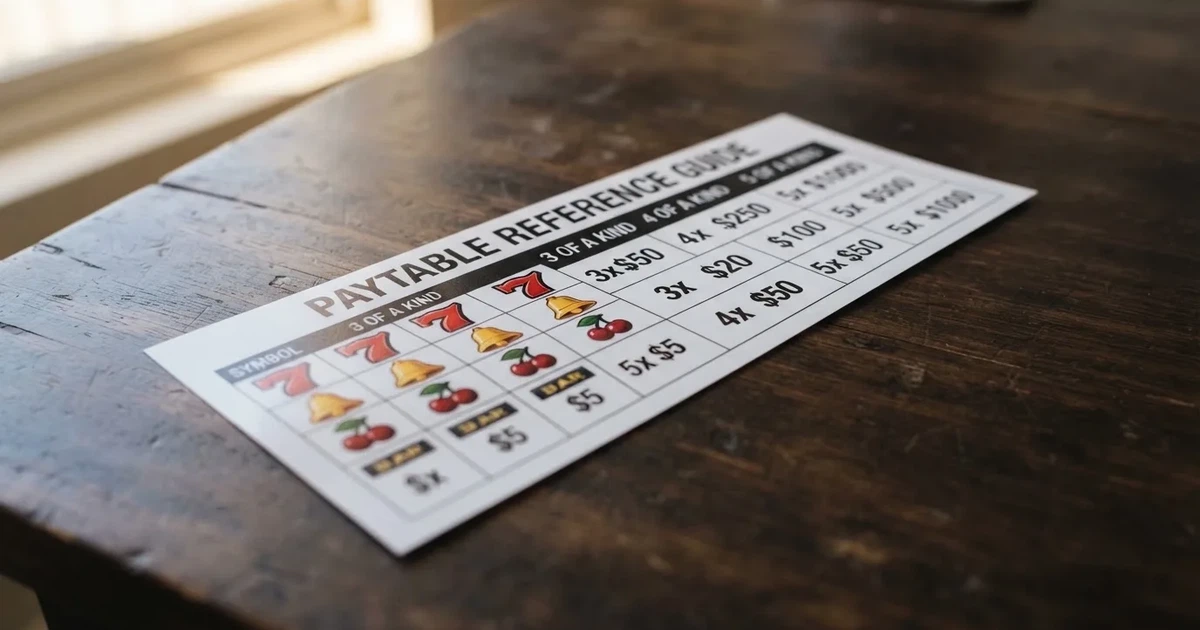
A paytable is the printed reference card that sits beside a slot. It is what tells a player which symbol pays what, how the bonus features trigger and what the maximum single win is. A Booming Games paytable, like any other studio’s, breaks down into a handful of moving parts.

The symbol ladder runs from low to high. Card-suit or fruit icons sit at the bottom and pay small multiples of the stake, then themed high symbols pay larger ones. Wilds substitute for other symbols to complete lines, scatters trigger free-spin rounds, and bonus symbols open the hold-and-win or pick-me features the studio is known for. Paylines are the patterns on which matching symbols have to land; a five-reel game with twenty lines pays left to right across adjacent reels, while a “ways” game pays any matching combination on adjacent reels regardless of position. The paytable states which scheme the game uses.
Volatility is the second thing a paytable will telegraph, usually in the marketing copy rather than the table itself. A high-volatility slot pays less often but in larger bursts when it does; a low-volatility one pays more often in smaller bursts. Booming Games skews toward the medium-to-high end of that scale, which is the profile most of its hold-and-win titles sit on. The return-to-player percentage, when the studio publishes one, sits on the paytable page as a long-term average over many millions of spins — not a prediction for any single session.
Two specific Booming Games titles are worth naming because the studio advertises the ceiling on them. Tasty Rush Sweet Spots and Regal Coins Hold and Win both carry a maximum win of 5,000x the line stake. Henhouse Hold and Win carries a higher ceiling of 6,000x. Those numbers are not what the typical spin returns; they are the published cap on what any single spin combination can pay out, and a useful player-side reminder that even a “max win” sits inside a long-tailed distribution where most sessions pay far less.
Booming Games itself runs four new releases a month from its base in Malta. The studio holds a Malta Gaming Authority B2B licence and a UK Gambling Commission account, plus recognition from regulators in Sweden, Ontario, Romania, Denmark, Greece, Belgium, Germany and Brazil. None of those credentials changes the Australian position, because none of those regulators licences the receiving side of the transaction — the offshore site taking Australian deposits is the entity the IGA targets, and the studio’s own licences are not what Australian readers are being asked to rely on.
Eleven Booming-friendly brands and what the regulator has done to each
What follows is not a ranking and not a recommendation. Each brand is here because the ACMA itself issued a formal warning over it for offering prohibited interactive gambling services to people in Australia, and the page names them in the regulator’s own order of publication. None is licensed to take an Australian deposit, whatever offshore licence the site displays, and a reader weighing any of them is weighing a brand the regulator has already addressed by name.

| Brand | ACMA action and date | Operator named by the ACMA | Subject support |
|---|---|---|---|
| RocketPlay | Formal warning, March 2026 (earlier May 2022 against Dama N.V.) | Pulsup Ltd (RocketPlay) | — |
| Level Up Casino | Formal warning, May 2022 | Dama N.V. | Wazdan listings |
| Woo Casino | Formal warning, March 2025 | Dama N.V. | — |
| Spirit Casino | Formal warning, May 2025 | Dama N.V. | — |
| National Casino | Formal warning, July 2025 | Consolutetish S.R.L. | Betsoft, Pragmatic Play listings |
| Bizzo Casino | Formal warning, July 2025 (earlier 2022 against TechSolutions) | Consolutetish S.R.L. | — |
| Ignition Casino | Formal warning, July 2025 | Bamboo Media | — |
| Instant Casino | Formal warning, February 2025 | EOD Code SRL | — |
| Jackbit | Formal warning, April 2026 (alongside CasinOK) | Ryker B.V. | — |
| Casino Intense | Formal warning, April 2025 | Sterplay Holding Ltd | 1spin4win listings |
| Sky Crown | Formal warning, September 2022 | Hollycorn N.V. (with Blue Leo) | — |
The operator-company column is the one the ACMA names on its formal-warning page. Several brands on the list sit under the same parent company — Dama N.V. runs at least four of the eleven, Consolutetish S.R.L. runs two — which means a formal warning against one brand sometimes carries across the wider group. The subject-support column tracks only whether a third-party studio listing page names this brand as a partner, not whether the studio’s content is on it; an em dash means the research set had no such listing to point at, not that Booming Games is not present.
Several of the brands have been warned more than once. RocketPlay was named in a Dama N.V. round in May 2022 and again as Pulsup Ltd in March 2026. Bizzo Casino was named in a 2022 round against TechSolutions (CY) Group Limited and TechSolutions Group N.V., then again in July 2025 against Consolutetish S.R.L. The recurrence matters: a formal warning is not a one-shot communication, and the regulator’s published list carries multiple entries against the same brand where the underlying service continued after the first warning.
RocketPlay
RocketPlay is the most recent brand on the list. The ACMA named Pulsup Ltd as the operator behind RocketPlay in a formal warning published in March 2026; an earlier May 2022 warning had named the brand under Dama N.V. when the brand sat within that operator group. The change of operator name between the two rounds is itself a signal — when the same brand surfaces under two different operating companies across regulator actions, it usually means the underlying business has been restructured or re-licensed offshore without the ACMA’s involvement.
A reader looking at RocketPlay in 2026 is looking at a brand the regulator has now addressed in two separate enforcement rounds, under two different operator names, in less than four years.
Level Up Casino
Level Up Casino sits in the Dama N.V. cluster of May 2022 formal warnings, alongside Bambet, Dazard, Wild Tornado and Cobra Casinos. The ACMA named Dama N.V. as the operator across all six brands in that round, which is the working shape of an offshore casino group — one Curaçao-registered operator running several brand front-ends, each carrying its own marketing but each pointing back to the same company.
Wazdan’s own listings page names Level Up Casino among the studios it supplies, which is the kind of cross-reference that establishes the brand carries real-money slot content at all. None of that licensing context alters the Australian position: the brand offers interactive gambling services the IGA prohibits, the regulator has formally said so, and the warning is on the public record.
Woo Casino
Woo Casino was the subject of a formal warning to Dama N.V. in March 2025. Like Level Up, it sits within the Dama group; unlike Level Up, it was warned in a separate round three years after the original 2022 cluster. That sequence — original warning, then a fresh one in 2025 — is the regulator’s way of marking that the warning was not treated as the end of the matter.
For an Australian reader, Woo Casino is a brand that has been told, by name, to stop what it is doing in relation to Australian customers, and is the subject of a second formal communication less than four years later. The first warning did not move it out of the Australian market.
Spirit Casino
Spirit Casino drew a formal warning in May 2025, again under the Dama N.V. operator name. It is the third Dama brand in this list to be warned in 2025 alone, which is one way of measuring how thinly the operator group’s compliance posture is spread across its roster of brands.
The practical takeaway is structural: a brand is a marketing surface, and the underlying operator is what the regulator actually names. A reader who treats the brand as the entity to evaluate is missing the layer the ACMA acts against.
National Casino
National Casino was the subject of a formal warning in July 2025, with Consolutetish S.R.L. named as the operator. The same round also named Bizzo Casino, which means the ACMA grouped the two brands together as the same operator’s portfolio. The brand sits on Betsoft’s and Pragmatic Play’s listings pages, which is the same kind of third-party supply record the Level Up entry carries.
National Casino is also a useful example of how a brand can carry on after being warned. The 2022 round against TechSolutions had not ended the brand’s Australian-facing activity; the July 2025 round is the regulator noting that it had not.
Bizzo Casino
Bizzo Casino is on this list twice, and that is the point. It was first named in a 2022 formal warning to TechSolutions (CY) Group Limited and TechSolutions Group N.V., then again in July 2025 to Consolutetish S.R.L. The operator name changed in between, but the brand did not, and the regulator’s second action is a public record that the brand’s Australian-facing activity continued across the change of operator.
For a reader, the sequence illustrates exactly what the ACMA enforcement record is designed to show. One warning is a regulator introducing itself. Two warnings, against two different operating companies, for the same brand, is the regulator saying the warning did not work.
Ignition Casino
Ignition Casino drew a formal warning in July 2025, with Bamboo Media named as the operator. The warning sits in the same July 2025 round as National Casino and Bizzo Casino — three brands, two operators, one batch of correspondence.
Bamboo Media is the operator the regulator addressed directly, which is the legal entity on the receiving end of the IGA correspondence. Australian readers evaluating the brand should be aware that the entity they would be transacting with, if they deposited, is not the entity the regulator has named.
Instant Casino
Instant Casino was the subject of a formal warning to EOD Code SRL in February 2025. It is the earliest entry in this list from the 2025 enforcement year, and it stands as a record of where the regulator was applying its attention before the larger mid-year rounds.
The warning is on the public register and the brand has continued to operate offshore in the year and a half since. The ACMA’s blocking requests against individual sites run separately from the warning correspondence, and a warning does not automatically mean a block, but it does mean a brand is now formally on the regulator’s record.
Jackbit
Jackbit was the subject of an April 2026 formal warning to Ryker B.V., alongside CasinOK. The pairing matters because it shows Ryker B.V. operating more than one brand at the same time, and the ACMA addressing both in the same correspondence.
For a reader, Jackbit is a brand the regulator has named within the last twelve months, under an operator that runs at least one other brand on the same enforcement record. The most recent formal-warning date is the one to weight.
Casino Intense
Casino Intense was the subject of a formal warning to Sterplay Holding Ltd in April 2025. The brand carries third-party studio listings on the 1spin4win side, with the studio’s site naming it among the casinos it supplies. A listing on a studio’s partner page is a signal that the brand is operationally active in real-money slots, not a signal of any kind of legitimacy for Australian readers.
Sky Crown
Sky Crown is the oldest entry in this list. The ACMA’s formal warning to Hollycorn N.V. over its Sky Crown and Blue Leo services dates to September 2022 and is one of the earlier examples of the regulator naming a parent operator across two brand surfaces in a single warning.
A 2022 warning still sits on the public record; it does not expire. Sky Crown is on this list because the record carries it, and a reader looking up the brand today is looking at an entity the ACMA named three and a half years ago.
The legal frame the regulator is working under
The Interactive Gambling Act 2001, tightened by the Interactive Gambling Amendment Act 2017, makes it an offence to provide online casino games, online pokies or in-play betting to a person in Australia. No state or territory issues a licence for any of those services. What is licensable is wagering on races and sport placed before the event, lotteries and keno — in practice licensed at the territory level, with the Northern Territory Racing and Wagering Commission regulating fifty-two of Australia’s online bookmakers, including Sportsbet, Bet365 and Ladbrokes. That commission has no full-time staff and meets once a month in Darwin, which is part of why the central federal regulator, the ACMA, does the enforcement work that flows from the IGA.
The minimum age for any form of legal Australian gambling is eighteen. The IGA targets the provider rather than the individual player — no Australian reader has been prosecuted for placing an offshore bet — but the offshore side of the transaction carries no Australian consumer protection, no complaints body and no recourse if a withdrawal is refused. A balance sitting on a blocked site is a balance the player has no Australian path to recover.
The Interactive Gambling Amendment (Gambling Reform) Bill 2026 passed Parliament on 19 August 2026. Its advertising and inducement measures commence on 1 January 2027, which means the law is enacted but not yet in force for the parts that bite hardest at how offshore brands reach Australian customers. A 2026 reader is reading under the existing regime; the new advertising restrictions are a near-term change rather than a current one.
How the ACMA actually enforces
The ACMA’s enforcement record against offshore brands runs in two streams. The first is the formal-warning register, which is the source the table above draws from. A formal warning is a written communication to the operator that names the brand, names the operator entity, cites the IGA provision breached and goes on the public record. Once a warning is published, the ACMA can move to the second stream: requesting that Australian internet service providers block the offending site at the network level.
The numbers are large. As reported in June 2026, the ACMA had asked ISPs to block 1,751 illegal gambling and affiliate marketing websites since the first blocking request in November 2019, and more than 230 unlicensed gambling services had left the Australian market since enforcement was strengthened in 2017. The June 2026 round alone asked ISPs to block twelve more sites in one batch: 7Signs, ChromaBet, Donbet, Duospin, Freshbet, Slots Gem, Jacks Club, Lucky Start, Pointsbetz, Spinrise, Vinyl Casino and Wildsino.
The blocking rate is the arithmetic the page is built around. From the first blocking request in November 2019 to the June 2026 total of 1,751 blocked sites, the ACMA has been adding roughly 270 sites a year to its block list — call it the band of roughly 250 to 290 sites per calendar year across the period, with the figure sensitive to whether partial years are counted at the front and back ends. That is the rate at which the regulator is moving against the offshore supply side, and it is the rate at which a brand sitting on the warning register can find its Australian-facing site quietly cut off.
What an Australian player actually has at the other end of an offshore site
The protection gap is the part of the picture that does not show up in a paytable or a bonus screen. Three concrete things differ between a licensed Australian wagering service and an offshore casino carrying Booming Games content.
First, the self-exclusion register. BetStop, the National Self-Exclusion Register, has been live since August 2023 and binds every Australian-licensed online and phone wagering service. A player who registers with BetStop is locked out of every Australian licensee simultaneously. An offshore casino is not connected to BetStop, which means a BetStop registration does not stop a player from depositing on an offshore site, and an offshore site’s own self-exclusion tool, if it has one, is the only thing that does. The two systems do not speak to each other.
Second, the payment routes. Since 11 June 2024, credit cards, credit-related products and digital currency have been banned as payment methods for any licensed Australian online wagering service. The legal deposit routes are debit card, bank transfer, PayID, Osko and BPAY. An offshore site that asks an Australian player for a credit card or a crypto deposit is operating outside the Australian rules — the payment itself is the tell that the site does not sit inside the Australian framework at all.
Third, the complaints path. A licensed Australian wagering service is answerable to its territory regulator and to an external dispute resolution scheme. An offshore site answers to whatever jurisdiction its licence comes from, which for most of the brands on the ACMA’s list is Curaçao, and the practical enforcement of a complaint from an Australian player through a Curaçao-licensed operator is not a routine outcome.
Help if the offshore side has become the problem
A reader who finds that Booming Games-carrying offshore play has started to feel compulsive or financially stressful has free, confidential help available around the clock. The National Gambling Helpline is 1800 858 858, free and twenty-four hours a day, with web chat at Gambling Help Online. BetStop, the National Self-Exclusion Register, is the structural option for someone who wants every Australian licensee to lock them out at once.
The tax position is straightforward for a recreational player. Gambling winnings are not assessable income under section 6-5 of the Income Tax Assessment Act 1997, and gambling losses are not deductible, unless the player is carrying on a business of gambling — which a recreational player is not. The Australian Taxation Office’s own materials make the position plain: a casual win is not taxable income, and a casual loss is not a deduction. Anyone whose activity has crossed the line into something more organised is advised to check with the ATO directly.
The shape of the Australian-facing market around the IGA
Two figures bracket the size of the offshore side. H2 Gambling Capital’s 2025 report estimates that Australians lose about A$3.9 billion a year to illegal gambling sites, and that the share of gambling going through legal Australian channels fell from 74% in 2021 to 64% in 2025. The legal-channel share is still the majority, but the trajectory is the part that matters — the regulated share is shrinking while the illegal share is growing, and the ACMA’s enforcement record is the regulator’s response to that drift.
The licensed side of the Australian market is dominated by wagering. The Northern Territory Racing and Wagering Commission’s fifty-two online bookmakers include Sportsbet, Bet365 and Ladbrokes, all licensed in the Territory for tax reasons rather than because the Territory has a particular gambling-policy stance. Casino games and pokies online sit outside that licence framework entirely, which is why Booming Games content, and the brands that carry it, occupy the offshore half of the market rather than the licensed half.
Aristocrat Leisure, the largest gambling-machine manufacturer in Australia and the second-largest slot-machine manufacturer worldwide behind International Game Technology, is the closest Australian analogue to a studio like Booming Games. Aristocrat’s 2025 revenue was A$6.30 billion, with a normalised net profit after tax and amortisation of A$1.55 billion and 7,400 employees. Its online real-money arm, Aristocrat Interactive, was formed in April 2024 by combining Anaxi with the newly acquired NeoGames group. None of that activity translates into a licensed Australian online casino, because the IGA does not licence online casino games for Australian players anywhere — Aristocrat Interactive’s regulated markets are overseas. The shape of the market is, in other words, the shape of a country whose largest gambling-machine maker operates internationally while its own residents are cut off from the product line the company is best known for.
What an honest comparison of these brands looks like
A fair comparison of the eleven brands in the ACMA record is not the comparison the affiliate pages run. Those pages rank by bonus size, game count and payout speed. For an Australian reader, the comparison that matters runs on different axes, and three of them are worth naming.
The first is the ACMA record itself, which is the one piece of data the regulator has put on the public file about each brand. A brand warned once, in 2022, sits in a different position from a brand warned twice, under two different operators, in 2022 and again in 2026. A brand warned in a batch with several others under the same operator name sits in a different position from a brand the regulator singled out individually. The record is incomplete but it is the only external audit these brands have.
The second is the parent-operator structure. Brands that sit under Dama N.V. or Consolutetish S.R.L. or Hollycorn N.V. are not eleven independent businesses — they are marketing surfaces for a smaller number of offshore groups, and a reader’s actual counterparty is the operator company the ACMA names, not the brand they typed into a search box.
The third is the date of the most recent action. A formal warning published in March 2026 is a different signal from one published in September 2022, because the regulator’s recent attention is the most informative piece of information about whether the brand’s Australian-facing activity is currently under scrutiny.
The comparison that matters for an Australian reader, ultimately, is whether to play at all on any of them. The IGA’s prohibition is on the supply side, not the player side, so the legal exposure sits with the brand and not the reader. The financial and consumer-protection exposure sits with the reader, in full, and that is the trade-off the rest of this page has been setting out.
What the page does not do
This page does not rank these brands. It does not recommend one over another. It does not publish any bonus offer, deposit match, free-spin package or promo code from any of them, because the only sources for those figures were affiliate marketing pages, and the ACMA’s record on those brands is itself the reason to read those pages with caution. The page does not link to any of the operators, and it does not name any app to install.
What it does is set out the ACMA’s published record, group the brands under the operators the regulator actually named, and explain the legal frame those actions sit inside. A reader who came looking for a recommendation has the recommendation the regulator has effectively already made: the IGA prohibits the supply, the ACMA is enforcing against the supply, and the brands carrying Booming Games content are the supply.
Frequently asked questions
Is Booming Games itself an operator, or just a game studio that supplies content to sites?
Booming Games is a game studio. It is headquartered in Malta, holds a Malta Gaming Authority B2B licence and a UK Gambling Commission account, and releases about four new slot titles a month. It supplies games to operator brands; it does not run a casino of its own and does not take customer deposits. The brands carrying its content are separate legal entities, and the ACMA’s enforcement actions are against those operators, not against the studio.
Can Booming Games titles be played for real money at any licensed Australian casino?
No. No Australian state or territory issues a licence for online casino games or online pokies. The Interactive Gambling Act 2001 prohibits the supply of those services to anyone in Australia, and the only licensed Australian online gambling products are pre-event wagering, lotteries and keno. A Booming Games slot can only be played for real money from inside Australia on an offshore site, which is exactly the category of site the IGA prohibits and the ACMA enforces against.
How does a Booming Games slot typically differ from other studios’ games in its paytable?
The paytable format is standard across the industry — symbol ladder, wild, scatter, paylines, feature triggers, maximum win — but the studio skews toward medium-to-high volatility and uses hold-and-win mechanics more heavily than some of its peers. Booming Games publishes maximum-win caps on its titles: 5,000x stake on Tasty Rush Sweet Spots and Regal Coins Hold and Win, and 6,000x on Henhouse Hold and Win. The paytable itself states the return-to-player percentage, which on the studio’s catalog generally sits in the standard industry range.
Does Booming Games operate its own casino, or license its games to other operators?
Booming Games licenses its games to other operators. The studio describes itself as a slot provider rather than an operator, and its About page lists the licences it holds as a B2B supplier, not as a casino operator. The brands the ACMA has warned — RocketPlay, Level Up, Woo Casino and the others named on this page — are the operators, not Booming Games itself.
Why do offshore casinos highlight Booming Games as a selling point to Australian visitors?
Booming Games is an established B2B studio with multiple jurisdictional recognitions, a regular release cadence and a back catalogue with published RTP and volatility data, which makes its content attractive to operators competing on game variety. For an Australian reader, the relevant point is not the studio’s reputation but the operator’s legal position: a respected studio does not legitimise a brand that the ACMA has formally warned for offering prohibited services to Australians.
Is it legal for a site to offer Booming Games games for real money to people in Australia?
No. The Interactive Gambling Act 2001 makes it an offence to provide online casino games — including real-money slot content from any studio, Booming Games included — to a person physically in Australia. The IGA targets the provider, not the player, but the site itself is operating illegally in relation to Australian customers, and the ACMA has formal-warning and site-blocking powers it has used repeatedly against exactly this category of operator.