
BGaming online casinos in Australia — what the offshore market actually looks like
Data current as of 7 November 2026 and cross-checked against the Australian Communications and Media Authority’s register of formal warnings and blocking actions.
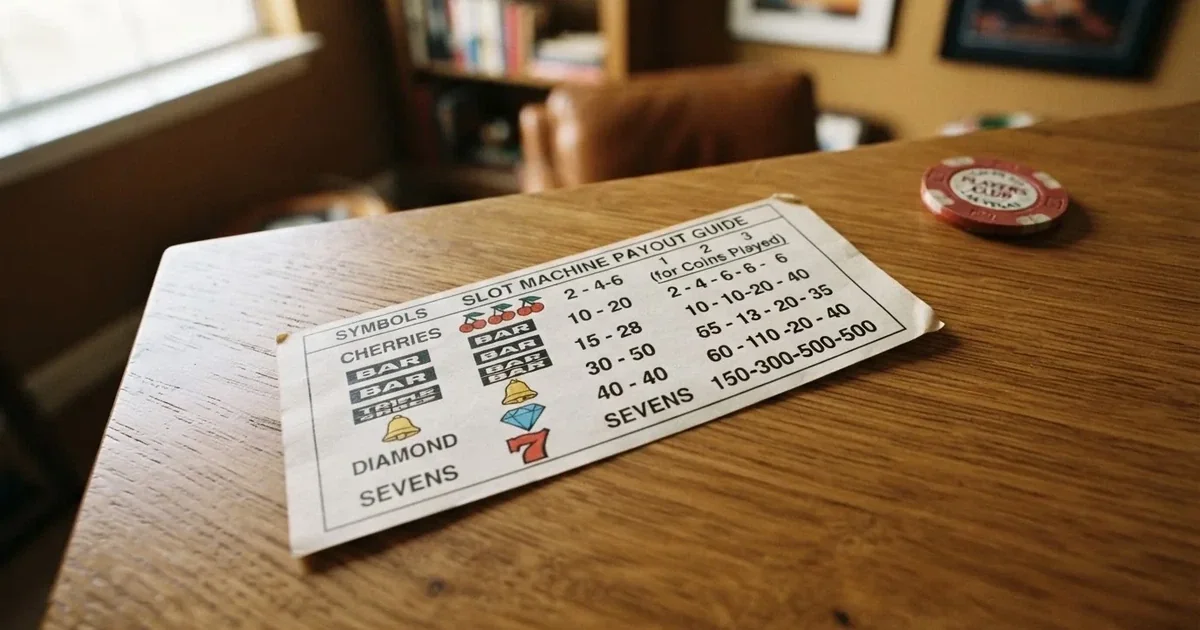
A search for BGaming-powered online casinos in Australia does not, in 2026, return a shortlist of local sites. It returns a global game studio whose name sits on the lobby of a long list of offshore casinos, almost all of which the ACMA has warned or blocked for offering prohibited services to Australians. The “best” question, in this market, is not which brand pays fastest or runs the loosest bonus. It is whether the product a reader is being sold is one they can legally play from inside Australia at all.
That is the angle this page takes. The studios and mechanics get described because they are what BGaming actually sells. The brands get named because they are the ones the ACMA itself has named. And the comparison that follows is not a ranking. It is a record of what the regulator has put on the public file about each operator, so a reader can see which way the wind has been blowing before they decide what to do with that information.
Table of Contents
- What “BGaming casino” actually means in Australia
- The studios making the games — and what their games actually are
- How a BGaming paytable works, in plain language
- What is and is not legal for online casino play in Australia
- The ACMA actions shaping the offshore market
- The blocking rate — what 1,751 sites over seven years actually means
- The 11 ACMA-named brands — what the regulator has put on file
- The pattern across the eleven brands
- What the payment picture looks like for BGaming play
- Bonus language and what it actually costs
- What a mobile BGaming casino looks like
- Responsible play, and where the help is
- The choice the page is built around
- Frequently asked questions
What “BGaming casino” actually means in Australia
The phrase does a lot of work in marketing copy and resolves to almost nothing once it meets Australian law. BGaming is a studio, not an operator. Stable Games Ltd, the Maltese company behind the BGaming brand, has been making games since 2012 and launched the BGaming name in 2018; the studio holds a Malta Gaming Authority Critical Gaming Supply Licence (MGA/B2B/785/2020, issued 18 March 2021) for Type 1 B2B gaming services. A supply licence lets a studio license its games to operators. It does not let BGaming run a casino, take Australian deposits, or advertise to Australian players. The studios background sits in the section on the studios themselves, with full coverage of BGaming, 1spin4win, Betsoft, Booming Games and Aristocrat further down this page.

A “BGaming casino” is, in practice, an offshore operator that has signed a content deal with the studio and then promoted that fact on its home page. The studio’s own about-page says its games are used by more than 3,000 operators and names Blaze, Pin-Up and Gamdom among them. None of those operators hold an Australian licence to take online casino bets. Under the Interactive Gambling Act 2001, no Australian licence for online casino games or online pokies exists. The phrase in the search box is, in 2026, a way of describing a category of offshore site, not a way of finding a locally licensed product.
That distinction matters because the studios background is one part of the search the page is built around, and the brand listings further down are another. They are not the same kind of entity and the law treats them differently. A studio can hold a B2B licence from Malta, the UK or Curaçao and license its games worldwide. An operator wanting to take real-money bets from a person in Australia needs an Australian licence. No Australian licence exists for the product category BGaming makes.
Why the studios background is on the page at all
The cluster of searches around BGaming and Australia mixes two audiences. One wants to know whether the games are any good — how the paytables work, what the mechanics do, whether the maths is fair. The other wants to know where to play. Both end up on a page like this. Treating only the second audience leaves the first with nothing useful, and treating only the first turns a regulatory note into a recommendation. The page handles both by explaining the games on their own terms and then describing the legal frame the operator side sits inside.
The mechanics worth knowing about — TRUEWAYS, MultiDice X, Merge UP — are studio inventions, not casino inventions. They live in the game code, they are the same on every operator that licenses the title, and they are tested by the same certification labs whether the site carrying them is licit or not. What changes between operators is everything around the game: who is willing to take a deposit from an Australian, what protections apply if a withdrawal is refused, and whether the site is still online six months from now.
The studios making the games — and what their games actually are
Five studios sit at the centre of the Australian-facing BGaming-adjacent market. Three of them — BGaming, 1spin4win and Betsoft — are the names that turn up most often on the offshore lobbies the ACMA has acted against. Booming Games is a Maltese B2B supplier with a broader European footprint. Aristocrat is the Australian incumbent whose 2026 revenue dwarfs the rest of the field. None of them run an Australian-licensed online casino. The descriptions below describe what they make and where it lives, not where it can be played for real money from Australia.
BGaming
BGaming is the studio the page is named for. Its catalogue runs to 250+ certified titles across video slots, video poker, lottery, card, scratch, crash and casual games. The proprietary mechanics include TRUEWAYS, a ways-to-win system that scales up to 262,144 ways; MultiDice X, a dice-mechanic slot; and Merge UP, a grid-style title. BGaming games are HTML5 by default, which is why they run in a phone browser without a download, and they are certified by the labs whose certificates the studios background includes. The studio describes its operator base as 3,000+ sites, of which it names Blaze, Pin-Up and Gamdom as examples.
A BGaming slot uses a paytable in the same way any other video slot does: each symbol carries a value per payline at each bet level, and the paytable screen inside the game lists those values for the current stake. Wilds substitute for other symbols, scatters usually trigger a free-spin round, and bonus mechanics vary by title. What differs from studio to studio is mostly the maths: how often a spin lands a win of any size, how big the largest possible win is relative to the bet, and how that distribution is described (low / medium / high volatility, or in the case of Betsoft, “Very High”). For BGaming, the studio’s site lists mechanics but does not publish a per-title volatility the way some studios do, so per-game volatility comparisons are not possible from the public materials.
1spin4win
1spin4win is the smaller of the two studios that recur on the ACMA-named brand list. Founded in 2021 by a team with 15 years of iGaming experience, headquartered in Willemstad, Curaçao, holding a Curaçao gaming licence, with a portfolio of more than 190 online slots and more than 1,000 casino and aggregator partnerships reported on its own site. The studio says its total bet sum grew 46% in the first half of 2025 against the first half of 2024. Its games are built in HTML5 for low-bandwidth connections, which makes them a common fit for offshore sites targeting markets where mobile data is expensive.
The 1spin4win catalogue is slot-only, narrow in mechanic and wide in count. It does not publish per-title volatility in the way Betsoft does, and its about-page carries the studio’s commercial claims rather than third-party test reports. For an Australian reader, what the studio licence does and does not authorise is the same as for any other Curaçao-licensed B2B supplier: it permits the studio to license its games to operators that the Curaçao regulator considers in scope. It does not put the operator on the right side of Australian law.
Betsoft
Betsoft is the third of the studios whose names recur in the ACMA file. Founded in 2006, describing a catalogue of more than 200 RNG games across slots, table games, video poker and specialty titles, certified by Quinel and Gaming Labs International, and operating in compliance with licensing authorities including Italy’s ADM. The studio says it partners with more than 500 operators across regulated markets in Europe, Scandinavia, Latin America and Africa.
Two Betsoft slots carry published numbers worth quoting because they illustrate what a slot paytable actually says. Good Girl Bad Girl 2 has a published RTP of 96.22%, a “Very High” volatility rating, and a 15.59% hit rate across 5 reels and 20 paylines. The Slotfather, live since 13 December 2012, has a published RTP of 95.69%, a “Medium” volatility rating, and an 8.17% hit rate across 5 reels and 30 paylines. The two together show how studios publish maths: the RTP is the long-run return to player, the volatility describes the shape of that return (large but rare wins versus small but frequent ones), and the hit rate is how often a spin lands any win at all. None of those numbers tell a reader whether they personally will win on a given session. They describe the distribution.
Booming Games
Booming Games (Malta) Limited sits in a slightly different tier from the other three. Headquartered in Malta, holding a Malta Gaming Authority B2B licence numbered MGA/B2B/459/2018, plus a UK Gambling Commission account (#57254), licences from Sweden’s Spelinspektionen and Ontario’s AGCO, and additional regulator coverage in Romania, Denmark, Greece, Belgium, Germany and Brazil. That is a meaningfully heavier licence stack than the Curaçao-only suppliers above, and it places Booming Games among the B2B studios that operate in jurisdictions with enforced player-protection rules.
For an Australian reader, the practical difference between a Booming Games licence and a Curaçao licence is not that one makes the operator legal here — neither does, for online casino games — but that a Maltese-licensed B2B supplier’s games are more likely to be carried by operators running inside a regulated European or North American framework. The studio’s commercial reach into Australia is via the offshore brands its operators run, not via any local presence.
Aristocrat Leisure
Aristocrat is the outlier in the studios set. Founded in 1953 by Leonard Ainsworth, listed on the ASX in 1996 under the ticker ALL, headquartered in North Ryde in Sydney’s northern suburbs, with additional offices in South Africa, Russia and the United States. The company describes itself as the largest gambling-machine manufacturer in Australia and the second-largest slot-machine manufacturer worldwide, behind International Game Technology. Its 2026 reported revenue is A$6.30 billion, with normalised net profit after tax and amortisation of A$1.55 billion and 7,400 employees.
Aristocrat’s online arms are Product Madness (social casino games) and Aristocrat Interactive, the latter formed in April 2024 by combining the Anaxi unit with the NeoGames group acquired for roughly US$1 billion. NeoGames brought Aspire Global, BtoBet and Pariplay into the Aristocrat fold. Aristocrat Interactive is a regulated online real-money-gambling business, which puts it in a different category from the offshore casino brands further down this page — but it operates in jurisdictions outside Australia, and the same Interactive Gambling Act barrier applies to its real-money products as to everyone else’s. Aristocrat’s earlier US$3.7 billion bid for Playtech was rejected in 2021; its US$1.3 billion acquisition of Video Gaming Technologies closed in 2014, Plarium in 2017 for US$500 million, and Big Fish Games in 2017 for US$990 million.
How a BGaming paytable works, in plain language
A paytable is the in-game screen that lists what each symbol is worth and what combinations pay. For a five-reel video slot, the paytable typically shows the value of each symbol at the current coin or bet level, lists any special symbols (wild, scatter, bonus), and describes the free-spin or bonus feature that a scatter combination triggers. The mathematics behind that screen — return to player, volatility, hit rate — is fixed in the game code and certified by the testing lab, and it does not change between operators.
The three numbers a reader will see quoted most often are RTP, volatility and hit rate. RTP is the long-run percentage of stakes that the game returns to players in the aggregate, expressed as a percentage of total wagered. The two Betsoft examples above show RTP in the 95-97% band, which is typical for a modern online slot. The remainder is the house edge, which is what funds the operator and the studio royalty. Volatility describes how RTP is distributed: a “Very High” volatility slot returns less often but pays larger amounts when it does, while a “Medium” volatility slot returns more often at smaller amounts. Hit rate is the percentage of spins that land any win at all, regardless of size. Good Girl Bad Girl 2 at 15.59% means roughly one spin in six-and-a-half returns something; The Slotfather at 8.17% means one in just over twelve.
None of these numbers predict a single session. They describe a long-run average across millions of spins. A reader who sits down for an hour of play is not playing millions of spins. They are playing a few hundred, and the variance on a few hundred spins is wider than the variance on millions. The paytable is honest about the maths and quiet about the experience.
A mechanic like BGaming’s TRUEWAYS does something specific to that maths. A traditional slot pays on a fixed number of paylines — twenty in the case of Good Girl Bad Girl 2, thirty for The Slotfather. TRUEWAYS replaces fixed paylines with a dynamic count of winning combinations, scaling up to 262,144 ways to win on qualifying spins. That changes the hit-rate and the shape of the payout distribution, but not the long-run RTP, which the studio calibrates separately. It also changes how the slot reads on the paytable screen, which is why paytables across studios do not look alike.
What is and is not legal for online casino play in Australia
Online casino games and online pokies are prohibited interactive gambling services under the Interactive Gambling Act 2001, as strengthened by the Interactive Gambling Amendment Act 2017. No Australian state or territory issues a licence for them. What is licensable is wagering on races and sport before the event, lotteries and keno — licensed in practice by the Northern Territory Racing and Wagering Commission, which regulates 52 of Australia’s online bookmakers including Sportsbet, Bet365 and Ladbrokes for tax reasons, runs without full-time staff, and meets once a month in Darwin. The minimum age for any licensed wagering is 18.
The ACMA is the enforcement body. It investigates, issues formal warnings, and directs Australian internet service providers to block illegal sites. As reported in June 2026, the ACMA’s running total since the first blocking request in November 2019 stood at 1,751 illegal gambling and affiliate marketing websites blocked, and more than 230 unlicensed gambling services had left the Australian market since enforcement was strengthened in 2017. The 26 June 2026 blocking round alone covered 7Signs, ChromaBet, Donbet, Duospin, Freshbet, Slots Gem, Jacks Club, Lucky Start, Pointsbetz, Spinrise, Vinyl Casino and Wildsino. H2 Gambling Capital’s 2025 report estimates Australians lose about A$3.9 billion a year to illegal gambling sites, and the share of gambling going through legal channels fell from 74% in 2021 to 64%.
The individual player is not prosecuted. The IGA targets the provider. What an offshore site gives up — by being offshore — is Australian consumer protection, an Australian complaints body, and any recourse if a withdrawal is refused. It can be blocked while the player still has a balance on it. It can also disappear without notice, taking the balance with it.
The Interactive Gambling Amendment (Gambling Reform) Bill 2026 passed Parliament on 19 August 2026. Its advertising and inducement measures commence 1 January 2027. That makes the Bill law with a start date, not law in force on a 2026 page. A reader reading this in December 2026 is reading under the existing regime; a reader reading it in February 2027 is reading under the new one.
The ACMA actions shaping the offshore market
The brands further down this page are not a ranking. They are a record. Each is listed because the ACMA itself issued a formal warning over it for offering prohibited services to Australians. The warnings are public, the dates are public, and the operator names on the warnings are public. Reading them in order gives a picture of how the offshore market has shifted against Australian players over the last four years.
Two patterns stand out. The first is operator-company churn: a single holding company such as Dama N.V. acquires several brands, gets warned, and the brands keep operating under new parent names. The second is repetition: a brand that gets warned in 2022 can be the subject of a further warning in 2025 under a different operator entity, which is what the Bizzo Casino and RocketPlay entries further down illustrate. The ACMA’s record catches both. The comparison table below catches both.
The blocking rate — what 1,751 sites over seven years actually means
The ACMA’s published blocking action is a count and a date. Counting the rate at which the total has grown gives a different sense of the pace.
The first blocking request went out in November 2019. The total stood at 1,751 blocked sites in June 2026. That is roughly seven years and seven months, or about 91 months. 1,751 ÷ 91 gives an average of around 19 sites blocked per month across the whole period. The actual rate is not flat. The early years were slower as the ACMA built the blocking regime; the 26 June 2026 round alone covered 12 sites in one action.
Two readings follow, and they sit on either side of a different question. One is that enforcement is steady — almost twenty sites a month, every month, for years, with a single round catching twelve at once. The other is that the supply side is replenishing as fast as the ACMA is removing it: more than 230 unlicensed services have left the Australian market since 2017, and the blocking list is still growing past 1,700 entries. H2 Gambling Capital’s A$3.9 billion a year loss estimate sits on the demand side of that same arithmetic.
The rate is best read as a band: somewhere between a dozen and twenty sites a month have been removed from Australian reach on average, and the round-by-round pace is faster than that average at the front of the curve. A reader who interprets the figure as a single number is reading it past its resolution; the monthly variation is wide, and the ACMA publishes cumulative totals rather than monthly counts. What the rate confirms is that the regime has not stalled. New warnings continue to issue, new blocks continue to land, and the same operator names reappear across different brands and different parent companies.
The 11 ACMA-named brands — what the regulator has put on file
The table below lists the eleven brands the plan routes onto this page, each named in an ACMA formal warning, with the operator entity named in the warning and the date the ACMA published it. The table does not rank them. It puts them in the order research gives.
| Brand | ACMA action and date | Operator named by the ACMA | Subject support |
|---|---|---|---|
| RocketPlay | Formal warning March 2026; earlier Dama N.V. warning May 2022 | Pulsup Ltd (Rocketplay) | — |
| Level Up Casino | Formal warning May 2022 | Dama N.V. | listings-only (wazdan) |
| Woo Casino | Formal warning March 2025 | Dama N.V. | — |
| Spirit Casino | Formal warning May 2025 | Dama N.V. | — |
| National Casino | Formal warning July 2025 | Consolutetish S.R.L. | listings-only (betsoft, en.wikipedia.org, pragmaticplay) |
| Bizzo Casino | Formal warning July 2025; earlier 2022 | Consolutetish S.R.L. (2026); TechSolutions (CY) Group Limited and TechSolutions Group N.V. (2022) | — |
| Ignition Casino | Formal warning July 2025 | Bamboo Media | — |
| Instant Casino | Formal warning February 2025 | EOD Code SRL | — |
| Jackbit | Formal warning April 2026 | Ryker B.V. | — |
| Casino Intense | Formal warning April 2025 | Sterplay Holding Ltd | listings-only (1spin4win, en.wikipedia.org, gamblingcommission.gov.uk) |
| Sky Crown | Formal warning September 2022 | Hollycorn N.V. | — |
The subject-support column reflects what research found in listings, not what the operator confirms. A “listings-only” entry is one where the brand’s association with BGaming or with one of the named studios is recorded on a third-party listing rather than on the operator’s own materials. A dash indicates no such listing was found and the page makes no claim either way.
What the table shows, beyond the dates, is the operator-company churn pattern mentioned earlier. Dama N.V. appears as the named operator for RocketPlay’s earlier 2022 warning, Level Up, Woo Casino and Spirit Casino across 2022 and 2025. Consolutetish S.R.L. appears for both National Casino and Bizzo Casino in the same July 2025 round. The ACMA warnings are published against the operator entity, not against the URL alone, which is why the same parent shows up across several brands.
The table is also missing what an ordinary casino comparison would carry. There are no bonus terms, no payout times, no game counts, no licence numbers. Those fields exist for these brands, but only on the affiliate marketing pages that promote them, and an editorial page that transcribed them would be repeating marketing copy. The ACMA record is what the public file actually contains and what a comparison on this side of the law can honestly rest on.
RocketPlay
The ACMA’s March 2026 formal warning names Pulsup Ltd over Rocketplay. That is a second warning on the brand — Dama N.V. was warned in May 2022 over a RocketPlay brand alongside Bambet, Dazard, Level Up, Wild Tornado and Cobra Casinos. The intervening years saw the brand migrate operators. The ACMA record does not say what product RocketPlay was offering in 2026; the warning is for a prohibited interactive gambling service, which in practice covers online casino games. RocketPlay’s listing on third-party BGaming-adjacent directories is not confirmed on its own materials, so the subject-support column reads as a dash. A reader looking for RocketPlay on the ACMA register will find two entries, four years apart, against two different operator entities.
Level Up Casino
Level Up was named in the May 2022 Dama N.V. warning that covered six brands. It does not appear in the ACMA record since. Third-party listings associate the brand with Wazdan content; the studios background research reaches confirms that listing without an operator-side confirmation. The page therefore records Level Up as a brand with one formal warning on file and an unverified BGaming-adjacent listing against its name. The 2022 warning is the most recent ACMA action, and the brand has not been re-warned under a new operator entity in the period research covers.
Woo Casino
The ACMA’s March 2025 warning named Dama N.V. over Woo Casino — the same operator entity as the 2022 warning to Level Up. The Dama N.V. brand continues to appear across the ACMA record in 2025 alongside Spirit Casino, which gets its own warning in May 2025 under the same parent. Woo Casino does not offer any information regarding its games provider on its site, leaving its subject-support status as unverified.
Spirit Casino
Spirit Casino was named in the ACMA’s May 2025 warning to Dama N.V., two months after Woo Casino. The same operator entity, the same prohibited-service category, a different brand URL. The page treats Spirit Casino as a sister site to Woo Casino in everything except the brand name on the warning. The subject-support column carries no listing the page can stand behind.
National Casino
National Casino was named in the ACMA’s July 2025 warning to Consolutetish S.R.L., in the same round as Bizzo Casino and Ignition Casino. Third-party listings on betsoft, en.wikipedia.org and pragmaticplay reference the brand, but no BGaming-specific listing is on file. National Casino is one of two brands in the ACMA’s July 2025 round named against Consolutetish S.R.L., which makes the round itself worth noting: three brands warned in one month, two of them under the same operator.
Bizzo Casino
The ACMA’s July 2025 warning to Consolutetish S.R.L. was Bizzo Casino’s second. The first was issued in 2022 to TechSolutions (CY) Group Limited and TechSolutions Group N.V. — different operator entities, same brand. The 2022 warning makes Bizzo the longest-running repeat entry on this page’s ACMA record. The subject-support column reads as a dash because no third-party listing confirms BGaming content on the brand.
Ignition Casino
Ignition Casino was named in the ACMA’s July 2025 warning to Bamboo Media. Bamboo Media does not appear elsewhere on the ACMA record research covers. The brand’s third-party listings are thin; no BGaming-specific listing is on file.
Instant Casino
Instant Casino was named in the ACMA’s February 2025 warning to EOD Code SRL. The warning is the only ACMA action on the brand in the period research covers, and no studio support is publicly confirmed.
Jackbit
The ACMA’s April 2026 warning named Ryker B.V. over Jackbit and CasinOK together — two brands under one operator entity in a single warning. Jackbit is the more frequently cited of the two in third-party coverage; no BGaming-specific listing is on file for the brand.
Casino Intense
The ACMA’s April 2025 warning named Sterplay Holding Ltd over Casino Intense. Third-party listings on 1spin4win, en.wikipedia.org and the UK Gambling Commission’s public materials reference the brand. The subject-support column carries those listings as the only BGaming-adjacent material the page can confirm. The listings themselves do not amount to a BGaming endorsement on Casino Intense’s part — they are directory references, not operator statements.
Sky Crown
The ACMA’s September 2022 warning named Hollycorn N.V. over Sky Crown and Blue Leo together. That makes Sky Crown one of the older entries on this page’s record. Hollycorn N.V. does not appear elsewhere in the ACMA record research covers. The subject-support column reads as a dash.
The pattern across the eleven brands
Three observations follow from reading the table in sequence. The first is that the operator-entity layer is doing the work the brand layer hides. Dama N.V. appears across four of the eleven entries; Consolutetish S.R.L. appears across two. A reader who treats the brand names as independent operators is missing that the ACMA is naming the same parent repeatedly. The second is that warnings are not single events: Bizzo Casino has two, RocketPlay has two, and the same parent has been warned in successive years under different brand names. The third is that the brand-by-brand game-studio support is thinner than the marketing suggests. Of eleven brands, three carry a third-party listing that the page can name and eight do not.
A reader looking for “best BGaming casino” is therefore not looking at a shortlist. They are looking at a directory of brands that the ACMA has acted against, several of which have been acted against more than once, with operator-entity churn that makes a single brand decision harder than the marketing implies. The reason this page does not rank them is not that one is genuinely better than another; it is that the comparison the law allows is the ACMA record, and on that record the entries differ less than the marketing copy claims they do.
What the payment picture looks like for BGaming play
A reader cannot bank into a licensed Australian online casino for BGaming titles because there is no licensed Australian online casino for BGaming titles. The payment picture for an Australian-facing player at an offshore site is therefore the offshore site’s payment picture, and that picture is the inverse of what the Australian rules require.
Under the Interactive Gambling Act and its 2024 amendments, credit cards, credit-related products and digital currency are banned as payment for licensed online wagering; penalties for operators run up to A$247,500. Legal deposit routes for licensed wagering are debit card, bank transfer, PayID/Osko and BPAY. An offshore casino offering BGaming titles to Australians typically offers crypto deposits, e-wallets and card payments that the licensed side would not accept. That is one of the strongest single-signal markers of an offshore operation: a deposit screen offering USDT, Bitcoin or Ethereum alongside or instead of PayID.
The withdrawal side runs on the same rails in reverse, with the same protections stripped out. A licensed Australian wagering operator is bound by Australian dispute resolution, advertising and responsible-conduct rules. An offshore operator is bound by whatever regime issued its licence, which for most of the brands on this page is Curaçao. Disputes that cannot be resolved on site have no Australian complaint body to escalate to, no BetStop registration that would freeze the player’s account, and no Australian court to enforce a payout judgment in the way the reader might expect. The balance can sit on a blocked site, and the balance can sit on a site that simply stops answering email.
This is the part of the picture that bonus copy is designed to hide. Welcome packages and free-spin offers describe the upside of a deposit without naming the rails the deposit runs on or the body that would arbitrate a dispute. A reader who arrives at an offshore casino from a BGaming search has, in effect, two decisions to make in sequence: whether to deposit at all, and which payment method to use if they do. The first decision is the larger one, and the payment question sits downstream of it.
Bonus language and what it actually costs
The bonus vocabulary of the offshore BGaming market is a global dialect: deposit match, free spins, wagering requirement, max cashout, game weighting. None of it is unique to BGaming and none of it changes the maths of what a bonus actually costs the player.
A deposit match of, say, 100% up to a stated cap doubles the first deposit in bonus money, with the bonus itself subject to a wagering multiplier that runs from twenty to fifty times the bonus on most offshore offers. A free-spin allocation hands a fixed number of spins at a fixed stake on a fixed game, with the winnings paid as bonus money subject to the same multiplier. Game weighting reduces the contribution of table games and sometimes certain slots toward the wagering requirement, so a player who enjoys blackjack at 10% weighting is doing ten times the volume of bets to clear the same bonus as a slots player at 100%.
The marketing copy says “up to” and “bonus” and “free”. The arithmetic underneath says required turnover of, say, A$1,000 × 40 = A$40,000 in bets before any bonus winnings become withdrawable. At a slot with a 96% RTP, A$40,000 in bets returns A$38,400 in the long run, leaving A$1,600 as the expected cost of clearing the bonus before any withdrawal cap is applied. A max-cashout rule can cap the withdrawal below the total bonus winnings, and a game-weighting rule can double the turnover a player actually needs. None of these mechanics is unusual for the offshore market. They are the standard cost of the welcome package.
The reason the page treats bonuses as background reading rather than as a recommendation is that recommending a bonus in this market means recommending a deposit at a site the ACMA has warned. The bonus arithmetic is honest; the framing is not. A reader who understands the cost is in a better position to decide what to do with that information. A reader who is sold the bonus without the cost is in a worse one.
What a mobile BGaming casino looks like
BGaming’s portfolio is HTML5, which means the games run in a phone browser without a download, an install or an app store listing. The same is true of 1spin4win’s catalogue, which the studio explicitly builds for low-bandwidth mobile connections, and of the Betsoft and Booming Games titles the operator side tends to license. The mobile experience for an Australian reader at an offshore site is, technically, the same as for any other reader: open the site in Safari or Chrome, log in, play.
What an Australian reader will not find is an Australian-licensed mobile casino app offering BGaming titles. The licensed Australian apps carry sports and racing wagering, lotteries and keno. They do not carry online casino games or online pokies. The App Store and Google Play enforce that distinction by policy for Australian accounts in addition to the legal one.
For an offshore site, the mobile experience is a marketing surface as much as a product one. Push notifications, biometric login, single-tap deposits and free-spin pop-ups are all designed to keep a phone-based session running. They are also designed to keep deposits flowing in the moments a player is least likely to be reading the small print. A reader who plays on a phone is playing inside a UX explicitly engineered to minimise the friction between a balance decision and the next spin.
The page’s position is not that mobile play is wrong. It is that mobile play at an offshore BGaming site is a product sold to a person inside a jurisdiction where the product is prohibited, and the friction-reduction is a cost the player pays in the form of impulse-driven deposits rather than in dollars. A desktop session and a phone session are not the same product even when the games are the same. The marketing knows that. The reader should too.
Responsible play, and where the help is
For an Australian reader whose play is moving from recreational to something else, the help is free, confidential and 24/7. Gambling Help Online runs national chat and email support. The National Gambling Helpline on 1800 858 858 is free from any Australian phone. BetStop, the National Self-Exclusion Register, has been live since August 2023 and binds every Australian-licensed online and phone wagering service; an offshore casino is not connected to BetStop, so self-excluding through BetStop closes the local account side and leaves the offshore side open. That asymmetry is the single most important responsible-play fact on this page.
The other is that the gambling-harm literature consistently identifies offshore and unregulated play as a higher-risk setting than licensed play, both because the consumer protections are absent and because the marketing is built around frictionless deposits. A reader who self-excludes through BetStop and continues to play offshore is treating the symptoms, not the cause. The proper sequence is the helpline first, the offshore deposits last.
This page is not a help line. It is a comparison. But the comparison only matters if the reader is reading it from a position where help is available, and the help number is worth more than the table.
The choice the page is built around
The spec for this page names a single angle — what choices exist, and for whom — and the comparison it supports is a choice between three positions rather than between eleven brands.
The first position is to play at an offshore casino carrying BGaming titles. The cost is the ACMA’s record on the brand, the absence of Australian consumer protection, and the operating reality that the site can be blocked or closed while a balance sits on it. The reader choosing this position is choosing the product on its own terms, against the regulator’s view of it.
The second position is to play a BGaming title in a social-casino or demo mode that does not involve real money. That carries the games without the offshore operator, and it carries the studio mechanics without the deposit rail. The reader choosing this position is choosing the gameplay without the wager.
The third position is to play a regulated Australian product — sports and racing wagering, lotteries, keno — where the IGA does not apply and the consumer protection regime does. That is not the same product category as a BGaming slot, and it is not presented here as a substitute. It is the third position because the comparison only makes sense with all three on the table.
A reader who arrived from a “best BGaming casino Australia” search is, in 2026, most likely looking for position one. The page does not endorse that position. It describes the product on the player’s side and the regulator’s side, names the brands the regulator has acted against, and lets the reader decide which of the three positions fits their situation. That is the choice the comparison is built around.
Frequently asked questions
Is BGaming itself an operator, or just a game studio that supplies content to sites?
BGaming is a game studio. It is operated by Stable Games Ltd of Valletta, Malta, and holds a Malta Gaming Authority Critical Gaming Supply Licence (MGA/B2B/785/2020) for Type 1 B2B gaming services, issued 18 March 2021. The licence authorises BGaming to license its games to operators. It does not authorise BGaming to take bets from Australian players or to run a casino itself.
Can BGaming titles be played for real money at any licensed Australian casino?
No. Online casino games and online pokies cannot be licensed anywhere in Australia under the Interactive Gambling Act 2001, as strengthened in 2017. The Northern Territory Racing and Wagering Commission regulates online bookmakers for wagering on races and sport, lotteries and keno. BGaming-powered online casino play only exists at offshore sites operating outside Australian law, which the ACMA has been warning and blocking since November 2019.
How does a BGaming slot typically differ from other studios’ games in its paytable?
A BGaming slot paytable covers the same fundamentals as any other video slot: symbol values, paylines or ways-to-win counts, special symbols, and bonus-round triggers. The differentiator is usually a proprietary mechanic — TRUEWAYS, MultiDice X and Merge UP in BGaming’s case — which changes how wins are counted and how payouts are distributed. The long-run RTP is calibrated separately from the mechanic and is the same kind of figure across studios, typically in the 95–97% band.
Does BGaming operate its own casino, or license its games to other operators?
BGaming licenses its games to other operators. The studio’s own about-page reports more than 3,000 operator partners and names Blaze, Pin-Up and Gamdom as examples. BGaming itself does not run a casino. The brands that promote BGaming content in Australia are offshore operators; none of them hold an Australian licence to take online casino bets.
Why do offshore casinos highlight BGaming as a selling point to Australian visitors?
BGaming’s marketing stack is well known, its games are HTML5 by default, its catalogue of 250+ titles covers slots, video poker, lottery, card, scratch, crash and casual games, and the studio’s brand carries a MGA B2B licence. For an offshore operator, BGaming is a way to put a recognised name on the lobby page. For an Australian reader, the highlight is a marketing claim about the studio, not a statement about the operator’s own standing under Australian law.
Is it legal for a site to offer BGaming games for real money to people in Australia?
No. Offering online casino games or online pokies to a person physically in Australia is a prohibited interactive gambling service under the Interactive Gambling Act 2001. The ACMA issues formal warnings, directs ISPs to block offending sites, and has had more than 230 unlicensed gambling services leave the Australian market since 2017. The individual player is not prosecuted, but the site is, and the player’s balance sits on a site that can be blocked without notice.