
Real Cash Online Pokies Australia 2026: What Offshore Sites Won’t Tell You
Real cash online pokies advertised for Australians sit in a strange legal climate. Every state and territory runs its own land-based machines, every club and pub knows what a pokie is, and the regulator that deals with online play has been blocking sites for years. Offshore operators keep offering “real cash” anyway. The page below lays out what that term usually covers in marketing, what it costs the player, what the Australian Communications and Media Authority has actually done about it, and which brands are still in the headlines.
Data current as of 7 November 2026 and verified against the ACMA’s published blocking requests and formal warnings register.
Table of Contents
- Pokies paytables: what the marketing term actually covers
- Top 11 brands the ACMA has acted against in 2026
- The shape of “real cash” pokies in the wider market
- The law Australians actually face
- Responsible play: what is and is not connected to BetStop
- Payment methods and the speed of offshore withdrawals
- Bonuses and free spins: how offshore offers are structured
- Mobile and apps: where the offshore pitch is strongest
- How fast the ACMA’s blocking round has been moving
- Side games on offshore menus: baccarat and blackjack in the wider picture
- Each brand: the regulator’s record and what the operator displays
- What the ACMA’s published record actually shows
- The 2026 reform that is law but not yet in force
- Tax: what a recreational player actually owes
- Reading the picture
- Frequently Asked Questions
Pokies paytables: what the marketing term actually covers
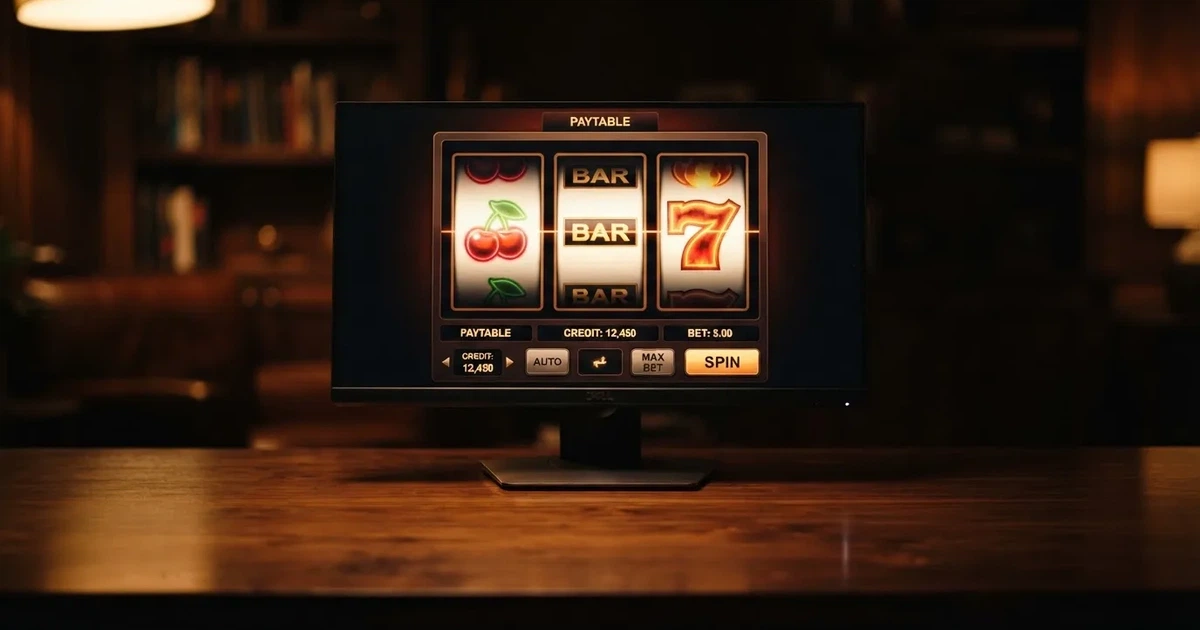
A “paytable” is the rules card on every pokie — the listing of symbols, the value of each winning combination, the bonus features and the return-to-player figure that sits somewhere on the page. The term comes up on every offshore advert that promises real cash play, because a paytable is where the player is supposed to check the numbers before staking. Most offshore pokies carry the same shape of paytable as their land-based Australian counterparts: a reel layout, a scatter symbol, a free-spins round, and a percentage somewhere in the mid-nineties that the marketing page points at as evidence the game is “fair”.

Two things the paytable does not show. It does not show whether the operator offering the game is licensed to take Australian players — that question sits with the ACMA, not with the game studio, and offshore sites routinely carry an RTP badge from a testing house while sitting outside every Australian regime. It does not show the effect of bonuses and free spins on the actual return a player keeps — the published RTP applies to the base game, and the wagering attached to a bonus draws that figure down.
A pokie paytable is a useful read for the game itself. It is not, on its own, evidence that the site offering it is lawful in Australia.
Top 11 brands the ACMA has acted against in 2026
The list below is not a ranking. Every name is here because the Australian Communications and Media Authority itself issued a formal warning to the operator behind it for providing prohibited interactive gambling services to people in Australia. The order follows the sequence in which those warnings were published.
| Brand | ACMA action and date | Operator named by the ACMA | Subject support |
|---|---|---|---|
| RocketPlay | Formal warning, March 2026 (earlier Dama N.V., May 2022) | Pulsup Ltd | — |
| Level Up Casino | Formal warning, May 2022 | Dama N.V. | Listed on Bgaming as a partner site |
| Woo Casino | Formal warning, March 2025 | Dama N.V. | — |
| Spirit Casino | Formal warning, May 2025 | Dama N.V. | — |
| National Casino | Formal warning, July 2025 | Consolutetish S.R.L. | Listed on Wikipedia as an online casino |
| Bizzo Casino | Formal warning, July 2025 (earlier TechSolutions, 2022) | Consolutetish S.R.L. | — |
| Ignition Casino | Formal warning, July 2025 | Bamboo Media | — |
| Instant Casino | Formal warning, February 2025 | EOD Code SRL | — |
| Jackbit | Formal warning, April 2026 | Ryker B.V. | — |
| Casino Intense | Formal warning, April 2025 | Sterplay Holding Ltd | Listed by the ABC and by the ACMA register; Crown Melbourne also named in the same coverage as a regulator-approved baccarat operator |
| Sky Crown | Formal warning, September 2022 | Hollycorn N.V. | — |
Two patterns sit in the table. Dama N.V. is named four times across separate brands and separate years — RocketPlay, Level Up, Woo and Spirit — which is the closest thing to a corporate pattern the ACMA’s published register shows. Consolutetish S.R.L. has the second cluster: National Casino and Bizzo in the same July 2025 round, with Bizzo already on the register from a 2022 warning to a different corporate group. The other operators each carry a single warning. None of the brands displays an Australian licence — none can, because no state or territory issues one.
The shape of “real cash” pokies in the wider market
Gaming machines are older than the internet. Registered clubs in New South Wales ran the first legal poker machines in 1956, and every state and territory now regulates the machines on its own terms. Australia’s machines take about 3% of the global pub and club stock against 0.3% of the world’s population — a per-capita density the industry is unusual in carrying.
The headline figures sit in the high single-digit billions. In 2020–21 Australians wagered almost A$150 billion through gaming machines and lost A$12.18 billion on them. New South Wales alone, outside its casinos, ran 87,298 machines across 2,195 venues as of June 2023, with player losses of A$8.18 billion in 2022–23. Queensland operated 21,122 machines in 351 venues by October 2023. Victoria held 26,380 outside Crown Casino in 488 venues in 2021–22, sitting under a 30,000-machine statewide cap.
The legal minimum return-to-player on these machines runs from 85% in New South Wales, the Northern Territory, Queensland and most of Victoria (87% at Crown Melbourne) up to 90% in Western Australia — where poker machines in pubs and clubs are banned outright and the only machines sit inside Crown Perth, where roughly 2,500 machines operate under Gaming and Wagering Commission approval.
The land-based picture is dense, regulated and familiar. The online picture is the opposite — and the rest of this page is about why.
The law Australians actually face
Online casino games, online pokies and in-play betting are prohibited in Australia. The Interactive Gambling Act 2001, as tightened by the Interactive Gambling Amendment Act 2017, makes it an offence to provide those services to a person physically in Australia. No state or territory licenses them. The minimum age is 18.
What is licensable is wagering on races and sport placed before the event, lotteries and keno. In practice most online bookmakers — including Sportsbet, Bet365 and Ladbrokes — are licensed through the Northern Territory Racing and Wagering Commission, a body that meets once a month in Darwin and has no full-time staff. The federal regulator, the ACMA, is the one doing the blocking.
An offshore operator offering online pokies to Australians is offering a prohibited interactive gambling service. It does not become legal because it shows a Curaçao or Kahnawake licence on its footer, because that licence covers the operator’s home jurisdiction, not Australia.
Responsible play: what is and is not connected to BetStop
BetStop, the National Self-Exclusion Register, has been live since August 2023. It binds every Australian-licensed online and phone wagering service. An offshore casino is not connected to it. A player who has registered with BetStop can still reach an offshore site, and the offshore site is not obliged to honour the registration.
The National Gambling Helpline — 1800 858 858 — is free, runs around the clock and offers chat through Gambling Help Online. That is the line a person in difficulty calls regardless of where they have been playing. The pages further down on bonuses and offshore apps explain why a self-exclusion on a licensed bookmaker does not touch an offshore casino; the helpline is the part that actually helps.
The house always has an edge, and these pages make no claim otherwise. A pokie running at a 95% return keeps five cents of every dollar staked on average across a long session. The mechanism is mechanical, the maths is published and the player pays it. Responsible play is the practice of treating that edge as the cost of entertainment rather than as something to outplay.
Payment methods and the speed of offshore withdrawals
The pages that advertise real cash pokies in Australia usually list four payment rails: debit card, bank transfer, PayID/Osko and BPAY. Each of these is legal for licensed Australian wagering. None of them is unique to the offshore sites that copy the same list.
A few payment routes are banned outright for licensed wagering, and the ban is a tell. Credit cards and credit-related products have been off-limits as payment for licensed online wagering since 11 June 2024, with operator penalties up to A$234,750. Digital currency is on the same restricted list. An offshore site asking an Australian player for a credit card deposit or a crypto transfer is therefore operating outside the rules the Australian-licensed bookmakers follow. That is not, on its own, evidence the offshore site is breaking Australian law — it is evidence it is not following the Australian rules that licensed wagering services follow.
Withdrawal speed is the other common pitch. Offshore marketing tends to promise “instant” or “same-day” withdrawals on PayID, and the claim has two halves. PayID itself is fast when both ends are connected to the New Payments Platform, and the deposit usually clears in seconds. The withdrawal half is slower, because the offshore operator must approve the request before it pushes the payment — approval queues of twelve to seventy-two hours are common, and the offshore site’s own anti-fraud checks sit on top. The combination reads as “instant” on the marketing page and as three to five working days on the bank statement.
Three rules the page names outright. No credit card. No crypto. No guarantee that a withdrawal approved by the offshore operator will arrive, because the operator is outside the Australian consumer-protection regime and the balance can be held against a bonus term the player did not read.
Bonuses and free spins: how offshore offers are structured
A “real cash welcome bonus” on an offshore pokies site is usually three things stapled together: a deposit match, a free-spins bundle and a wagering requirement that ties them. A 100% match up to A$500 with 200 free spins and a 40× wagering multiple on the bonus is a typical shape — generous on its face, expensive once the maths is run.
The wagering multiple is where the cost sits. A A$500 bonus at 40× means the player must turn over A$20,000 before any of the bonus money becomes withdrawable cash. At a 95% RTP, that turnover costs about A$1,000 in expected loss across the clearing period. The free spins carry their own clearing requirement, usually at the same multiple. A cap on the maximum cashout from free-spin winnings — A$100 or A$200 is common — limits what the bundle is worth once cleared.
Three terms worth reading before claiming anything. The game weighting clause says not every pokie counts 100% toward the wagering requirement; some count 50%, some count 0%. The max-bet clause caps the stake per spin during the clearing period — usually A$5 or A$10 — and a single spin above the cap can void the bonus and the winnings. The country restriction says bonuses are not paid to players from certain jurisdictions, and “Australia” sits on the list of most offshore offers — the bonus exists on the marketing page and disappears when an Australian player tries to claim it.
“Free” in “free slots” is doing marketing work, not arithmetic. A free spin with a 40× clearing requirement is not free once the requirement lands.
Mobile and apps: where the offshore pitch is strongest
Real cash pokies apps appear in the Apple and Google stores with names that match the offshore brands, and a player searching for them will find the marketing language lifted straight from the desktop site. The mobile pitch is built around three claims: same paytable as the desktop game, faster session start, push notifications for new bonuses.
Two things to know. A “real cash” app is, under Australian law, the same prohibited service as the desktop site offering real cash pokies to Australians. A “free-to-play” app with the same name is a different product — it does not offer cash withdrawals and is generally lawful under the IGA’s carve-out for social gaming and free-to-play titles, though it is often designed to push the player toward the real-money version of the same game. The two products carry the same brand name and the same look, and the difference between them is the cash register at the bottom of the screen.
BetStop, again, binds the licensed bookmakers only. An offshore casino app is not on the register, the ACMA does not require it to honour an Australian self-exclusion, and the same helpline applies regardless of how the player reached the site.
How fast the ACMA’s blocking round has been moving
The blocking arithmetic is straightforward and worth keeping on hand. The first Australian ISPs received a blocking request from the ACMA in November 2019. By June 2026, the cumulative total of blocked gambling and affiliate-marketing websites stood at 1,751. That is roughly 260 sites per year on average, or about five per week, over a six-and-a-half-year window.
The pace has not slowed. The June 2026 round alone added twelve sites: 7Signs, ChromaBet, Donbet, Duospin, Freshbet, Slots Gem, Jacks Club, Lucky Start, Pointsbetz, Spinrise, Vinyl Casino and Wildsino. More than 230 unlicensed services have left the Australian market entirely since enforcement was strengthened in 2017, in addition to the sites still being blocked at the network level.
H2 Gambling Capital’s 2025 estimate is that Australians lose about A$3.9 billion a year to illegal offshore gambling sites, and that the share of gambling going through legal channels fell from 74% in 2021 to 64%. The numbers do not prove the blocklist is failing — the blocklist is one tool, and the share going through legal channels depends on the legal channel’s own offer as much as on enforcement. The numbers do show that the offshore market has not gone away.
Why the rate matters
A blocking round that adds twelve names in one notice is doing two things at once. It tells the next operator what the threshold looks like, and it tells Australian consumers that the regulator is still actively listing brands. A round that takes six months to publish ten names would read differently, and would deserve to. The June 2026 round sits at the fast end of the recent pattern and is the rate that matters for any forecast of what the 2026 register will look like by year’s end.
Side games on offshore menus: baccarat and blackjack in the wider picture
The same offshore pokies sites usually carry a table-games section, and the marketing pages talk about baccarat and blackjack as if they were alternatives to the pokies. They are not alternatives in cost.
Baccarat’s house edge is 1.06% on the Banker bet, 1.24% on the Player bet and 14.36% on the Tie. The game runs on a six- or eight-deck shoe in punto banco, the variant most played today and developed in Havana during the 1940s. Chemin de fer, the two-player variant that emerged from baccarat banque in the late 19th century, is the rarer offering online. The 14.36% Tie edge is the number to remember — it is the bet the marketing page nudges toward because it pays 8:1, and it is the bet the house edge punishes hardest.
Blackjack’s house edge is 0.28% under the most generous rule sets (Las Vegas Strip rules: dealer stands on soft 17, double on any two cards, double after split, resplit aces, late surrender) and 0.43% under Atlantic City rules. Those edges are after optimal strategy. A player who deviates from basic strategy adds between one and four percentage points to the edge, depending on the mistake. The game’s RTP figure on the marketing page usually quotes the optimal figure and not the figure a casual player will actually achieve.
Crown Melbourne, for context, offers three baccarat variants — Traditional Baccarat, Crown Baccarat and 2 to 1 Baccarat — regulated by the Victorian Gambling and Casino Control Commission, which replaced the VCGLR on 1 July 2022. Under section 66 of the NSW Casino Control Act 1992, a casino operator must not permit a game such as baccarat to be played unless the regulator has approved the game and its rules, and the operator must make a copy of those rules available to patrons on request. The legal Australian version of baccarat is a regulator-approved table with a rules card the player can read. The offshore version is none of those things.
Each brand: the regulator’s record and what the operator displays
The write-ups below cover the eleven brands in the table above. Each block carries the ACMA’s published record and ends on a verdict about the operator’s standing in the Australian market.
RocketPlay
The ACMA published a formal warning to Pulsup Ltd over RocketPlay in March 2026. An earlier warning was issued to Dama N.V. in May 2022 covering six brands, including RocketPlay. The operator named by the ACMA has changed; the brand name has not. The site lists no Australian licence and accepts no Australian payment rails other than the standard offshore debit-card and crypto options. A player in Australia opening an account on RocketPlay is using a service the regulator has explicitly told the operator is unlawful. Rocketplay is one of the most-repeated names on the register.
Level Up Casino
The May 2022 warning to Dama N.V. named six brands, and Level Up Casino was one of them. The site is listed on Bgaming as a partner site for that studio’s catalogue, which is the closest thing to an industry reference the brand carries. No Australian licence is displayed and the payment list is the standard offshore debit-card-plus-crypto mix. Level Up is part of the Dama cluster that has been on the register for years.
Woo Casino
The March 2025 warning to Dama N.V. added Woo Casino to the register, three years after the same operator was warned over six other brands. The site is otherwise described only in its own marketing copy, which lists the usual 100%-match-with-free-spins welcome offer. Woo is the most recent Dama-N.V. name to land on the register, and the ACMA’s pattern of repeated warnings to the same operator suggests the regulator considers the previous warnings ineffective on their own.
Spirit Casino
Spirit Casino joined the register in May 2025 under the same Dama N.V. action as Woo. Two warnings to the same operator within two months is unusual on the register’s published record, and it indicates the regulator was running a coordinated round rather than publishing individual cases. Spirit’s site carries the same marketing language as the rest of the Dama cluster, with no Australian licence and no Australian-only payment terms.
National Casino
The July 2025 warning to Consolutetish S.R.L. covered National Casino alongside Bizzo. National Casino is listed on Wikipedia as an online casino brand, which is the closest thing to an independent reference the brand carries. The site has been operating since 2019, has been the subject of consumer complaints filed in non-Australian jurisdictions, and displays no Australian licence.
Bizzo Casino
Bizzo has two warnings on its file: the 2025 Consolutetish S.R.L. action and an earlier 2022 warning to TechSolutions (CY) Group Limited and TechSolutions Group N.V. Two warnings to two different corporate groups, covering the same brand, is the rare pattern on the register. The site is otherwise unremarkable as an offshore pokies site — same catalogue, same bonus shape, no Australian licence, no Australian-specific payment terms.
Ignition Casino
The July 2025 warning to Bamboo Media put Ignition Casino on the register. Ignition is one of the older offshore pokies brands in the Australian marketing stream, and the site’s existing customer base is the most likely reason it took until 2025 to attract an ACMA warning — the brand is familiar to Australian players through affiliate pages that have been running for years. The warning changes nothing about the site’s legal position: online pokies for Australians were prohibited before the warning and remain prohibited after it.
Instant Casino
The February 2025 warning to EOD Code SRL covered Instant Casino, a brand that was running heavily in Australian affiliate marketing through 2024 and into early 2025. The warning was early in the calendar year, which is consistent with the regulator acting on a brand whose Australian traffic was growing visibly. No Australian licence, no Australian-specific payment terms.
Jackbit
The April 2026 warning to Ryker B.V. covered Jackbit alongside CasinOK in a single notice. Jackbit runs a sportsbook alongside its casino, which is a different shape from the pokies-only brands above, and the IGA’s prohibition covers the casino half of the site while leaving the wagering side in a more complex legal position. The site’s Australian-facing pages carry the offshore credit-card and crypto options the licensed bookmakers are banned from offering.
Casino Intense
The April 2025 warning to Sterplay Holding Ltd named Casino Intense. Casino Intense is the brand with the most third-party references on the register: it has been named in ABC News coverage and in the ACMA’s own register, and Crown Melbourne’s baccarat page sits in the same coverage trail as a regulator-approved counter-example. The brand’s position is unchanged by the cross-references: online casino for Australians is prohibited, and Casino Intense’s listing elsewhere does not give it an Australian licence.
Sky Crown
The September 2022 warning to Hollycorn N.V. covered Sky Crown and Blue Leo, two brands on the same corporate file. Sky Crown is one of the longer-standing warnings on the register, and the brand has been the subject of an industry-wide pattern in which the same operator runs multiple brands under different names. The ACMA’s September 2022 publication is the public record; the site’s own pages do not address the warning.
What the ACMA’s published record actually shows
Three patterns sit across the eleven brands. The Dama N.V. cluster — RocketPlay, Level Up, Woo and Spirit — runs to four brands and four warnings over four years, the most repeated operator name on the register. The Consolutetish S.R.L. cluster — National Casino and Bizzo — added two more in July 2025, with Bizzo already warned in 2022 under a different corporate group. The remaining seven brands each carry a single warning, with Hollycorn N.V.’s Sky Crown and Blue Leo pairing the only other multi-brand operator on the file.
No warning on the register is a court order. The ACMA’s formal warnings are administrative actions under the Interactive Gambling Act 2001, and the regulator’s enforcement powers include directing Australian ISPs to block the named sites. The blocking is the practical consequence: a balance held on a blocked site is not reachable through the Australian internet.
The 2026 reform that is law but not yet in force
The Interactive Gambling Amendment (Gambling Reform) Bill 2026 passed Parliament on 19 August 2026. Its advertising and inducement measures commence on 1 January 2027. On a 2026 page the bill is law with a start date, not a current restriction. The Australian-licensed bookmakers will face new advertising rules from 1 January 2027; the offshore pokies sites that the ACMA has been blocking will continue to be blocked in the meantime, under the existing 2001 Act.
Tax: what a recreational player actually owes
Gambling winnings of a recreational player are not assessable income in Australia. Section 6-5 of the ITAA 1997 treats them as the proceeds of a windfall, not as revenue. Losses are not deductible, unless the person carries on a business of gambling — a category that covers professional poker players and sports bettors but not the recreational player on an offshore site. The ATO’s own guidance is the right place to check, and the standard line — “check with the ATO” — is the standard line for a reason.
Reading the picture
Three things hold across the eleven brands. None displays an Australian licence, because none can. None is connected to BetStop, because BetStop binds the licensed bookmakers only. None offers the player any Australian consumer-protection recourse if a withdrawal is refused, because the regulator whose job that would be is the same regulator telling the operator the service is prohibited. The blocking arithmetic — 1,751 sites since November 2019, twelve in the most recent round alone — is the practical measure of how often that mismatch plays out.
The marketing language on real cash pokies is consistent because it sells the same product across eleven fronts. The legal language in the ACMA’s register is consistent for the opposite reason: it is describing the same prohibition across the same eleven cases. A player reading both is reading two stories about the same offer.
Frequently Asked Questions
Does “real cash” mean the same thing as “real money” when a pokies site advertises it?
The two phrases are used interchangeably on most offshore marketing. They both refer to the same thing: a balance on the site that can be withdrawn through one of the offshore payment rails. Neither phrase means the operator is licensed in Australia — no offshore operator offering real cash pokies to Australians is licensed here, because no state or territory licenses online casino games.
How does a A$10-deposit real-cash pokies claim compare with a no-deposit real-cash offer?
A A$10-deposit offer requires the player to put money in first, usually paired with a deposit-match bonus and a wagering requirement that runs into the thousands of dollars before the bonus becomes withdrawable. A no-deposit offer skips the deposit step and pays out the bonus itself, usually with a smaller cap on the maximum cashout — A$100 or A$200 is common. Both are subject to offshore terms and both run against Australian law.
Is playing online pokies for real cash from an offshore site something an Australian can legally do?
The IGA targets the provider, not the player. An Australian opening an account on an offshore site is not personally prosecuted. The site is offering a prohibited service, and the ACMA can direct Australian ISPs to block it. A balance held on a blocked site is not reachable, and there is no Australian complaints body to appeal to if a withdrawal is refused.
What’s the difference between a real-cash pokies app and a free-to-play pokies app with the same name?
A real-cash app takes deposits and pays withdrawals, and is the offshore casino under the IGA’s prohibition. A free-to-play app with the same brand name does not pay withdrawals and is generally lawful under the IGA’s social-gaming carve-out, though it usually pushes the player toward the real-money version. The two products sit in the same app store, carry the same look and rely on the same brand.
Why would a site advertise “free slots” that can win real cash, when the two seem contradictory?
“Free” is doing marketing work. A free-spin bundle with a 40× wagering requirement is not free once the requirement lands. The free spins are a way to introduce the site to the player; the requirement is the cost the player pays to turn the winnings into cash. The terms page is where the cost is set out, and the terms page is what a player reads before claiming.
How fast does a real-cash pokies withdrawal typically move compared with the original deposit?
The deposit is fast, because PayID and the New Payments Platform clear in seconds when both ends are connected. The withdrawal is slower, because the offshore operator must approve the request before it pushes the payment. Approval queues of twelve to seventy-two hours are common, and the offshore site’s anti-fraud checks sit on top. Three to five working days is the realistic window, and the marketing promise of “instant” applies only to the deposit side.