
Pokies tips and tricks 2026 — what the maths says, what the law says, and what the marketing hides
7 November 2026 — figures checked against ACMA formal-warning publications and the public blocking register.
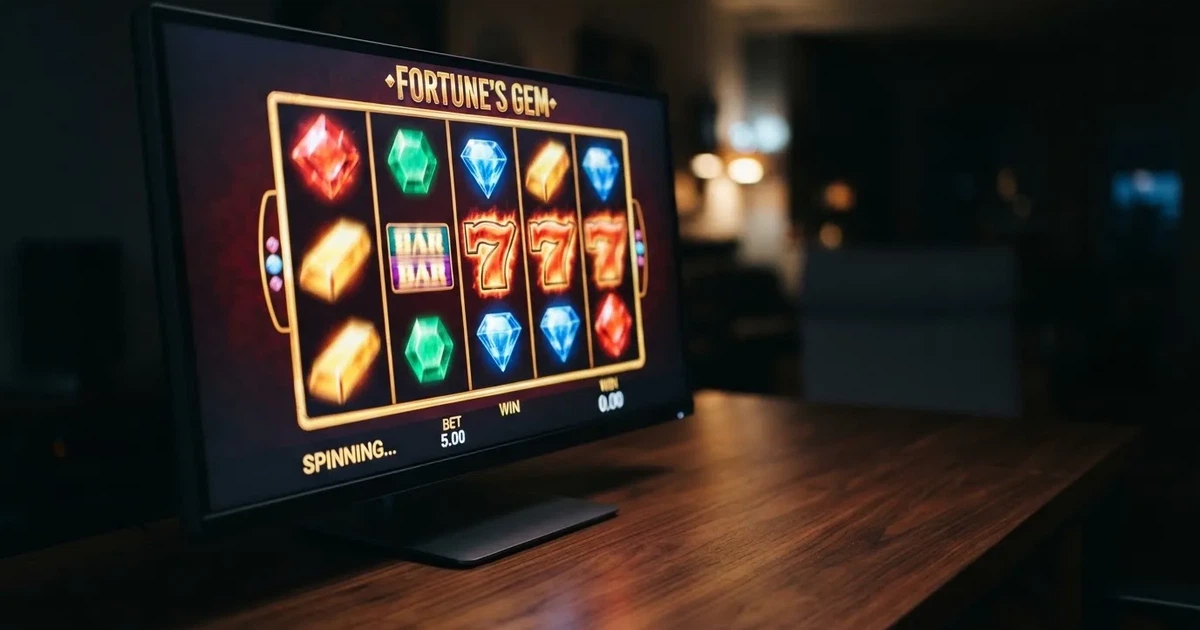
The first thing to settle about “pokies tips and tricks” is whether there is anything left to discover. Every spin on a modern gaming machine runs through a random number generator (RNG): a piece of software that produces outcomes independently of what came before, with no memory of the last result, the player’s stake, the time of day or whether the machine has just paid out. The pattern that looks like a hot streak or a cold run is the generator doing what it does. There is no button combination, no sequence of stake sizes and no pause in play that moves the next spin closer to a win. That is the part of “tips and tricks” nobody selling them wants on the first line, because it dissolves most of what is being sold.
What follows is a page about that gap. It looks at the public claims about how to beat pokies, at the operators that have been pulled up for offering those games to Australians, at the law that makes those offers illegal, and at the support available when the game stops being entertainment. The angle throughout is consequence: what each of those pieces actually means for a person sitting at a machine or staring at an offshore casino site tonight, and when the cost surfaces — at the cashier, in a blocked account, in a regulator’s letter, or in the months afterwards.
Table of Contents
- Eleven operators, eleven formal warnings — the ACMA’s recent action
- How a pokie actually works — the fundamentals the tips pages skip
- The legal prohibition — what the Interactive Gambling Act actually says
- Responsible play — what the support system looks like
- What the law actually means for a person searching “pokies tips and tricks”
- The land-based alternative — where the legal play sits
- The numbers in one place — what the figures add up to
- A final word on the genre
- Frequently asked questions
Eleven operators, eleven formal warnings — the ACMA’s recent action
The most direct way to see what the Australian Communications and Media Authority (ACMA) treats as a prohibited interactive gambling service is to read the list of operators it has formally warned under the Interactive Gambling Act 2001. The brands below are not a ranking. They are a roster of sites the regulator itself has named for offering online casino games, including online pokies, to people in Australia — the same product the “tips and tricks” pages describe. None of them can be licensed to provide it anywhere in the country.
The brands sit roughly in the order the regulator acted. Two of them — National Casino and Bizzo Casino — were warned twice under different ownership structures, which is itself a story about how offshore operators reorganise after one warning.
| Brand | ACMA action and date | Operator named by the ACMA | Notes from public listings |
|---|---|---|---|
| RocketPlay | Formal warning, March 2026 | Pulsup Ltd | — |
| RocketPlay | Earlier formal warning, May 2022 | Dama N.V. | — |
| Level Up Casino | Formal warning, May 2022 | Dama N.V. | Listed in provider catalogues |
| Woo Casino | Formal warning, March 2025 | Dama N.V. | — |
| Spirit Casino | Formal warning, May 2025 | Dama N.V. | — |
| National Casino | Formal warning, July 2025 | Consolutetish S.R.L. | Listed in public references |
| Bizzo Casino | Formal warning, July 2025 | Consolutetish S.R.L. | — |
| Bizzo Casino | Earlier formal warning, 2022 | TechSolutions (CY) Group / TechSolutions Group N.V. | — |
| Ignition Casino | Formal warning, July 2025 | Bamboo Media | — |
| Instant Casino | Formal warning, February 2025 | EOD Code SRL | — |
| Jackbit | Formal warning, April 2026 | Ryker B.V. | — |
| Casino Intense | Formal warning, April 2025 | Sterplay Holding Ltd | Listed in coverage of Australian venues |
| Sky Crown | Formal warning, September 2022 | Hollycorn N.V. | — |
Several names recur on the roster for a reason. Dama N.V. is named four times across May 2022, March 2025 and May 2025 — once for RocketPlay’s earlier incarnation, then again separately for Woo Casino and Spirit Casino. The pattern shows what “tips and tricks” articles pointing to a brand’s licence often miss: the licence changes hands, the brand sometimes stays, and the regulator’s file follows the operator structure rather than the marketing name. A reader who sees a Curaçao or Kahnawake number on a site’s footer is looking at a paper instrument that did not stop the ACMA from writing to the company behind it.
A second thread is the doubled warnings. National Casino and Bizzo Casino both appeared in the ACMA’s earlier 2022 file under TechSolutions, then resurfaced in July 2025 under Consolutetish S.R.L. — a different corporate entity on the same brand. A formal warning is not a prosecution and carries no penalty in itself; what it does is put the operator on notice. Reorganising the corporate wrapper does not erase that notice, and the regulator has now written to both versions. The lesson for anyone evaluating an offshore site on the basis of its licence is that the licence is the part of the offer least likely to mean what it says.
The rest of the list — RocketPlay under Pulsup Ltd, Jackbit under Ryker B.V., Casino Intense under Sterplay Holding, Ignition Casino under Bamboo Media, Instant Casino under EOD Code SRL, Sky Crown under Hollycorn N.V., and Level Up under Dama N.V. — adds up to a cross-section of the operators the ACMA considers part of the prohibited market. Each of them has, at some point, advertised pokies or casino games to Australian customers. None of them holds an Australian licence to do so. The licences they do display — typically Curaçao, Anjouan or Kahnawake — authorise them in their own jurisdiction and mean nothing under the Interactive Gambling Act 2001.
What the ACMA’s blocking request means in practice
The regulator’s tool of last resort is the formal request to Australian internet service providers (ISPs) to block a site at the DNS or IP level. As of the round reported on 26 June 2026, the ACMA had asked ISPs to block 1,751 illegal gambling and affiliate marketing websites since the first blocking request in November 2019. That is roughly the same set of names — 7Signs, ChromaBet, Donbet, Duospin, Freshbet, Slots Gem, Jacks Club, Lucky Start, Pointsbetz, Spinrise, Vinyl Casino and Wildsino joined the list in that single June round — and a much longer list of operators behind them.
The blocking-rate calculation makes the pace visible. From the first blocking request in November 2019 to the round reported in June 2026 is roughly 79 months, over which 1,751 sites were added to the block list. That is an average of about 22 blocked sites per month across the period — somewhere between 260 and 270 a year. The figure is a band rather than a point because the rounds come in clusters: some months see nothing added, others see a dozen or more names go on the list in a single announcement. The condition that holds the band together is that the ACMA publishes only after a formal request has been issued, so the rate tracks enforcement effort rather than the actual volume of new sites appearing. The point the band carries is not the exact number but the shape: a regulator that has been running this process for six and a half years is still adding to the list every quarter, and the list is not shrinking.
For a player, the consequence is not abstract. An account balance held with an offshore operator sits behind the block. The ACMA’s enforcement targets the provider; the player’s funds are not protected by any Australian consumer law, and there is no Australian complaints body to approach if a withdrawal is refused or a bonus term is rewritten after the fact. A site that disappears behind a block can reappear at a new address the same week, with the same games, under a different name.
How a pokie actually works — the fundamentals the tips pages skip
The hardware and software underneath any modern pokie make “tips and tricks” a category problem rather than an information gap. A gaming machine is, at its core, a computer running an RNG. The RNG produces a number for each reel on every spin — typically many numbers per reel, mapped onto the symbols visible on the screen. The outcome of one spin is calculated the moment the button is pressed or the handle pulled. Nothing the player does after that moment changes it.

This is the part of the page where the marketing of “pokies tips and tricks” runs into the engineering. Three properties of an RNG-based machine are worth holding in mind before reading any list of strategies:
- Independence. Each spin is independent of the previous one. A machine that has just paid a large jackpot is not “due” to dry up; equally, a machine that has gone cold for an hour is not “building up” to a win. The RNG does not know what it produced last time, and it has no quota.
- Fixed return-to-player (RTP). Every machine has a programmed long-run return to player, set by the manufacturer and approved by the regulator. In Australian jurisdictions the legal minimum is set state by state: 85% in New South Wales, the Northern Territory, Queensland and most of Victoria (87% at Crown Melbourne), 87% in the Australian Capital Territory and Tasmania, 87.5% in South Australia, and 90% in Western Australia. Above that floor, venues can choose higher settings. The point is that the RTP is a long-run average over millions of spins — not a per-session target, not a guarantee.
- No skill layer. There is no decision on the player’s part that alters the house edge on a standard pokie. Bet size changes the volatility — how big the wins and losses swing on any given spin — but it does not change the long-run return. Lines, credits and “max bet” are display choices, not strategy.
These three points collapse most of the tips list. “Hot” and “cold” machines are a misreading of independence. “Loose” machines in a venue are usually a misreading of denomination — a A$1 machine and a 1c machine look the same to a player but the RTP settings often differ. “Pressing buttons in a sequence” or “waiting between spins” do nothing to the RNG. “Betting max to unlock features” sometimes unlocks a bonus round on a multi-level game, but the bonus round is part of the same RNG — the feature payout is calibrated into the overall return, not added on top.
The genuine skill a player can apply is on the management side: deciding in advance how much to spend, what loss is acceptable, and when to leave. None of those change the odds. They change the cost.
What “pokies tips and tricks” articles usually get wrong
The recurring errors in the genre are predictable, because they are errors about how a random process is supposed to feel. A few worth naming because they appear so often:
- The gambler’s fallacy. Believing that a streak has to reverse. Each spin is independent.
- The hot-streak fallacy. Believing that a winning run is the machine “paying out” and worth extending. The streak was real; the expectation that it will continue is not.
- The “loose machine” hunt. Some venues do publish RTP settings above the floor, but they are not signposted on the cabinet, and the difference between 87% and 90% is invisible in any session short of thousands of spins.
- The bonus-trap. A “feature” or “free spins” round is built into the machine’s maths. The cost of buying into it is already in the long-run return. There is no edge to be unlocked.
- The pattern-watch. Watching the screen for symbols “lining up” or reels “settling” near a win. RNGs do not animate outcomes; the visible reel movement is a render of a result already decided.
The shape these errors share is that they all treat a random process as if it were a deterministic one with hidden structure. RNGs do not have hidden structure that responds to the player.
Why Dragon Link comes up so often
A reader looking for “pokies tips and tricks” in Australia is likely to find page after page about Dragon Link. The reason is partly its popularity in venues and partly its denomination structure — Dragon Link has a wide stake range and a four-jackpot link, which gives the tips pages something to write about. The strategy content, however, is the same as for any other pokie: the RNG decides the outcome, the RTP is set by the venue and the regulator, and bet size changes the volatility rather than the odds.
What is actually different about Dragon Link is its bonus structure: a hold-and-spin feature triggered by six or more orb symbols, with the option to fill the screen for one of the four link jackpots. The feature is built into the machine’s overall RTP, which means chasing it costs the player the same long-run percentage as playing the base game. Where the maths matters is on the volatility side: the hold-and-spin feature can produce long stretches without a feature trigger, balanced by occasional large payouts. A player who treats the feature as “due” is back at the gambler’s fallacy. A player who treats it as entertainment with a wide variance is reading the machine correctly.
The honest “tip” for Dragon Link, and for any linked-jackpot pokie, is to play at a stake level that lets the session last long enough to see the feature trigger at least a few times — otherwise the volatility does the work the maths would not, and the experience is mostly waiting. That is bankroll advice, not strategy. The math is the same.
The legal prohibition — what the Interactive Gambling Act actually says
The legal frame for online pokies in Australia is the Interactive Gambling Act 2001 (IGA), tightened by the Interactive Gambling Amendment Act 2017. Together, those statutes make it an offence to provide online casino games, online pokies and in-play betting to a person physically in Australia. No state or territory issues a licence for the provision of online casino games. What is licensable is wagering on racing and sporting events placed before the event, lotteries, and keno — most of it in practice licensed through the Northern Territory, where the Northern Territory Racing and Wagering Commission oversees 52 of Australia’s online bookmakers.
The structure matters because it is easy to mistake the licence landscape. The NTRWC licences wagering services (Sportsbet, Bet365, Ladbrokes — the household names) but does not, and cannot, licence an online casino. A poker-machine-style game played for real money over the internet sits outside the licensable product set entirely. The Northern Territory’s coverage of bookmakers is sometimes read as a sign that online gambling is broadly licensed in Australia. It is not. The commission has no full-time staff and meets once a month in Darwin — a body built around racing and sports wagering, not around pokies.
What this means for the offshore operator list above is direct: every one of the eleven brands is offering a product that no Australian regulator is empowered to licence. The licence they display — usually Curaçao, Anjouan or Kahnawake — is granted by a foreign regulator with no jurisdiction in Australia and no standing under the IGA. The Interactive Gambling Act does not recognise foreign licences as a defence.
The 2026 reform package — what changes and when
The Interactive Gambling Amendment (Gambling Reform) Bill 2026 passed Parliament on 19 August 2026, adding new measures on advertising and inducements around prohibited services. Its commencement is set for 1 January 2026 — law with a start date, not yet in force on a page written today. The headline effect is to extend what the ACMA can pursue: inducements to use prohibited services, including the affiliate marketing pages that sit between a player and an offshore brand, become a clearer target.
For a reader on the page today, the practical effect is small. The 2026 blocking rate and the 2025 enforcement wave are already the operative facts. What the reform package does is harden the perimeter around the same product over the coming year — it does not change the legal position of the eleven brands in the table above. They remain prohibited services today, and they will remain prohibited services after 1 January 2026.
Payments and the credit-card ban
Since 11 June 2024, credit cards, credit-related products and digital currency have been banned as payment for licensed online wagering in Australia, with penalties of up to A$247,500 for operators that breach the rule. Legal deposit routes for licensed wagering are debit card, bank transfer, PayID/Osko and BPAY. An offshore casino asking an Australian customer for a credit card or a crypto deposit is operating outside the Australian rules — a small signal, but a signal the customer can read.
For a customer of an offshore site, the payment angle works both ways. The site is not bound by the Australian credit-card ban, so it can take credit cards and crypto freely. The customer’s bank, however, can flag or block transactions to known gambling-related merchants under its own policies. The result is the offshore site offering a payment method the licensed market is forbidden to take, while the customer’s own bank may refuse the payment regardless. Neither party is operating under Australian rules; the customer is the one left without protection if the transaction goes wrong.
Where the money goes when the block lands
A reader following the eleven-brand roster to its logical end is eventually going to ask what happens to a balance held with an offshore operator that gets blocked. The short answer is that the operator remains the custodian of the funds — the block cuts the customer off from the site, not the operator off from the money. The Interactive Gambling Act targets the provider. There is no Australian complaints body with jurisdiction to compel a payout, no equivalent of the UK Gambling Commission or the Malta Gaming Authority’s player-protection mechanisms. The customer can attempt to withdraw through whatever channels remain reachable — email, an alternate domain, a mirror site — but the leverage sits with the operator.
This is the consequence the marketing pages around “pokies tips and tricks” do not mention. A strategy that improves the odds — there is no such strategy, but a reader who believes there is one is the target reader — does nothing about the moment the site goes dark. The odds are the same the day before and the day after. The withdrawal risk is not.
Responsible play — what the support system looks like
The responsible-gaming frame around Australian pokies is set up for licensed services, and offshore operators sit outside it. That detail matters more than it sounds, because the support available to a player who feels their play has become a problem is partly built into the licensed channels.
The central piece is BetStop, the National Self-Exclusion Register. BetStop went live in August 2023 and binds every Australian-licensed online and phone wagering service — if a player registers, none of those operators can accept their bets. The register covers sports and racing wagering, which is what is licensed; it does not cover offshore casino sites. A self-excluded player who opens an offshore account is not barred by BetStop. The exclusion stops at the licensed perimeter.
For a player in distress, the contact points are:
- The National Gambling Helpline, 1800 858 858. Free, 24 hours a day, every day.
- Gambling Help Online, with web chat. Free, confidential, run by the state and territory gambling-support services.
- The state and territory problem-gambling services, which can refer into counselling and financial counselling.
The helpline and Gambling Help Online do not require the player to be using a licensed service. They will speak to anyone, offshore or otherwise, and the conversation itself does not create a record with a regulator. The limit on what they can do, however, is the limit on the player’s position: if the player is using an offshore operator, the support service can talk them through the situation but cannot reach into the operator’s account or compel a withdrawal.
The other part of the responsible-gaming frame is the venue-level machinery that exists for land-based pokies. Tasmania, for example, planned nation-leading mandatory pre-commitment cards for its poker machines — a system that would have required a player to set a spending limit before sitting down at a machine. Implementation of that reform was delayed until late 2025. New South Wales operates the largest concentration of gaming machines outside casinos — 87,298 machines across 2,195 venues as of June 2023, with player losses of A$8.18 billion in 2022-23 — under its ClubSAFE and responsible-gambling framework. Queensland runs 21,122 gaming machines across 351 venues. Victoria operates 26,380 outside Crown Casino across 488 venues under a 30,000-machine statewide cap. None of this machinery — pre-commitment cards, venue exclusions, the state-level self-exclusion registers — extends to offshore sites. A player who has self-excluded from every club in their state can still open an offshore account in five minutes.
That asymmetry is the structural reason the responsible-gaming frame cannot do its normal work around offshore play. The licensed system is built to give a player a way out. The offshore system is not.
What the law actually means for a person searching “pokies tips and tricks”
The shape of the prohibition as it lands on an individual is narrower than the marketing of “tips and tricks” suggests. The Interactive Gambling Act targets the provider, not the player. A person in Australia who opens an account with an offshore casino does not commit an offence under the IGA. The offence is on the side offering the games.
What the individual loses is the protection the IGA would have given them if the provider were licensed. That protection includes:
- Complaint and dispute resolution through an Australian regulator or an Australian-recognised ADR body. Offshore sites have none of this; their dispute processes are internal.
- Segregation of player funds from operating funds. Offshore operators hold player balances on their own balance sheet, at their own discretion.
- Responsible-gaming integration with BetStop and the National Self-Exclusion Register.
- Identity verification under Australian anti-money-laundering rules, with the consumer protection that comes from it.
- The marketing-restrictions regime that begins on 1 January 2026.
The list is the negative space of the offshore offer. Each item is a thing the licensed market provides and the offshore market does not. A reader searching for “pokies tips and tricks” is looking for a way to change the odds. The cleanest change the law gives them is the change of venue — a licensed club, a licensed casino, a state-regulated environment in which the machine’s RTP is approved and the operator’s obligations are enforceable.
A note on tax
A recreational gambler’s winnings in Australia are not assessable income. Section 6-5 of the Income Tax Assessment Act 1997 excludes them, and losses are not deductible. The exception is a person who carries on a business of gambling, which the ATO assesses case by case and which is not the situation of a player using a venue or an offshore site recreationally. For anyone whose activity has moved from occasional play to something more structured, the ATO’s guidance is the place to check — model only, and the ATO is the only authority on what counts as a business.
The land-based alternative — where the legal play sits
For a reader who came to this page looking for a way to engage with pokies that is within Australian law, the answer is the licensed venue. The land-based product is the original one — registered clubs operated Australia’s first legal poker machines from 1956, in New South Wales — and remains the only legally offered real-money pokie product in the country.
The state-by-state picture is uneven, because each jurisdiction regulates its own machines:
- New South Wales allows gaming machines in clubs and hotels outside casinos, with the largest concentration of machines in the country. The legal minimum RTP is 85%, with venues free to set higher returns.
- Queensland runs a comparable club-and-hotel model, with 21,122 machines across 351 venues as of October 2023.
- Victoria operates under a 30,000-machine statewide cap with 26,380 machines outside Crown Casino across 488 venues in 2021-22, and a legal minimum RTP of 85% (87% at Crown Melbourne).
- South Australia sets the floor at 87.5%.
- Western Australia banned poker machines in pubs and clubs when Crown Perth opened in 1985. The casino’s own machine count has since grown from about 200 in 1985 to roughly 2,500, all approved by the state’s Gaming and Wagering Commission.
- Tasmania ended Federal Group’s monopoly over poker machines through legislation passed in November 2021, moving oversight to the Tasmanian Liquor and Gaming Commission. The state has been planning mandatory pre-commitment cards, delayed to late 2025.
- The Australian Capital Territory sets a minimum RTP of 87%.
- The Northern Territory — whose Racing and Wagering Commission licences online bookmakers but does not licence online casinos — runs its own club-and-hotel machines with an 85% minimum RTP.
The minimum-RTP figures explain a structural feature of the Australian market: a player in Western Australia sees a floor of 90%, against 85% in New South Wales, Queensland, Victoria or the Northern Territory. That five-point gap is the largest state-level variation in the country, and it is the reason the same machine can behave differently between venues without the player changing anything about their play. The licensed venue offers the player a transparent machine in a regulated environment. The offshore site offers the player the same software in an unregulated one.
Baccarat and blackjack — the skill games the venue offers
A reader searching for “pokies tips and tricks” is, by definition, looking at a machine that has no skill layer. The skill games in the licensed venue are the table games — baccarat and blackjack in particular — where basic strategy does move the house edge. A short detour through each, because the contrast is the cleanest illustration of what “tips and tricks” can and cannot do:
Baccarat. House edge is 1.06% on the Banker bet, 1.24% on the Player bet and 14.36% on the Tie. The skill in baccarat is essentially bet selection: the Banker bet is the cheapest for the player in the long run, the Tie bet is the most expensive by a wide margin, and no system of record-keeping changes the next hand. The game’s origins are disputed, with some accounts placing it in 19th-century France and others following David Parlett’s view that the game Macao is its immediate precursor. Punto banco, the variant most played today, was developed in Havana in the 1940s; the casino banks the game at all times and plays both hands to fixed drawing rules. Chemin de fer, the two-player variant, emerged from baccarat banque in the late 19th century and is named for being quicker than the original game. Card values in punto banco are fixed: 2-9 at face value, 10/J/Q/K at zero, ace at one, hand totals taken modulo 10, dealt from a 6- or 8-deck shoe. Crown Melbourne offers three baccarat variants — Traditional Baccarat, Crown Baccarat and 2 to 1 Baccarat — under rules approved by the Victorian Gambling and Casino Control Commission, which replaced the VCGLR as Victoria’s casino regulator on 1 July 2022. Section 66 of the NSW Casino Control Act 1992 requires a casino operator to make a copy of the approved rules available to patrons on request.
Blackjack. House edge with optimal strategy is about 0.28% under liberal Las Vegas Strip rules (dealer stands on soft 17, double on any two cards, double after split, resplit aces, late surrender) and about 0.43% under Atlantic City rules. The skill in blackjack is basic strategy — the right decision on every possible hand — and deviations from basic strategy cost the player real money. The game is descended from the English vingt-un, with a related game described in Cervantes’ Rinconete y Cortadillo around 1601-1602 and formal rules published in Britain in 1800. The name “blackjack” dates from around 1899, with prospectors of the Klondike Gold Rush of 1896-99 credited with giving it its modern name. Card values: number cards at face value, jack/queen/king at 10, ace at 1 or 11; a two-card 21 is a “blackjack” or “natural” and beats any other hand; the dealer draws to 17 or higher, with some rule sets requiring a hit on a soft 17. Casino variants include Spanish 21 (no 10s, liberal player rules), Double Exposure Blackjack (both dealer cards face-up, with rule tweaks to compensate), Blackjack Switch (swap cards between two hands) and Super Fun 21 (up to four splits).
The contrast with pokies is the point. In baccarat and blackjack, basic strategy is a thing — a defined set of decisions that demonstrably moves the house edge, often dramatically. In pokies, no such set exists. The “tips and tricks” pages are selling the illusion of a basic strategy that the maths does not support.
Why the offshore offer keeps being remade
The roster above is not the first set of ACMA warnings, and the regulator’s June 2026 round is not the last. Between November 2019 and June 2026, the ACMA added 1,751 sites to the block list, and H2 Gambling Capital’s 2025 estimate puts Australian losses to illegal gambling sites at around A$3.9 billion a year. The share of gambling going through legal channels fell from 74% in 2021 to 64%. The offshore market is not a stable thing that can be blocked out of existence; it is a moving target that reorganises around every enforcement round. The 2022-then-2025 doubled warnings on National Casino and Bizzo Casino are the visible examples, and the dozens of other sites on the block list are the invisible ones.
For the regulator, the consequence is the work itself — the blocking-rate calculation above is a measure of the work’s pace. For a player, the consequence is the asymmetry the section above already named: the operator reorganises and resumes; the player’s protection does not.
The numbers in one place — what the figures add up to
The figures on this page, drawn from the public record:
- 1,751 illegal gambling and affiliate marketing websites blocked since November 2019 (ACMA, June 2026).
- 230+ unlicensed gambling services that have left the Australian market since 2017 (ACMA, June 2026).
- A$3.9 billion per year — estimated Australian losses to illegal gambling sites (H2 Gambling Capital 2025).
- 74% → 64% — the share of Australian gambling going through legal channels in 2021 vs 2026.
- 52 online bookmakers licensed in the Northern Territory (NTRWC, April 2026).
- A$150 billion wagered through Australian gaming machines in 2020-21.
- A$12.18 billion lost on those machines in the same period.
- A$8.18 billion lost on NSW gaming machines outside casinos in 2022-23, across 87,298 machines in 2,195 venues.
- 21,122 Queensland gaming machines across 351 venues (October 2023).
- 26,380 Victorian gaming machines outside Crown Casino across 488 venues (2021-22), under a 30,000 statewide cap.
- 2,500 gaming machines at Crown Perth, up from about 200 in 1985.
- 1.06% baccarat house edge on the Banker bet, 1.24% on the Player bet, 14.36% on the Tie.
- 0.28% blackjack house edge under liberal Las Vegas Strip rules, 0.43% under Atlantic City rules.
- 85-90% — the legal minimum RTP for poker machines across Australian jurisdictions, with 85% in NSW, NT, Qld and most of Vic, 87% in the ACT, Tas and Crown Melbourne, 87.5% in SA, and 90% in WA.
The numbers are not a case for offshore play. They are the case for reading the maths of pokies as it actually stands and for keeping the engagement inside the venues and channels where the consumer protections and the responsible-gaming machinery actually work.
A final word on the genre
Search results for “pokies tips and tricks” tend to converge on a small set of recommendations: choose a machine with a higher denomination, bet max to unlock features, manage your bankroll, leave when you’re ahead. Each of those is reasonable bankroll advice and none of it moves the RNG. The “tips” pages sell the package as if it were strategy; the “tricks” pages sell it as if it were edge. Both read better than they play, because what they actually contain is sensible session management wrapped in a story about beating the machine.
The honest position is closer to the maths. The machine returns a fixed percentage over a long run. The player’s decisions change the volatility, not the return. The legal channel is the licensed venue. The illegal channel is offshore, with the consumer protections of any unregulated cross-border transaction. The support system for a player in trouble is the National Gambling Helpline on 1800 858 858 and Gambling Help Online — both free, both outside the offshore perimeter, both built to talk to anyone regardless of where they have been playing.
That is the consequence the genre skips over: the part where the strategy has not worked, the session has ended, and the question is what comes next.
Frequently asked questions
Can any real tip or trick change the odds on a pokies machine?
No. Modern pokies run on a random number generator, and each spin is independent of the previous one. The machine’s long-run return to player is fixed and approved by the relevant Australian state or territory regulator, with a legal minimum between 85% and 90% depending on the jurisdiction. Bet size, button sequence, timing and machine choice do not change that return. They can change the volatility — how big the swings are within a session — but not the percentage that the house keeps in the long run.
How is a strategy for a specific title like Dragon Link different from general pokies strategy?
It isn’t, mechanically. Dragon Link has a hold-and-spin feature and four linked jackpots, which makes it a high-volatility game with long stretches between features and occasional large payouts. That is a bankroll consideration, not a strategy one. The maths of the machine is the same as for any other RNG-based pokie: the outcome of each spin is decided at the moment of the spin, and the bonus round is already accounted for in the machine’s overall return. Treating the feature as “due” after a long dry stretch is the gambler’s fallacy applied to a specific title.
Is there a legal way for an Australian to try out pokies strategies?
Yes — at a licensed venue. Poker machines are legal in clubs, hotels and casinos across every Australian state and territory except for pubs and clubs in Western Australia (where the machines are confined to Crown Perth). The land-based machines are regulated state by state, with responsible-gaming machinery attached. Online pokies for real money are prohibited for people in Australia under the Interactive Gambling Act 2001. No state or territory licences an online casino to offer them.
Does bet size actually change the odds on a pokies machine?
Bet size changes the volatility, not the long-run return. A A$1 spin and a 1c spin on the same machine are both running off the same RNG and the same RTP. The A$1 spin produces larger wins and losses per spin but does not move the percentage the house keeps. Where bet size has a mechanical effect is on multi-level games where features are stake-gated — a “max bet” requirement to enter a bonus round — but even then the bonus round is calibrated into the machine’s overall return, not added on top of it.
What do “tips to win pokies” articles usually get wrong about random number generators?
The most common error is treating the RNG as if it has a memory. Each spin is independent: a machine that has just paid a jackpot is not “due” to dry up, and a machine that has gone cold for an hour is not “building up” to a win. The other errors follow from this one — pattern-watching, “loose machine” hunts, the belief that timing or button sequence affects the next outcome, and the assumption that a bonus round is a separate event the player can unlock. None of these move the maths.