
Mines casino game in Australia in 2026: how the grid works and why no online version is lawful here
Mines is a tile-by-tile gamble dressed up as a logic puzzle. Pick a stake, set how many mines hide under a grid, then reveal tiles one at a time — every safe tile lifts the running multiplier, one hidden mine ends the round and forfeits the stake. The appeal is obvious: a player controls when to stop, and the math rewards stopping early. The trouble for an Australian reader is upstream of all of that. Under the Interactive Gambling Act 2001, no offshore online casino can lawfully offer Mines for real money to a person in Australia, and the Australian Communications and Media Authority has spent years acting on exactly that fact.
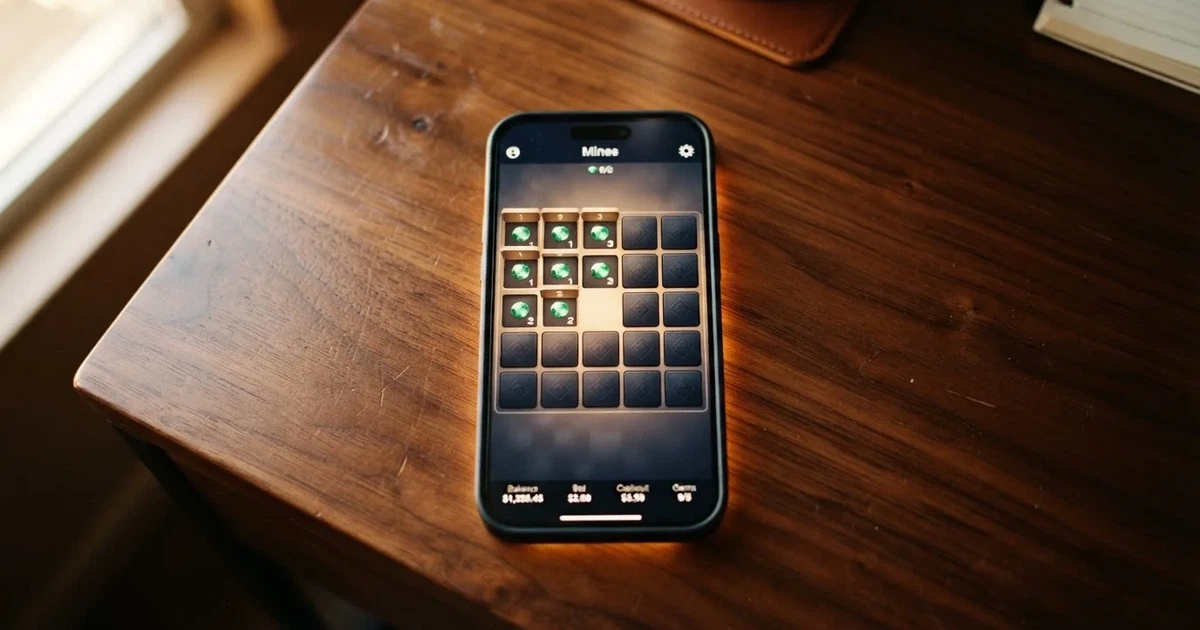
This page is written for someone weighing whether Mines is even an option they can pursue, and, if it is not, what the regulator has actually done about it. It walks through how the game works, why no site on the international market is a legal destination for an Australian resident, what the ACMA’s blocking list and formal warnings look like, what a “no deposit bonus” attached to Mines really costs in clearance terms, and how eleven brands that have drawn formal warnings compare. It closes with the practical reader questions: what is a sensible stop point, whether the app differs from the browser version, and what to do if a balance is sitting on a blocked site.
The licensing situation is current as of 7 November 2026, checked against the ACMA’s public register of formal warnings and the Australian Communications and Media Authority’s published blocking actions.
Table of Contents
- How the Mines game actually pays out
- Why no Mines casino game is legal for an Australian player
- Responsible play and what the protections actually cover
- Payments on offshore Mines sites and why some routes do not exist legally
- What a Mines “no deposit bonus” really costs the punter
- Mines specifically: the studio behind the game and what its licence status means
- Eleven brands the ACMA has formally warned over Mines and similar products
- Reading each brand through what the ACMA’s action actually means
- How an Australian punter who wants to keep playing actually navigates this
- Common questions about the Mines casino game in Australia
How the Mines game actually pays out
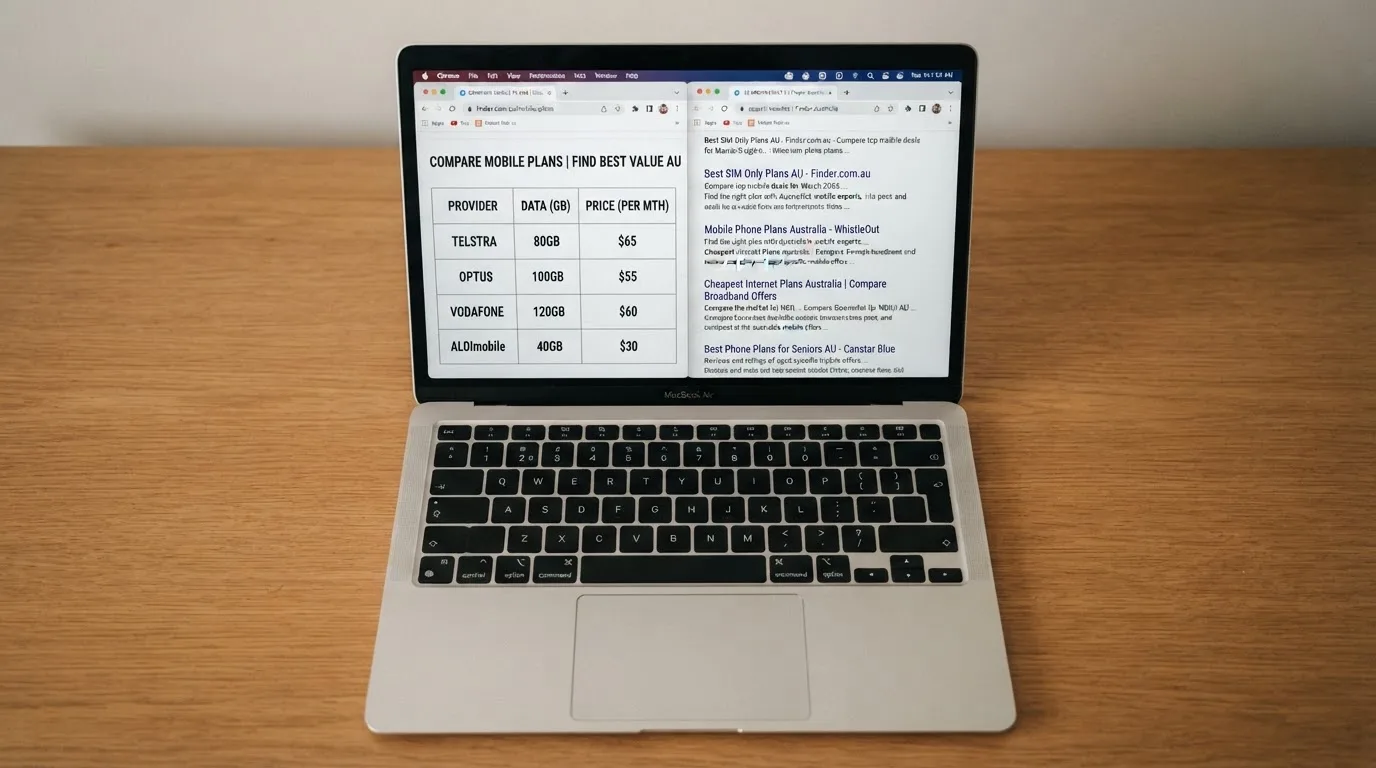
Mines is mechanically simple, which is what makes the multiplier math worth knowing before a stake goes down. The game shows a grid — most commonly a five-by-five layout — and hides a set number of mines chosen by the player before the round starts. Every safe tile a player reveals multiplies the running payout; hitting a mine forfeits the stake and ends the round immediately. The decision the game forces is when to cash out.
The grid, the multiplier curve and the hidden mine count
The Mines multiplier is not a flat function of the number of safe reveals — it is a function of two variables, the number of tiles revealed so far and the number of mines hidden under the grid. Set one mine and almost every reveal is safe, which means the multiplier stays low; set twenty mines on a twenty-five-tile grid and one mistake ends the round almost immediately, but every successful reveal pays much more. The classic Mines setup — five mines on a five-by-five grid — sits between the two extremes, and most marketing screenshots of the game show that configuration. The exact multiplier for any combination of mines and revealed tiles is published in each game’s paytable, and it is the only honest reference for what a single round is worth.
The house edge in Mines is built into that paytable in the same way it sits in any other casino game: the multipliers offered are slightly less than the true odds of a randomly placed mine missing the safe reveals. Spribe, the studio that built the most widely circulated version, makes its paytable publicly available, and a careful read of it shows a house edge in the low single digits for most configurations — favourable compared with most pokies, less favourable than a single-zero roulette wheel. The point of the paytable is not the headline number; it is the curve.
Cash-out versus one more tile: why stopping is the only edge
The arithmetic that matters in Mines is the gap between the current multiplier and the next one. Every additional safe tile revealed is worth more than the previous one in absolute terms — the multiplier steps are not evenly spaced — but every additional reveal also raises the chance the next click ends the round. A punter who decides before play that they will cash out after three reveals on five mines has, in advance, locked in a multiplier that fits the bankroll they brought. A punter who decides after five safe tiles have made them feel lucky is the punter the marketing is built around. The grid has no memory of what came before; the multiplier is the same on the sixth tile whether the previous five felt calm or chaotic.
Why no Mines casino game is legal for an Australian player
Australian law on this point is unambiguous in its text and unusually well documented in its enforcement. The Interactive Gambling Act 2001, tightened by the Interactive Gambling Amendment Act 2017, makes it an offence to provide online casino games — which the Act calls “prohibited interactive gambling services” — to a person physically in Australia. Mines is an online casino game. The list of exceptions is short: wagering on racing and sport placed before the event, lotteries and keno. Online pokies, online roulette, online blackjack and online Mines all fall under the same prohibition.
What the ACMA has actually done about it
Enforcement runs through the ACMA, which investigates complaints, issues formal warnings to operators and can direct Australian internet service providers to block illegal services. According to the ACMA’s own tally as reported in June 2026, 1,751 illegal gambling and affiliate marketing websites have been blocked since the first blocking request went out in November 2019, and more than 230 unlicensed gambling services have left the Australian market since enforcement was strengthened in 2017. A blocking round reported on 26 June 2026 added a further twelve domains to that list — 7Signs, ChromaBet, Donbet, Duospin, Freshbet, Slots Gem, Jacks Club, Lucky Start, Pointsbetz, Spinrise, Vinyl Casino and Wildsino. The pace has not slowed.
H2 Gambling Capital’s 2025 estimate puts Australian losses to illegal gambling sites at around A$3.9 billion a year, and shows the share of gambling going through legal channels falling from 74% in 2021 to 64%. Those numbers describe the size of the market the prohibition has not closed; they do not soften the prohibition itself. The IGA targets the provider, not the individual player, so an Australian punter does not face prosecution for playing — but an offshore casino gives no Australian consumer protection, no complaints body and no recourse if a withdrawal stalls or is refused. And once a site is on the blocking list, a balance left on it can become unreachable from inside Australia without warning.
The exception that does not apply to Mines
The Northern Territory Racing and Wagering Commission regulates a sizeable share of Australia’s online bookmakers — Sportsbet, Bet365 and Ladbrokes among them, licensed in the Territory for tax reasons — and the commission itself runs without full-time staff, meeting once a month in Darwin. That arrangement is the legal backbone of online wagering in Australia, and it is precisely the model that does not extend to casino games. A licence from the NTRWC covers pre-event sports and racing bets; it does not cover a five-by-five grid of hidden mines. Mines is a casino product, and no Australian state or territory issues casino licences for online supply.
Responsible play and what the protections actually cover
The tile-by-tile format of Mines rewards a discipline the marketing rarely talks about: deciding a stop point before the round starts, and sticking to it. The temptation Mines is built around is the one-more-tile reflex after a run of safe reveals — exactly the pattern responsible-play guidance for any stake-and-chance product warns against.
BetStop and the offshore gap
BetStop, the National Self-Exclusion Register, has been live since August 2023 and binds every Australian-licensed online and phone wagering service. A punter who registers with BetStop cannot open a new account with an Australian-licensed bookmaker for the exclusion period they choose, and the registered operator is required to close any existing account, refund the balance and suppress marketing. The protection is real and enforced. What it does not cover is any offshore casino, including any site offering Mines to Australian residents. An offshore operator is not connected to BetStop, does not run an identity check against it and is not bound by it. Self-excluding through BetStop does not stop someone who wants to keep playing from opening an account on an offshore site under a different name; the only thing that does is the punter’s own commitment to it.
The National Gambling Helpline — 1800 858 858, free and staffed around the clock — sits behind both BetStop and the offshore market. Chat support is available through Gambling Help Online. The helpline does not need the punter to have played through an Australian-licensed site; it works for anyone in Australia who feels their play is moving in a direction they did not plan.
Offshore balance and what happens when a site is blocked
A practical concern that does not get raised often enough: when the ACMA adds a domain to a blocking round, the block is a direction to Australian ISPs, not a seizure of the operator’s assets. If a punter has a balance sitting on an offshore site at the moment that domain is added to the block list, the punter may still be able to reach the site through a non-Australian route, or through a mirror the operator stands up while the regulator catches up. The site is still outside Australian consumer law. The block makes the operator harder to reach, not easier to argue with. The rule of thumb for any punter who has funds on a site the ACMA has acted against is to withdraw whatever the operator will release before the next blocking round, not to assume a balance is safe because the domain is still resolving somewhere in the world.
Payments on offshore Mines sites and why some routes do not exist legally
A clean Australian wagering deposit runs through debit card, bank transfer, PayID/Osko or BPAY. Since 11 June 2024, credit cards, credit-related products and digital currency are banned as payment for any licensed online wagering in Australia, with penalties for operators of up to A$247,500 per breach. A punter asked for a credit card deposit or a crypto transfer on an Australian-licensed site is being asked to do something the operator is not allowed to facilitate.
Offshore Mines casinos are not bound by that ban, because they are not licensed in Australia. What an offshore site asks for is whatever the operator’s payment stack happens to support — credit cards, crypto, e-wallets that do not recognise Australian self-exclusion, bank transfers to accounts outside the country. The transaction will usually go through. What it will not do is give the punter any of the protections Australian law attaches to a wagering payment: no dispute path through the operator’s Australian bank, no chargeback under local consumer law, no recourse if the operator simply does not pay out.
The deposit side is rarely where a punter runs into trouble on an offshore site. The withdrawal side is. Offshore operators set their own payout timeframes, their own verification thresholds and their own maximum daily or weekly withdrawal limits — terms the punter reads only when they try to cash out, and which are written under a jurisdiction that has nothing to do with Australia. A blocked site that will not release a balance has, from the punter’s perspective, no Australian door to knock on. That asymmetry is the reason the ACMA’s enforcement work focuses on blocking rather than on consumer protection: there is no consumer protection to enforce.
What a Mines “no deposit bonus” really costs the punter
Marketing around Mines frequently attaches a no-deposit bonus — a small credit the casino adds without a deposit, in exchange for which the punter agrees to wager the bonus (and usually the winnings from it) through a multiple before any of it can be withdrawn. The arithmetic behind that requirement is worth understanding, because the headline word “free” is doing all the work the small print does not.
The clearance math behind the headline
The standard structure is a wagering multiple applied to the bonus, sometimes to the bonus plus any winnings from it. A A$10 no-deposit bonus with a 40× wagering requirement means the punter has to place A$400 in qualifying bets before the bonus balance converts to withdrawable cash. The punter’s edge over those A$400 in qualifying bets is, by the game’s house edge, somewhere around 96–99% of stake returned on average for most Mines configurations — which means the expected loss across A$400 in qualifying play is in the A$4–A$12 range, applied to a bonus that started at A$10. The bonus has not paid the punter; it has cost them a few dollars to learn how slowly turnover converts.
A more punishing structure — and they exist — applies the same 40× to the bonus plus winnings, which means every dollar a punter wins during clearance is recycled back into the requirement. A punter who wins A$50 during clearance on a A$10 bonus is now working off a A$60 base at 40×, which is A$2,400 in qualifying bets rather than A$400. The headline bonus did not change; the cost did.
The clause that finishes the offer
The other clause the marketing rarely prints in advance is the maximum cashout cap on no-deposit play. Many offshore operators cap the amount a punter can withdraw from a no-deposit bonus at a fixed multiple of the bonus — five times the bonus, ten times the bonus, sometimes A$100 regardless. A punter who runs a A$10 bonus up to A$300 over the course of clearance, then converts and tries to withdraw, finds the operator paying out the cap and zeroing the rest. The bonus did exactly what it was written to do: it generated turnover, and the cap decided what the punter kept from it.
The honest read of a Mines no-deposit bonus in Australia is that the bonus is not an offer of money — it is an offer of access, conditional on turnover, conditional on a cashout cap, and conditional on the punter being willing to play on a site the ACMA has acted against or could act against at any moment. None of that is hidden in the small print; none of it is in the headline either.
Mines specifically: the studio behind the game and what its licence status means
The most widely circulated version of Mines in offshore casinos is built by Spribe, a studio founded in 2018 that is best known for the crash-style title Aviator, launched in January 2019. Spribe supplies a software engine and a paytable to the operators who carry the game; the operator runs the cashier, the bonuses and the player relationship. The studio’s footprint on any individual site is the game itself.
Spribe’s UK licence status
Spribe OÜ holds a UK Gambling Commission Gambling Software Remote licence, number 057302-R-333085-003, listed as active since 8 December 2020. The Commission’s public register also shows a separate Game Host (Casino) Remote licence application as “in progress” at the time of the current listing. On 30 October 2025 the Commission suspended Spribe OÜ’s existing UK remote gambling software licence on suitability grounds, after finding the company had been hosting casino games without the separate remote casino game host licence its business model required.
The UK licence question matters for an Australian reader for a narrow reason: it is one of the few regulated jurisdictions whose public registers a reader can actually check, and the suspension record tells a punter that the Spribe game engine has, at a regulator’s finding, run outside the licence envelope its operators expected. The Australian position does not turn on the UK outcome — the IGA’s prohibition on online casino games stands whether the studio is licensed, suspended or unlicensed anywhere else. What the UK record adds is evidence that the marketing claim “licensed and regulated” can sit on a site whose own regulator has found the licence to be the wrong kind.
Mines as a software category, not a brand
A Mines game can come from studios other than Spribe, and the same five-by-five grid with hidden mines shows up under different brand marks on different offshore sites. The game logic is similar enough across implementations that the marketing screenshots look interchangeable; the differences live in the published paytable, in the random-number generator behind it and in the operator’s terms. A punter comparing two “Mines” games on two different sites is comparing two different paytables wrapped in two different terms sheets, on two different licence claims, against two different sets of ACMA enforcement history. The label on the box is not the product.
Eleven brands the ACMA has formally warned over Mines and similar products
The ACMA’s list of formal warnings is not a ranking and not a recommendation. Each brand here is named because the regulator itself has issued a formal warning over it for offering prohibited interactive gambling services to Australians. The list reflects what the ACMA has acted against, in the order it acted, and not a hierarchy of quality. For any operator on this list, the underlying legal position is the same: online casino games cannot be licensed anywhere in Australia, whatever licence the site displays in its footer.
How to read the table
The table compares each brand on four matters: the ACMA action and its date, the operator entity the ACMA named in the formal warning, and the supporting record the public web carries for the brand. A dash means no record is available. Where the ACMA has acted against the same operator under more than one brand, both warnings are listed.
| Brand | ACMA action and date | Operator named by the ACMA | Subject support |
|---|---|---|---|
| RocketPlay | Formal warning, March 2026; earlier Dama N.V., May 2022 | Pulsup Ltd (RocketPlay); Dama N.V. (2022) | — |
| Level Up Casino | Formal warning, May 2022 | Dama N.V. | Listed on BGaming as a partner |
| Woo Casino | Formal warning, March 2025 | Dama N.V. | — |
| Spirit Casino | Formal warning, May 2025 | Dama N.V. | — |
| National Casino | Formal warning, July 2025 | Consolutetish S.R.L. | Listed in the en.wikipedia.org Mines game entry |
| Bizzo Casino | Formal warning, July 2025; earlier 2022 | Consolutetish S.R.L. (2025); TechSolutions (CY) Group Limited and TechSolutions Group N.V. (2022) | — |
| Ignition Casino | Formal warning, July 2025 | Bamboo Media | — |
| Instant Casino | Formal warning, February 2025 | EOD Code SRL | — |
| Jackbit | Formal warning, April 2026 | Ryker B.V. (Jackbit and CasinOK) | — |
| Casino Intense | Formal warning, April 2025 | Sterplay Holding Ltd | Listed in Abc.net.au and acma.gov.au and Crownmelbourne.com.au coverage |
| Sky Crown | Formal warning, September 2022 | Hollycorn N.V. (Sky Crown and Blue Leo) | — |
The brands listed cover what the ACMA has acted against, not what the Australian market has available. A brand absent from this table is not necessarily lawful; it may simply not yet have drawn a formal warning. The pattern across the table is the operator-level recycling underneath it: Dama N.V. appears four times across the list (RocketPlay’s 2022 warning, Level Up, Woo Casino and Spirit Casino), Hollycorn N.V. once, Consolutetish S.R.L. twice (National Casino and Bizzo Casino’s 2025 warning, with Bizzo Casino also drawing a 2022 warning under TechSolutions). The same parent companies are recycling the same product under different brand names, which is the pattern the ACMA’s enforcement record is documenting in real time.
The blocking-rate arithmetic
The ACMA’s running total of blocked sites — 1,751 since the first blocking request in November 2019 — covers a span of roughly six and a half years to June 2026. That works out to a long-run average somewhere between 260 and 280 sites blocked per year, with the annual figure sitting closer to 300 in the most recent reporting window once the smaller blocking rounds are counted. The pace has been steady rather than slowing; the ACMA’s June 2026 round alone added twelve domains in a single reporting cycle.
The number is informative, not comforting. A reader who treats the blocking-rate as a measure of how thoroughly the regulator is closing the offshore market would over-read it — most of the 1,751 are affiliate marketing pages and mirror domains, not the underlying casino platforms. A reader who treats the rate as a measure of how determined the regulator is to keep acting would read it right. The blocking-rate is a rate of intent, and the intent has not flagged.
Reading each brand through what the ACMA’s action actually means
What follows is the same legal position for every brand on the list: no Australian resident can lawfully play Mines for real money on any of them. The differences live in what the ACMA has documented about each operator — the date of the action, the operator entity named, whether the same operator has been warned before under another brand. The brands below are described by the regulator’s record, not by their own marketing.
RocketPlay
The ACMA issued a formal warning to Pulsup Ltd over RocketPlay in March 2026. The same brand name had already drawn a Dama N.V. warning in May 2022 — the operator behind the brand has changed since, but the offering to Australian residents has not. The 2026 action is the most recent piece of evidence that the brand is still being marketed into Australia; the 2022 action is the piece of evidence that the warning did not, on its own, close the site down.
Level Up Casino
Level Up was named in the May 2022 Dama N.V. warning alongside Bambet, Dazard, Rocketplay, Wild Tornado and Cobra Casinos. The brand is listed on BGaming as a partner site for BGaming’s catalogue, which is the closest the public record comes to a verifiable supply relationship beyond the ACMA’s own action. There is no second ACMA warning to record here; the operator has not, on the regulator’s published record, been re-warned under this brand since 2022.
Woo Casino
The ACMA warned Dama N.V. over Woo Casino in March 2025, a second Dama N.V. brand to draw a formal warning in 2025. Woo is the case that shows how a single operator entity can run an enforcement action against itself under different brand names — Spirit Casino’s May 2025 warning was the next one in the same sequence.
Spirit Casino
Spirit Casino drew its Dama N.V. formal warning in May 2025, two months after Woo Casino. The pattern matters more than any individual brand: the operator entity the ACMA is warning is the same one, and the marketing surface the warning targets is a fresh domain.
National Casino
National Casino was named in the July 2025 warning to Consolutetish S.R.L., the same operator entity that drew the second Bizzo Casino warning in the same month. National Casino is the only one of the eleven brands with a presence in the public Mines game entry on Wikipedia, which is a thin form of evidence that the brand has at least been associated with Mines on a record a reader can check.
Bizzo Casino
Bizzo Casino drew its second formal warning in July 2025 under Consolutetish S.R.L., having already drawn a 2022 warning under TechSolutions (CY) Group Limited and TechSolutions Group N.V. Two warnings separated by three years, under two different operator entities, on the same brand, is the clearest pattern on the list of an operator that has reorganised itself around a regulator’s actions without leaving the Australian market.
Ignition Casino
The ACMA warned Bamboo Media over Ignition Casino in July 2025. Ignition is one of the longer-running offshore casino brands in the market, and the July 2025 warning is the first formal ACMA action the public record names against this operator entity over this brand.
Instant Casino
The ACMA warned EOD Code SRL over Instant Casino in February 2025, the first formal action on the list to come from that operator entity.
Jackbit
The ACMA warned Ryker B.V. over Jackbit and CasinOK in April 2026, two brands under one operator at the same time. The April 2026 action is the most recent operator-level warning the ACMA has published at the time of writing.
Casino Intense
The ACMA warned Sterplay Holding Ltd over Casino Intense in April 2025. Casino Intense is one of three brands on this list that appears in the coverage carried by Abc.net.au and acma.gov.au and Crownmelbourne.com.au, which is a thin indicator that the brand has drawn broader media coverage than the ACMA’s enforcement bulletin alone.
Sky Crown
The ACMA warned Hollycorn N.V. over Sky Crown and Blue Leo in September 2022. Sky Crown is the earliest formal warning on the list and the only one issued to Hollycorn N.V., whose other Australian-facing brands have not, on the regulator’s published record, drawn separate formal actions.
How an Australian punter who wants to keep playing actually navigates this
The page above has argued, line by line, that the legal and the practical both push the same way: no online Mines offer to Australian residents is lawful under the Interactive Gambling Act 2001, the ACMA’s enforcement record is long and current, and the offshore sites that do offer the game carry no Australian consumer protection. A punter who has been playing on one of the eleven brands above and is reading this is the punter for whom the next paragraph is written.
The practical order matters. Check the ACMA’s list of formal warnings and the most recent blocking round for any domain currently used by the operator. If a balance is sitting on a site that has just been added to a blocking round, attempt the withdrawal before the next reporting cycle, not after — once a domain is blocked at the ISP level the operator’s Australian-facing customer support tends to thin out at exactly the moment a punter needs it most. BetStop registration is the only self-exclusion mechanism that binds Australian-licensed operators; it does not bind offshore sites, and it is not a substitute for closing an offshore account on the operator’s own terms. The National Gambling Helpline at 1800 858 858 is free, around the clock, and does not require the caller to have played through an Australian-licensed site. A punter who feels their play has moved in a direction they did not plan can ring it from anywhere in Australia, including from a balance they cannot withdraw.
Common questions about the Mines casino game in Australia
The questions below are the ones an Australian punter weighing Mines tends to arrive at. Each is answered in a few sentences, with the regulatory position stated plainly and the arithmetic on the bonus side worked through in the words it warrants.
Is it legal to play the Mines casino game for real money in Australia?
No. The Interactive Gambling Act 2001 prohibits the supply of online casino games to a person physically in Australia, and Mines is an online casino game. The prohibition applies whether the site displays a Curaçao, Maltese or any other offshore licence; no state or territory issues an Australian licence for online casino supply, and the offshore licences on offer do not extend that protection across borders.
How does the payout on Mines increase as more safe tiles are revealed?
Each additional safe reveal multiplies the running payout by a factor published in the game’s paytable, and the size of the step depends on the number of mines hidden under the grid. With more mines hidden, each successful reveal pays more; with fewer mines hidden, more reveals are safe but the multipliers are smaller. The paytable for the exact configuration in play is the only honest reference for the multiplier curve.
What determines how many hidden mines are placed on a Mines grid?
The player chooses the mine count before the round starts, within the bounds the game’s interface offers. The choice is the only strategic input the player controls; the position of the mines under the grid is determined by the game’s random-number generator after the stake is set, and the player has no way to read that position before clicking.
What conditions usually apply before a Mines no-deposit bonus can be withdrawn?
The standard conditions are a wagering multiple applied to the bonus (often the bonus plus any winnings from it), a maximum cashout cap on no-deposit winnings, and a list of excluded games or bet types that do not count towards the requirement. The bonus pays out only after the playthrough is met within the operator’s stated window, and the cap is applied to whatever the bonus balance converts to, not to whatever the player runs it up to during clearance.
Is the Mines app a separate product from the browser-based version of the game?
The app and the browser version run on the same game engine and paytable in most cases; the difference is the wrapper around them. The browser version runs in a web page on any device, the app is a downloadable client or a progressive web app installed on a phone. The wagering math and the random-number generator are the same either way, and the operator’s terms apply to both.
What is a sensible way to decide a stop point before starting a round of Mines?
The most reliable method is to set the cash-out point before the round starts, in terms of a number of safe reveals rather than a feeling, and to leave the table as soon as that point is reached. The single multiplier step the punter chose in advance is the only decision the punter has actually made; every choice after the third or fourth safe reveal is being made by the marketing, not by the math.