
House of Pokies in Australia in 2026: who runs it, whether the law lets it serve you, and which operators the ACMA has had the same fight with
Data current as of 7 November 2026, cross-checked against the ACMA register of formal warnings and the Interactive Gambling Act 2001.
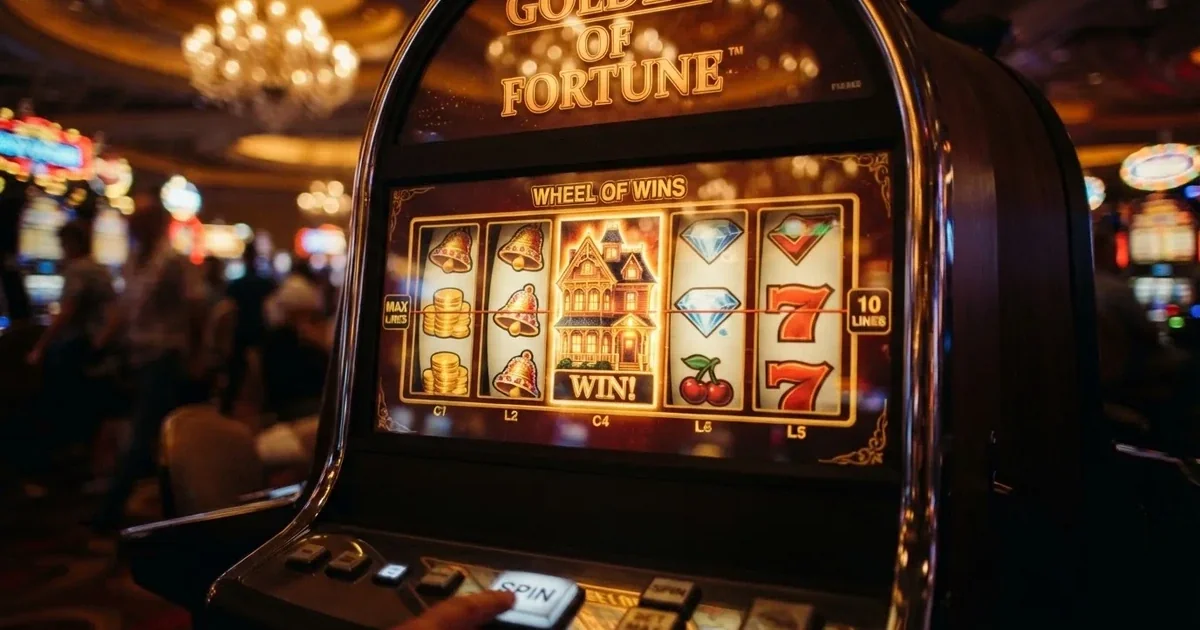
A House of Pokies login page reached from a Sydney address is not the product it is marketed as. The site wears the look of an Australian pokies room, and its welcome page runs in English with dollars, but the licence it advertises is not one the law of this country recognises. This page sets out, plainly, what House of Pokies actually is, where it sits under Australian law, and what the same offshore model looks like across eleven other brands the Australian Communications and Media Authority has had to write to directly. The aim is choice, not endorsement: you finish the page knowing which doors are open and which are not, and why.
Table of Contents
- The House of Pokies product and what sits underneath its branding
- The legality frame for an Australian resident
- What “safe” actually means when the operator is offshore
- How money moves into and out of House of Pokies
- The bonus and free-spins picture
- Mobile and the app
- Eleven other operators the ACMA has warned — the same fight
- What this leaves on the table
- Frequently asked questions
The House of Pokies product and what sits underneath its branding
What “House of Pokies” names
“House of Pokies” is a single offshore online casino operating under that brand name from outside Australia. It runs an instant-play browser site alongside mirror domains, presents a slot lobby in Australian dollars and markets to Australian players with pokies terminology borrowed from the local pub and club trade. The same name appears on third-party affiliate pages and review sites that aggregate the brand’s bonus offers, free spins codes and no-deposit deals, which is how most Australian search traffic finds it in the first place.
The site itself does not market itself as Australian. It carries no Australian licence, no ACMA endorsement and no presence on BetStop, the National Self-Exclusion Register. Its terms of service specify a Curaçao or other offshore corporate licence holder and route any dispute through an overseas jurisdiction. Anyone in Australia who opens an account is therefore dealing with an unlicensed operator whose compliance regime is not Australian.
The mirror-domain question
A reader who clicks two different links to House of Pokies and arrives at two different URLs is not necessarily on two different sites. The brand operates through mirror domains — duplicate front-ends at separate addresses that share the same back-end wallet, the same games library and the same terms. The mirror exists so that when one address is blocked, the other still resolves. The product, the bonus structure and the withdrawal process are identical at every mirror.
This is the practical reason the ACMA’s blocking orders have moved brand by brand rather than address by address: cutting one mirror does not cut the others, and a new one reappears within weeks. It is also the reason a player who has been paid at one address in the past has no guarantee that the same operator behind a fresh URL is still honouring the same terms.
The legality frame for an Australian resident
The blanket prohibition
Online casino games and online pokies cannot be licensed in Australia. The Interactive Gambling Act 2001, as tightened by the Interactive Gambling Amendment Act 2017, makes it an offence to provide these services to a person physically present in Australia. The prohibition is not a soft rule the operator can comply with; the IGA carves the activity out of what any state or territory may licence. What may be licensed, and is, is wagering on racing and sport placed before the event, lotteries and keno.
In practice that means the names Australians see online — Sportsbet, Bet365, Ladbrokes — are licensed by the Northern Territory Racing and Wagering Commission for tax reasons. The NTRWC oversees fifty-two online bookmakers, holds no full-time staff of its own and meets once a month in Darwin. Online pokies, online roulette, online blackjack and live dealer casino games have no analogous licensing pathway.
What this means for a House of Pokies account
The site operator, by serving an Australian account, is committing the offence the IGA names. The Australian resident, by playing, is not prosecuted — the IGA targets the provider — but the practical consequences fall on the player. An offshore operator is not connected to BetStop, has no obligation to honour a self-exclusion request, and sits outside any Australian dispute-resolution body. There is no Australian ePayments Code claim to bring, no AFCA complaint, and no AUSTRAC escalation route when a withdrawal is refused or delayed.
A House of Pokies account can also be cut off mid-balance. The ACMA directs Australian ISPs to block illegal sites, and more than 1,751 illegal gambling and affiliate pages have been added to that block list since the first blocking request in November 2019. When an address goes dark, whatever is sitting in the player wallet at that moment sits there too — outside any Australian consumer-protection framework.
The 2026 reform picture
The Interactive Gambling Amendment (Gambling Reform) Bill 2026 passed Parliament on 19 August 2026. Its advertising and inducement measures commence on 1 January 2027, which means the law is on the books but not yet biting. The reform tightens the inducement rules around bonuses and sign-up offers — the kind of marketing copy that runs through House of Pokies affiliate sites — but it does not change the underlying prohibition on the product itself. The relevant point for an Australian player reading this in 2026 is that the bill is law with a future start date, not a rule in force today.
What “safe” actually means when the operator is offshore
The question to ask first
“Is House of Pokies safe?” is the wrong opening question because it lets the framing stay on technical security. The site uses standard SSL encryption and runs recognised payment processors; on those narrow points it is no different from any other e-commerce site. The harder question is whether the safeguards that matter in gambling — a real licence, a real dispute body, a real exit route — exist at all, and the answer for an unlicensed offshore operator is that they do not.
A licensed Australian wagering operator must hold an Australian bookmaker licence, must connect to BetStop, must observe the credit-card ban, must publish a responsible-gambling code and must lodge disputes with an approved ADR provider. House of Pokies does none of these. Its safety claims, to the extent they appear at all in its terms, are consumer-protection claims about the operator’s own internal process.
Where the practical gaps sit
When a withdrawal is delayed, an Australian player at an offshore site has no industry body to escalate to. When a bonus is voided for “irregular play”, the operator’s own review is the only review. When the account is closed for a Terms & Conditions breach the player did not know about, the offshore licensing authority is the only appeal, and that authority sits in another jurisdiction, in another language, on another timeline. The phrase “responsible gambling” on an offshore site’s footer is a marketing statement, not a binding commitment to a registered self-exclusion database.
This is what makes the responsible-gambling question genuinely different for an Australian reader. BetStop binds every Australian-licensed online and phone wagering service — about two hundred operators at last count. A House of Pokies account is outside that net. The National Gambling Helpline (1800 858 858, free, 24/7, with chat at Gambling Help Online) still takes the call and still helps, but it cannot reach into the offshore operator to enforce an exclusion.
The licensed alternative
The genuinely safer choice for an Australian who wants to wager online is to use a locally licensed operator connected to BetStop, governed by the IGA’s consumer protections, and accountable to an Australian dispute body. The licensed Australian market does not include online pokies or online casino games, only wagering, lotteries and keno — a narrower product range, deliberately, because parliament decided the wider one was too harmful to license.
How money moves into and out of House of Pokies
The deposit side
The deposit routes an Australian might use at House of Pokies are not the same routes the local licensed market uses. Credit cards and credit-related products have been banned as a payment method for licensed Australian online wagering since 11 June 2024, with penalties for operators of up to A$247,500. Digital currency sits in the same banned category. Legal deposit routes for licensed wagering are debit card, bank transfer, PayID/Osko and BPAY. A House of Pokies deposit page that asks for a credit card or a crypto wallet is operating outside the Australian ruleset by design.
Australian banks have built their own second line of defence. Westpac’s gambling block refuses authorisation on transactions registered under the Betting/Casino Gambling merchant category code on eligible personal credit and debit cards. ANZ’s gambling transaction block, activated through the ANZ app, also blocks gambling transactions made through a digital wallet such as Apple Pay on an eligible card, not just the physical card. Commonwealth Bank lets customers apply a gambling lock to eligible cards through the CommBank app, with the same caveat the others carry: not every gambling transaction will be caught, and some non-gambling transactions might be caught in error.
Once the ANZ block is on, taking it off again requires a 48-hour waiting period — a deliberate friction point to discourage impulse reversal.
The withdrawal side, and the “review”
A House of Pokies withdrawal review is the operator’s own internal compliance check before any money is released. It sits between the player’s withdrawal request and the actual transfer. During the review the operator checks identity documents, checks that any bonus terms have been met, checks for “irregular play” flags, and may queue the request behind other payouts in a manual batch. The duration of this review is set by the operator and not by any Australian regulator. A “review time” of 48 to 72 hours is typical of what affiliates publish for offshore brands; what comes after — the bank transfer leg — depends on which rail the operator chooses.
The Australian-side rails the operator might use to send the money back include Osko, which delivers a bank transfer between participating Australian banks in under a minute, 24/7, addressed to either a BSB and account number or to a PayID. PayID payments display the name of the account holder before the transfer is sent — a feature AP+ itself uses to warn that being asked to send money to a PayID on an illegal gambling site almost certainly means a scam site. More than 25 million PayID identifiers had been registered on Australia’s New Payments Platform by April 2025, and over 100 Australian financial institutions now support PayID-based instant transfers.
BPAY, owned equally through Cardlink Services Limited by ANZ, Commonwealth Bank, National Australia Bank and Westpac, runs a different rail: the payer enters a Biller Code and a Customer Reference Number in online banking. BPAY has operated in Australia since 1997 and is available through more than 140 banks and financial institutions. None of these rails is the issue. The issue is whether the offshore operator ever releases the funds from the in-site wallet to the rail in the first place.
The AUSTRAC threshold
AUSTRAC’s threshold-transaction-report rule applies only to physical cash transfers of A$10,000 or more. Ordinary electronic bank transfers, including those to or from an offshore gambling site, are not subject to that per-transaction reporting requirement regardless of the amount sent. The reporting framework is the wrong place to look for a transaction cap.
Apple Pay, Google Pay and the surcharge question
By the end of 2025, Apple Pay, Google Pay and Samsung Pay transactions collectively accounted for around 45% of all card payments in Australia by number. The Reserve Bank’s July 2025 review of merchant card payment costs proposes removing surcharges only on eftpos, Mastercard and Visa transactions — explicitly leaving American Express outside the scope of the proposed surcharge ban. Apple itself charges no fee to consumers for using Apple Pay; any surcharge comes from the merchant’s card-processing fees, not from Apple. Transaction limits and PIN requirements for Apple Pay are set by the card issuer or merchant, not by Apple.
These rails matter here because the licensed Australian wagering ban on credit-card and credit-related payments also constrains gambling use of linked digital wallets like Apple Pay. A licensed operator cannot lawfully accept an Apple Pay deposit that draws on credit; an unlicensed offshore operator has no such constraint, which is part of why the bank-side gambling blocks matter more than the operator-side rules.
The bonus and free-spins picture
What “no deposit” actually unlocks
A House of Pokies no-deposit bonus code, like the sign-up free spins codes that run through the same affiliate channels, does not move real money without conditions. The typical structure on an offshore site is: a small number of free spins or a token cash credit credited on signup, with a high wagering multiple (commonly 40x to 60x the bonus amount), a maximum cashout cap well below what a player could win during unrestricted play, a list of excluded games, and a clock on how long the bonus remains usable. A “no deposit” promise is, in plain terms, a promise to let the player risk the casino’s money under the casino’s rules.
What the bonus actually unlocks, then, is not free cash. It is a timed trial of the site’s own terms, under which a withdrawal request that breaches any single condition — wagering incomplete, wrong game played, time expired, max cashout exceeded — voids the bonus and any winnings tied to it. The structure is identical at every offshore brand on the ACMA’s warning list, because the structure is the industry’s, not the operator’s.
Free spins and the withdrawal barrier
The same mechanics apply to free spins. The wins from the spins are credited as bonus funds; the bonus funds carry a wagering requirement; the wagering requirement must be cleared inside the bonus window; only then does the player have a withdrawal-eligible balance, and that balance is usually capped at a multiple of the original bonus. The “free” in free spins refers to the cost of the spin, not to the cost of converting the result into withdrawable cash.
A player who reads the small print up front knows the shape of the bargain. A player who does not discovers it on the day of the first withdrawal request, when the operator’s review finds a breach and the bonus is voided. The page does not need to moralise about this; it simply states the sequence, because the sequence is the offer.
Why the bonus terms matter even if the site is illegal
A reader might assume that because the product is prohibited, the bonus terms do not apply. They do. The operator’s terms are the only terms the player has, and they are enforceable in the operator’s own jurisdiction. The Australian player’s only leverage is to refuse the bonus; once accepted, the player is bound by the T&Cs the same way a player at a licensed site would be. The illegality of the offer does not unwind the contract the player signed to claim it.
Mobile and the app
What the House of Pokies app actually is
A “House of Pokies mobile app download” is, in practical terms, the same offshore site packaged for a phone. There is no separate Australian-licensed product underneath. The app may be a Progressive Web App that loads the same browser front-end, a wrapper around the same site, or a native shell that hides the browser chrome. What it does not do is connect to any Australian regulator, self-exclusion register or licensed dispute body. The mobile product is a delivery mechanism, not a different licence.
The legitimate Australian wagering apps, by contrast, are downloadable from the Apple App Store and Google Play under Australian app-store rules, hold an Australian wagering licence, and connect to BetStop when a self-exclusion request is raised. The same phone can run both — the licensed wagering app from the App Store and the offshore casino app from the operator’s own site or a third-party store — and the regulatory difference between them is total.
The data side of the app
An app installed outside the official stores carries the data risks those stores are designed to mitigate. Apple and Google screen apps for compliance with their platform policies, including restrictions on real-money gambling apps in jurisdictions where the product is prohibited. An app loaded from an operator’s own site bypasses that screening. The permissions the app requests — contacts, location, storage, overlay drawing — are set by the operator, not by a platform review. This is true of any app installed outside the official stores, not of House of Pokies in particular; it bears saying because the marketing of these apps rarely does.
Eleven other operators the ACMA has warned — the same fight
Why this list exists
House of Pokies sits in a category, not alone. The ACMA issues formal warnings under the Interactive Gambling Act 2001 to offshore operators offering prohibited services to Australians, and the warning list over the past four years covers a roster of brands that share the same business model. The list below is not a ranking and not a recommendation. Each operator is named because the ACMA itself wrote to the company behind it, and because a reader weighing House of Pokies is also weighing these. The question the same evidence answers is the same question for each: would the ACMA’s letter have changed if the licence on the footer had been real?
| Brand | ACMA action and date | Operator named by the ACMA | Subject support |
|---|---|---|---|
| RocketPlay | Formal warning, March 2026; earlier Dama N.V. warning, May 2022 | Pulsup Ltd (RocketPlay) | Listings only — Gambling Insider coverage |
| Level Up Casino | Formal warning, May 2022 | Dama N.V. | Listings only — Westpac merchant-category data |
| Woo Casino | Formal warning, March 2025 | Dama N.V. | — |
| Spirit Casino | Formal warning, May 2025 | Dama N.V. | — |
| National Casino | Formal warning, July 2025 | Consolutetish S.R.L. | Listings only — ACMA, AUSTRAC, BetStop references |
| Bizzo Casino | Formal warning, July 2025; earlier TechSolutions warning, 2022 | Consolutetish S.R.L. | Listings only — Gamblinginsider.com coverage |
| Ignition Casino | Formal warning, July 2025 | Bamboo Media | — |
| Instant Casino | Formal warning, February 2025 | EOD Code SRL | Listings only — ecoPayz and PayID pages |
| Jackbit | Formal warning, April 2026 | Ryker B.V. | — |
| Casino Intense | Formal warning, April 2025 | Sterplay Holding Ltd | Listings only — AUSTRAC, BetStop, Gamblinginsider.com |
| Sky Crown | Formal warning, September 2022 | Hollycorn N.V. | — |
What the table shows, taken row by row, is a pattern rather than a hierarchy. Dama N.V. alone has been the named operator on three ACMA formal warnings spanning 2022 to 2025. Consolutetish S.R.L. has been the named operator on two within a single 2025 round, one of which was Bizzo Casino’s second warning since 2022. The companies rotate; the business model does not.
The 1,751-site block rate, set against the 2017 enforcement baseline
The ACMA’s enforcement output gives a running picture of how fast the offshore market responds to being cut off. By the end of the period reported in June 2026, a cumulative total of 1,751 illegal gambling and affiliate marketing sites had been placed on Australian ISP block lists since the first blocking request in November 2019. In the same report, more than 230 unlicensed gambling services were noted to have left the Australian market since enforcement was strengthened in 2017.
The arithmetic the running totals make possible gives the bigger picture. Take 1,751 sites blocked since November 2019, across roughly six and a half years to June 2026. The middle of that window lands at around 270 blocks a year, or close to 22 a month, though the pace has shifted: the early years were slower, the post-2022 years faster as the ACMA’s enforcement machinery matured. Read across the 230 services that withdrew since 2017 — also a roughly nine-year window — the withdrawal rate sits at around 25 services a year, or one every fortnight or so. Order-of-magnitude, one in every seven to eight sites the ACMA moved against withdrew from the Australian market rather than keep operating under the warning. The remaining six to seven absorbed the warning, rebranded, or re-emerged under a new mirror.
That ratio is the structural answer to “does blocking work?”. Yes, in the sense that close to a quarter of warned services leave. No, in the sense that three times that number stay, and the blocks pile up faster than the withdrawals. The headline number — 1,751 — is the visible half. The quieter half is the persistence of the operators behind it.
What the brands in the table have in common
Every brand in the table offers the same prohibited product to Australians under an offshore licence. Every one of them shows up in affiliate marketing that targets Australian phrases, including “no deposit” and “free spins” variants of the brand name. Every one of them is built around a bonus-and-wagering structure of the kind described in the previous section. And every one of them sits outside BetStop, outside the Australian Financial Complaints Authority and outside any practical Australian enforcement route.
The differences between them are differences of operator, theme, game library and bonus headline — not differences of legal status. From the perspective of an Australian player deciding whether to use any of them, the ACMA warning is the same warning in every row: the operator is offering a service it is not licensed to offer in Australia.
What this leaves on the table
A reader who wants to play pokies
There is no Australian-licensed online pokies product to move to. The IGA does not license the activity, and the prohibition is the deliberate policy choice parliament made in 2017 when it tightened the law. A reader who wants to play online pokies from Australia is, today, choosing between the unlicensed offshore market and not playing online at all.
The honest framing of that choice is what this page has tried to put on the table. House of Pokies is one of eleven-plus offshore brands the ACMA has had to warn about offering that product. Its bonuses come with the offshore-market’s standard wagering and cashout terms. Its withdrawals sit behind the operator’s internal review. Its app is a wrapper around the same unlicensed product. None of those facts is a personal judgement of the reader who chooses to play; they are the description of what is being chosen.
A reader who wants to gamble online within Australian consumer protection
The product set is wagering on racing and sport, lotteries, and keno. Sportsbet, Bet365 and Ladbrokes, along with the rest of the fifty-two operators licensed by the Northern Territory Racing and Wagering Commission, sit under Australian consumer law, the ePayments Code, BetStop, the credit-card ban, and an Australian ADR pathway. The narrower product range is the price of those protections, and the protections are the answer to “is it safe?”.
A reader who needs help
The National Gambling Helpline is 1800 858 858, free, 24/7, with chat at Gambling Help Online. BetStop, the National Self-Exclusion Register, has been live since August 2023 and binds every Australian-licensed online and phone wagering service. For a reader already playing offshore, the helpline takes the call regardless of which site the account sits on.
Frequently asked questions
Is House of Pokies legal for someone in Australia to use for real-money play?
No. The Interactive Gambling Act 2001 prohibits the provision of online casino games and online pokies to a person in Australia, and House of Pokies is not licensed by any Australian state or territory. The Australian resident is not personally prosecuted under the IGA, but the operator is, and the player has no Australian consumer-protection framework, dispute body or self-exclusion register to fall back on if a withdrawal is refused or the site is blocked mid-balance.
How long does a typical House of Pokies withdrawal review take?
The review window is set by the operator and not by any Australian regulator. Affiliate pages for offshore brands typically quote a review time of around 48 to 72 hours, after which the funds are released to the player’s chosen rail — typically a bank transfer, Osko instant transfer or, less commonly, a crypto wallet. The review exists to check identity, bonus compliance and “irregular play” flags, and a single breach voids the bonus and any winnings.
What does a House of Pokies no-deposit bonus code actually unlock?
A small credit or free-spins bundle credited on signup, governed by the operator’s bonus terms: a wagering multiple in the 40x–60x range of the bonus amount, a maximum cashout cap, a list of excluded games, and a time window. The bonus unlocks a timed trial of the site’s own terms; it does not unlock withdrawable cash. A breach of any single condition voids the bonus and the winnings tied to it.
Is the House of Pokies app a different product from its browser-based site?
No. The mobile app — whether a Progressive Web App, a wrapper around the browser front-end, or a native shell — delivers the same offshore product, the same wallet and the same terms as the browser site. It does not connect to BetStop, the ACMA or any Australian dispute body. Apps loaded outside the official app stores also bypass the platform-screening process the Australian-licensed wagering apps go through.
What conditions usually apply before House of Pokies free spins can be withdrawn?
Wins from free spins are credited as bonus funds; the bonus funds carry a wagering requirement, usually a multiple of the winnings or of the bonus credited; the wagering must be cleared within the bonus window; and only then does the player hold a withdrawal-eligible balance, which is typically capped. The “free” in free spins refers to the cost of the spin, not to the cost of converting the result into withdrawable cash.
Why might House of Pokies operate under more than one web domain?
Because the brand uses mirror domains — duplicate front-ends at separate URLs sharing the same wallet, games library and terms — so that when the ACMA directs ISPs to block one address, the others still resolve. The product, the bonus structure and the withdrawal process are identical at every mirror, and a new one tends to appear within weeks of a block taking effect.