
Golden Pokies in Australia: The Offshore Offer, the Regulator’s Verdict, and the Cost Behind the Bonus
A search for Golden Pokies in Australia almost always lands on a brand that the Australian Communications and Media Authority has already ordered internet providers to block. The site is part of a wider offshore casino landscape in which every operator promises generous welcome packages and fast withdrawals, and in which the regulator’s response has been to add more sites to a list that has run into the thousands since 2017. This page is not a recommendation. It traces what Golden Pokies is, what its bonuses actually require, why the ACMA has acted against the brands that share its template, and what an Australian player stands to lose when the platform they have chosen is one the law does not let operate here. Current data: 7 November 2026; verified against the ACMA register and igamingbusiness coverage.

Table of Contents
- What Golden Pokies Actually Is
- The Legal Frame: Why No Australian Licence Exists
- H2 Gambling Capital’s 2026 Estimate of the Sector
- How ACMA Enforcement Actually Works
- The Blocking Rate, as a Band
- The Payment Picture for an Australian Player
- What a “Golden Pokies” No-Deposit Code Actually Unlocks
- Sign-Up Bonuses and the Same Structure at Larger Numbers
- The Game Catalogue: Pokies, Tables and the Software Behind Both
- Offshore Brands Cited by the ACMA
- The Operator Recurring Pattern
- The Player-Protection Layer an Offshore Casino Cannot Offer
- What This Page Is, and Is Not, For
- Frequently Asked Questions
What Golden Pokies Actually Is
Golden Pokies presents itself as an offshore online casino, run by an operator that holds no licence to supply interactive gambling services to a person physically in Australia. The product on offer is a catalogue of slot games marketed under the Australian slang “pokies,” together with the standard offshore package: a sign-up bonus, a no-deposit code, free spins, and a roster of payment rails that include cryptocurrency alongside bank cards and e-wallets.
The site is not a single, isolated product. It is one of a string of similarly themed offshore casinos, several of which the ACMA has named in formal warnings over the past three years. The Golden Pokies domain itself was added to the ACMA’s first blocking rounds: in March 2021 the regulator ordered ISPs to block Golden Pokies alongside Play Croco, Aussie Play, Golden Reels, All Spins Win, Bonza Spins, Pokie Spins, House of Pokies, Pokie Mate and PokieZ. The grounds given were that all ten were operating as illegal offshore gambling sites under the Interactive Gambling Act 2001. That was the early stage of a wider enforcement drive which, by the figures reported in June 2026, has resulted in 1,751 illegal gambling and affiliate marketing websites being blocked since the first blocking request in November 2019, and more than 230 unlicensed gambling services having left the Australian market since enforcement was strengthened in 2017.

The point of those numbers is not the count itself. It is the rate. From a single blocking request in late 2019 to 1,751 blocked sites by mid-2026 is roughly 270 blocks a year, or one every weekday or so. When a reader sees an offshore casino marketed to Australians, the most likely background to that marketing is a regulator that has been steadily adding more sites to the block list, not fewer.
The Legal Frame: Why No Australian Licence Exists
Online casino games, online pokies and in-play betting cannot be licensed anywhere in Australia. The Interactive Gambling Act 2001, strengthened by the Interactive Gambling Amendment Act 2017, makes the provision of those services to a person in Australia an offence. What can be licensed is wagering on racing and sport placed before the event, lotteries and keno. In practice the wagering side is licensed by the Northern Territory Racing and Wagering Commission, which regulates 52 of Australia’s online bookmakers — Sportsbet, Bet365 and Ladbrokes among them — though the commission has no full-time staff and meets once a month in Darwin.
The minimum age for any legal gambling product in Australia is 18.
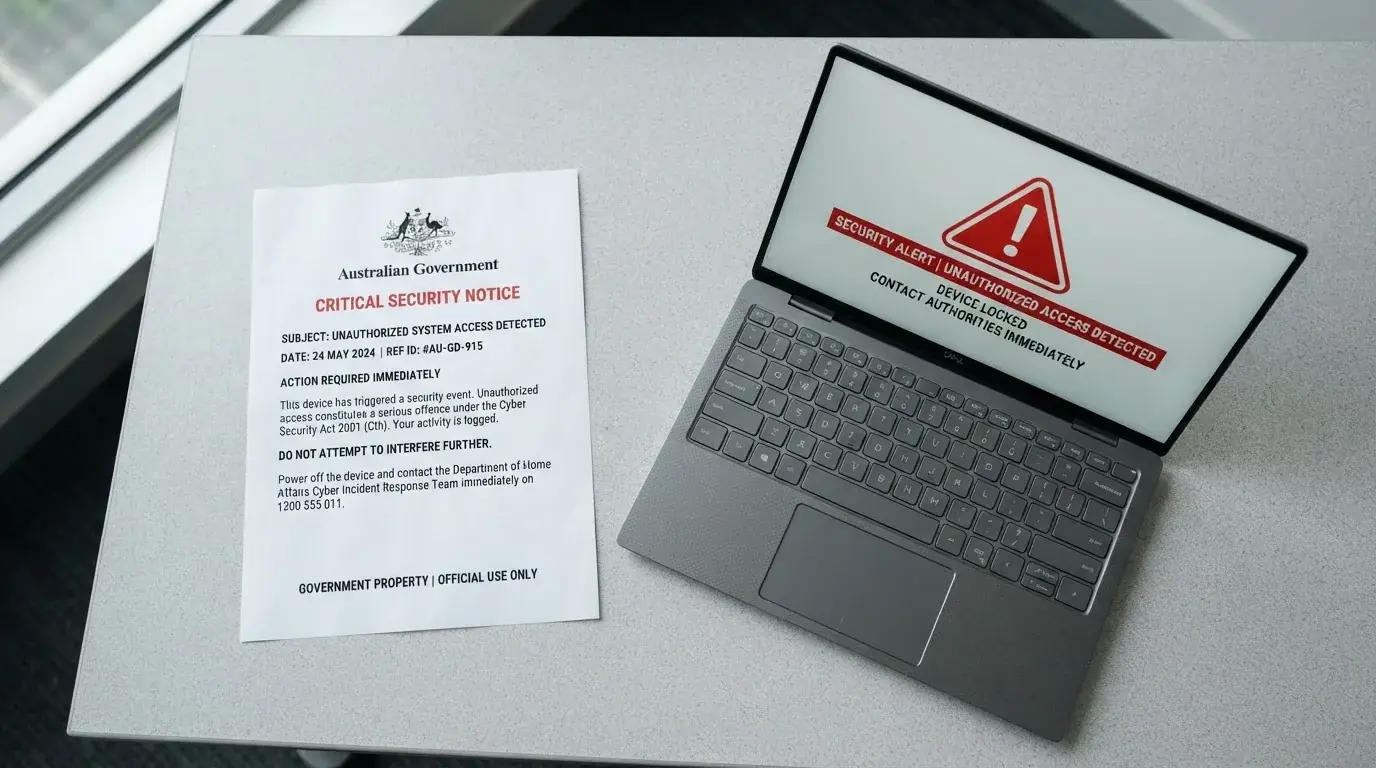
The enforcement arm for the IGA is the ACMA. It investigates complaints, issues formal warnings and can direct internet service providers to block sites. The individual player is not prosecuted; the Act targets the provider. The practical consequences for the player lie elsewhere. An offshore casino offers no Australian consumer protection, no recognised complaints body and no enforceable right of recourse if a withdrawal is refused. The site can be blocked while a balance remains in an account.
A useful way to think about the legal frame is what it makes lawful, and what it makes merely reachable. A licensed Australian wagering service can take a bet on a horse race, can take a debit card or a PayID transfer to fund that bet, and will be covered by Australian consumer law and by BetStop if the player has self-excluded. An offshore casino can reach an Australian resident through the same internet connection and can accept deposits through many of the same rails, but it sits outside that frame on every axis at once: licence, recourse, self-exclusion and the credit-card ban that applies to licensed Australian online wagering since 11 June 2024.
A short line that bears repeating: prohibited is not unreachable. The block works at the level of the Australian internet service provider, and the offshore operator can publish a new mirror domain within hours. What prohibition does is shift the operator into a position where it has no Australian obligations of any kind — not the licence terms, not the consumer law, not the credit-card prohibition, not the BetStop registration.
H2 Gambling Capital’s 2026 Estimate of the Sector
H2 Gambling Capital’s 2025 report puts Australians’ annual losses to illegal gambling sites at approximately A$3.9 billion, and records that the share of gambling going through legal channels fell from 74% in 2021 to 64% over the period the report covers. The first figure is what an Australian reader pays to operators the regulator considers illegal. The second is the drift: more spending is moving off the licensed side of the fence and onto the offshore side, where it cannot be recovered if a withdrawal is refused.
The drift matters because it tells the reader what kind of market the marketing is competing inside. Offshore operators are not picking up customers the licensed side has failed to attract. They are picking up customers the licensed side is not allowed to serve at all. A licensed Australian bookmaker cannot legally offer an online pokie. The offshore casino can, and that gap is the market.
The A$3.9 billion figure also gives the reader a sense of the stakes on the regulator’s side. Each block order, each formal warning, each round of ISP instructions is a piece of an enforcement regime that, by the regulator’s own reporting, has not yet bent the underlying flow. The 1,751 blocked sites are the visible part. The A$3.9 billion is what the visible part has not stopped.
How ACMA Enforcement Actually Works
Three instruments sit behind the ACMA’s response to offshore casinos offering services to Australians: formal warnings, blocking orders, and the indirect pressure that comes from naming an operator publicly.
A formal warning is published, identifies the operator behind the brand and the relevant section of the Interactive Gambling Act, and is intended to put the operator on notice. The warnings in the June 2026 round of activity and the years before it follow a recognisable shape: a brand name, often more than one under a single holding company, an operating company that is usually registered outside Australia, and a date. Dama N.V. alone has received formal warnings over six brands (Bambet, Dazard, Level Up, Rocketplay, Wild Tornado and Cobra Casinos) in May 2022, then over Woo Casino in March 2025 and Spirit Casino in May 2025. Pulsup Ltd received a formal warning over Rocketplay.com.au in March 2026. Consolutetish S.R.L. received warnings over National Casino and Bizzo Casino in July 2025; Bizzo Casino had already been the subject of a 2022 formal warning issued to TechSolutions. Hollycorn N.V. was warned over Sky Crown and Blue Leo. Bamboo Media was warned over Ignition Casino in the same July 2025 round. EOD Code SRL over Instant Casino in February 2025. Ryker B.V. over Jackbit and CasinOK in April 2026. Sterplay Holding Ltd over Casino Intense in April 2025.
A blocking order is the second instrument, and it is the one with the most direct effect on a player. The ACMA asks Australian ISPs to block specified domains at the DNS level. Once blocked, the brand’s main domain resolves to nothing or to a regulator’s notice page. The mirror domains that appear later in response to a block order are themselves added to later blocking rounds, and the cycle continues.
The third instrument is indirect, and it is the one the regulator relies on most. Each formal warning carries the name of the operator behind the brand. Once that name is on the public record, an Australian bank asked to process a transfer to a related entity has a reference point for an enhanced due-diligence review, and an Australian payment service provider asked to process card transactions has grounds to refuse them under its own terms. None of this is enforcement in the IGA sense. All of it tightens the air around the operator over time.
The Blocking Rate, as a Band
The arithmetic behind the block list, as a band, looks like this. The first blocking request was issued in November 2019. By the figures reported in June 2026, 1,751 websites had been blocked since that first request. Spread across the months from late 2019 to mid-2026, that is a running average in the order of 22 blocks per month, or roughly one for each working day. The band a reader can carry away from that is wide: enforcement intensity has not been constant. Some months see a published round of a dozen blocks; other months pass without one. The reading is that the ACMA is adding new sites to the block list at a steady average rate of roughly 20 to 25 per month, with individual rounds varying from single-digit additions to the dozen-site rounds reported in June 2026.
That is what “enforcement has been strengthened” has produced in practice. It is not a single decisive action that ended a market. It is a continued, fluctuating pipeline of new domains being added at a rate the offshore operators can respond to, and that the regulator can absorb.
The Payment Picture for an Australian Player
The payment rail a reader chooses to fund an offshore casino account is itself a place where Australian rules bite. The Interactive Gambling Act as amended in 2023 makes it unlawful for an Australian-licensed online wagering service to accept payment by credit card or credit-related product, a restriction that also constrains gambling use of linked digital wallets like Apple Pay. That prohibition does not bind an offshore casino, but it shapes what an Australian bank will and will not process.
Three Australian-bank levers matter for the offshore case. Westpac’s gambling block operates at card level and refuses authorisation on transactions registered under the merchant category code for betting and casino gambling on eligible personal credit and debit cards. ANZ’s gambling block, activated in the ANZ app, blocks gambling transactions through a digital wallet such as Apple Pay on an eligible card, not just the physical card, and once activated requires a 48-hour waiting period before it can be removed again. The RBA’s July 2025 review proposes removing surcharges only on eftpos, Mastercard and Visa transactions, explicitly leaving American Express outside the scope of the proposed surcharge ban — a small structural detail, but one that affects what a card-funded deposit actually costs.
Apple Pay itself, as a payment method, has a particular shape. Apple does not charge consumers fees for using it in stores, online or in apps; any surcharge comes from the merchant’s card-processing fees rather than from Apple. Transaction limits and PIN requirements for Apple Pay purchases are set by the card issuer or merchant, not by Apple. By the end of 2025 Apple Pay, Google Pay and Samsung Pay together accounted for around 45% of all card payments in Australia by number. An Australian bank that activates a gambling block on a card will generally block the same transaction when it comes through the wallet on the same card — ANZ’s terms say this explicitly.
Osko and PayID sit on the other side of the rail picture. Osko transfers between participating Australian banks arrive in under a minute, 24/7, whether addressed to a BSB and account number or to a PayID. Paying to a PayID shows the name of the account holder before the transfer is sent, which is itself a filter: Australian Payments Plus warns that being asked to transfer money to a PayID on an illegal gambling site almost certainly means a scam site. PayID-based instant transfers are available at over 100 Australian financial institutions. The New Payments Platform that underpins Osko and PayID went live on 13 February 2018 and is owned by a non-profit whose shareholders include the Reserve Bank of Australia and the major banks; more than 25 million PayIDs had been registered by April 2025. The platform’s monthly outages are capped at two minutes.
BPAY completes the legal-side rail set. Launched on 18 November 1997, BPAY is a bill-payment service in online banking — the payer enters a Biller Code and a Customer Reference Number — available at over 140 banks and financial institutions and offered by over 95,000 businesses. Since September 2021 BPAY has been run by Australian Payments Plus, the same entity that runs PayID and Osko. BPAY is the rail the licensed wagering side uses; it is not how an Australian resident typically funds an offshore casino.
The cash threshold sits in the background. AUSTRAC’s threshold-transaction-report rule requires reporting of transfers of A$10,000 or more, but applies only to physical cash; ordinary electronic bank transfers are not subject to that per-transaction reporting requirement regardless of the amount sent. The point is not that AUSTRAC monitors small transfers. It is that the player’s bank does, and it has its own block on the merchant-category code for gambling regardless of AUSTRAC’s threshold.
The net of all of this for an Australian funding an offshore casino is short: card rails are blocked by the issuer if the gambling block is on, Apple Pay on a blocked card follows the card, credit cards are not legal funding for licensed Australian wagering and most banks will refuse them for offshore casinos anyway, PayID and Osko can reach a casino account but the name-check feature exposes the recipient. The rails that work are not the ones that look most convenient.
What a “Golden Pokies” No-Deposit Code Actually Unlocks
The marketing around Golden Pokies centres on its no-deposit offer. The phrase suggests something close to free money: a code that activates a balance or a set of free spins without the player having to deposit. What it actually unlocks is smaller, and the gap between the two readings is the point of the section.
A Golden Pokies no-deposit bonus code, where one is offered, is a token that credits a starting balance or a small number of free spins on selected slot titles. The starting balance is almost always subject to a maximum cashout cap, a wagering requirement, and a game-restriction list. Withdrawal requires the same internal review that applies to a deposit-funded bonus: identity verification, source-of-funds checks where the balance is large enough to attract attention, and confirmation that the wagering requirement has been met in full.
Three conditions recur across the offshore no-deposit template. The first is the maximum cashout: even if a player runs a no-deposit balance into a number several times the starting credit, the amount that can actually be withdrawn is capped, often at a small multiple of the starting credit and sometimes at a flat ceiling. The second is the wagering requirement: the bonus amount must be wagered a stated number of times before withdrawal, and not all games contribute at the same rate, with table games and many live-casino games often contributing zero. The third is the country restriction: a no-deposit bonus targeted at an Australian resident is being offered by an operator that is, by definition, doing business in breach of the IGA. The bonus is not a sign that the operator is licensed; it is a sign that the operator is competing for an Australian customer the law does not let it have.
The free-spins form of the same offer works the same way. A set of free spins on a named slot, winnings paid as bonus money, the same wagering requirement and the same maximum cashout. The slot chosen is usually a high-RTP title where the wagering requirement has the best chance of being cleared without the player being able to extract a large real-money balance.
What this amounts to is a free trial with a hard ceiling. A player who redeems the code, plays through the spins or the bonus balance, and runs into the maximum cashout at the end of the wagering requirement has effectively played a free session at the casino’s expense. A player who clears the wagering requirement and tries to withdraw is asking the operator to send real money to an Australian account from an entity the ACMA has already named. That last step is the place where most of the player complaints about offshore casinos originate.
Sign-Up Bonuses and the Same Structure at Larger Numbers
A Golden Pokies sign-up bonus — the offer made when a player opens an account and makes a first deposit — is the larger-scale version of the same template. The headline number, often “A$2,000” or a similar headline-grabbing figure, is the total amount that can be unlocked across a sequence of deposits, not the amount credited at once. Each tranche of the bonus is gated by a deposit, has its own wagering requirement, and contributes to the bonus balance rather than the real-money balance until cleared.
The same three conditions apply, but at different magnitudes. The wagering requirement is usually expressed as a multiplier on the bonus amount, often in the 35x to 50x range for the offshore pokies market. A A$1,000 bonus with a 40x wagering requirement means A$40,000 must be wagered before the bonus balance converts to real money and can be withdrawn. The maximum-cashout cap, where one applies to a deposit bonus, is usually higher than on a no-deposit offer, but is often still present. The game-restriction list is wider: only certain slots contribute at 100%, table games and live-casino games usually contribute at less, and a few high-RTP slots are excluded entirely.
The arithmetic of a deposit bonus is where the marketing most clearly diverges from the cost. A A$1,000 bonus with a 40x requirement asks the player to turn over A$40,000 at the named slots. At an average slot RTP in the mid-90s, the expected loss on that turnover is several thousand dollars, against a bonus that unlocks A$1,000 of bonus balance with a maximum cashout usually lower than the bonus headline. The bonus pays the casino to acquire a player; the wagering requirement ensures the player will, on average, give back more than the bonus is worth.
What the headline number does is set an expectation the arithmetic cannot meet. A reader who reads “A$2,000 Bonus” and reads no further sees a number they imagine they can clear. A reader who reads the wagering requirement and the game restrictions sees a different proposition, and is the reader the page is for.
The Game Catalogue: Pokies, Tables and the Software Behind Both
Golden Pokies markets a catalogue of slot titles — “pokies” in the Australian vocabulary — drawn from the standard offshore game suppliers. The titles are not proprietary; they are licensed from the same handful of studios whose games appear across the offshore sector. A player who has played the same titles on another offshore brand will see the same paytables, the same RTP figures and the same volatility profiles here.
What the catalogue gives the player is familiarity. The titles have been picked because they are recognisable, because they carry name recognition from the land-based floor or from the bigger international online casinos, and because their RTPs are widely published. None of that changes what the catalogue is on the operator’s side: a set of integrations to a game aggregator, with the operator taking a percentage of every spin.
The live-casino table offering, where one is present, follows the same shape. The tables are run by the same live-dealer studios that supply most of the offshore sector; the operator integrates the feed, takes a percentage of every hand, and applies its own bonus terms to any play funded with bonus money. Table games usually contribute zero or a token amount to wagering requirements, which means a player who tries to clear a bonus at the tables will, in most cases, end the session having lost the bonus without making meaningful progress on the requirement.
Offshore Brands Cited by the ACMA
What follows is the set of offshore brands the ACMA has named in formal warnings. None is licensed to supply online casino games to a person in Australia; the IGA prohibits the supply altogether. The list is not a ranking. It is the regulator’s own record of where its enforcement has landed, ordered as research gives it.
| Brand | ACMA action and date | Operator named by the ACMA | Subject support |
|---|---|---|---|
| RocketPlay | March 2026 (Pulsup Ltd); earlier May 2022 (Dama N.V.) | Pulsup Ltd | Listings reference the brand only |
| Level Up Casino | May 2022 | Dama N.V. | Listings reference the brand only |
| Woo Casino | March 2025 | Dama N.V. | — |
| Spirit Casino | May 2025 | Dama N.V. | — |
| National Casino | July 2025 | Consolutetish S.R.L. | Listing pages carry the brand |
| Bizzo Casino | July 2025; earlier 2022 (TechSolutions) | Consolutetish S.R.L. | Listings reference the brand only |
| Ignition Casino | July 2025 | Bamboo Media | — |
| Instant Casino | February 2025 | EOD Code SRL | Listing pages carry the brand |
| Jackbit | April 2026 | Ryker B.V. | — |
| Casino Intense | April 2025 | Sterplay Holding Ltd | Listing pages carry the brand |
| Sky Crown | September 2022 | Hollycorn N.V. | — |
RocketPlay
RocketPlay has had two formal warnings issued against it by the ACMA: one in May 2022 against Dama N.V. and a more recent one in March 2026 against Pulsup Ltd, covering the Australian-facing Rocketplay.com.au. The site offers a pokies catalogue and the standard offshore welcome package, both of which sit outside what the IGA permits for an Australian resident. The earlier Dama N.V. warning named six brands in a single notice; the 2026 action is specifically for Rocketplay’s Australian-facing domain. RocketPlay is the clearest case in the set of an operator that has been told twice and has continued to operate; the second warning is, by its existence, evidence that the first one did not produce the regulator’s preferred outcome.
Level Up Casino
Level Up Casino was named in the May 2022 Dama N.V. batch of six brands. The brand positions itself at the mid-to-upper end of the offshore pokies market and carries a relatively wide catalogue. The ACMA’s action is the same as for the other five in that batch: a formal warning identifying the operating company and the IGA breach, no further enforcement on the brand itself. The brand is the kind of mid-market offshore casino whose longevity is a feature of the sector rather than an anomaly; it has stayed in the market across more than three years of post-warning operation.
Woo Casino
Woo Casino received a Dama N.V. formal warning in March 2025, two-and-a-half years after the operator’s first round of warnings. The gap is the consequence: Dama N.V. was warned, continued to operate multiple brands, and was warned again. For an Australian player, the relevant fact is not the date of the warning but the persistence of the brand afterwards. Woo Casino’s offering — pokies catalogue, welcome bonus, no-deposit free spins — is the standard Dama N.V. template, which the ACMA has now objected to in writing three times across the operator’s various brands.
Spirit Casino
Spirit Casino was named in the May 2025 Dama N.V. warning, the third Dama N.V. action in three years. Spirit Casino sits at the same template end of the market as Woo Casino. The third warning is what makes the case worth pausing over: by the time the regulator has gone back to the same operating company three times, the operator is no longer plausibly unaware of the regime it is operating in. The brand has continued to take Australian-facing traffic since the May 2025 warning.
National Casino
National Casino was named in the July 2025 Consolutetish S.R.L. warning, in the same notice that named Bizzo Casino. Consolutetish S.R.L. is a relatively new name on the ACMA register compared with Dama N.V., and the National Casino warning is the operator’s first appearance there. The brand offers a pokies catalogue and a sportsbook, the latter being a product an Australian-licensed wagering service can offer; the casino side is not. The operator has since appeared on the ACMA’s formal warnings list, solidifying the regulator’s record of this brand’s activities.
Bizzo Casino
Bizzo Casino has been warned twice. The first warning, in 2022, was issued to TechSolutions Group N.V. and TechSolutions (CY) Group Limited; the July 2025 warning was issued to Consolutetish S.R.L. Two operators, two formal warnings, the same brand. The transfer of the brand between operators is a common pattern in the offshore sector, and what it means for the player is that the entity on the other side of the registration form may not be the same entity that received the first warning. The brand is the constant; the operator behind it is not.
Ignition Casino
Ignition Casino was named in the July 2025 warning issued to Bamboo Media. The brand had been a presence in the offshore market for some years before the warning. The warning is the regulator’s first against Bamboo Media and against Ignition Casino; the brand sits in the middle of the offshore catalogue range and offers a poker product alongside the pokies catalogue, which is one of the prohibited casino-side services for Australian residents.
Instant Casino
Instant Casino received a formal warning in February 2025 against EOD Code SRL. The brand sits at the faster-turnover end of the offshore market, with a product positioning built around quick deposits and withdrawals, and the marketing tends to play on the speed of the rails. The February 2025 warning does not affect the operator’s ability to actually clear a withdrawal quickly; it does affect the regulator’s view of the operator’s right to be taking Australian traffic at all.
Jackbit
Jackbit was named in the April 2026 warning against Ryker B.V., alongside CasinOK. Jackbit positions itself around a wider range of casino games and a sportsbook, with a marketing emphasis on cryptocurrency deposits. The brand is a relatively recent addition to the ACMA register. This action by the ACMA reflects its broader enforcement policy against offshore brands.
Casino Intense
Casino Intense received a formal warning in April 2025 against Sterplay Holding Ltd. The brand sits at the smaller catalogue end of the offshore market, with a more limited pokies offering than the larger brands. The warning is the first against Sterplay Holding Ltd.
Sky Crown
Sky Crown was named in the ACMA’s formal warning against Hollycorn N.V., the same operator as Blue Leo. The warning predates most of the others in the set, going back to September 2022, and is the ACMA’s first against Hollycorn N.V. The brand carries the standard offshore pokies catalogue and welcome package and has continued to operate across the period since the warning.
The Operator Recurring Pattern
What the eleven brands share, more than anything they do not, is the position the ACMA has taken against them. Each of the eleven has been named in a formal warning. Each has an operating company that is registered outside Australia. Each offers an online casino product that the IGA prohibits from being supplied to Australian residents. None is licensed in Australia.
The differences between the brands, in terms a player cares about, are mostly in the marketing layer: the size of the welcome bonus, the number of free spins in the no-deposit offer, the payment rails the cashier supports. The legal layer is the same on every row. The consequence layer is the same on every row: a player opening an account at any of these brands is engaging with an entity the ACMA has decided is offering prohibited interactive gambling services to Australians.
The history of the brands is also instructive. Dama N.V. has been warned three times in three years, against three groups of brands, and has continued to operate each time. TechSolutions and Consolutetish S.R.L. have warned under the same brand name. Hollycorn N.V. has been warned once but operates several brands, which means the warning sits against an operator that has more than one product to lose. The pattern is not that warnings end brands. It is that warnings are the regulator’s instrument, and the instrument operates on a longer time scale than a single bonus cycle.
The Player-Protection Layer an Offshore Casino Cannot Offer
A reader who decides to use an offshore casino is, by definition, deciding to step outside the player-protection layer that surrounds legal Australian gambling. Three pieces of that layer are worth naming in full.
BetStop, the National Self-Exclusion Register, has been live since August 2023. It binds every Australian-licensed online and phone wagering service. A player who registers with BetStop is excluded from every licensed operator on the register. An offshore casino is not connected to BetStop. Registering with BetStop does not exclude a player from Golden Pokies, from any of the eleven brands named above, or from any other offshore operator. A player who has registered with BetStop and then opens an account at an offshore casino has, in effect, undone the registration on the only piece of the gambling market the registration covers.
The National Gambling Helpline, 1800 858 858, is free, 24/7, and offers chat at Gambling Help Online. It is the front door to the same support services that BetStop connects to. It does not depend on the player using a licensed operator; any Australian resident can call it. The point of naming it here is that the support exists, it is reachable, and it sits at the same distance from a player whether they are playing at a licensed wagering service or at an offshore casino.
The credit-card ban, in force since 11 June 2024, applies to Australian-licensed online wagering. It does not apply directly to an offshore casino. But it shapes what funding rails the licensed side accepts, and it shapes what funding rails the banks will process. A bank that refuses to send a credit-card payment to a licensed Australian wagering service will also refuse, on the same grounds, to send the payment to an offshore casino. The ban is not what stops an offshore casino from accepting a credit card; the bank’s own block is.
The net is that the player who moves offshore loses access to the three pieces of the Australian player-protection layer at once: BetStop because the offshore site is not connected to it, the dispute resolution that comes with an Australian licence because there is no Australian licence, and the implicit bank-side screening that comes with the credit-card ban because the bank-side screening still applies even though the ban does not.
What This Page Is, and Is Not, For
This page has described eleven offshore brands, traced the ACMA’s enforcement against each, and walked through what a no-deposit or sign-up bonus actually costs an Australian player. It has not recommended a place to play. It cannot: the law does not let one be recommended, the brands are not licensed in Australia, and the IGA’s prohibition is the starting point of every figure on this page rather than a footnote at the end.
A reader who has come to this page to find a casino to play at has come to the wrong place; the right answer is that there is no legal Australian-licensed online casino to be recommended. A reader who has come to find what an offshore casino would actually cost them, and what the regulator’s response has been, has come to the right one. The numbers in this page are what those two readers need to weigh against each other.
Frequently Asked Questions
Is Golden Pokies legal for someone in Australia to use for real-money play?
No. The Interactive Gambling Act 2001 prohibits the supply of online casino games, online pokies and in-play betting to a person in Australia, and no state or territory issues a licence for those products. Golden Pokies was added to the ACMA’s blocking order in March 2021, and any mirror domain that appears later is itself the kind of service the regulator has consistently moved to block. The IGA targets the provider, not the player, but the player has no Australian consumer protection if a withdrawal is refused.
What does a Golden Pokies no-deposit bonus code actually unlock?
A no-deposit code credits a small bonus balance or a set of free spins on selected slots, subject to a wagering requirement, a maximum cashout cap and a game-restriction list. The marketing suggests something close to free money; the terms make it a free trial with a hard ceiling. Winnings above the cap are forfeit, and most table games contribute zero to clearing the wagering requirement. Withdrawal still triggers the operator’s identity and source-of-funds checks.
Is the Golden Pokies app a separate product from its browser-based site?
The Golden Pokies mobile app and browser site sit within the same offshore casino product and share the same fundamentals: the same account, the same catalogue, the same bonus terms, the same payment rails. The app is a delivery mechanism for the same product, not a separate one, and it inherits the same licensing position. A player who switches between the two has not moved to a different operator or to a different legal position.
What kind of slot titles are listed under the Golden Pokies catalogue?
The catalogue is drawn from the same handful of offshore game studios that supply most of the sector. The titles are not proprietary; they are the same paytables, RTPs and volatility profiles that appear under the same names on other offshore brands. A player who has played the same titles on another offshore site has effectively already seen the catalogue. The catalogue is familiar by design.
What conditions usually apply before a Golden Pokies sign-up bonus can be withdrawn?
A sign-up bonus is paid as bonus money, not as real money, and converts only after a wagering requirement — often 35x to 50x the bonus amount — has been met. The contribution rate varies by game; slots usually contribute 100%, table games often zero. A maximum cashout cap frequently applies, and an identity and source-of-funds check is triggered at withdrawal. The bonus headline is not the amount that can be withdrawn.
How does Golden Pokies compare with other offshore sites offering similar sign-up bonuses?
On the marketing layer, similar offshore brands compete on the size of the welcome package, the number of no-deposit free spins and the speed of the cashier. On the legal layer, they are the same proposition. The ACMA has named Golden Pokies and the eleven other brands reviewed on this page in formal warnings over the period from 2021 to 2026, and the IGA prohibits each of them from supplying casino games to Australian residents. The competition between them is for the same pool of Australian traffic the law does not let any of them lawfully serve.