
Best Progressive Jackpot Slots 2026 in Australia: How the Prize Pool Really Grows
A progressive jackpot is not a feature on top of a normal slot. It is a parallel pot that sits alongside the reels, fed by a sliver of every losing spin and reset the moment somebody hits it. The prize figure on the screen is the live total of every wager placed across the connected network since the last payout. That single sentence explains why the same game in the same week can advertise A$4.2 million one day and A$180,000 the next.
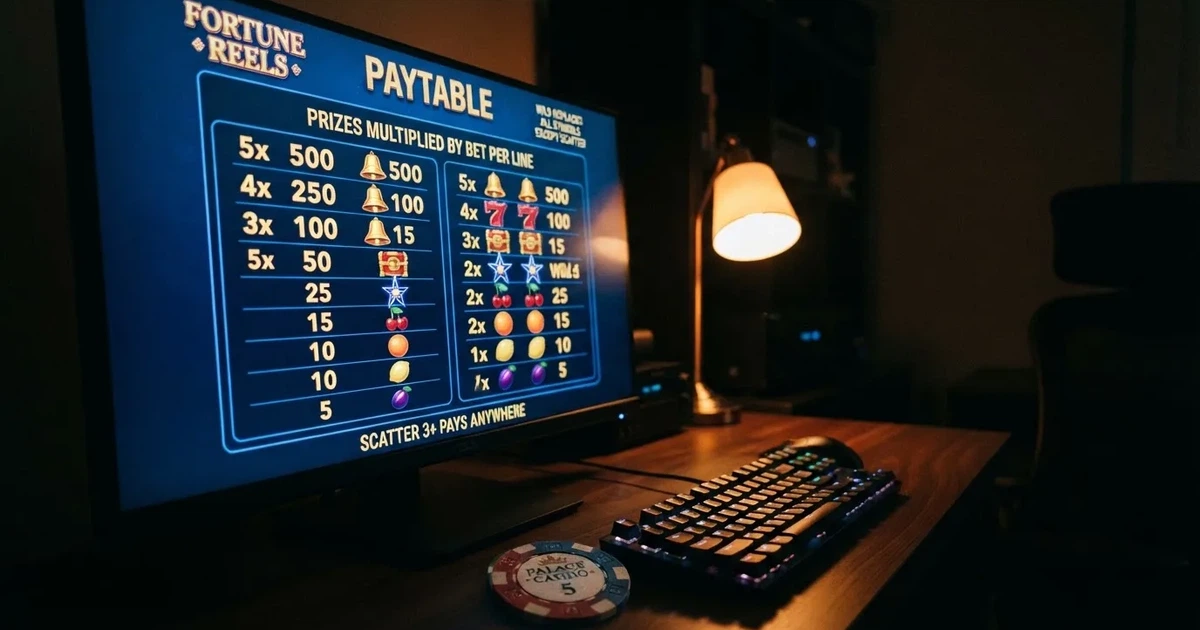
Anyone comparing progressive jackpot slots in 2026 runs into the same wall within minutes: the offshore sites that advertise them are not licensed to offer casino games to Australians, and the venues that are licensed onshore carry a different product — fixed-jackpot pokies and table games under state and territory regulation. The page below separates those two worlds, explains the mechanics the marketing copy skips over, and walks through every brand the Australian regulator has warned about for offering exactly the product described. The arithmetic belongs to the page itself: how fast the ACMA is closing sites, what the prize pool’s growth rate actually means, and what a player pays for the chance of a payout the site advertises as life-changing.
Currency and licence data are current as of 7 November 2026, checked against the ACMA’s published register of formal warnings and blocking orders.
Table of Contents
- How Progressive Jackpots Actually Work
- The Australian Market in 2026
- Offshore Casinos Offering Progressive Jackpots to Australians
- Player Protection and Responsible Gambling
- How the Shortlist Is Built — and What the Criteria Are
- The Mechanic Table — Comparing the Warning History
- The Blocking Rate Calculation
- What the Records Look Like
- What a Player Should Carry Away
- Looking Past the Headlines
- Frequently Asked Questions
How Progressive Jackpots Actually Work
A progressive jackpot is a prize pot that grows with each wager and resets to a floor when it pays out. The house skims a small percentage of every bet — usually a fraction of a percent — and adds it to the pool. Every connected machine, every online spin on the same network, drops its share into the same total. The pot keeps rising until somebody triggers the trigger condition (a specific symbol combination, a randomly seeded value, or a wheel bonus), at which point the full pot is paid out and the cycle starts again from a preset minimum.

The mechanic is older than the internet. The first Megabucks progressive, manufactured by International Game Technology, paid out its inaugural jackpot of $4,988,842.17 on 1 February 1987, after less than a year on the floor of large American casinos. The premise was simple: link machines across many venues so that the prize could climb into territory no single bank could fund alone. Wide-area linking turned a casino-floor novelty into the seven- and eight-figure jackpots that now anchor online slot marketing a generation later.
Three flavours matter for anyone reading the marketing.
Standalone progressives are confined to a single machine. The pot grows only from the spins on that one cabinet. Because the contribution base is small, the ceiling is modest — usually a few thousand dollars before the trigger fires and resets. These are the quiet progressives that sit in the corner of a venue and never make headlines.
Local or in-house progressives link machines within one venue. A bank of cabinets across the gaming floor feeds the same pool. The ceiling is higher than a standalone, lower than a wide-area network, and the reset floor is set by the venue rather than the manufacturer.
Wide-area progressives link machines across multiple venues, regions, or — in the online case — every site running the same game on the same network. Mega Moolah, Mega Fortune, and Age of the Gods are the names readers will recognise from advertising. These are the jackpots that climb into eight figures, because the contribution base is the entire pool of players betting on the network. The €19.4 million record paid out on Microgaming’s “Absolootly Mad: Mega Moolah” on 27 April 2021 was a wide-area jackpot — one spin in Belgium drained a pot that tens of thousands of players had been feeding for weeks.
A fourth variant is worth knowing because it appears on the paytable even though it looks identical to the others. A must-hit-by jackpot is a mystery prize whose exact value is set by a random number generator within a preset range the moment the previous jackpot is won — the A$1,000-to-A$3,000 band is the common example. The visible seed figure on the screen is a ceiling, not the payout. The trigger is a timer or a hidden value rather than a symbol combination, which is why some players report “hitting a jackpot” on a spin where the visible reels show nothing unusual.
Jackpot Mechanics
| Type | Contribution Base | Ceiling Potential |
|---|---|---|
| Standalone | Single machine | Modest (thousands) |
| Local | Single venue | Moderate |
| Wide-area | Entire network | Eight figures |
Every progressive carries a seed — the floor it resets to after a payout. Seeds are set by the operator or the manufacturer and funded from a different revenue stream than the growth contributions. A seed of A$1 million on a wide-area game means the next cycle starts higher than a standalone machine ever reaches in its first year. This is why Mega Moolah can advertise a headline figure on launch day without any waiting period.

The reset is also why the headline figure on a progressive’s home page is almost meaningless on its own. A jackpot showing A$6.4 million is not “worth” A$6.4 million to the player who has to spin it. It is the sum of every wager placed on the network since the last winner, growing at a rate the network’s own traffic sets, and it pays out the moment the trigger fires — regardless of how large it has climbed by then.
Why the base game pays back less
Progressive slots typically run a lower base return-to-player than fixed-jackpot games of similar size. The reason is mechanical, not psychological: a percentage of every wager leaves the base-game return and goes into the progressive pool instead. A 96% non-progressive slot might drop to 92% or lower once the progressive contribution is carved out, because the jackpot portion is funded by the same wager.
The trade-off is the size of the ceiling. A flat-jackpot game pays the same maximum regardless of how long the pot has been building. A progressive can pay twenty, fifty, two hundred times its reset floor. The expected return across millions of spins works out to roughly the same total; the variance is just distributed differently — long stretches of small wins punctuated by the rare spin that returns more than the player has staked in a lifetime of sessions.
There is a narrow edge case worth naming, because it explains why some serious players chase progressive video poker and Caribbean Stud. If the jackpot climbs high enough that the game’s theoretical return-to-player passes 100%, the bet becomes positive expectation: mathematically, every dollar wagered returns more than a dollar on average across a long enough sample. This break-even point is easier to calculate for table games with published rules. Slot machines with progressive jackpots usually hide their reel layouts and weighting, so the same arithmetic is genuinely hard to do, and the player has to take the listed paytable on trust.
The Australian Market in 2026
The fundamental split in Australia is the IGA split, and it is not negotiable. The Interactive Gambling Act 2001, as tightened by the Interactive Gambling Amendment Act 2017, makes it an offence to provide online casino games, online pokies, or in-play betting to a person in Australia. No state or territory issues a licence for those products. The licensable online products are wagering on pre-event races and sport, lotteries, and keno.
The progressive jackpot slots in question fall squarely on the prohibited side. Every offshore site a reader sees advertised — and every brand named in the comparison table further down — is offering a product that no Australian regulator has licensed them to offer. The licence the site displays at the footer is an overseas one, issued by a jurisdiction whose rules say nothing about Australian players, whose dispute resolution does not reach Australian consumers, and whose enforcement stops at the border.
What the Australian player can do, legally, is bet with a licensed Australian operator on races and sporting events before they start, buy a lottery ticket, or play keno. The licensed venues — pubs and clubs in most states, the major casino floors in Melbourne and Sydney — operate physical gaming machines under state-level regulation. Some of those machines carry fixed-jackpot features; the progressive networks exist in those venues too, but they are the standalone or in-house kind, not the eight-figure wide-area networks the offshore sites advertise.
The result for anyone searching for these products is that the product the marketing describes and the product the Australian law permits are not the same product. The rest of this page is the consequence of that gap.
Who regulates what
The Australian Communications and Media Authority — the ACMA — is the federal body that enforces the Interactive Gambling Act. Its powers cover investigation, formal warnings, civil penalty proceedings, and the ability to direct Australian internet service providers to block illegal sites. As reported in June 2026, the ACMA had asked ISPs to block 1,751 illegal gambling and affiliate-marketing websites since the first blocking request in November 2019, and more than 230 unlicensed gambling services had left the Australian market since enforcement was strengthened in 2017. The 26 June 2026 round alone added twelve more domains to the block list: 7Signs, ChromaBet, Donbet, Duospin, Freshbet, Slots Gem, Jacks Club, Lucky Start, Pointsbetz, Spinrise, Vinyl Casino and Wildsino.
State and territory regulators handle the physical venues. The Victorian Gambling and Casino Control Commission, which replaced the VCGLR as Victoria’s casino regulator on 1 July 2022, approves table games and rules changes at Crown Melbourne. The NSW Casino Control Act 1992 imposes the same gatekeeping function in NSW. The Northern Territory Racing and Wagering Commission regulates online bookmakers licensed in the Territory — Sportsbet, Bet365, Ladbrokes among them — for tax reasons, with no full-time staff and a single monthly meeting. The NTRWC’s role is narrow and online-only by design; it does not license casino games.
The takeaway: there is no Australian regulator to whom a player can complain about an offshore casino’s conduct. The licence footer on an offshore site is a foreign jurisdiction’s view of that operator, not Australia’s.
How big the illegal market actually is
H2 Gambling Capital’s 2025 report estimated that Australians lose roughly A$3.9 billion a year to illegal gambling sites, and that the share of gambling going through legal channels fell from 74% in 2021 to 64%. The fall is the consequence of the offshore casino marketing discussed here — every player who spins a progressive slot on an unlicensed site is part of that A$3.9 billion figure. The same report explains why the ACMA’s blocking programme has continued to expand rather than taper: enforcement has not closed the gap, it has only shifted it.
Offshore Casinos Offering Progressive Jackpots to Australians
The brands below are not ranked, recommended, or endorsed. They are listed because the ACMA itself issued a formal warning over each of them for offering prohibited interactive gambling services to people in Australia. The warnings are published on the ACMA’s own website and reproduced verbatim in the comparison table.
A formal warning is the regulator’s first formal step after investigation. It names the operator, the brand, and the contravention, gives the operator a deadline to comply, and puts the matter on the public record. A warning is not a prosecution and not a fine. It is the regulator saying, in writing, that what the operator is doing is illegal under Australian law and that further action follows if it does not stop.
The repeated line that “online casino games cannot be licensed anywhere in Australia, whatever licence the site displays” sits beside every brand because the same point applies to all of them. An operator’s licence footer is real — Curacao, Anjouan, the Malta Gaming Authority all issue real licences — but none of those licences authorises the operator to take bets from Australians on online casino games. The Australian prohibition is on the supply side; the offshore licence is a permission to operate in its own jurisdiction, not a passport into every other country.
RocketPlay
The ACMA named Rocketplay twice. The May 2022 warning covered Dama N.V. across six brands, including Rocketplay. The March 2026 warning named Pulsup Ltd over Rocketplay specifically — the same brand, a different corporate entity on the operator side, four years apart. Two warnings on the same brand in four years is the ACMA’s way of saying the first warning did not produce lasting change.
The licence RocketPlay shows at the footer is an offshore one. The brand is operated by Pulsup Ltd, which is not an Australian company and has no Australian licence. The site’s progressive jackpot catalogue runs on standard aggregator feeds, with Mega Moolah-style and Age of the Gods-style networks the same as every other brand in this list. What distinguishes RocketPlay from the rest is the regulator’s patience: a second formal warning on the same brand, in the same place, after the first one ran its course, is a record of enforcement that has not stuck.
Level Up Casino
Level Up sits in the original May 2022 batch of Dama N.V. warnings. The single warning, four years ago, is the regulator’s file on this brand. Level Up’s own listing on BGaming’s aggregator page places the brand on the network for progressive jackpot distribution; that listing is what the brand offers, not what the regulator has verified.
Level Up runs the same product every Dama brand runs — a Curacao-licensed casino carrying third-party progressive jackpots, slot tournaments, and a sportsbook, none of which is licensable to Australians. The relevant reading for the comparison is that the brand has not drawn a second formal warning in the years since, which is a different signal from RocketPlay’s two. Whether that is because the brand stopped targeting Australia or because the regulator has not yet returned to it is not a question either party has answered on the public record.
Woo Casino
The March 2025 warning over Woo Casino is the more recent of the two Dama N.V. warnings published that month. The five-month gap between this warning and the Spirit Casino warning below suggests the ACMA worked through the Dama group systematically across the spring of 2025 — Dama N.V. controls enough brands that the regulator’s case-by-case approach is visible in the timing.
Woo Casino’s offshore licence, like Level Up’s, is a Curacao one. The site’s product mix is standard: slot catalogue with progressive jackpots, table games, live dealer, sportsbook. None of that is licensable to Australians, and the March 2025 warning is on the public record.
Spirit Casino
Spirit Casino drew the second of the two Dama N.V. warnings in 2025, in May. The pattern — two Dama warnings two months apart, on different brands under the same operator — is the regulator working through the corporate family. Spirit Casino’s product set is the same as Woo’s: progressive jackpot slots, table games, live dealer, all under a Curacao footer. The warning is the regulator’s response to the supply of those products into Australia.
National Casino
National Casino was named in the July 2025 ACMA warning to Consolutetish S.R.L., the same warning that covered Bizzo Casino. The brand sits on the standard aggregator feeds — the Wikipedia listing for National Casino is a directory entry, not a regulator endorsement. The corporate operator, Consolutetish S.R.L., is a Romanian-registered company, and the offshore licence the brand displays sits with a regulator that does not cover Australian consumers.
Bizzo Casino
Bizzo Casino has the longer file of the two Consolutetish brands. The July 2025 warning to Consolutetish is the most recent entry; the earlier 2022 warning to TechSolutions (CY) Group Limited and TechSolutions Group N.V. sits beside it. Two warnings, two different operating companies, the same brand, four years apart — the same shape as the RocketPlay timeline.
The TechSolutions connection is the older record. Bizzo was operated by TechSolutions when the first warning landed, and a different corporate parent is operating it now. The regulator’s view of the brand is unchanged, even if the corporate structure has shifted.
Ignition Casino
Ignition Casino drew the other half of the July 2025 warning batch, with Bamboo Media as the named operator. The brand is a different shape from the others on this list — Ignition has historically pitched itself at a poker-and-casino audience, with the progressive jackpot catalogue as a secondary line rather than the lead product. The warning is the ACMA’s standard notice that the casino products it offers are prohibited to Australians regardless of how they are packaged.
Instant Casino
EOD Code SRL drew the ACMA’s February 2025 warning over Instant Casino. The brand runs on a Curacao licence and carries the same progressive jackpot catalogue as the rest of this list. The February 2025 timing puts Instant Casino in the first wave of 2025 enforcement — the same spring that produced the Dama N.V. warnings for Woo and Spirit, suggesting the regulator ran multiple parallel investigations through the first half of 2025.
Jackbit
Ryker B.V. drew the April 2026 warning that covered Jackbit and CasinOK. Both brands are named in the same warning, so the ACMA treated them as the same operator under different labels — a common pattern when an operator runs parallel brands on the same backend.
Jackbit’s product pitch differs from the rest of the list in that it leans into crypto deposits and esports betting alongside the casino catalogue. The warning applies to the casino products specifically; esports betting sits in a different regulatory space. The April 2026 timing puts Jackbit in the most recent wave of enforcement the ACMA has published.
Casino Intense
Sterplay Holding Ltd drew the ACMA’s April 2025 warning over Casino Intense. Casino Intense’s public profile carries aggregator listings across multiple directories — the ABC coverage of the ACMA’s broader enforcement programme and the ACMA warning publication sit alongside Crown Melbourne material because the directories index everything in the same feed. The April 2025 warning is the regulator’s own entry.
Sky Crown
Hollycorn N.V. drew the ACMA’s formal warning over Sky Crown and Blue Leo, published in September 2022. Hollycorn runs multiple brands — the Sky Crown / Blue Leo pair is the cluster the regulator named in this warning. Sky Crown’s licence footer is the offshore kind. The September 2022 warning is the older record on this list, but no subsequent warning has replaced it.
What the warning list shows
The pattern across the eleven brands is structural, not coincidental. Offshore operators offering progressive jackpot slots to Australians cluster around a small number of corporate parents: Dama N.V. controls at least four of the brands on this list, and Hollycorn, Consolutetish, and TechSolutions each control at least two. The ACMA names the corporate parent rather than the brand in its warnings, which is why Dama N.V. appears five times across the entries above.
The repetition matters for what the regulator is signalling. A formal warning is not a one-off: the ACMA expects compliance within a defined period, returns to check whether the operator has stopped, and re-issues if it has not. The RocketPlay file — two warnings, two operators, four years — is the public record of that follow-up. The absence of a second warning on the others is not a sign of compliance; it is a sign that the regulator has not yet returned to that brand.
Player Protection and Responsible Gambling
Anyone comparing progressive jackpot slots needs to read this section before reading the offers. The product the marketing describes is a high-variance, no-recourse product: high variance because the prize ceiling is enormous, no recourse because the operator is outside Australian jurisdiction and the ACMA’s enforcement runs through ISP blocks rather than through a complaints body a player can contact.
A few facts to fix in mind before any offer is weighed.
What the offshore site cannot give
An offshore casino offers no Australian consumer protection. The licence displayed in the footer is real, but the body that issued it does not accept Australian complaints, does not enforce Australian standards, and does not hold the operator’s Australian player funds in any segregated account. If a withdrawal is refused, if a bonus term is changed after a deposit, if an account is closed and the balance is forfeit — the player has no Australian ombudsman, no Australian regulator to escalate to, and no Australian court whose order the operator is required to respect. The site’s terms of service will name its own dispute resolution forum; that forum’s view of a complaint is the only view a player will receive.
This is the consequence of the offshore structure, not a marketing complaint. The operators are not uniquely bad actors; they are running within the legal frame they have chosen. The frame does not include Australian players.
BetStop and what it covers
BetStop — the National Self-Exclusion Register — has been live since August 2023. It binds every Australian-licensed online and phone wagering service. A player who registers with BetStop is excluded from placing bets with those services for the period they nominate. The mechanism works because the licensed operators are required to check the register before accepting a wager.
An offshore casino is not connected to BetStop. The exclusion register sits inside the Australian-licensed system, and the offshore operators have no obligation to consult it and no integration that would let them do so automatically. A player who has registered with BetStop and then opens an offshore account has bypassed their own exclusion. The Australian-licensed wagering operators will not let them in; the offshore sites will. The protection only works where the player uses only the channels it covers.
Help that reaches the player regardless
The National Gambling Helpline — 1800 858 858 — is free, available 24/7, and the same number whether the player bets with an Australian-licensed operator, an offshore site, or a physical venue. Gambling Help Online, the companion service, runs a chat function alongside the phone line. Both services are funded independently of the operators and are not bound by the offshore/onshore split. The number is the one to keep when the rest of the page is closed.
The credit card and crypto ban
From 11 June 2024, credit cards, credit-related products, and digital currency cannot be used to fund a licensed Australian online wagering account. The penalties for operators that accept them reach A$247,500. The ban covers credit cards and crypto — the two deposit routes that the offshore sites most actively market.
A licensed Australian wagering operator will not ask for either. A site that asks an Australian player for a credit card number or a Bitcoin wallet address is operating outside the Australian rules regardless of what its licence footer says. That signal is the simplest check a reader can run before depositing.
How the Shortlist Is Built — and What the Criteria Are
A list of “best progressive jackpot slots” usually ranks by three signals: the size of the current jackpot, the game’s contribution rate (the percentage of each wager that feeds the pot), and the base game’s RTP. None of those is the only thing to weigh, and the trade-offs matter more than the headline.
The headline number
The jackpot total on a game’s home page is the live sum of every wager placed on the network since the last payout. It tells the reader how close the pot is to a payout, in the sense that the network’s reset point is closer than the current figure suggests. It tells the reader nothing about how likely a payout is on the next spin. The reset is triggered by the trigger condition, which fires at a probability the network sets independently of how large the pot has climbed.
A higher figure is not a better chance of winning. It is a larger amount to win. The reader looking for “value” needs to read the probability, not the headline.
Contribution rate
Contribution is the percentage of every wager that goes into the progressive pot rather than the base game’s return. A 3% contribution on a A$1 spin is A$0.03 into the pot. A million spins on the network put A$30,000 into the pot, before any of it pays out. The network’s overall growth rate is contribution rate multiplied by total network wagering, and the ceiling of the jackpot is set by how often the trigger fires rather than by how fast the pot grows.
A higher contribution rate means a faster-rising pot and a lower base-game RTP. A 5% contribution gives the player a worse base game than a 2% contribution, and a faster-rising pool. The same trade-off applies the other way: a low-contribution progressive is a slow-rising pool with a higher base game. Neither is universally better — the question is whether the reader is chasing the ceiling or the base game’s return.
Base game RTP
The base game’s return-to-player is the percentage of wagers that the game returns to players in non-progressive payouts. A 92% RTP slot returns A$0.92 of every A$1.00 wagered across a long sample. A 96% slot returns A$0.96 of every A$1.00. The 4-point gap is the house edge on the base game alone, before the progressive contribution is taken out.
A progressive’s base RTP is lower than a comparable non-progressive because the contribution leaves the return. A 96% slot that takes 3% into a progressive pays back 93% on the base game. The progressive is the rest, paid out in one spin whenever the trigger fires.
Trigger frequency
How often the progressive pays out is a network setting, not a feature the player can dial. The published frequency — “approximately one payout every X days” — is a network average. The variance around that average is wide: some payouts happen twice in a week, others take three times the average. The reader looking for the best chance of hitting the trigger needs the frequency, not the size of the current pot.
Variance and session length
Progressive slots are high variance by construction. The base game returns are smaller than a non-progressive game of similar theme, and the progressive payout is the long-tail event. A session of an hour on a 92% base RTP progressive with a 5% contribution will return less than a session on a 96% non-progressive slot with the same theme, almost always. The rare session that hits the progressive makes up for many sessions that did not, and the player is paying for the chance to be the one that does.
This is the trade the marketing skips. “Mega Moolah paid out €19.4 million” is true, and the chance of that spin landing on any individual wager is the trigger probability the network sets — small enough that the headline was news.
The Mechanic Table — Comparing the Warning History
| Brand | ACMA action and date | Operator named by the ACMA | Subject support |
|---|---|---|---|
| RocketPlay | Formal warning March 2026 (Pulsup Ltd); earlier May 2022 (Dama N.V.) | Pulsup Ltd; Dama N.V. | — |
| Level Up Casino | Formal warning May 2022 | Dama N.V. | Listings-only (BGaming) |
| Woo Casino | Formal warning March 2025 | Dama N.V. | — |
| Spirit Casino | Formal warning May 2025 | Dama N.V. | — |
| National Casino | Formal warning July 2025 | Consolutetish S.R.L. | Listings-only (Wikipedia) |
| Bizzo Casino | Formal warning July 2025 (Consolutetish); earlier 2022 (TechSolutions) | Consolutetish S.R.L.; TechSolutions | — |
| Ignition Casino | Formal warning July 2025 | Bamboo Media | — |
| Instant Casino | Formal warning February 2025 | EOD Code SRL | — |
| Jackbit | Formal warning April 2026 | Ryker B.V. | — |
| Casino Intense | Formal warning April 2025 | Sterplay Holding Ltd | Listings-only (ABC, ACMA, Crown Melbourne) |
| Sky Crown | Formal warning September 2022 | Hollycorn N.V. | — |
The table is the ACMA’s file on each brand, transcribed. The dash in the “Subject support” column is the no-data marker for brands where the research turned up no separate verification of the progressive jackpot offering — the listings-only cells are brands where a directory (BGaming, Wikipedia, ABC, ACMA, Crown Melbourne) lists the brand in the kind of catalogue the operator itself maintains, but the regulator has not separately endorsed it. The two are not the same signal: the regulator’s entry is a warning, the directory’s entry is a listing, and a reader weighing the brands should not treat them as equivalent.
The corporate clustering is the row that matters more than any individual entry. Dama N.V. controls four brands on this list; Hollycorn, Consolutetish, and TechSolutions each control at least two. The ACMA names the parent, not the brand, in its warnings, and the parent-level pattern is what the regulator is signalling against. A new brand from the same parent carries the same regulatory history whether or not the ACMA has named it yet.
The Blocking Rate Calculation
The ACMA’s blocking programme has a measurable pace, and that pace is what the regulator’s enforcement actually means. Two figures carry the calculation: the running total of blocked sites — 1,751 as of June 2026 — and the date of the first blocking request — November 2019. The arithmetic between them is the rate at which the ACMA has added new sites to the block list over the lifetime of the programme.
From November 2019 to June 2026 is roughly six and a half years, or 78 months. Dividing 1,751 by 78 gives an average of roughly 22 blocked sites per month across the programme’s lifetime. The 12-site batch reported on 26 June 2026 sits close to that average — the most recent round was not a single outsized effort but one more in the ongoing series.
The range that matters for the reader is wider than the average. The ACMA’s enforcement intensified after 2017, and the early years of the programme — 2019 and 2020 — carried fewer blocks than the post-2022 years, when the regulator began running monthly investigations. Some months produced no blocks at all; other rounds added more than the 26 June 2026 batch. The honest statement is a band: somewhere between fifteen and thirty sites blocked per month across the lifetime of the programme, with a long tail of months on either side.
What the band tells the reader: the offshore sites being discussed are not a static target list. The ACMA’s block list is updated continuously, and a site that is reachable in one month can be blocked the next. The 230-plus unlicensed services that have left the Australian market entirely since 2017 is the second-order effect — sites that moved offshore entirely rather than remain reachable. The combination is the regulator’s actual footprint: roughly twenty new blocks per month, plus the steady retirement of services that no longer see Australia as a viable market.
The calculation sits where it does because the consequence is the question this page is built to answer. The offshore marketing a reader sees today is the visible tip of an enforcement programme that has been running for six and a half years and is still adding sites at the rate it has averaged since 2019. A reader weighing whether to deposit at any of the brands named above is weighing the offer against the regulator’s record on its operator — and that record is the ACMA’s warning, not the operator’s licence footer.
What the Records Look Like
The €19,430,723.60 payout on 27 April 2021 at Napoleon Sports & Casino in Belgium, on Microgaming’s “Absolootly Mad: Mega Moolah,” is the published record for an online slot jackpot. It is verified across two independent industry sources and the operator’s own payout confirmation. The record has held for five years because the network has not produced a larger single-spin payout in the meantime.
Microgaming has since restructured as Games Global, and Games Global distributes the Mega Moolah series. The company has announced later Mega Moolah wins in the £11.5 million and £13.5 million range — large, but well short of the record. A record is a record because nobody has beaten it, and the absence of a larger payout in the five years since April 2021 is what keeps the €19.4 million figure at the top.
Verification of a record payout runs through three layers: the operator’s payout record, the game provider’s network log, and an independent industry source. The Microgaming/Games Global record carries all three. Smaller payouts — the £11.5 million and £13.5 million figures — typically carry only the operator and the provider, and the industry source covers them as news without naming them as records.
The reader looking at a jackpot home page is looking at the running total of every wager on the network since the last payout. The €19.4 million record is the largest single-spin payout in the network’s history. The two are different numbers, and a reader confusing them — taking the home-page total as if it were the record — is reading the wrong figure.
What a Player Should Carry Away
The arithmetic is on the reader’s side for one specific case: a progressive jackpot that has grown so large that the game’s theoretical return-to-player passes 100%. That situation turns the bet into positive expectation — every dollar wagered returns more than a dollar across a long enough sample. The break-even point is the figure to look for, not the headline.
The break-even point is easier to calculate for table games with published rules. Caribbean Stud Poker with a published progressive pays back a calculable percentage on the base game plus a calculable contribution to the progressive. A progressive that climbs high enough that the combined return passes 100% is the rare case where the bet pays the player to play it. The calculation requires the base game’s published RTP, the progressive contribution rate, and the current jackpot size; the reader doing it should be using all three.
Slot machines with progressive jackpots hide their reel layouts. The weighting of the symbols, the exact probability of the trigger combination, and the contribution of every wager to the pot are not published. The “theoretical RTP” the paytable shows is the provider’s number, not a calculation the reader can redo. The break-even point exists, but the player is taking the provider’s word for where it sits.
The honest reading: positive-expectation play is achievable on a small minority of progressive games, and only with the cooperation of a published rule set and a jackpot large enough to push the math across 100%. For most progressive jackpot slots on most days, the player’s expected return is below 100%, the same as every other casino game. The variance is just wider, and the ceiling is higher.
The licence question
Every offshore site on the comparison table displays a licence footer. The licence is real — Curacao, Anjouan, the Malta Gaming Authority, and others issue real permissions to operate. None of those permissions covers Australian players, because no foreign regulator issues permissions that cover every other country’s players. The Australian prohibition is on supply, not on licence recognition.
The credit-card and crypto ban is the simplest check. A site asking an Australian for a credit card or a Bitcoin wallet address is operating outside the Australian rules. A licensed Australian wagering operator will not ask for either. That signal alone separates the licensed channels from the offshore casino marketing discussed here.
Looking Past the Headlines
The progressive jackpot slot this page is built around is a specific product: a slot whose top prize grows with every wager placed on its network and resets on payout. The marketing of that product to Australians runs entirely through offshore operators, every one of which the ACMA has warned at least once for offering prohibited interactive gambling services to people in Australia. The fact that the product is heavily marketed and heavily enforced is not a contradiction — it is the state of the market.
The legal frame, the regulator’s file, the mechanics, and the arithmetic above are all that the page needs to make the consequence clear. A reader who has read this far has the facts the comparison was meant to surface. The deposit decision belongs to the reader, and the offshore offer it sits beside is the ACMA’s file rather than the regulator’s approval.
Frequently Asked Questions
How does a progressive jackpot slot’s prize pool actually grow between wins?
Every wager on the connected network drops a small percentage — typically a few percent — into the shared pot rather than into the base game’s return. The pot rises with every spin across every site running the same game on the same network, then resets to a preset seed value the moment the trigger condition fires. The headline figure on the home page is the live total since the last payout, not a guaranteed payout.
What is the difference between a standalone jackpot and a network-wide progressive jackpot?
A standalone jackpot grows only from spins on a single machine, which keeps the ceiling modest and the payout frequency high. A network-wide progressive links every machine or every online site running the same game, so the contribution base is much larger and the ceiling can climb into eight figures. Wide-area networks are what produced the €19.4 million Mega Moolah record; standalone machines never approach that scale.
Do licensed Australian pokies venues offer progressive jackpot machines?
Australian venues offer progressive-style machines under state and territory regulation, but the wide-area online networks the offshore sites advertise are not among them. The progressive jackpots in Australian venues are standalone or in-house networks, regulated by state-level bodies like the Victorian Gambling and Casino Control Commission. Online progressive jackpot slots offered to Australians are all offshore and prohibited under the Interactive Gambling Act.
Why do progressive jackpot slots typically have a lower base return-to-player than fixed-jackpot games?
A portion of every wager leaves the base game’s return and goes into the progressive pot instead. A 96% non-progressive slot might return 92% or less once the contribution is carved out, because the jackpot portion is funded by the same wager. The trade is the size of the ceiling: a flat jackpot pays the same maximum regardless of growth, while a progressive pays whatever the network has built since the last reset.
How is a record progressive jackpot payout verified?
A record payout runs through three independent verifications: the operator’s payout record, the game provider’s network log, and an independent industry publication. The €19,430,723.60 Absolootly Mad: Mega Moolah payout on 27 April 2021 is the published online slot record because it carries all three. Smaller payouts typically carry only the operator and the provider.
What triggers the jackpot round on a typical progressive jackpot slot?
The trigger varies by game. Most wide-area progressives require a specific symbol combination on the reels — often the top combination on a single payline — to enter the jackpot round itself. The jackpot round then spins a wheel or selects a tier, with the progressive amount the player wins. “Must-hit-by” progressives use a different mechanism: a random number generator picks the payout within a preset range after the previous jackpot is won, and the trigger is a hidden value rather than a symbol combination.