
High volatility slots in Australia: the legal landscape, the mechanics, and what readers in 2026 can actually use
A search for “high volatility slots” almost always leads to offshore casino sites promising big payouts and bonus rounds. For an Australian reader, that trail runs into a hard wall before the first spin. The Interactive Gambling Act 2001 makes it an offence to provide online casino games — including online pokies — to anyone in Australia, and no state or territory issues a licence for them. What follows is not a list of offshore casinos to play at. It is a working picture of what high volatility slots actually are, why the marketing around them is misleading, what the Australian regulator has done about the offshore sites pitching them, and what a reader in Australia can lawfully do instead.
Current as of 30 October 2026 · cross-checked against the ACMA’s published blocking requests and formal warnings register.
Table of Contents
- Why an Australian search for high volatility slots lands on a prohibited product
- What “high volatility” actually means at the machine
- Pokies-style machines in Australian pubs, clubs and casinos
- The ACMA’s record on offshore operators pitching high volatility slots to Australians
- The Northern Territory wagering licence and what it actually covers
- What a player with a bigger bankroll actually does with high volatility slots
- The safeguards that actually apply to an Australian player
- Payments and the rule that an offshore site often breaks
- The 2026 reform package
- Tax: what winnings and losses look like at the ATO
- What an Australian reader who wants high volatility slots actually does
- The mechanics the marketing rarely explains
- What this page is and is not for
- What an Australian reader can do right now
- Comparison: offshore marketing claim against what the regulator’s record shows
- How the ACMA’s enforcement record reads month by month
- What changes in 2026 and what does not
- A short list of the ACMA’s recent blocking rounds and warnings
- What to read next
- FAQ
Why an Australian search for high volatility slots lands on a prohibited product
The phrase “high volatility slots” describes a mathematical property of a slot machine — how steeply its payout curve swings between long quiet stretches and occasional large wins. It is a real category, used by providers, regulators and analysts. The trouble for an Australian reader is that the venues which sell these games online are exactly the venues the Australian regulator has spent the last decade moving against.

The Interactive Gambling Act 2001, tightened by the Interactive Gambling Amendment Act 2017, prohibits the supply of online casino games, online pokies and in-play betting to a person physically in Australia. The Act targets the provider, not the individual player — playing from Australia is not, by itself, a criminal offence — but every offshore site a search surfaces sits on the wrong side of that prohibition. No licence displayed in a footer changes that. Curaçao, Kahnawake, Anjouan and similar offshore frameworks are not recognised by any Australian regulator for the supply of online casino games to Australian residents.
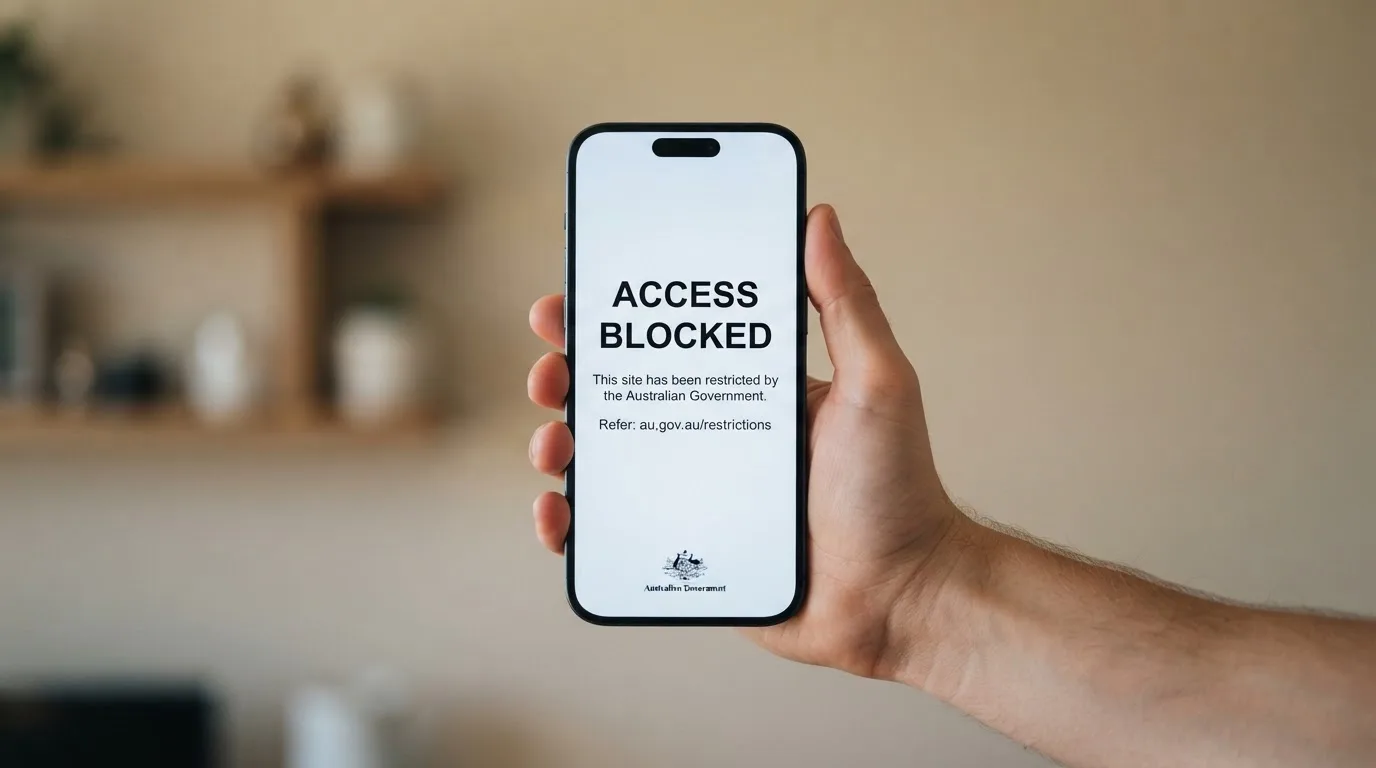
The Australian Communications and Media Authority enforces the prohibition through three mechanisms: investigating complaints, issuing formal warnings to named operators, and directing Australian internet service providers to block offending websites. As of the round reported on 26 June 2026, the ACMA had asked ISPs to block 1,751 illegal gambling and affiliate marketing websites since the first blocking request in November 2019, and more than 230 unlicensed gambling services had withdrawn from the Australian market since enforcement was strengthened in 2017. The most recent round alone added 12 sites to the blocking list, including 7Signs, ChromaBet, Donbet, Duospin, Freshbet, Slots Gem, Jacks Club, Lucky Start, Pointsbetz, Spinrise, Vinyl Casino and Wildsino.
H2 Gambling Capital’s 2025 estimate puts Australian losses to illegal gambling sites at about A$3.9 billion a year, with the share of gambling going through legal channels falling from 74% in 2021 to 64%. Those figures explain why the ACMA keeps blocking sites: the demand is real, and the supply keeps shifting to new domains.
What “high volatility” actually means at the machine
Volatility is a description of variance. A high volatility slot pays out less often than a low or medium volatility title, and when it does pay, the prizes cluster further from the average. A long run of small or zero wins is normal; a single spin can return a multiple of the stake that a low volatility game would never produce.
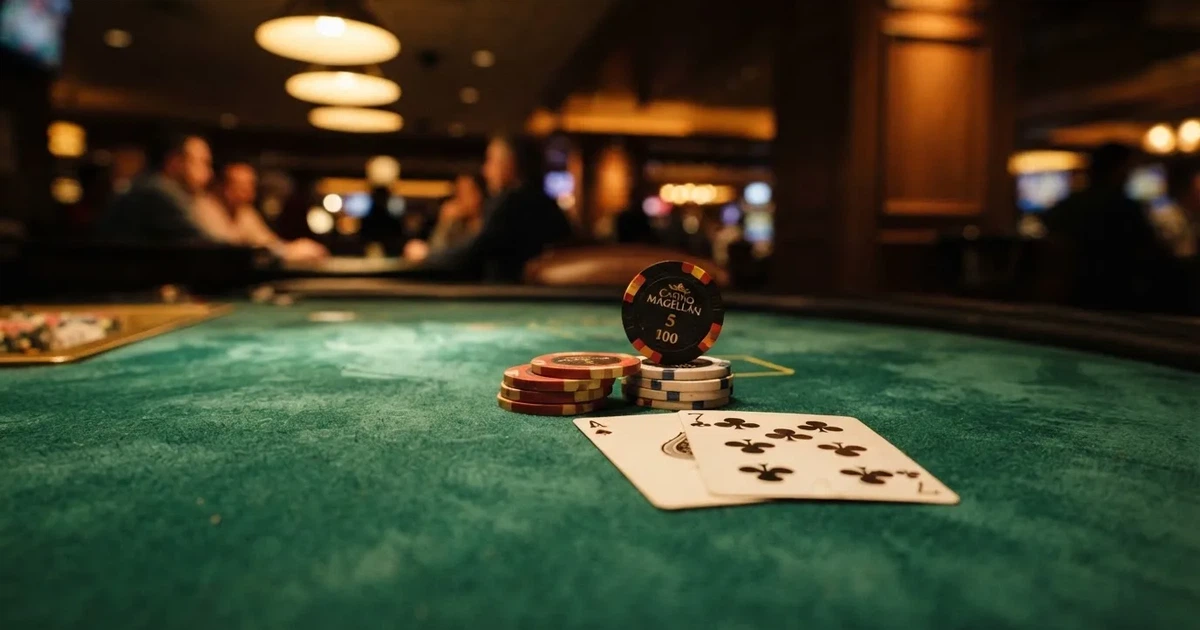
The architecture that produces this distribution is worth knowing about, because it is the same architecture whether the game sits in a Crown Melbourne back room or in an offshore browser tab.
The mechanics behind the paytable
The mechanical ancestor of the modern slot was the Liberty Bell, developed by Charles Fey in San Francisco in the late 19th century. Three reels, five symbols — horseshoes, diamonds, spades, hearts and the bell — with three bells in a row returning the top prize of ten nickels. That machine had roughly a thousand possible combinations: ten symbols on each of three reels gives 10 × 10 × 10 = 1,000 outcomes, weighted by how often each symbol lands.
Modern video slot machines can use five or more reels with fifty or more symbols per reel. The combinatorics explode: the odds against a specific top combination can run to 300 million to one. A classic mechanical three-reel game offers about a thousand possible combinations; a five-reel video slot can offer billions. The result is a paytable with rare, large hits and frequent near-misses — the volatility profile a player feels as long dry patches and sudden bursts.
The payout percentage — what the industry calls return to player, or RTP — is a separate dimension. It is the share of money wagered that the machine returns over a very long run, and it is set by the game’s mathematics. Australian jurisdictions do not set a uniform minimum for pokie-style machines, which is unlike the United States, where Nevada requires at least 75%, Mississippi at least 80% and New Jersey at least 83%. The Australian approach is venue-level harm-minimisation rather than machine-level RTP floors.
Where high volatility shows up in practice
High volatility titles tend to share certain design choices: a smaller number of paylines relative to the number of ways to win, fewer but larger bonus features, and prize structures where the top end is many times the average spin return. Game providers publish volatility ratings alongside RTP, and a slot rated “high” should be approached as a different product from one rated “low” — not a better one, not a worse one, but a product with a different risk shape.
The bankroll implications are straightforward. A player who treats a high volatility slot the way they would treat a low volatility one — short sessions, modest stakes, an expectation of regular small wins — will burn through their bankroll in the dry patches between features. A player who sizes their stake against the long quiet stretches and accepts that the session may produce nothing is treating the product honestly. The arithmetic is the same in either case; the framing is what changes the experience.
Pokies-style machines in Australian pubs, clubs and casinos
Australia runs one of the densest pokie networks in the world outside the United States. By 2010 an estimated 97,103 gaming machines operated outside casinos — a per-capita rate roughly five times that of the United States. New South Wales legalised slot machines in 1956 and remains the largest single market.
As of the most recent state-by-state counts, pokies-style machines outside casinos numbered:
- 87,298 in New South Wales (June 2023)
- 26,380 in Victoria (2021–22)
- 21,122 in Queensland (October 2023)
- 11,672 in South Australia (September 2023)
- 3,587 in the ACT (November 2023)
New South Wales carries more than three times the next state’s count, and the ACT figure is small enough that the territory’s 3,587 machines are a rounding error against the NSW total. Western Australia does not permit poker machines outside the one casino, and Tasmania and the Northern Territory report smaller populations of machines, so the five states above cover most of what a reader would actually find.
The high volatility of these machines, where it exists, is a property of the game being played — many of the same titles that appear in offshore libraries also appear on Australian pub and club floors through licensed arrangements. A player in a NSW club sitting at a machine rated “high volatility” by the publisher is interacting with the same mathematics as a player spinning the same title offshore. What changes is the legal frame around the machine: consumer protection, complaint routes, harm-minimisation messaging on the device, the venue’s responsible gambling officer, and the connection to BetStop.
Land-based table games as a parallel
Crown Melbourne, regulated by the Victorian Gambling and Casino Control Commission (the VGCCC, which replaced the VCGLR on 1 July 2022), offers three baccarat variants — Traditional Baccarat, Crown Baccarat and 2 to 1 Baccarat. The same regulator approves changes to Crown Melbourne’s blackjack variants; its public log records the “Perfect Pairs” side bet being renamed “Crown Pairs” on 23 December 2024 and a new “Free Bet” option with a “Pot of Gold” side bet introduced on 25 March 2024. Under section 66 of the NSW Casino Control Act 1992, a casino operator must not permit a game such as baccarat to be played unless the game and its rules are approved by the regulator, and the operator must make a copy of the approved rules available to patrons on request.
These are not the online product the search was about, but they sit in the same mathematical family — baccarat carries a house edge of 1.06% on the Banker bet, 1.24% on the Player bet and 14.36% on the Tie — and they are what a Melbourne or Sydney resident can lawfully sit down to. Blackjack with optimal strategy runs about 0.28% under liberal Las Vegas Strip rules and about 0.43% under Atlantic City rules; the house edge numbers are tighter, but the volatility of a session is shaped by betting patterns and table rules as much as by the underlying game.
The ACMA’s record on offshore operators pitching high volatility slots to Australians
The ACMA’s enforcement record is the most direct evidence of who is offering these games to Australians. The names below are operators the regulator itself has named in formal warnings under the Interactive Gambling Act 2001. They are not a recommendation, and they are not a ranking — they are a cross-section of the supply the regulator has moved against, presented for the reader who wants to know which brands the search results are pointing at.
The blocking rate as a measure of the offshore market’s scale
The arithmetic that belongs to this section is the running total of blocked sites against the time the ACMA has been issuing blocking requests.
- Running total of blocked sites: 1,751 (as of the round reported on 26 June 2026).
- First blocking request issued: November 2019.
- Months elapsed from November 2019 to the June 2026 snapshot: roughly 79.
A simple blocking rate, treating the count as spread evenly across the period, gives an average of about 22 sites blocked per month, or roughly 265 a year. That is an average, not a monthly figure — single rounds have asked ISPs to block more than a dozen sites at once, and quieter months sit below the average. The honest reading is that the ACMA has been adding blocked sites at a steady clip since late 2019, with bursts when a cluster of new offshore operators appears.
Stating it as a band rather than a single figure: the rate has run at roughly 250–300 sites per year on average since the first blocking request, with individual rounds adding anywhere from one site to more than a dozen. The number a reader should hold onto is the cumulative total — 1,751 sites blocked since November 2019 — because that figure carries the scale of the offshore supply the regulator is working through.
The named operators
The table below covers the brands the ACMA has formally warned for offering prohibited online casino services to Australians. Each row names the brand, the ACMA’s action and the date, the operator behind the brand as the ACMA named it, and what the public listings say about whether the brand is connected to high volatility slots specifically.
| Brand | ACMA action and date | Operator named by the ACMA | High volatility slots — subject support |
|---|---|---|---|
| RocketPlay | Formal warning March 2026 (Pulsup Ltd); earlier warning May 2022 (Dama N.V.) | Pulsup Ltd (Rocketplay) | — |
| Level Up Casino | Formal warning May 2022 | Dama N.V. | Public listings note BGaming content |
| Woo Casino | Formal warning March 2025 | Dama N.V. | — |
| Spirit Casino | Formal warning May 2025 | Dama N.V. | — |
| National Casino | Formal warning July 2025 | Consolutetish S.R.L. | Public listings (Wikipedia) note casino operation |
| Bizzo Casino | Formal warning July 2025 (Consolutetish S.R.L.); earlier warning 2022 (TechSolutions) | Consolutetish S.R.L.; earlier TechSolutions (CY) Group Limited and TechSolutions Group N.V. | — |
| Ignition Casino | Formal warning July 2025 | Bamboo Media | — |
| Instant Casino | Formal warning February 2025 | EOD Code SRL | — |
| Jackbit | Formal warning April 2026 | Ryker B.V. | — |
| Casino Intense | Formal warning April 2025 | Sterplay Holding Ltd | Public listings (ABC, ACMA, Crown Melbourne) note broader operation |
| Sky Crown | Formal warning (Hollycorn N.V.) | Hollycorn N.V. | — |
The dashes in the right-hand column are deliberate. The research for this page did not surface a verifiable, source-attributable statement that any of these brands specifically carries a “high volatility slots” category above the level of an affiliate marketing page, and the page does not invent one. Where the public listings (BGaming, Wikipedia, the ABC’s coverage of the Northern Territory regulator, the ACMA’s own publications and Crown Melbourne’s own site) carry a separate note on the brand, that note is what appears in the cell.
What this list means for a reader
The list is long because the supply is large. The same operator names recur — Dama N.V. appears four times, Hollycorn N.V. once — because the offshore market is concentrated, not fragmented. The ACMA warns a corporate group once, and the regulator’s record shows whether the same group returns under different brand names. A reader who notices Dama N.V. across four of eleven rows is looking at a single corporate family running four differently named casino front-ends, not at four unrelated companies.
The dates also matter. A 2022 warning does not mean the brand is gone; the ACMA’s record shows re-warning the same group under different brand names as new domains appear. The April 2026 warning to Ryker B.V. and the March 2026 warning to Pulsup Ltd are recent. A site that was clean in 2022 may have re-entered the market under a new front-end by 2026.
The Northern Territory wagering licence and what it actually covers
A reader who lands on an offshore casino will often see an Australian jurisdiction named in the footer. The jurisdiction is almost always the Northern Territory, and the licence on display is almost always a wagering licence, not a casino licence.
The Northern Territory Racing and Wagering Commission regulates 52 of Australia’s online bookmakers — including Sportsbet, Bet365 and Ladbrokes — which are licensed in the Territory for tax reasons. The commission has no full-time staff and meets once a month in Darwin. Its job is to license wagering on races and sport placed before the event, plus lotteries and keno. It does not license online casino games, online pokies or in-play betting, because the Interactive Gambling Act 2001 does not let it.
An offshore casino that displays a Northern Territory licence is either displaying a wagering licence it does not have, or displaying a wagering licence it does have for a sportsbook it runs separately from the casino site. Either way, the licence displayed is not a licence for the casino product the reader is being offered. The footer is a piece of marketing, not a regulatory fact.
What a player with a bigger bankroll actually does with high volatility slots
The question this page keeps returning to is what a high volatility slot is for, because the offshore marketing pitches it as a route to a big win and rarely tells the reader what it costs.
A high volatility slot suits a player with a bankroll large enough to absorb long stretches of zero or near-zero returns, and a session length long enough to ride out the variance. It suits a player who treats the session as a stake against a rare event rather than as a steady entertainment spend. It does not suit a player who wants frequent small wins, or a player whose session is short by design, or a player whose bankroll is sized for low volatility play. The mathematics works the same way in either case; what changes is the player’s tolerance for variance.
For an Australian reader, the practical consequence is that the offshore venues offering these products are exactly the venues the regulator is moving against. A reader who wants the volatility profile can find similar mathematics on licensed Australian pub and club pokies, where consumer protection, harm-minimisation messaging on the device, and the connection to BetStop apply. The same is true for table games at Crown Melbourne or The Star Sydney, where baccarat and blackjack operate under regulator-approved rules.
A worked example: what “high volatility” looks like in session terms
The marketing word for a high volatility slot is “massive win potential”. The arithmetic underneath that word is harder.
Consider a session of 200 spins at A$1 per spin, total stake A$200. A high volatility game rated at 96% RTP returns, on average, A$192 across those 200 spins. The expected loss is A$8. The actual outcome is a wide distribution around that A$8 figure: most sessions sit close to the average, but a meaningful share of sessions will show a much larger loss because the long quiet stretches outweighed the occasional large hit, and a smaller share will show a win because the rare hit landed.
That A$8 expected loss is the average over many sessions. No individual session is guaranteed to land within A$20 of A$192 — that is the shape of variance, and the reason the game is called “high volatility” rather than “medium” or “low”.
A player who treats that A$8 as a subscription cost for a chance at a 200x or 500x return is approaching the product honestly. A player who treats it as a steady entertainment spend is mismatched to the product, and will most likely run out of bankroll in the dry stretches before any rare event lands.
The marketing word — in quotes, because the marketing sells the rare event — is “massive win potential”. The arithmetic underneath is a small average loss against a long quiet stretch, with a low probability of a much larger return. The two framings are not contradictory; they are the same product described from different angles.
The safeguards that actually apply to an Australian player
The Australian player-protection framework is built around licensed venues, not offshore sites, and the gap matters.
BetStop
BetStop, the National Self-Exclusion Register, has been live since August 2023. It binds Australian-licensed online and phone wagering services — the bookmakers, the lottery products, the keno services — to honour a player’s request to be excluded. An offshore casino is not connected to BetStop. A player who registers with BetStop has closed off the Australian-licensed routes; the offshore routes remain open because they sit outside the regime.
This is the practical consequence of choosing an offshore site over a licensed venue. The safeguards a reader has heard of — self-exclusion, deposit limits, cooling-off periods, harm-minimisation messaging — apply through the licensed route. Offshore sites have their own internal tools, sometimes more generous than the Australian minimums, sometimes less, and always outside Australian supervision.
The helpline
The National Gambling Helpline is 1800 858 858, free, 24/7, with chat available at Gambling Help Online. The helpline is for the person who has a problem, and for the person who is worried about someone else. It is not a regulatory body and it does not adjudicate complaints against operators — that is the job of state and territory regulators — but it is the route to immediate support.
What an offshore site cannot offer
An offshore site gives no Australian consumer protection, no Australian complaints body, and no Australian recourse if a withdrawal is refused. If the ACMA blocks the site, the player’s balance can be stranded with no path to recover it. The same product, played on a licensed Australian pokie in a NSW club or at a Crown Melbourne table, comes with a venue-level complaints route, a regulator behind that route, and harm-minimisation tools that the venue is required to maintain.
Payments and the rule that an offshore site often breaks
Since 11 June 2024, credit cards, credit-related products and digital currency have been banned as payment for licensed online wagering in Australia, with penalties of up to A$247,500 for operators who breach the rule. Legal deposit routes for licensed wagering are debit card, bank transfer, PayID/Osko and BPAY.
An offshore casino site asking an Australian player for a credit card or a crypto deposit is operating outside the Australian rules. The deposit will succeed; the rule applies to the operator, not to the player. The practical consequence for the player is that the operator’s compliance with Australian payment rules is a meaningful signal — a site that takes credit cards from Australian customers is not running within the Australian regulatory frame at all.
The 2026 reform package
The Interactive Gambling Amendment (Gambling Reform) Bill 2026 passed Parliament on 19 August 2026. Its advertising and inducement measures commence on 1 January 2027 — law with a start date, not yet in force on a 2026 page. A reader who sees inducement offers disappear from licensed Australian wagering marketing in early 2027 is looking at the Bill’s measures taking effect; a reader who sees the same inducement offers appearing from offshore casino sites targeting Australians is looking at the same measures pushing marketing offshore. Either way, the underlying product prohibition does not change: online casino games and online pokies remain unlawful to supply to anyone in Australia.
Tax: what winnings and losses look like at the ATO
Gambling winnings of a recreational player are not assessable income under section 6-5 of the Income Tax Assessment Act 1997, and losses are not deductible. The rule changes if the person carries on a business of gambling, in which case the ATO’s ordinary business income and deduction rules apply. The boundary between a recreational player and a gambling business is fact-specific and the ATO publishes guidance on it; a reader with a serious tax question should check the ATO’s material directly rather than rely on a summary.
What an Australian reader who wants high volatility slots actually does
The search the reader started with leads to offshore sites the ACMA is blocking. The product those sites offer is unlawful to supply to Australians. The player-protection framework applies through the licensed route. The bankroll logic that makes high volatility slots what they are does not require an offshore site; the same mathematics is available on licensed Australian pokies and at Crown Melbourne’s tables.
The practical step, for a reader who came to this page for a shortlist: the lawful shortlist is the licensed venues in the reader’s state or territory, with the understanding that the same volatility profile the offshore marketing is selling sits on machines inside those venues. The reader who wants the licensed route gets consumer protection, regulator oversight and harm-minimisation tools the offshore route cannot match. The reader who wants the offshore route gets a product the Australian regulator is moving against, and no recourse when the regulator moves.
The mechanics the marketing rarely explains
A handful of points the offshore marketing tends to gloss over, because the marketing is selling the rare event rather than the average.
- A high volatility slot does not pay out more often than a low volatility slot. It pays out less often, in larger amounts, with longer stretches between payouts. The “high” in “high volatility” describes the size of the swings, not the size of the return.
- The RTP figure on the paytable is an average across a very large number of spins, not a session guarantee. A session of 200 spins can land anywhere from a substantial win to a substantial loss, with the average sitting somewhere in the middle.
- The bonus features — free spins, multipliers, pick rounds — are the moments when high volatility titles pay their large prizes. A player who never reaches a bonus feature because the bankroll ran out in the base game has experienced the most common shape of a high volatility session.
- The “max win” figure on the paytable is the upper bound of the prize structure, not the expected outcome. A 5,000x max win at A$1 stake is a A$5,000 ceiling, not a forecast.
- The hit frequency — how often any payout lands — is lower on high volatility titles than on low or medium ones. A game that pays once every three spins on average will feel completely different from one that pays once every twelve.
These five points are the basic literacy a reader needs to read a high volatility paytable honestly. The offshore marketing rarely leads with them because they are not the points that sell the product.
What this page is and is not for
This page is for an Australian reader who arrived through a search for “high volatility slots” and needs the legal frame, the regulatory record and the lawful alternatives before deciding what to do next. It is not a recommendation of an offshore site to play at, because no offshore casino can lawfully supply online casino games to a person in Australia. It is not a ranking of the ACMA’s warning list, because the warning list is a record of enforcement, not a quality ordering. It is not an inducement to claim any offer, because the offers described in the search results sit on prohibited product.
The reader’s decision, once the picture is laid out, is between two routes: the licensed route through Australian pubs, clubs and casinos, with consumer protection and harm-minimisation tools the offshore route cannot match, and the offshore route through sites the regulator is moving against, with no Australian recourse. Both routes offer the same underlying mathematics on machines with similar volatility profiles; what differs is the legal frame around the machine, and that frame is what this page is about.
What an Australian reader can do right now
A reader in Australia who wants to act on this page has a small set of practical options.
- Find the licensed pokies venues in their state or territory. NSW carries the largest network by a wide margin; the ACT carries the smallest of the five states that permit pokie-style machines outside casinos; Western Australia does not permit them outside the one casino. The state-by-state counts above give a sense of the network’s scale.
- For table games, Crown Melbourne and The Star Sydney are the licensed casino venues. Both offer baccarat and blackjack variants under regulator-approved rules, with house edges that are tighter than a typical pokie.
- For wagering on races and sport, the 52 Northern Territory-licensed bookmakers are the regulated route, with PayID/Osko, BPAY, debit card and bank transfer as the legal deposit methods.
- For self-exclusion, BetStop binds the licensed wagering route. It does not bind offshore casinos, but it is the strongest safeguard available within the Australian frame.
- For support, the National Gambling Helpline is 1800 858 858, free, 24/7, with chat at Gambling Help Online.
The search that brought the reader here will keep surfacing offshore casino sites, and the ACMA will keep moving against them. The licensed routes above are the routes the regulatory frame actually supports.
Comparison: offshore marketing claim against what the regulator’s record shows
| Offshore marketing claim | What the ACMA’s record and the law actually show |
|---|---|
| “Licensed and regulated” — footer shows a Curaçao or similar offshore licence | The Interactive Gambling Act 2001 prohibits supply of online casino games to anyone in Australia; no Australian jurisdiction issues a licence for them |
| “Big bonuses and free spins for Australian players” | The product being bonus-eligible is the prohibited product; the inducement measures of the 2026 reform package commence 1 January 2027 for licensed wagering |
| “Take credit card or crypto deposits” | Banned as payment for licensed Australian wagering since 11 June 2024; an offshore site accepting these is outside the Australian rules |
| “Self-exclusion available on request” | Self-exclusion applies through the licensed route via BetStop; offshore sites run their own tools outside Australian supervision |
| “Hundreds of high volatility slots” | The mathematics is the same on licensed Australian pokie machines; the licensed venue carries the consumer protection the offshore site does not |
The two columns describe the same product from different angles, and the right-hand column is the one an Australian reader should weigh first.
How the ACMA’s enforcement record reads month by month
A reader who follows the ACMA’s published record sees the rhythm of enforcement: warnings to a corporate group, then formal blocking rounds as new domains appear under related brands, then further warnings to the same corporate group under yet another brand. The April 2026 action against Ryker B.V. is the most recent of the formal warnings covered by the research for this page. The June 2026 blocking round added 12 sites to the blocking list.
A reader who notices that the same corporate group appears across multiple warnings — Dama N.V. four times, Hollycorn N.V. once, TechSolutions twice under different corporate names — is reading the offshore market’s actual structure. The market is concentrated. The marketing makes it look fragmented because the brand names differ; the regulator’s record shows the concentration.
What changes in 2026 and what does not
What changes in 2026 is the running total of blocked sites, which the ACMA publishes after each blocking round. The most recent published total, as of the round reported on 26 June 2026, is 1,751 sites blocked since November 2019, and 230 or more unlicensed services withdrawn from the Australian market since 2017. Each round adds to both figures.
What does not change is the underlying prohibition. The Interactive Gambling Act 2001 continues to make it an offence to supply online casino games, online pokies and in-play betting to a person in Australia. The Interactive Gambling Amendment (Gambling Reform) Bill 2026, passed on 19 August 2026, adds advertising and inducement measures that commence on 1 January 2027 — the prohibition itself is already in force.
A reader looking at the page in early 2026 and a reader looking at it later in the year will see the same legal frame, a higher blocking total, and possibly one or two further formal warnings added to the record. The licensed alternatives — pubs, clubs, Crown Melbourne, The Star Sydney, the Northern Territory-licensed bookmakers — are unchanged.
A short list of the ACMA’s recent blocking rounds and warnings
- 26 June 2026: blocking round, 12 sites including 7Signs, ChromaBet, Donbet, Duospin, Freshbet, Slots Gem, Jacks Club, Lucky Start, Pointsbetz, Spinrise, Vinyl Casino and Wildsino.
- March 2026: formal warning to Pulsup Ltd over Rocketplay.
- April 2026: formal warning to Ryker B.V. over Jackbit and CasinOK.
- July 2025: formal warnings to Bamboo Media over Ignition Casino and to Consolutetish S.R.L. over National Casino and Bizzo Casino; Bizzo Casino had already been the subject of a 2022 formal warning to TechSolutions.
- May 2025: formal warning to Dama N.V. over Spirit Casino.
- April 2025: formal warning to Sterplay Holding Ltd over Casino Intense.
- March 2025: formal warning to Dama N.V. over Woo Casino.
- February 2025: formal warning to EOD Code SRL over Instant Casino.
- May 2022: formal warning to Dama N.V. covering Bambet, Dazard, Level Up, Rocketplay, Wild Tornado and Cobra Casinos.
- September 2022: formal warning to Hollycorn N.V. over Sky Crown and Blue Leo.
The dates are the dates the ACMA published. A reader who clicks through to the ACMA’s website will find the formal warning publication for each entry above, with the operator named and the brand identified.
What to read next
A reader who wants to follow the regulator’s record directly should look at the ACMA’s formal warning page. A reader who wants the licensed venues in their state or territory should look at their state or territory’s gambling regulator — the NSW Liquor & Gaming authority, the Victorian Gambling and Casino Control Commission, the Queensland Office of Liquor and Gaming Regulation, the South Australian Consumer and Business Services, and so on. A reader who wants immediate support should call 1800 858 858 or use the chat at Gambling Help Online.
FAQ
What does high volatility mean for a slot machine?
High volatility describes how steeply a slot’s payouts swing between long quiet stretches and occasional large wins. The game pays out less often than a low or medium volatility title, but when it pays, the prize tends to be larger. It is a shape of variance, not a measure of how much the game returns on average.
How big are the swings between wins on a high volatility slot compared with a steadier one?
A high volatility slot can run through dozens or hundreds of spins with no payout or only small ones, then return a prize many times the average spin return. A low volatility slot pays out more often, but the prizes cluster closer to the average. The two feel different to play, and they cost the bankroll differently over a session.
Is it legal to play high volatility slots at an online casino from Australia?
The Interactive Gambling Act 2001 prohibits the supply of online casino games — including online pokies — to anyone in Australia. The Act targets the provider, not the individual player, so playing from Australia is not by itself a criminal offence. The offshore sites offering these games sit on the wrong side of the prohibition; the ACMA blocks them and warns the operators, and an Australian player has no Australian consumer protection if a withdrawal is refused or the site is blocked with a balance on it.
Are high volatility pokies-style machines common in Australian pubs and clubs?
Australia operates one of the densest pokie networks outside the United States. As of the most recent state counts, 87,298 machines outside casinos in NSW, 26,380 in Victoria, 21,122 in Queensland, 11,672 in South Australia and 3,587 in the ACT. Many of the same titles available offshore appear on these machines under licensed arrangements, with the regulator’s harm-minimisation requirements applying.
Why might a high volatility slot suit a player with a bigger bankroll?
A high volatility slot suits a player whose bankroll is large enough to absorb long stretches of zero or near-zero returns and whose session is long enough to ride out the variance. The mathematics is the same in every case; what changes is the player’s tolerance for the dry patches between features. A small bankroll on a short session will typically be consumed by the dry patches before any rare event lands.
What is the practical consequence of the ACMA’s enforcement record for an Australian player?
The ACMA has asked ISPs to block 1,751 illegal gambling and affiliate marketing websites since November 2019, and more than 230 unlicensed services have left the Australian market since 2017. For a player, the practical consequence is that the offshore casino site they were about to deposit with may already be on the blocking list, may be added during the session, and gives no Australian recourse if it disappears with a balance on it.