
Best Australian Online Pokies in 2026: What “Best” Actually Means in a Prohibited Market
Data current as of 7 November 2026, cross-checked against the Australian Communications and Media Authority’s published blocking and formal-warning notices.
The honest answer to a search for the best Australian online pokies is shorter than the question expects. There is no licensed list to draw from, no state regulator issuing a certificate of approval, no comparison table that ends in a clean verdict. Online pokies are prohibited outright under the Interactive Gambling Act 2001, and no Australian jurisdiction licences them. What a searcher actually finds is an offshore market that exists in spite of the law, policed from Canberra one formal warning at a time, and a separate licensed world of pub, club and casino pokies that bears no relationship to anything sold online. This page walks both sides of that divide, names eleven offshore brands the ACMA has acted against, and lays out the comparison a reader would have to make if any of them were a viable choice.
Table of Contents
- Anatomy of an Online Pokies Paytable
- The Top 11 Brands the ACMA Has Formally Warned
- Legality and the Interactive Gambling Act 2001
- Responsible Play and Where Help Is Free
- Payments and Payouts on Offshore Sites
- What a Sign-Up Bonus Actually Costs
- Mobile Play Without an App to Install
- Reckoning on the Blocking Rate
- Reading the Brands the ACMA Has Named
- What This Page Is Not
- Frequently Asked Questions
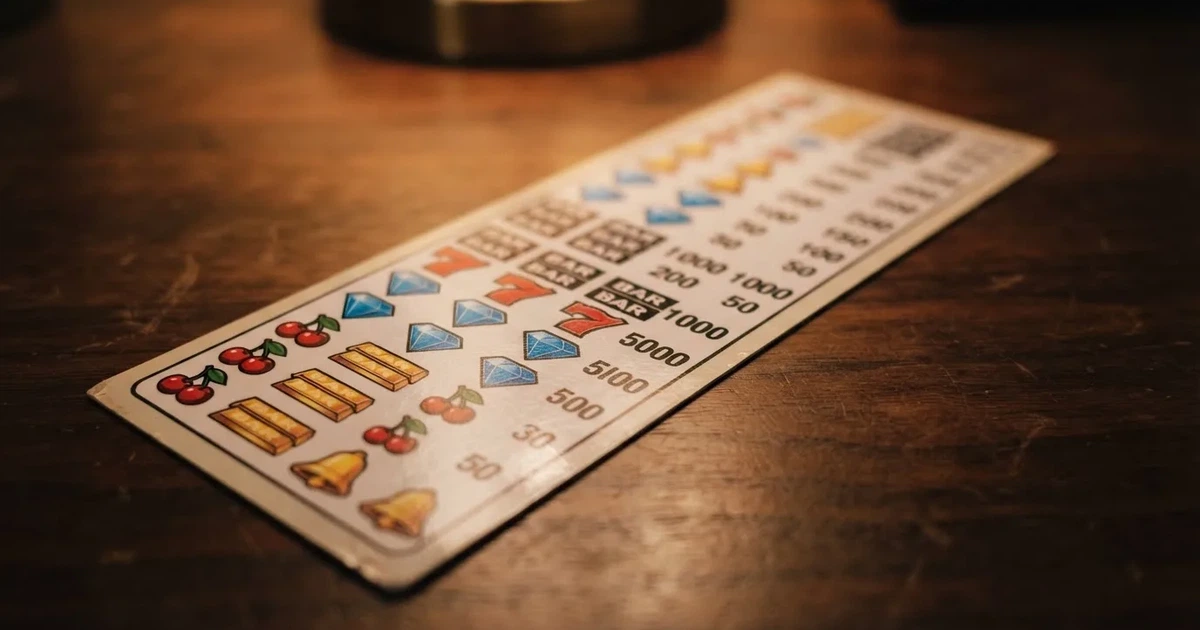
Anatomy of an Online Pokies Paytable
A paytable is the small printed grid inside a pokie that lists every symbol, the value of combinations, and the rules of any bonus feature. The single number a player most often comes back to is the return-to-player — the percentage of all wagered money a game is designed to return over a very long run. A 95% RTP game, played for years, will eventually give back $95 of every $100 it took in; the remaining $5 is the machine’s gross margin, and that number is what the house actually earns. In a licensed Australian venue, the minimum RTP varies by state: 85% in New South Wales, the Northern Territory and Queensland, 87% in the ACT and Tasmania, 87.5% in South Australia, and 90% in Western Australia, where pokies are otherwise confined to the one casino in Perth.

Offshore pokies publish their own RTPs, and the figure runs much closer to 96% than to 85%. Higher RTP, on its face, is friendlier to the player. Two things follow from that. First, a 96% RTP still leaves a 4% house edge, which compounds over thousands of spins the same way an 8.5% edge compounds in a NSW pub. Second, an RTP figure is only as honest as the operator behind it; outside a jurisdiction that audits and enforces it, the number is a label, not a guarantee. A reader who treats a higher published RTP as a reason to choose one offshore brand over another is reading the marketing, not the math.
The other feature worth recognising on a paytable is volatility — how a game distributes its payouts. A high-volatility pokie pays out rarely and in larger lumps; a low-volatility game pays out often and in small amounts. Both can sit at a 96% RTP and feel like completely different products to the punter sitting at them. For someone who buys long sessions and small entertainment, low volatility stretches the bankroll further. For someone who buys the rare big hit and accepts the dry stretches, high volatility offers the larger upside at the cost of longer waits between anything happening at all.
The Top 11 Brands the ACMA Has Formally Warned
The table below names eleven offshore brands that the Australian Communications and Media Authority has, in its own published enforcement record, formally warned for offering prohibited online casino services to Australians. The page does not recommend any of them. The order follows the ACMA’s own record, beginning with the most recent action. A formal warning under the Interactive Gambling Act 2001 is a legal step short of an ISP-level block; it puts the operator on notice and is often the first public marker that a brand is targeting Australians it should not be targeting.

| Brand | ACMA action and date | Operator named by the ACMA | Game-provider footprint |
|---|---|---|---|
| RocketPlay | Formal warning, March 2026 | Pulsup Ltd | — |
| Level Up Casino | Formal warning, May 2022 | Dama N.V. | Listed by BGaming as a partner |
| Woo Casino | Formal warning, March 2025 | Dama N.V. | — |
| Spirit Casino | Formal warning, May 2025 | Dama N.V. | — |
| National Casino | Formal warning, July 2025 | Consolutetish S.R.L. | Listed by Wikipedia as a sample operator |
| Bizzo Casino | Formal warning, July 2025 (earlier 2022) | Consolutetish S.R.L. (earlier TechSolutions) | — |
| Ignition Casino | Formal warning, July 2025 | Bamboo Media | — |
| Instant Casino | Formal warning, February 2025 | EOD Code SRL | — |
| Jackbit | Formal warning, April 2026 | Ryker B.V. | — |
| Casino Intense | Formal warning, April 2025 | Sterplay Holding Ltd | Listed in ABC and ACMA material on the broader enforcement landscape |
| Sky Crown | Formal warning, September 2022 | Hollycorn N.V. | — |
The column on game providers draws only on what third-party listings and the regulator’s own page say about each brand. Most of the eleven carry no public listing in that sense at all, which is itself a marker: a presence in the supplier listings BGaming or other studios maintain is the closest thing the offshore industry has to a footprint.
Two patterns stand out from the table. Dama N.V. is named three separate times across 2022, 2025 and again in 2025 — RocketPlay, Level Up, Woo Casino, Spirit Casino — which is the same corporate parent attracting four distinct formal warnings over four years for the same conduct. A formal warning that does not change behaviour becomes a habit, and a habit that draws four warnings is not a brand that has misunderstood the rules. The second pattern is that the names keep changing while the parent does not. ACMA warns the company behind the brand, not the brand itself, which is why Dama N.V. sits above four differently named sites and Consolutetish S.R.L. sits above two. A punter searching the brand name will not necessarily find the warning the regulator published.
None of the eleven offers a remedy an Australian punter can rely on if a withdrawal is refused. The ACMA warns, blocks and, in conjunction with the Australian Federal Police, refers matters for further action — it does not arbitrate disputes. A balance sitting in an offshore account when the site is blocked remains the punter’s problem, not the regulator’s.
Legality and the Interactive Gambling Act 2001
The frame around every other section is the Interactive Gambling Act 2001, strengthened by the Interactive Gambling Amendment Act 2017. Together, the two make it an offence to provide online casino games, online pokies or in-play betting to a person physically in Australia. No state or territory licences those products. What can be licensed is wagering on racing and sport placed before the event, lotteries and keno — and in practice those licences are issued by the Northern Territory Racing and Wagering Commission, a body with no full-time staff that meets once a month in Darwin yet regulates fifty-two of Australia’s online bookmakers for tax reasons.
For the player, the law’s weight does not fall on the punter. The IGA targets the provider. An Australian sitting in a kitchen in Perth clicking spin on an offshore site is not the person the statute is built to prosecute. What the statute does do, and what a reader thinking of opening an account should understand, is leave the punter with no Australian consumer protection, no complaints body, and no realistic way to recover funds if a withdrawal is refused or a brand disappears. A formal warning puts the operator on notice; it does not hand the player a chargeback.
Minimum age is 18 across the country. A reader under that threshold should not be reading this page for actionable advice; a reader over it should still hear the regulation because it determines what recourse exists if anything goes wrong.
The 2026 reform picture is worth a sentence, because it is law with a future start date, not law in force. The Interactive Gambling Amendment (Gambling Reform) Bill 2026 passed Parliament on 19 August 2026; its advertising and inducement measures commence on 1 January 2027. The provisions most relevant to offshore online pokies — clearer prohibition language, stronger referral powers — will begin to apply once that date arrives. On this page, written in the year the bill passes, the practical effect is forward-looking. The shape of the prohibition does not change between now and the start date.
Responsible Play and Where Help Is Free
The argument for treating offshore pokies the way the law treats them is not moral. It is mechanical. Every figure on this page — the 96% RTPs, the high-volatility dry stretches, the bonus terms research declined to attach — works the same way regardless of which side of the prohibition the operator sits on. The house edge is the house edge. For most adults who place a wager occasionally, that edge is the price of an evening’s entertainment and no more. For a meaningful minority, the same edge is the start of something that stops being entertainment.
If online pokies play ever starts to feel compulsive, financially pressured or hidden from people close to the punter, two Australian services are free, confidential and open around the clock. The National Gambling Helpline is 1800 858 858. Gambling Help Online offers web chat, email and self-help material. Neither requires a name, a Medicare card or a referral. Both are funded to support people who have decided they want to stop and people who have only decided they want to talk.
BetStop, the National Self-Exclusion Register, has been live since August 2023 and binds every Australian-licensed online and phone wagering service. That is the universe of licensed bookmakers and licensed wagering sites — not offshore casinos. Registering with BetStop will exclude a person from the licensed side of the market and do nothing to an offshore brand the regulator has not authorised in the first place. The boundary matters and a reader who wants self-exclusion to cover an offshore account will not find it through BetStop.
For friends and family noticing signs in someone else, the same helpline takes calls from third parties. The helpline is built for the conversation before a crisis as well as the conversation during one.
Payments and Payouts on Offshore Sites
The payment side of this page is informational, not advisory. There is no licensed Australian online pokies product to deposit into or withdraw from, so the only thing to describe is what an offshore site typically offers and where those methods intersect with Australian rules that do still apply.
PayID is the instant-pay rail run through the New South Wales Payments Operator’s New Payments Platform. It clears in seconds, runs on the bank account a punter already holds, and is the same rail licensed Australian wagering services use. An offshore casino asking a punter for a PayID is asking the punter’s bank to credit an account that, on the ACMA’s published view, should not be receiving that credit. Whether the bank blocks it, flags it or processes it depends on the bank. The fact that PayID is convenient and Australian-built says nothing about whether the merchant on the receiving end is one the bank should be paying.
Digital currency is the other common route. Crypto deposits and withdrawals are how many offshore operators sidestep the card and bank rails entirely. Since 11 June 2024, credit cards, credit-related products and digital currency have been banned as payment for licensed online wagering in Australia, with penalties of up to $247,500 for the operator. That ban applies to Australian-licensed wagering — which is racing, sport, lotteries and keno, not online pokies. An offshore pokies site asking for a credit card or a Bitcoin deposit is not bound by that rule. A punter using one is using a payment method their own country has judged unsuitable for legal wagering.
For licensed wagering, the legal deposit routes are debit card, bank transfer, PayID/Osko and BPAY. None of those should be confused with a recommendation to use them for an offshore casino. A licensed wagering deposit, made into a licensed operator, sits inside Australian consumer law; the same debit card used to fund an offshore site does not.
On the withdrawal side, two practical points survive across the offshore category. One: payouts are usually fastest on the same rail the deposit came in on, so a crypto deposit returns as a crypto withdrawal, and a PayID deposit returns to the same bank account. Two: the rail moving the money has very little to do with whether the operator agrees to send it. A three-day PayID withdrawal that never arrives is still no withdrawal. That distinction is the one a payout table cannot draw and the one a reader is most likely to miss.
What a Sign-Up Bonus Actually Costs
The bonus terms on offshore pokies sites follow a recognisable shape. A first deposit unlocks a matched percentage, sometimes 100%, sometimes 200%, sometimes larger, with a cap that varies from a few hundred dollars to several thousand. Free spins arrive in batches tied to specific games. The wagering requirement sits somewhere between thirty and fifty times the bonus amount, occasionally higher.
Wagering requirements are where the marketing language separates from the arithmetic. A A$500 bonus with a 40x wagering requirement obliges the punter to place A$20,000 in qualifying bets before the bonus, and any winnings from it, can be withdrawn. A 96% RTP pokie, run through A$20,000 in qualifying bets, returns A$19,200 on average and costs the punter about A$800 in expected value. That is the realistic price of clearing the bonus, not the matched A$500 the marketing led with.
Max-cashout caps and game-weighting rules make the picture worse in specific, often invisible ways. Table games and many live-dealer games contribute zero or a reduced percentage toward wagering, which forces the wagering onto pokies. Time limits compress the clearance window into days rather than weeks. The maximum single bet while wagering is often capped at a level low enough to make a high-volatility game effectively unusable. Read together, the bonus is not the headline figure; it is the smallest number visible from the fine print.
The free spins that arrive with the same welcome package carry their own terms, usually a separate wagering multiplier applied to spin winnings and a cap on how much of those winnings can be withdrawn. The headline number of free spins tells a punter nothing about what those spins end up worth in cleared cash.
The single sentence a reader should hold onto: the bonus is the price of admission, not the prize, and the price is paid in time at the machine and in the gap between published RTP and what survives the wagering multiplier.
Mobile Play Without an App to Install
There is no such thing as a legal Australian online pokies app, in the sense of an app distributed through the Apple or Google stores that delivers real-money pokie play to a person in Australia. The app stores themselves do not carry those products, and the Interactive Gambling Act makes it an offence to provide them. What an Australian punter who wants mobile access actually finds is the mobile browser version of an offshore site, which is to say the same offshore site rendered through a phone screen.
The technical reality of mobile browser play is unremarkable. Modern offshore sites are built responsively, deposit and withdrawal flows run on the same page as the desktop version, and the games run on HTML5 without a separate download. What changes between desktop and mobile is the screen real estate and the patience of a punter using one thumb. What does not change is the legal status of the play or the consumer-protection position of the punter.
A punter who reads a third-party app-store listing for a “real money pokies app” in Australia is being shown either a licensed wagering product rebranded for the search or an offshore brand whose app is not on the Australian store. The first is a sports or racing book, not pokies; the second is reachable through the mobile browser but not from the official store. Either way, the app framing in the listing is not the framing the law gives the product.
The choice that does exist on the mobile side is between offshore mobile-browser play and licensed mobile wagering. They are not substitutes for each other; one is prohibited and the other does not include pokies. A punter who wants to bet on the Melbourne Cup from a phone does so through a licensed bookmaker’s mobile site or app; a punter who wants to play pokies on a phone does so through an offshore site’s mobile site, on the terms described elsewhere on this page.
Reckoning on the Blocking Rate
The blocking-rate calculation is the page’s arithmetic, drawn from the regulator’s own published record. As of 26 June 2026, the ACMA had directed Australian internet service providers to block 1,751 illegal gambling and affiliate marketing websites since the first blocking request in November 2019. That is the running total over roughly six and a half years of enforcement, beginning from zero. The arithmetic, on the inputs the regulator has published, gives a band rather than a single figure: between about 17 and 19 sites blocked per month across the full life of the program, with the rate higher in recent years and lower in the first twelve months while the legal framework was being tested. The band reflects the same data seen at different levels of smoothing; the underlying rate has risen as the ACMA’s block list has lengthened, so a more recent window gives a higher monthly figure than a six-and-a-half-year average.
The point of stating the band rather than a single number is that the rate is itself an enforcement signal, not a count of how many sites exist. The ACMA blocks the sites it has the standing to block, after a process of formal warning and referral; the offshore industry generates new sites faster than they can be processed. A punter looking at the block list as a measure of how many illegal sites there are in Australia is reading the regulator’s capacity, not the market’s size. That scale, balanced against the billions lost to illegal gambling annually, is the measure of what the prohibition is up against.
The share of gambling going through legal channels has fallen from 74% in 2021 to 64% as of the 2025 estimate. That downward movement is the trend the regulator’s blocking program is responding to. The block list is the response; the share of legal-channel gambling falling is the problem the response is built to address.
Reading the Brands the ACMA Has Named
The eleven brands the ACMA has formally warned are not interchangeable, and the differences among them are worth a careful read before any of them is dismissed out of hand. The common thread — that none can be licensed in Australia — applies to all of them. What separates them is the route by which the regulator reached them, and what that route suggests about the operator’s likely behaviour.
RocketPlay carries two markers. The first is a March 2026 formal warning to Pulsup Ltd for the .com.au version of the brand; the second is an earlier May 2022 warning to Dama N.V. for the same brand. The fact that the operator name changed while the brand stayed the same is the closest thing to a smoking gun for a corporate restructuring designed to put distance between a brand and its enforcement record. A punter who takes the .com.au warning as a reason to find a different domain of the same brand is reading the situation correctly.
Level Up Casino is one of four brands sitting under Dama N.V., the parent that has collected more ACMA formal warnings than any other operator in the dataset. A Dama N.V. brand is, on the ACMA’s own record, an operator that has been told four times what the rules are and has continued in the same direction.
Woo Casino and Spirit Casino share the Dama N.V. parent and were both warned in 2025. Two warnings in one year to the same operator is not a one-off enforcement; it is a pattern that the ACMA’s published record makes visible. The brand names are different and the warning dates are months apart, which is also the point.
National Casino and Bizzo Casino share Consolutetish S.R.L. as the operator of record for a July 2025 warning, and Bizzo carries a further earlier 2022 warning to TechSolutions. Two operators, one brand, multiple warnings: a punter who treats “different site” as “different company” is being misled by the surface.
Ignition Casino was named in July 2025 through Bamboo Media, an operator name not previously visible in the ACMA’s earlier rounds. That makes it harder to pattern-match on prior warnings, but the conduct the regulator warned about is the same prohibited offering, and the licensing status the ACMA publishes is the same null.
Instant Casino sits under EOD Code SRL, warned in February 2025, and is one of the brands whose ACMA action is recent enough that a punter seeing a fresh advertisement for it is being shown a brand the regulator has formally addressed in the last eighteen months.
Jackbit, warned through Ryker B.V. in April 2026, is the most recent action in the dataset. The pattern it fits is the same one the others fit: a parent company, a brand name, a warning, and the offshore site continuing to operate. A punter who wants to read that as evidence the warning was ineffective is reading the regulator’s enforcement mechanism, not its strategy.
Casino Intense was warned through Sterplay Holding Ltd in April 2025. Its listing in third-party material on the broader enforcement landscape is what gives it a game-provider footprint at all, and the same listing is the only material the public record carries on its supplier relationships.
Sky Crown is the oldest in the dataset, warned through Hollycorn N.V. in September 2022. A punter comparing the age of the warning with the brand’s continued operation is reading a long enforcement history, not an outdated one.
The single sentence the eleven rows together support: a brand’s offshore licence is a corporate registration, not a regulator’s authorisation, and a formal warning from the ACMA is the closest the public record gets to a published reason to avoid that particular brand.
What This Page Is Not
A search for the best Australian online pokies turns up a great deal of confident ranking content that does not survive a close read of the law. This page is not that content, and a reader arriving here expecting a Top-10 shortlist of clickable brands has been told what to expect at the top of the page: there is no such list, because there is no such product. A searcher who wants offshore casino play, of the kind the ACMA warns about, can find it without this page’s help. A searcher who wants a licensed Australian online pokies product cannot be given one, because it does not exist.
What the page does is describe the landscape a searcher is sitting in: what a paytable actually says, what RTP and volatility do to a session, what the ACMA’s enforcement record shows about the eleven named brands, where help is free if any of this stops being entertainment, and what an offshore welcome bonus actually costs the punter who claims it. The arithmetic the page runs is the arithmetic of enforcement — 1,751 blocks since November 2019, a band of monthly block rates, the A$3.9 billion lost to illegal sites — rather than the arithmetic of a turn at the reels. Both kinds of arithmetic belong on the page; what does not is a recommendation that any of the eleven brands is a reasonable place to play.
For the reader who arrived looking for a recommendation, the honest answer is that the question, in this market, is the wrong shape. Online pokies are not legal to provide to Australians, no operator can be licensed to provide them, and the regulator’s enforcement record over the eleven named brands is the most informative dataset the public has. The page’s verdict on the market is the one the law has already published.
Frequently Asked Questions
Is “Australian pokies online” a licensed category recognised by any state regulator?
No. Online pokies are prohibited under the Interactive Gambling Act 2001 and no Australian state or territory issues a licence for them. The licensed pokie product is the one inside pubs, clubs and casinos, regulated separately by each state and territory. A brand using the words “Australian pokies” is describing its marketing positioning, not its licensing status.
Is there a legal Australian online pokies app, as opposed to a mobile browser site?
No. There is no Australian-licensed app that delivers real-money online pokies, and the major app stores do not carry one. The licensed mobile products available are wagering apps from Australian-licensed bookmakers covering racing, sport, lotteries and keno. An offshore pokies site accessed through a mobile browser is not the same product and is not covered by the same rules.
What’s the difference between “Australian pokies online” and pokies in an Australian venue?
Pokies in a licensed Australian venue are regulated state by state, with minimum RTPs set by each jurisdiction between 85% and 90%, venue-level harm-minimisation measures, mandatory pre-commitment cards in Tasmania from late 2025, and connection to BetStop’s National Self-Exclusion Register. Offshore online pokies are none of those: the venue, the regulator and the consumer-protection regime are absent. The product on the screen is similar; everything around it is not.
Do sign-up bonuses offered on “Australian pokies online” sites come from a local operator?
No. The local operator does not exist, because no Australian operator is licensed to offer online pokies. Bonuses advertised by offshore brands targeting Australians are offered by the offshore operator itself, governed by the offshore operator’s terms, and enforceable only under whatever jurisdiction the offshore licence comes from — which is not Australia.
Can a PayID-friendly “Australian online pokies” site still be operating from offshore?
Yes. PayID is the Australian instant-pay rail; an offshore site can accept PayID deposits by holding an Australian bank account or through an intermediary that does. The presence of PayID as a payment method tells a punter nothing about where the operator is incorporated or under which regulator it runs. The licensed Australian wagering operators that use PayID do so under Northern Territory Racing and Wagering Commission oversight; an offshore casino that also offers PayID does so outside that regime.
Does the word “Australian” in a pokies site’s name indicate its actual licensing jurisdiction?
No. Brand names are commercial choices and are not regulated for accuracy in the way a financial product description is. Several of the eleven brands in the ACMA’s enforcement record use “Australian” or a state name in their branding and are nonetheless operated from offshore, by overseas companies, under non-Australian licences. The name on the page is not the jurisdiction on the licence.