
Best Aus Pokies Online Australia: Why This Search Has No Clean Answer
The phrase “best aus pokies online australia 2026” looks like a request for a ranked shortlist, the way a reader might ask for the best espresso machine or the best running shoe. Online pokies in Australia do not work that way. The product itself sits on the wrong side of a federal prohibition, and the regulator has spent several years telling offshore operators, one by one, that offering it to Australians is unlawful. What follows is not a ranking. It is a working map of the landscape the search lands in: the legal frame, the regulator’s running action list, the payment side, the bonus language that still circulates around these brands, and a fair-comparison sketch of eleven brands the ACMA has named.
The data below is current as of 30 October 2026 and was checked against formal warnings published by the Australian Communications and Media Authority and against the regulator’s own blocking-round notices.
Table of Contents
- Why There Is No Licensed Online Pokies Product in Australia
- What the ACMA Has Actually Done
- Responsible Play: What Actually Applies to a Reader in Australia
- The Money Side: What Payments Even Mean Here
- What an Online Pokies Bonus Actually Involves
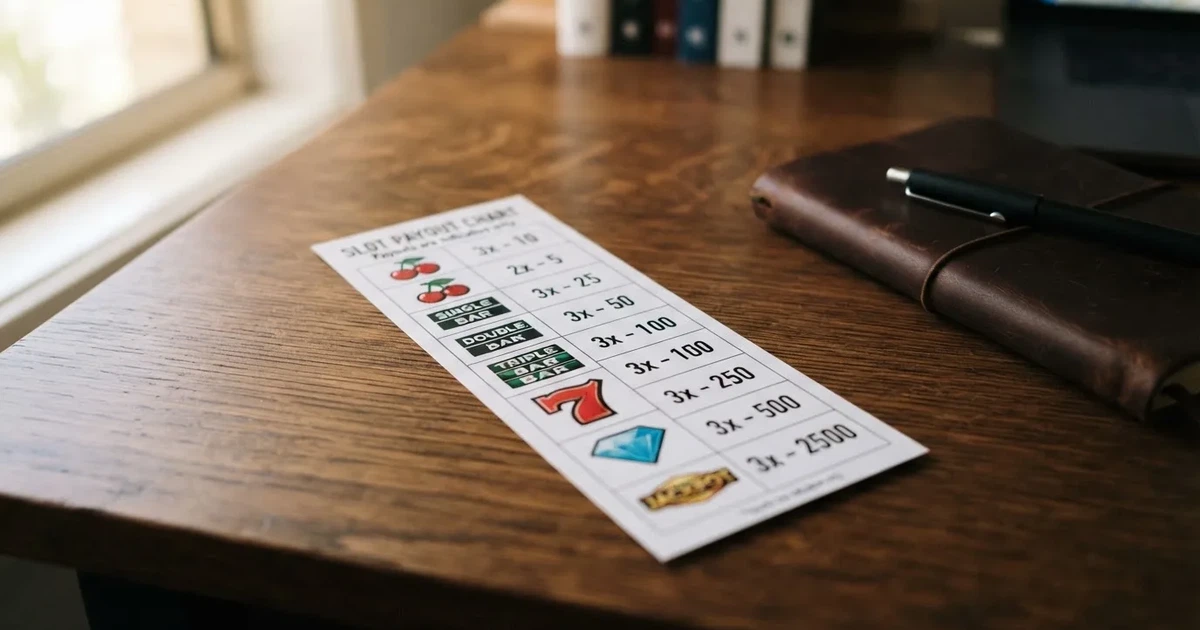
- Reading a Pokie Paytable
- Eleven Brands the ACMA Has Named
- Comparing What Cannot Be Ranked
- What a Fair Comparison Would Actually Weigh
- The Wider Australian Gambling Landscape, in Context
- Tax, Withdrawals and the Practical Edge
- Frequently Asked Questions
Why There Is No Licensed Online Pokies Product in Australia
Under the Interactive Gambling Act 2001, tightened by the Interactive Gambling Amendment Act 2017, it is an offence to provide online casino games, online pokies or in-play wagering to a person physically in Australia. No state or territory issues a licence for that product. What is licensable, and what the Northern Territory Racing and Wagering Commission handles for tax reasons across roughly fifty-two online bookmakers including Sportsbet, Bet365 and Ladbrokes, is wagering on races and sporting events placed before the event, plus lotteries and keno. The NTRWC itself runs on a part-time model, with no full-time staff and a single monthly meeting in Darwin. Online pokies sit outside that entire licensable frame.

That distinction matters because the brands that surface under this search display foreign licences — Curaçao, Anjouan, occasionally the Malta Gaming Authority. None of those change the position for a player in Australia. The IGA targets the provider, not the punter, so an Australian who opens an account is not personally at risk of prosecution. But the protection regime that comes with a domestic licence — a complaints body, dispute resolution, a regulator who can compel a payout — does not exist offshore. A withdrawal the operator declines to honour has, in practice, no Australian backstop, and the ACMA can direct local ISPs to block the site while a balance is still sitting on it.
The bill currently sitting on top of this frame, the Interactive Gambling Amendment (Gambling Reform) Bill 2026, passed Parliament on 19 August 2026. Its advertising and inducement measures commence on 1 January 2027. It is law with a start date, not yet in force on a 2026 page, and the prohibitions it adds land after the calendar turns.
What a “Pokie” Actually Is and Is Not Online
The word “pokies” in Australia refers to electronic gaming machines. They have been legal in clubs since 1956 in New South Wales, where registered clubs first installed them, and they operate under state and territory regulation in every jurisdiction except pubs and clubs in Western Australia, where a ban took effect when Crown Perth opened in 1985. Crown Perth’s own machine count climbed from roughly 200 in 1985 to around 2,500 today, all individually approved by the state’s Gaming and Wagering Commission.
The minimum return-to-player for those land-based machines is set state by state: 85% in New South Wales, the Northern Territory and Queensland, 87% in the Australian Capital Territory and Tasmania, 87% at Crown Melbourne (generally 85% elsewhere in Victoria), 87.5% in South Australia, and 90% in Western Australia. Those figures govern what a licensed pub or club poker machine is required to return to players over the long run. They say nothing about an offshore online pokie, which has no Australian approval and no Australian audit.
The online product is, mechanically, a digital version of the same idea — reels, symbols, paylines — wrapped in software that no Australian regulator has tested. The legal status is what flips. Land-based pokies are licensed and supervised. Online pokies offered to Australians are prohibited.
What the ACMA Has Actually Done
The Australian Communications and Media Authority does not just write letters. It runs a blocking regime and a formal-warning regime, both of which leave a public trail. As of the figures reported in June 2026, the ACMA had asked Australian ISPs to block 1,751 illegal gambling and affiliate marketing websites since the first blocking request in November 2019, and more than 230 unlicensed gambling services had left the Australian market since enforcement was strengthened in 2017. The blocking request of November 2019 is the first blocking request — the regulator’s earlier round of blocking requests had a different character, and that November 2019 date is the one the published total is anchored to.
That gives a usable arithmetic. The running total since November 2019 is 1,751 blocked sites across roughly six and a half years, an average of around 270 sites per year, or close to 22 to 23 per month, when set against the period from November 2019 to the June 2026 reporting date. The round reported on the same day, 26 June 2026, asked ISPs to block twelve more sites: 7Signs, ChromaBet, Donbet, Duospin, Freshbet, Slots Gem, Jacks Club, Lucky Start, Pointsbetz.com, Spinrise, Vinyl Casino and Wildsino. That round on its own is one twelfth the size of the year’s average, which fits a pattern the ACMA’s published figures show: enforcement comes in waves, and a single blocking request is the visible tip of a much larger underlying list.
| ACMA Action | Frequency |
|---|---|
| Blocking Request | 270 sites/year |
| Formal Warning | Varies by operator |
The arithmetic is a statistical estimate. It is an average over the running total and the elapsed period, not a guarantee that any given month carries a particular number of blocks. The actual monthly figure has run higher and lower than this band over the same period.
The Shape of the Loss Side
H2 Gambling Capital’s 2025 report put Australians’ annual losses to illegal gambling sites at around A$3.9 billion, and noted that the share of gambling going through legal channels had fallen from 74% in 2021 to 64%. The share is not the same as the loss figure; the loss figure is what Australians are estimated to spend on illegal sites in a year. The legal-channel share dropping means more of the total spend is leaving the regulated system, not that the legal system has shrunk in absolute terms. Together the two figures describe the direction the market has been moving since the 2017 amendment tightened enforcement.
Formal Warnings, Named Operators
Formal warnings are a separate instrument from the blocking regime. They are issued to the operator behind a service, they are published by name, and they carry the date. The ACMA’s published list of warnings is the public trail a reader can check directly.
In May 2022 the ACMA warned Dama N.V. over six casino brands: Bambet, Dazard, Level Up, Rocketplay, Wild Tornado and Cobra Casinos. In March 2025 the same operator was warned over Woo Casino, and in May 2025 over Spirit Casino. The Dama N.V. footprint is unusually wide for a single operator and shows up three times on the public warning register under one parent company name.
In February 2025 the ACMA warned EOD Code SRL over Instant Casino. In July 2025 three more warnings went out: to Bamboo Media over Ignition Casino, and to Consolutetish S.R.L. over National Casino and Bizzo Casino. Bizzo had already been warned in 2022, when TechSolutions (CY) Group Limited and TechSolutions Group N.V. were the named recipients. The same brand appearing twice on the warning register under different parent companies is a pattern, not an isolated event.
In April 2025 the ACMA warned Sterplay Holding Ltd over Casino Intense. In September 2022 it warned Hollycorn N.V. over Sky Crown and Blue Leo. In April 2026 it warned Ryker B.V. over Jackbit and CasinOK. And in March 2026 the ACMA warned Pulsup Ltd over Rocketplay.com.au, which sits on the same brand name as one of the 2022 Dama N.V. brands and is a useful example of how an operator can re-appear under a different company name.
A warning is not a fine. It is a public statement that the regulator has found a breach of the Interactive Gambling Act 2001 and has put the operator on notice that further action may follow. Its practical effect is reputational; its enforcement teeth sit with the blocking regime.
Responsible Play: What Actually Applies to a Reader in Australia
If the question is what an Australian player can rely on, the answer separates cleanly by regime. Australian-licensed wagering services are bound by BetStop, the National Self-Exclusion Register, which has been live since August 2023. Signing up with BetStop puts a stop on further wagering with every Australian-licensed online and phone operator. Offshore casino sites are not connected to BetStop. Self-excluding through BetStop does not stop an offshore account, and an offshore operator has no obligation to honour a BetStop registration.
Help lines are a different matter and reach whoever calls them. The National Gambling Helpline is 1800 858 858, free, twenty-four hours a day, with chat available through Gambling Help Online. The service is for anyone whose gambling has started to feel compulsive or stressful, regardless of whether the gambling in question happens at a licensed Australian venue, on an Australian-licensed wagering account or on an offshore site.
There is also the matter of where the money comes from. Since 11 June 2024, credit cards, credit-related products and digital currency have been banned as payment for licensed online wagering in Australia, with penalties of up to A$247,500 for operators that accept them. The legal deposit routes are debit card, bank transfer, PayID and Osko, and BPAY. A site that asks an Australian customer for a credit card or a crypto deposit is, by definition, not running under the Australian rules — because the only operators those rules bind are the ones who hold an Australian licence.
The Money Side: What Payments Even Mean Here
The payment question that often comes attached to this search is whether PayID makes an offshore site “more Australian” or more legal. It does not. PayID is a payment rail that uses a BSB and account number, or a phone number, or an ABN, to route a transfer through the New Payments Platform in real time. It is built by Australian financial institutions and is used, among other things, to fund licensed Australian wagering accounts. None of that changes the legal status of the destination. If the destination is an offshore operator offering prohibited online casino games or online pokies, the payment is to an unlicensed recipient.
A reader who sees “PayID deposits” advertised on an offshore site is looking at a marketing line. The operator is advertising a fast and convenient way to move money, and the speed and convenience are real. The legal status of what the money buys is unchanged.
The same applies to withdrawals. A fast payout on an offshore site is fast because the operator chooses to release funds quickly; it is not fast because any Australian body is supervising the release. A withdrawal the operator decides to refuse has no Australian recourse. The ACMA’s blocking power sits over the site, not over the operator’s bank account, and a balance held on the site at the moment it is blocked is, in practice, frozen.
What an Online Pokies Bonus Actually Involves
A bonus offer on an offshore site typically takes one of three shapes: a deposit-gated package, where a deposit unlocks a percentage match, a “free spins” allocation tied to a specific slot, or a no-deposit offer of a small credit or a small number of spins on registration. The mechanics are common to the offshore market and are not specific to any one brand.
The wagering requirement is the figure that matters. A bonus carry a multiplier — the bonus amount that has to be turned over before any winnings can be withdrawn. Twenty times is ordinary; forty times is heavy; anything above that is at the steep end of the offshore market. There is usually a maximum-cashout cap on winnings from a no-deposit bonus, and there is usually a list of games that count towards the wagering requirement at a reduced rate, or not at all. Slots almost always count in full; table games often count at ten per cent or zero.
A punter who reads the offer at face value is reading the marketing. The arithmetic lives in the small print, and the small print is where the offer’s real cost sits. The bonus word in the headline is sized for the headline; the multiplier is sized for the punter’s wallet.
What the Page Does Not Carry
The bonus terms for the brands discussed below were not collected, because the only sources for them were affiliate marketing pages. Affiliate pages quote a brand’s headline terms at the time the affiliate last refreshed them, and the underlying operator can change terms without telling the affiliate. A reader who wants the actual multiplier, the actual cap and the actual excluded games has to read the operator’s own terms page at the moment they intend to claim. What this page can do is name the shape of the offer and the questions to put to it, not quote a number that may have shifted since publication.
Reading a Pokie Paytable
A paytable is the panel inside a slot game that lists every symbol, its value, the win lines it appears on, and the rules for the bonus features. It is the document a punter is supposed to read before staking, and on an offshore site it is the only document the operator has no incentive to misrepresent, because the maths is set by the game provider and is auditable by the provider’s own test houses.
A standard paytable will show the high-paying symbols at the top — the themed icons, often five or six of them, with five-of-a-kind payouts listed in multiples of the line bet. Below those sit the mid-tier symbols, usually the playing-card ranks from ace down to nine. Below those sits the scatter, which pays anywhere on the reels rather than on a line, and the wild, which substitutes for other symbols. The paytable also lists the free-spins trigger, the bonus-round trigger, and any gamble feature that lets a punter double a win on the flip of a card.
The return-to-player figure is sometimes displayed on the paytable and sometimes buried in the game’s information screen. It is a long-run average, not a guarantee for any session. A ninety-six per cent RTP means the game keeps four per cent of every dollar wagered, on average, across millions of spins. It does not mean the next hundred spins will land at four per cent.
Volatility is a separate axis. A high-volatility game pays out rarely and in larger chunks; a low-volatility game pays out often and in small chunks. The RTP figure is the same shape, on average, but the distribution across a session is different. A punter with a small bankroll playing a high-volatility game can lose the bankroll in a long cold stretch; the same punter on a low-volatility game will see more small wins and a slower drain.
Eleven Brands the ACMA Has Named
The eleven brands below are not a ranking. They are the brands the ACMA itself has put on the public record as having offered prohibited interactive gambling services to Australians. The list is in the order set by the regulator’s published warnings.
For each, the line that matters most is the second one: the operator name and the warning date. The product line is the same in every case, because the law is the same in every case. What changes is the date the regulator acted and, occasionally, the parent company that fronts the brand.
RocketPlay
The ACMA issued a formal warning to Pulsup Ltd over Rocketplay.com.au in March 2026. A separate warning to Dama N.V. in May 2022 also covered the Rocketplay brand, which means the same brand has surfaced twice on the public warning register under two different parent companies. This is an offshore service, and such sites fall outside the Australian licensing frame. No further operational data for this brand is confirmed.
Level Up Casino
Dama N.V. was warned in May 2022 over six brands, of which Level Up was one. The warning covered the full set under one parent company. The brand appears in Bgaming’s own listings as a distribution partner, which is a statement Bgaming makes about where its games are placed, not a statement Level Up makes about itself. This site operates without an Australian licence.
Woo Casino
The ACMA warned Dama N.V. over Woo Casino in March 2025, three years after the same parent company was warned over a different set of brands. A repeat warning to the same parent is a public statement that the earlier warning did not produce a change in behaviour. As with other offshore operators, Australian licences do not apply here. No additional data is available for Woo Casino.
Spirit Casino
Spirit Casino was added to the same Dama N.V. warning register in May 2025, four months after Woo. Two warnings to the same parent in the same year is a pattern, not an isolated event. This operator provides no Australian-licensed content. Information on game providers or payment methods for this brand remains unverified.
National Casino
The ACMA warned Consolutetish S.R.L. over National Casino in July 2025. The Wikipedia entry on gambling in Australia lists National Casino among offshore brands, which is a statement of how the encyclopaedia categorises the brand, not a statement of the brand’s own regulatory status. This service remains prohibited in Australia.
Bizzo Casino
Consolutetish S.R.L. was warned over Bizzo Casino in July 2025. Bizzo had already been the subject of a 2022 formal warning to TechSolutions (CY) Group Limited and TechSolutions Group N.V. Two warnings to the same brand under two different parent companies, three years apart, is the kind of pattern the regulator’s repeated-action argument is built from. This site holds no Australian authorisation. No specific provider data is listed for Bizzo Casino.
Ignition Casino
The ACMA warned Bamboo Media over Ignition Casino in July 2025. Bamboo Media is a parent company that did not appear in earlier waves of warnings, which is consistent with operators cycling through new front companies after the regulator has named an earlier one. Australian regulation does not extend to this service. The operator has not publicly disclosed its game-library or payment-support specifics.
Instant Casino
The ACMA warned EOD Code SRL over Instant Casino in February 2025. The warning was the first public action against this brand. This remains an unlicensed offshore entity in the eyes of Australian law. No specific data is available for Instant Casino.
Jackbit
Ryker B.V. was warned by the ACMA in April 2026 over Jackbit and CasinOK, with the same warning covering two brands. A single warning covering multiple brands lets the regulator reach several at once when they share a parent, and the parent-company pattern shows up again. This entity lacks an Australian licence. Specifics regarding the gaming software and supported payments for this service remain opaque.
Casino Intense
The ACMA warned Sterplay Holding Ltd over Casino Intense in April 2025. The brand has appeared in Australian media coverage of offshore casino enforcement and on the ACMA’s own formal-warning register, and Crown Melbourne’s coverage of approved table-game variants names Casino Intense among the brands the regulator has acted against. None of those references amount to an Australian endorsement. This service is not authorised locally.
Sky Crown
The ACMA issued a formal warning to Hollycorn N.V. over Sky Crown and Blue Leo in September 2022. The warning covered two brands under one parent. Sky Crown has not appeared on the ACMA’s blocking list in any of the publicly reported rounds, which does not contradict the warning — a formal warning and a blocking request are separate instruments. This service is unlicensed in Australia. This brand has not published details concerning its provider partnerships or payment integrations.
Reading the Eleven Together
Three patterns are visible across the eleven. First, the parent-company pattern: Dama N.V. alone accounts for four of the eleven entries, and Consolutetish S.R.L. accounts for two more, so six of the eleven sit under two parent companies. Second, the re-brand pattern: Bizzo and Rocketplay both appeared on the warning register twice, under different parent names, which is consistent with operators re-fronting a brand after one parent has been named. Third, the recency pattern: seven of the eleven warnings are dated 2025 or 2026, which matches the regulator’s stated direction of travel under the strengthened 2017 framework.
None of those patterns make any of the eleven a better or worse choice, because there is no choice being offered. The product is prohibited in every case. What the patterns do is explain why a single search term produces a single set of brands, and why the same brand can come back under a new name.
Comparing What Cannot Be Ranked
A standard comparison table under this search would set the eleven brands against columns for licence, payment methods, payout speed, game providers, bonus offer and RTP. Each of those columns runs into the same problem: every cell would either carry a foreign-licence figure the operator displays on its own terms page, or a no-data marker for a figure the public record does not contain. The table would have one filled column — the operator name and the warning date — and ten columns of either marketing numbers or blanks.
What the public record does carry, for the eleven, is the warning action and the date, the operator name behind the warning, and the absence of any Australian licence. That is the comparison the data supports.
| Brand | ACMA action and date | Operator named by the ACMA | Australian licence |
|---|---|---|---|
| RocketPlay | Formal warning, March 2026 | Pulsup Ltd | — |
| Level Up Casino | Formal warning, May 2022 | Dama N.V. | — |
| Woo Casino | Formal warning, March 2025 | Dama N.V. | — |
| Spirit Casino | Formal warning, May 2025 | Dama N.V. | — |
| National Casino | Formal warning, July 2025 | Consolutetish S.R.L. | — |
| Bizzo Casino | Formal warning, July 2025 (also 2022) | Consolutetish S.R.L. (also TechSolutions) | — |
| Ignition Casino | Formal warning, July 2025 | Bamboo Media | — |
| Instant Casino | Formal warning, February 2025 | EOD Code SRL | — |
| Jackbit | Formal warning, April 2026 | Ryker B.V. | — |
| Casino Intense | Formal warning, April 2025 | Sterplay Holding Ltd | — |
| Sky Crown | Formal warning, September 2022 | Hollycorn N.V. | — |
Every cell in the right-hand column is a dash, because no brand on the list holds an Australian licence and none could. The licence column is the only column the public record settles, which is the point. The other comparison columns a reader might expect — payment methods, payout time, game library size, bonus value — would be filled from the operators’ own terms pages or from affiliate marketing, and either way the figures would not survive a week of reading.
What a Fair Comparison Would Actually Weigh
If a reader is set on comparing offshore offers anyway, the columns that matter are not the ones a comparison table usually leads with. The licence the operator displays tells the reader which regulator, in which jurisdiction, is supposed to be holding the operator to a standard. The regulator’s actual record with that operator — warnings, revocations, complaint volumes — tells the reader how that standard has been applied. The bonus terms, read on the operator’s own page, tell the reader what the offer costs. The payment side tells the reader how a balance gets in and out, and whether the operator can stall a withdrawal.
The order is licence, regulator record, terms, payments. Lead with the brand and the reader is reading the marketing. Lead with the regulator’s record and the reader is reading the public file. The first three brands in any search-engine result are the ones with the largest marketing budgets, not the ones with the cleanest regulator file.
The Australian layer sits over all of it. A brand the ACMA has named is one the regulator has found in breach of the Interactive Gambling Act 2001. A brand the ACMA has not named is one the regulator has either not examined or has examined and not published. The absence of a warning is not a clean bill of health. The presence of one is a public finding.
The Wider Australian Gambling Landscape, in Context
A reader searching for online pokies in Australia is, more often than not, searching for the same activity they have seen in a pub or club. The land-based machine is the original. In New South Wales, 87,298 gaming machines operated outside casinos across 2,195 venues as of June 2023, with player losses of A$8.18 billion in 2022-23. Queensland had 21,122 gaming machines in 351 venues in October 2023. Victoria had 26,380 machines outside Crown Casino in 488 venues in 2021-22, under a statewide cap of 30,000. Western Australia is the outlier: pubs and clubs there have none, by legislation that took effect in 1985 when Crown Perth opened. Tasmania ended Federal Group’s monopoly on poker machines in November 2021, moving oversight to the Tasmanian Liquor and Gaming Commission, and was set to introduce nation-leading mandatory pre-commitment cards, with implementation delayed until late 2025.
In 2020-21 Australians bet almost A$150 billion through gaming machines and lost A$12.18 billion on them. Australia has about three per cent of the world’s pub and club poker machines with 0.3 per cent of the global population. The concentration is unusually high by global standards, which is part of why the legal-versus-offshore split matters as much as it does: the established product is large, regulated and embedded, and the offshore product is the part of the market that operates outside that frame.
Tax, Withdrawals and the Practical Edge
Gambling winnings of a recreational player are not assessable income in Australia, under section 6-5 of the Income Tax Assessment Act 1997, and losses are not deductible. The exception is a person who carries on a business of gambling, which is a higher bar than a punter running an offshore account. The Australian Taxation Office’s own guidance applies, and the qualifier here is the standard one: a reader in doubt should check with the ATO directly, because the rule is a tax rule and the application depends on the reader’s own circumstances.
A withdrawal on an offshore site is the operation most likely to go wrong, because it is the one where the operator’s incentive diverges from the player’s. The deposit clears in seconds; the withdrawal can stall at the operator’s discretion. The reasons given are usually Know Your Customer checks, source-of-funds reviews or “additional verification” — language that means the operator wants more documentation before releasing money, and that has no Australian backstop because no Australian regulator compels the release. A punter who has deposited and won and is now trying to withdraw is, at that point, in the position where the choice of operator matters most.
Frequently Asked Questions
Is there any licensed, ranked list of online pokies sites for Australian players?
No. Online pokies are prohibited for Australians under the Interactive Gambling Act 2001, and no Australian regulator issues a licence for the product. Any ranked list circulating online is built from affiliate data and operator self-reporting, and the rankings are not endorsed by any Australian body. The closest equivalent is the licensed land-based poker machines in pubs, clubs and casinos, which are supervised state by state.
Does a PayID deposit option make an online pokies site any more Australian or legal?
No. PayID is a payment rail that routes a transfer through the New Payments Platform in real time, and it is used to fund Australian-licensed wagering accounts. The legal status of the receiving operator does not change because the payment method is Australian. An offshore operator accepting PayID is still an offshore operator offering a prohibited product.
What separates a licensed pub or club poker machine from an “online pokies” site?
A licensed pub or club machine is supervised by a state or territory regulator, has an audited return-to-player figure and is subject to venue-level harm-minimisation measures. An offshore online pokie has none of those. The reel-and-symbols mechanic is similar; the regulatory frame is not. The minimum RTP for land-based pokies runs from 85% in NSW, the NT and Queensland to 90% in Western Australia.
Can an offshore online pokies site legally advertise a sign-up bonus credit to Australians?
No. The Interactive Gambling Act 2001 prohibits the provision of online casino games and online pokies to Australians, and a sign-up bonus credit for that product is part of what is being provided. The 2026 amendment bill tightens the advertising and inducement side further, with those measures commencing on 1 January 2027, but the prohibition on offering the product itself is already in force.
How would payouts on an offshore online pokies site be verified as fair?
They would not, in any Australian-regulated sense. The offshore operator may publish return-to-player figures and may submit games to independent test houses, but no Australian regulator audits the figures or compels a payout. If the operator declines a withdrawal, the only recourse is the operator’s own complaints process, which is not binding. The ACMA can act against the site, not against a specific payout.
Is online pokies play covered by the same ban as online casino table games?
Yes. The Interactive Gambling Act 2001 prohibits the provision of online casino games and online pokies together, as a single category of prohibited interactive gambling service. Online wagering on races and sporting events placed before the event sits outside that category and is the form of online gambling that is licensed in Australia.