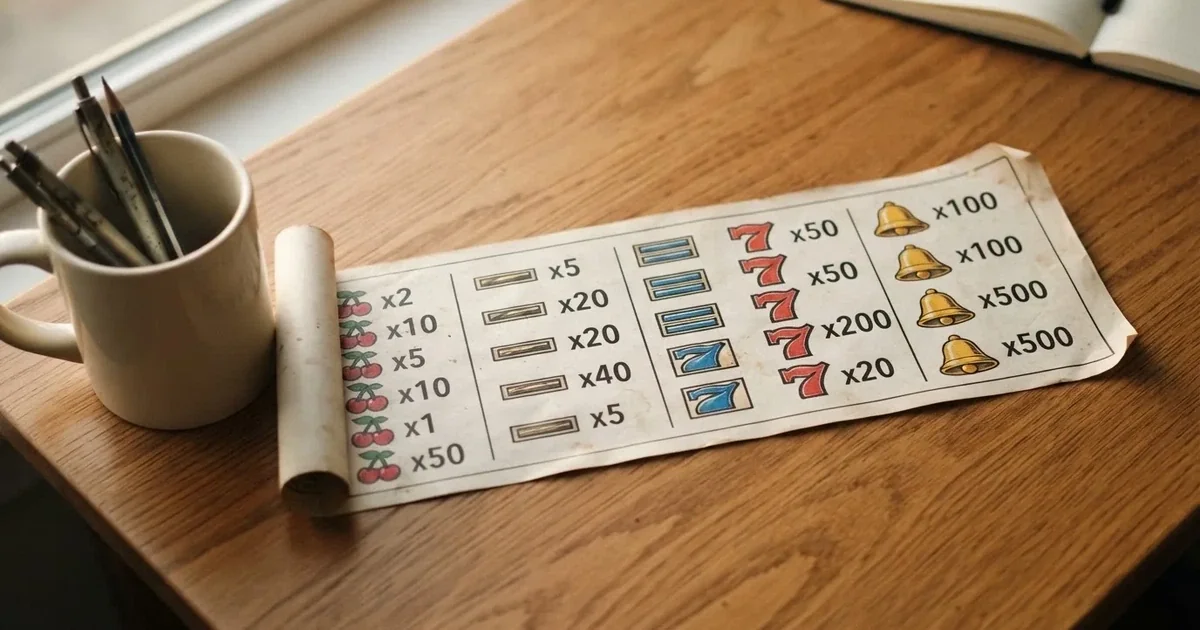
Best 7 Reel Slots Australia 2026: What The Format Quietly Changes For A Player
 Available in US
A seven-reel slot is older than its five-reel cousin in look and simpler in layout, but the extra two reels shift the odds in a way a printed paytable never spells out. The shape of the machine is one thing; what an Australian player runs into when looking for one online is quite another. This page opens with where to turn if the search starts feeling heavier than it should, then walks through what a 7-reel bonus round and a 7-reel paytable actually do, lays out the offshore brands the ACMA has acted against, sets out the lawful situation under the Interactive Gambling Act 2001, and ends with the questions readers ask most.
Current as of 23 September 2026. Licence claims, blocking orders and operator warnings cross-checked against the Australian Communications and Media Authority’s published register.
Table of Contents
- Where To Turn Before Anything Else
- What A “7 Reel Bonus Slot” Actually Adds To The Spin
- Reading A Seven-Reel Paytable Without Misreading It
- The Offshore Brands The ACMA Has Acted Against
- What The Blocking Rate Actually Tells The Reader
- Where The Lawful Market Sits
- How The Landscape Differs From The One Inside A Pub
- What A Comparison Among These Brands Would Actually Weigh
- What Reading The Fine Print Actually Changes
- Why The Format Specifically Is Harder To Find In The Lawful Market
- What The Seven-Reel Format Means For The Mathematics
- How This Page Came To Its Conclusions
- Where A Reader Can Read More On The Lawful Side
- The Consequence The Page Keeps Returning To
- Frequently Asked Questions
Where To Turn Before Anything Else
A search for any reel count of online slot will, in Australia, lead only to offshore brands the regulator has warned or blocked. If the search itself has started feeling like a habit that is hard to interrupt, free confidential help is on the other end of a number that does not require an account, an app or a quiet room. Gambling Help Online runs a 24/7 chat and the National Gambling Helpline on 1800 858 858 answers the same hours, free, with counsellors who know what offshore-account losses look like in practice. The page on Pokies And Poker Machines Across Australia’s Venues and the next sections are written assuming help is one click or one call away if it is ever wanted.
BetStop, the National Self-Exclusion Register, has been live since August 2023 and binds every Australian-licensed online and phone wagering service to honour a person’s exclusion request. It does not bind offshore casinos; that is what this page is largely about. Exclusion through BetStop still matters even so, because most of the legal Australian wagering market sits behind the same exclusion list — bookmakers, racing and sports betting. If poker-style slot machines in pubs and clubs are part of the picture as well, every state and territory runs its own self-exclusion scheme through the venue operator, with entry refused, loyalty accounts closed and any unspent credits banked on the way out. None of this requires giving up a name to a casino, and none of it costs anything to set up.
What A “7 Reel Bonus Slot” Actually Adds To The Spin
A seven-reel slot is a video slot whose reels count seven rather than the modern five-by-three norm. The extra two reels do three things a player feels inside a session even if the rules page never names them.
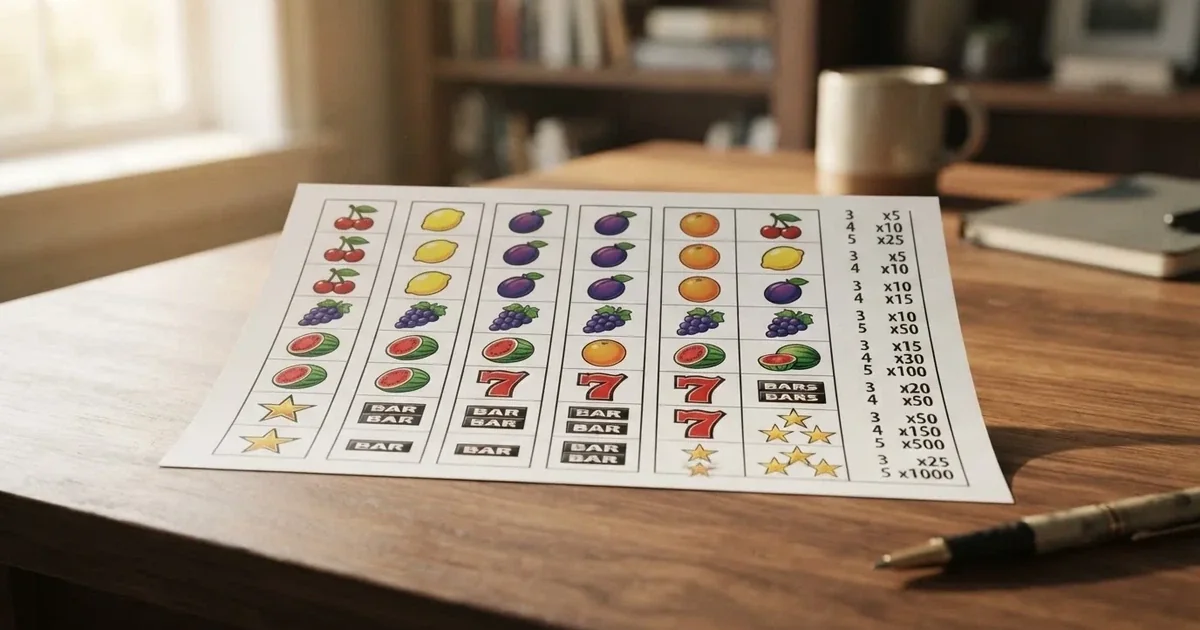
More stops per reel, more combinations per spin. A classic three-reel mechanical slot carries roughly ten symbols per reel — Charles Fey’s 1890s Liberty Bell design used horseshoes, diamonds, spades, hearts and a bell — and produces about a thousand distinct combinations across three reels. Bally’s 1963 Money Honey added an automatic payout hopper and pushed reel counts upward; the 1976 Fortune Coin video slot opened the door to the multi-reel layouts now standard. A modern video slot with fifty or more symbols per reel across five reels produces odds of hundreds of millions to one against the top combination. A seven-reel slot sits between the two extremes. Each added reel multiplies the stops; what it contributes is not “more chances to win” so much as longer odds between the bottom and the top of the paytable.
More paylines drawn against the same stake. A standard five-reel slot offers twenty to forty fixed lines. A seven-reel layout, even with the same line structure, opens up to fifty-plus lines crossing the reels — diagonals, zig-zags and shaped patterns that the player does not pick but pays for, because the stake is split across every active line. The headline stake may look identical to a five-reel game; the cost per spin is not, because each line takes a share of it.
A bonus round that feels earned more often. A 7 reel bonus slot runs the bonus trigger as a scatter count across all seven reels rather than five. The odds of a scatter landing on a given reel do not change, but the scatter has seven reels to land on rather than five, and the apparent frequency of “almost triggering” the round goes up. Free 7 reel bonus slots online make this the centrepiece — three scatters anywhere, ten free spins; four scatters, fifteen; five or more, a multiplier on top. The advertised hit frequency reads higher than a five-reel game’s because it is higher; what does not change is the house edge built into the bonus itself.
What A Free-Spins Round Actually Pays
Free 7 reel bonus slots no download look free at the door and rarely are. Three things determine whether a “free” round ever turns into a withdrawable amount, and each one matters more than the spin count on the offer page.
The first is the wagering multiplier. Most 7 reel bonus slots that run a deposit match attach a multiplier — typically thirty-five to fifty times the bonus amount — that must be turned over in real money before any winnings can be withdrawn. A free-spins-only offer is usually cheaper on this front, with the bonus carrying a lower multiplier or none at all. The difference is the difference between an offer and a marketing word.

The second is the maximum cashout ceiling. Many free-spins offers cap what can be withdrawn from the bonus round at a flat figure — twenty, fifty, one hundred dollars — regardless of what the round pays out. A bonus round that returns five hundred dollars still pays out the cap. The paytable never lists the cap; the bonus terms do, in the smaller paragraphs underneath.
The third is which games the free spins are valid on. The promotional email names one title; the terms reserve the right to substitute at any time. A seven-reel slot is a less common format than a five-reel one, so the substitution list is usually longer for the format and the actual title the free spins run on is the one the operator picks.
Free 7 reel slots with bonus in practice behave like free spins on any other format: the bonus pays the cap, the wagering multiplier grinds the rest, and what reaches the cashier is a fraction of what the paytable showed. The format is not the point; the terms are.
Reading A Seven-Reel Paytable Without Misreading It
A 7 reel classic slots paytable is laid out as a grid of symbols with a payout beside each combination and the lines on which those combinations count. Two numbers carry almost all the information a player needs and one almost never appears on the printout.
The hit frequency. Out of every hundred spins, how many return anything at all. For a seven-reel slot this is usually printed somewhere on the help screen and is rarely lower than the equivalent five-reel slot, because the scatter mechanics discussed above push the apparent rate up. Hit frequency is not payout percentage; a slot can hit often and pay little, or hit rarely and pay large.
The return-to-player percentage. Out of every hundred dollars staked across a very long run, how much returns to players. The figure assumes perfect play and an enormous sample; the variance around it in a single session is enormous. A seven-reel slot’s RTP is rarely worse than a five-reel’s on the same provider’s catalogue; the format’s smaller library means the figures available are also fewer, and many titles carry no published RTP at all.
The number that never appears. The standard deviation per spin — what the volatility actually looks like between sessions. The closest most paytables come is a verbal label such as “high volatility” or “low volatility”, and even those are absent on a meaningful share of titles. A seven-reel slot, because it carries more stops per reel, drifts toward higher variance than a five-reel slot of equivalent payout structure. The label is the only signal most paytables give, and it is the one signal worth carrying into the next section.
Reel Count As A Stand-In For Volatility
Reel count alone is not a clean volatility proxy. A seven-reel slot with a flat paytable and many small wins behaves very differently from a seven-reel slot with one large top payout. What reel count does shift, consistently, is the spacing between payouts — the gap between the smallest win and the largest one grows with reel count, because the extra reels add wins in the middle that pay modestly and concentrate the big wins at the top of the paytable where the symbol combinations are rare. A common reading is that a 7 reel slot feels busier in the middle of a session (more small wins) and emptier at the ends (the big wins less frequent than they look). Where the format does sit, between the three-reel classics and the modern five-by-three video norm, is the place to look for games that feel like a step back from the cluster-pays and Megaways layouts now standard.
A practical reading: reel count as a volatility signal works for the spread between the smallest and largest listed payout, and only as a rough indicator. The label on the help screen, where it exists, is a tighter signal than the reel count. Where it is absent, the only honest answer is that the figure is not on the page and the spin pattern is the only test left — a costly one, which is exactly the point.
The Offshore Brands The ACMA Has Acted Against
The brands below all face the same lawful problem: online casino games cannot be licensed anywhere in Australia, whatever licence the site displays in its footer. Each has been the subject of a formal warning from the ACMA under the Interactive Gambling Act 2001 for offering prohibited services to Australians. The licence claim that sits at the bottom of each landing page is, by definition, a licence to operate somewhere other than Australia. No brand on this list is reviewed or recommended; the list exists so the reader can recognise what is on the other end of a search.
The brands are listed in the order the ACMA’s published warnings place them, newest first within the relevant operator group.
| Brand | ACMA action and date | Operator named by the ACMA | Subject support |
|---|---|---|---|
| RocketPlay | Formal warning, March 2026 | Pulsup Ltd | — |
| Level Up Casino | Formal warning, May 2022 | Dama N.V. | BGaming listings carry the title |
| Woo Casino | Formal warning, March 2025 | Dama N.V. | — |
| Spirit Casino | Formal warning, May 2025 | Dama N.V. | — |
| National Casino | Formal warning, July 2025 | Consolutetish S.R.L. | Wikipedia carries the brand entry (en.wikipedia.org) |
| Bizzo Casino | Formal warning, July 2025; earlier 2022 | Consolutetish S.R.L.; earlier TechSolutions | — |
| Ignition Casino | Formal warning, July 2025 | Bamboo Media | — |
| Instant Casino | Formal warning, February 2025 | EOD Code SRL | — |
| Jackbit | Formal warning, April 2026 | Ryker B.V. | — |
| Casino Intense | Formal warning, April 2025 | Sterplay Holding Ltd | ABC, ACMA and Crown Melbourne listings carry adjacent references |
| Sky Crown | Formal warning, September 2022 | Hollycorn N.V. | — |
Two patterns sit underneath the table. The first is operator repetition: a single corporate group often sits behind several brand names. Dama N.V. accounts for four of the eleven brands above; Consolutetish S.R.L. accounts for two; the others sit behind distinct vehicles. A formal warning over one brand on the same operator’s roster does not automatically warn the others, which is why a second brand on the same group sometimes stays accessible while the first is blocked. The reader searching after a warning is published often meets the same site under a different label.
The second pattern is the gap between the warning and the actual interruption of service. A formal warning from the ACMA is not a blocking order. The ACMA’s separate blocking action — directing Australian ISPs to make the site unreachable — runs on a different timeline, usually some months after the warning, and sometimes not at all for affiliates and mirrors. The brand may keep operating, advertising and accepting Australian sign-ups long after the warning has been published; the published register is the record, not the live state.
What A Formal Warning Does And Does Not Do
A formal warning under the Interactive Gambling Act 2001 is a written notice that the ACMA considers the service to be in breach of the prohibition on providing online casino games to Australians. It is a step on the way to a civil penalty proceeding, an injunction or a blocking order, but on its own it requires the operator to stop and gives the operator a chance to comply. Compliance is rare; what follows the warning is usually the next step.
The ACMA has, since November 2019, asked Australian internet service providers to block illegal gambling and affiliate marketing websites in batches. By June 2026, the running total stood at 1,751 websites blocked. The pace matters as much as the number: at the rate implied by the first blocking request in November 2019 through to the June 2026 round, the regulator has been adding roughly two hundred to three hundred sites a year to the list, with a fresh batch reported in the same month the cumulative figure was given. A new batch is not unusual — twelve more names were added in that June 2026 round alone, including Slots Gem, Lucky Start and Wildsino among the more recognisable labels. The pattern is enforcement on a treadmill, not a single cleanup.
An offshore casino that has been warned is, in practice, a casino that has not yet been blocked. The balance a reader leaves on it sits in the operator’s account on a server outside Australia, subject to whatever dispute mechanism the site displays in its terms — usually an arbitrator in Curaçao, Malta or Cyprus, none of which an Australian player can compel to act. The withdrawal is the moment the risk becomes concrete.
What The Blocking Rate Actually Tells The Reader
The first ACMA blocking request went out in November 2019. By June 2026, the cumulative count of blocked sites was 1,751. The arithmetic of that period — six years and roughly seven months, or about seventy-nine months — gives a pace of roughly twenty-two sites per month, or just over two hundred and sixty a year on a straight average.
The straight average is the cleanest way to state it and the most misleading. The pace has not been even. Earlier rounds were small and irregular; later rounds have been larger and more frequent, particularly after the Interactive Gambling Amendment Act 2017 strengthened the ACMA’s enforcement hand and the post-2022 amendment regime took effect. A more useful band sits between roughly two hundred and three hundred and fifty sites blocked per year over the past three years, with the cumulative figure carrying that trend. The reader looking at the published total and asking how many more there might be in the next twelve months can use that band as a guide: somewhere in the low hundreds, added to a running total that already exceeds 1,750.
The pace also explains why a brand that was warned eighteen months ago may still be reachable today. The blocking pipeline runs behind the warning pipeline, and the warning pipeline runs behind the regulator’s own monitoring. A site warned in February 2025 may still be accepting Australian sign-ups well into 2026; the formal warning is the earliest public step, not the last. A reader looking for a closed door is, in practice, looking at a door that may stay open for the rest of the calendar year and longer.
Where The Lawful Market Sits
Online casino games and online pokies cannot be licensed in Australia. The Interactive Gambling Act 2001 (IGA), tightened by the Interactive Gambling Amendment Act 2017, makes it an offence to provide online casino games, online pokies or in-play betting to a person in Australia; no state or territory issues a licence for them, and no offshore licence converts into one. What is licensable is wagering on races and sport placed before the event, lotteries and keno — in practice licensed by the Northern Territory through the Northern Territory Racing and Wagering Commission (NTRWC), which regulates fifty-two of Australia’s online bookmakers including Sportsbet, Bet365 and Ladbrokes, and which runs on a part-time staff model that meets once a month in Darwin. Minimum age for any form of wagering is eighteen.
The individual player is not prosecuted. The IGA targets the provider, not the person clicking the link. What an offshore casino gives up is everything else: no Australian consumer protection, no complaints body with jurisdiction, no recourse if a withdrawal is refused, no connection to BetStop, and no guarantee that the site will still be reachable — or the company still operating — when a payout is requested. The balance can be stranded; the wagering turnover cannot be undone.
The ACMA is the regulator that investigates, issues formal warnings and directs ISPs to block. The blocking is the lever the regulator pulls most often, and the count above is what that lever has produced. The Interactive Gambling Amendment (Gambling Reform) Bill 2026 passed Parliament on 19 August 2026 and tightens the inducement and advertising rules; its commencement is 1 January 2027, which is law with a start date rather than law in force on a 2026 page.
What The Law Does About The Money Side
Since 11 June 2024, credit cards, credit-related products and digital currency are banned as payment for any licensed online wagering service in Australia, with penalties for operators up to A$247,500 per breach. The lawful deposit routes that remain for Australian-licensed wagering are debit card, bank transfer, PayID/Osko and BPAY.
| Payment Method | Status |
|---|---|
| Credit Card | Banned |
| Debit Card | Permitted |
| Bank Transfer | Permitted |
| PayID/Osko | Permitted |
| BPAY | Permitted |
A casino site asking an Australian customer for a credit card or a crypto deposit is, by that fact, outside the Australian rules, even where the operator is licensed somewhere else.
The ban is on the licensed side. It does not, in itself, make a credit card deposit to an offshore casino lawful from the Australian player’s end — the offshore site is still offering a prohibited service — but it explains why a request for a card number on an offshore casino’s cashier page is one of the clearer signals that the site is not running within the Australian framework at all. The signal is older than the credit card ban, but the ban has made it harder for the offshore brands to dress up their cashier pages.
On the tax side, gambling winnings of a recreational Australian player are not assessable income under section 6-5 of the Income Tax Assessment Act 1997, and losses are not deductible unless the person carries on a business of gambling. The model answer is “check with the ATO” because the line between a recreational player and a professional gambler is the ATO’s, not the player’s. The reader who keeps a session log for the ATO is the reader who has crossed it.
How The Landscape Differs From The One Inside A Pub
Australia has, in the licensed offline world, a slot machine population that outpaces most comparable countries. Outside casinos, New South Wales operated 87,298 pokie-style machines in June 2023, Victoria 26,380 across 2021–22, Queensland 21,122 in October 2023, South Australia 11,672 in September 2023, and the ACT 3,587 in November 2023 — a national footprint that runs at roughly five times the United States’ per-capita rate once casinos are excluded. NSW legalised slot machines in 1956; by 2010 the country operated an estimated 97,103 gaming machines outside casinos. The format on the pub floor is overwhelmingly five-reel video, with a small surviving tail of three-reel mechanical machines in older venues. A seven-reel mechanical machine exists, mostly in older refurbished cabinets and in the rarer multi-station setups; on the pub floor it is unusual, not standard.
What the offline market offers that the offshore market does not is recourse. A venue that refuses to pay out a legitimate win can be complained about to the state gambling commission; an offshore site cannot. A venue that does not honour its self-exclusion can be reported to the same regulator; an offshore site cannot be reported in any jurisdiction the Australian player can reach. The offline market is restricted in what it can offer — no casino games, no online access — and it is correspondingly more accountable for what it does offer.
The seven-reel format on the pub floor is unusual enough that a player looking for one in a specific venue is more likely to find a five-reel video slot with a seven-symbol bonus reel layered on top. The mechanical seven-reel cabinet is a small slice of the installed base, mostly in larger clubs and casinos. The online seven-reel slot, by contrast, is a format the offshore catalogues have absorbed into their libraries because the bonus mechanics read well on screen and the higher variance suits a market that pays out less often at larger numbers.
What An Australian Reader’s Search Actually Lands On
The first page of an Australian search for any reel count of online slot, in 2026, returns offshore brands and affiliate pages. The affiliate pages sit on domains registered outside Australia and are not subject to the Australian Consumer Law; they are also subject to the ACMA’s blocking orders, with more than 1,751 such sites now on the list. The brands themselves sit behind affiliate marketing pages and run their own advertising through search engine results and email. The pattern is consistent across the eleven brands above: a search lands on an affiliate page, the affiliate page redirects to the brand, and the brand displays a licence from Curaçao or Anjouan in its footer.
What the licence claim is, in every one of these cases, is a licence to operate from that jurisdiction. It is not a licence to provide prohibited interactive gambling services to Australians. The IGA draws the line at the Australian customer, not at the corporate vehicle; the offshore licence speaks to the latter, and the warning speaks to the former. A reader reading the footer as a “yes” is reading the wrong line of the document.
What A Comparison Among These Brands Would Actually Weigh
Comparing these brands in 2026 shows they all sit in the same lawful category: prohibited interactive gambling services with an ACMA warning on the public record. A fair comparison would weigh the following five factors, none of which suggests a reason to play at any of them.
Warning recency. The ACMA’s formal warnings are dated; a warning over twelve months old is more likely to have been followed by a blocking order than one issued in the last quarter. A reader weighing risk on this axis alone would lean toward the most recently warned brands, on the working assumption that the regulator’s attention is freshest on those.
Operator repetition. A brand sitting behind an operator that already runs multiple warned brands is, by definition, a brand the regulator has not yet fully exhausted. The Dama N.V. cluster of brands is the clearest example; Consolutetish S.R.L. the next.
Blocking status. A brand whose domain has been added to a blocking round is harder to reach from an Australian connection than one that has only been warned. The cumulative count above is the public part of the register; the live state on a specific domain can move faster.
Withdrawal mechanism. The terms page names the payment routes available to an Australian customer and the identity check that precedes a first withdrawal. The longer the check, the more opportunity for a refusal; the more it changes between sign-up and cash-out, the less the brand can be relied on.
Connection to BetStop. None of these brands are connected to the National Self-Exclusion Register, because none of them are Australian-licensed. Exclusion under BetStop does not reach them; the only path to exclusion from these brands is to stop visiting them, which the absence of a binding register makes harder than the lawful alternative.
The five matters above are not a ranking. They are the only honest comparison on a market where every brand carries the same lawful problem and the differences between them are differences of degree. A reader who has decided to look for 7-reel slots in Australia anyway is reading this page for what to do once the search itself has become the problem, and the comparison is part of that.
What Reading The Fine Print Actually Changes
Three clauses in an offshore casino’s terms page carry almost all the weight a reader cares about, and they sit in the small print the affiliate pages never quote.
The first is the maximum cashout on a bonus win. For a free-spins round, the figure is usually a flat cap; for a deposit match, it is usually expressed as a multiple of the deposit. A “10x cap on bonus winnings” sounds generous in marketing and means that a bonus round paying A$1,000 returns A$200 to a A$200 deposit before the wagering requirement has been touched.
The second is the wagering multiplier itself. A 35x bonus turnover is on the lower end of the offshore market; 50x is more common; anything over 60x is steep against the broader market. The turnover is calculated on the bonus alone, the deposit alone, or the bonus plus the deposit, depending on the operator; the terms page names which. The deposit-and-bonus formulation is the costlier one and the one most often advertised without the qualifier.
The third is the game-weighting clause. Not every game on the casino’s floor counts the full stake toward the wagering requirement. Slots typically count 100%; table games and live casino often count 10% or are excluded entirely. The clause is the one that decides whether the turnover can actually be cleared on the game the reader wants to play, or whether the reader is grinding through a slot they did not choose to clear a bonus they did choose. A seven-reel slot is a slot, so the weighting usually applies, but the game the free spins run on may not be the game the reader wanted to play.
What The Help Section Never Says
The help section on an offshore casino’s site usually carries a FAQ on bonuses, on deposits and on verification. It does not usually carry an FAQ on what happens if the casino is blocked in Australia mid-session. The answer, in practice, is the worst case described above: the balance sits on the operator’s server, the wagering turnover is intact on the operator’s books, and the Australian player has no jurisdiction that will compel a payout. The reader who reads the help section for the bonus terms and not for the dispute clause has read the wrong page.
A reader who has decided to claim an offer at one of these brands anyway is the reader this section is written for. The wagering turnover matters more than the headline stake; the cap matters more than the bonus name; the game weighting matters more than the count of free spins. Read the terms; if the terms are not legible, that is itself a signal.
Why The Format Specifically Is Harder To Find In The Lawful Market
The seven-reel slot is rarer than the five-reel video slot because the format predates the modern video slot by several decades and the offshore catalogues that absorb it today are doing so in a small way. A search for “7 reel pokies” in an Australian context returns, in 2026, affiliate pages and offshore casinos rather than licensed venues. The licensed offline market — pubs, clubs, casinos — runs overwhelmingly five-reel video with mechanical three-reel machines in the older cabinets; seven-reel machines are a small installed base, mostly in the larger clubs and the casino floors in Melbourne, Perth and the Gold Coast.
What that means for an Australian reader is that the seven-reel format is harder to find lawfully than the five-reel format. The licensed venues run mostly five-reel video. The licensed online market does not exist. The seven-reel slot the reader is searching for is, almost without exception, an offshore product.
The consequence is sharper than the search suggests. A reader looking for “7 reel slots Australia” lands in the offshore catalogue by default, not by choice. The lawful alternative is a licensed venue with a five-reel video machine, which is a different game with a different paytable and a different bonus structure. The reader is choosing between a seven-reel slot at an offshore site and a five-reel slot at a local venue, and the comparison is not between games but between a lawful experience and an unlawful one. The Australian Consumer Law, the state gambling commissions and BetStop apply to the venue; they do not apply to the offshore site. The reader who reads the format question as a format question is reading it wrong; it is also a jurisdiction question.
What The Seven-Reel Format Means For The Mathematics
The arithmetic behind a seven-reel slot is the same arithmetic behind any slot: each spin pays out the stake multiplied by the payout on the combination that landed, with the payout determined by the paytable. The reel count changes two numbers and leaves the rest alone.
The number of distinct outcomes. With seven reels and an average of fifteen stops per reel, the count of distinct outcomes is fifteen to the seventh — about one hundred and seventy million, against the roughly one thousand outcomes of the classic three-reel machine and the roughly sixteen million of a five-reel slot at the same stop count. The larger the outcome set, the rarer the top combinations and the flatter the middle of the paytable.
The expected payout as a fraction of turnover. The RTP figure on the help screen is, in steady state, what the player receives across a very long run. The figure does not change with reel count for a given payout structure; what changes is the variance. A seven-reel slot at the same RTP as a five-reel slot will see longer dry spells between the larger wins because the larger wins sit at the rare end of the outcome set.
The volatility class. Most seven-reel slots in offshore catalogues are rated medium-to-high volatility. The label is not consistent across providers; the same label on different providers can mean different things. The practical reading is that a seven-reel slot, on average, behaves more like a five-reel high-volatility slot than like a five-reel low-volatility slot. The reader who is used to a five-reel low-volatility game will find the seven-reel format less forgiving in the short run.
The arithmetic above is the same arithmetic behind any multi-reel slot. What it tells the reader is that the seven-reel format is not, on its own, a higher- or lower-paying slot than the five-reel format; it is a different volatility profile at roughly the same RTP. The reader looking for a specific payout level should compare RTPs, not reel counts. The reader looking for a specific session feel should compare volatilities, not reel counts. The reel count is a stylistic choice that carries through to the volatility in a consistent way.
How This Page Came To Its Conclusions
The figures on this page — the blocking total, the operator names, the warning dates, the licence claims — were drawn from the ACMA’s published register, from H2 Gambling Capital’s 2025 estimate of Australian losses to illegal sites, and from the ABC and the regulator’s own pages on the Northern Territory Racing and Wagering Commission. The figures on the format itself — the slot’s history from Fey’s 1890s Liberty Bell through Bally’s 1963 Money Honey to the 1976 Fortune Coin video slot — were drawn from the standard reference material on slot machine history. The RTP and volatility discussion tracks what the providers themselves publish.
The conclusion — that the seven-reel slot is harder to find lawfully than the five-reel slot, that the offshore catalogue absorbs it in a small way, and that the search for it in Australia defaults to the prohibited market — follows from the lawful situation under the Interactive Gambling Act 2001 rather than from any judgement on the offshore brands themselves. The brands on the table above have all been warned by the ACMA for offering prohibited services to Australians; the page does not recommend them and does not rank them, and the comparison among them is offered as a way to read the public record rather than as a way to choose among them.
The arithmetic of the blocking rate is the page’s own. The first blocking request was in November 2019 and the cumulative figure at June 2026 was 1,751, giving the band stated above; the reader can re-run the calculation with any later round and arrive at a slightly higher figure.
Where A Reader Can Read More On The Lawful Side
The lawful market sits mostly in two places: licensed venues and licensed online and phone wagering. The state and territory gambling commissions carry the rules for the venue market; the NTRWC carries the rules for the online wagering market. The ACMA’s own pages carry the blocking orders and the formal warnings, and Gambling Help Online carries the help line and chat. A reader who wants the formal warnings themselves should go to the ACMA’s website; the eleven brands above are all named on it.
A reader who wants to play a seven-reel slot lawfully is, in practice, looking for a licensed venue with an older cabinet. The Crown Melbourne floor carries a range of formats, and the larger clubs in NSW and Queensland sometimes carry seven-reel machines in the older wing. A call to the venue before the visit is faster than the search; a player card does not require playing through a bonus round to obtain one.
A reader who wants to read more about the offshore brands on the table can read the ACMA’s published warnings; the names and dates on the table above are drawn directly from those warnings and the regulator’s date stamp is the source. The licence claims in each brand’s footer are not, and the reader looking for a licence that converts into Australian consumer protection will not find one.
The Consequence The Page Keeps Returning To
The reader who arrived on this page looking for a place to play a 7-reel slot in Australia has, by the time the page ends, read the same message in three different forms: the lawful market does not offer online casino games, the offshore market is in the regulator’s enforcement crosshairs, and the format specifically defaults to the offshore catalogue because the licensed venues run mostly five-reel video. None of that is news the reader was hoping to read; all of it is what the search returns when the reader follows it through.
The consequence, plain, is that the search itself is the part worth thinking about. If it has been running for weeks, if the affiliate pages are now familiar by name, if the daily log of “which casino is this one” has become a routine — that is the place the help line, the help line and the self-exclusion register are aimed at. The seven-reel slot does not change the situation; the search has moved from a question about a format to a question about a pattern. Gambling Help Online and the National Gambling Helpline on 1800 858 858 are the same answer they have been since the start of this page; they remain the answer at the end of it.
Frequently Asked Questions
What makes a 7-reel slot different from a standard five-reel video slot?
The reel count shifts the number of possible combinations per spin and the number of paylines drawn against the same stake, but the underlying maths of expected return is the same. What changes is the variance between sessions — a seven-reel slot tends toward longer gaps between the larger wins than a five-reel slot of the same RTP. The format is older in look and rarer in the catalogues; offshore providers have absorbed it because the bonus mechanics read well on screen.
Can 7-reel slot machines be found in licensed Australian pubs and clubs?
Rarely. The licensed venue market runs overwhelmingly five-reel video with a small surviving tail of three-reel mechanical machines. A seven-reel cabinet exists on some casino floors and in the older wing of larger clubs, but the format is a small share of the installed base. A reader looking for one in a specific venue is better off calling the venue before visiting; the format does not show up on a venue’s online game list.
Do 7-reel slots typically pay out differently than newer five-reel formats?
The published RTP on a seven-reel slot is usually close to the equivalent five-reel slot on the same provider’s catalogue. What differs is the volatility — the seven-reel format tends toward more variance between sessions, because the extra reels add more middle-of-the-paytable wins and concentrate the largest payouts at the rare end. The reader comparing payout levels should look at the RTP, not the reel count.
Is a 7-reel slot online the same game as a 7-reel machine on a casino floor?
In format, yes; in jurisdiction, no. The online version runs on an offshore server under an offshore licence and is offered to Australians in breach of the Interactive Gambling Act 2001. The casino-floor version runs under a state gambling commission’s rules, pays out through a regulated cashier and is subject to the venue’s complaint process. The two experiences differ in accountability more than they differ in mechanics.
Are 7-reel slots for real money available legally from an Australian-based site?
No. No Australian-licensed site offers online casino games of any reel count; the IGA prohibits them and no state or territory issues a licence for them. The seven-reel slot is not the exception. The licensed alternative is a venue with a seven-reel cabinet in its older wing, which is a small share of the installed base but a lawful one.
Is reel count still a useful way to compare volatility between older and newer slots?
Roughly. Reel count correlates with the spread between the smallest and largest payouts on the paytable, and through that with the volatility profile. It is a less reliable signal than the volatility label on the help screen where one is published, and useless where the help screen carries no label. The reader who cannot find either should treat the reel count as a rough proxy rather than a substitute for the published figure.
Prepared by the Casino Deposit Info editorial staff.