
What an instant PayID withdrawal looks like at an Australian-facing casino, and what the speed actually buys the player
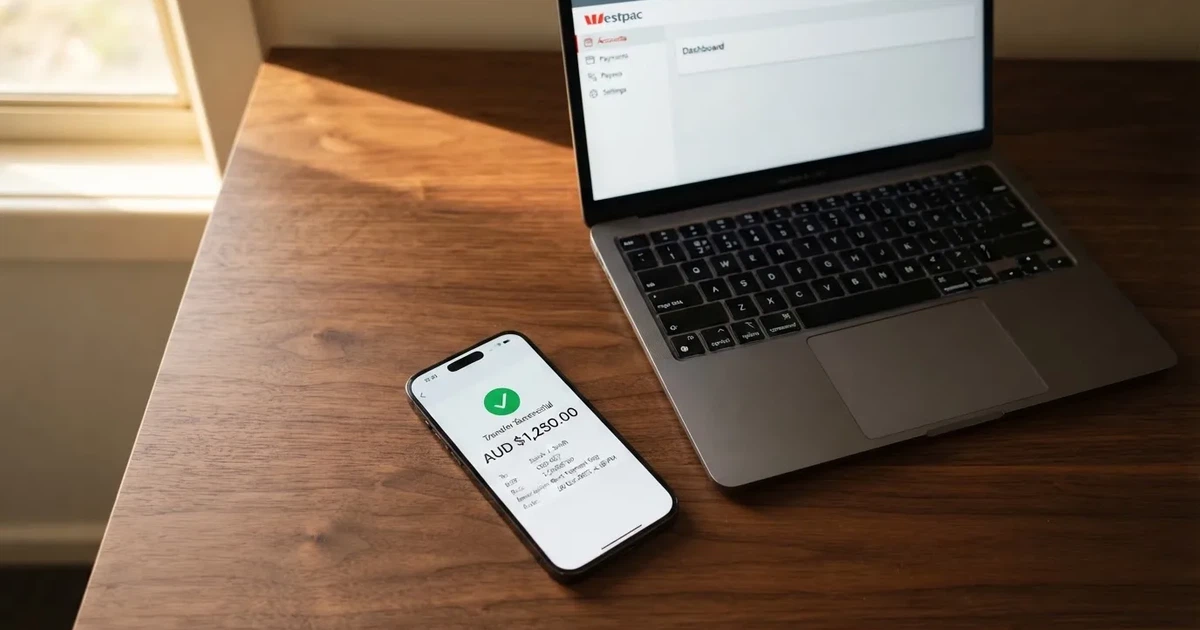
A PayID withdrawal is a bank transfer addressed to something the account holder can remember — a mobile number, an email, an ABN, an organisation identifier — rather than to a BSB and account number. When an Australian-facing casino advertises “instant PayID withdrawal”, the word that matters is not PayID. The PayID leg of the journey is mostly mechanical. The variable is the casino’s own queue before it releases the funds. The page below separates those two things, then walks through what the speed leaves untouched: the licence the operator does not have, the consumer protection an Australian player cannot reach if the withdrawal is refused, and the betting block sitting on the card most readers would use to top up the balance in the first place.
Standfirst: data current as of 29 October 2026, licence claims verified against ACMA formal-warning publications and the Interactive Gambling Act 2001 (Cth) as amended.
Table of Contents
- The eleven brands the ACMA has already told off, and why each is on this page
- What “instant” actually means when a PayID withdrawal is sent
- PayID itself, and what Australian Payments Plus says about gambling
- Why none of the eleven is a lawful offer to an Australian resident
- What a withdrawal that lands in minutes still leaves the player holding
- The brand-by-brand picture, in the order the ACMA has been writing to them
- What the page would tell the reader to do, if the page were going to tell the reader what to do
- The reform the page caught the edge of
- A note on what the data does not cover
- Frequently asked questions
The eleven brands the ACMA has already told off, and why each is on this page
The comparison below is not a ranking. It is a list of eleven offshore casino brands the Australian Communications and Media Authority has already named, in a formal warning, for offering prohibited online casino games to people in Australia. PayID withdrawal speed is the search term that brought the reader here; the licence status is the fact that decides whether the search term has anywhere to land. Every brand below has been told, in writing, that what it does is unlawful in Australia. The brands differ in operator, in jurisdiction, in the year of the ACMA letter and in how recently the warning was issued. They do not differ in product: online casino games and online pokies cannot be licensed anywhere in Australia.

The ACMA-action landscape at a glance
| Brand | ACMA action and date | Operator named by the ACMA | PayID support |
|---|---|---|---|
| RocketPlay | Formal warning, March 2026; earlier Dama N.V. action May 2022 | Pulsup Ltd (RocketPlay); Dama N.V. previously | — |
| Level Up Casino | Formal warning, May 2022 | Dama N.V. | Westpac listings reference |
| Woo Casino | Formal warning, March 2025 | Dama N.V. | — |
| Spirit Casino | Formal warning, May 2025 | Dama N.V. | — |
| National Casino | Formal warning, July 2025 | Consolutetish S.R.L. | AUSTRAC and Wikipedia listings |
| Bizzo Casino | Formal warning, July 2025; earlier 2022 warning to TechSolutions | Consolutetish S.R.L.; TechSolutions (CY) Group and TechSolutions Group N.V. previously | — |
| Ignition Casino | Formal warning, July 2025 | Bamboo Media | — |
| Instant Casino | Formal warning, February 2025 | EOD Code SRL | EcoPayz and PayID listings reference |
| Jackbit | Formal warning, April 2026 | Ryker B.V. | — |
| Casino Intense | Formal warning, April 2025 | Sterplay Holding Ltd | AUSTRAC, iTnews and NAB listings reference |
| Sky Crown | Formal warning (Hollycorn N.V. PDF, September 2022) | Hollycorn N.V. | — |
Three of the eleven — National Casino, Bizzo Casino and Woo Casino — sit under operators that the ACMA has now contacted more than once about more than one brand. Dama N.V. alone takes three slots on this page. The repetition is not a typo in the table; it is what the ACMA’s own publication list shows. A formal warning is the regulator’s first step. It is not, by itself, a block. The blocking numbers come later, in a different process, and they sit behind a different counter.
What the table does not show
The table has four columns. Three are about the regulator: what was done, when, and over which corporate name. The fourth is about the payment method the reader searched for. Most cells are em dashes. That is not an oversight. The brand-by-brand data on whether a given offshore casino actually credits a PayID withdrawal in minutes — as opposed to hours, or never — comes from affiliate pages, not from any register the page can cite. Where a brand surfaces on a Westpac, NAB, AUSTRAC or EcoPayz page, the mention is a payments-industry listing rather than the casino’s own attestation of instant withdrawal. The honest reading is: the operator side of the comparison has no auditable column, so the page does not invent one.
What “instant” actually means when a PayID withdrawal is sent
A PayID sits on top of Australia’s New Payments Platform, which the Reserve Bank of Australia oversees and which Australia Payments Plus runs. Osko is the brand the underlying real-time transfer product goes by between participating banks. The practical claim of the network is direct enough to quote: an Osko transfer between participating banks lands in under a minute, around the clock, including weekends, whether the address is a BSB and account number or a PayID. That part of the journey is not where the speed is being negotiated.
The slow part is everything the casino does before it sends the money.
A casino with a real “instant PayID withdrawal” advertised on its homepage is, in the cleanest version of the product, promising two things: that the funds have already passed the operator’s internal review before the player hit the cashout button, and that the bank leg of the trip will resolve in roughly a minute once the transfer is released. Most of the brands on this page, in practice, run a queue between the cashout request and the release. That queue is what the marketing line flattens. The reader who reads “instant” and sees the funds land in three minutes did not see the half hour that came before, when the request sat in a settlement review.
The queue is not pointless. A casino that releases funds without reviewing them releases a chargeback onto itself, a bonus abuse path, and a fraud exposure onto the payments team. A reader who has been asked for source-of-funds documents on a first withdrawal has been inside that queue. The lesson is not that the queue is illegitimate; the lesson is that it is not instant, and the brand’s marketing has stopped counting once the money left its own account.
PayID itself, and what Australian Payments Plus says about gambling
PayID is operated by Australian Payments Plus, the domestic payments provider, and is offered by more than one hundred Australian financial institutions — the same institutions whose online banking most Australian readers already use. A registered PayID reached twenty-five million in April 2025, on a population roughly half that. It is, by usage, the default fast-payment address in the country.
The check the system gives the payer is the one that matters for this page. When a transfer is addressed to a PayID, the payer is shown the name of the account holder before the transfer is sent. That is the guard against mistyped numbers, against scams, against paying the wrong payee. It is also the guard the page’s subject runs straight into: the reader about to deposit at an offshore casino is being asked to send funds to a PayID on a site that the Australian regulator has already warned off, and AP+ itself publishes a plain-English warning about that exact pattern. The bank’s name-on-account check turns the question from “is this casino fast?” into “is this casino fast, and is the name the bank shows me a name I can verify?”
The regulator’s stance on gambling sits on the same page. AP+ defines a piece of slang the industry has not been quick to clean up: “scambling”, which it uses for illegal online gambling platforms advertised on social media and messaging apps that draw people in and then leave them on a scam site. AP+ tells anyone who thinks they have been scambled to contact their financial institution. The advice is not aimed at a punter who has picked a brand from a comparison page; it is aimed at the pattern the comparison page sits on top of. PayID does not contact customers directly; emails and SMS messages claiming to be from PayID are a scam; PayID never asks anyone to send money in order to receive money, or to upgrade an account. None of this is the casino’s marketing. All of it is the rail the casino’s marketing rides.
Why none of the eleven is a lawful offer to an Australian resident
Australia’s prohibition on online casino gambling is set by the Interactive Gambling Act 2001 (Cth), tightened by the Interactive Gambling Amendment Act 2017. It is an offence to provide online casino games, online pokies or in-play betting to a person physically in Australia; no state or territory issues a licence for those products. Wagering on races and on sport before the event can be licensed — in practice, through the Northern Territory — and lotteries and keno sit outside the prohibition. Casino games are not a licensable product. Any brand on the list above that displays a Curaçao, Anjouan, Malta or Kahnawake licence is displaying a licence that says nothing about the right to serve an Australian. The page is not going to spend a sentence on each licence’s home jurisdiction; the home jurisdiction is not the question. The question is whether the IGA lets the casino take a deposit from a person in Australia, and the answer to that question is no.
The enforcement side of that prohibition sits with the ACMA. The ACMA investigates, issues formal warnings, and can direct Australian internet service providers to block illegal sites. The reader is not the target of prosecution; the IGA points at the provider. That does not unwind the consumer-protection gap. An offshore casino gives no Australian dispute resolution, no complaints body in the Australian sense, and no Australian recourse if a withdrawal is refused. It can also be blocked by an ISP with funds still in a player balance — a concrete ending to a “fast payout” story that the marketing does not walk through.
A short calculation: the ACMA’s blocking rate since 2019
The research carries a running total and a starting date. As of the ACMA round reported on 26 June 2026, a total of 1,751 illegal gambling and affiliate marketing websites had been blocked since the first blocking request in November 2019. The single round reported that day added twelve more names — 7Signs, ChromaBet, Donbet, Duospin, Freshbet, Slots Gem, Jacks Club, Lucky Start, Pointsbetz, Spinrise, Vinyl Casino and Wildsino. The arithmetic the page owes the reader is the rate that headline figure implies: how many sites the ACMA’s blocking process has been clearing, on average, each month, over the eighty-one months from November 2019 to the August 2026 reporting window.
Divided out, 1,751 blocked sites over roughly eighty-one months is a band centred on twenty-one to twenty-two sites per month. The band’s edges are set by the reporting window — taken from the November 2019 start to the June 2026 round, the average sits at the lower end; taken forward to the August 2026 reform that closed this page’s research, it lifts by only a fraction. The condition the rate carries, which a casual reader is liable to skip past, is that not every site on the ACMA’s list ends up blocked. The formal warning is a separate step, often the one the page names a brand for, and the blocking request comes afterwards, sometimes months later, sometimes not at all if the site moves infrastructure. The headline rate is the regulator’s pace at the bluntest tool it has; it is not a forecast of when a given brand disappears.
Quick comparison: payment method features
| Payment method | Speed | Regulator stance |
|---|---|---|
| PayID/Osko | Under a minute | Legal for wagering deposits |
| Standard bank transfer | 1–3 business days | Legal for wagering deposits |
| Credit card / credit product | Instant | Prohibited for wagering deposits |
The H2 estimate of where the money actually goes
H2 Gambling Capital’s 2025 work, cited in industry reporting, puts Australians’ losses to illegal gambling sites at roughly A$3.9 billion a year, and the legal-channel share of gambling spend at sixty-four per cent in the year the report measured — down from seventy-four per cent in 2021. The second figure is the one with the direction. Legal-channel share is dropping, illegal share is rising, and the total illegal spend is measured in single-digit billions of Australian dollars a year. None of that is a forecast about a single brand on this page. It is the picture of the market the eleven brands in the table above are selling into.
What the Northern Territory regulator actually does
The Northern Territory Racing and Wagering Commission regulates fifty-two of Australia’s online bookmakers — the licensed wagering side, which is the legal product — including Sportsbet, Bet365 and Ladbrokes. Those operators are licensed in the Territory for tax reasons rather than because Darwin is the natural base for a global bookmaker. The commission has no full-time staff and meets once a month in Darwin. The reader who imagines a heavyweight Australian gambling regulator with teams of inspectors does not have that regulator in mind; the regulator they have in mind does not exist for the licensed side, let alone for the offshore side the page is about.
What a withdrawal that lands in minutes still leaves the player holding
Speed is a small part of the contract a reader is being asked to sign. The larger part is what the contract does not carry. The list is short and most of it is mechanical, but none of it goes away because the PayID leg of the trip was fast.
BetStop does not reach an offshore casino
BetStop, the National Self-Exclusion Register, has been live since August 2023. It binds Australian-licensed online and phone wagering services. An offshore casino is not connected to it; a self-exclusion registered on BetStop does not extend to a brand on this page. For a reader who has self-excluded because they wanted to, this is the gap to know about. For a reader who has not, it is the reason the register is not the answer to the question on this page either.
The credit-card ban covers more than the card
The Interactive Gambling Act 2001 as amended in 2023 prohibits Australian-licensed online wagering services from accepting credit cards and credit-related products as payment. The ban’s edge cuts further than the card itself: ANZ’s gambling-block feature, activated inside the ANZ app, also blocks gambling transactions made through a digital wallet such as Apple Pay on an eligible card, not just on the physical card. Westpac’s gambling block works at the card level, refusing authorisation of transactions registered under the merchant category code for betting and casino gambling on eligible personal credit and debit cards. By the end of 2025, mobile-wallet transactions across Apple Pay, Google Pay and Samsung Pay were around forty-five per cent of all card payments in Australia by number. The credit-card ban’s effective surface is correspondingly wider than the word “credit card” implies.
Apple Pay’s own terms frame this the other way. Apple does not charge consumers for using the wallet, and any surcharge the reader sees at a merchant comes from the merchant’s own card-processing fees rather than from Apple. Apple states that transaction limits and PIN requirements for Apple Pay purchases are set by the card issuer or the merchant, not by Apple. The relevant setter, for a gambling transaction, is the issuer. ANZ tells its customers that removing the gambling block once it has been turned on requires a forty-eight-hour waiting period, and that the block is not perfect — some gambling transactions will not be blocked, and some non-gambling transactions might be blocked in error. The bank is being honest about a tool that is not a wall.
The American Express carve-out
The Reserve Bank of Australia’s July 2025 review of merchant card payment costs proposes removing surcharges only on eftpos, Mastercard and Visa transactions, leaving American Express outside the scope of the proposed surcharge ban. Amex’s structure is the technical reason: it runs as a three-party scheme that issues cards and processes transactions itself, unlike Visa or Mastercard’s four-party model. The relevance here is narrow but worth naming. A reader whose card of choice is an Amex will see the credit-card ban behave on Amex the way it behaves on other cards at licensed wagering, and differently at merchants that accept Amex for surcharging purposes. None of this opens a route into an offshore casino.
What “real money” means at a brand that does not accept Australian customers
The search term carries the words “real money” because some readers have met “real money casinos” used as a marketing label for an offshore brand’s cash play. The label does not change the product, and it does not change the licensing. Real money at an unlicensed brand is real money being staked at an unlicensed brand. The winnings are not assessable income for a recreational player under section 6-5 of the ITAA 1997, and the losses are not deductible — a tax position worth a sentence because the gambling pages that get the legal frame wrong most often get this part wrong too. A reader who is in business as a professional gambler has a different conversation with the ATO; the model here is “check with the ATO”, not the page writing the answer for them.
The brand-by-brand picture, in the order the ACMA has been writing to them
What follows is each of the eleven brands from the comparison table, in roughly chronological order of ACMA contact. The frame is the same for every block: the regulator’s letter, the corporate name on the letter, the licence the brand displays, and the verdict this page draws from the combination. The brands do not differ in product; they differ in which operator holds the licence they display and in how many letters the regulator has had to write.
RocketPlay — Pulsup Ltd, March 2026 (and Dama N.V. in May 2022)
RocketPlay’s earlier life on this list was under Dama N.V., named in the ACMA’s May 2022 letter covering six Dama brands at once. The March 2026 letter names Pulsup Ltd and the RocketPlay domain specifically. Two separate operators have now been told, in writing, that what this brand does is unlawful in Australia. The PayID leg of the journey is not the slow part of the RocketPlay story; the regulator’s paperwork is.
The verdict this page draws: a brand with two ACMA letters in four years is not a brand that has been caught out once and corrected. The reader who picks it on speed is picking a brand the regulator has had to write to twice.
Level Up Casino — Dama N.V., May 2022
Level Up was one of the six Dama N.V. brands in the May 2022 letter. The Westpac payments-industry listings carry a reference; that is the closest the page gets to a brand-side attestation on PayID. It is also a brand the ACMA wrote to once under Dama and that has kept its product offering aimed at Australian customers since. The reader who is choosing on the basis of regulator contact is choosing one letter over none. None of the brands on this page has zero.
Woo Casino — Dama N.V., March 2025
Woo Casino was named in a fresh ACMA letter to Dama N.V. in March 2025, after the original 2022 letter. The 2025 letter is the regulator coming back to the same operator over a new brand under the same group. Dama N.V. is the operator with three slots on this list. The volume is the point.
Spirit Casino — Dama N.V., May 2025
Spirit Casino sits two months after Woo Casino and two operators away from the same Dama N.V. letter trail. The brand is recent enough on the list that the ACMA’s first action is also its current one. Recent in this context means the regulator’s patience with the operator is shorter than the operator’s patience with the regulator.
National Casino — Consolutetish S.R.L., July 2025
National Casino’s operator in the ACMA’s July 2025 letter is Consolutetish S.R.L. The payments-side listings that name the brand are AUSTRAC’s register and the Wikipedia entry on the New Payments Platform — neither of which is the brand’s own attestation of instant PayID withdrawal. The same operator also took a letter for Bizzo Casino in the same month.
Bizzo Casino — Consolutetish S.R.L., July 2025; TechSolutions, 2022
Bizzo Casino is the brand on this list with the longest ACMA trail. The 2022 letter went to TechSolutions (CY) Group Limited and TechSolutions Group N.V. The 2025 letter went to Consolutetish S.R.L. The regulator has now written to two distinct corporate groups over the same brand. That is not a brand the ACMA has dropped. A reader who picks Bizzo on the basis that the licence has changed hands between warnings is picking a brand the licence has changed hands over, not because of.
Ignition Casino — Bamboo Media, July 2025
Ignition Casino’s operator on the ACMA’s July 2025 letter is Bamboo Media. The brand has a single letter on the file at this point, and the operator is a name the ACMA had not previously written to on this page. That is the floor, not the ceiling; a single letter today is the position Woo Casino held in 2022.
Instant Casino — EOD Code SRL, February 2025
Instant Casino’s operator on the ACMA’s February 2025 letter is EOD Code SRL. The brand name and the search term rhyme on purpose; that is the marketing decision the regulator’s letter sits on top of. The payments-side listings reference is the EcoPayz page and the PayID page itself, both listings of payment methods rather than the brand’s own attestation. A reader who lands here from the brand name is the reader the marketing aimed the brand name at.
Jackbit — Ryker B.V., April 2026
Jackbit sits under Ryker B.V., which also received the ACMA’s April 2026 letter over CasinOK. Two brands in one letter. The reader looking for the most recent formal warning on this page finds it here.
Casino Intense — Sterplay Holding Ltd, April 2025
Casino Intense’s operator in the ACMA’s April 2025 letter is Sterplay Holding Ltd. The payments-side listings that carry a reference to the brand are the AUSTRAC register, an iTnews article, and a NAB page — three industry-side mentions, none of them the brand itself.
Sky Crown — Hollycorn N.V., September 2022
Sky Crown sits under Hollycorn N.V., which also received the ACMA’s letter over Blue Leo at the same time. The Hollycorn PDF carries both brands. Sky Crown is the oldest letter on this list in raw date terms, and the one that has sat the longest without a fresh letter — which is also the letter that has had the most time to be ignored.
What the page would tell the reader to do, if the page were going to tell the reader what to do
The page is not going to. Comparison pages on this subject often end with a recommendation, and the recommendations tend to be the part that ages worst. The reader who arrived from a search for instant PayID withdrawal has arrived with a question that the eleven brands above do not answer yes to. The page’s job is to name what the search term asks and to lay out what the search term leaves out, and to do it in the order the reader is most likely to need the pieces.
The piece that lands first is the speed the rail delivers. PayID, Osko, the New Payments Platform — that infrastructure is real, the banks are participating in it, the transfer is fast once it is sent. The piece that lands second is the operator queue that decides when “fast” starts, and the operator’s licence that decides whether the queue is worth waiting in. The piece that lands third is the credit-card ban and the gambling block on the card the reader is most likely to use to fund the balance that the queue is paying out. The piece that lands fourth is BetStop, the National Self-Exclusion Register, the National Gambling Helpline on 1800 858 858 (free, twenty-four hours, with chat at Gambling Help Online), and the fact that none of them reach an offshore brand on this page. The reader who reads the page in that order reads the contract before signing it.
The reform the page caught the edge of
The Interactive Gambling Amendment (Gambling Reform) Bill 2026 passed Parliament on 19 August 2026. The advertising and inducement measures in that bill commence on 1 January 2027. The bill is law with a start date, not yet in force on this page. The reader who looks for the bill in the body of the page is looking for a thing the page can name without yet describing — a reform whose shape is fixed, whose force is not. The piece that is law today is the Interactive Gambling Act 2001 as amended in 2017 and 2023; the piece that becomes law in 2026 is the inducement ban.
A note on what the data does not cover
The page does not have a brand-side column on PayID withdrawal speed because the brand-side data is affiliate marketing, not a register. The page does not have a per-brand RTP column because no RTP was named in research for any brand on this list. The page does not have a bonus terms table because the only sources for those terms were affiliate pages. The page does not recommend a brand. The reader who arrived looking for one is the reader most likely to leave without one; the page’s job in that case is to make sure the leaving is informed.
Frequently asked questions
Is it legal for an online casino to process a PayID withdrawal for an Australian resident?
No. The Interactive Gambling Act 2001 (Cth) makes it an offence to provide online casino games or online pokies to a person physically in Australia, regardless of how the withdrawal is routed. None of the eleven brands above holds an Australian licence to offer casino games, because no such licence exists.
What does the casino usually do before releasing an instant PayID withdrawal?
The casino runs a settlement review between the cashout request and the release of the funds. On a first withdrawal this is the moment a casino asks for source-of-funds documents and identity checks. The PayID leg of the journey starts only after the operator releases the funds.
Does a PayID withdrawal clear faster outside normal banking hours?
The Osko transfer runs around the clock, weekends included, between participating Australian banks, and resolves in under a minute once sent. The part that does not change with the hour is the operator queue; that runs on the casino’s own clock.
Is there a maximum amount that can be withdrawn instantly through PayID?
The brand-side maximum is whatever the casino publishes on its own cashier page; the network-side maximum is set by the participating bank and the PayID account holder’s own limits. The two interact, and neither is small. The brand-side maximum is the relevant one for a withdrawal request.
What identity checks apply before a first PayID withdrawal is approved?
Standard KYC: a government-issued ID, proof of address, and often a source-of-funds document on a first withdrawal. The casino may also run an AML check against the bank account the PayID resolves to. None of this is optional for the operator that wants to keep its payments rails open.
Can an instant PayID withdrawal be recalled once a casino has sent it?
Once an Osko transfer has landed at the receiving bank it cannot be reversed by the sender; the casino is no longer the actor on the transfer. The window for any hold is the operator’s pre-release queue, not the network leg. A withdrawal the reader sees as “instant” was already past that queue when it left the casino.