
Australian players searching for POLi casinos in 2026 get eleven results – here is what they actually mean
Search engines still return results for casinos that once accepted POLi from Australian players. The page you are reading has to lead with the awkward part of that: POLi closed its Australian operations on 30 September 2023, and online casinos may not lawfully serve a person physically in Australia regardless of the payment method they list. The eleven brands that still rank for this term share one quality – the Australian Communications and Media Authority has formally warned each of them for offering prohibited services to people in Australia. What follows is the consequence of that, drawn from the ACMA’s own record and the rest of what is on the public ledger about how these operators actually handle a deposit.
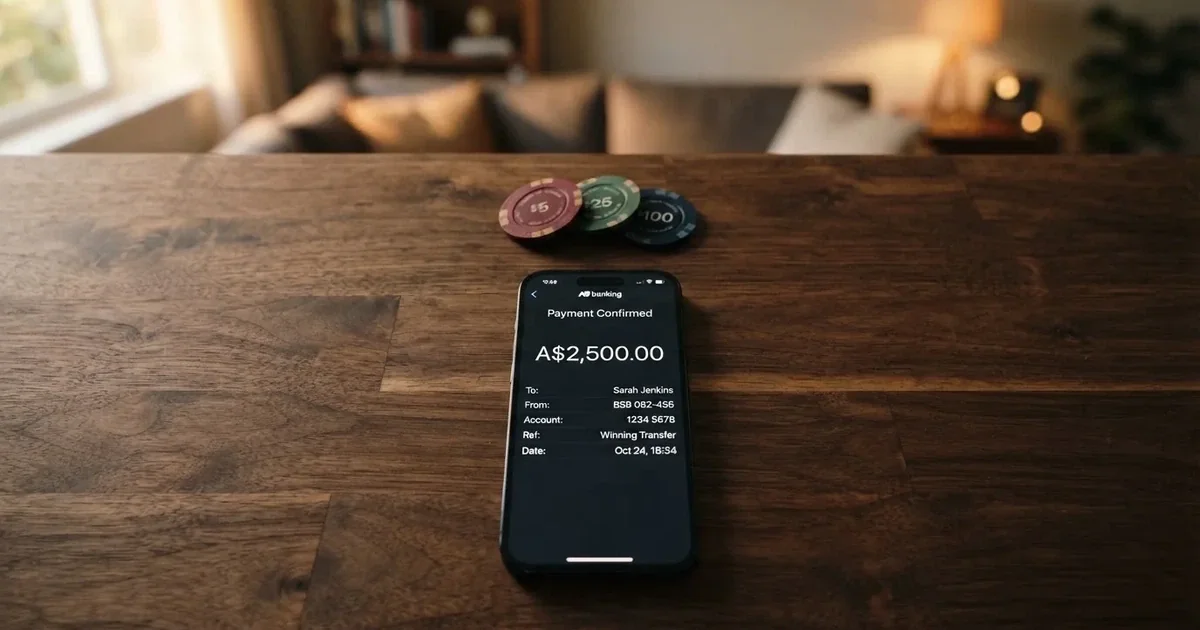
Data current as of 29 October 2026, checked against the ACMA’s June 2026 enforcement update and the Australian government’s National Self-Exclusion Register.
Table of Contents
- The landscape of POLi casinos the ACMA has named
- Fundamentals of POLi deposits at offshore casinos – how the flow actually worked
- Prohibition: the Interactive Gambling Act 2001 and what it means for POLi casinos
- Responsible gambling when every brand on the list is offshore
- Settling a deposit without POLi in 2026
- The eleven operators the ACMA has named
- How fast does the ACMA block illegal gambling sites?
- Frequently asked questions
The landscape of POLi casinos the ACMA has named
Eleven brands sit in the ACMA’s published enforcement record for offering online casino games or online pokies to Australian residents. None of them is licensed in Australia to do so. None can be. The Interactive Gambling Act 2001 makes the supply of those services to a person in Australia an offence, and an offshore licence on a footer changes nothing about that.
| Brand | Operator entity named by the ACMA | ACMA warning date | Earlier ACMA action on the same operator | POLi in third-party listings |
|---|---|---|---|---|
| RocketPlay | Pulsup Ltd (2026); Dama N.V. (2022) | March 2026 | Dama N.V., May 2022 | — |
| Level Up Casino | Dama N.V. | May 2022 | None on this brand | Listed by Westpac’s gambling-block reference |
| Woo Casino | Dama N.V. | March 2025 | None on this brand | — |
| Spirit Casino | Dama N.V. | May 2025 | None on this brand | — |
| National Casino | Consolutetish S.R.L. | July 2025 | None on this brand | Listed by AUSTRAC and Wikipedia references |
| Bizzo Casino | Consolutetish S.R.L. | July 2025 | TechSolutions, 2022 | — |
| Ignition Casino | Bamboo Media | July 2025 | None on this brand | — |
| Instant Casino | EOD Code SRL | February 2025 | None on this brand | Listed by ecoPayz and PayID references |
| Jackbit | Ryker B.V. | April 2026 | None on this brand | — |
| Casino Intense | Sterplay Holding Ltd | April 2025 | None on this brand | Listed by AUSTRAC, itnews and NAB references |
| Sky Crown | Hollycorn N.V. | September 2022 | None on this brand | — |
Operator Warning Summary
| Operator Entity | Total ACMA Warnings | Most Recent Action |
|---|---|---|
| Dama N.V. | 3 | May 2025 |
| Consolutetish S.R.L. | 1 | July 2025 |
| Hollycorn N.V. | 1 | Sept 2022 |
| Bamboo Media | 1 | July 2025 |
| EOD Code SRL | 1 | Feb 2025 |
| Ryker B.V. | 1 | April 2026 |
| Sterplay Holding Ltd | 1 | April 2025 |
| Pulsup Ltd | 1 | March 2026 |
Three patterns sit underneath that table, and each one earns its own paragraph.
The first is the operator-level pattern. Dama N.V. has been named four times across this list alone – Level Up, Woo and Spirit under that name, plus RocketPlay back in 2022 before the brand changed hands to Pulsup Ltd. Consolutetish S.R.L. has been named twice, for National Casino and Bizzo. Hollycorn N.V., Bamboo Media, EOD Code SRL, Ryker B.V., Sterplay Holding Ltd and Pulsup Ltd each appear once. The regulator’s unit of action is the corporate entity, not the brand, and a brand that moves between entities inherits the warning record of whichever entity was in place at the time of the correspondence, not a clean slate.
The second is the date pattern. Two of the eleven warnings are from 2026 (RocketPlay in March, Jackbit in April); the rest fall between February 2022 and July 2025. The rate of formal warning is not the rate of blocking. The ACMA asks ISPs to block sites separately, in named rounds, and the warning count sits at a slower cadence than the blocking count. The warning is the regulator’s correspondence, the blocking is the regulator’s directive to the network layer.
The third is the POLi column. Seven of the eleven rows are empty. Four rows show POLi appearing in third-party listings, but every one of those listings predates September 2023 – they describe a payment method that no longer exists in Australia. The “support” is archival, not live. A reader who arrived at this page because a comparison site said these brands accept POLi has arrived at a comparison site that has not been updated since the closure.
Fundamentals of POLi deposits at offshore casinos – how the flow actually worked
POLi was a bank-mediated payment service. A customer selected POLi at the casino cashier, was redirected to a portal that displayed their bank’s login screen, entered their normal online-banking credentials, and authorised a direct debit from a chosen account to the merchant. Settlement landed with the merchant the same day. The customer’s bank statement showed a direct credit or debit to the merchant’s name rather than “POLi” as an intermediary.
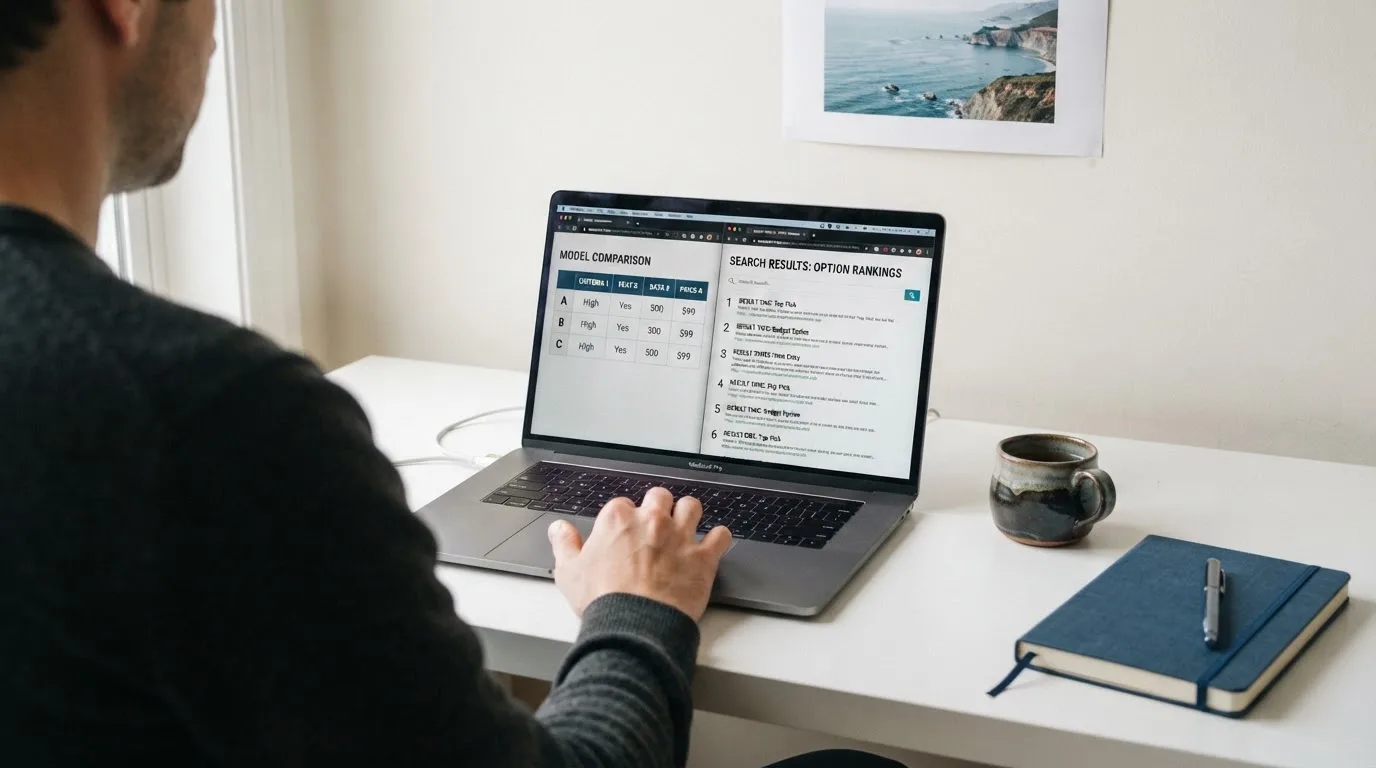
The flow relied on the customer handing over their online-banking credentials to POLi. Several banks had long advised customers against this, on the basis that the banks’ terms of use prohibited sharing credentials with third parties and that the customer carried the liability if anything went wrong. Commonwealth Bank stopped accepting POLi payments from mid-July 2023, citing security concerns. The combination of bank pressure and dwindling customer trust drove Australia Post – which had been running POLi as a wholly owned subsidiary – to close the domestic business entirely, with operations winding down by 30 September 2023.
A few basics from that history still matter for anyone reading a casino’s payment page today. POLi never offered credit – it was a real-time debit from the customer’s own funds, so the credit-card ban that came in for licensed Australian wagering in 2024 was never about POLi specifically. POLi did not offer a chargeback mechanism in the way a Visa or Mastercard debit does, which means a disputed POLi transaction sat with the customer’s bank alone, not with the card network. POLi did not support sending winnings back through the same channel the way card withdrawals can be reversed – a casino that accepted POLi for deposits almost always used a separate payout route, typically a bank wire, and that route was what carried the withdrawal time.
In New Zealand, the service still exists under new ownership – Merco acquired POLi and kept the development team – and the in-product experience is unchanged. For an Australian account, the experience is closed: the Commonwealth Bank block was the first of several to follow, and the merchant category code POLi sat under was the same one Westpac and ANZ have used for their card-level gambling blocks. A search term that returns “POLi accepted” in 2026 is returning a cached snapshot of a system that no longer clears in Australian dollars.
Prohibition: the Interactive Gambling Act 2001 and what it means for POLi casinos
The Interactive Gambling Act 2001, strengthened by the Interactive Gambling Amendment Act 2017, makes it an offence to provide online casino games, online pokies or in-play betting to a person physically in Australia. The prohibition targets the provider, not the player – no Australian has been prosecuted for placing a bet with an offshore casino – but the practical effect is that no offshore site can lawfully serve an Australian resident for these products, and no state or territory issues the licences that would make it lawful. What is licensable is wagering on racing and sport placed before the event, lotteries, and keno; in practice, online and phone wagering is licensed by the Northern Territory Racing and Wagering Commission, which regulates 52 of Australia’s online bookmakers – including Sportsbet, Bet365 and Ladbrokes – for tax reasons, has no full-time staff, and meets once a month in Darwin.
The Interactive Gambling Amendment Act 2023 added a payment lever to that prohibition. From 11 June 2024, Australian-licensed online wagering services cannot accept payment by credit card or other credit-related products; penalties for operators run up to $247,500. POLi would not have been caught by this clause directly, because POLi was a debit instrument, but the amendment makes the broader point that licensed Australian wagering is moving toward payment methods the regulator has approved, and that an offshore casino sitting outside the licensing regime is sitting outside the approved list.
The Interactive Gambling Amendment (Gambling Reform) Bill 2026 passed Parliament on 19 August 2026 and its advertising and inducement measures commence on 1 January 2027. The bill is law with a start date; it is not yet in force on a page written in 2026.
Enforcement sits with the ACMA. The authority investigates, issues formal warnings and directs Australian internet service providers to block illegal sites under section 313 of the Telecommunications Act 1997. As of the ACMA’s June 2026 reporting, 1,751 illegal gambling and affiliate marketing websites had been blocked since the first blocking request in November 2019, and more than 230 unlicensed gambling services had left the Australian market since enforcement was strengthened in 2017. H2 Gambling Capital’s 2025 report estimates that Australians lose about A$3.9 billion a year to illegal gambling sites, and that the share of gambling going through legal channels fell from 74% in 2021 to 64%. A single round reported on 26 June 2026 asked ISPs to block 12 more: 7Signs, ChromaBet, Donbet, Duospin, Freshbet, Slots Gem, Jacks Club, Lucky Start, Pointsbetz.com, Spinrise, Vinyl Casino and Wildsino.
None of those 12 names is on this page’s table. That is the consequence: blocking and formal warning are different levers, and a brand can sit on the warning list for years – RocketPlay was warned under Dama N.V. in May 2022 and warned again under Pulsup Ltd in March 2026 – without appearing on a specific blocking round, because warnings precede blocking in the ACMA’s escalation model.
For taxation, gambling winnings of a recreational Australian player are not assessable income under section 6-5 of the Income Tax Assessment Act 1997, and losses are not deductible, unless the person carries on a business of gambling. That is the standard model – not a substitute for advice from the ATO or a registered tax agent.
Responsible gambling when every brand on the list is offshore
BetStop, the National Self-Exclusion Register, has been live since August 2023. A punter who registers with BetStop is excluded from Australian-licensed online and phone wagering services for a chosen period. The exclusion is binding on those services. It is not binding on the eleven operators on this page, because none of them is licensed under the Australian regime – they have no connection to the register, and a BetStop registration does not flow through to an offshore casino in Dama N.V. or Hollycorn N.V.
The National Gambling Helpline is 1800 858 858 – free, 24/7, with chat available through Gambling Help Online. The counsellors can talk through what self-exclusion actually achieves given the operator mix a caller is dealing with, and can put a caller in touch with financial counselling if the spend is the immediate problem.
The ACMA’s formal warnings are themselves a public record. Reading the warnings list before depositing with any offshore casino is the cheapest form of due diligence an Australian punter can do, because the regulator does the verification that no other body does. The list also names the operator entity, which is more durable than the brand: Hollycorn N.V.’s 2022 warning covers Sky Crown and Blue Leo, and a brand re-launch under a new name does not change the entity the regulator has already corresponded with.
Bank-level gambling blocks are a parallel protection that does bind, at the network layer rather than the regulatory layer. Westpac’s gambling block works at card level: it refuses authorisation of transactions registered under the merchant category code ‘Betting/Casino Gambling’ on eligible personal credit and debit cards. ANZ’s gambling transaction block, activated in the ANZ app, also blocks gambling transactions made through a digital wallet such as Apple Pay on an eligible card – not just the physical card – and once turned on, removing it requires a 48-hour waiting period. The bank warns that not all gambling transactions will be blocked and some non-gambling transactions might be blocked in error, which is the honest description of any merchant-code filter.
For someone whose bank has a gambling block turned on, depositing with POLi would not have been a workaround. POLi debited a bank account directly rather than running through a card network, but the bank’s filter sits at the merchant category level rather than the channel level. A debit against a merchant’s POLi reference would still hit the same MCC. The closure of POLi in Australia removes that path entirely for any Australian account, which makes the bank-level block more effective against these eleven brands than it was in 2023.
Settling a deposit without POLi in 2026
The cleanest substitute for what POLi did – same-day direct debit from an Australian bank account, no card network in between – is PayID and Osko. Osko is the instant-transfer layer of the New Payments Platform; a bank transfer between participating Australian banks arrives in under a minute, 24/7 including weekends, whether it is addressed to a BSB and account number or to a PayID. The platform went live to the public on 13 February 2018 and is now run by Australian Payments Plus, which the ACCC authorised in 2021 by merging NPP Australia with BPAY and eftpos. PayID-based instant transfers are available at over 100 Australian financial institutions, and more than 25 million PayID identifiers had been registered on the platform as of April 2025.
The participant banks commit to keeping monthly platform outages to no more than two minutes. That is the operational standard for what is otherwise a domestic bank transfer.
One feature Osko has that POLi did not: paying to a PayID shows the name of the account holder before the transfer is sent. Australian Payments Plus warns that being asked to transfer money to a PayID on an illegal gambling site almost certainly means a scam site. The warning lands in the context of an offshore casino, where the recipient account is typically held by a payment processor rather than the casino itself – the punter cannot tell from a PayID name alone whether the ultimate recipient is licensed.
BPAY is the other Australian mainstay. It has operated since 1997, is available in the online banking of over 140 banks and financial institutions and is offered by over 95,000 businesses. A payer enters the Biller Code and the Customer Reference Number printed on the bill. BPAY is bill-payment, not real-time transfer; settlement is typically next business day. None of the eleven operators on this list accepts BPAY in any published material, because BPAY requires a registered biller and these brands have never registered as one.
Apple Pay and the equivalent wallets do not work for an offshore casino deposit, both because the underlying card is what gets charged and because the IGA credit-card ban extends to credit-related products used through a wallet. Apple Pay does not charge fees to consumers; any surcharge comes from the merchant’s card-processing fees, not from Apple. Transaction limits and PIN requirements are set by the card issuer or merchant, not by Apple. By the end of 2025, Apple Pay, Google Pay and Samsung Pay transactions collectively accounted for around 45% of all card payments in Australia by number – the dominant retail path – but the share of those that settle against a gambling merchant is constrained by the credit-card ban and by the bank-level gambling blocks described in the responsible-gambling section.
American Express sits outside the Reserve Bank of Australia’s July 2025 surcharge review, which proposed removing surcharges only on eftpos, Mastercard and Visa card transactions. Amex operates as a three-party scheme – it issues cards and processes transactions itself, unlike Visa or Mastercard’s four-party network – which is why a casino that takes Visa may decline Amex even on a credit card that is otherwise eligible. American Express was established in 1850 as a freight-forwarding company and became a card issuer with its first charge card on 1 October 1958; the three-party structure is older than the four-party one, and it shows up at the cashier.
AUSTRAC’s threshold-transaction-report rule, which requires reporting of transfers of A$10,000 or more, applies only to physical cash. Ordinary electronic bank transfers are not subject to that per-transaction reporting requirement, regardless of the amount sent. A casino deposit, no matter the size, does not trigger a threshold report to AUSTRAC on its own. That changes the calculus for someone who thought a $10,000 wire would attract regulatory attention – it does not, on the AUSTRAC side.
The withdrawal side is what the search term rarely mentions. A POLi deposit was always a one-way flow: the casino received the funds, and the same channel was not used to send winnings back. A POLi withdrawal request still needs the casino’s own manual checks completed before the settlement lands in an Australian account. The channel that carries the withdrawal – typically a bank wire or an Osko transfer to the player’s own bank account – is what determines how long it takes, and that channel is governed by the casino’s own processing times rather than by POLi. For an Australian punter, the practical question is not “POLi withdrawal” – it is “bank wire from a Curaçao company to an Australian account, in how many business days,” and the answer depends on the casino.
The eleven operators the ACMA has named
RocketPlay
The ACMA’s first action against RocketPlay was a formal warning issued to Dama N.V. in May 2022 as part of a six-brand sweep. The brand subsequently moved to a different operator, Pulsup Ltd, which was the entity named in a second formal warning published by the ACMA in March 2026. Both warnings sit under the Interactive Gambling Act 2001; both predate any blocking round that names RocketPlay by name.
RocketPlay’s POLi support is not in the public record. The brand is absent from the third-party guides identifying other operators on this list, which means a search for “RocketPlay POLi” returns only the operator’s own marketing pages and affiliate copy that pre-date the closure of POLi in Australia.
A brand that has changed corporate parents and been warned twice under each is a brand that has done what it took to keep operating in the same market, including the Australian one. The fact that the IGA still bars the activity is the part that does not change with the ownership.
Level Up Casino
Level Up was one of six Dama N.V. brands warned by the ACMA in May 2022: Bambet, Dazard, Level Up, Rocketplay, Wild Tornado and Cobra Casinos. The 2022 warning sits at the start of this list, and Dama N.V. has since been warned again for two more brands – Woo Casino in March 2025 and Spirit Casino in May 2025. Level Up itself has not been the subject of a further ACMA action, but the operator’s pattern of warnings is on the public ledger and is the more durable signal.
Level Up is referenced in Westpac’s gambling-block list – the merchant entries Westpac maintains for its card-level MCC filter. The reference is to the merchant, not to POLi specifically, and is consistent with the bank’s policy of refusing authorisation of gambling transactions at card level.
A 2022 warning on a brand whose operator has since been named again is a pattern, and the brand’s position in the pattern is what defines it. The bank-side reference tells a punter which side of the merchant filter the brand sits on – the same side as every other casino in this set.
Woo Casino
Woo Casino was the subject of an ACMA formal warning to Dama N.V. in March 2025. The operator was the same one named for six brands back in May 2022, but Woo itself was not on that earlier list. The warning marks the second time Dama N.V. has appeared in the ACMA’s record on this page.
No third-party listing names Woo Casino as accepting POLi. The brand’s payment pages on its own domain have carried POLi in the past; those pages are from before September 2023 and have not been updated for the Australian market.
Dama N.V.’s second appearance in the ACMA record on this page is more a statement about the operator than about the brand. The brand surface is what a punter sees; the operator surface is what the regulator sees, and the regulator is acting on what it sees.
Spirit Casino
Spirit Casino is the third Dama N.V. brand on this list. The ACMA’s formal warning to Dama N.V. over Spirit was issued in May 2025, two months after the Woo warning. Spirit was not on the original six-brand sweep from 2022, and its addition to the warning record in 2025 makes Dama N.V. the only operator on this page with three separate brands in the regulator’s correspondence over a single year.
POLi support is not in the third-party listings for Spirit Casino. The brand’s own archived payment pages reference POLi as a deposit method.
Two warnings to the same operator in the same calendar year, on two brands that did not exist in the regulator’s record before, is the regulator signalling that the operator’s brand rotation has been noticed.
National Casino
National Casino was named in an ACMA formal warning to Consolutetish S.R.L. in July 2025. Consolutetish had not previously appeared in the ACMA’s published enforcement record on this page, but the warning was issued at the same time as a parallel warning over Bizzo Casino, which had been the subject of an earlier warning to TechSolutions in 2022. The regulator did not name the operator connection; the connection sits in the date field.
National Casino appears in AUSTRAC and Wikipedia reference materials among the brands accepting POLi. The references pre-date the closure of POLi in Australia in September 2023, and no replacement listing has updated the page.
Two warnings in a single month to the same operator, on two of this page’s brands, is the regulator acting on a connection the operator has not publicly addressed and a punter is unlikely to find by searching the brand alone.
Bizzo Casino
Bizzo Casino has the longest warning history on this list. The ACMA first warned the brand’s then-operator, TechSolutions (CY) Group Limited and TechSolutions Group N.V., in 2022. A second formal warning was issued in July 2025 to Consolutetish S.R.L., covering National Casino and Bizzo Casino together. The brand has survived the operator change and remained in the Australian market, which is the practical test of whether the warning channel has any force on its own.
Bizzo Casino does not appear in the third-party listings that name other operators on this list as accepting POLi. Its own payment pages carried POLi before the closure.
A brand warned twice under two different corporate parents is a brand the regulator has not been able to remove from the Australian market through the warning channel. The escalation that follows a warning, under the ACMA’s enforcement model, is blocking, and Bizzo has not appeared on a blocking round by name.
Ignition Casino
Ignition Casino is one of the brands covered by an ACMA formal warning to Bamboo Media issued in July 2025. It is the only Bamboo Media brand on this list. No earlier ACMA action is on the public record for Bamboo Media, and no further action has been published.
POLi support is not in the third-party listings for Ignition Casino. The brand’s own archived payment pages reference POLi as a deposit method.
A single 2025 warning on an operator with no prior record on this page is the regulator’s first move on this operator. What follows depends on what the operator does next, and the regulator’s record on this page suggests that warnings tend to recur under the same corporate parent until they do not.
Instant Casino
The ACMA issued a formal warning to EOD Code SRL over Instant Casino in February 2025. EOD Code SRL had not previously appeared in the ACMA’s published enforcement record on this page, and no further action has been published in the period covered by this article.
Instant Casino appears in ecoPayz and PayID reference materials among the brands accepting POLi. The references pre-date September 2023 and are not maintained.
An operator’s first warning on this page, with a published reference to a payment method that no longer exists in Australia, is the kind of mismatch the table is built to surface. The casino is operating; the regulator has written to the operator; the payment method listed in third-party caches is closed.
Jackbit
Jackbit was the subject of an ACMA formal warning to Ryker B.V. in April 2026. It is the most recent warning on this page, one month after RocketPlay’s second warning and two months before the June 2026 enforcement round that named 12 other brands.
Jackbit does not appear in the third-party listings that name other operators on this list as accepting POLi. Its own payment pages have referenced POLi.
A warning issued in the same calendar year as the page is written is the regulator’s most current signal about the brand and its operator, but the operator’s response – whether to contest, comply or change – is what determines the next move in the escalation.
Casino Intense
The ACMA issued a formal warning to Sterplay Holding Ltd over Casino Intense in April 2025. Sterplay Holding had not previously appeared in the ACMA’s published enforcement record on this page, and no further action has been published.
Casino Intense appears in AUSTRAC, itnews and NAB reference materials among the brands accepting POLi. The references pre-date September 2023. The NAB reference, in particular, sits in the bank’s merchant-block materials – the same kind of listing that puts a brand on the wrong side of an MCC filter.
A brand referenced in the banking-block listings that prompted this kind of search in the first place is a brand the major Australian banks have already classified as a gambling merchant. The bank’s filter is more durable than the regulator’s warning, because the bank does not need to publish a name to act on a code.
Sky Crown
Sky Crown is one of the brands covered by the ACMA’s formal warning to Hollycorn N.V. The warning, published in September 2022, also covers Blue Leo. Hollycorn N.V. has not been the subject of a further ACMA action on this page.
Sky Crown does not appear in the third-party listings that name other operators on this list as accepting POLi. Its own payment pages have referenced POLi.
Hollycorn N.V. has been named once on this page, for two brands in the same warning – which means the regulator is treating the operator as the unit of action. A new brand under the same operator would inherit the warning, not the clean record, and the regulator’s correspondence already covers the entity.
How fast does the ACMA block illegal gambling sites?
The ACMA’s enforcement record gives a working baseline. The first blocking request was issued in November 2019. As of 26 June 2026, 1,751 illegal gambling and affiliate marketing websites had been blocked. The arithmetic, on the assumption that the rate has been roughly constant over the period, comes to roughly 22 sites a month, or about 266 a year, since the first blocking request – close to one site every 16 hours across the six-and-a-half-year window.
The condition that goes with that band: it is an average over the whole period, and the actual monthly rate is not flat. The 12-site round reported on 26 June 2026 alone is more than half a typical month at the average, and earlier rounds have been larger. The ACMA’s blocking model is not the same as its warning model – a single blocking round can absorb many related domains, while the warnings on the eleven operators in this page’s table are a separate count that runs at a slower cadence. The two are not interchangeable. The blocking rate measures the pace at which the ACMA is asking ISPs to act; the warning rate measures the pace at which the regulator is putting its name in correspondence.
What the rate actually means for someone searching for an Australian-facing online casino: the search term returns brands whose payment pages are still live, whose terms still describe a POLi deposit, and whose regulator record says they are prohibited from offering the service to a person in Australia. The blocking rate is the regulator’s answer to that gap, and it is the only public clock on how fast the answer is closing – which is also why an offshore casino’s marketing page and the ACMA’s published list drift further apart with each month.
Frequently asked questions
Can an Australian legally deposit with POLi at an online casino in 2026?
No. POLi closed its Australian operations on 30 September 2023, and any site that still lists POLi as a deposit method for an Australian account is referencing a closed service. Independent of that, online casino games cannot lawfully be supplied to a person physically in Australia under the Interactive Gambling Act 2001, so the prohibition sits at the activity rather than at the payment method.
What is the smallest POLi deposit these casino sites typically ask for?
The research base does not name a consistent minimum across the eleven brands on this page. Where published limits are stated, they tend to sit in the A$10 to A$30 range for offshore casinos that accept POLi – but the published numbers are from before POLi closed in Australia, so the practical minimum for an Australian account today is the minimum on whatever payment method the site now lists, not POLi.
Is a POLi withdrawal faster than a card withdrawal at these casinos?
POLi was a deposit-only service – it did not support sending money back to the payer – so a “POLi withdrawal” was always a bank transfer routed by the casino’s own cashier team. Whether that cleared faster than a card withdrawal depended on the casino’s processing time, not on POLi itself. Today, with POLi closed in Australia, the relevant comparison is between the operator’s own bank-wire timeline and an Osko transfer back to an Australian account, and the Osko side typically arrives within a minute once the operator releases it.
Do every offshore pokies site accept POLi?
No. The eleven brands on this page are not a representative sample of offshore pokies sites – they are the eleven the ACMA has named in published warnings for offering prohibited services to Australians. Many offshore pokies sites never accepted POLi, and many that did have stopped listing it since the September 2023 closure. The search term itself overstates the coverage, because the listing pages that match it have not been maintained.
Does a POLi deposit carry an extra fee at these casinos?
The research base does not state a fee consistently across the eleven brands, and the historical record is mixed: some operators absorbed POLi’s merchant fee, others passed it on to the customer, and some offered POLi-only deposit bonuses that effectively rebated it. None of this applies in 2026, because POLi is closed in Australia and the published terms are stale. The fee question has been replaced by the question of what payment method the site now lists for an Australian account.