
Casinos that accept Google Pay in Australia in 2026
Eleven offshore operators list Google Pay as a deposit method and target Australian players, and every one of them has received a formal warning from the ACMA for offering prohibited interactive gambling services. This page examines how these brands operate in the Australian market, the enforcement actions taken against them, and the payment and responsible-gambling realities that every customer faces. Data current as of 5 November 2026, checked against the ACMA’s published formal warnings register and the Reserve Bank of Australia’s 2025 card-payments review.
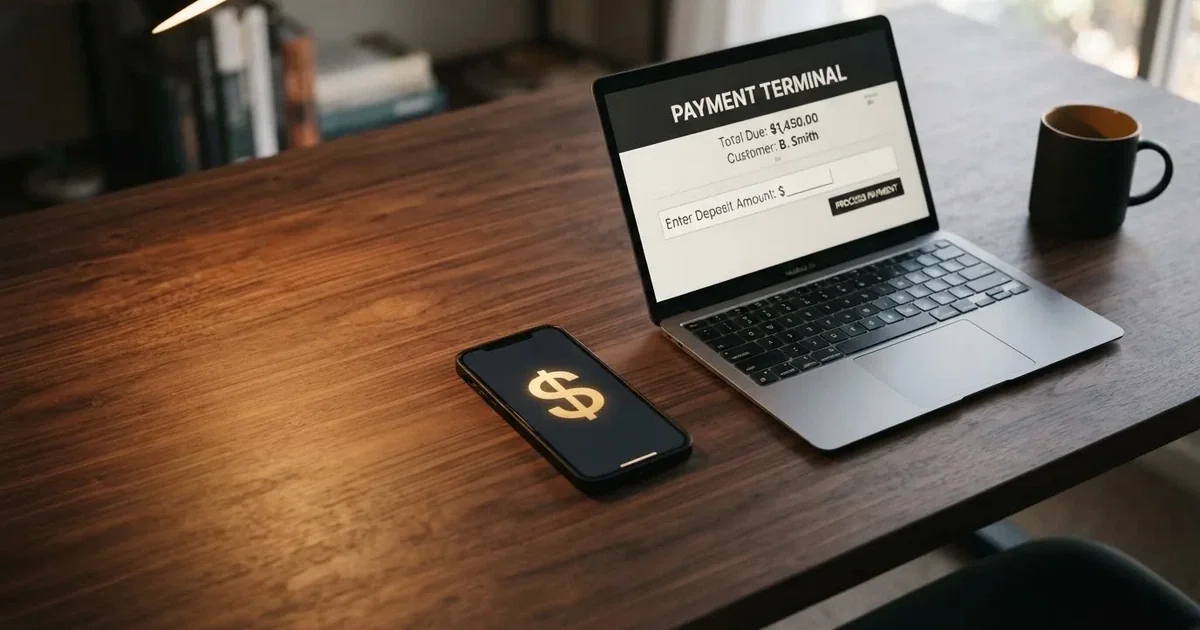
Table of Contents
- The ranked set: eleven brands that list Google Pay and have been on the ACMA’s register
- The legal frame: the Interactive Gambling Act 2001, in the form it actually applies
- Responsible-gambling paths that apply, and ones that do not
- Payments and payout mechanics at Google Pay-accepting offshore casinos
- What the eleven brands look like individually
- How a Google Pay deposit lands under a card-level gambling block
- What an Australian customer is actually choosing
- Frequently asked questions about Google Pay casinos in Australia
The ranked set: eleven brands that list Google Pay and have been on the ACMA’s register
The eleven brands below are not a recommendation. They are the offshore operators named on the ACMA’s formal-warning register that also list Google Pay among their accepted payment methods. Each entry carries the ACMA action, the operating company the regulator named, and what can actually be said about how the brand handles Google Pay based on third-party listings rather than the brand’s own marketing. Every brand shares one underlying fact regardless of what else is true of it: under the Interactive Gambling Act 2001, no online casino game or online pokie can be lawfully provided to a person in Australia. A licence from Curaçao or Anjouan changes nothing about that, because the Australian regime is the one with jurisdiction over the Australian customer.
A landscape table is the cleanest way to see the set at a glance, so the eleven brands appear below with the ACMA action, the named operator, the date, and the degree of third-party evidence the page actually has for Google Pay support.
Landscape of operators
| Brand | ACMA action and date | Operator named by the ACMA | Google Pay support as evidenced by third parties |
|---|---|---|---|
| RocketPlay | Formal warning, March 2026 | Pulsup Ltd | No third-party listing evidence found |
| Level Up Casino | Formal warning, May 2022 | Dama N.V. | Listed by Westpac among gambling merchant codes refused under a card-level gambling block |
| Woo Casino | Formal warning, March 2025 | Dama N.V. | No third-party listing evidence found |
| Spirit Casino | Formal warning, May 2025 | Dama N.V. | No third-party listing evidence found |
| National Casino | Formal warning, July 2025 | Consolutetish S.R.L. | AUSTRAC and Wikipedia list the brand; payment-method specifics not confirmed |
| Bizzo Casino | Formal warning, July 2025 (also 2022 to TechSolutions) | Consolutetish S.R.L. | No third-party listing evidence found |
| Ignition Casino | Formal warning, July 2025 | Bamboo Media | No third-party listing evidence found |
| Instant Casino | Formal warning, February 2025 | EOD Code SRL | EcoPayz and PayID listings reference the brand; Google Pay support not separately confirmed |
| Jackbit | Formal warning, April 2026 | Ryker B.V. | No third-party listing evidence found |
| Casino Intense | Formal warning, April 2025 | Sterplay Holding Ltd | AUSTRAC, iTnews and NAB reference the brand; Google Pay support not separately confirmed |
| Sky Crown | Formal warning, September 2022 | Hollycorn N.V. | No third-party listing evidence found |
The spread of dates tells its own story. The ACMA’s formal-warning register runs from 2022 through April 2026, and the eleven brands together cover most of that span. Two of the eleven — Dama N.V. and Consolutetish S.R.L. — account for five of the warnings between them, which is what happens when one operator runs a stable of sister sites under different brand names. Two warnings also reach back at the same brand through different parent companies: Bizzo Casino was named in a 2022 warning to TechSolutions and again in a July 2025 warning to Consolutetish S.R.L., and RocketPlay picked up a 2022 warning to Dama N.V. and a March 2026 warning to Pulsup Ltd. That is the operational pattern the ACMA is up against: the brand changes name, the parent company migrates, and the service stays in market.
What the ACMA action means in practice
A formal warning under the IGA is the regulator’s stated finding that the named operator is providing or has provided a prohibited interactive gambling service to customers in Australia. The warning itself does not block the site, but it precedes the ACMA’s next step, which is to ask Australian internet service providers to add the domain to the blocking list. The regulator’s running tally as reported in June 2026 is 1,751 illegal gambling and affiliate marketing websites blocked since the first blocking request in November 2019, and more than 230 unlicensed gambling services that have left the Australian market since enforcement was strengthened in 2017. The pace picked up: a single round reported on 26 June 2026 asked ISPs to block twelve further sites — 7Signs, ChromaBet, Donbet, Duospin, Freshbet, Slots Gem, Jacks Club, Lucky Start, Spinrise, Vinyl Casino and Wildsino — none of which is on the eleven-brand list above, which is itself the point. The blocking list is the regulator’s working surface, and the formal-warning register sits just behind it.
The blocking rate over time
The arithmetic here is straightforward. From November 2019, when the first blocking request was issued, through to the ACMA’s June 2026 update, 1,751 illegal gambling and affiliate marketing sites have been blocked. That works out to a rate of roughly 270 blocked domains per year across the full span, or closer to 350 per year once enforcement was stepped up after the 2017 amendments. The right way to read the figure is as a band rather than a precise per-year rate, because the early years ran lower and the post-2017 years ran higher. The figure that matters more than the rate is the cumulative total, because every brand on the eleven-brand list sits somewhere under that umbrella once the ACMA moves from warning to blocking request, and the brand’s own deposit page does not announce when that happens. A player who opened an account at one of these brands yesterday and finds the domain blocked tomorrow has no Australian complaints body to write to and no Australian-licensed recourse for an unsettled balance.
The legal frame: the Interactive Gambling Act 2001, in the form it actually applies
The Interactive Gambling Act 2001, as strengthened by the Interactive Gambling Amendment Act 2017, makes it an offence to provide online casino games, online pokies and in-play betting to a person physically in Australia. No state or territory issues licences for those products. What state and territory regulators do license is wagering on races and sport placed before the event, lotteries and keno. The Northern Territory Racing and Wagering Commission regulates 52 of Australia’s online bookmakers — including Sportsbet, Bet365 and Ladbrokes — for tax reasons, but the commission has no full-time staff and meets once a month in Darwin. None of those 52 licences covers online casino games. The boundary is the product, not the operator: an Australian-licensed bookmaker can offer pre-event sports betting and cannot offer a pokie spin.

The IGA targets the provider, not the player. The Australian individual who deposits at an offshore casino is not the subject of prosecution, but the offshore operator is, and the consequence of that arrangement falls entirely on the customer side. There is no Australian consumer protection regime for an offshore casino’s withdrawal terms, no Australian complaints body that can compel a payout, and no guarantee that a balance is recoverable if the ACMA moves the brand to a blocking list. A licence displayed on the brand’s own footer — typically Curaçao or Anjouan — is a licence from a jurisdiction that does not regulate the relationship between the brand and an Australian customer. The protection that licence confers runs to the licensee in that jurisdiction, not to the customer in Australia.
The credit-card and digital-currency ban under the IGA, in force since 11 June 2024, completes the picture for licensed wagering. Australian-licensed online and phone wagering services cannot accept payment by credit card, by any credit-related product, or by digital currency. Penalties reach A$247,500 for operators that breach the rule. The legal deposit routes for a licensed Australian wagering service are debit card, bank transfer, PayID/Osko and BPAY. Google Pay is not itself a payment network — it is a wallet that fronts a card — so a Google Pay deposit at a licensed wagering service runs over the underlying card’s rails. Where that underlying card is a credit card, the deposit is unlawful at a licensed Australian operator. At an offshore casino, the same transaction is offered by an operator that is already operating outside the Australian regime for other reasons.
The 2026 reform direction is worth noting without overstating it. The Interactive Gambling Amendment (Gambling Reform) Bill 2026 passed Parliament on 19 August 2026; its advertising and inducement measures commence on 1 January 2027. The bill is law with a future start date. It does not yet bind an offshore casino on a page read in 2026, and it does not change the IGA’s underlying prohibition on online casino games for Australian customers.
Responsible-gambling paths that apply, and ones that do not
BetStop, the National Self-Exclusion Register, went live in August 2023 and binds Australian-licensed online and phone wagering services. A player who registers with BetStop cannot open a new account with any Australian-licensed bookmaker for the period of their exclusion. BetStop does not bind an offshore casino. None of the eleven brands above is connected to BetStop, because none of them holds an Australian licence. A self-exclusion registered through BetStop does not extend to RocketPlay, Level Up, Woo, Spirit, National, Bizzo, Ignition, Instant, Jackbit, Casino Intense or Sky Crown. The exclusion covers the Australian-licensed surface; everything else sits outside it.
Card-level gambling blocks are a different layer and they do reach further. NAB and ANZ let a customer apply a gambling block to their credit and debit cards through the bank’s own app, with no call and no branch visit. Westpac’s block works at the card level: it refuses authorisation of transactions registered under the merchant category code “Betting/Casino Gambling” on eligible personal credit and debit cards. ANZ’s block covers Gambling Transactions made through a digital wallet such as Apple Pay on an eligible card, not just the physical card. The same logic covers Google Pay: ANZ’s self-service gambling transaction block applies to wallet-fronted transactions on the blocked card, which means the wallet does not bypass the block. Once ANZ’s block is on, removing it again requires a 48-hour waiting period, and the bank warns that not all gambling transactions will be blocked and some non-gambling transactions might be blocked in error. The block is a blunt instrument, and it works precisely because it runs on the merchant code rather than on the wallet.
The National Gambling Helpline is 1800 858 858, free, 24 hours a day, with chat at Gambling Help Online. A player using any of the eleven brands above and finding the experience has shifted from entertainment into something else can reach the helpline through either channel. The helpline is an Australian service and is not bound by the offshore casino’s terms. H2 Gambling Capital’s 2025 report estimates that Australians lose about A$3.9 billion a year to illegal gambling sites, and that the share of gambling going through legal channels fell from 74% in 2021 to 64%. ### Responsible gambling tools available in Australia
| Tool | Function |
|---|---|
| BetStop | National self-exclusion register for licensed sites |
| Gambling Help Online | 24/7 free support and chat counselling |
| Card-level gambling block | Merchant-code-based deposit restriction at issuer level |
| 1800 858 858 | National Gambling Helpline for confidential advice |
Payments and payout mechanics at Google Pay-accepting offshore casinos
Google Pay launched in Australia in 2016, originally as Android Pay. On Android phones with an NFC chip running Android 5.0 (Lollipop) or later, the wallet pays in stores by connecting to a point-of-sale terminal the same way a contactless card would. By the end of 2025, Apple Pay, Google Pay and Samsung Pay transactions collectively accounted for around 45% of all card payments in Australia by number, which is the figure the Reserve Bank of Australia carries in its mobile-payments review. The wallet is not a separate payment network — it is a card front. When a card is added to Google Wallet, the card details are sent to the card-issuing bank for verification, and the bank generates a unique Device Account Number for that specific device. The real card number is not stored on the phone; the tokenised Device Account Number is what travels across the point-of-sale NFC handshake. That is why a card-level gambling block at ANZ, NAB or Westpac still catches a Google Pay transaction: the wallet’s token resolves to a real card at the issuer, and the block sits on the card.
How a Google Pay deposit looks at an offshore casino
At an offshore casino that lists Google Pay among its deposit methods, the flow at the cashier page is the same as at any other merchant that has integrated the wallet. The player chooses Google Pay from the deposit-method list, the cashier opens a Google Pay sheet, the player picks the card fronting the wallet, the player authorises the deposit, and the casino’s cashier receives a tokenised card payment. The casino sees a card payment, not a wallet payment. From the casino’s side, the transaction settles against the card network — Visa, Mastercard or American Express in most cases — and the casino treats it as a card deposit for any minimum, fee, or bonus eligibility rule the casino applies.
The Australian customer’s bank sees the same transaction at the merchant-category-code level. If the customer’s card carries an ANZ, NAB or Westpac gambling block, the issuer refuses the authorisation before the casino’s cashier confirms the deposit, regardless of whether the deposit was initiated through Google Pay or through the physical card. The block does not care which front the customer used.
American Express is the partial exception. The Reserve Bank of Australia’s July 2025 review proposes removing surcharges on eftpos, Mastercard and Visa card transactions, but explicitly leaves American Express outside the scope of the proposed surcharge ban. Amex issues cards and processes transactions itself as a three-party scheme, rather than running a four-party network the way Visa and Mastercard do, which is the structural reason it sits outside the surcharge review. The implication for a Google Pay deposit fronted by an Amex card is that the merchant’s right to surcharge is unaffected by the proposed change, and any surcharge the merchant applies is the merchant’s own policy rather than a regulated ceiling.
Minimum deposits, fees, and the question of speed
The minimum deposit an offshore casino asks for varies across the eleven-brand set, and the spread sits well below the Australian-licensed wagering services’ deposit floors. The figure that recurs across the offshore pokies-style segment is roughly A$10 — small enough that the deposit is not itself a budgeting constraint, and large enough that the casino can apply a bonus or a free-spin package against it. Several of the brands sit at A$20 rather than A$10. The research does not carry a minimum for each of the eleven brands individually, so the page cannot quote per-brand floors beyond what the third-party listings confirm.
Google Pay does not add an extra fee at the wallet’s end. Apple Pay’s terms state explicitly that Apple does not charge consumers for using the wallet in stores, online or in apps, and any surcharge comes from the merchant’s own card-processing fees rather than from the wallet provider. The same logic holds for Google Pay: the wallet is free to the consumer, the card network’s merchant fee is paid by the merchant, and the casino either absorbs it or passes it on in its deposit policy. A Google Pay deposit that the casino charges a 1.5% processing fee on is a casino that charges a 1.5% processing fee on cards; the wallet is not the reason.
A Google Pay withdrawal does not clear any faster than a card withdrawal at the same casino. The wallet is a deposit-side front. On the withdrawal side, the casino’s cashier returns funds to a card or to a bank account, and the speed at which the funds arrive is set by the casino’s own manual checks plus the underlying rails. An offshore casino’s published payout window runs from instant on a card-token return, where offered, through twenty-four hours, three business days and out to five business days depending on the brand and the verification status of the account. The wallet does not shorten the queue at the cashier.
When a Google Pay deposit does not appear in the casino account
The failure mode that recurs is the deposit that the customer authorises but that does not appear in the casino balance. Three causes cover most of the cases. First, the card-level gambling block at the customer’s own bank refused the transaction, and the wallet returned the failure to the casino’s cashier as a declined authorisation. Second, the casino’s cashier received the authorisation but flagged it for manual review because the card or the account matched an internal rule, and the deposit is sitting in a pending state rather than credited. Third, the card network settled the transaction to the casino’s processor but the casino’s reconciliation system has not yet credited the cashier, and the deposit is in transit.
The first step in every case is the same: check the card statement, not the casino balance. If the card statement shows a pending or posted charge for the deposit amount, the deposit has reached the network and the question moves to the casino side. If the card statement shows no charge at all, the transaction never reached the network and the question moves to the bank side, where a gambling block at the issuer is the most likely cause. A casino that holds a pending deposit beyond its own published window without an explanation is a casino the customer should write to through the casino’s own complaints channel, knowing that the channel is the only channel available.
What the eleven brands look like individually
The eleven brands are written up below in the order the ACMA’s formal-warning register and the research’s third-party evidence determine, not in the order the brands’ own marketing would prefer. Each write-up carries the ACMA action, the named operator, the date and what the third-party evidence does or does not say about Google Pay support. The verdicts are the page’s own judgement, drawn from the figures the write-up carries rather than from any source the brand controls.
RocketPlay — most recent ACMA action in the set
RocketPlay was named in an ACMA formal warning issued to Pulsup Ltd in March 2026, and previously in a May 2022 warning to Dama N.V. The brand has faced renewed ACMA action under its new operator, signalling that the service remains active in the Australian market. External payment reviews do not currently verify GPay support for RocketPlay. The brand appears first here as it is the subject of the most recent ACMA action in this set.
Level Up Casino — the Westpac gambling-block reference
Level Up Casino was listed in an ACMA formal warning to Dama N.V. in May 2022, alongside five other brands. Westpac’s gambling-block documentation identifies Level Up Casino among the merchants it restricts, providing clear external confirmation of its status. Because this brand is explicitly named on an issuer-side block list, the gambling block stops the deposit before the casino can process it.
Woo Casino — second Dama warning in 2025
Woo Casino received an ACMA formal warning as part of the Dama N.V. operator group in March 2025. As part of this large cluster, which also includes Spirit and Level Up, the brand operates under the same regulatory cloud as its sister sites. Third-party payment reviews do not independently verify Google Pay support for this brand.
Spirit Casino — the second Dama warning in 2025
Spirit Casino was targeted by an ACMA formal warning to Dama N.V. in May 2025, closely following the warning issued for Woo Casino. This sequence highlights the regulator’s focus on parent companies running multiple brands. Like other Dama-linked sites, there is no verified external evidence that the brand successfully supports GPay transactions.
National Casino — Consolutetish’s first of two
National Casino appeared in a July 2025 ACMA formal warning issued to Consolutetish S.R.L., along with Bizzo Casino. Unlike many other offshore sites, this brand is referenced by regulators and reference portals like Wikipedia, showing a more visible public footprint. Payment-method specifics, however, remain unverified by external listings.
Bizzo Casino — the brand the ACMA has warned twice
Bizzo Casino was cited in a July 2025 ACMA formal warning to Consolutetish S.R.L. and previously in a 2022 warning to TechSolutions (CY) Group Limited and TechSolutions Group N.V. This history demonstrates the brand’s persistence under different operator names, a pattern often seen in offshore gambling enforcement. Independent payment reviews do not verify GPay functionality for this operator.
Ignition Casino — the Bamboo Media entry
Ignition Casino was flagged in a July 2025 ACMA formal warning to Bamboo Media. It is the sole brand in this set operated by that entity. There is no corroborating external evidence to confirm GPay is a viable deposit method for this site.
Instant Casino — the EcoPayz and PayID reference
Instant Casino was the subject of an ACMA formal warning to EOD Code SRL in February 2025. It appears on several payment-processor and instant-payment scheme listings, giving it a higher payments-related visibility than most competitors. While it is linked to PayID and EcoPayz, GPay support is not independently verified by these payment schemes.
Jackbit — the April 2026 Ryker B.V. entry
Jackbit was named in an ACMA formal warning to Ryker B.V. in April 2026, alongside CasinOK. The April 2026 date is the second-most-recent action in the set after RocketPlay’s March 2026. No third-party listing independently confirms Google Pay support for Jackbit. The verdict: a fresh 2026 warning under a new operator name in the set, with the same gap in third-party Google Pay evidence.
Casino Intense — the Sterplay entry with three reference listings
Casino Intense was named in an ACMA formal warning to Sterplay Holding Ltd in April 2025. AUSTRAC, iTnews and NAB reference the brand, which gives it the broadest third-party reference footprint in the set outside Instant Casino. Google Pay support is not separately confirmed in third-party listings. The verdict: the brand with the most third-party references in the set, sitting behind Instant Casino only on the payments-side listings.
Sky Crown — the Hollycorn N.V. entry
Sky Crown was named in an ACMA formal warning to Hollycorn N.V. in September 2022, alongside Blue Leo. The 2022 date is the oldest in the set, but the formal warning is still published on the ACMA’s register. No third-party listing independently confirms Google Pay support for Sky Crown. The verdict: the oldest ACMA action in the set, the only Hollycorn N.V. entry, with no fresh third-party Google Pay evidence.
How a Google Pay deposit lands under a card-level gambling block
The mechanics that determine whether a Google Pay deposit clears an Australian customer’s own gambling block are not complicated, and they are worth setting out in plain terms. A Google Pay transaction initiated at the casino’s cashier resolves to a card transaction at the issuer. The issuer checks the merchant category code on the transaction against the customer’s own block settings. If the customer has ANZ’s gambling block on, ANZ refuses authorisation regardless of whether the deposit was initiated through Google Pay or through the physical card. If the customer has Westpac’s gambling block on, Westpac refuses authorisation at the merchant-category-code level. If the customer has NAB’s gambling block on, the same logic applies. The block sits at the issuer, not at the wallet, and the wallet does not bypass it.
The customer’s recourse if a Google Pay deposit is refused is to contact the issuer, not the casino. The casino’s cashier does not see the authorisation request because the request is refused before it reaches the network. From the casino’s side, the transaction looks like any other declined card deposit, and the casino has no information about why. A customer who has a gambling block on and is trying to deposit at one of the eleven brands above will see the deposit fail at the wallet authorisation step, not at the casino’s cashier. The block is doing what the customer asked it to do.
The reverse case — a customer without a block, depositing at one of the eleven brands, with the deposit accepted — is the case the IGA’s enforcement budget is built to address. The deposit clears, the casino credits the account, the customer plays, and the ACMA’s next blocking round may or may not include the brand. The risk is on the customer side, and it is the same risk for a card deposit as for a Google Pay deposit.
What an Australian customer is actually choosing
The eleven brands above are not a ranking in the conventional sense. A conventional ranking would rank them on payout speed, game selection, mobile performance and bonus generosity, and would treat the ACMA’s formal warnings as a footnote. The order this page uses is closer to the order a regulator’s working file would put them in: most recent action first, then by operator cluster, then by third-party evidence depth. The reason for that order is that the ACMA’s action is the most recent dated fact about each brand, and dated facts are what an Australian customer comparing options actually has to compare against.
A customer who chooses one of these brands over the others is choosing a brand whose marketing page lists Google Pay, whose ACMA status is published on the regulator’s register, and whose third-party Google Pay evidence ranges from independently confirmed at Westpac’s merchant-code level (Level Up Casino) to not separately confirmed at any third-party listing. None of those three facts is, on its own, a reason to choose one brand over another. They are reasons to know what is being chosen.
A customer who decides that the ACMA’s enforcement record, the absence of Australian-licensed recourse, and the gap between the marketing-page payment-method list and the third-party evidence base are reasons not to deposit at any of the eleven has reached the conclusion the legal frame is built to support. The IGA does not require that conclusion; it permits it. The responsible-gambling paths above — BetStop, the card-level gambling blocks at ANZ, NAB and Westpac, the National Gambling Helpline — are the practical infrastructure for reaching it.
Frequently asked questions about Google Pay casinos in Australia
Is it legal for an online casino to accept Google Pay from a player in Australia?
No online casino may lawfully provide casino games or online pokies to a person in Australia under the Interactive Gambling Act 2001. Google Pay is a wallet that fronts a card, and the prohibition runs against the operator, not the payment method. An offshore casino that lists Google Pay is operating outside the Australian regime regardless of the wallet.
What is the smallest deposit a Google Pay casino site usually asks for?
The minimum deposit across the offshore pokies-style segment that lists Google Pay runs from about A$10 at the low end to A$20 at the more common end, though the research does not carry a minimum for every brand in the eleven-brand set individually, so per-brand floors cannot be quoted beyond what third-party listings confirm.
Does a Google Pay withdrawal clear any faster than a card withdrawal at these sites?
No. Google Pay is a deposit-side wallet front, and a withdrawal from any of the eleven brands runs through the casino’s own cashier to a card or bank account. The speed is set by the casino’s manual checks and the underlying rails, not by the wallet the deposit used.
Can Google Pay be used at every offshore pokies-style site, or only some of them?
Only at the offshore casinos that have integrated the wallet at their cashier, and only for deposits. A brand that lists Google Pay on its marketing page may not appear in third-party payment listings with Google Pay specifically confirmed; the marketing-page claim is the brand’s own, and the third-party evidence is what the page relies on where it exists.
Does depositing with Google Pay add an extra fee at these casino sites?
No. Google Pay does not charge consumers a fee, and the merchant’s card-processing fee is paid by the merchant rather than passed through the wallet. Any fee on a Google Pay deposit at one of the eleven brands is the casino’s own deposit policy, applied the same way it would apply to a card deposit.
What should a player do if a Google Pay deposit does not appear in a casino account?
Check the card statement before checking the casino balance. If the card statement shows a pending or posted charge, the deposit reached the network and the casino is the side to contact through its own complaints channel. If the card statement shows nothing, the deposit never reached the network and the customer’s own bank — and a possible gambling block at the issuer — is the more likely cause.