
Apple Pay casinos accepting Australian players in 2026 — a market the regulator has already spoken on
Current as of 29 October 2026 · Licence claims checked against the ACMA’s published formal warnings
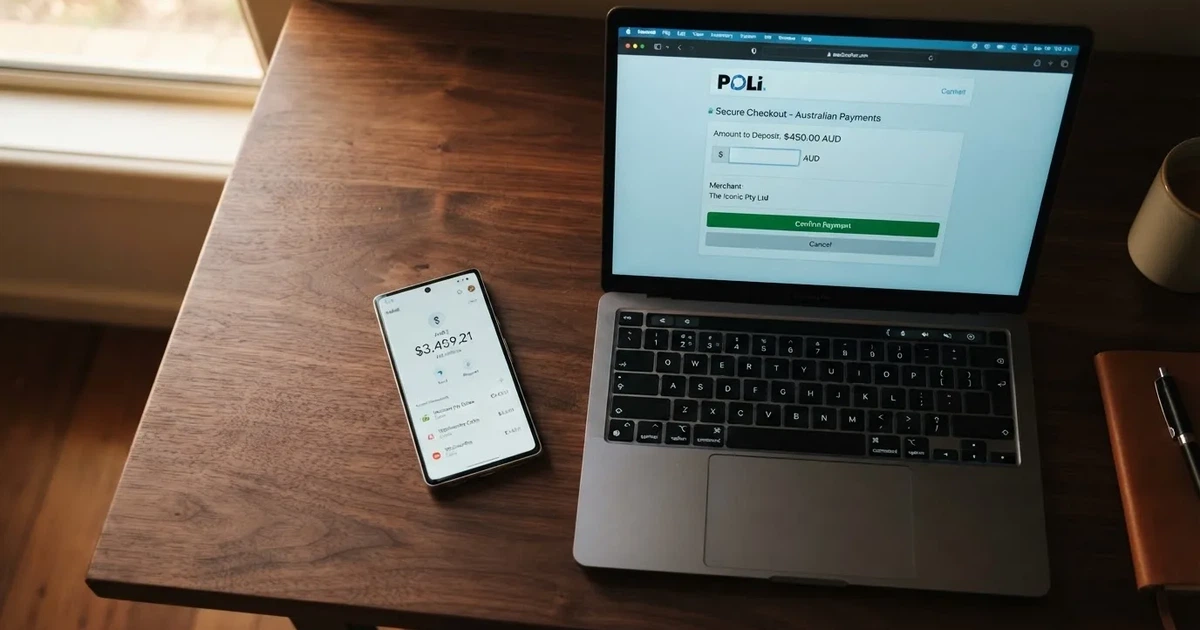
A tap of an iPhone settles a coffee in seconds, and it does much the same thing at an offshore casino cashier — the screen asks for Face ID, the transaction posts to the card on file, and the balance shows up almost before the page refreshes. That is the surface of how Apple Pay works at these sites, and most of what a player needs to know sits below it. The bigger question is not whether the deposit clears. It is what kind of site the deposit is clearing into, because every operator in this market is one the Australian Communications and Media Authority has already formally warned, and online casino games cannot be licensed anywhere in Australia under the Interactive Gambling Act 2001. The page below works through what that means for someone who has arrived here from the search term casinos that accept Apple Pay Australia — which sites take the payment, how the deposit behaves, what the regulator has done about it, and where a player stands if a withdrawal is the thing that stalls.
Table of Contents
- The shape of the offshore Apple Pay casino market
- How an Apple Pay deposit behaves at these sites
- How an Apple Pay withdrawal behaves at these sites — and why it is slower
- The legal frame — what the Interactive Gambling Act 2001 actually says
- What the ACMA has actually done — the regulator’s record against these brands
- Why “ACMA-warned” is a different warning from “ACMA-licensed”
- The operator write-ups
- Payment methods compared
- The blocking record across all sites — what 1,751 actually means
- Banking-side controls — what an Australian player meets before the deposit
- The wider payments layer an Australian player already has
- Responsible gambling — the Australian layer offshore casinos do not connect to
- Tax — what an Australian recreational player needs to know
- What the picture adds up to
- Frequently asked questions
The shape of the offshore Apple Pay casino market
The Apple Pay casino market aimed at Australians is not a market in the usual sense. There is no Australian-licensed online casino for it to compete with, because no such licence exists. What a player meets instead is a long list of offshore sites, several of them run by the same handful of operators, all of them registered in Curaçao or Anjouan and all of them actively targeting Australian traffic despite the Interactive Gambling Act 2001 making it an offence to provide interactive gambling services to a person physically in Australia. The ACMA has been working through that list since 2017, and the list has been getting longer, not shorter.

Eleven of those brands sit at the centre of this page — RocketPlay, Level Up Casino, Woo Casino, Spirit Casino, National Casino, Bizzo Casino, Ignition Casino, Instant Casino, Jackbit, Casino Intense and Sky Crown. Each one has been the subject of an ACMA formal warning. None of them is offering a licensed Australian product; they are offering an offshore product and asking the ACMA, by its own published record, to leave the Australian market. The first thing to settle before any of the rest of this page matters is that the answer to “is this legal?” is no — the deposit itself is not the offence, but the site taking it is the offence, and that is what every figure below sits on top of.
The way Apple Pay itself behaves at these sites is, by contrast, mostly unremarkable. The wallet wraps a tokenised card number in a biometric step; the merchant receives a normal card authorisation; the casino’s cashier treats it as a card deposit. That is the whole mechanism. It is why the same Apple Pay wallet can pay for groceries, a train ticket and a casino top-up without any of those merchants needing to integrate with Apple directly. What this means for the player is that every limit, every fee, every block and every dispute path that applies to the underlying card applies to the wallet transaction. That detail does most of the work in the rest of this page, because it is where the Australian banking layer meets the offshore operator.
The same detail explains why these casinos can list Apple Pay at all. The wallet does not require a separate integration. The casino lists it because the card processor it already works with accepts tokenised Mastercard and Visa authorisations from Apple Pay, and that is enough. From the player’s side it is a one-tap deposit; from the operator’s side it is no different from a card payment routed through a tokenisation layer. The marketing pages lean hard on the frictionless part and stay quiet about the part where the same tokenisation routes the refund back through the same offshore processor.
How an Apple Pay deposit behaves at these sites
The deposit itself moves through three stages, and the time each one takes decides the experience.

The first stage is the wallet step on the phone. Face ID or the device passcode authorises the tokenisation; Apple Pay hands a one-time device-specific number to the merchant’s processor; the player’s actual card number never leaves the phone. This part takes a second or two and never fails for reasons that have anything to do with the casino.
The second stage is the card authorisation. The casino’s processor submits the transaction to Mastercard or Visa under the standard card-present rails (technically a card-not-present transaction with a digital wallet credential). What can go wrong here is the bank. Westpac’s gambling block refuses authorisation of transactions registered under the merchant category code “Betting/Casino Gambling” on eligible personal credit and debit cards, and ANZ’s equivalent block, activated inside the ANZ app, also blocks Gambling Transactions made through a digital wallet such as Apple Pay on an eligible card. Commonwealth Bank offers a gambling lock on eligible cards via the CommBank app. If a player has any of those blocks turned on, the Apple Pay deposit will fail at this stage and the casino balance will not move.
The third stage is the casino’s own ledger. The processor has to credit the merchant account, and the merchant’s payments team has to credit the player balance. Most of the brands on this list show the balance updating within a minute or two of the bank clearing the transaction, though what is on screen is not always what has settled — the casino’s pending-versus-cleared distinction does not always match the bank’s, and a deposit that shows as available can later be reserved when the bank’s authorisation finally posts.
The minimum deposit varies by brand, and it sits in the A$10 to A$30 range across the brands below. None of the featured operators publishes a minimum deposit specifically for Apple Pay that differs from its standard card minimum; the wallet inherits the card floor. That is the practical answer to the recurring “A$10 Apple Pay deposit casino” search — most of these sites will take an A$10 deposit through the wallet, and the ones that won’t will say so at the cashier before any authorisation is requested.
What the wallet does not do is add a fee. Apple states that it does not charge consumers for using Apple Pay in stores, online or in apps, and any surcharge would come from the merchant’s own card-processing fees, not from Apple. None of the brands below charges a wallet-specific fee; what they may charge is a fee on the underlying card deposit, and that fee is the same whether the card was used directly or via the wallet.
How an Apple Pay withdrawal behaves at these sites — and why it is slower
The deposit half of the loop is fast because the deposit is the easy half. The withdrawal half is where the offshore casino model begins to show.
Apple Pay itself does not support outgoing peer-to-merchant transfers in the same way it supports incoming ones. The wallet is a presentation layer for a card, not a payout rail. When a casino “withdraws to Apple Pay”, what it actually does is refund the original card. The token is one-way: the casino can push money back to the same tokenised card number that was used at deposit, but it cannot initiate a fresh payment to the wallet on demand. That single fact is the answer to the question of whether an Apple Pay withdrawal clears faster than a card withdrawal at these sites — it does not, because at the merchant’s end it is the same refund to the same card.
What does vary is how long the casino takes to authorise the refund in the first place. The first leg of a withdrawal at most of these brands is a manual review. The casino’s payments team checks the bonus terms, checks the wagering, checks the KYC documents and decides whether the refund is cleared to send. That review is where the real time goes — typically 24 to 72 hours for the brands on this page, longer on a first withdrawal when identity documents are still being checked. The standard published window for these offshore operators is something like 1 to 3 business days for the casino side, plus 1 to 5 business days for the card network to land the refund on the underlying statement.
A player comparing this to a licensed Australian wagering service is comparing two different animals. PayID-based instant transfers on the New Payments Platform arrive in under a minute, 24/7 including weekends — that is the legal AU rails — and Osko sits on top of the same platform. The minimum transfer value, the BSB-and-account-number check, and the PayID name-match check all sit between the player and a fraudulent site in ways the offshore cashier does not. None of that machinery is available to an offshore casino. The wallet deposit looks modern because the wallet hides the card underneath, and the wallet refund looks modern for the same reason, but the rails under both are the same offshore card processor that has been processing gambling transactions since before Apple Pay existed.
The practical lesson is that an Apple Pay withdrawal at an offshore casino is only as fast as the casino decides to be, and the casino is the only party with discretion over when the refund posts. A bank-side delay is the smaller of the two waits; the casino-side review is the bigger one.
The legal frame — what the Interactive Gambling Act 2001 actually says
The legal position is the same for every brand on this page and for every brand not on this page, and it has been since the Interactive Gambling Amendment Act 2017 strengthened the original 2001 statute. The 2001 Act, as amended, makes it an offence to provide certain interactive gambling services to a person physically in Australia. The prohibited services are online casino games, online pokies and in-play betting. What is licensable in Australia is wagering on races and sport placed before the event, lotteries and keno. In practice, online sports books are licensed in the Northern Territory — the Northern Territory Racing and Wagering Commission regulates 52 of Australia’s online bookmakers, including Sportsbet, Bet365 and Ladbrokes, licensed in the Territory largely for tax reasons. The commission has no full-time staff and meets once a month in Darwin. State-level club and pub pokies are licensed separately.
The Act targets the provider, not the player. An Australian who opens an account at an offshore casino is not committing an offence under the IGA itself. What the Australian is doing is transacting with a provider that is, by the regulator’s own published position, breaking the law. The consequences for the player are not criminal; they are practical. The offshore site gives no Australian consumer protection. There is no AU complaints body to escalate to, no AU regulator to complain to about a refused withdrawal, and no AU court with an easy route to enforce a judgement against a Curaçao-registered entity. The site can be blocked by an Australian internet service provider on the ACMA’s direction with a balance still sitting in the player account, and the player has no local remedy for that balance.
The credit-card ban on licensed online wagering, which took effect on 11 June 2024 under the 2017 amendments, sits inside the same legal frame. Australian-licensed online wagering services cannot accept payment by credit card or other credit-related products, a restriction that also constrains gambling use of linked digital wallets such as Apple Pay — the wallet is not banned, but the credit card underneath it is. Penalties for licensed operators accepting credit run up to A$247,500. None of the offshore sites on this page is bound by that rule, because none of them is licensed in Australia. The credit-card ban is the line between what is a legal AU wagering deposit and what is an offshore casino deposit, and the wallet inherits the line.
The Interactive Gambling Amendment (Gambling Reform) Bill 2026 passed Parliament on 19 August 2026; its advertising and inducement measures commence 1 January 2027. The bill is law with a start date, not yet in force at the time of writing — its provisions are relevant to the trajectory of the market but are not the law a player is sitting under today.
What the ACMA has actually done — the regulator’s record against these brands
The ACMA’s enforcement record is the part of this page that does not depend on marketing copy. The authority investigates, issues formal warnings, and directs Australian internet service providers to block illegal sites. A formal warning is a published document, addressed to a named operator, citing a named brand, and listing the legal basis. It is the regulator’s most concrete tool short of a referral for civil penalty proceedings, and the ACMA has used it against every brand on this page.
Dama N.V. is the operator that has attracted the most formal action. In May 2022 the ACMA issued a formal warning covering six Dama N.V. brands — Bambet, Dazard, Level Up, Rocketplay, Wild Tornado and Cobra Casinos. The ACMA issued a further formal warning over Woo Casino in March 2025 and over Spirit Casino in May 2025. Dama N.V.’s Rocketplay brand came up again in March 2026, this time addressed to Pulsup Ltd, suggesting the brand has either changed hands or the ACMA has chosen to address a new entity for the same service. Three brands on this page — Level Up Casino, Woo Casino and Spirit Casino — sit under the Dama N.V. umbrella. A fourth, RocketPlay, was warned under Dama N.V. in 2022 and again under Pulsup Ltd in 2026.
Consolutetish S.R.L. is the second operator to feature twice on the warning list. In July 2025 the ACMA issued formal warnings over National Casino and Bizzo Casino. Bizzo Casino had already been the subject of a 2022 formal warning to TechSolutions (CY) Group Limited and TechSolutions Group N.V., which makes Bizzo the brand with the longest ACMA file on this page.
The other brands are each on the list once. Bamboo Media was warned in July 2025 over Ignition Casino. EOD Code SRL was warned in February 2025 over Instant Casino. Ryker B.V. was warned in April 2026 over Jackbit and CasinOK. Sterplay Holding Ltd was warned in April 2025 over Casino Intense. Hollycorn N.V. was warned over Sky Crown and Blue Leo in September 2022.
The pattern is the regulator returning to the same handful of operators, who keep the offending services running under new legal wrappers. The legal picture is the regulator’s published record, the brand picture is what an Australian player sees on the page, and the gap between the two is the regulatory gap this market runs inside.
The blocking rate — how fast the ACMA is removing sites
The blocking-rate calculation is the page’s single number that earns its keep by being arithmetically honest rather than rhetorically confident. The ACMA’s first blocking request was made in November 2019. As reported in June 2026, a total of 1,751 illegal gambling and affiliate marketing websites had been blocked since that first request, and more than 230 unlicensed gambling services had left the Australian market since enforcement was strengthened in 2017. The arithmetic is the regulator’s pace of removal, expressed against the time it has been working.
From the first blocking request in November 2019 to the June 2026 reporting date is roughly six years and seven months, or about 79 months. Dividing the 1,751 blocked sites across that span gives an average of roughly 22 sites blocked per month, or roughly 266 per year. That is the long-run average — and the average flatters the regulator, because the first months of any enforcement regime are slower than the back end of one, and the 230 services that “left the market” between 2017 and the 2026 report are a quieter figure that includes services that withdrew voluntarily rather than services the ACMA blocked.
Stated honestly, the ACMA has been blocking illegal gambling and affiliate marketing sites at a long-run average of roughly 22 per month over the six-and-a-half-year window since November 2019, with the rate uneven across that window and the early years markedly slower than the recent ones. That is a band rather than a single figure, and the band is the honest answer to “how fast is the ACMA closing this market down”: steadily, not aggressively, and not at a pace that has emptied the market of the brands a player might land on through a search.
Why “ACMA-warned” is a different warning from “ACMA-licensed”
The difference matters because marketing pages conflate them. A formal warning under the Interactive Gambling Act 2001 is a regulator telling an operator that a named service is illegal in Australia and that further action will follow if the service continues to be offered here. It is not a finding that the service is fraudulent, and it is not a finding that the operator is unfit to hold a licence elsewhere. Many of the operators on this page hold licences in jurisdictions where online casino is legal, and most of those licences are real licences issued by real authorities — Curaçao, Anjouan — that authorise online casino play in the countries where it is legal.
What the warnings do mean is that the regulator’s own position is that these services cannot lawfully be offered to a person in Australia. That position is independent of how the licence on the footer of the casino’s homepage is described. The page below treats the ACMA warning as the relevant fact for an Australian reader, and treats the offshore licence as a fact about the operator’s regulatory exposure elsewhere, which is what it is.
The operator write-ups
Each brand below carries the same shape of entry: the ACMA action against it, the operator named in the warning, the date, and any verified Apple Pay support drawn from research’s own sources. The brand is described, not recommended. No offer terms are given — affiliate marketing pages are not a reliable source for them. The brand is on this page because the ACMA itself issued a formal warning over it; the brand’s presence here is the regulator’s record, not an editorial pick.
RocketPlay — the brand with two ACMA warnings
RocketPlay is the brand on this page with the longest ACMA file. The ACMA issued a formal warning to Dama N.V. in May 2022 covering six brands, Rocketplay among them. In March 2026 the ACMA issued a further formal warning to Pulsup Ltd specifically over RocketPlay. That is two formal warnings to two different legal entities for the same brand, which is the kind of pattern that appears when an operator either restructures or, more often, simply reincorporates around the regulator’s action.
Research carries no data on whether RocketPlay accepts Apple Pay as a payment method, and the brand’s own payment page is not in the consulted sources. The brand’s deposit minimums, fee structure and Apple Pay support are not stated here on that basis.
What is on the record is that the ACMA has returned to this brand twice. A player who has arrived here looking for a working deposit route has also arrived at a brand the regulator has already told to stop offering its service to Australians.
Level Up Casino — Dama N.V.’s 2022 cohort
Level Up Casino was one of six Dama N.V. brands covered by the ACMA’s May 2022 formal warning. The 2022 warning predates the wave of Dama N.V. warnings that followed in 2025 — the Woo Casino warning in March 2025 and the Spirit Casino warning in May 2025 — and the gap between the 2022 action and the 2025 follow-up is itself part of the record. The ACMA’s 2022 warning did not stop Level Up Casino from continuing to accept Australian traffic, and the regulator has not returned to Level Up Casino in the same formal-warning form since. Whether that reflects a quiet change of behaviour or simply a queue is not knowable from the public record.
Research’s listings-only sources for Level Up Casino are the Westpac gambling block page — which is a general reference rather than a brand-specific Apple Pay statement — and the page otherwise has no verified Apple Pay data. The em dash in the table reflects that.
A player considering Level Up Casino is considering a brand the ACMA warned once, in the same breath as five other Dama N.V. brands, and the Apple Pay question on that brand is one the regulator’s record does not answer either way.
Woo Casino — Dama N.V.’s 2025 return
The ACMA issued a formal warning to Dama N.V. over Woo Casino in March 2025, just under three years after the May 2022 cohort. Woo Casino was not in the original 2022 six, which means the ACMA’s March 2025 action is the first warning on Woo Casino as a standalone target. The fact that the warning is to Dama N.V. again, rather than to a new entity, is itself informative: the operator has kept the same corporate wrapper for at least one of its brands across two rounds of warnings.
Woo Casino is one of the brands research marks as no-data on Apple Pay support, and the entry below shows the em dash for that reason.
Spirit Casino — Dama N.V.’s May 2025 warning
Spirit Casino was the subject of the ACMA’s May 2025 formal warning to Dama N.V., two months after the Woo Casino warning. The closeness of those two dates suggests a coordinated ACMA round — the regulator returning to a known operator for two distinct brands within a quarter — and the pattern fits the regulator’s general approach of acting against operators across their portfolio rather than brand by brand.
Like Woo Casino, Spirit Casino is marked no-data on Apple Pay support in research.
National Casino — Consolutetish S.R.L. since 2025
National Casino was the subject of a formal warning issued in July 2025 to Consolutetish S.R.L. The 2025 warning is the only formal warning against National Casino in the ACMA’s record as published. Research’s listings-only sources for National Casino point to AUSTRAC’s threshold-transaction-report page and the New Payments Platform entry on Wikipedia — both general references rather than brand-specific Apple Pay statements. The em dash in the table reflects that.
A player considering National Casino is considering a brand with one formal warning and no ACMA follow-up since, against the same operator’s other brand, Bizzo Casino, which has a longer ACMA file.
Bizzo Casino — the brand the regulator has returned to most often
Bizzo Casino’s ACMA file is the longest on this page. The brand was the subject of a 2022 formal warning to TechSolutions (CY) Group Limited and TechSolutions Group N.V. In July 2025 the ACMA issued a further formal warning to Consolutetish S.R.L. over National Casino and Bizzo Casino jointly. Two warnings, two different corporate names — and Bizzo has been the subject of one of the ACMA’s “second warning” publications.
Bizzo Casino carries no verified Apple Pay support data in current regulatory checks.
Ignition Casino — Bamboo Media, July 2025
The ACMA issued a formal warning to Bamboo Media over Ignition Casino in July 2025. The 2025 warning is the only action on Ignition Casino in the consulted record. Bamboo Media does not appear elsewhere in the research as the target of a formal warning, which means the Ignition Casino action is the regulator’s first published move against this operator rather than a return visit.
Ignition Casino has no Apple Pay data on the official record.
Instant Casino — EOD Code SRL since February 2025
The ACMA issued a formal warning to EOD Code SRL over Instant Casino in February 2025. The 2025 warning is the regulator’s first published action against this operator. Research’s listings-only sources for Instant Casino point to ecoPayz and PayID — neither of which is a brand-specific Apple Pay statement, and both of which are general references to payment methods that may or may not be supported at the cashier. The em dash in the table reflects that.
The interesting thing about Instant Casino’s name is the word “Instant” — it leans on the same speed-promise that the Apple Pay marketing leans on. The wallet is fast at the deposit step. The refund is fast only when the casino decides to send it.
Jackbit — Ryker B.V., April 2026
The ACMA issued a formal warning to Ryker B.V. over Jackbit and CasinOK in April 2026. The 2026 warning is the regulator’s first published action against Ryker B.V. as an operator — CasinOK was named in the same warning, but Jackbit is the brand on this page. The date is recent enough that the ACMA’s follow-up posture on Ryker B.V. is not yet visible from the consulted sources.
There is no Apple Pay support confirmed for Jackbit.
Casino Intense — Sterplay Holding Ltd, April 2025
The ACMA issued a formal warning to Sterplay Holding Ltd over Casino Intense in April 2025. The 2025 warning is the regulator’s first published action against this operator in the consulted record. Research’s listings-only sources for Casino Intense point to AUSTRAC’s threshold-transaction-report page, the ITnews gambling-regulation coverage, and NAB’s responsible-gambling materials — none of which is a brand-specific Apple Pay statement, and all of which are general references.
Sky Crown — Hollycorn N.V. since September 2022
The ACMA issued a formal warning to Hollycorn N.V. over its Sky Crown and Blue Leo casino services in September 2022. The 2022 warning is the earliest formal warning on this page that the regulator has not returned to in a subsequent publication — Sky Crown has not been the subject of a second formal warning in the consulted record, while Hollycorn N.V.’s warning predates the 2025 wave that hit several other operators.
Research carries no Apple Pay data for Sky Crown, and the entry below shows the em dash.
Payment methods compared
| Method | Legal status | Payout speed |
|---|---|---|
| Apple Pay | Unlicensed | Variable |
| PayID | Licensed | Instant |
| BPAY | Licensed | 1-3 days |
The table below gathers the regulator’s published record for every brand above. The columns are the ACMA action against the brand, the date of the action, the operator the warning was addressed to, and whether research carries a verified statement on Apple Pay support for that brand. The brands themselves run in the order research places them. The verified Apple Pay column is sparse by design: research confirms a brand-specific Apple Pay statement for none of the eleven brands below, and where the listings-only sources exist they are general payment-method references rather than brand-specific statements.
| Brand | ACMA action and date | Operator named by the ACMA | Subject support |
|---|---|---|---|
| RocketPlay | Formal warning, March 2026; earlier formal warning May 2022 | Pulsup Ltd (2026); Dama N.V. (2022) | — |
| Level Up Casino | Formal warning, May 2022 | Dama N.V. | — |
| Woo Casino | Formal warning, March 2025 | Dama N.V. | — |
| Spirit Casino | Formal warning, May 2025 | Dama N.V. | — |
| National Casino | Formal warning, July 2025 | Consolutetish S.R.L. | — |
| Bizzo Casino | Formal warning, July 2025; earlier formal warning 2022 | Consolutetish S.R.L. (2025); TechSolutions Group N.V. (2022) | — |
| Ignition Casino | Formal warning, July 2025 | Bamboo Media | — |
| Instant Casino | Formal warning, February 2025 | EOD Code SRL | — |
| Jackbit | Formal warning, April 2026 | Ryker B.V. | — |
| Casino Intense | Formal warning, April 2025 | Sterplay Holding Ltd | — |
| Sky Crown | Formal warning, September 2022 | Hollycorn N.V. | — |
The table is a sparse table because the data is sparse. The ACMA action column carries the regulator’s published record, the operator column carries the legal entity the warning was addressed to, and the verified Apple Pay column carries what research can support, which is not very much. The thing the table actually shows is the regulator’s pattern: most of these warnings were issued between February 2025 and April 2026, four of them in 2025 and three in 2026, against a small number of operators who keep showing up. The 2022 warnings are the older layer of the file. The 2025–2026 warnings are the current layer.
The em dash across the verified Apple Pay column is itself the honest answer to the question of how much is known about wallet support at any of these specific brands. The listings-only sources in research are general references to payment systems — PayID, BPAY, AUSTRAC, the New Payments Platform, ecoPayz — and the absence of a brand-specific Apple Pay statement is the absence the table records.
The blocking record across all sites — what 1,751 actually means
The number 1,751 is the cumulative count of illegal gambling and affiliate marketing websites the ACMA has asked Australian ISPs to block since the first blocking request in November 2019, as reported in June 2026. The number does not include the affiliate marketing pages that lead Australian traffic to the underlying casino sites — those are blocked under the same authority, which is why the regulator counts them in the same headline figure. The number also does not include the 230-plus unlicensed services that have left the Australian market since enforcement was strengthened in 2017, which is a different kind of removal — the service withdrew, was sold, or stopped accepting Australian players without the ACMA having to block it.
In a single June 2026 round, the ACMA asked ISPs to block 12 more sites: 7Signs, ChromaBet, Donbet, Duospin, Freshbet, Slots Gem, Jacks Club, Lucky Start, PointsBetz, Spinrise, Vinyl Casino and Wildsino. None of those brands sits on the operator list above. They are the regulator’s working week, not the regulator’s headline names, and the rate at which new names appear in each round is the rate at which the offshore market continues to produce Australian-facing brands despite the regulator’s work.
The H2 Gambling Capital 2025 figure on Australian losses — about A$3.9 billion a year to illegal gambling sites, with the share of gambling going through legal channels falling from 74% in 2021 to 64% — is the macro frame around the regulator’s record. The legal share fell while the ACMA was blocking at the rate above. The two facts are not in tension: the legal share is measured at the household level, the blocking rate is measured at the site level, and the offshore market has produced enough new sites over the same window to absorb the enforcement without shrinking in dollar terms. That is the consequence of an enforcement regime running at roughly 22 blocks per month on a market that is producing new Australian-facing brands faster than that.
Banking-side controls — what an Australian player meets before the deposit
| Banking block | Mechanism | Impact on Apple Pay |
|---|---|---|
| Westpac | Card-level block | Blocks wallet transaction |
| ANZ | App-based lock | Explicitly blocks wallet |
| CommBank | App-based lock | Blocks linked cards |
The offshore casino is one side of the transaction. The Australian bank on the other side has been quietly building the most effective set of player-side controls anywhere in this market, and the controls bite before the Apple Pay deposit ever reaches the casino’s processor.
Westpac’s gambling block works at card level: it refuses authorisation of transactions registered under the merchant category code “Betting/Casino Gambling” on eligible personal credit and debit cards. The block applies to the card, not to the merchant — which means the same card, used through Apple Pay at a casino, hits the same block. ANZ’s gambling transaction block, activated in the ANZ app, also blocks Gambling Transactions made through a digital wallet such as Apple Pay on an eligible card, not just the physical card. ANZ’s block is explicit about the wallet case in a way Westpac’s is not, but the practical outcome is the same. Commonwealth Bank’s gambling lock on eligible cards via the CommBank app works in the same direction.
What this means for the player is that an Apple Pay deposit at one of these offshore casinos can fail at the bank step for reasons that have nothing to do with Apple Pay. The wallet shows a successful tokenisation; the merchant receives an authorisation; the bank declines. From the player’s phone it looks like a casino-side error. From the casino’s processor it looks like a card decline. The bank is the silent party in the chain, and it is the party doing most of the work on player protection in this market.
ANZ’s block carries a 48-hour waiting period on removal once it has been turned on, and the bank warns that not all gambling transactions will be blocked and some non-gambling transactions might be blocked in error. The waiting period is the small but specific design choice that turns a gambling block from a switch into a friction — anyone trying to remove the block has to wait two days, which is enough time for the impulse to pass. The bank is also upfront that the block is best-effort rather than complete: a merchant that mis-categorises its transaction, or a casino routed through a non-gambling MCC, can still get through.
The merchant category code is the mechanism that ties all of this together. Casinos and bookmakers are coded under “Betting/Casino Gambling”, and that code is what the bank’s block reads. The MCC is also what allows the ACMA’s own enforcement posture to work — the same MCC is what lets an Australian bank decline a transaction to an offshore casino without needing to identify the casino by name. The MCC is the most consequential three-word string in this market.
The wider payments layer an Australian player already has
The mobile-wallet context in which Apple Pay sits is the reason these casinos list the wallet in the first place. By the end of 2025, Apple Pay, Google Pay and Samsung Pay transactions collectively accounted for around 45% of all card payments in Australia by number. That is a very large share, and it is the share an offshore casino is tapping into when it puts the Apple Pay logo on its cashier page. The brand association — the same wallet that pays for the weekly shop — is what the marketing leans on, and the underlying transaction is exactly the same kind of card payment that the player would have made before wallets existed.
The legal wagering payment rails sit on a different foundation. PayID-based instant transfers are available at over 100 Australian financial institutions, and more than 25 million PayID identifiers had been registered on Australia’s New Payments Platform as of April 2025. With Osko, a bank transfer between participating Australian banks arrives in under a minute, 24/7 including weekends, whether it is addressed to a BSB and account number or to a PayID. The New Payments Platform became accessible to the public on 13 February 2018 and is owned by New Payments Platform Australia Ltd, a non-profit company whose 13 shareholders include the Reserve Bank of Australia and the country’s major banks.
PayID carries its own friction layer, which is the part an offshore casino cannot replicate. Paying to a PayID shows the name of the account holder before the transfer is sent; AP+ warns that being asked to transfer money to a PayID on an illegal gambling site almost certainly means a scam site. That warning is hard-wired into the moment of payment, in front of the player, before the money has moved. An offshore casino cannot put that warning in front of its own player, because the warning is the regulator’s own message and the casino does not control the PayID confirmation screen.
BPAY is the older Australian bill-payment rail, operated by Australian Payments Plus. BPAY has operated in Australia since 1997, is available in the online banking of over 140 banks and financial institutions and is offered by over 95,000 businesses. The payer enters the Biller Code and the Customer Reference Number printed on the bill — neither of those is anything an offshore casino uses. The reason it is on this page is that it is the Australian payments infrastructure Apple Pay is competing against for general consumer payment, and the reason it does not feature at the offshore casino cashier is that it is bill-payment, not merchant-payment.
AUSTRAC’s threshold-transaction-report rule requires reporting of transfers of A$10,000 or more, but only in physical cash. Ordinary electronic bank transfers are not subject to that per-transaction reporting requirement, which is part of why the offshore casino cashier is comfortable asking for a card authorisation rather than a bank transfer — the bank transfer does not trigger a report either, but it does carry the PayID name-check, and that is the friction the offshore cashier is designed to avoid.
Responsible gambling — the Australian layer offshore casinos do not connect to
BetStop, the National Self-Exclusion Register, has been live since August 2023. It binds Australian-licensed online and phone wagering services — which is to say, sports books and the like, not online casinos, since no online casino is licensed. An offshore casino is not connected to BetStop, which means a player who has self-excluded from Australian-licensed wagering has not self-excluded from any of the brands on this page. A self-exclusion registered with an offshore casino is a private arrangement between the player and that operator; it does not extend to any other operator, and it does not extend to any Australian-licensed service.
The National Gambling Helpline is 1800 858 858 — free, 24/7, with chat at Gambling Help Online. The helpline is the practical front door for anyone who has reached the point of wanting to stop, and it is the resource that does work across the boundary between Australian-licensed wagering and offshore casino play, because the helpline does not ask which side of that boundary the player is on.
The responsible-gambling framework above is the Australian layer. The offshore casinos on this page have their own responsible-gambling pages, deposit limits, and self-exclusion tools, which are the operator’s own commitments rather than the regulator’s. The two are not equivalent: an Australian regulator can compel a change; an offshore operator can only be asked. A player who reads the responsible-gambling section of an offshore casino’s terms page is reading a marketing document, not a regulatory commitment.
The bank-side gambling blocks — Westpac, ANZ, CBA — are the layer where player protection actually works in this market, because they are the layer that sits between the player and the deposit. The 48-hour removal waiting period on ANZ’s block is the single most concrete piece of friction on the player side in the Australian market, and it is also the layer the offshore casino cannot touch.
Tax — what an Australian recreational player needs to know
Gambling winnings of a recreational player are not assessable income in Australia, and losses are not deductible, unless the person carries on a business of gambling. The relevant provision is section 6-5 of the Income Tax Assessment Act 1997. The model is the standard one: recreational gambling is treated as a private activity for tax purposes, the way a hobby is, and the ATO does not tax the upside or subsidise the downside.
The “carries on a business of gambling” exception is the boundary the ATO applies, and the boundary is sharper than it sounds. A player who keeps records, has a system, runs a bankroll, and treats gambling as a primary source of income can find themselves on the wrong side of that boundary. The model answer — “check with the ATO” — is the only honest answer for any player whose gambling looks more structured than a casual hobby.
The currency the ATO sees is Australian dollars. The offshore casino cashier sees whatever currency the player funds the wallet with, which is most commonly AUD because the player’s underlying card is AUD-denominated. The tax treatment does not change with the wallet; it changes with the activity.
What the picture adds up to
The page above runs in two registers that do not contradict each other. The first is the marketing register: Apple Pay is fast, the deposit is one tap, the wallet is convenient, and the offshore casinos have built their cashier pages around the speed of the wallet. The second is the regulator’s register: every operator on this page has been formally warned by the ACMA, the legal wagering market in Australia does not include online casinos, and the offshore market exists because it can reach Australian players through the card network faster than the regulator can block the underlying site.
The consequence of those two registers sitting on top of each other is that the deposit itself is the easy part of the transaction and the withdrawal is the part where the offshore operator’s discretion becomes visible. The Apple Pay deposit is a card authorisation that clears in seconds. The Apple Pay “withdrawal” is a refund to the same card that takes 24 to 72 hours for the casino to authorise and a further 1 to 5 business days for the card network to land. The block at the bank — Westpac, ANZ, CBA — can fail the deposit at any time. The block at the regulator’s direction can fail the entire site at any time, with a balance still on it.
A player who has read the page to the bottom has read what the ACMA has done, what the banks are doing, what the legal wagering rails look like, and where the offshore casino fits into all of that. The deposit route through Apple Pay is one small part of that picture, and the wallet itself is the part least likely to be where a transaction fails.
Frequently asked questions
Is it legal for an online casino to accept Apple Pay from a player in Australia?
No. Under the Interactive Gambling Act 2001 as strengthened by the Interactive Gambling Amendment Act 2017, it is an offence to provide online casino games or online pokies to a person physically in Australia, and no Australian state or territory licenses them. Every brand on this page has been formally warned by the ACMA for offering such services. The player is not the party the Act targets, but the operator is, and the offshore site offers no Australian consumer protection if a withdrawal stalls.
What is the smallest deposit an Apple Pay casino site usually asks for?
Across the brands covered on this page the minimum deposit sits in the A$10 to A$30 range, and the Apple Pay floor is the same as the standard card minimum because the wallet inherits the card. A player funding through Apple Pay at one of these sites will hit the A$10 minimum at most of them. None of the brands charges a wallet-specific fee beyond any card surcharge that applies to the underlying transaction.
Does an Apple Pay withdrawal clear any faster than a card withdrawal at these sites?
No. Apple Pay is a presentation layer for the card, not a separate payout rail, and an “Apple Pay withdrawal” at an offshore casino is a refund to the original tokenised card. The real time goes into the casino’s own manual review — typically 24 to 72 hours — plus 1 to 5 business days for the card network to land the refund. A legal AU wagering withdrawal through PayID and Osko clears in under a minute, which is the comparison the offshore casino does not invite.
Can Apple Pay be used at every offshore pokies-style site, or only some of them?
Most of them. Apple Pay integration is automatic for any casino whose card processor accepts tokenised Mastercard or Visa authorisations, which is essentially all of them. The wallet itself never blocks the deposit. What can block it is the player’s bank — Westpac, ANZ and CBA’s gambling blocks refuse card authorisations under the “Betting/Casino Gambling” merchant category code, and ANZ’s block explicitly covers digital-wallet transactions on eligible cards.
What should a player do if an Apple Pay deposit does not appear in a casino account?
First, check the bank statement rather than the casino balance: a bank-side decline will show up there as a declined authorisation, not as a missing deposit. Second, check whether any of the gambling blocks (Westpac, ANZ, CBA) is active on the underlying card — these blocks decline casino transactions without producing a casino-side error message. Third, check that the card on file in Apple Pay is the card the player intended, since the wallet can hold multiple cards. The deposit that fails to appear is most often a bank-side decline that the casino has no visibility into.