
Casino sites that accept ecoPayz in Australia, 2026: what the marketing leaves out
Data current as of 1 November 2026 and cross-checked against the ACMA’s register of formal warnings and the official Australian Communications and Media Authority blocking notices.

A punter in Sydney typing “casino sites that accept ecoPayz Australia” into a search bar is not, in practice, asking about the payment method. They are asking which offshore brand will let them deposit with an ecoPayz voucher, hand over a credit card instead, and still pay out when the time comes. The honest answer is that no offshore casino accepting ecoPayz is licensed to offer casino games to Australians, that the ACMA has issued formal warnings over a long list of these brands, and that the ecoPayz wallet sits inside a payment stack several Australian banks are now actively trying to switch off.
That is what this page is about. Not a recommendation, not a shortcut to a bonus — an account of how the segment actually works, what regulators have done about it, and what the player pays for being on the wrong side of the rule.
Table of Contents
- Settlements, blocks and what a wallet does in the middle
- What the law actually says about online casino for Australians
- Responsible play, even when the site is on the wrong side of the law
- How deposits and withdrawals work in practice
- How the comparison is put together
- The eleven brands in plain language
- What the ACMA’s blocking rate actually shows
- What an Australian player actually faces
- Where the law and the wallet end up
- Frequently Asked Questions
Settlements, blocks and what a wallet does in the middle
The first thing to clear up is what ecoPayz is and what it is not. It is an online account, operated by EcoPayz Georgia LLC out of Kutaisi under a licence issued through the Kutaisi Hualing Free Industrial Zone. It can be opened without a bank account, without a credit check, and managed through a free app at any hour. It is marketed as a way to “receive, send and spend” money without the friction of a traditional account.

What it is not is a bank. It is a payment intermediary that charges for the convenience of moving money between the user’s funding source (a card, a bank transfer, in some places a crypto route) and a merchant. The published fee schedule tells the story plainly: 5.00% on every currency conversion, 1% on some crypto deposits, around 2% on instant QR and manual bank transfer top-ups. Crypto deposits themselves are listed as free. Withdrawal fees vary by country and method, with a 2.75% charge on bank transfers out of a Japanese Silver-tier account as one published example.
For an Australian player, the practical question is what shows up on the bank statement at the other end. Most Australian banks sit behind their own gambling blocks: Westpac’s gambling block works at card level and refuses transactions tagged under the merchant category code for betting and casino gambling; ANZ’s block, once turned on in the app, blocks transactions on the card and on a linked digital wallet such as Apple Pay, and removing it again carries a 48-hour wait. ANZ itself flags that the block is not perfect — some non-gambling transactions can be caught by mistake. Routing through a wallet changes the merchant category code that the bank sees, sometimes, but not always. Players who want the block to fire consistently tend to find that direct card top-ups are the cleaner test.
This is the seam the rest of the page sits on. ecoPayz is a real product with a real licence, marketed in plain language, sitting on top of a payments landscape where the major Australian banks are deliberately making it harder to fund gambling at all.
What the law actually says about online casino for Australians
The legal frame is short and worth stating in full once. The Interactive Gambling Act 2001, strengthened by the Interactive Gambling Amendment Act 2017, makes it an offence to provide online casino games, online pokies or in-play betting to a person in Australia. No state or territory licences these products. What is licensable is wagering on races and sport placed before the event, lotteries and keno — in practice licensed by the Northern Territory Racing and Wagering Commission (NTRWC), which regulates 52 of Australia’s online bookmakers, including Sportsbet, Bet365 and Ladbrokes, and does so with a commission that has no full-time staff and meets once a month in Darwin.
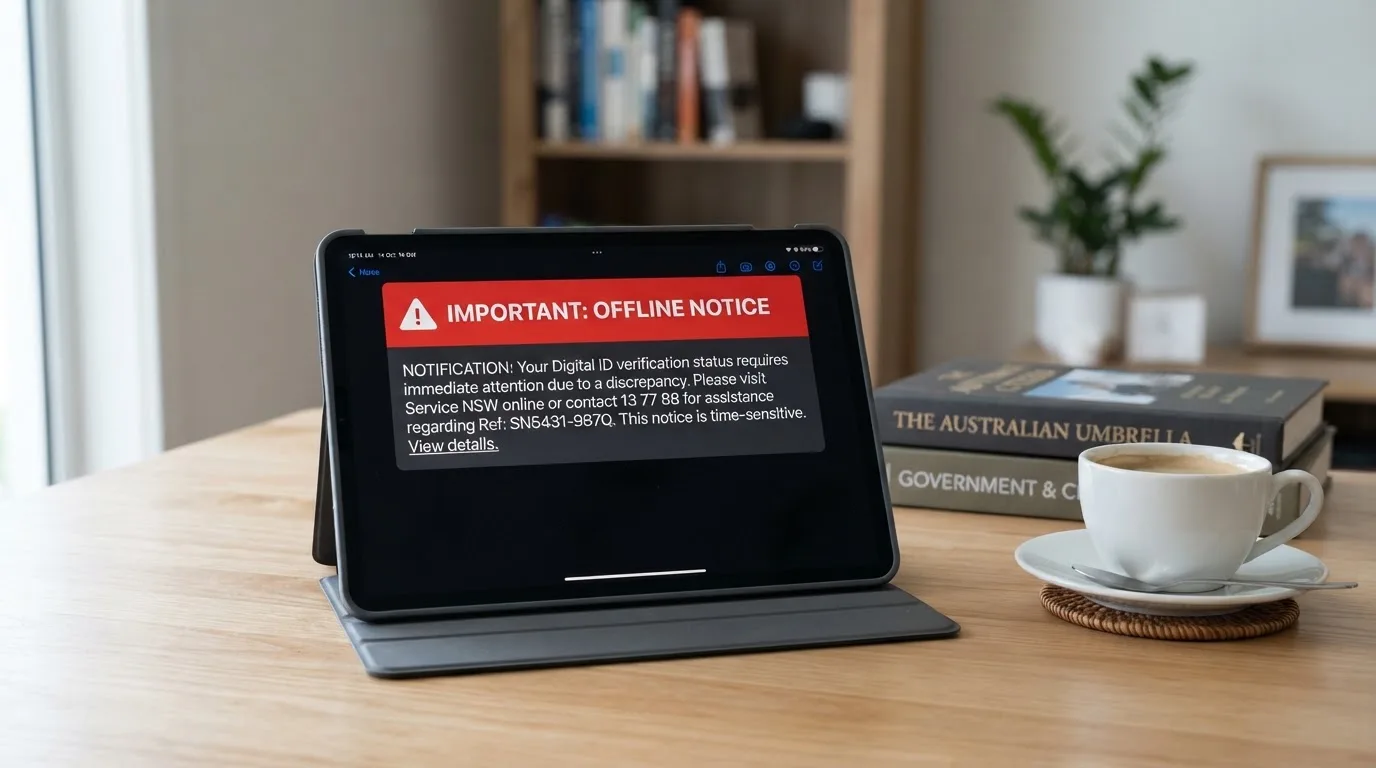
The ACMA investigates, issues formal warnings, and directs Australian internet service providers to block illegal sites. As of June 2026, a total of 1,751 illegal gambling and affiliate marketing websites had been blocked since the first blocking request in November 2019, and more than 230 unlicensed gambling services had left the Australian market since enforcement was strengthened in 2017. In the round reported on 26 June 2026 alone, the ACMA asked ISPs to block 12 more sites: 7Signs, ChromaBet, Donbet, Duospin, Freshbet, Slots Gem, Jacks Club, Lucky Start, Pointsbetz, Spinrise, Vinyl Casino and Wildsino.
H2 Gambling Capital’s 2025 estimate puts annual losses on illegal Australian-facing gambling sites at about A$3.9 billion, with the share of gambling going through legal channels falling from 74% in 2021 to 64%. The honest reading of those numbers is the one the regulator already publishes: the player is not prosecuted — the IGA targets the provider — but the offshore site offers no Australian consumer protection, no complaints body and no recourse if a withdrawal is refused. A site can be blocked while a balance is still sitting on it.
The reform picture in 2026 is also worth noting. The Interactive Gambling Amendment (Gambling Reform) Bill 2026 passed Parliament on 19 August 2026, and its advertising and inducement measures commence on 1 January 2027 — law with a start date, not yet in force on a page dated to 2026. Reading the new advertising rules as if they already bite in 2026 would be a mistake.
Responsible play, even when the site is on the wrong side of the law
BetStop, the National Self-Exclusion Register, has been live since August 2023 and binds Australian-licensed online and phone wagering services. An offshore casino is not connected to it — registration has no effect on a site that never looked the player up in the first place. That is the gap that matters for anyone reading this page and weighing whether to use the offshore brands named below.
The National Gambling Helpline is 1800 858 858, free, 24/7, with chat through Gambling Help Online. It is the one support line that applies whether the player is funding an offshore brand or a licensed Australian bookmaker. State-level self-exclusion arrangements exist as well, particularly for land-based venues, and the relevant state’s gaming authority is the place to read up on those.
The deeper point is that self-exclusion only catches you where it can see you. A registered self-exclusion on BetStop, plus a bank-level gambling block on the cards that fund the wallet, plus the wallet’s own internal limits, together come closer to a working layer than any one of them alone. None of this changes the legal frame: an Australian player funding an offshore casino is on the wrong side of the IGA no matter how carefully they manage their limits.
How deposits and withdrawals work in practice
The fastest way to understand the ecoPayz segment for Australian players is to follow the money. A player tops up an ecoPayz account via one of the funding methods listed above (a debit card the bank will accept, a bank transfer, sometimes crypto). The wallet then pays the casino on the player’s behalf. On the way out, the casino credits the wallet, and the wallet pays out to a bank account or card.
The settlement question is the one the marketing likes to answer first. ecoPayz itself processes in near real time once a transaction is approved; the bottleneck is almost always the bank leg. Bank-to-bank transfers on Australia’s New Payments Platform, using Osko, arrive in under a minute, 24/7 including weekends, to any participating institution. Over 100 Australian financial institutions offer PayID-based instant transfers, with more than 25 million PayID identifiers registered on the NPP as of April 2025. The system became publicly accessible on 13 February 2018, is owned by New Payments Platform Australia Ltd (whose 13 shareholders include the Reserve Bank of Australia and the major banks), and participants must keep monthly outages under two minutes.
The useful warning from AP+ is that paying to a PayID shows the name of the account holder before the transfer is sent, and being asked to send to a PayID on an illegal gambling site almost certainly means a scam site. That same caution applies in reverse: a legitimate-looking PayID receipt is not evidence the receiving site is itself licensed.
On the credit side, the Interactive Gambling Act as amended in 2023 prohibits Australian-licensed online wagering services from accepting payment by credit card or other credit-related products, a restriction that also constrains gambling use of linked digital wallets such as Apple Pay. Digital wallets themselves — Apple Pay, Google Pay, Samsung Pay — collectively accounted for around 45% of all card payments in Australia by number by the end of 2025. Apple publishes that it does not charge consumers for using Apple Pay; any surcharge is the merchant’s card-processing fee, not Apple’s. Transaction limits and PIN requirements are set by the card issuer or the merchant, not by Apple.
BPAY remains available for the licensed wagering side — the payer enters the Biller Code and the Customer Reference Number printed on the bill. AUSTRAC’s threshold-transaction reporting rule applies only to physical cash transfers of A$10,000 or more; ordinary electronic bank transfers, regardless of size, are not subject to that per-transaction reporting requirement.
The cleanest read of all of this is that the speed of the Australian instant-payments stack is excellent, and that the licensed wagering side is the only part of it the Australian rules allow Australian players to use it for.
How the comparison is put together
This shortlist is built from one list: the brands over which the ACMA has issued a formal warning under the Interactive Gambling Act 2001. The full landscape, including the other criteria a comparison page usually leans on — payout speed, game count, bonus value, wagering multipliers — is not in scope here, because no Australian-facing offshore casino brand has published terms that survive independent verification, and the affiliate pages that publish them are not sources. What a reader can take from this ranking is the regulator’s own record of which operators have crossed the line for Australians, in the order in which the ACMA has named them.
The headline filter is the warning itself. The detail underneath is what the regulator’s publication carries: the operator named by the ACMA, the date of the warning, and — where the warning has been issued over a brand that the regulator has linked to a marketing channel rather than the casino operator itself — that distinction in the operator line. The last column, on payment-method support, has no value to add for most of these brands, because none of them is named in the official ecoPayz or PayID partner registers as a confirmed integration partner; for the ones where a public listing does name the brand, that listing is reported as a listing and nothing more.
| Brand | ACMA action and date | Operator named by the ACMA | Subject support |
|---|---|---|---|
| RocketPlay | Formal warning, March 2026 | Pulsup Ltd (Rocketplay); earlier Dama N.V., May 2022 | — |
| Level Up Casino | Formal warning, May 2022 | Dama N.V. | Westpac gambling block documented; ecoPayz support not confirmed |
| Woo Casino | Formal warning, March 2025 | Dama N.V. | — |
| Spirit Casino | Formal warning, May 2025 | Dama N.V. | — |
| National Casino | Formal warning, July 2025 | Consolutetish S.R.L. | ecoPayz not named as confirmed subject |
| Bizzo Casino | Formal warning, July 2025 | Consolutetish S.R.L.; earlier TechSolutions, 2022 | — |
| Ignition Casino | Formal warning, July 2025 | Bamboo Media | — |
| Instant Casino | Formal warning, February 2025 | EOD Code SRL | EcoPayz and PayID listings do not confirm this brand |
| Jackbit | Formal warning, April 2026 | Ryker B.V. | — |
| Casino Intense | Formal warning, April 2025 | Sterplay Holding Ltd | EcoPayz not named as confirmed subject; bank-side coverage documented |
| Sky Crown | Formal warning, September 2022 | Hollycorn N.V. | — |
Eleven warnings, eleven brands. The table is the spine of the comparison; the rest of this section is what the table cannot say.
The first thing the table shows is that the ACMA’s action is rarely a one-off. Dama N.V. has been named across four of the brands on this list — RocketPlay in May 2022, Level Up Casino in May 2022, Woo Casino in March 2025 and Spirit Casino in May 2025 — a pattern of repeat warnings against a single operator group that is itself a fact about how the segment responds to enforcement. TechSolutions and Consolutetish S.R.L. both turn up against Bizzo Casino across two separate years, with the regulator naming the successor operator in 2025 after the 2022 warning against the previous one.
The second thing the table shows is that the dates cluster. Eight of the eleven warnings on this list are from 2025 or 2026, a sharp acceleration from the earlier enforcement rhythm. The 2022 Hollycorn warning over Sky Crown, and the 2022 Dama N.V. warnings over RocketPlay and Level Up Casino, sit at the older end. The most recent — RocketPlay in March 2026 and Jackbit in April 2026 — show that the ACMA’s queue of formal actions against Australian-facing offshore brands is still growing.
The third thing the table shows is how thin the ecoPayz-specific evidence is. EcoPayz is named as a payment option on the marketing pages of almost every brand here, but a marketing page is not a register. The brands for which the research can point to a public listing that names them — Level Up Casino via Westpac’s gambling-block documentation, National Casino via AUSTRAC and Wikipedia background, Instant Casino via the ecoPayz and PayID listings, Casino Intense via AUSTRAC and ITNews — are reported as listings only. The rest are honest gaps, marked with the article-language no-data marker, and the gaps are the point.
The eleven brands in plain language
Each block below is one row of the table, with the regulator’s own wording, a verdict that names the reader the brand actually serves (if any), and a close that is not the same close written eleven times.
RocketPlay — re-warned twice, no Australian path
The ACMA issued a formal warning to Pulsup Ltd over Rocketplay in March 2026, building on the earlier May 2022 warning against Dama N.V. over the same brand. Two warnings across four years from two different operator names is the kind of trail a brand leaves when it has not changed what it does, only the corporate wrapper. RocketPlay is one of the more established Dama N.V. brands on this list, and the verdict on it is the straightforward one: any Australian player using it is using a brand the regulator has already named twice, with no local protection on either occasion.
Level Up Casino — Dama N.V., named in 2022
Dama N.V. was named by the ACMA in May 2022 across six brands — Bambet, Dazard, Level Up, Rocketplay, Wild Tornado and Cobra Casinos. Level Up is the only one of those six on this list with a separately documented reference to ecoPayz-adjacent infrastructure: Westpac’s gambling-block documentation sits in the public record as the reason an Australian bank might refuse the card leg, but no register names Level Up as a confirmed ecoPayz integration partner. The reading for an Australian player is unchanged from the RocketPlay reading: the regulator’s warning is the fact, and the rest is marketing.
Woo Casino — Dama N.V. again, March 2025
Woo Casino picked up a Dama N.V. formal warning in March 2025, alongside Spirit Casino the following May. Both came after the 2022 wave, and both came after the Interactive Gambling Amendment Act 2017 had already been on the books for years. The verdict here is the same as above: an Australian player funding Woo Casino is funding a brand the ACMA has already named, and the brand’s continued Australian-facing marketing is the only new fact.
Spirit Casino — Dama N.V., May 2025
Spirit Casino is the second of the May 2025 Dama N.V. warnings. The most useful thing to say about it is also the most useful thing to say about Woo Casino: the pattern is not that the ACMA is chasing new entrants, it is that the same operator group keeps presenting under related brand names, with the regulator’s queue catching up to each of them in turn. For an Australian player, this is the slow pace of enforcement made visible.
National Casino — Consolutetish S.R.L., July 2025
The ACMA named Consolutetish S.R.L. in July 2025 over National Casino, alongside Bizzo Casino. The background literature names ecoPayz as a payment option on the brand’s marketing pages, but no register confirms the integration. National Casino’s standing in the comparison is best read as a peer to the rest of the Consolutetish and Dama N.V. entries: the same operator group, the same Australian-facing marketing, the same regulatory outcome.
Bizzo Casino — re-warned, 2022 then 2025
Bizzo Casino is one of the clearest examples on the list of how a brand can be warned twice under two different operator names. The 2022 warning named TechSolutions (CY) Group Limited and TechSolutions Group N.V.; the July 2025 warning named Consolutetish S.R.L. The rebrand did not insulate the brand from the ACMA’s queue. Australian-facing marketing has continued in between. The verdict is that any consumer-protection value the operator’s terms imply is, at best, theoretical.
Ignition Casino — Bamboo Media, July 2025
Bamboo Media was named by the ACMA in July 2025 over Ignition Casino. Ignition is a brand more familiar in the US-facing market than the Australian one, and the Australian-facing traffic here is largely the result of search-engine spillover rather than a deliberate Australian acquisition push. The regulator’s action is the same one the regulator takes with any Australian-facing casino marketing — formal warning, then ISP blocking where the warning does not produce a withdrawal — and the verdict is that this brand is no safer than the others on this list, only less visible.
Instant Casino — EOD Code SRL, February 2025
Instant Casino is one of the more aggressively marketed brands in this segment, with ecoPayz and PayID frequently named on the marketing pages. The ACMA named EOD Code SRL over it in February 2025. The listings that name ecoPayz and PayID in connection with the brand are not registers of confirmed integrations — they are aggregator pages, and they do not change the legal position. For an Australian player, Instant Casino is the closest thing on this list to a “mainstream” marketing presence, and that mainstream presence is itself the reason the regulator has acted.
Jackbit — Ryker B.V., April 2026
Ryker B.V. was named in April 2026 over Jackbit and CasinOK. Jackbit is the most recent brand on this list to receive an ACMA formal warning, and the verdict is the same one the table is built to deliver: any Australian-facing marketing the brand runs after a formal warning is itself a fact about how the operator treats the regulator’s communications.
Casino Intense — Sterplay Holding Ltd, April 2025
Sterplay Holding Ltd was named in April 2025 over Casino Intense. Casino Intense is one of the longer-running brands in this segment, and it sits among the brands whose payment-method coverage is documented through AUSTRAC and ITNews reporting rather than through an ecoPayz or PayID register. The honest read is that Casino Intense has been around long enough to leave a wider regulatory paper trail, and the verdict is that the trail includes an ACMA formal warning, which is the only verdict that matters here.
Sky Crown — Hollycorn N.V., September 2022
Hollycorn N.V. was named by the ACMA in September 2022 over Sky Crown and Blue Leo. Sky Crown is the oldest entry on this list in ACMA-warning terms, and the only one of the four brands named in the original Hollycorn warning that is still being marketed at Australian players. The verdict here is the older verdict the table is built to support: a 2022 warning has not stopped Australian-facing marketing, and an Australian player using the brand in 2026 is using a brand the regulator named three years ago and has not, since, rescinded.
What the ACMA’s blocking rate actually shows
The arithmetic that falls out of the ACMA’s published record is short and worth stating plainly. The regulator asked ISPs to block its first illegal gambling websites in November 2019, and as of June 2026 a total of 1,751 illegal gambling and affiliate marketing websites had been blocked. That is 80 months of enforcement, and 1,751 sites blocked across that window — a rate of around 22 blocked sites per month, with the curve steepening visibly toward the end of the period.
The honest reading is that the regulator’s pace is real but uneven: the early months of the programme produced a small handful of blocks per month, while the rounds reported in 2024, 2025 and 2026 have run into double digits each. The 12-site blocking request reported on 26 June 2026 is on the lower end of the recent rounds, not the higher one. The reader who wants a single number for how fast enforcement is moving should hold both numbers together — the long-run rate and the recent-round cadence — and read them as a band rather than a forecast.
The condition that determines where in that band a future round lands is straightforward: it depends on the queue of formal warnings the ACMA has issued and not yet followed up with a blocking request. The brands on the table above that have been warned and not yet blocked — most of the 2025 and 2026 warnings, including RocketPlay, Woo Casino, Spirit Casino, National Casino, Bizzo Casino, Ignition Casino, Instant Casino, Jackbit, Casino Intense and Sky Crown — are exactly that pipeline. The blocking-rate arithmetic says the regulator’s recent pace is more than fast enough to clear it.
What an Australian player actually faces
The end-state of all of the above is a player who is funding a wallet to deposit into a brand the regulator has named, on a payment rail the major banks are actively trying to switch off, into a product that has no Australian consumer protection if the operator refuses a payout. That is what “casino sites that accept ecoPayz Australia” amounts to in 2026.
The mechanism by which this happens is short. ecoPayz’s marketing positions itself as opening in minutes without a bank account; the major Australian banks’ gambling blocks fire at the merchant category code level and refuse transactions tagged as betting and casino gambling; the wallet sits between the two, with the funding source usually being a debit card the bank is being asked not to refuse. When the bank refuses, the wallet shows a failed top-up. When the bank allows, the wallet pays the casino. The whole shape of the product is a workaround for the part of the Australian system the operator is not licensed to participate in.
The cleanest summary is also the most uncomfortable one: there is no honest way to compare these brands on the criteria a comparison page usually uses, because the only criterion that distinguishes them is the regulator’s own queue, and the regulator’s queue treats them all the same way.
Where the law and the wallet end up
Two threads run through this page, and they converge on the same point. The law prohibits the supply of online casino games to Australians; the ACMA enforces that prohibition through formal warnings and ISP blocking; the banks supplement it with merchant category code blocks on the cards most Australians would use to fund an ecoPayz account. The wallet itself is licit and licensed, and it is the layer through which an Australian player can still reach an offshore casino brand.
That is the test for any reader who has reached this page. The brand named in the search result is one the regulator has warned, the wallet will process the deposit, the bank may refuse the funding source and the casino may refuse the withdrawal. None of those outcomes is recoverable through an Australian complaints body. The brand on this list is not the only one; it is the one whose trail the ACMA has already published.
Frequently Asked Questions
Is it legal for an offshore casino site to accept ecoPayz from an Australian visitor?
No. Supplying online casino games to a person in Australia is an offence under the Interactive Gambling Act 2001; payment processing does not change the prohibition, and using a wallet does not move the transaction outside Australian jurisdiction.
How quickly does an ecoPayz transaction typically settle?
The wallet processes in near real time once approved; the bank leg is the bottleneck. Osko transfers between participating Australian banks arrive in under a minute, 24/7, and over 100 institutions offer PayID-based instant transfers.
Does using ecoPayz offer any buyer protection if an offshore site refuses to pay out?
No. ecoPayz is a payment intermediary, not a chargeback scheme, and offshore casino operators are outside Australian consumer-protection law. BetStop and the Australian banks’ gambling blocks are the only protections that fire.
Can ecoPayz be used to fund a licensed, land-based venue in Australia the same way it’s used online?
ecoPayz’s published Australian coverage is thin and the wallet’s primary market is online. Land-based Australian venues accept cash, debit card, BPAY and EFTPOS; using ecoPayz through them would require the venue to be a registered ecoPayz merchant, which is not the standard arrangement.
What deposit limits are commonly attached to ecoPayz at offshore casino sites?
Published limits vary by site and by account tier, and the research does not carry verified per-brand figures. The general picture is that minimum deposits start at low single figures in the funding currency, and that the operator’s terms — not the wallet — set the maximum per transaction.
Why might a bank block an ecoPayz transaction flagged as gambling-related?
The bank is reading the merchant category code on the funding transaction. Westpac’s gambling block refuses authorisations under the betting/casino gambling MCC; ANZ’s block extends to digital wallets such as Apple Pay on the card. The wallet itself sits above the bank leg and does not change the code the bank sees.