
Live blackjack online casino australia: what an Australian punter is actually choosing between in 2026
29 October 2026 — checked against the Australian Communications and Media Authority’s published formal warnings and blocking notices.
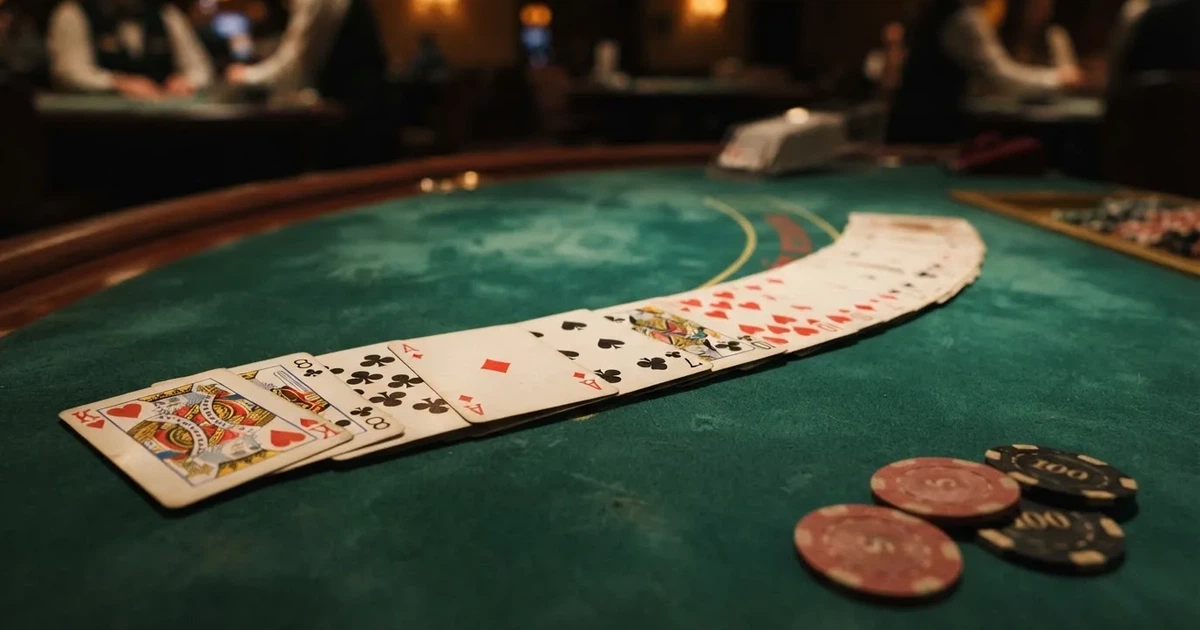
A live blackjack table streamed to an Australian phone screen looks identical to one streamed anywhere else. A real dealer flips real cards from a real shoe, multiple players sit at the same felt surface, and the result of each hand is settled by the cards themselves rather than a random number generator. The fundamental problem this page exists to address is that none of that matters under Australian law. The Interactive Gambling Act 2001, as strengthened by the Interactive Gambling Amendment Act 2017, prohibits the supply of online casino games — including a live dealer table — to anyone in Australia, and the regulator charged with enforcing that prohibition has spent the years since 2019 building the most active blocking programme of any comparable jurisdiction.
This is not a page about which offshore site has the nicest app. The eleven operators profiled below have all been the subject of formal warnings from the ACMA. Several have been blocked at ISP level. Every one of them runs under a licence issued somewhere outside Australia, and every one of them is, for an Australian resident, an unregulated product with no Australian consumer protection, no Australian complaints body, and no guarantee that a balance sitting in the account on the morning the next blocking round is announced will be withdrawable that afternoon.
What follows covers the game’s fundamentals so the comparison below them makes sense, the legal frame that determines what a live dealer table can lawfully be in this country, the regulatory action that has shaped the offshore market an Australian is choosing between, and a close reading of each of the eleven brands the ACMA has acted against. The closing section answers the questions a reader weighing a deposit most often asks.
Table of Contents
- The fundamentals of live blackjack
- The Australian legal frame for any live dealer table
- Payment methods and the Australian rules around them
- Bonuses, wagering, and the cost of a live blackjack offer
- Crypto and the live blackjack angle
- The blocking rate: how fast the ACMA is removing sites
- Responsible play at a live dealer table
- The Landscape of Illegal Operators
- Comparing the eleven
- Choosing between the options that exist
- Frequently Asked Questions
The fundamentals of live blackjack
Live dealer blackjack differs from the computer-generated version in one obvious way and several less obvious ones. The obvious way is the human being running the table — a real dealer drawing cards from a physical shoe, calling out totals, and pushing chips across the felt. The less obvious ones are the structural limits that follow from the physical shoe: only so many players can fit around a single table, hands run at the pace a human can deal them, and the rules applied at one table cannot be quietly swapped by a software update between hands.

How a hand works
A standard blackjack hand begins with two cards dealt face up to each player and one face up, one face down, to the dealer. Number cards count as their number, jacks, queens and kings count as ten, and an ace counts as either one or eleven at the player’s election. A starting two-card total of 21 — an ace plus any ten-value card — is a “blackjack” or “natural” and is the strongest hand. The dealer must keep drawing until reaching a total of seventeen or higher; some rule sets require the dealer to take another card on a “soft 17” (an ace and a six), which tilts the edge slightly back toward the house.
The strategic content of blackjack is what to do after the first two cards. Stand, hit, double down, split pairs, and in some variants surrender — each option changes the expected value of the hand against the dealer’s visible card, and the mathematically correct choice varies by rule set. The casino’s edge against a player who never varies from correct basic strategy is small. Under the liberal Las Vegas Strip rules — dealer stands on soft 17, double on any two cards, double after split, resplit aces, late surrender — the house edge comes in at about 0.28%. Under the more common Atlantic City rules it sits closer to 0.43%. Both figures assume every hand is played optimally; real-world play drifts higher.
Where the game came from
Blackjack’s immediate predecessor is the French and English game vingt-un, with a related game called veintiuno described in Miguel de Cervantes’ Rinconete y Cortadillo, written around 1601-1602. Formal rules for the English version were published in Britain in 1800. The name itself is more recent: according to card historian Thierry Depaulis, the game acquired its modern name around 1899, with prospectors during the Klondike Gold Rush of 1896 to 1899 credited with the renaming.
The variants worth knowing
The standard six- or eight-deck game is what most live dealer studios deal. Beyond it, four variants recur at the offshore tables the ACMA has warned against, and each carries a meaningfully different house edge:
- Spanish 21 is played without any ten-value cards — all tens are removed from the shoe — but compensates players with liberal rules on doubling, splitting and late surrender.
- Double Exposure Blackjack deals both of the dealer’s cards face up, which sounds like a player advantage but is offset by adjusted blackjack payouts and dealer wins on all ties.
- Blackjack Switch lets players swap the top cards between two hands, a structural concession that comes with rule changes pushing the edge back toward the house.
- Super Fun 21 permits up to four splits and several player-favourable rules, with corresponding adjustments on the blackjack payout.
The dealer rule that moves the edge most
Of the individual rules that distinguish one blackjack variant from another, the one with the largest single effect on the house edge is whether the dealer hits or stands on a soft 17. A dealer who must stand on soft 17 shifts roughly 0.2% of edge from the house to the player relative to a dealer who must hit. It is not the only rule that matters — surrender availability, doubling restrictions, the number of decks in the shoe all move the figure — but for a player comparing two otherwise similar tables, the soft-17 rule is the single difference most worth checking before sitting down.
The side bets to avoid
Most live dealer blackjack tables carry one or more side bets alongside the main hand. Perfect Pairs, 21+3, and similar wagers pay out at odds that look generous on a printed paytable but carry house edges in the multiple-percent range rather than the fractions of a percent the main hand offers. Crown Melbourne renamed its Perfect Pairs side bet to “Crown Pairs” when it was approved by the Victorian Gambling and Casino Control Commission on 23 December 2024, and a “Free Bet” option with a new “Pot of Gold” side bet was approved on 25 March 2024. The Victorian regulator’s approval process exists precisely because side bets are where the edge on a blackjack table balloons fastest.
The Australian legal frame for any live dealer table
The phrase “online casino” in an Australian context does not mean a site licensed somewhere and made available to Australians. It means an unlawful supply of prohibited interactive gambling services. The two are not the same thing, and the difference is what every other section of this page hangs on.
What the Interactive Gambling Act 2001 actually prohibits
The IGA, as amended in 2017, makes it an offence to provide online casino games, online pokies, or in-play betting to a customer physically present in Australia. The penalty for an individual provider is up to A$220,000 per day; for a corporation, up to A$1.1 million per day. The Act targets the provider, not the customer — an Australian punter playing at an offshore site commits no offence under the IGA itself. What the punter gives up by playing offshore is every protection the Australian licensing system would otherwise afford.
What is licensable is wagering on racing and sporting events placed before the event begins, lotteries, and keno. In practice these are licensed through state and territory regulators, with the Northern Territory Racing and Wagering Commission licensing 52 of Australia’s online bookmakers — Sportsbet, Bet365 and Ladbrokes among them — partly for historical tax reasons. The NT regulator operates with no full-time staff and meets once a month in Darwin, a structural detail that matters because the same body simultaneously issues licences to large national brands and is the de facto national wagering regulator by default.
What the ACMA has actually done since 2017
Enforcement strengthened in 2017, and the ACMA’s record since then has been steadily compounding. According to the regulator as reported in June 2026, a total of 1,751 illegal gambling and affiliate marketing websites had been blocked since the first blocking request was issued in November 2019, and more than 230 unlicensed gambling services had left the Australian market entirely since 2017. The June 2026 round alone added twelve more sites to the block list: 7Signs, ChromaBet, Donbet, Duospin, Freshbet, Slots Gem, Jacks Club, Lucky Start, Pointsbetz, Spinrise, Vinyl Casino and Wildsino.
The blocking rate — the arithmetic this page turns to its own use — works out to roughly 263 sites blocked per year averaged across the six and a half years since the first request, or about 22 per month. That is not a one-off enforcement push; it is a sustained tempo. H2 Gambling Capital’s 2025 report puts annual Australian losses to illegal gambling sites at around A$3.9 billion, and shows the share of gambling going through legal channels falling from 74% in 2021 to 64%. The legal share is shrinking because the offshore market has not contracted; it has merely migrated around the blocking programme.
The 2026 advertising reform
The Interactive Gambling Amendment (Gambling Reform) Bill 2026 passed Parliament on 19 August 2026, with its advertising and inducement measures commencing on 1 January 2027. The bill is law with a future start date, not yet in force at the time of writing. Its practical effect on a player considering an offshore live blackjack site today is limited; its practical effect on the marketing that reaches Australian inboxes and feeds in 2026 is significant, and it is the regulatory backdrop any Australian-facing advertising seen between now and the end of the year is operating against.
What an Australian customer gives up by playing offshore
The individual customer is not prosecuted under the IGA. That is the only piece of the legal picture that runs in the customer’s favour. Everything else runs against:
- No Australian consumer protection. A complaint to the ACMA about an offshore site triggers the regulator’s enforcement process, not a dispute resolution process for the player. There is no ombudsman, no code of practice, and no requirement the operator publish a payout policy.
- No recourse on a refused withdrawal. If a licensed Australian bookmaker refuses a withdrawal, the customer has a regulator to complain to. If an offshore site refuses one, the customer’s options are the site’s own internal review and whatever arbitration clause its terms contain, sitting in whatever jurisdiction the licence is issued.
- No connection to BetStop. The National Self-Exclusion Register, live since August 2023, binds only Australian-licensed online and phone wagering services. An offshore casino is not connected to it. A self-excluded Australian who opens an offshore account is not blocked from doing so.
- Balance risk on the next blocking round. The ACMA’s blocking requests are issued in batches and take effect within days at the major ISPs. A balance sitting in an offshore account on the morning one of those requests lands is, in practical terms, behind a wall.
Payment methods and the Australian rules around them
The payment side of an offshore account is where the regulatory gap is widest, because the rules that apply to licensed Australian wagering do not extend to offshore sites — and the offshore sites, by definition, are not bound by them.
What the Australian rules forbid
Since 11 June 2024, credit cards, credit-related products and digital currency have been banned as payment methods for licensed online wagering in Australia. Penalties for operators accepting them reach A$247,500. The legal deposit routes for a licensed Australian wagering account are debit card, bank transfer, PayID/Osko and BPAY. A licensed Australian bookmaker will not accept a credit card deposit or a Bitcoin transfer. An offshore casino typically will, and the difference tells the customer which set of rules the operator considers itself bound by.
What that means at an offshore live blackjack table
A live blackjack table deals the same cards whether the deposit behind it came from a PayID transfer or a Bitcoin wallet. The cards do not care. What changes is the regulatory layer around the deposit:
- A credit card deposit is illegal at a licensed Australian bookmaker; at an offshore site it is ordinary. The card issuer’s chargeback rights for gambling transactions have tightened in recent years, which is the practical recourse a customer who has been refused a withdrawal still has.
- A cryptocurrency deposit sits outside the Australian banking system entirely. Once the funds are in the casino’s wallet, the customer’s recovery options are whatever the operator’s terms specify and whatever the exchange on the way out allows.
- A PayID deposit is the route a licensed Australian bookmaker would offer. It is also the route some offshore sites accept, often because the same payment processor services both markets; the difference is that the PayID transfer itself does not bring the offshore site under Australian jurisdiction.
Payout speed as a signal
A live blackjack payout, whether via PayID or otherwise, still waits on the same review process as any other casino withdrawal. The advertised “instant payout” at most offshore sites applies once the operator’s internal review has cleared the withdrawal; for a first withdrawal this can take several business days while the site verifies identity documents and the payment method. This is not unique to offshore sites — Australian-licensed wagering also takes time on a first withdrawal — but at a licensed bookmaker the customer has a regulator to escalate to if the delay stretches past what the operator’s own terms promise. At an offshore site, the customer has the operator.
Bonuses, wagering, and the cost of a live blackjack offer
Blackjack bonus offers tend to look generous and convert poorly. The reason is structural: a bonus is awarded in nominal dollars, and the wagering requirement is stated as a multiple of the bonus, the deposit, or both. Slots contribute the full bet toward clearing that requirement because their return to player is high and their variance is low; table games contribute a fraction — typically 5% to 20% — because the player’s edge is small and the operator needs the math to work. A player who claims a bonus, sits at a live blackjack table, and tries to clear it by playing optimally will often find that the contribution rate means almost none of the wagering requirement is being met.
This is where the marketing words meet their arithmetic. A “100% match” headline figure assumes the bonus is cleared against slots. Against a live blackjack table it is, in practical terms, a fraction of that. The bonus still costs the player the full required turnover; what changes is how much of the bonus is released.
Reading the terms that matter
Three terms determine what a blackjack bonus actually costs:
- The wagering multiple. Twenty times the bonus is common for slots; forty times is common for table games, where the contribution rate is lower. The higher multiple is not a sign of generosity — it is a sign that fewer bets count toward clearing.
- The contribution rate. What fraction of each table game bet counts toward the wagering requirement. Twenty percent means a A$10 blackjack hand contributes A$2 toward clearing; five percent means A$0.50.
- The max cashout cap. Some blackjack bonuses cap the amount that can be withdrawn from bonus winnings regardless of how much is cleared. A cap of five times the bonus is common.
None of these terms is hidden in the small print at the better-run sites; all of them are routinely skimmed past by players who never read the bonus terms before clicking claim. The compound effect is that a bonus which would clear in a few hours of slots play can take a week of steady blackjack to clear, and a max cashout cap can leave most of what was won sitting in the account as a non-withdrawable balance.
The right comparison
What a player comparing two live blackjack bonuses should compare is not the headline match percentage but the expected value of clearing the bonus under realistic play. The arithmetic is simple: required turnover times one minus RTP, divided by the contribution rate, gives the expected cost. For a live blackjack hand at optimal strategy against liberal rules, the RTP sits around 99.7%, which means a turnover of A$2,000 cleared against table games at 20% contribution loses the player roughly A$4 in expected value per A$100 of bonus — before any max cashout cap. That is a small number per hand, but it is also the figure the bonus exists to obscure, and it is the one the headline match percentage does not surface.
Crypto and the live blackjack angle
A bitcoin-funded live blackjack table deals the same cards as a card-funded one, with only the payment method changed. The mechanics of the hand are identical; the regulatory and practical picture around the deposit and the withdrawal is different.
Why some Australian players use crypto at offshore sites
Three reasons recur. The first is that a credit card deposit is the natural route for an Australian punter, and credit cards have been banned at licensed Australian bookmakers since June 2024 — but most offshore sites still accept them, and chargeback disputes on gambling transactions have become harder to win. Crypto sidesteps the chargeback question entirely. The second is that crypto withdrawals settle faster than bank transfers once the operator has approved them, because there is no intermediary bank to clear the payment. The third is privacy: a crypto deposit does not appear on an Australian bank statement, which is relevant for a punter who would prefer not to have gambling transactions visible to a partner, a joint account holder, or a credit assessment.
Why those reasons do not change the legal picture
The IGA’s prohibition is on the supply of prohibited interactive gambling services to a person in Australia. It is not on the payment method. A Bitcoin transfer into an offshore account does not convert an unlawful supply into a lawful one, and it does not bring the receiving site within the Australian consumer protection framework. The deposit method is the least regulated part of the transaction; the unregulated parts are the operator’s obligations on payouts, dispute resolution, and self-exclusion.
The exchange-rate risk that does not appear in the marketing
Crypto-denominated live blackjack bonuses are typically quoted in the coin the site accepts, not in Australian dollars. The value of that bonus in A$ moves with the exchange rate between the moment the bonus is awarded and the moment it is cleared or forfeited. A player who accepts a bonus in Bitcoin and the price of Bitcoin drops 15% over the clearing period has lost value independent of the blackjack result. This is a risk that does not exist at an AUD-denominated table and that the marketing does not typically mention.
The blocking rate: how fast the ACMA is removing sites
The arithmetic this page is built to surface is the rate at which the ACMA is removing offshore gambling sites from Australian reach. The inputs are the running total of blocked sites and the date of the first blocking request, both from the ACMA’s own published record.
The first blocking request went out in November 2019. By the report dated 26 June 2026, the cumulative total of blocked sites had reached 1,751. That works out to roughly 263 blocking requests per year on average across the six and a half years since the programme began, or about 22 per month, with the tempo in the most recent years well above the early-year average. The June 2026 round alone added twelve sites in one announcement; earlier rounds in 2025 and 2024 ran at comparable single-round sizes.
The reading: the offshore live blackjack market an Australian punter is choosing between is not a stable market. Sites that were reachable last month are blocked this month, and the same operators reappear under new domain names within weeks. A punter who opens an account at a site that is not on the current block list is choosing a site whose name is not yet on it, not a site the regulator has examined and cleared. The ACMA does not pre-approve offshore sites; it removes them, in batches, after they have been operating long enough to draw attention.
The blocking rate is what makes a balance in an offshore account a depreciating asset. The rate is not a prediction that any specific site will be in the next round; it is the background tempo against which the next round will arrive, and against which a balance sitting in a site that is in the next round will be inaccessible from an Australian IP address.
Responsible play at a live dealer table
Live dealer blackjack hands run on a human cadence, but the cadence is fast. A shoe of eight decks deals roughly seventy hands per hour with a single player, and more with several players at the table. A player who does not set a bankroll limit before joining a live table is one bad streak away from having set one for them. The in-game prompts offered by live dealer studios are thinner than what the software-generated versions provide — there is no “reality check” pop-up in a video stream, and the dealer’s pace does not adjust to a player’s spending rate.
The Australian-licensed alternative is the route by which a self-exclusion or a deposit limit actually bites. BetStop, the National Self-Exclusion Register, covers all Australian-licensed online and phone wagering services. An offshore site is not connected to it. A player who has registered with BetStop and then opens an offshore account is not protected by the registration, and the offshore account’s own responsible gambling tools are whatever the operator chooses to provide.
The National Gambling Helpline (1800 858 858) is free, runs 24/7, and offers chat through Gambling Help Online. It is the right first call for any Australian punter who feels the size of their gambling is no longer theirs to set. It is not licensed-wagering-specific; it covers offshore play as well.
The Landscape of Illegal Operators
The table below summarises the ACMA’s formal warnings against each of the eleven operators profiled below. The columns are: the brand as it appears in the ACMA’s published list, the action taken and the date published by the regulator, the operating company named in the warning, and what the research found regarding subject support. “Subject support” here refers to whether the operator’s own materials or third-party listings confirm a feature relevant to live dealer blackjack; where research carries no such confirmation, the cell is left as a dash.
| Metric | Description |
|---|---|
| House Edge (Blackjack) | 0.28% – 0.43% |
| House Edge (Baccarat) | 1.06% – 14.36% |
| House Edge (Craps) | 1.36% – 16.67% |
| Payment Route | Recoverability |
|---|---|
| PayID | High |
| Bank Transfer | Moderate |
| Bitcoin | Low |
Every brand on this list is an offshore operator. None of them is licensed to supply online casino games to Australian residents under Australian law, and the ACMA’s formal warning over each one is the regulator’s published record that the operator has been doing so.
RocketPlay
The ACMA’s most recent action against RocketPlay is the formal warning issued to Pulsup Ltd over RocketPlay in March 2026. An earlier warning had gone to Dama N.V. in May 2022, one of six Dama-operated brands caught in that round alongside Bambet, Dazard, Level Up, Wild Tornado and Cobra Casinos. The brand has changed hands at the corporate level since the 2022 warning and the regulator has had to re-issue the action against the new operator — a familiar pattern with offshore brands, where the licence and the operating company are fungible. The site’s live dealer offering is not documented in research; the only confirmed material is the regulator’s action.
The RocketPlay profile is the cleanest example on this list of the structural problem: a brand that has been the subject of two ACMA formal warnings under two different operating companies in four years, and is still accepting Australian customers.
Level Up Casino
Level Up Casino was named in the May 2022 ACMA warning to Dama N.V., one of six brands in that round. The site’s live dealer offering is referenced in third-party listings carried by Bgaming, which is a confirmation that the product exists rather than a description of its terms. What the ACMA’s warning covers is the supply of prohibited interactive gambling services to Australians; the third-party listing confirms only that a live dealer product is part of what is being supplied.
Dama N.V. is the operating company behind a substantial cluster of the brands on this list — RocketPlay in its earlier incarnation, Level Up, Woo Casino, Spirit Casino. The Dama cluster is what the ACMA’s blocking programme has spent the most cumulative effort on, and the four Dama brands here account for nearly two thirds of the eleven-operator set by brand count.
Woo Casino
The ACMA formally warned Dama N.V. over Woo Casino in March 2025, three years after the same operator was warned over a different cluster of brands. The interval between warnings is the kind of detail that disappears in marketing copy and matters in a regulatory read: a single operating company has been on the regulator’s published list continuously across multiple rounds. Woo Casino is one of the better-known names in the Dama cluster and the ACMA’s continued attention is a matter of public record rather than a one-off enforcement action.
Spirit Casino
Dama N.V. was warned over Spirit Casino in May 2025, one month after the Woo Casino warning and three years after the original Dama round. The cadence is the regulatory backdrop any Australian punter weighing a deposit at a Dama brand is depositing against: two formal warnings in three months, four in four years, all on the same operating company. Spirit Casino’s individual profile does not add materially to what the Woo Casino profile already establishes; the relevant fact is the operating company, and that fact is the same.
National Casino
The ACMA formally warned Consolutetish S.R.L. over National Casino in July 2025. The same operator was warned over Bizzo Casino in the same round, and Bizzo had already been the subject of a 2022 warning to TechSolutions Group N.V. — a structural pattern that mirrors the Dama cluster, with the licence and operating company moving between enforcement actions. National Casino’s live dealer offering is documented in third-party listings carried by en.wikipedia.org.
The Consolutetish S.R.L. cluster is smaller than the Dama cluster but shows the same pattern: a brand that has been the subject of formal warnings under two different operating companies, neither of them licensed to supply online casino games to Australians.
Bizzo Casino
Bizzo Casino was caught twice. The 2022 warning went to TechSolutions (CY) Group Limited and TechSolutions Group N.V.; the July 2025 warning went to Consolutetish S.R.L., with National Casino in the same round. The operating company has changed and the regulator has tracked the brand across the change. Bizzo is one of two brands on this list — RocketPlay is the other — where the ACMA has had to re-issue a formal warning to a new operator because the brand changed hands between rounds. For a punter weighing Bizzo today, the relevant reading is that the brand has attracted two formal warnings under two operators in three years.
Ignition Casino
The ACMA formally warned Bamboo Media over Ignition Casino in July 2025, in the same round that caught National Casino and Bizzo Casino. Ignition is one of the longer-established offshore casino brands and its appearance on the ACMA list is recent rather than historical. The relevant question for a punter weighing Ignition is the same as for any other operator on this list: the regulator has formally found the supply to Australians unlawful, and the brand’s response to that finding is not in the public record.
Instant Casino
The ACMA formally warned EOD Code SRL over Instant Casino in February 2025, the earliest warning in 2025 on this list. The “Instant” branding is a common one in the offshore market and the same name has been used by multiple operators over the years; the ACMA’s warning is to EOD Code SRL specifically and does not extend to every operator that has used the Instant Casino name. The warning itself is the regulator’s formal record that the operator named has been supplying prohibited services to Australians, and the punter’s read is the same as for any other operator on this list.
Jackbit
The ACMA formally warned Ryker B.V. over Jackbit and CasinOK in April 2026. The pairing is notable because both brands appear in the same enforcement action, which suggests a shared operating infrastructure rather than two independent operators. Jackbit is one of the more crypto-oriented brands on this list, and the warning is one of the most recent on the ACMA’s published record.
Casino Intense
The ACMA formally warned Sterplay Holding Ltd over Casino Intense in April 2025. Casino Intense’s appearance in third-party listings carried by the ABC, the ACMA’s own publication, and Crown Melbourne places it in a small group of operators on this list with external confirmation of its live dealer product; the confirmation is from sources that do not endorse the operator’s supply to Australians and does not change the regulatory picture.
Sky Crown
The ACMA formally warned Hollycorn N.V. over Sky Crown and Blue Leo in September 2022, the earliest warning on this list. The Hollycorn warning predates the Dama, Consolutetish and Bamboo rounds by two to three years and is the start of the regulator’s published attention to the cluster. Sky Crown’s profile is the one on this list where the ACMA action is the longest-standing and where the brand has had the most time to either modify its Australian-facing operations or to be blocked at ISP level. The research carries no current confirmation that the brand is or is not still actively accepting Australian customers.
Comparing the eleven
Eleven offshore brands, each the subject of at least one formal warning from the ACMA, each operating under a licence issued outside Australia, each accepting Australian customers at the time the warning was issued. The differences between them are real but they are differences within a category the regulator has already declared unlawful.
Recency of action
The most recent formal warnings — RocketPlay in March 2026 and Jackbit in April 2026 — are also the ones with the shortest interval between the regulator’s action and the present. The shortest interval is not a sign the brand has modified its Australian-facing operations; it is a sign the regulator has acted recently. The ACMA does not announce a warning in advance and does not publish a follow-up confirming the brand has changed its behaviour.
Operating company clusters
Two operating companies account for five of the eleven brands: Dama N.V. (RocketPlay in 2022, Level Up, Woo Casino, Spirit Casino) and Consolutetish S.R.L. (National Casino, Bizzo Casino). A punter weighing a deposit at any one of those five brands is effectively weighing a deposit at a brand owned by an operator the regulator has formally warned at least twice in the case of Consolutetish and at least four times in the case of Dama. The other six brands are distributed across five different operating companies.
Subject support
Three of the eleven brands — Level Up Casino, National Casino, and Casino Intense — have third-party listings confirming a live dealer product. The other eight carry no such confirmation in research, which is not the same as saying they do not offer live dealer blackjack; the offshore market is large and the listings that cover it are not comprehensive. The honest reading is that a live dealer product is confirmed at three of the eleven and unconfirmed at the other eight, and that research did not document the terms of any of the three.
What none of the eleven offers
What none of the eleven offers is the thing a punter looking for an Australian-licensed alternative would be looking for: a connection to BetStop, recourse to an Australian regulator on a refused withdrawal, and the guarantee that a balance sitting in the account will not be behind an ISP block on the morning the next ACMA round is announced. The bonuses are not a substitute for any of those; the deposit methods are not a substitute for any of those; the live dealer studio quality is not a substitute for any of those.
Choosing between the options that exist
The honest framing for an Australian punter in 2026 is that the choice is not between a regulated Australian live blackjack site and an offshore one. It is between an offshore live blackjack site and not playing online at all. The Australian-licensed wagering market offers racing and sports betting, not online casino games; the Interactive Gambling Act 2001 has prohibited online casino supply to Australians since 2001 and the 2017 amendments strengthened enforcement.
A punter who decides to play offshore is choosing a product the regulator has declared unlawful, an operator that has been formally warned for supplying that product, and a payment and withdrawal process that runs outside the Australian consumer protection framework. The eleven brands above are not the only options; they are the ones the ACMA has already acted against, and the action is a signal the regulator considers the supply ongoing.
What the choice actually comes down to
For a punter who has decided to deposit anyway, three questions narrow the choice:
- Is the brand on the current ACMA block list? A brand that is currently blocked at Australian ISPs is inaccessible from a standard Australian connection without a VPN, and a punter using a VPN to access a blocked site has no legitimate expectation of recourse if the withdrawal is refused.
- Has the operating company been warned before? A repeat warning — Dama’s four, Consolutetish’s two — is the regulator’s published record that the operator has not modified its Australian-facing supply between warnings.
- What is the payment route? A deposit by PayID is the most recoverable in a chargeback dispute; a deposit by Bitcoin is the least recoverable. The card-versus-crypto split is also the split between the payment methods that are and are not banned at Australian-licensed wagering, which is itself a signal which set of rules the operator considers itself bound by.
What the choice should include
The cost of an offshore live blackjack session is the cost of the cards and the cost of being outside the Australian regulatory framework. The first is what the house edge captures. The second is what happens if the operator refuses a withdrawal, the site is blocked before the withdrawal clears, or the operator simply disappears with the balance. A punter comparing two offshore sites on the basis of game selection and bonus terms is comparing on 5% of the relevant variables; the other 95% is the regulatory and structural picture around the deposit and the withdrawal.
Frequently Asked Questions
No. The Interactive Gambling Act 2001 prohibits the supply of online casino games, including live dealer blackjack, to customers in Australia. The Act targets the provider, not the customer, so an individual Australian punter is not personally prosecuted for playing offshore — but the offshore site is operating unlawfully under Australian law, and the Australian customer has no Australian consumer protection, no Australian complaints body, and no Australian regulator to escalate a refused withdrawal to.
How does a live-dealer blackjack table differ from a computer-generated version?
A live dealer table is run by a real dealer drawing from a physical shoe, with the action streamed to the player over a video connection. A computer-generated table uses a random number generator and a graphical representation of a dealer. The cards and the rules are the same in both; what differs is the pace (live dealer is faster than a fully animated version but slower than a no-animation RNG table), the social context (multiple players share the same table at a live dealer studio), and the availability of card-counting (live dealer reshuffles frequently and the shoe penetration is shallow enough that counting is rarely effective).
What dealer rule most affects the house edge in blackjack?
Whether the dealer hits or stands on a soft 17 — an ace and a six — is the single rule with the largest effect on the house edge, shifting roughly 0.2% from the house to the player when the dealer stands rather than hits. Surrender availability, doubling restrictions and the number of decks in the shoe also move the figure, but for a player comparing two otherwise similar tables, the soft-17 rule is the first thing to check.
Does a blackjack bonus offer usually count table game bets the same as slot bets?
Almost never. Slots typically contribute 100% of each bet toward clearing the bonus wagering requirement. Table games — blackjack, roulette, baccarat — typically contribute a fraction, usually between 5% and 20%, because the player edge is smaller and the bonus math does not work at full contribution. A player who claims a bonus intended for slots and clears it at a blackjack table is doing far more wagering than the bonus headline implies.
Is a live blackjack app a separate product from a site’s browser-based table?
Usually not. Most operators run the same live dealer studio through both the mobile app and the browser, with the mobile app typically offering a touchscreen-friendly version of the same games and the browser version offering a fuller lobby. The cards dealt and the rules applied are the same in both. The differences are in the interface — bet placement, side bet access, chat with the dealer — rather than in the game itself.
Can a live blackjack hand be joined partway through a dealer’s shoe?
Sometimes. Most live dealer studios offer a “Bet Behind” feature that lets a player wager on another player’s hand without holding a seat at the table, which is the practical answer when a shoe is already in progress and the seats are full. Holding an actual seat partway through a shoe is studio-dependent; some studios only open seats between shoes, others accept new players at any point subject to a “no bet after the first card” rule.