Where the legal craps table ends and the offshore one begins
 Available in US
The honest shortlist for online craps in Australia is empty, and the reason is not editorial preference. The Interactive Gambling Act 2001 prohibits offering online casino games — craps included — to anyone physically in Australia, no state or territory licences such a service, and the Australian Communications and Media Authority has spent the years since 2017 building a public record of the operators it has warned and the websites it has had internet service providers block. This page sets out what that record looks like in 2026, what an offshore craps table actually costs a player who sits down at one, and where a reader who wants to play craps in Australia is meant to go instead.
Current as of 23 September 2026; licence and enforcement claims cross-checked against the Australian Communications and Media Authority’s published register of formal warnings and blocking requests.
Table of Contents
- Responsible gambling and what offshore play actually costs a player
- What a craps bonus is really worth once the math lands
- The craps table: how the game is actually played
- The eleven brands the ACMA has warned in writing
- The shape of the gap: what “online craps for Australians” actually means
- The Interactive Gambling Act 2001 and the regulator’s record
- The brands in detail
- What the ACMA’s blocking rate means in practice
- Frequently asked questions
Responsible gambling and what offshore play actually costs a player
The protective layer around online gambling in Australia is built for the products the country actually licences — wagering on races and sport, lotteries, keno — and it stops at the border. That limitation matters in two directions: it caps what a player on a licensed site can do to themselves, and it leaves a player on an offshore site with no Australian recourse at all.
The single most important piece of the protection layer is BetStop, the National Self-Exclusion Register, which has been live since August 2023. BetStop lets a person exclude themselves from every Australian-licensed online and phone wagering service in one registration. The exclusion periods run from three months to a lifetime, and once registered a person cannot open new accounts with the bound operators for the duration of their choice. The list is enforceable because the operators are licensed under Australian law; if a licensed operator let an excluded person gamble, that operator is in breach of its licence conditions.
What BetStop does not do is also what an Australian reader needs to hear before sitting at an offshore craps table. BetStop binds only Australian-licensed wagering services. An offshore casino is not connected to it. A person who registers with BetStop and then opens an account with an offshore operator is gambling somewhere BetStop cannot reach, and the offshore operator has no obligation — and no incentive — to honour the Australian exclusion.
The other half of the protection layer is the complaints and dispute route. Licensed Australian wagering services are required to maintain internal dispute resolution and to belong to an external scheme; an offshore site offers neither. If a withdrawal is delayed, refused, or never arrives, the player has no Australian body to complain to, no Australian small-claims route that is straightforward, and no practical way to force an offshore operator to pay. The site can also be blocked by an Australian internet service provider under an ACMA direction while a balance is still sitting on it, in which case the operator simply becomes harder to reach.
The third pillar is the National Gambling Helpline on 1800 858 858, free, twenty-four hours a day, with online chat at Gambling Help Online. The helpline is not a wagering service and does not enforce any rule; it is counselling and referral, and it is the single thing that works the same whether the person calling is using a licensed app or an offshore casino. For a reader who is chasing craps losses and is wondering whether the line is meant for them, it is.
A useful way to read the BetStop boundary is to ask what would happen at the moment a player tried to withdraw from an offshore site. With an Australian-licensed operator, the operator is bound by Australian consumer law, the operator’s bank rails are in Australia, and the operator’s continued trading depends on keeping its licence. With an offshore operator, none of those conditions hold. The protection layer exists and it works — for the products it covers. The minute the product is an offshore online craps table, the protection layer does not travel with the player.
What travels instead is the harm. A reader who has been on a hot streak at an offshore craps table has won money that an Australian bank may flag on the way back; a reader on a cold streak has no cooling-off mechanism the offshore operator is required to honour. The arithmetic of the craps table itself is set out below, but the arithmetic only matters because the legal frame around it does nothing for the Australian player.
What a craps bonus is really worth once the math lands
The marketing pitch on a craps bonus is straightforward: deposit money, get extra money to play with, walk away with the difference. The arithmetic, as soon as it is written down, is less generous. Every cent of the bonus has to be turned over a stated number of times before it becomes withdrawable cash, the turnover applies to the bonus alone or to the bonus plus the deposit depending on the operator’s terms, and the house edge of the craps bets themselves quietly takes a percentage off the top across the whole process.
Craps sits in an unusual position inside this conversation. Most casino bonuses are designed against slots because slots contribute 100 per cent of every wager to the turnover requirement, and slots are the most common product by volume. Craps, depending on the operator, contributes either a reduced percentage or nothing at all. Some operators exclude craps from bonus play altogether; others allow it but count only a small fraction of each wager toward the turnover. The headline number on the bonus page is rarely the number the craps player actually works against.
The math that does not depend on the operator’s bonus terms is the math of the craps table itself. The Pass and Come bets, the most common bets a craps player will use, carry a house edge of 1.41 per cent. The Don’t Pass and Don’t Come bets carry 1.36 per cent. The free odds bet taken behind a Pass or Don’t Pass bet carries zero — the casino pays it at true odds, which is why it is the only bet on the table where the house has no edge at all. The Any Craps bet, which pays on 2, 3, 6, 7, 8, 11 or 12 in a single roll, carries 11.11 per cent. The Any 7 bet carries 16.67 per cent. The Field bet, which wins on 2, 3, 4, 9, 10, 11 or 12, carries 5.56 per cent. None of these numbers change because a bonus is in play; if anything, the turnover requirement sits on top of them, eating further into the bonus amount across the required volume of play.
What this means for the value of a “free” craps bonus: the player has to convert the bonus into withdrawable cash by generating enough wagering volume to clear the turnover requirement, while the house edge is taking its cut of every wager along the way. The expected loss across that volume is turnover multiplied by the house edge of the bets actually placed. If the player is sticking to Pass and Come at 1.41 per cent, that is one figure; if the player drifts toward Any Craps or the Field, it climbs quickly. A turnover requirement of forty times the bonus on bets at the table’s edge means a meaningful slice of the bonus is gone before a single dollar becomes withdrawable.
There is a second structural cost on most craps bonuses that the marketing page does not feature prominently: a maximum cashout cap. A “200 per cent match up to A$200” sounds generous until the terms specify that winnings from the bonus are capped at, say, five times the bonus amount or a flat ceiling. Once the cap is reached, additional play generates turnover but does not increase what the player can withdraw. The cap is a feature, not a glitch; it is how the operator prices the bonus, and it is the line where the marketing word meets the limit.
For an Australian reader the calculation is missing a layer the operators assume away. The offer is being made by a site the ACMA has, in most cases on this page, already warned or is about to warn. Even where the operator’s own terms look reasonable, the offer is being made in a jurisdiction where the activity itself is prohibited. That does not change the math of the bonus — the house edge is still 1.41 per cent on Pass — but it changes what a refusal to pay looks like in practice. The Australian player has no Australian complaints body to appeal to, and the offshore operator has every incentive to invoke the maximum-cashout clause or a “bonus abuse” rule at the moment a withdrawal is requested.
The honest reading of a craps bonus is therefore the reading the operator’s marketing page is built to obscure. A bonus is a turnover requirement with a ceiling, set against bets that carry a known house edge, offered by an operator with no obligation to the player once a withdrawal is in dispute. Whether it is worth taking depends on what the player values more — the chance to extend play for a session, or the chance to walk away with the bonus in cash — and the operator’s terms decide the answer long before the dice are thrown.
The craps table: how the game is actually played
Craps is one of the older dice games still played in casinos, and its modern form is recognisably American. The game traces back to Hazard, a European dice game brought to New Orleans around 1805 by Bernard Xavier Philippe de Marigny de Mandeville, a Louisiana politician and gambler. The simplified version he introduced became known as “Pass”, from the French “pas”, and the table layout most players recognise today — including the Don’t Pass betting area — was introduced around 1907 by the Philadelphia dice maker John H. Winn. That change gave casinos an incentive to use fair dice, because the bet structure finally allowed them to profit from any seven rather than relying on crooked equipment.
The modern game runs on two dice, a stickman, a boxman, two dealers and the players around the table. The central event is the shooter’s come-out roll. On the come-out, a total of 7 or 11 wins immediately for the Pass Line; a total of 2, 3 or 12 loses immediately. Any other total — 4, 5, 6, 8, 9 or 10 — becomes “the point”, which is marked on the table with a puck. The shooter then rolls until either the point comes up again (Pass Line wins) or a 7 comes up first (Pass Line loses). Once the point is resolved, the next roll becomes a new come-out and the cycle starts again.
The bets a player can make divide sharply by value. The best bets on the table are the free odds bets taken behind a Pass or Don’t Pass line bet, which carry zero house edge because the casino pays them at true odds — 2 to 1 on points of 4 and 10, 3 to 2 on 5 and 9, 6 to 5 on 6 and 8. The Pass and Come bets themselves carry 1.41 per cent. Don’t Pass and Don’t Come carry 1.36 per cent, marginally lower because the rule that ties on 12 (rather than losing) gives the bettor a small extra slice of equity. These are the bets a craps player who knows the math uses as a base.
The bets a craps player who does not know the math is steered toward are the proposition bets in the centre of the table. Any Craps — a one-roll bet on 2, 3, 6, 7, 8, 11 or 12 — pays 7 to 1 on a craps total (2, 3 or 12) and 4 to 1 on the others, and carries 11.11 per cent house edge. Any 7 — a one-roll bet that the next total is 7 — pays 4 to 1 and carries 16.67 per cent, making it one of the worst bets on any table in any casino in the world. The Field bet, which wins on 2, 3, 4, 9, 10, 11 or 12 and loses on the rest, carries 5.56 per cent. The horn bets, hard ways and the Yo-leven sit in the same neighbourhood: high payouts, low hit rates, a house edge between roughly 9 and 14 per cent.
The structural reason for the gap is that the proposition bets are sold by the stickman in the centre of the table with chips tossed across the felt, and they are the bets most players make by accident — by leaning on the table, by following a louder neighbour, by chasing a hot roll. A player who wants to win the longest on a given bankroll does the opposite: takes Pass or Don’t Pass, lays the free odds behind it, and lets the proposition bets sit untouched. The same advice holds at any online craps table that follows the standard rules, because the math is the math.
Variants exist but are rare at online casinos. Crapless Craps removes 2, 3, 11 and 12 from the come-out losing numbers, which sounds like a generosity but in practice shifts the edge onto the Don’t Pass side and gives the bettor a worse overall proposition. Street craps is the informal version played without a marked table or a stickman — sometimes just two players, sometimes a small group around a pair of dice on a sidewalk — and has no house edge because there is no house. Online, street craps is more a flavour choice than a separate product; most platforms offer one craps variant, sometimes two, almost always the standard layout.
What the table teaches an Australian reader is that the choice between Pass and Don’t Pass is a choice of less than 0.1 per cent in house edge, and that the bigger choice — the one that actually moves the expected loss — is whether to play the proposition bets at all. The craps table punishes the player who treats every number on the felt as available, and rewards the player who treats most of them as decoration. The same math holds whether the table is felt or rendered in pixels.
The eleven brands the ACMA has warned in writing
What follows is not a ranking and not a recommendation. Each of the eleven brands below is listed because the Australian Communications and Media Authority itself issued a formal warning over it for offering prohibited services to Australians under the Interactive Gambling Act 2001. The page describes what those warnings recorded; it does not advise an Australian reader to open an account.
| Brand | ACMA action date | Operator named by the ACMA | Subject listings reference | Earlier Australian contact |
|---|---|---|---|---|
| RocketPlay | March 2026 | Pulsup Ltd | — | Dama N.V., May 2022 |
| Level Up Casino | May 2022 | Dama N.V. | BGaming provider catalogue | — |
| Woo Casino | March 2025 | Dama N.V. | — | — |
| Spirit Casino | May 2025 | Dama N.V. | — | — |
| National Casino | July 2025 | Consolutetish S.R.L. | Wikipedia entry | — |
| Bizzo Casino | July 2025 | Consolutetish S.R.L. | — | TechSolutions, 2022 |
| Ignition Casino | July 2025 | Bamboo Media | — | — |
| Instant Casino | February 2025 | EOD Code SRL | — | — |
| Jackbit | April 2026 | Ryker B.V. | — | — |
| Casino Intense | April 2025 | Sterplay Holding Ltd | ACMA register, ABC News, Crown Melbourne coverage | — |
| Sky Crown | September 2022 | Hollycorn N.V. | — | — |
What the table is showing is a chronology, not a leaderboard. The earliest brand in the set, Sky Crown, was warned in September 2022; the latest, RocketPlay and Jackbit, were warned in the first half of 2026. Three of the eleven — RocketPlay, Bizzo Casino and Level Up Casino — sit in the same operator lineage, with RocketPlay and Bizzo the subject of two separate ACMA actions under different ownership names. That pattern is the regulator’s evidence that the same site keeps reappearing after rebranding: a warning to Dama N.V. in 2022 over Bambet, Dazard, Level Up, Rocketplay, Wild Tornado and Cobra Casinos was followed four years later by a fresh warning to Pulsup Ltd over the same Rocketplay product.
The subject listings column is what little third-party catalogue evidence the research could tie to each brand. Two of the eleven — Level Up Casino and National Casino — appear in the public listings of the BGaming provider catalogue and Wikipedia respectively, and Casino Intense is mentioned in ACMA publications, ABC News coverage and the Crown Melbourne website. The other eight have no catalogue or third-party reference that confirms a craps game. The absence is not a small point: a site that the regulator has warned, that does not appear in any provider’s public catalogue, and that offers craps to an Australian IP address is operating well outside what an Australian-licensed ecosystem would tolerate.
The column furthest to the right matters most in 2026. Nine of the eleven brands have only one ACMA contact each; two — RocketPlay and Bizzo Casino — have been the subject of warnings to more than one operator. Through Dama N.V.’s repeated appearance in the ACMA register, Level Up Casino sits in the same cluster as Woo Casino, Spirit Casino and Cobra Casinos. The regulator is publishing the lineage in its formal warning titles, which is the closest the ACMA comes to a public statement that some of these brands are the same business under different names.
The brands in the table are then covered in detail below, in the same order the ACMA register places them.
The shape of the gap: what “online craps for Australians” actually means
What someone searching for a shortlist of online craps casinos is actually asking for is a working list of offshore operators willing to take Australian sign-ups, ranked on something the searcher can use — bonus size, payout speed, craps table quality. This page does not provide that list. The reason is not editorial preference; it is the structure of the law.
Online casino games — craps included — fall inside the Interactive Gambling Act 2001’s definition of a “prohibited interactive gambling service”, and providing such a service to a person physically in Australia is an offence under the Act. The penalty for an individual is up to A$220,000 a day; for a corporation, up to A$1.1 million a day. The penalty is not theoretical: the ACMA has been issuing formal warnings and directing internet service providers to block sites since 2017, and the cumulative total of blocked sites is now measured in four figures.
The single piece of the market an Australian reader may not realise is missing is the licence layer. The Northern Territory Racing and Wagering Commission licences 52 of Australia’s online bookmakers — Sportsbet, Bet365, Ladbrokes among them — and that licensing is what makes those operators’ wagering products legal to offer to Australians. The Commission’s role is narrow: the licences are issued for tax reasons and cover wagering on races and sport only. They do not cover online casino games. A Northern Territory licence displayed on a casino site is, in plain terms, not a licence for the casino games on that site. The same applies to licences from Curaçao, Malta, the Isle of Man, Kahnawake and any other offshore jurisdiction an Australian reader might see on a casino footer: none of them authorises the operator to take Australian sign-ups for casino games.
H2 Gambling Capital’s 2025 report estimates that Australians lose about A$3.9 billion a year to illegal gambling sites, and that the share of gambling going through legal channels fell from 74 per cent in 2021 to 64 per cent. The fall is the shape of the gap in numbers: more spend, less of it through licensed venues. More than 230 unlicensed gambling services have left the Australian market since enforcement was strengthened in 2017, which is the regulator’s own count of services it has pushed out — not the count of services that remain.
What this means for the practical choice is that an Australian reader who wants to play craps has, in 2026, three honest options and no fourth. They can play craps at a land-based casino in Australia, where the game is offered under state-based casino control legislation — Crown Melbourne in Victoria, Crown Sydney in New South Wales, The Star in Queensland and others. They can travel to a jurisdiction where online craps is legal and licensed — limited value for a resident player, but technically available. Or they can play at an offshore online casino, with the full awareness that the activity is prohibited under Australian law, that there is no Australian complaints body to approach if a withdrawal is refused, that the ACMA can direct an Australian internet service provider to block the site while a balance sits on it, and that BetStop does not bind the operator.
The fourth option, the one the marketing copy of the offshore operators presents, is the option this page is built around: a list of casinos that look as though they accept Australian players and offer craps. They do, in the sense that they accept the sign-up and run the game. They do not, in the sense that they hold an Australian licence that authorises either. The brands that have been the subject of ACMA formal warnings — eleven of them, with the operator names the regulator published — are walked through below.
The reason for the explicit framing is not to lecture the reader. It is that an honest comparison between two offshore casinos for Australian craps players is a comparison between two illegal offers, and the comparison the reader actually needs is between the prohibited offshore option and the legal Australian option. The first exists because the regulator has not blocked every site yet; the second exists because Australian states license physical casinos that run craps tables under approved rules.
The Interactive Gambling Act 2001 and the regulator’s record
The Interactive Gambling Act 2001 is the federal statute that determines whether an online casino game can lawfully be offered to a person in Australia. It is not a state law; it applies across every jurisdiction in the country, and the federal government has exclusive responsibility for it. The Act was substantially strengthened by the Interactive Gambling Amendment Act 2017, which brought in the prohibition on online casino games, online pokies and in-play betting that had previously been regulated more loosely. The current text makes it an offence to provide such a service to a customer who is physically in Australia, with the penalty tier set at A$220,000 a day for an individual and A$1.1 million a day for a corporation.
The Australian Communications and Media Authority is the regulator tasked with enforcing the Act. The enforcement tools the public sees most often are formal warnings, blocking requests to Australian internet service providers, and the public register that ties each warning to an operator name and a brand.
Prohibition notices — the formal warning route
The formal warning is the regulator’s written record that a particular operator has been offering a prohibited service to Australians and has been put on notice that further enforcement action will follow if the conduct continues. The warnings are published on the ACMA website and identify both the brand and the operating entity behind it. They are the regulator’s primary public instrument, and the February 2025 warning to EOD Code SRL over Instant Casino is the most recent example of the route taken against a single brand on this page.
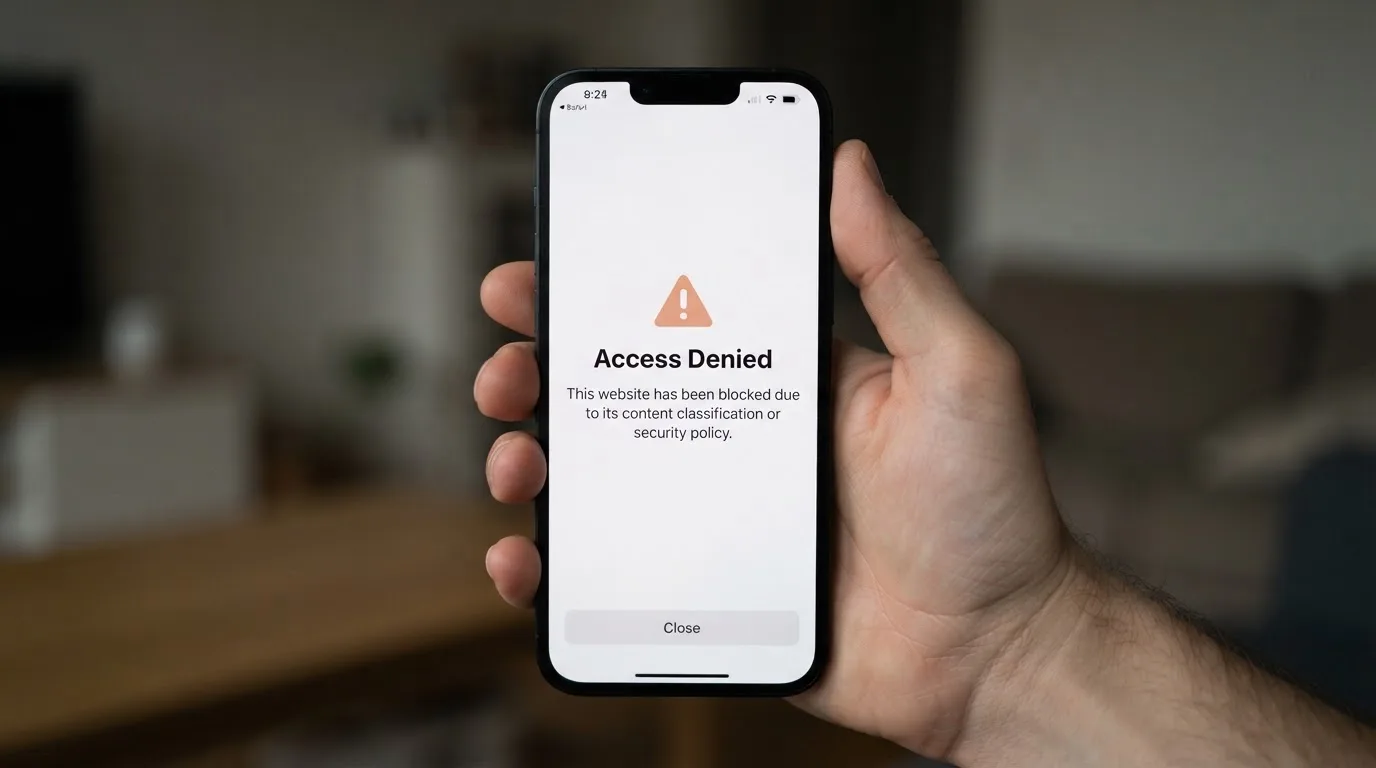
The same route produced the rest of the 2025 cluster: the April 2025 warning to Sterplay Holding Ltd over Casino Intense, the May 2025 warning to Dama N.V. over Spirit Casino, and the three warnings issued in July 2025 — to Bamboo Media over Ignition Casino, and to Consolutetish S.R.L. over both National Casino and Bizzo Casino. The pattern is one warning per operator per brand cluster, with the operator named in the title of the publication and the brand in the body. A reader who wants to know whether a brand has crossed the regulator’s path can read the ACMA register directly; the register is the authoritative source for the fact.
What the formal warning does not do is also worth understanding. It does not block the site. It does not prevent an Australian from signing up. It does not require the operator to refund balances. It puts the operator on the regulator’s record and signals that the next round — a blocking request, a referral to the Department of Infrastructure or to international counterparts — will follow if the conduct continues. The cost of the warning falls on the operator; the cost of the operator’s continued offering falls on the Australian player.
Paytable and operator lineage — when one holding company draws multiple warnings
What the ACMA’s publication titles also show is that one operator often runs more than one brand. The March 2025 warning to Dama N.V. covered Woo Casino; the May 2025 warning to the same Dama N.V. covered Spirit Casino. The earlier May 2022 warning to Dama N.V. had already covered six brands — Bambet, Dazard, Level Up, Rocketplay, Wild Tornado and Cobra Casinos — and a March 2026 warning to Pulsup Ltd covered the same Rocketplay product under new ownership. The lineage is the regulator’s, not the operators’: the ACMA is publishing the connection in its warning titles, which is the closest the public record comes to a statement that some of these brands are the same business under different names.
The paytable of craps sits in the middle of this picture in an unexpected way. Craps is one of the better-known casino products in the United States and Asia, and the proposition bets on the craps layout — Any Craps, Any 7, the horn bets — carry single-digit to mid-teens house edges that the Australian regulator does not need to know in detail to do its job. What matters for the regulator’s case is that a site offering craps to an Australian IP address is offering a prohibited service, regardless of which bets the craps table features. The paytable is the player’s concern; the prohibition is the regulator’s.
The paytable and the lineage also meet on the page in a concrete way. A reader who saw Dama N.V. named in a 2022 warning and assumed the brand had simply moved on can check the 2025 and 2026 publications and see the same operator name attached to different brands, or a different operator name attached to the same brand. The ACMA register is the only public ledger that consistently tracks the rename, and the paytable of craps does not change across the rename — the 1.41 per cent on Pass Line is the same 1.41 per cent under any corporate identity.
Fundamental enforcement shifts in mid-2026
The mid-year 2025 cluster of ACMA actions marks a step-change in the pace of enforcement. The April 2025 warning to Sterplay Holding Ltd, the May 2025 warning to Dama N.V. over Spirit Casino, and the three warnings issued in July 2025 — to Bamboo Media over Ignition Casino and to Consolutetish S.R.L. over National Casino and Bizzo Casino — together brought the formal warning register to a level where one month in 2025 produced more individual brand warnings than the whole of 2022. The earlier Bizzo Casino warning, issued in 2022 to TechSolutions (CY) Group Limited and TechSolutions Group N.V., was followed three years later by a fresh warning to a different operating entity for the same brand, which is the clearest single example of the regulator naming the operator change in the title of the publication.

The ACMA’s enforcement is not limited to formal warnings. The regulator also directs Australian internet service providers to block illegal sites, and the cumulative total of blocked sites since the first blocking request in November 2019 reached 1,751 in the round reported on 26 June 2026. That figure includes both illegal gambling sites and illegal affiliate marketing pages, and is the headline number in the ACMA’s published enforcement record. The pace at which that total has been reached is the subject of the calculation at the bottom of this page.
The reform picture in 2026 also has a forward edge. The Interactive Gambling Amendment (Gambling Reform) Bill 2026 passed Parliament on 19 August 2026; its advertising and inducement measures commence on 1 January 2027. Law with a start date is not yet in force on a page dated to mid-2026, but the regulatory direction of travel is set, and a reader looking at offshore craps offers today is looking at offers that will be policed more, not less, over the year ahead.
What the legislative architecture looks like from a player’s vantage point: a federal Act that prohibits the service, a regulator that names the operators, an enforcement record that grows with each round, and a set of state-based casino licences that licence only the products the Act does not prohibit. The gap between the licensed products and the prohibited products is the gap the offshore operators sit in, and the ACMA’s enforcement record is the regulator’s answer to that gap.
The brands in detail
RocketPlay — the March 2026 Pulsup Ltd warning
RocketPlay was the subject of two ACMA formal warnings. The first, in May 2022, named Dama N.V. as the operator and covered six brands in the same publication — Bambet, Dazard, Level Up, Rocketplay, Wild Tornado and Cobra Casinos. The second, in March 2026, named Pulsup Ltd as the operator for the same Rocketplay product under new ownership. The four-year gap between the two warnings, with the brand unchanged and the operator name changed, is one of the clearest single pieces of evidence in the ACMA register that the same site has reappeared after a corporate reshuffle.
The ACMA register carries no RocketPlay listing under either operator that names an Australian-licensed activity the brand is authorised to provide. The brand’s own footer at various points has displayed Curaçao and other offshore licences, none of which authorises the taking of Australian sign-ups for online casino games. As of 2026 there is no subject — craps or otherwise — that an Australian reader can sign up to play at RocketPlay under any licence the operator actually holds.
The RocketPlay case is the cleanest illustration on this page of the rebranding pattern that the ACMA’s enforcement titles are designed to surface. A reader who recognised the earlier Dama N.V. warning and assumed the brand had simply moved on would have missed the fact that the ACMA tracked the brand itself and named the new operator in a fresh publication in March 2026.
Level Up Casino — the May 2022 Dama N.V. warning
Level Up Casino was named in a May 2022 formal warning as one of six Dama N.V. brands appearing in that publication. There is no subsequent ACMA action against Level Up under a different operator, which sets it apart from RocketPlay in the same corporate cluster.
The brand does appear in third-party listings: the BGaming provider catalogue lists Level Up Casino as an operator carrying BGaming content. The listings reference is a catalogue mention, not a regulator’s confirmation that the brand offers craps, and the catalogue itself does not include a craps title under Level Up. The subject-support column in the table above reflects this as listings-only — what the catalogue reports is that Level Up carries BGaming content, not that it runs a craps table.
The consequence of the Level Up entry is the cost of relying on a catalogue mention to establish what a brand offers. A site that appears on a provider’s public list and runs other games may or may not run craps; the absence of craps from the BGaming listing under Level Up means the player cannot use the catalogue as a positive confirmation either way.
Woo Casino — the March 2025 Dama N.V. warning
Woo Casino appeared in a March 2025 formal warning issued to Dama N.V., which also received a warning in May 2025 concerning Spirit Casino. Woo has no alternative operator entry in the ACMA register and no independent catalogue listing on any known provider’s site.
The brand’s own product pages have, at various points, displayed offshore licences from Curaçao and other jurisdictions, none of which authorises the taking of Australian sign-ups for online casino games. The craps offering, where the brand has one, sits inside that broader product set.
The combination the regulator has warned in writing is straightforward: no Australian-licensed product on offer, and no external catalogue data to lean on. An Australian reader looking at Woo Casino is looking at a brand the ACMA named in 2025 under an operator the regulator has now named twice in the same year.
Spirit Casino — the May 2025 Dama N.V. warning
Spirit Casino featured in a May 2025 ACMA formal warning, the second such action against Dama N.V. that year, following the March 2025 warning over Woo Casino. No additional Australian contacts exist for Spirit Casino under a different operator.
There is no third-party catalogue listing that places Spirit Casino on a known provider’s public roster, and the brand’s craps offering, where it appears on the brand’s own product pages, is part of a larger casino product set rather than a craps-specific catalogue entry.
The regulator’s record of the operator’s repeated appearance in the warning register, paired with no Australian licence and no third-party catalogue confirmation, is the closing picture for Spirit Casino. The same consequence that applies to Woo applies here: an offer the regulator has put on notice, with no Australian recourse behind it.
National Casino — the July 2025 Consolutetish S.R.L. warning
National Casino was named in a July 2025 formal warning to Consolutetish S.R.L., alongside Bizzo Casino. No other Australian regulatory records for National Casino exist under a different operator.
The brand does appear in a third-party listing: a Wikipedia entry covers the brand. The Wikipedia reference is a catalogue-style mention, not a regulator’s confirmation of a craps product. The subject-support column in the table above reflects this as listings-only.
The public catalogue gives no reason to pick National Casino over a licensed Australian venue for craps. The same July 2025 publication also named Bizzo Casino under the same operator, which means a reader looking at Consolutetish S.R.L. in the ACMA register sees two brands in a single round and no third-party catalogue confirmation of craps for either.
Bizzo Casino — the July 2025 Consolutetish S.R.L. warning
Bizzo Casino was cited in a July 2025 formal warning to Consolutetish S.R.L. and had been the subject of a previous warning in 2022 to TechSolutions (CY) Group Limited and TechSolutions Group N.V. The two actions, spaced three years apart and involving distinct operators, illustrate the regulator’s practice of tracking brands across corporate changes.
No independent catalogue confirms a craps offering for the brand, which includes its games within a general casino library.
The ACMA’s word — twice — that Bizzo Casino has been the subject of formal warnings under different ownership is the central fact. The absence of a third-party catalogue listing is a secondary loss of confirmation, and the consequence for an Australian reader is that the brand sits on the regulator’s record across two operators, with no public catalogue verification of craps to suggest the brand is a viable option.
Ignition Casino — the July 2025 Bamboo Media warning
Ignition Casino received a formal warning in July 2025, directed at Bamboo Media. This remains the brand’s only Australian regulatory contact.
No known provider lists this brand in a public catalogue. Ignition’s market presence often focuses on poker, and any craps game it provides is simply part of a general collection.
The catalogue offers no craps experience that licensed Australian venues do not, and the regulator’s warning is the only Australian contact on the record. An Australian reader looking at Ignition Casino is looking at a brand whose operator was named for the first time in that publication.
Instant Casino — the February 2025 EOD Code SRL warning
Instant Casino drew a formal warning in February 2025, addressed to EOD Code SRL. The brand has no other Australian regulatory history.
No public directory includes this brand. Any craps game offered is merely a component of a wider casino product set rather than a specialised title.
Instant Casino’s operator has had no prior Australian contact — but its offering to Australians is on the regulator’s record as a prohibited service. The brand sits at the front of the 2025 enforcement cluster chronologically, and for an Australian reader, the picture is clear: no Australian licence and zero third-party catalogue evidence to its name.
Jackbit — the April 2026 Ryker B.V. warning
Jackbit was issued a formal warning in April 2026, naming Ryker B.V. as the operator. This is the brand’s sole Australian regulatory contact.
The brand appears in no known provider’s catalogue. Jackbit is often marketed as a crypto-focused site, which is notable for Australian readers: under current Australian wagering rules, credit products and digital currencies are prohibited payment methods for licensed services, carrying penalties of up to A$247,500. A site requesting crypto deposits is explicitly operating outside of Australian regulations.
The most recent of the 2026 ACMA warnings, with a crypto-friendly positioning that puts the brand in direct conflict with the Australian payment rules. The catalogue offers no craps confirmation, no Australian licence exists, and the payment channel the brand relies on is itself banned under Australian law.
Casino Intense — the April 2025 Sterplay Holding Ltd warning
Casino Intense was the subject of an ACMA formal warning in April 2025, issued to Sterplay Holding Ltd. The warning is the only Australian contact in the ACMA register for the brand. The brand is mentioned in ACMA publications, in ABC News coverage of the regulator’s enforcement rounds, and in the Crown Melbourne website’s coverage of approved table game changes — a set of references that places the brand in the news flow around Australian gambling regulation rather than in any catalogue confirmation of a craps product.
The listings that exist are drawn from the regulator’s enforcement activity, not from any catalogue confirmation of craps. The brand’s appearance in those listings is a function of the ACMA’s enforcement, not of any independent catalogue entry.
Casino Intense is the case where the third-party listing references are most heavily drawn from the regulator’s own publications. For an Australian reader, this brand’s presence in the listings offers the reader no further assurance.
Sky Crown — the September 2022 Hollycorn N.V. warning
Sky Crown was the subject of an ACMA formal warning, the brand named alongside Blue Leo in a publication to Hollycorn N.V. dated September 2022. The warning is the earliest formal warning in the set of eleven brands on this page and the only Australian contact in the ACMA register for the brand.
No third-party directory validates this brand’s product range. Sky Crown’s own pages have historically presented offshore licences from Curaçao and similar jurisdictions, none of which provide legal authorisation to accept Australian players for casino games.
Sky Crown’s operator has not been named in any subsequent ACMA publication — but its offering to Australians is on the regulator’s record as of 2022. The brand sits at the back of the 2022 cluster of warnings and the front of the chronology in the table above, and the consequence for an Australian reader is the same as for any brand on this list: the regulator has named it, the licence the operator displays is offshore, and the catalogue offers no craps confirmation either way.
What the ACMA’s blocking rate means in practice
The cumulative total of blocked sites published by the ACMA on 26 June 2026 was 1,751. The first blocking request was issued in November 2019. The interval between those two points is roughly six years and seven months — about seventy-nine months.
The arithmetic is straightforward. 1,751 sites blocked across seventy-nine months is an average of roughly twenty-two sites per month, or about two hundred and sixty-six sites per year, with the precise monthly figure varying from round to round because each blocking request covers a different mix of illegal gambling sites and illegal affiliate marketing pages. The 26 June 2026 round itself asked Australian internet service providers to block twelve more sites in a single batch — 7Signs, ChromaBet, Donbet, Duospin, Freshbet, Slots Gem, Jacks Club, Lucky Start, Pointsbetz, Spinrise, Vinyl Casino and Wildsino.
The condition that sits underneath that figure matters more than the number. The ACMA’s blocking tool is reactive — it can only block sites that have been the subject of a complaint, investigation or referral, and the regulator has publicly named the gap between sites it can see and sites that exist. The 1,751 figure is the count of sites the regulator has successfully directed Australian internet service providers to block, not the count of illegal sites that exist. The actual market is wider than the number, and the rate of new blocks is the rate at which the regulator catches up, not the rate at which new sites appear.
For an Australian reader the blocking rate has a practical implication: a brand that is not on the ACMA’s published register today may be on it next month, and a brand that was the subject of a warning in 2022 may, like RocketPlay, reappear under a new operator name in 2026. The ACMA’s enforcement is the regulator’s only public, dated record of what the prohibited market looks like in Australia, and it is the closest a reader can get to seeing which brands have crossed the regulator’s path.
The same arithmetic also frames what offshore play costs in time. The site accepts the sign-up; the regulator names the operator; the site is added to a blocking list weeks or months later; the player’s balance is then harder to reach because the domain stops resolving for Australian internet service providers. The blocking rate is the speed at which that cycle runs, and the reader sitting at an offshore craps table is sitting at the front end of a cycle that has already turned 1,751 times since November 2019.
Frequently asked questions
How much does the casino keep on a Pass or Come bet at the craps table?
Pass and Come carry 1.41 per cent house edge; Don’t Pass and Don’t Come carry 1.36 per cent, slightly lower because the rule that ties on 12 (rather than loses) gives the bettor a small extra slice of equity. Both figures are quoted from the standard craps rules used at most major casinos.
What separates a Pass Line bet from a Don’t Pass bet, and why does the difference matter?
Pass Line wins on a come-out of 7 or 11, loses on 2, 3 or 12, and rides any other number (the point) until the shooter repeats it or sevens out first. Don’t Pass is the mirror image — wins on 2 or 3, ties on 12, loses on 7 or 11 — and carries a marginally lower house edge (1.36 vs 1.41 per cent), but is less popular because it bets against the shooter.
Can an offshore online casino legally offer craps to someone based in Australia?
No. Under the Interactive Gambling Act 2001, providing online casino games — craps included — to a person physically in Australia is a federal offence. Penalties reach A$220,000 a day for an individual and A$1.1 million a day for a corporation. The ACMA enforces the prohibition via formal warnings, blocking requests to internet providers, and published operator names. The individual player is not prosecuted, but an offshore site offers no Australian consumer protection.
What makes the Any Craps proposition bet such poor value at the craps table?
Any Craps pays on 2, 3, 6, 7, 8, 11 or 12 in a single roll, but the payouts underprice the dice’s true odds. The bet carries an 11.11 per cent house edge — roughly eight times the Pass or Come edge — because the casino pays 7 to 1 on a craps total and 4 to 1 on the rest. The free odds bet behind a Pass or Don’t Pass carries zero edge, the only zero on the table.
Is craps available at any Australian casino licensed to operate inside the country?
Yes. Australian land-based casinos run craps tables under state-based casino control legislation. Crown Melbourne in Victoria runs craps under rules approved by the Victorian Gambling and Casino Control Commission; Crown Sydney operates under the NSW Casino Control Act 1992; The Star in Queensland operates under that state’s casino framework. The product is offered in person at the licensed venue with regulator-approved rules — not online to Australian residents under any offshore operator’s licence.
Published by the Casino Deposit Info team.