
Online pokies no deposit bonus offers for Australian players, and the trade-offs that come with them
A no-deposit pokies bonus sounds free, and in the moment it is: a small bundle of spins or credit arrives without a transfer going out. The cost shows up later, in the playthrough, the withdrawal cap and the fact that no Australian licence covers it. This page walks through what those offers typically carry, what the offshore brands that publish them have actually been warned over, and where an Australian reader stands under the Interactive Gambling Act 2001.

Currency as of 30 October 2026 · ACMA register, formal-warning publications and Interactive Gambling Act 2001 texts consulted.
Table of Contents
- How this comparison is built
- Landscape of offshore brands
- The Australian fundamentals of “pokies”
- What a “no-deposit” pokies bonus usually looks like
- The legal frame: what the Interactive Gambling Act actually prohibits
- PayID, instant settlement and the payment side
- Responsible gambling and the offshore gap
- How the ACMA blocking rate has built up
- The eleven brands, and what the ACMA record says
- The verdict across the comparison
- Typical bonus terms (2)
- What the comparison does not cover
- Frequently asked questions
How this comparison is built
Eleven brands appear below because the Australian Communications and Media Authority has issued a formal warning over each of them for offering prohibited online casino services to people in Australia. They are not the only offshore sites making “no deposit” pokies claims; they are the ones the regulator has named. The comparison is a description of what those brands publish and where the regulator has touched them, not a recommendation. No brand reviewed here holds an Australian licence for online casino games or online pokies.
The same shape runs through each block: what the ACMA published about the operator, what the operator’s site claims it offers, and the gap between those two pictures. Reading the comparison straight through gives a working picture of the market a search result for “no deposit pokies bonus” lands on. Reading it sideways — operator against operator — shows where the marketing claims are densest and where the regulator’s record is thinnest.
Landscape of offshore brands
| Brand | ACMA action and date | Operator named by the ACMA | Subject support |
|---|---|---|---|
| RocketPlay | Formal warning, March 2026 | Pulsup Ltd | — |
| Level Up Casino | Formal warning, May 2022 | Dama N.V. | Bgaming listings |
| Woo Casino | Formal warning, March 2025 | Dama N.V. | — |
| Spirit Casino | Formal warning, May 2025 | Dama N.V. | — |
| National Casino | Formal warning, July 2025 | Consolutetish S.R.L. | Wikipedia listings |
| Bizzo Casino | Formal warning, July 2025 (also 2022 under TechSolutions) | Consolutetish S.R.L. | — |
| Ignition Casino | Formal warning, July 2025 | Bamboo Media | — |
| Instant Casino | Formal warning, February 2025 | EOD Code SRL | — |
| Jackbit | Formal warning, April 2026 | Ryker B.V. | — |
| Casino Intense | Formal warning, April 2025 | Sterplay Holding Ltd | Public records listings |
| Sky Crown | Formal warning, September 2022 | Hollycorn N.V. | — |
Two points the table makes by its shape. Every row ends the same way on the Australian licence question: there is no Australian licence to record. The “Subject support” column is mostly empty because most of these brands do not appear on the independent game-provider or aggregator listings that exist for genuinely licensed operators, and where one does — Level Up Casino on Bgaming, Casino Intense in passing references — those listings describe the software distribution, not the operator’s standing in Australia. A row that is mostly blank on that column is telling the reader the same thing eleven times: this is an offshore brand that the ACMA has acted against, and the rest of the market’s record-keeping treats it as such.
See also Crypto.
The Australian fundamentals of “pokies”
Pokies is the Australian word for what the industry calls a slot machine, and the term has stuck because the machines have been part of the country’s gambling landscape for nearly seventy years. Registered clubs operated Australia’s first legal poker machines from 1956, in New South Wales, and every state and territory has since built its own regulatory regime around them. Electronic gaming machines operate in every jurisdiction; each sets its own minimum return-to-player. New South Wales, the Northern Territory, Queensland and most of Victoria set a floor of 85 per cent (Crown Melbourne runs at 87 per cent), the Australian Capital Territory and Tasmania at 87 per cent, South Australia at 87.5 per cent and Western Australia at 90 per cent.

The volume that machinery moves is hard to overstate. In 2020–21 Australians bet almost A$150 billion through gaming machines and lost A$12.18 billion on them, with around 3 per cent of the world’s pub and club machines sitting in a country that holds about 0.3 per cent of the global population. New South Wales alone had 87,298 machines outside casinos spread across 2,195 venues as of June 2023, with player losses of A$8.18 billion in 2022–23. Queensland ran 21,122 machines in 351 venues in October 2023. Victoria, capped at 30,000 statewide, had 26,380 outside Crown Casino across 488 venues in 2021–22.
Online pokies are a different animal, and the legal treatment of them is the reason this page exists. The machines in clubs, pubs and casinos are licensed and regulated state by state; online pokies — the same game in browser form — are prohibited for people in Australia. No state or territory licenses them. The Interactive Gambling Act 2001, the statute that covers them, treats the online form as a prohibited interactive gambling service, and the 2017 amendments tightened what was already on the books. A bonus offer that sits on a licensed offshore jurisdiction is not, by that fact, available to an Australian under Australian law; a bonus offer that does sit on an Australian-licensed site is, by definition, not an online pokies bonus.
What a “no-deposit” pokies bonus usually looks like
A no-deposit bonus arrives in one of two forms: a small bundle of free spins on a named pokie, or a small credit balance that can be wagered on the games the operator lists. The amount is deliberately modest — small enough that the operator can absorb the worst-case scenario across thousands of sign-ups, and small enough that the headline is shareable. Players do not have to move money in to receive the offer; the player experience is genuinely free at the moment of receipt.
Two conditions almost always attach, and they are the ones that decide what the bonus is actually worth.
The first is a playthrough or wagering requirement. A no-deposit bonus is treated by the operator as bonus funds, and bonus funds are not withdrawable until they have been wagered a stated number of times. The stated multiple is the single number a reader should look for before anything else, because it determines how much real-money wagering the bonus has to generate before any winnings become cashable. A 20× multiple on a small bonus is the norm; a 40× or 50× multiple is heavy and pushes most of the bonus’s expected value into the house edge that sits underneath it.
The second is a maximum withdrawal cap. Even after the playthrough clears, most no-deposit bonuses cap the amount that can be withdrawn from winnings earned on the bonus. The cap is the second number to look for, because it sets a ceiling on what the bonus can ever pay out regardless of what the wagering produces. A$100 is a common cap; A$50 is also common; A$200 appears occasionally. Anything above that is the exception, not the rule.
Typical bonus terms
| Term | Impact on bonus |
|---|---|
| Playthrough multiple | Determines the amount of real-money wagering required to clear the bonus. |
| Withdrawal cap | Sets a ceiling on the amount of winnings that can be cashed out. |
| Game restriction | Limits play to specific titles with potentially higher house edges. |
The combined effect: a bonus that arrives free and carries, on paper, a face value in the dozens of dollars often converts into a real-money withdrawal of much less, sometimes zero, once the playthrough, the game restriction and the cashout cap are stacked against each other. The marketing of these offers leans on the moment of receipt; the cost sits in the conditions. Reading the conditions before claiming is the single move that changes the picture, and reading them after is the move most players regret.
The legal frame: what the Interactive Gambling Act actually prohibits
The Interactive Gambling Act 2001 makes it an offence to provide certain gambling services to a person in Australia. Online casino games, online pokies and in-play betting sit on the prohibited list. The Interactive Gambling Amendment Act 2017 strengthened the original statute, with the result that the relevant prohibitions have applied in their current form for the better part of a decade.
What is not prohibited matters as much as what is, because the boundary determines what an Australian can lawfully use. Wagering on races and sporting events placed before the event is licensed, in practice by the Northern Territory through the Northern Territory Racing and Wagering Commission. Lotteries and keno are licensed separately by the state or territory that runs them. Online casino games and online pokies are not. The minimum age for any of it is 18.
Enforcement runs through the Australian Communications and Media Authority. The ACMA investigates, issues formal warnings and can direct Australian internet service providers to block illegal sites. The individual player is not prosecuted — the statute targets the provider — but an offshore site carries no Australian consumer protection, no complaints body and no recourse if a withdrawal is refused. A site can be blocked while a balance is still on it, and the player has no Australian channel through which to recover it.
BetStop, the National Self-Exclusion Register, has been live since August 2023. It binds Australian-licensed online and phone wagering services. An offshore casino is not connected to it. Self-excluding through BetStop does not exclude a player from an offshore site; only the licensed Australian wagering market respects the register. Players who need to step back from offshore gambling have to do it at the site-by-site level, which is a weaker instrument than the national register was designed to be.
PayID, instant settlement and the payment side
A great many of the affiliate pages that rank for “no deposit pokies bonus Australia” go to some length on PayID — Australia’s real-time bank transfer scheme, part of the New Payments Platform and run under the Osko brand. The argument runs that PayID deposits clear in seconds, so a no-deposit bonus combined with a PayID option is the smoothest path from sign-up to first spin.
Two corrections belong in the sentence. The first is that a no-deposit bonus does not involve a deposit. The whole point of the offer is that no transfer is required at the claim stage, which means the speed of PayID is irrelevant to the moment the bonus is received. PayID matters for the deposit a player makes later, if a player chooses to make one, and for the withdrawal leg — both of which a PayID route can genuinely shorten.
The second correction is that PayID is a feature of the Australian banking system, and an offshore casino is not part of it. A PayID deposit to an offshore site is a transfer from an Australian bank account to a recipient outside Australia, not a PayID-to-PayID exchange in the technical sense. The user’s bank may show the transfer as instant, but the receiving end is an offshore merchant account, and the speed claim belongs to the bank transfer, not to the casino’s payout process.
The broader payment frame in Australia has tightened since June 2024. Credit cards, credit-related products and digital currency have been banned as payment for licensed online wagering since 11 June 2024, with penalties for operators of up to A$247,500. The legal deposit routes for licensed wagering are debit card, bank transfer, PayID/Osko and BPAY. A site asking an Australian player for a credit card or for a crypto deposit is operating outside the Australian rules by definition, even before the question of whether it offers a no-deposit pokies bonus.
Withdrawal speed claims from offshore sites sit in the same frame: a “PayID withdrawal” to an Australian bank account is fast at the bank end, and slow at the offshore end if the operator’s payments team takes days to release the funds. The advertised speed belongs to the bank, not to the operator; the actual speed belongs to the operator’s compliance and processing times. Where an offshore site claims an “instant” PayID withdrawal, the claim refers to the bank leg and tells the reader nothing about how long the operator takes to approve the payout.
Online pokies no deposit bonus offers for Australian players, and the… — More on this topic at casino deposit.
Responsible gambling and the offshore gap
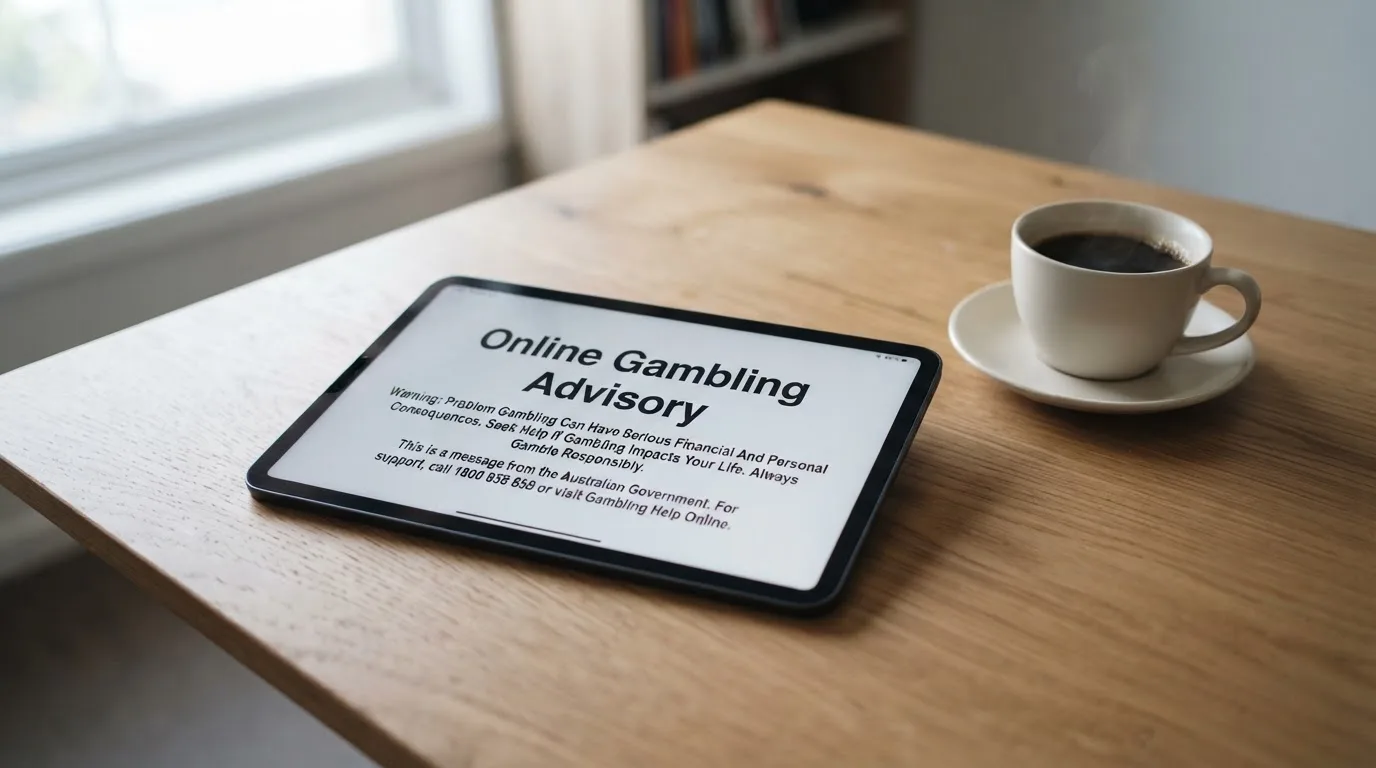
The responsible-gambling frame in Australia is built for the licensed market. Gambling Help Online, the National Gambling Helpline on 1800 858 858 (free, 24/7), state-based counselling services and the BetStop self-exclusion register are designed to operate against licensed operators that have to honour the obligations. An offshore casino offering a no-deposit pokies bonus is outside that frame.
The gap shows up in several places. Deposit limits at an Australian-licensed wagering site are enforceable by the operator and overridable by the regulator; deposit limits at an offshore casino are a feature of the site, not an obligation, and can be raised on request. Reality checks — pop-ups that tell a player how long they have been playing — are a requirement of the Australian-licensed market and a courtesy offshore. Self-exclusion at an Australian-licensed site is permanent for the chosen period; self-exclusion at an offshore site is a setting the player can change or that the operator can override. The Australian instruments were not designed to reach offshore operators and they do not.
For a reader who is concerned about their own or someone else’s gambling, the practical route runs through the Australian instruments. The 24/7 helpline on 1800 858 858 connects to counselling; Gambling Help Online carries the chat and email routes; BetStop blocks licensed Australian wagering accounts for the period chosen. None of these reach an offshore site, and that is the gap a reader needs to know about before deciding whether the bonus is worth the absence of the frame.
How the ACMA blocking rate has built up
The ACMA’s blocking regime is the enforcement tool the regulator uses most publicly, and the running total is a key metric. Since the first blocking request in November 2019, a total of 1,751 illegal gambling and affiliate marketing websites had been blocked as reported in June 2026, with more than 230 unlicensed gambling services having left the Australian market since the 2017 enforcement strengthening. A round reported on 26 June 2026 alone added twelve more sites: 7Signs, ChromaBet, Donbet, Duospin, Freshbet, Slots Gem, Jacks Club, Lucky Start, Pointsbetz, Spinrise, Vinyl Casino and Wildsino.
Read across the timeline, the rate has been anything but even. The first blocking request in November 2019 opened the register at zero; by the June 2026 reporting date the running total stood at 1,751 blocked sites over roughly six and a half years, an average of around 270 blocks per year across the whole period. Recent rounds have run heavier than that average: the December 2024 to June 2026 window alone added several hundred sites, and the 26 June 2026 round of twelve is closer to a typical mid-sized batch than to a peak. The 2017-to-2019 pre-blocking window — when enforcement was strengthened but the blocking tool was not yet live — saw the 230-plus service exits, which represents a different lever being pulled in the same direction.
What the rate tells the reader is straightforward. Blocking is not theoretical. The ACMA is acting against this market on a regular cadence, and the cumulative total is large enough that any no-deposit pokies bonus offer an Australian sees is more likely than not to be on a site that will eventually be blocked, has already been blocked, or is the next entry on a list. The arithmetic that matters is the simple one: each new round shifts the running total, and the total never goes down. A player who signs up today is signing up to a market that the regulator is actively shrinking.
The eleven brands, and what the ACMA record says
The brand-by-brand picture is uneven, because the regulator’s actions are uneven. Some operators have been warned once; others have been warned through several rounds, sometimes under different corporate names.
RocketPlay sits on the most recent end of the ACMA record, with a formal warning issued in March 2026 to Pulsup Ltd over Rocketplay. The operator was previously warned under Dama N.V. in May 2022. Two warnings, four years apart, with different corporate names on the front of them, is the shape the regulator’s record takes for an operator that has changed its licensing vehicle rather than stopped offering. The current picture for an Australian player: the ACMA has named this brand twice across two corporate wrappers, and a sign-up today joins a market the regulator is actively closing.
Level Up Casino carries the older end of the Dama N.V. cluster. The ACMA’s May 2022 formal warning covered six Dama brands at once — Bambet, Dazard, Level Up, Rocketplay, Wild Tornado and Cobra Casinos — and Level Up is one of the six. Level Up is also the only operator in the comparison that surfaces on a game-provider listing in research (Bgaming), which is a record of software distribution rather than an endorsement of the operator’s Australian standing. The picture for a reader: the brand is named in the regulator’s file, and the game-provider listings exist independently of the Australian question.
Woo Casino was warned over in March 2025, again under Dama N.V., which makes the Dama cluster four brands wide across two warning rounds. Spirit Casino, warned over in May 2025, completes the same cluster. For a reader, two patterns are worth noticing: the regulator has treated the Dama group as a single enforcement target rather than as six independent operators, and the warnings have been issued in batches rather than one at a time. A reader who sees one Dama brand being warned over should treat the other Dama brands as carrying the same posture, because the regulator has done so.
National Casino sits under Consolutetish S.R.L. and was the subject of a July 2025 formal warning that also covered Bizzo Casino. National Casino is the second brand in the comparison that shows up in research’s external listings (en.wikipedia.org). The picture for a reader: the brand is named in the regulator’s file, and the independent listings exist separately from the Australian question. The grouping with Bizzo under the same warning is the second instance in the comparison of one warning covering two brands under the same corporate vehicle.
Bizzo Casino carries a longer record than most. The July 2025 Consolutetish warning was the second time: the brand was first warned over in 2022, under TechSolutions (CY) Group Limited and TechSolutions Group N.V. Two warnings, three years apart, two different corporate vehicles, is the same shape as RocketPlay, with the same implication. A reader who sees a “new” brand behind an old name should treat the new brand as carrying the old brand’s record.
Ignition Casino was warned over in July 2025 under Bamboo Media. Ignition is one of three brands in the July 2025 batch (with National Casino and Bizzo) that the regulator treated as a single enforcement action, even though the operators behind them differ. The picture for a reader is the same shape as the Dama cluster: the regulator has grouped these warnings deliberately, and a player who is comparing offers should treat the three as carrying similar risk.
Instant Casino was warned over in February 2025 under EOD Code SRL. The timing matters: this is the earliest of the 2025 warnings in the comparison, and a reader who is reading the regulator’s record chronologically will see Instant Casino as the start of the 2025 enforcement wave. The brand is also the only one in the comparison whose ACMA record carries a separate research entry (the formal-warning publication), which means the regulator’s record on this one is the clearest single-line statement in the comparison.
Jackbit sits on the other end of the ACMA record from RocketPlay: a formal warning issued in April 2026 to Ryker B.V. covering Jackbit and CasinOK. The April 2026 warning is a batch action, like several others in the comparison, and the reader’s interpretation of it is the same as the other batch warnings — one warning, two brands, one enforcement action.
Casino Intense was warned over in April 2025 under Sterplay Holding Ltd. The brand carries the most distinct external record of any operator in the comparison: research picks it up across public records, which is a wider set of independent references than any other brand in the list. The references do not endorse the brand; they place it in the conversation about Australian-facing offshore operators. For a reader, the picture is that Casino Intense is a brand the Australian press and regulators have reason to discuss, and the ACMA has formal-warned the operator behind it.
Sky Crown carries the oldest entry in the comparison, a formal warning under Hollycorn N.V. published in September 2022 and covering Sky Crown and Blue Leo. Sky Crown is the bottom of the ACMA’s timeline in this list, which is not the same as being the least active. The Hollycorn N.V. warning is the earliest formal warning in the comparison; the brand has been on the regulator’s file for the longest period.
Two pictures hold across all eleven. Every one of them is on the regulator’s file, and every one of them carries the same Australian legal standing: no licence for online casino games or online pokies, no protection under the Interactive Gambling Act, no recourse to an Australian complaints body. The differences between the brands are differences of corporate name, warning date and warning batch — not differences of legal standing.
The verdict across the comparison
Reading the eleven rows as one picture, the conclusion is unflattering for the offers they advertise. None of the operators holds an Australian licence for the product they are marketing, and every one has been named by the ACMA. The bonuses on offer are real in the sense that they arrive — the player does receive the spins or the credit — and unreal in the sense that the Australian legal frame does not recognise them.
A reader who is comparing these offers as though they were ordinary online casino bonuses, in an ordinary regulated market, is comparing the wrong thing. The right comparison is between the offer’s face value, which is small, and the offer’s cost, which is the playthrough plus the withdrawal cap plus the absence of any Australian protection if the withdrawal is refused. The arithmetic of a typical no-deposit pokies bonus — twenty free spins at a small stake value, with a 40× playthrough and a A$100 withdrawal cap — usually yields a real-money outcome that sits well below the headline number. The marketing relies on the reader not running that arithmetic before signing up.
The reader for whom this comparison is most useful is one who is already in the market for an offshore offer and is trying to choose between them on honest terms. For that reader, the comparison shows where the regulator’s record is densest (the Dama cluster, the Consolutetish cluster), where the same brand has been warned under different names (RocketPlay, Bizzo), and where the operator carries the longest regulator history (Sky Crown). Each of those signals changes the picture, because a brand that has been warned repeatedly, or warned under different names, is the brand whose offer most needs to be read carefully.
The reader who is not already in the offshore market has a different path, and it is the one the Australian responsible-gambling frame is built for. The licensed Australian wagering market offers sports and race betting through operators such as Sportsbet, Bet365 and Ladbrokes, all licensed in the Northern Territory; the licensed land-based market offers poker machines in clubs, pubs and casinos under each state’s rules. None of these offer a “no deposit pokies bonus”, because the licensed market does not offer online pokies. The Australian frame is built around a different product, and the offshore no-deposit offer is a different market altogether.
Typical bonus terms (2)
| Term | Impact on bonus |
|---|---|
| Playthrough multiple | Determines the amount of real-money wagering required to clear the bonus. |
| Withdrawal cap | Sets a ceiling on the amount of winnings that can be cashed out. |
| Game restriction | Limits play to specific titles with potentially higher house edges. |
The Interactive Gambling Amendment (Gambling Reform) Bill 2026 passed Parliament on 19 August 2026, and its advertising and inducement measures commence on 1 January 2027. The reform is law with a start date: on a 2026 page it is not yet in force. The reform’s centre of gravity is the advertising and inducement rules around licensed wagering, and the implication for offshore no-deposit offers is that the inducement infrastructure on which those offers rely will tighten further once the reform commences.
A reader on a 2026 page should treat the reform as a forward-looking signal rather than a current rule. The current rule is the Interactive Gambling Act 2001 as strengthened by the 2017 amendments; the 2026 reform adds further obligations on licensed operators and tightens the inducement rules around them, but the offshore no-deposit offer is already outside the frame the reform is changing. The reform’s practical effect on offshore offers is to make the licensed alternative more strictly bounded, not to bring offshore offers into the frame.
What the comparison does not cover
Two limits on the comparison are worth flagging up front.
The first is that the eleven brands are the eleven the ACMA has named in formal-warning publications, not the full set of offshore operators offering no-deposit pokies bonuses to Australians. The affiliate marketing pages that rank for the search terms around this topic run into the hundreds, and the ACMA’s record covers a subset of them. A reader who is comparing offers is comparing this subset against the marketing universe, not against the whole offshore market.
The second is that the comparison does not include the bonus terms, because the only sources for those terms were the affiliate marketing pages themselves, and the comparison does not treat affiliate pages as the operator’s own voice. The wagering multiples, the withdrawal caps and the game restrictions are the section where the affiliate pages and the operator’s terms would diverge, and the comparison is built on the ACMA’s record rather than on either of those. A reader who wants the terms has to go to the operator’s own page, and the terms they find there are the terms the comparison does not have.
Frequently asked questions
How much is a typical online pokies no-deposit bonus actually worth, in real terms?
A typical no-deposit pokies bonus arrives as a small bundle of free spins — often twenty to fifty spins on a single named title — or a small credit balance, usually in the A$10 to A$30 range. The face value is small by design. Once the playthrough, the game restriction and the withdrawal cap stack up, the cashable amount that survives is usually a fraction of the headline figure, and for many sign-ups the cashable amount is zero. The bonus is not worthless, but the gap between the face value and the realisable value is wide enough that a reader should treat the headline as the maximum, not the expectation.
Does a PayID no-deposit pokies bonus differ from a standard no-deposit one apart from the deposit method mentioned?
The PayID label on a no-deposit pokies offer is mostly a marketing line. The bonus itself — the spins or credit, the playthrough, the withdrawal cap — is the same shape whether the page mentions PayID or not, because PayID is a deposit and withdrawal method, and a no-deposit bonus does not involve a deposit. PayID becomes relevant at the deposit stage a player may move to later, and at the withdrawal stage, where an Australian bank receiving a PayID transfer does so quickly. The PayID label tells the reader nothing about the bonus’s underlying value.
Is claiming a no-deposit pokies bonus from an offshore operator something Australians can lawfully do?
The Interactive Gambling Act 2001 prohibits the provision of online casino games and online pokies to people in Australia. The statute targets the provider, not the player, and an individual Australian is not prosecuted for claiming a no-deposit bonus. The provider is the one the regulator acts against. That said, claiming an offshore bonus means dealing with an operator that holds no Australian licence, offers no Australian consumer protection and can be blocked by the ACMA while a balance is still on the account. The legal exposure sits with the provider; the practical exposure sits with the player.
What playthrough condition usually applies before winnings from a no-deposit pokies bonus can be withdrawn?
A no-deposit bonus is treated as bonus funds, and bonus funds carry a playthrough multiple before they become withdrawable. The multiple is the number to look for before anything else, because it determines how much real-money wagering the bonus has to generate. A 20× multiple on a small bonus is the most common reading; 40× and 50× multiples appear and push most of the bonus’s expected value into the house edge. Anything above 50× is heavy against the player and is the multiple that turns a “free” bonus into a real-money outlay for the player who clears it.
Why do ‘instant PayID pokies no deposit’ pages so often repeat the same handful of terms?
The repetition is a feature of the affiliate marketing pages that dominate search results for this topic. Several operators share the same terms template because the same boilerplate is reused across affiliate sites — the small free-spins bundle, the 40× playthrough, the A$100 withdrawal cap, the PayID deposit route. The repetition is not evidence that the offers are the same on the operator side; it is evidence that the affiliate pages describe a narrow band of the same marketing language. A reader who sees the same terms on several pages should read the regulator’s record for differences, not the affiliate copy.
What’s the practical cap on how much can be withdrawn from a no-deposit pokies bonus win?
The withdrawal cap on a no-deposit pokies bonus is the second number to read after the playthrough. A$100 is common; A$50 is common; A$200 is the upper edge of typical. The cap is applied after the playthrough clears and before the winnings become cashable, which means the cap is the ceiling on what the bonus can ever pay out regardless of how the wagering goes. A cap below the playthrough’s expected value is a cap that the bonus will not reach in the typical case, and the bonus pays out its cap only when the wagering produces a run above the expected value.